
“Bez cilja i nada mi smo samo mjerači vremena.” (“Without goals and hope, we are just measurers of time.” – Ranko Marinković (Croatian novelist)
Continuing the account of my whirlwind tour of Europe, concluding with the time that I spent in Croatia and Hungary.
Day 5 – Sunday 12th October 2025 – Maribor to Zagreb
Although there are occasional direct trains between Maribor and Zagreb, there were none departing at the time at which I wished to travel. Other train options either involved a long walk across the border or a very indirect journey, either of which would take several hours. Instead I decided to travel by bus to Zagreb, which was scheduled to take under two hours. To ensure that I had a full day in Zagreb, this required me to catch an 07:20 bus from Maribor, slightly earlier than I ideally would have liked.
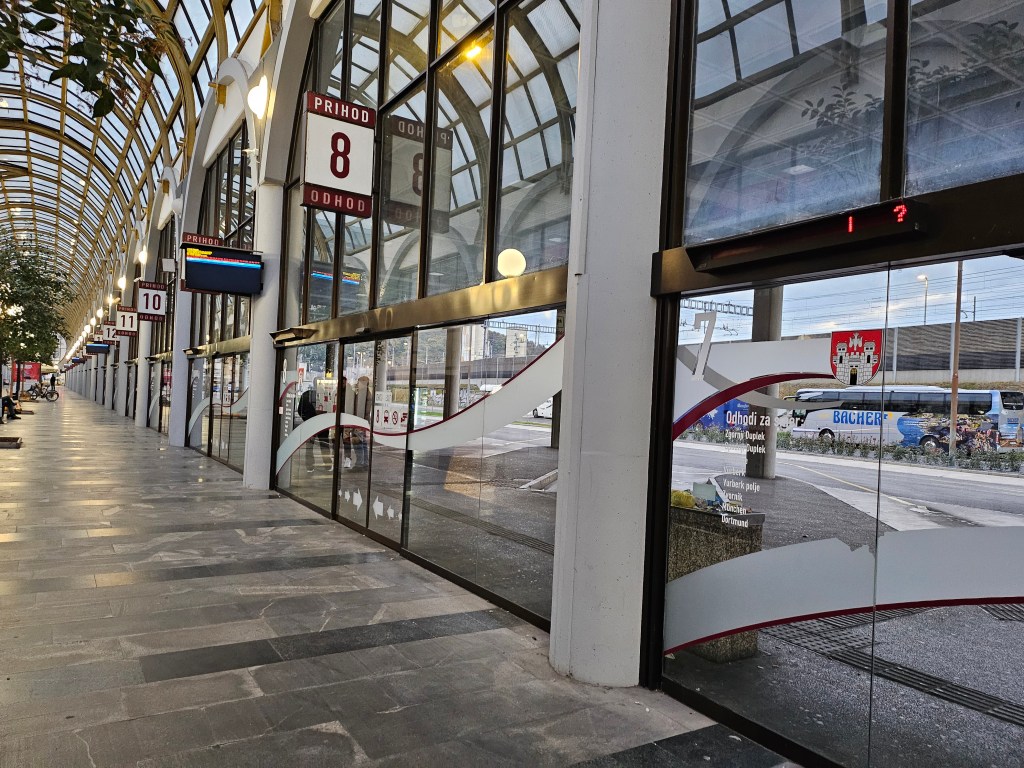
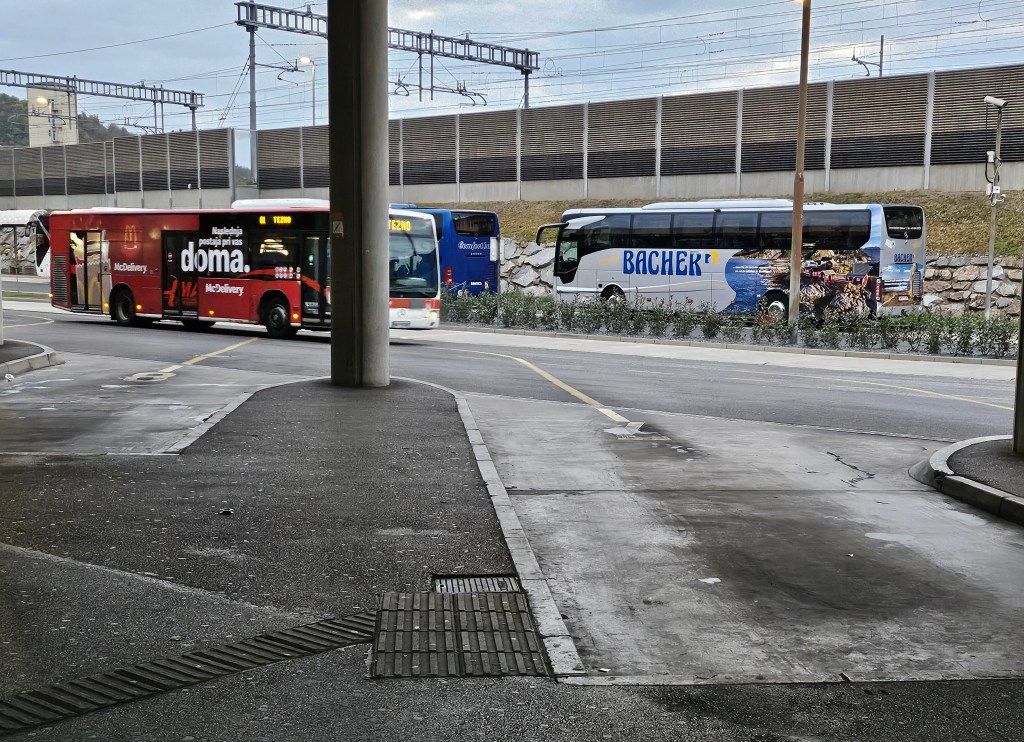
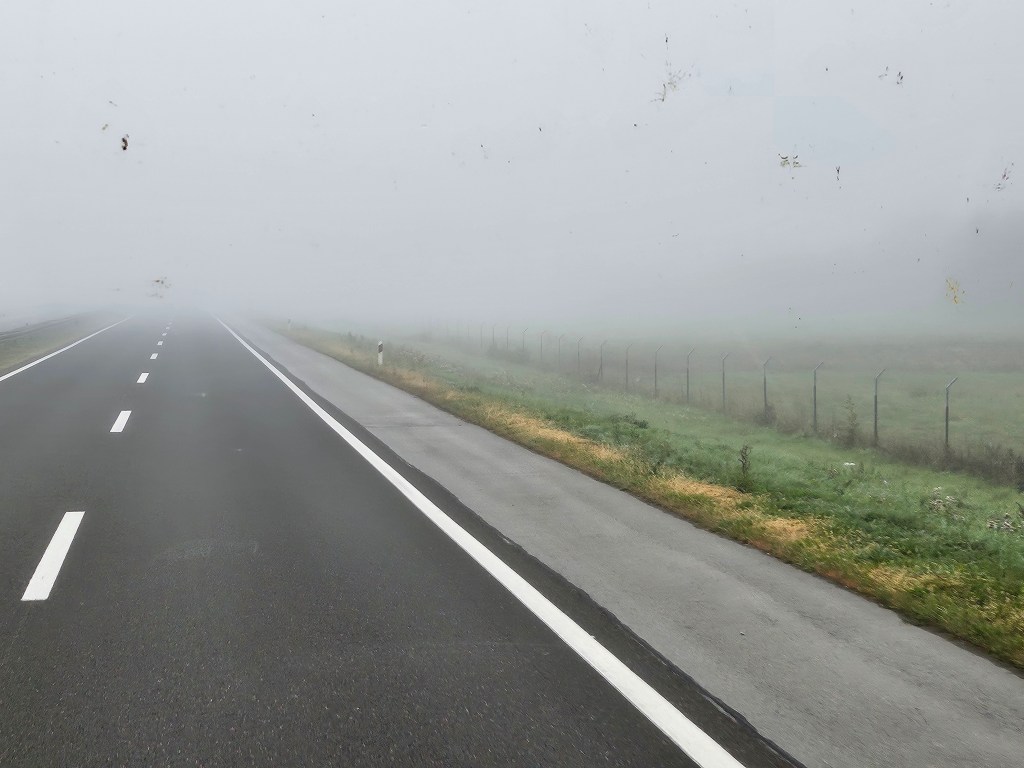
Maribor’s bus station is one of the more pleasant ones that I have used, with automatic doors from the waiting area to each bus departure bay. I did not have to wait long after I got there, as the bus I was catching arrived about 15 minutes early, having come overnight from Prague. It left on time and soon joined the dual carriageway that leads to Croatia. The road climbs into the hills as it approaches the border and we were enveloped in early morning fog with visibility down to about 20 metres at times. On both sides of the border there are structures in place for border checks, but with both countries now in the Schengen area (Croatia joined in 2023) these were unstaffed that morning and the bus passed through without stopping.
The bus arrived at Zagreb bus station 20 minutes early at 08:55. I was glad that I was just getting off there and not having to hang around waiting for a departure, as Zagreb bus station seemed rather chaotic and run down. The bus station is about 15 minutes walk from Zagreb’s railway station, near where I had booked a hotel. Rather than carry my bag around all day, I called at the hotel so that I could leave my bag and explore unencumbered.
I had tried to visit Zagreb once before, during my Interrail trip in 1983, when I planned to spend a night and the following morning there. However, the train I was on from Belgrade arrived several hours late at about 10pm, after the hotel booking kiosk at the station (which one relied on to obtain accommodation in the pre-Internet age) had shut for the night. I ventured out into the still busy main square to see if I could find a hotel. The first hotel I tried said it was full and, because of a trade fair taking place in Zagreb at the time, they knew of no other hotels with vacancies. So I had no option but to return to the station and travel onward on a night train to Italy. So the station and the square outside was all I saw of Zagreb in 1983.
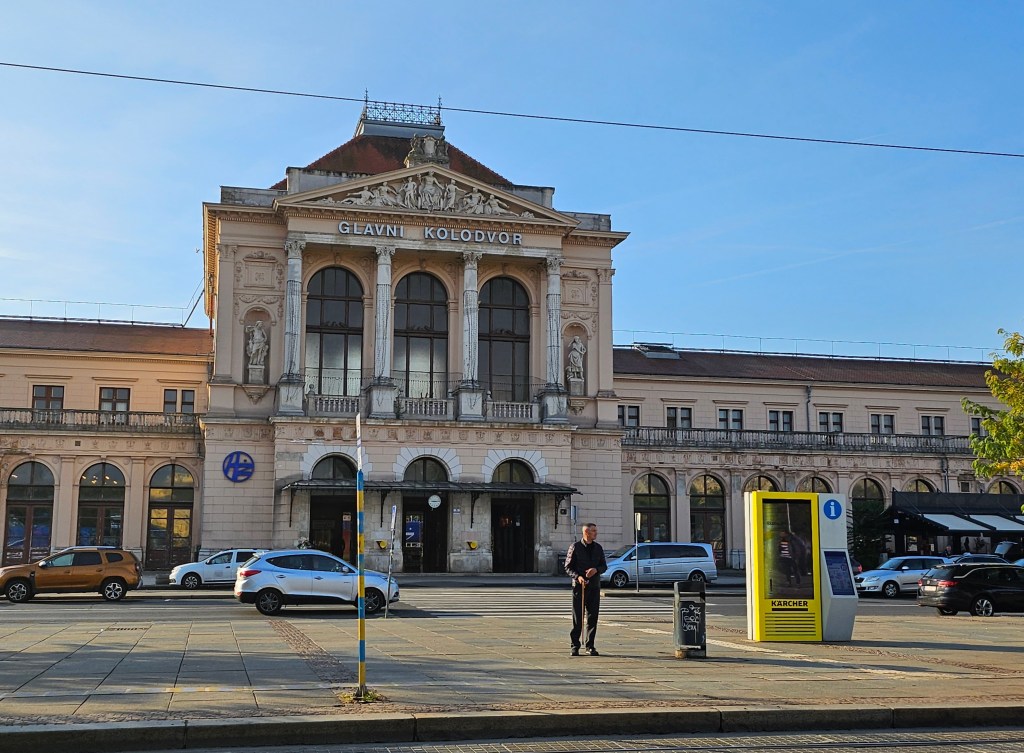
So after I dropped off my bag, the first thing I did was to go to the station and the immediate surrounding area to see if I could remember any of it. The interior of the station did seem vaguely familiar and I don’t think it had changed much in the 42 years since I was last there. I then tried to work out which was the hotel I had asked whether they had a room. The nearest hotel to the station, and the only one now in the square immediately outside, is the Esplanade Hotel. I am not sure if this was the hotel I tried in 1983, but unless some others have disappeared in the intervening years, it probably was. However, I have now learnt that the Esplanade Hotel was the luxury hotel of Communist Yugoslavia and it was where Queen Elizabeth II stayed when on a state visit to Yugoslavia a few years before my first attempted visit. So, even had they had a room in 1983, I suspect it would have been rather beyond my budget.
In researching what to do in Zagreb, I discovered that several of the official museums, which are branches of the national museum, such as the Croatian History Museum were closed until further notice, and those that were still open were closed on Sunday afternoons. That said, Zagreb has a number of commercial ‘museums’, such as the Museum of Broken Relationships or the Hangover Museum, but those didn’t really seem my cup of tea, so I decided to give them a miss. As it was still early, and before the first place I wanted to go to would be open, I planned a walk to see some of the sights of Zagreb, starting in the Lower Town. The parts of the Lower Town nearest the station largely consist of solid, slightly grim, post-war Communist reconstruction architecture.
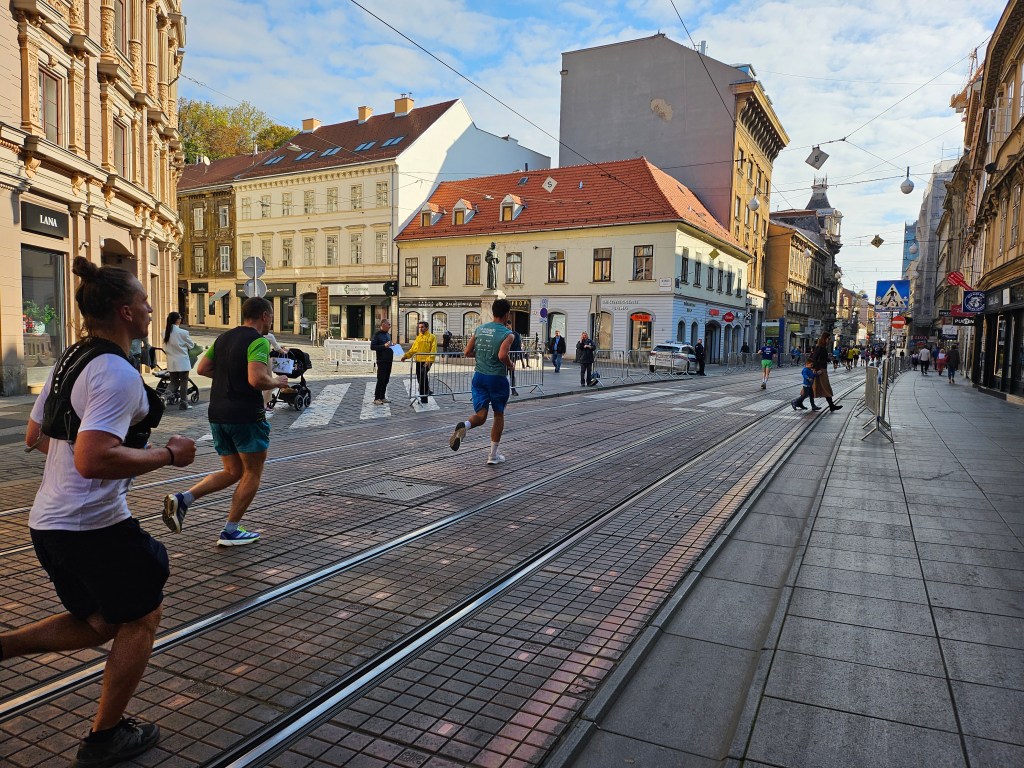
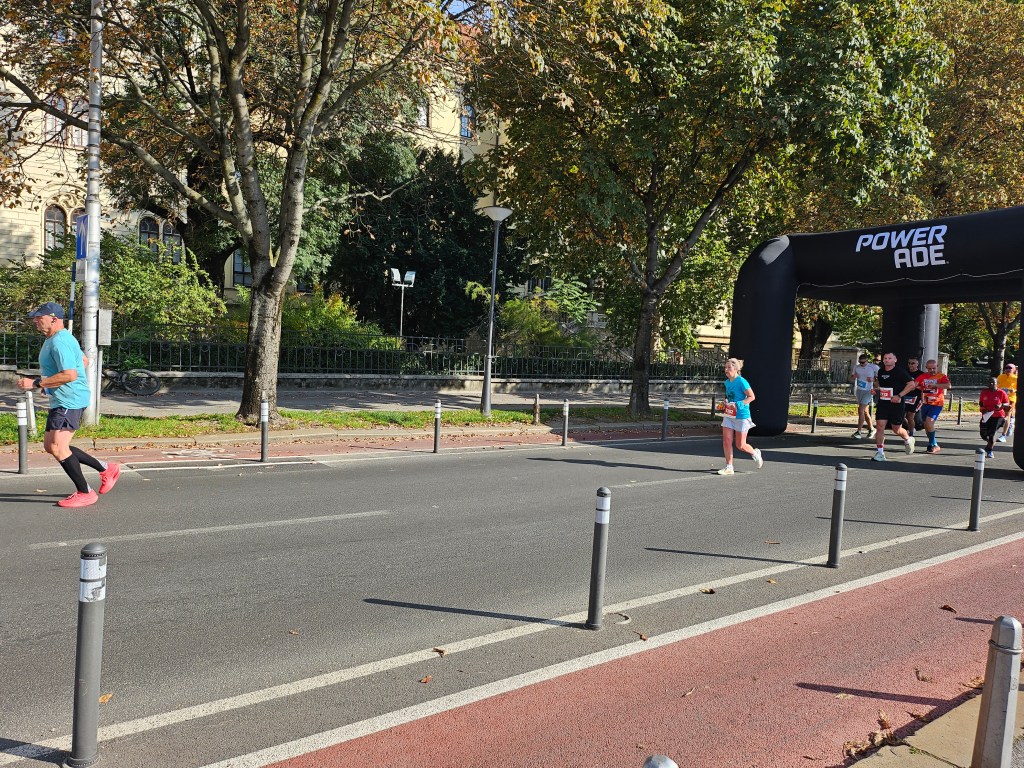
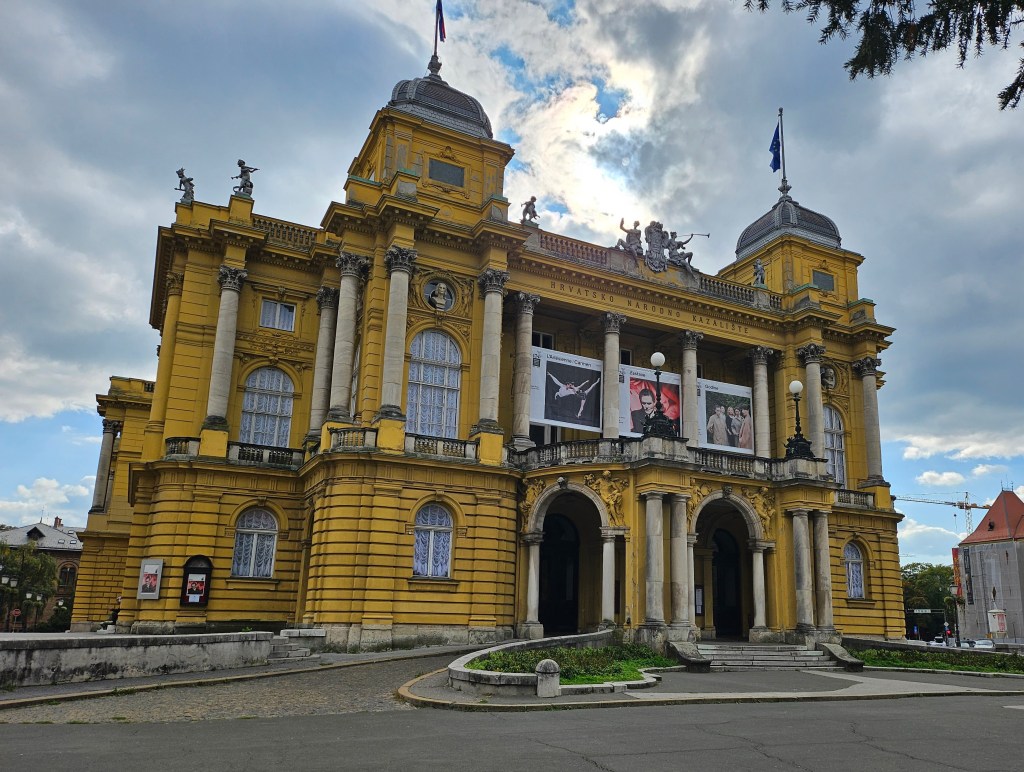
My walk took me through some green spaces, past the State Archives and the National Theatre. I discovered that, yet again, when visiting a city on a Sunday, I was there on the day that their City Marathon was taking place. The Zagreb marathon seemed to have more participants than the Vilnius marathon that I had encountered a few weeks earlier, so I had to wait for a gap among the runners before I could cross some roads.
I then headed to the National Ethnographic Museum, arriving just after it opened at 10am. The door was unlocked, so I went in, but there was nobody at the ticket desk, so the guard manning the entrance told me to pay when I left. The permanent exhibition consisted of folk costumes from different parts of the country, some of them associated with semi-pagan rituals. There was also a small display of ethnographic artefacts from around the world. The temporary exhibition compared the traditional art of embroidery samplers with modern days social media posting – which I’m not sure quite worked. All three of the areas were quite small and there appeared to be other parts of the museum that were no longer open. When I came to leave, it appeared that the person manning the ticket desk had turned up for work, but he seemed preoccupied in the back office. The guard who was on the front door earlier had disappeared, so I did not feel too guilty in just leaving without seeking out anybody to pay for my visit.
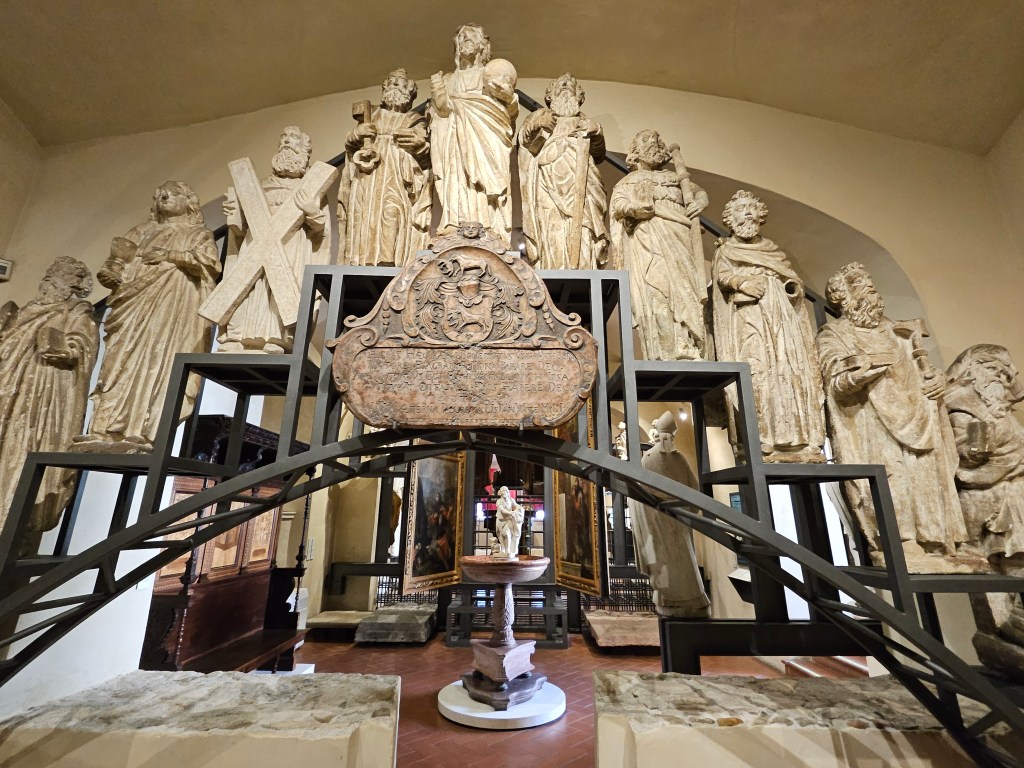
I next climbed further into the Upper Town to visit the Zagreb City Museum. You could pay separately to visit either the permanent exhibition or the special exhibition of gold artefacts, each of which cost a similar amount to enter. I chose to view both. The permanent exhibition was excellent, describing the history of the city from ancient times through to the war of the early 1990s during the break-up of Yugoslavia. It was detailed and I thought it was the epitome of what a city museum should be like. It took me the rest of the morning to look round this part of the museum. I was slightly worried that if the special exhibition took as long then I would not be done by the time the museum closed at 2pm. However, while the special exhibition contained some exquisite examples of Gothic and Renaissance gold items, it was contained within just one large room in the basement, so I was able to see it all in the time available.

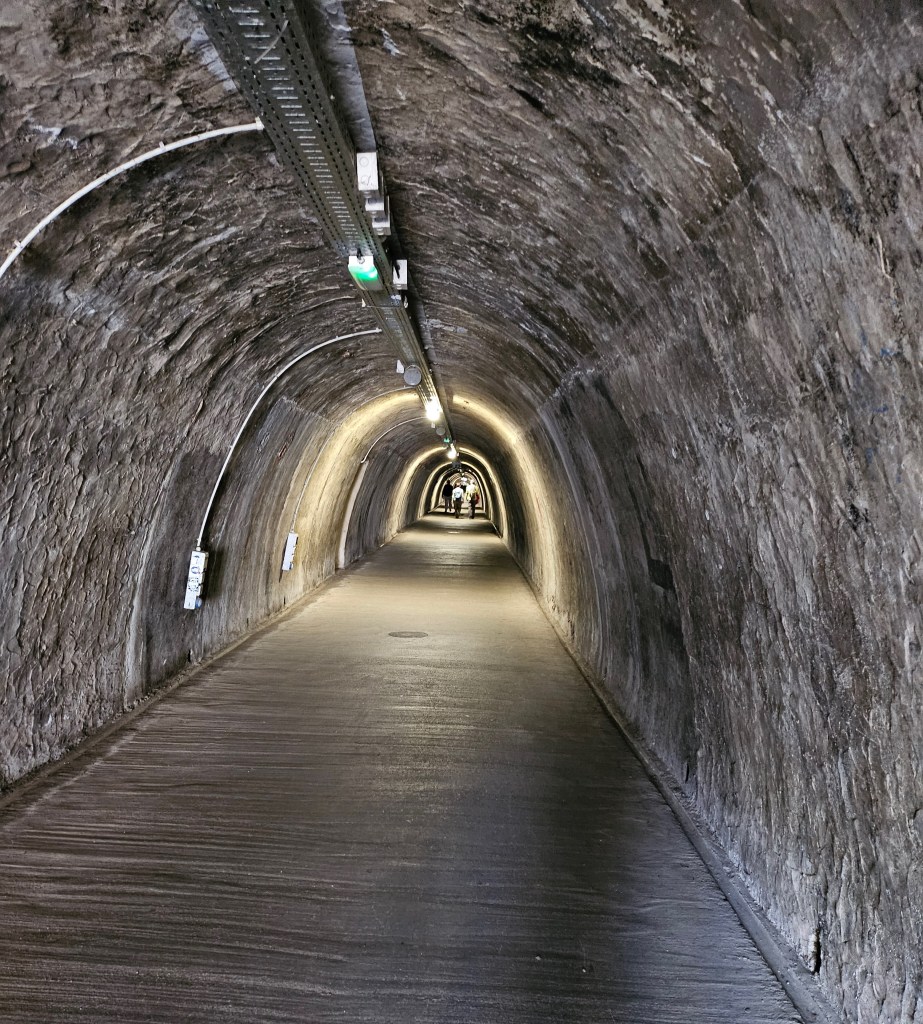
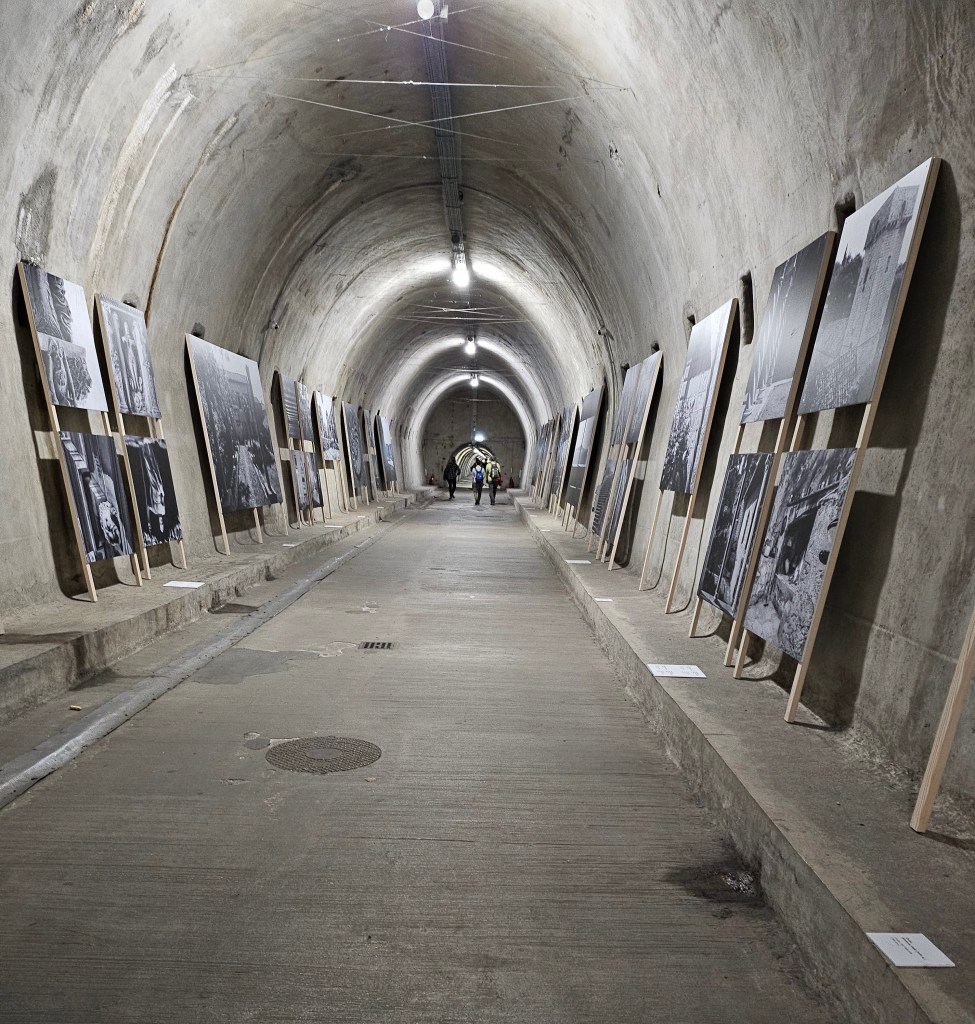
I walked down the hill from the City Museum to find an entrance to the the Grič Tunnel. This was originally built as a bomb shelter during World War II under the hill on which Zagreb’s upper town is located. Now open as a convenient short-cut for pedestrians, it is also used as an exhibition space. There are some spurs coming off the main tunnel to provide alternative exits. I walked the full length of the main tunnel for about four hundred metres. Upon exiting at the other end, I climbed up to the promenade above the tunnel which provides views over the centre of Zagreb.
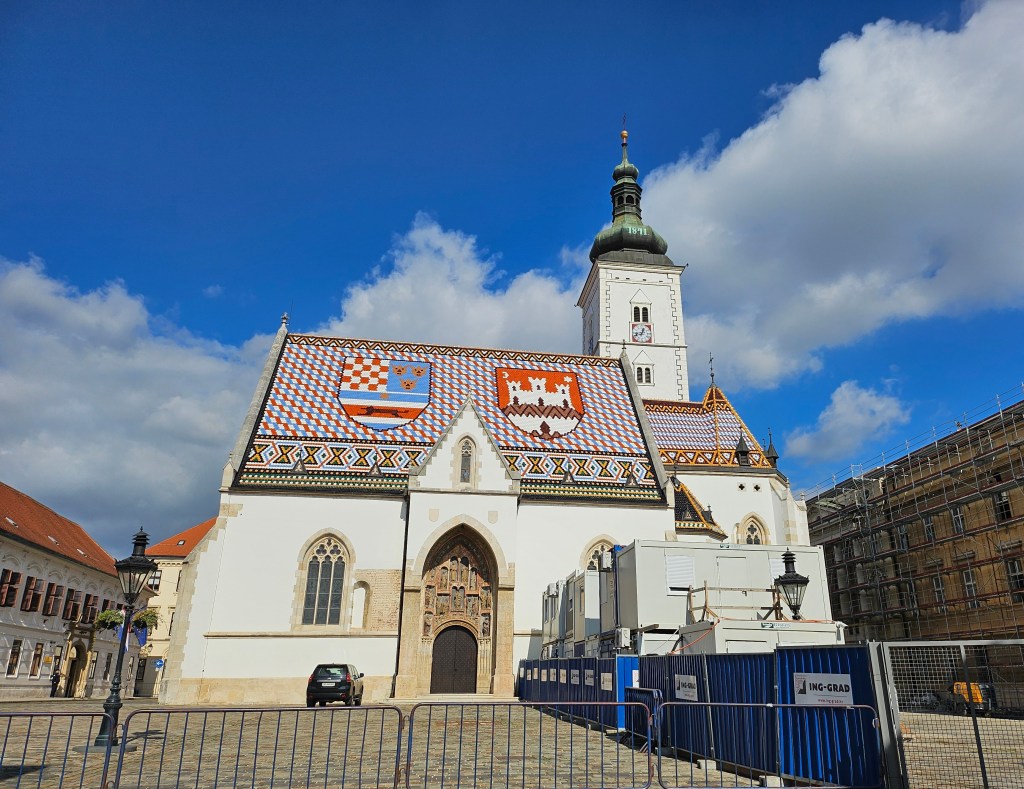
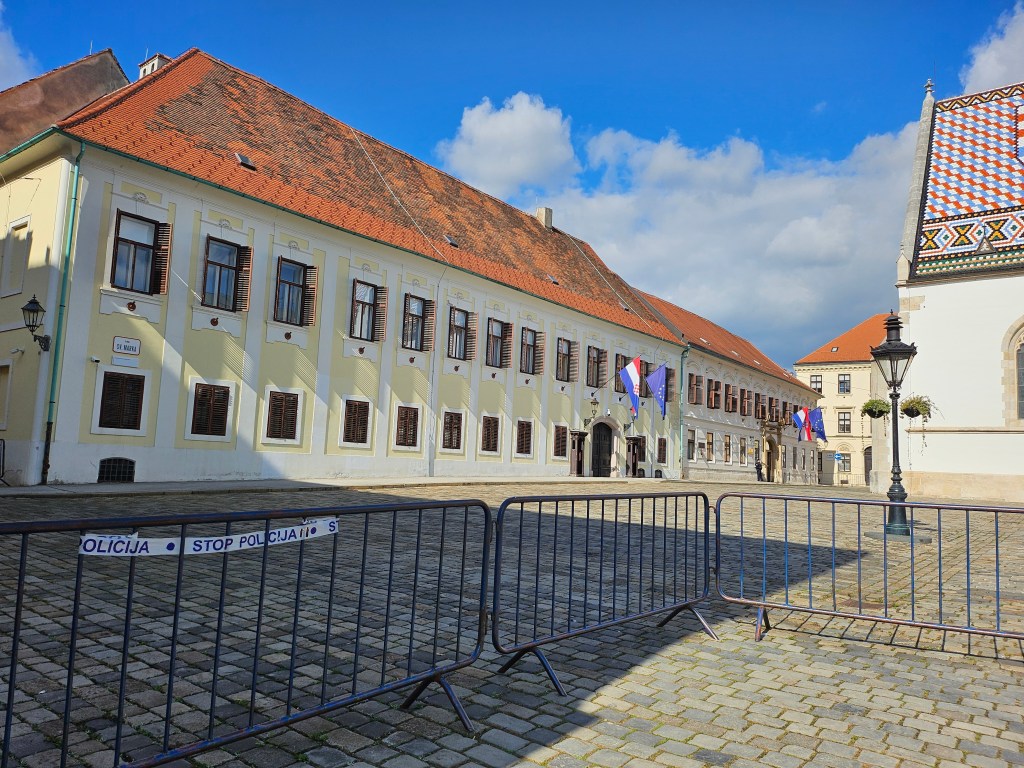
Next stop was to look at St Mark’s Church with its attractive tiled roof, which is located directly between the Presidential Palace and the Croatian Parliament. Unfortunately it was not possible to go inside the church while I was there. I continued following a walk to take me round the main sights of Zagreb. Nearby was Zagreb’s Old Stone Gate, which contains within it a chapel to the Virgin Mary, reminding me of the Gate of Dawn in Vilnius. The roadway passing through the old stone gate make a 90°turn, presumably making it easier to defend.
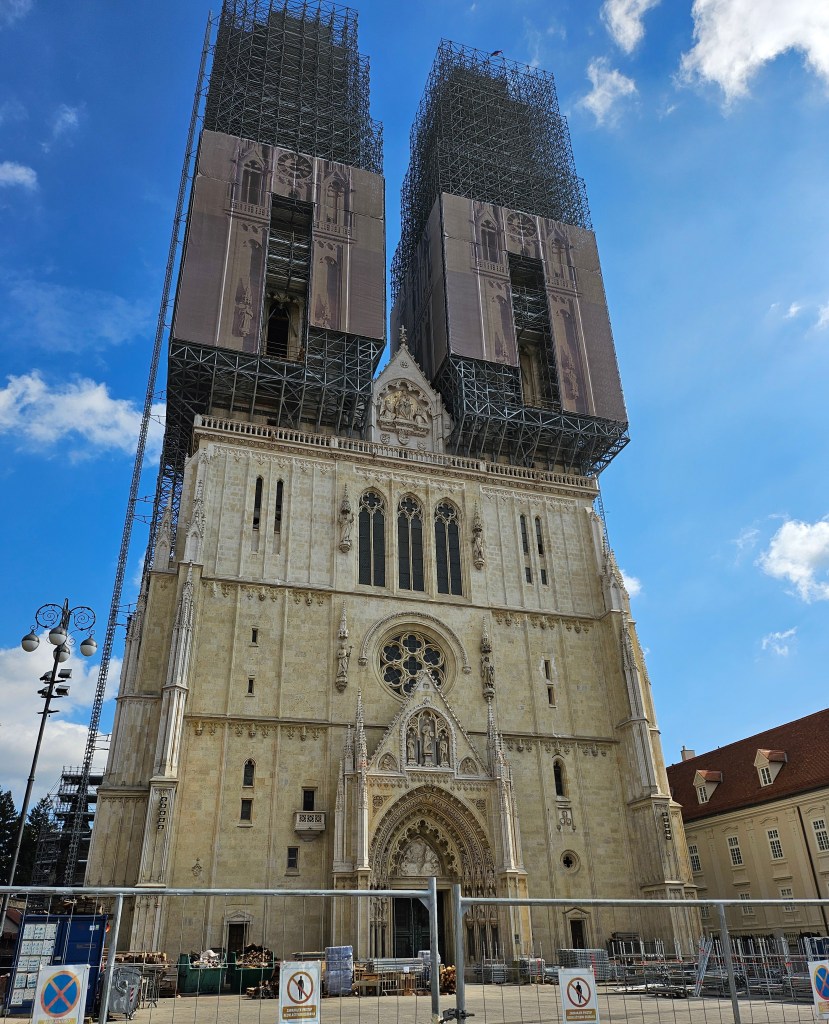
I went through the main market place, in which, on a Sunday afternoon, the final few stalls were starting to pack up. From there I made my way to Zagreb Cathedral. This was badly damaged in a massive earthquake in March 2020, at the start of the Covid pandemic, which caused one of its two spires to collapse. Repairs are still ongoing and the cathedral is still closed. Nearby, back in the Lower Town is Zagreb’s main square, Ban Jelačić Square, where the Zagreb Marathon was finishing that day. To get across the finishing straight of the marathon route, they had built a temporary scaffolding footbridge.
I then continued back through the Lower Town, finding some Art Nouveau buildings, as well as some pleasant parks and the city’s botanical gardens. A succession of early starts was beginning to catch up with me so I returned to my hotel for an hour’s rest before heading out again to find dinner.
On my way to dinner I walked through Zrinjevac Park, where I had been earlier. However, it was now crowded with people and there was a band performing on the bandstand in the middle of the park. The crowd were all singing along with the band and swaying to the music.
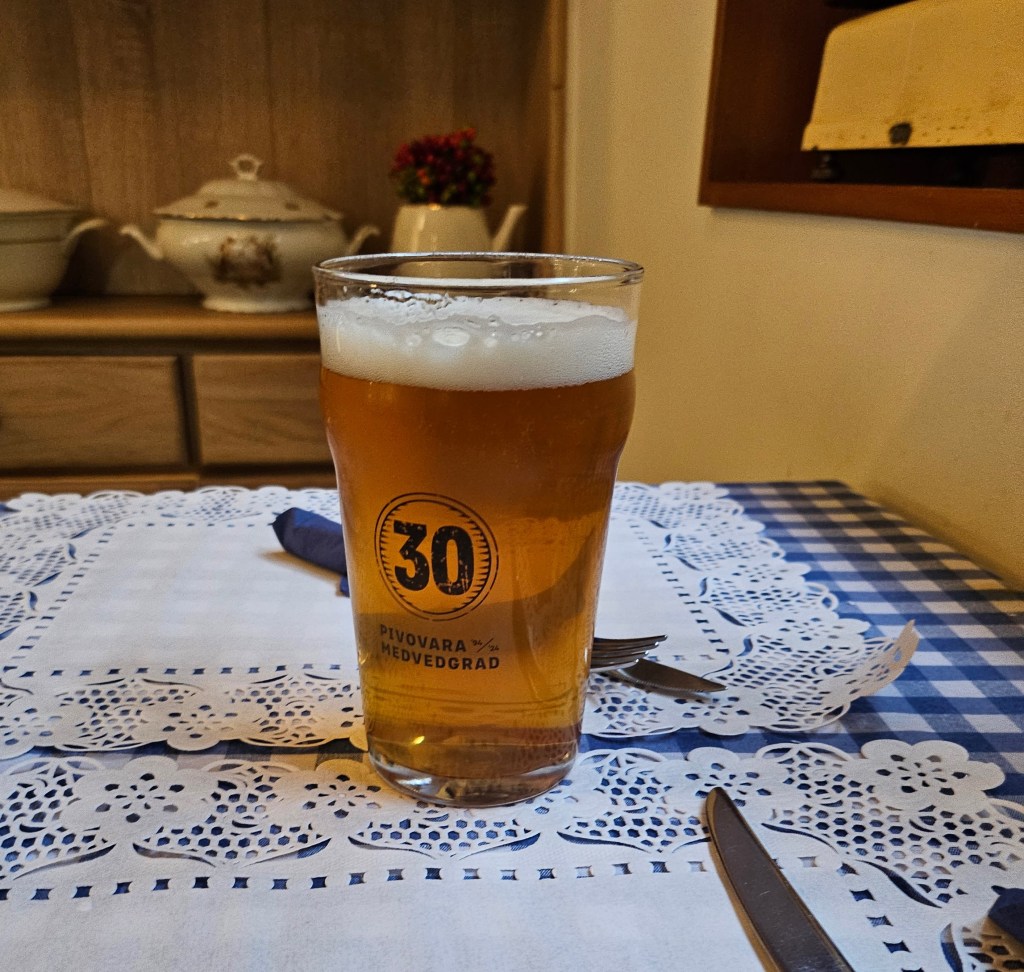
As I had not booked anywhere to eat that evening, I headed for the main restaurant area in the Upper Town. There I enquired if I could get a table in a well-reviewed restaurant that I had identified. They agreed, provided that I could be finished in just over an hour from my arrival. I had cottage cheese to start with, followed by cabbage stuffed with minced meat on mashed potato. To drink I had a glass of very tasty Medvedgrad brewery beer. I wouldn’t have minded lingering longer, but the next group to have booked the table arrived on time and I was forced to move on.
As I had enjoyed the Medvedgrad beer, I thought I would see if I could find a pub where I could sample some more. Google identified what it claimed was a beer hall selling Medvedgrad beer on the other side of city centre from where I had dined. So I decided to go there. Walking down the main street on my way there was a group of young people just ahead of me, also seeming to be following a route on their phones. They turned down the same alleyway as Google was showing me as the way to the beer hall. However, both they and I were slightly bewildered when this alleyway just led to some residential apartment blocks. They returned the way they came, whereas I carried on and tried to approach the beer hall from a different direction – this involved walking through the courtyard of another residential area, but it did bring me to the place I was looking for. As I arrived, so so did the group I had been following but from the other direction. My quest ultimately was in vain, as rather than just being a pub, this was another very busy restaurant with all the tables occupied by people eating.
Staying overnight in Zagreb meant that I had spent the night in a different country for six consecutive nights – a personal record. (I think that my previous best was four nights in four different countries.)
Day 6 – Monday 13th October 2025 – Zagreb to Osijek
I could have caught a direct train to Osijek, but that would have meant another early start, skipping the breakfast that my hotel in Zagreb was providing. As Monday is the day in Croatia when nearly all attractions are shut, I decided to make it primarily a day for travelling. So I decided to leave Zagreb by train at a more reasonable hour, but I would need to change in Vinkovci.
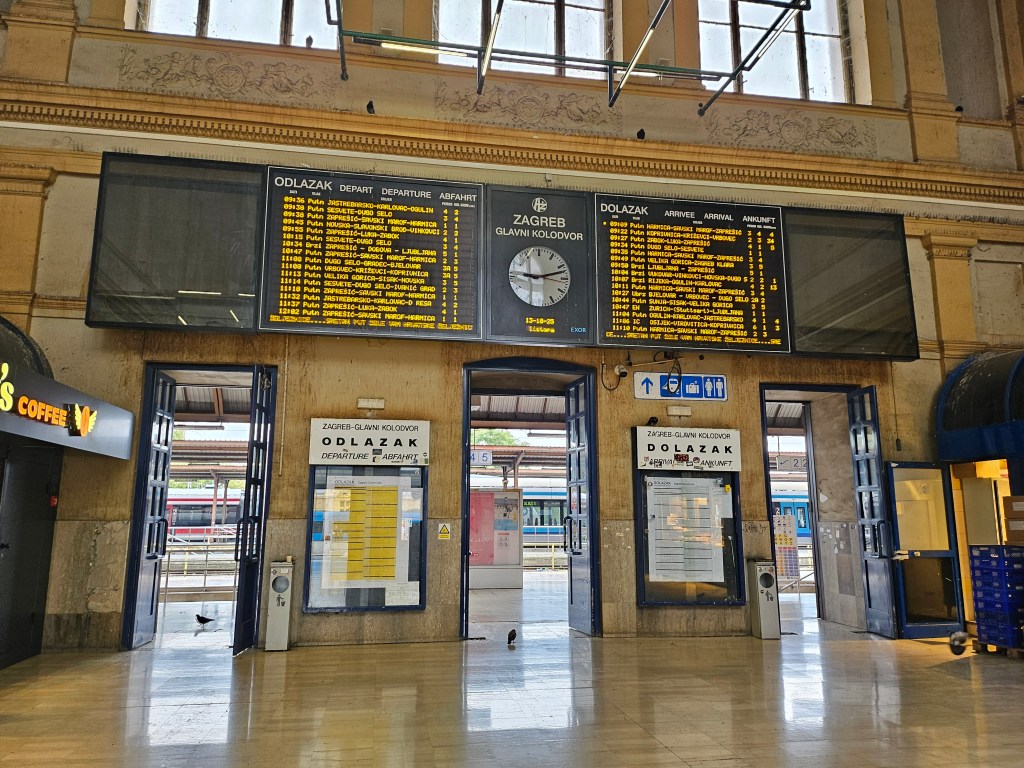
So after breakfast I had a leisurely stroll to Zagreb Glavni Kolodor to catch the 09:45 train to Vinkovci. Looking at the departure board, I was struck by the paucity of available destinations – most of the trains listed were local services. When I briefly passed through Zagreb 42 years earlier, it was then possible, for example, to catch through trains from Zagreb to Ostend, Paris, Rome, Istanbul, Athens and Moscow – none of which services exist any more. Nor are there trains any longer to Belgrade, the capital of the former Yugoslavia, which in 1983 was served by nearly 20 trains a day from Zagreb.
The train to Vinkovci that I was catching was scheduled to make 51 stops in its 5 hours 15 minutes journey. I chose the one coach on the train which had compartments and settled into an empty one, which I had to myself for the first four hours. There were works on the track on the line out of Zagreb, so within a short space of time the train was running 11 minutes late. This gave me some concern, as I had only 17 minutes for my connection in Vinkovci, with the next train to Osijek being two hours later. The train trundled on, stopping every six minutes on average, but at every tiny halt there appeared to be at least one person getting off or on. After my hectic schedule so far on this trip, this part of the journey with the compartment to myself was a welcome relaxation. The mobile signal was generally good, so I engaged in a WhatsApp dialogue with the owner of the property where I was going to be staying in Osijek about how to access my room. The train clawed back some of its lost time, but then lost it all again and more just before and after Slavonski Brod, where it filled up with passengers. Slavonksi Brod is so named to distinguish it from Brod on the other side of the Sava river, which is now in Republika Srpska in Bosnia Herzegovina.
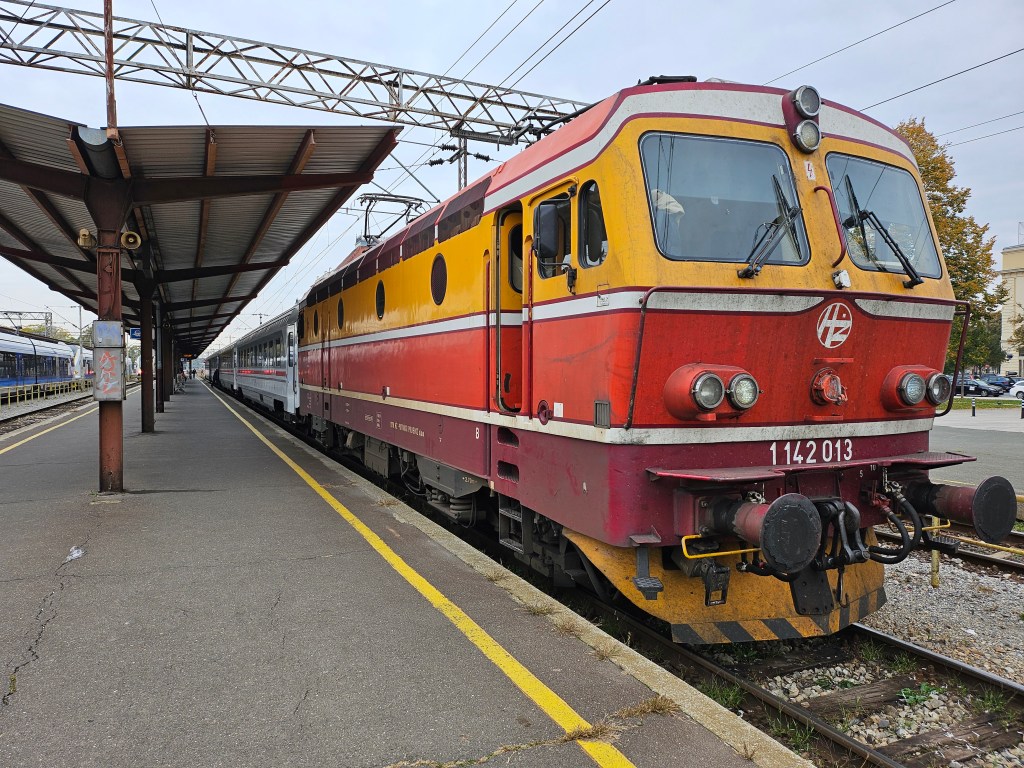
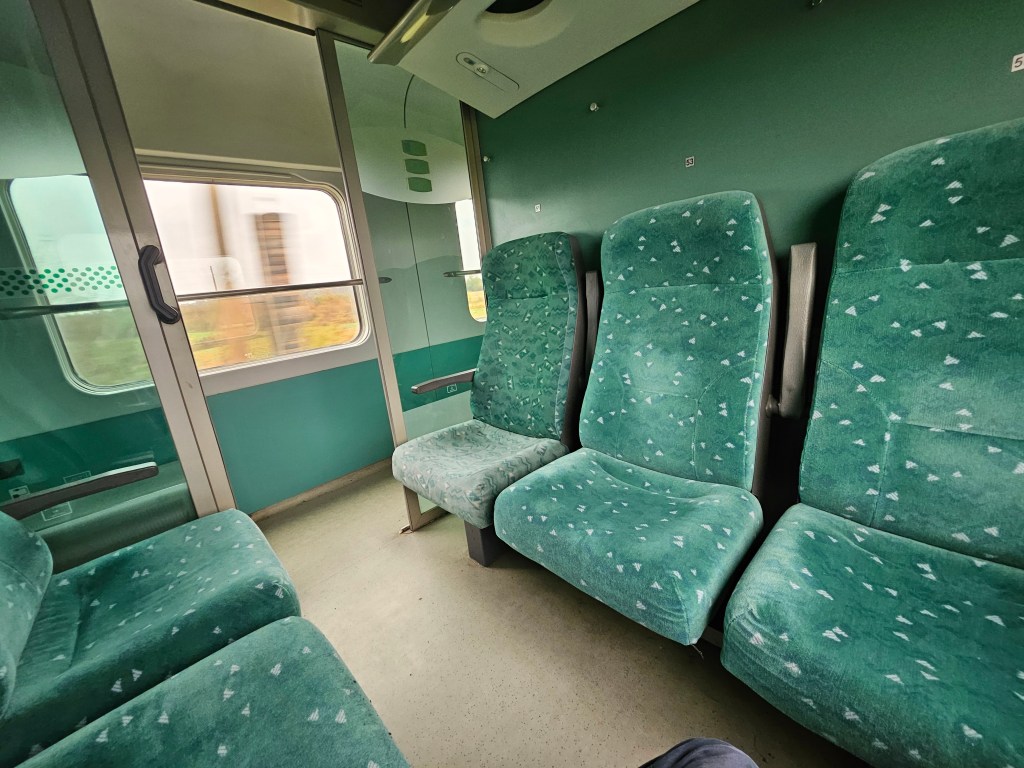
My train pulled into Vinkovci 12 minutes late, which was just enough time to go through the underpass to reach the modern diesel train to take me on the final leg of my day’s journey. I don’t know if this train would had been held had my arrival been any later, but I like to think so, as I noticed that the plain clothes revenue inspector who had been on my preceding train for the final part of its journey also transferred to the Osijek train with me. The 45 minute run to Osijek was on time and I arrived at Osijek station just after 4pm.

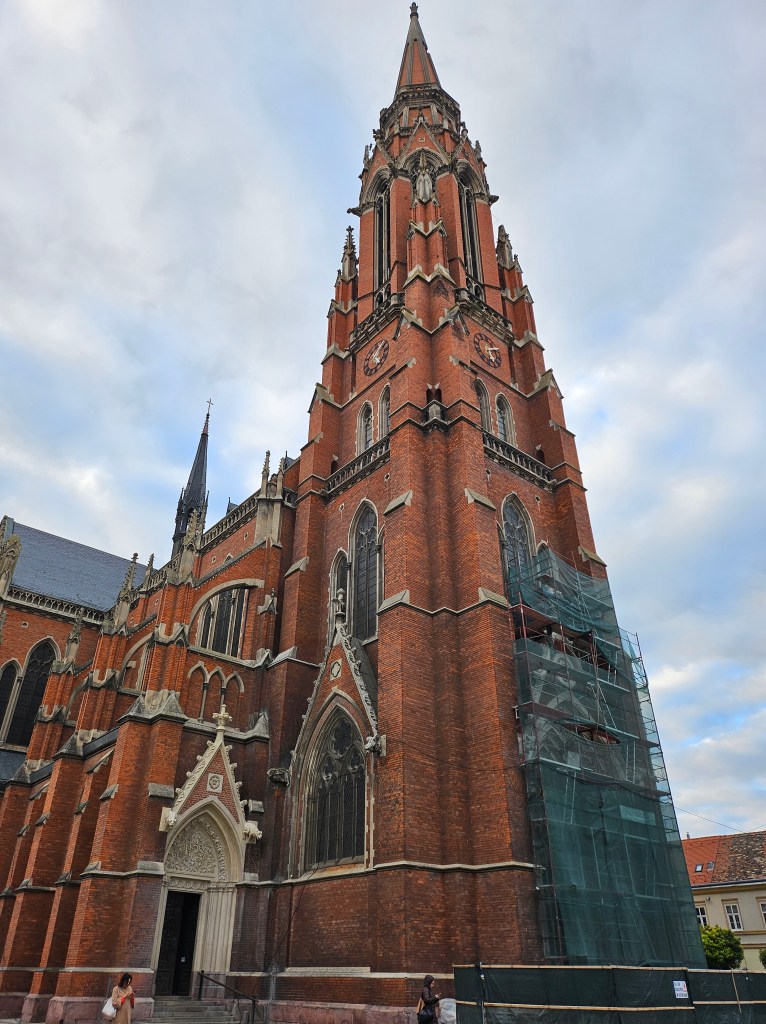
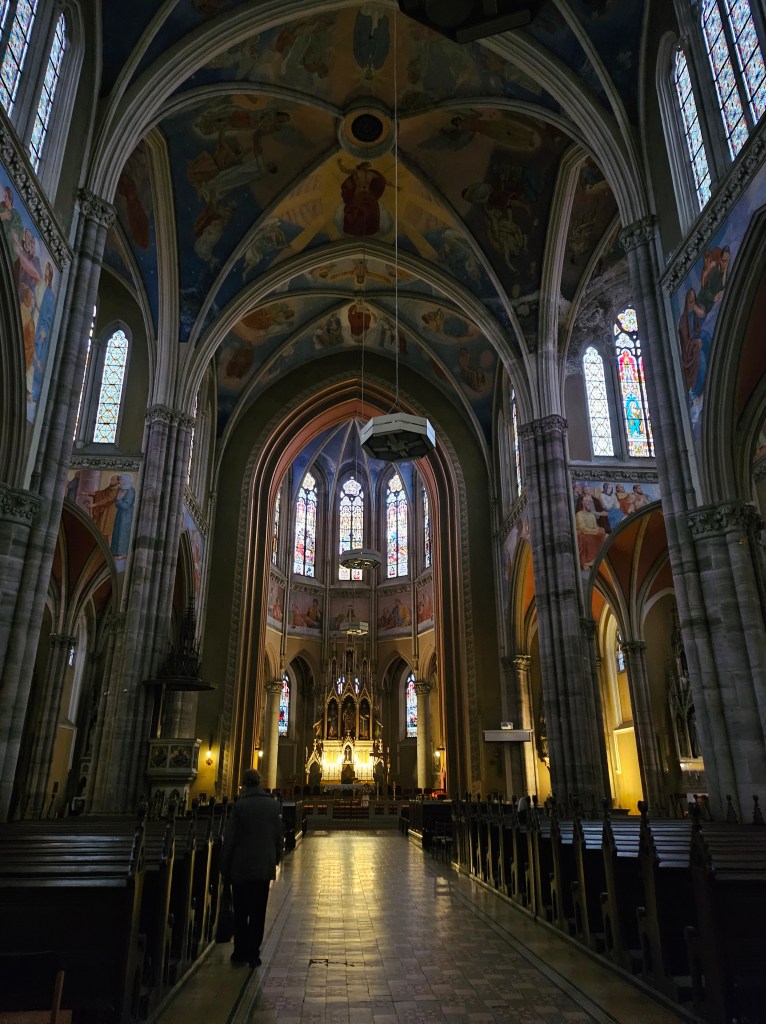
It was about a 15 minute walk to where I had booked my room for the night. I was pleased that the instructions on how to enter the building and access my room were very clear and I managed to get into my room without any difficulty. Once I had settled in, I set off for an initial explore of Osijek. I went to the main square in the new town and had a quick look inside the nearby massive red-brick cathedral, built in the 19th century.
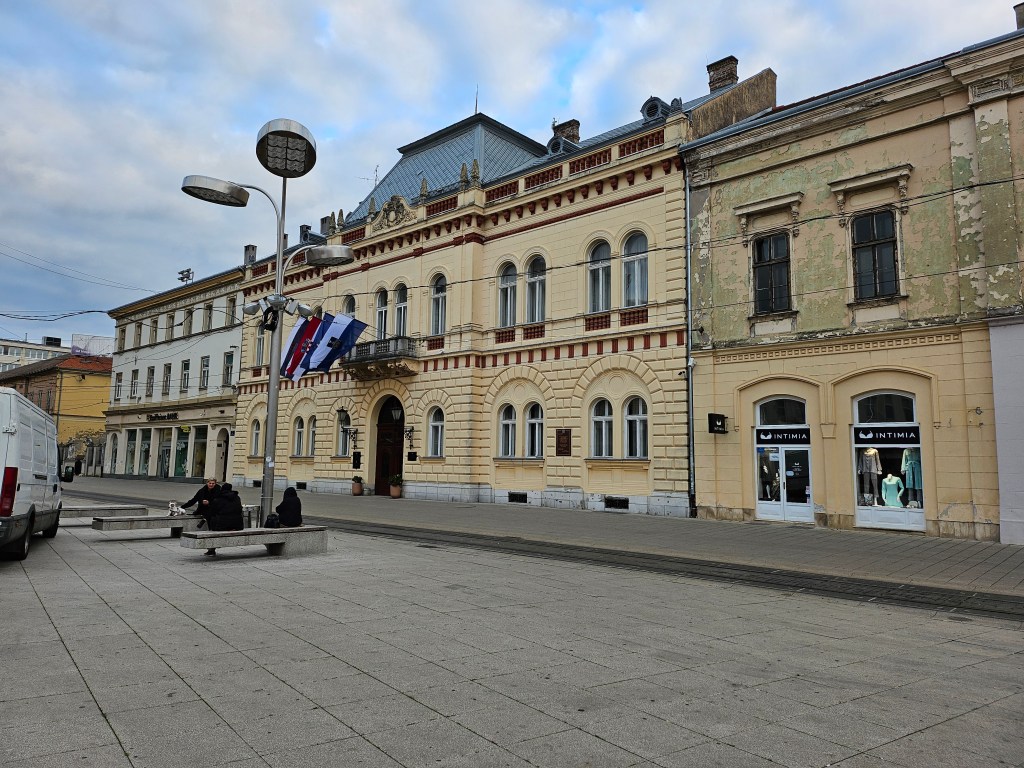
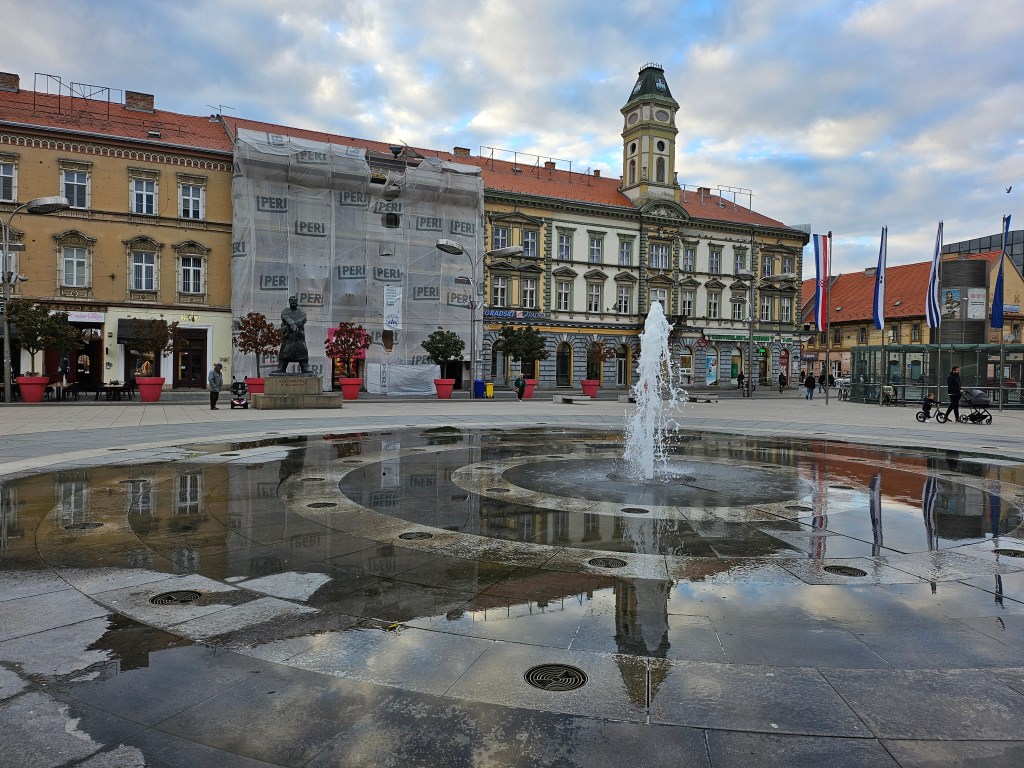
From the centre I walked along the banks of the Drava river, the same river as I had encountered in Maribor two days previously. I went past the pedestrian suspension bridge across the river and all seemed very peaceful. It was hard to imagine that in the early 1990s, during the Croatian War of Independence, Serbian forces held the north bank of the river and subjected the centre of Osijek to shelling for months on end. I walked as far as the outer walls of the Tvrđa, the fortified old town, but as it was starting to get late decided to postpone an exploration of there until the next day.

That evening I found a very good pizza restaurant, where I had an interesting prosciutto, pear, walnut and honey pizza.
Day 7 – Tuesday 14th October 2025 – Osijek to Pécs
Osijek is the fourth largest city in Croatia and the unofficial capital of the region of Slavonia. I left my overnight accommodation to continue my exploration of the city. I walked to the Drava river again to approach the fortified old town (Tvrđa). While the centre of the Tvrđa has been beautifully restored, many of the buildings on the periphery still show damage incurred during the Croatian War of Independence between 1991 and 1995.
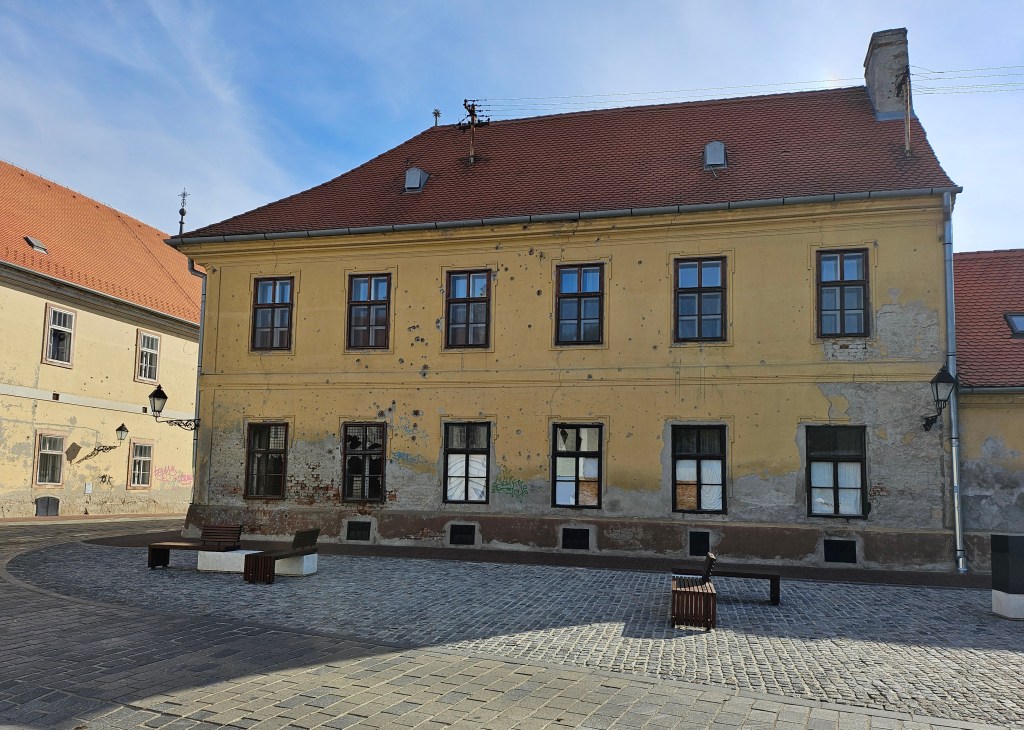
Walking through the Tvrđa past St Michael’s Church, I came to the impressive main square, with the Trinity Column at its heart. The two museums that I wished to visit are located on either side of the square.
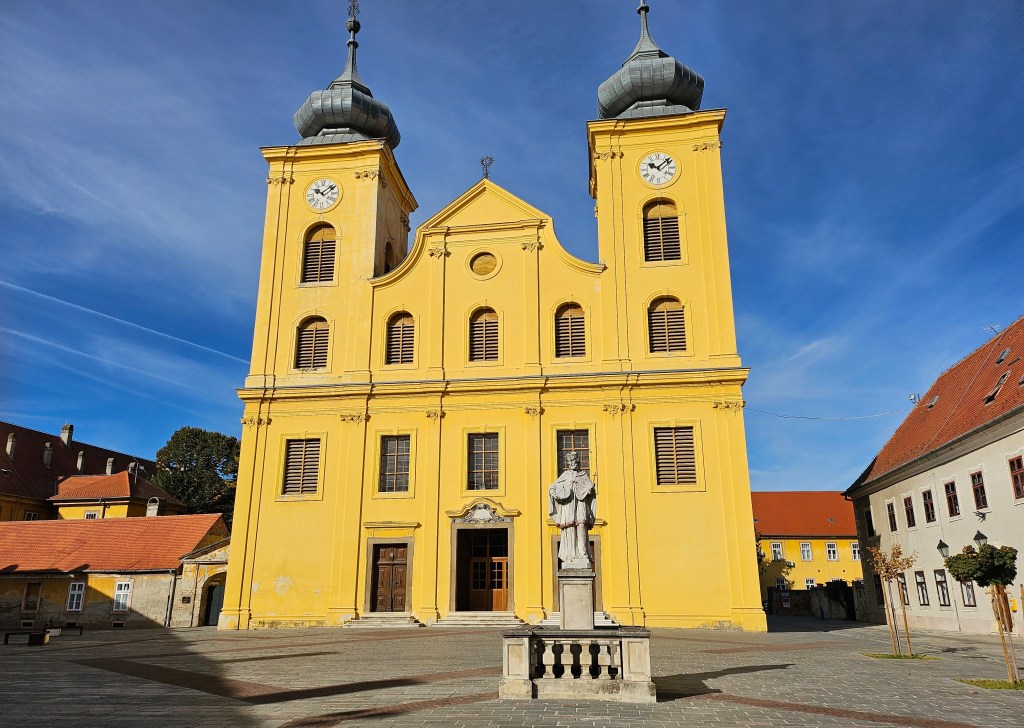
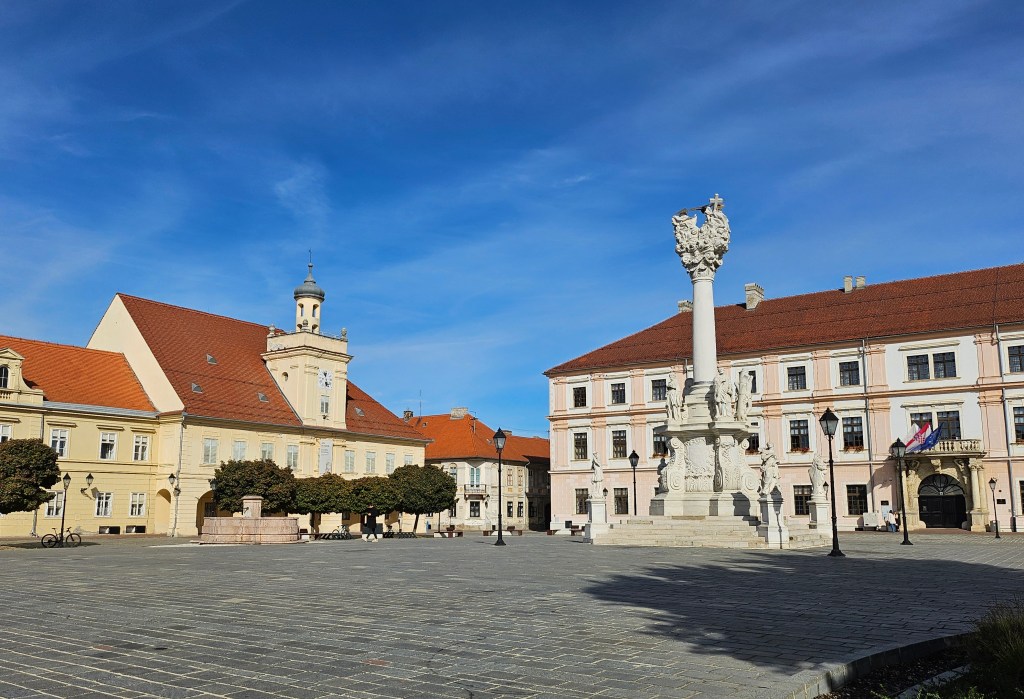

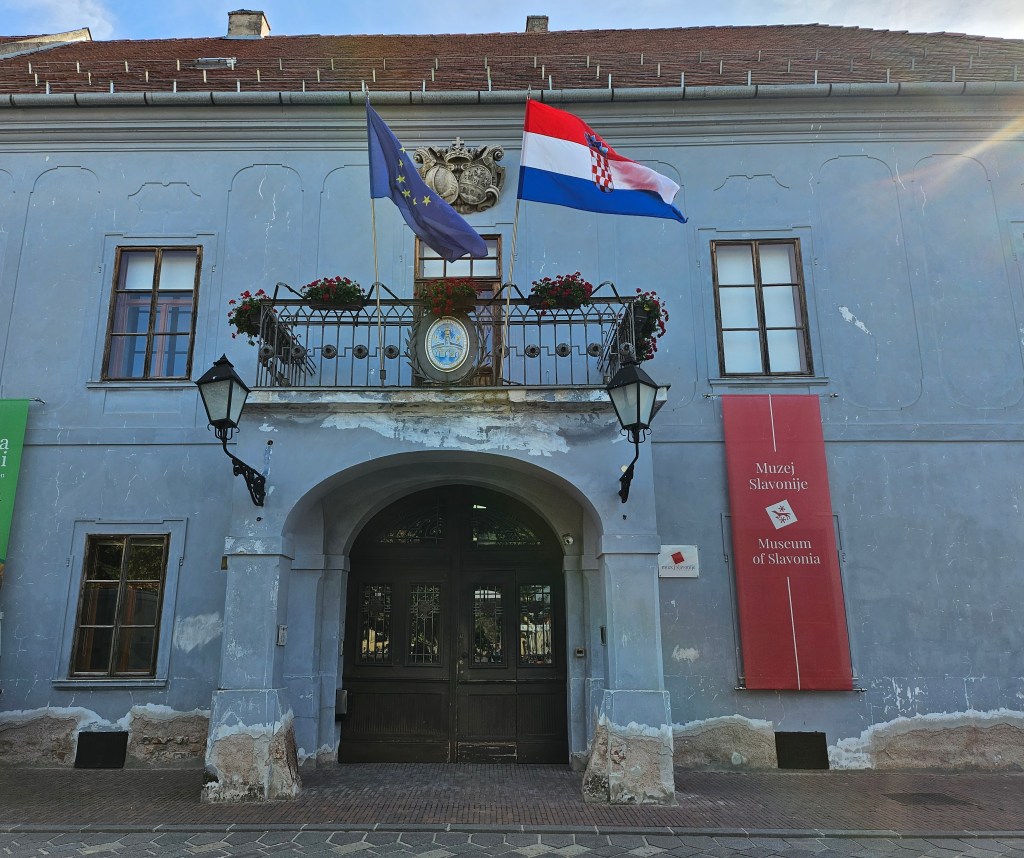
I went first to the Museum of Slavonia. This was a little disappointing. The main collection is of furniture and fashions throughout the ages, but with little more general information about the history of Slavonia. At the time of my visit there were also two special exhibitions. One was on the role of barber surgeons as medical practitioners, at the time when physicians would not sully themselves with operating on patients. The other was about how modern technologies have been developed by mimicking natural phenomena, ranging from cats eyes to Velcro.

I then crossed the square to visit the Museum of Archaeology. This is located in the building that used to house the City Guard for Osijek. Even though the Archaeology Museum had been open for a while that morning, I was clearly the first visitor of the day, as the person manning the ticket desk asked me to look round the collection of monumental stonework in the inner courtyard while he went to turn on the lights and display screens in the rooms upstairs. Although I am less interested in the more ancient history covered by this museum, I thought that it was very good with lots of information to put the objects on display into their historical context.
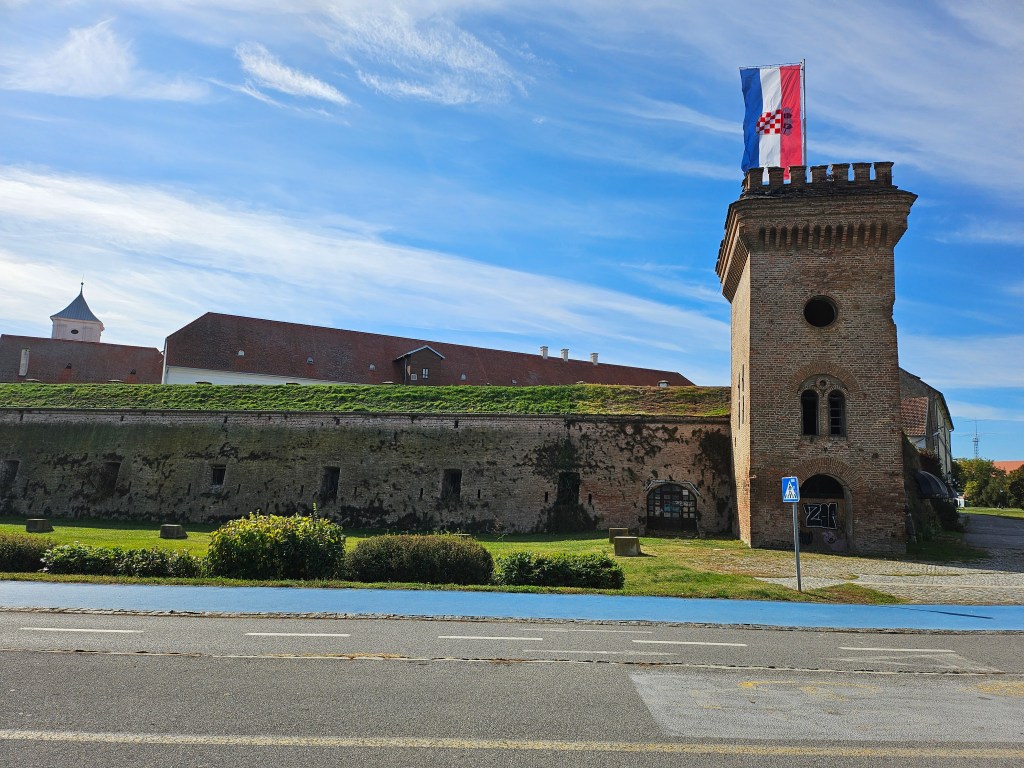
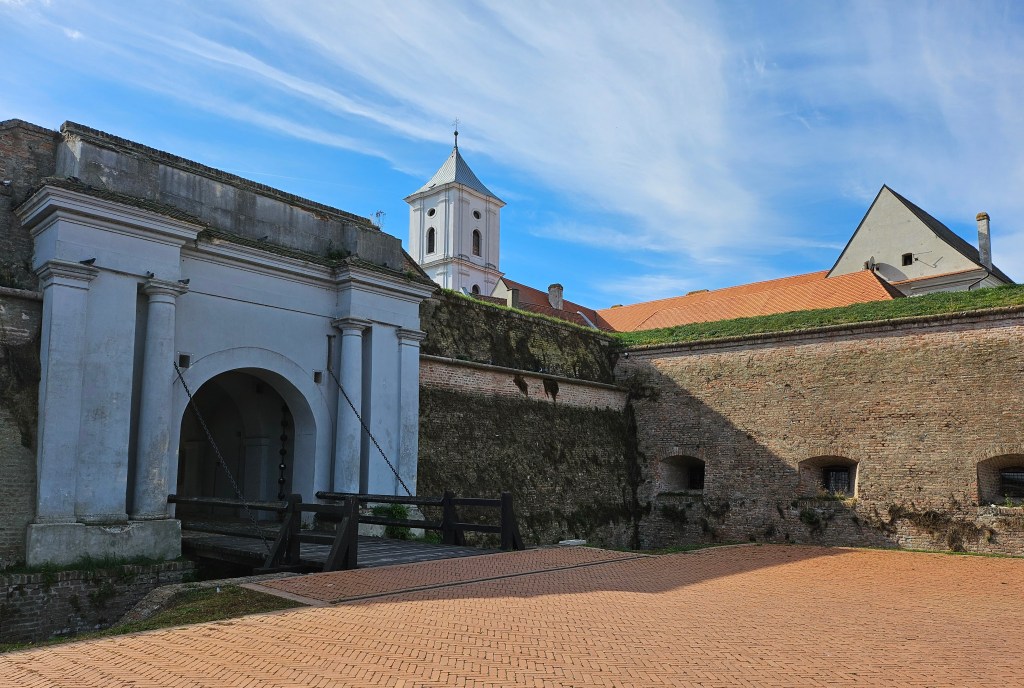
After my time in the two museums, I continued my exploration of the Tvrđa. I walked around the outside to observe the thick bastion walls, but only those on the side of the citadel by the Drava river remain. I came back in through through the water gate, the only survivor of the the four original gates.
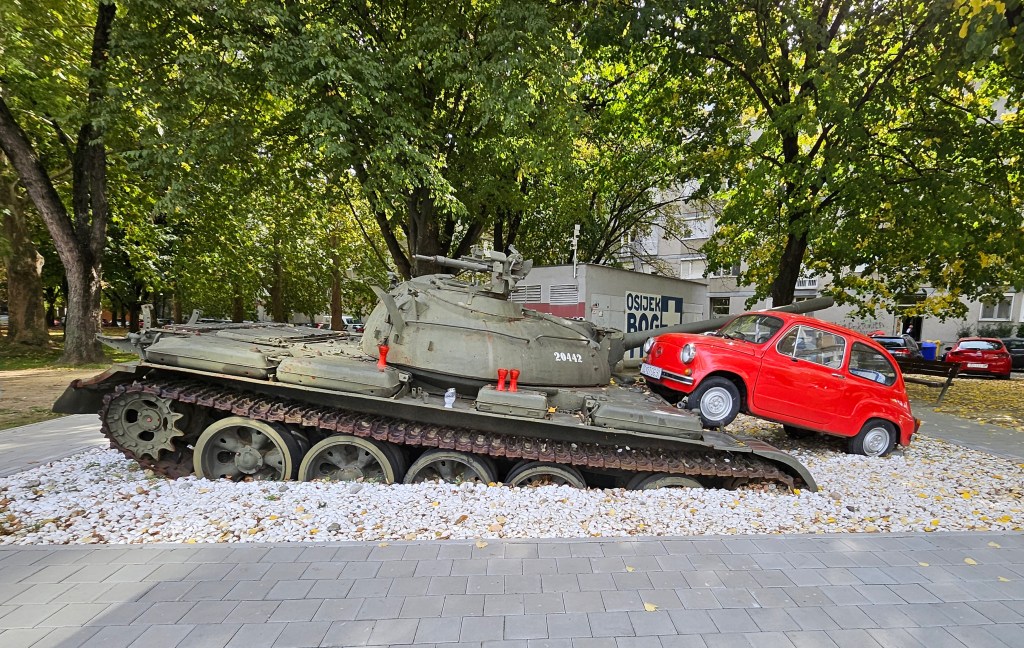
I left the Tvrđa and walked a short distance back towards the modern city to a road junction, where there is the Red Fićo monument. This depicts a small red car crushing into the ground a Yugoslav army T-55 tank. The monument commemorates an incident in June 1991 in the early days of the Croatian War of Independence, when a citizen of Osijek tried to stop a column of tanks entering the city by parking his car across the junction, only for it to be crushed by the lead tank.
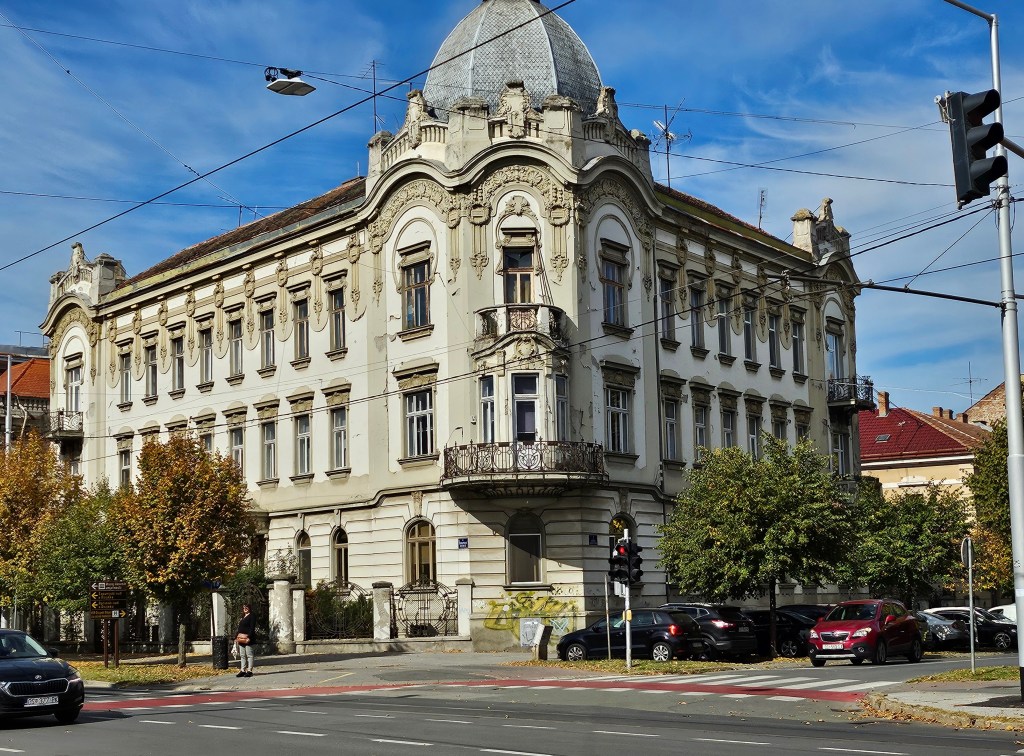
I started to make my way back to Osijek station via an indirect route through a couple of parks and then down Europska Avenue. This street is lined with Art Nouveau buildings from the beginning of the 20th century, which are in varying states of repair.
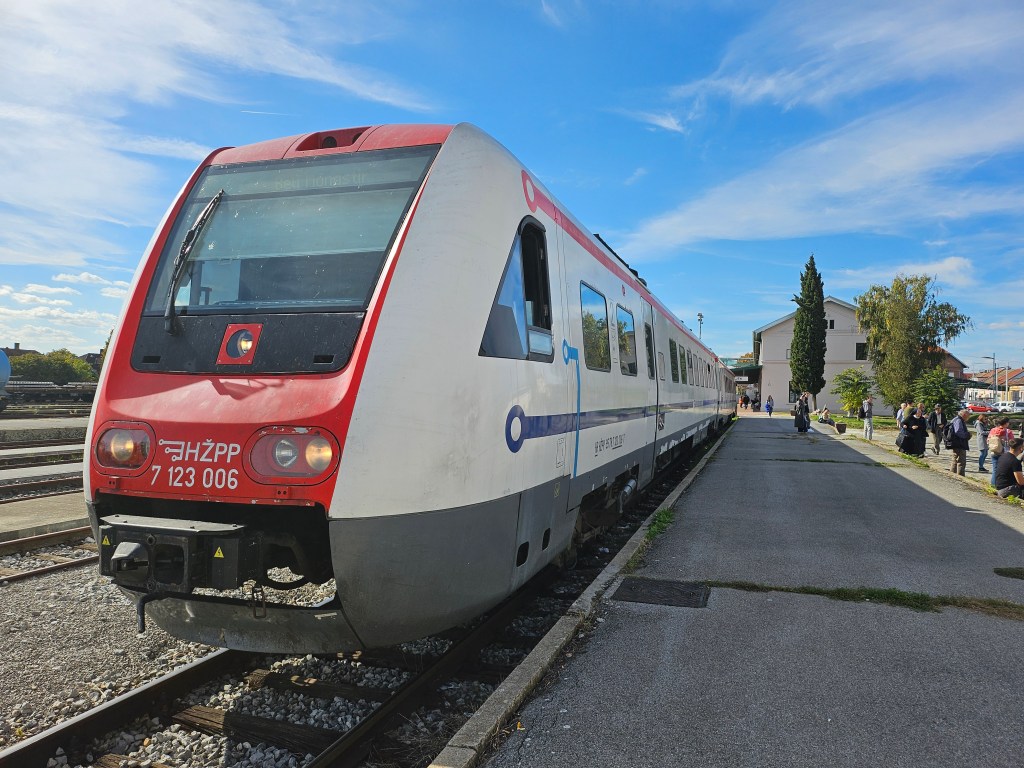
At Osijek station most of the services on the departure board were shown as having rail replacement buses, but fortunately mine was not one of them. The 13:28 train to Beli Manastir was already in the platform, so I went and got on it. I only had three minutes for my connection in Beli Mantasir, so I was not pleased when the train was slightly late in departing. It then proceeded to cross the Drava river and continued north. From the river all the way to Beli Manastir the train was travelling through territory captured by Serbian forces in 1991 following the break-up of Yugoslavia and was part of the self-declared Republic of Serbian Krajina. After this was recaptured by Croatian forces in 1995, it was administered by the United Nations until becoming reintegrated into Croatia in 1998.
I had bought a through ticket for my journey to Pécs on the MAV (Hungarian Railways) website. When the ticket collector came round on my Croatian train he stared long and hard at my ticket, as if he had never before seen one like that, before eventually deciding that he should annotate it with the number of the train on which I was travelling.
Although the Croatian train was a fairly modern diesel unit, it crawled slowly all the way to Beli Manastir, eventually arriving just one minute before my train to Pécs was due to depart. My next train was waiting on the opposite platform just a bit further down. It was an ancient single carriage diesel unit which would not have looked out of place in a railway museum. I was the only passenger to make the transfer from the Croatian train to the Hungarian one. Apart from the driver and the guard, there was only one other person on the train when it left Beli Manastir and I am not sure if she was just an ordinary passenger, as she seemed to know both the driver and the guard. Despite the short connection time, we left on time almost as soon as I had got on.
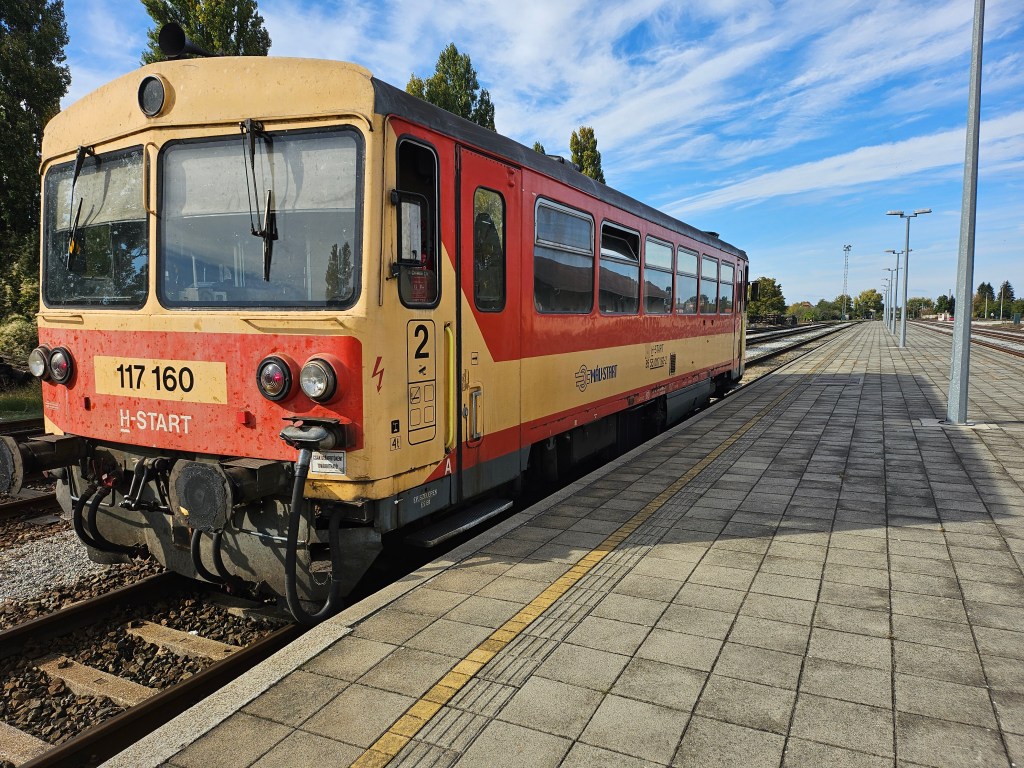
Although this was a far older train, it immediately picked up speed and sped along at about three times the speed of the Croatian train, causing it to bounce around and rattle alarmingly. We soon crossed the barely noticeable border into Hungary and much to my surprise sped through the first station at which we were due to stop, Magyarbóly, despite there being people waiting on the platform. A short while later we stopped outside a building, where a man came out and waved at the driver, whereupon we reversed the way we came and pulled into the station at Magyarbóly. The people who had been waiting on the platform got on and our unit was attached to another. These manoeuvres were clearly not built into the timetable, as we were late when we finally departed from Magyarbóly. I am not quite sure why this convoluted reversing took place, but I have two possible theories. Maybe, despite Croatia having been in Schengen since 2023, the Hungarians do occasional border checks and the stop beyond Magyarbóly is required to do these before intra-Hungary passengers get on. Alternatively, maybe it is because they want to run a two-car unit on this route, but the the tracks at Beli Manastir are not arranged to enable the driving unit to swap ends there.
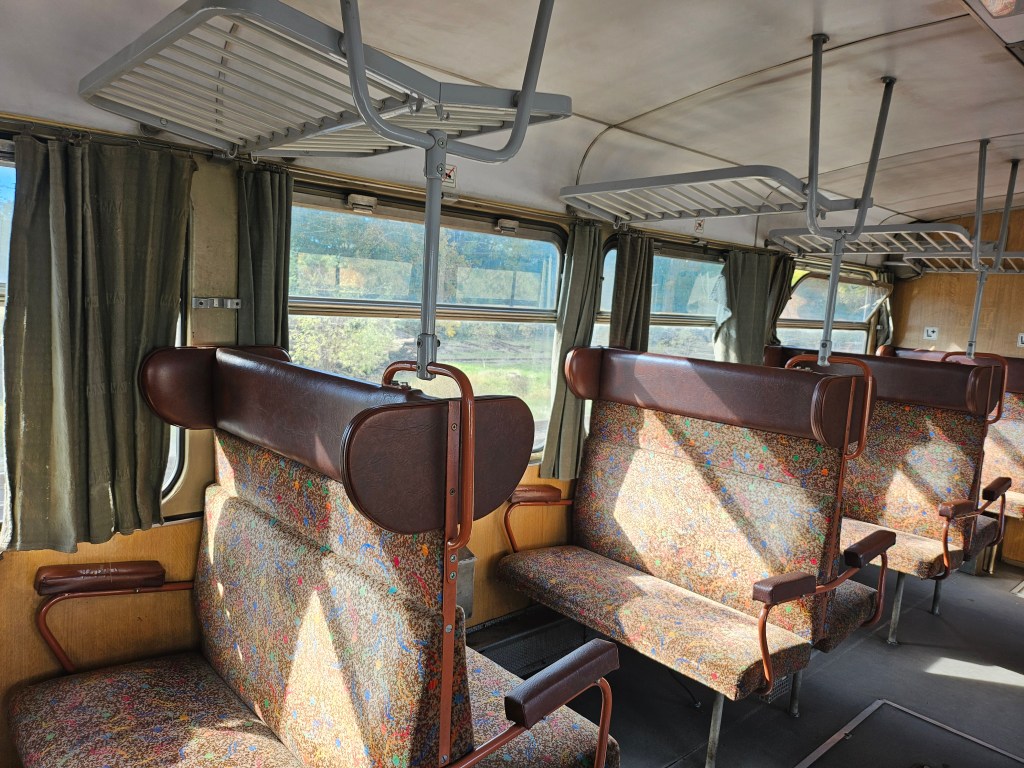
A pleasant ride of about an hour through the southern Hungarian landscape, stopping at the occasional village, brought me to Pécs. Pécs is the fifth largest city in Hungary and has a rich cultural heritage dating back to pre-Roman times. Pécs University is the oldest in Hungary, being founded in 1367. Following the Battle of Mohács in 1526, the Ottomans conquered Pécs and ruled the city for 150 years, and it now contains the largest number of Turkish Ottoman buildings of any central European city. As it was now late afternoon, I decided to go for a walk round Pécs and leave visiting any of the places on my route until the following day.
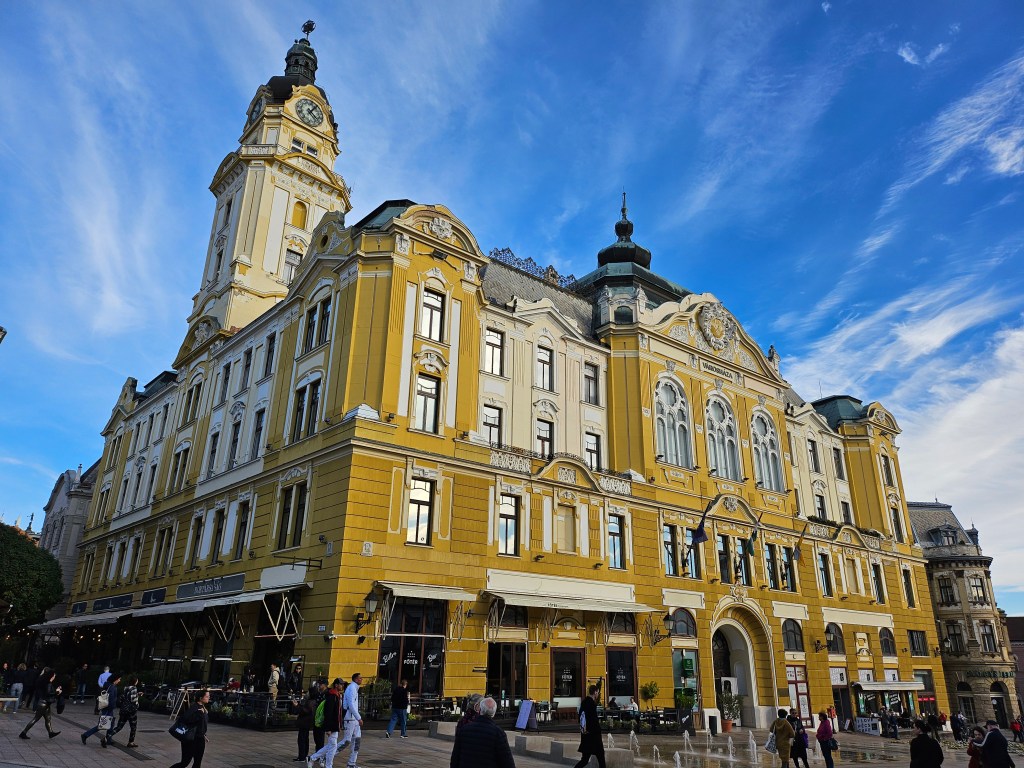
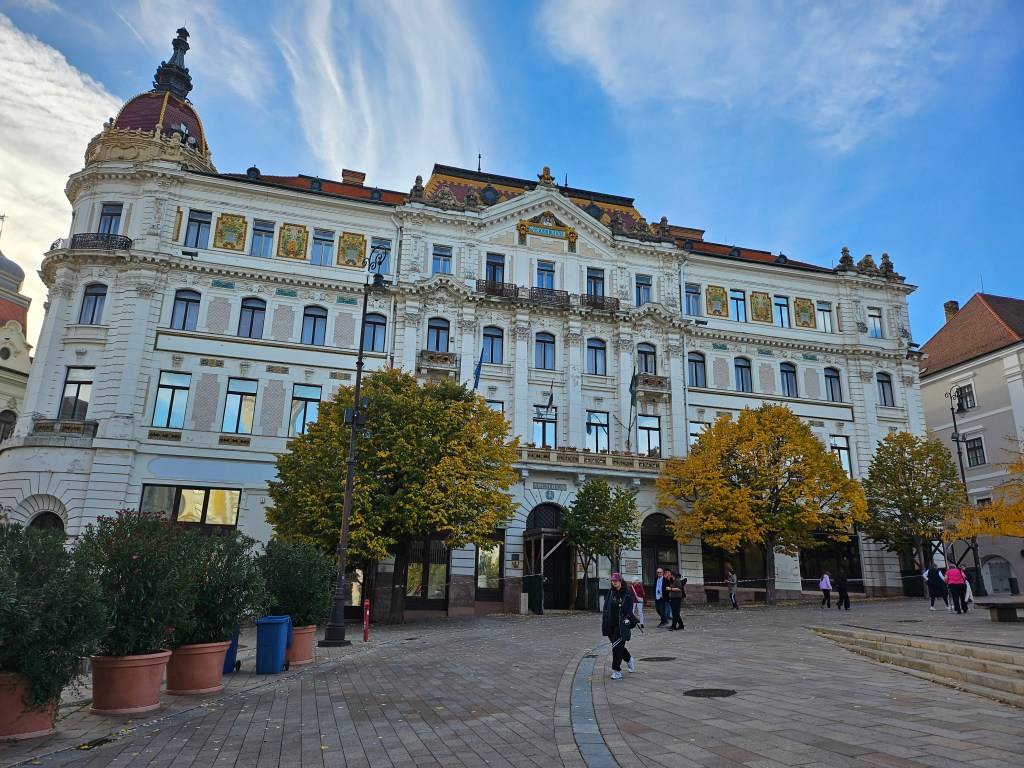
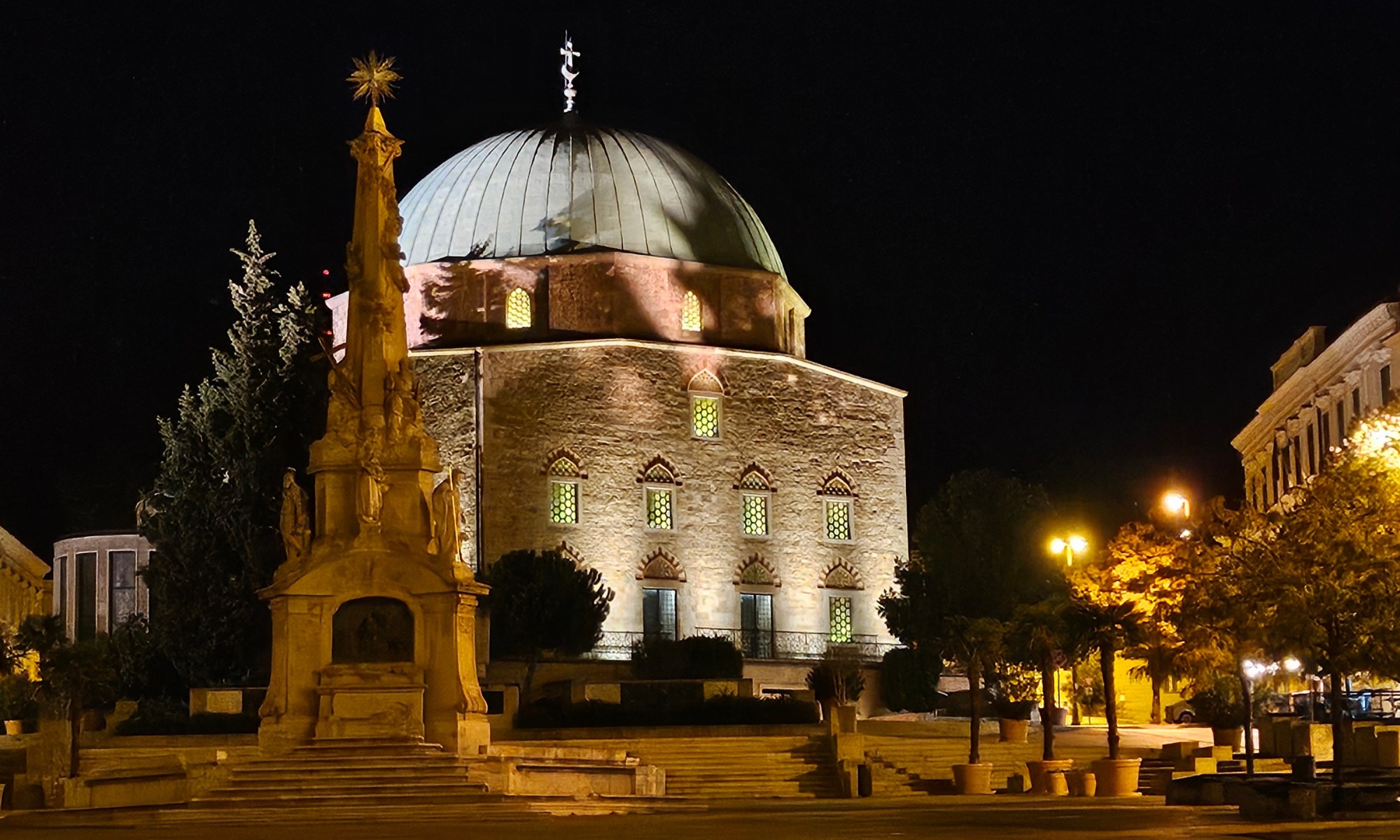
I started my walk in the main square, Széchenyi Square. Here are both the City and County Halls, whose current buildings were constructed in the 19th century. The top of Széchenyi Square is dominated by the Candlemas Church of the Blessed Virgin Mary, which had originally been built by the Ottomans as the Mosque of Pasha Qasim. I then went via the National Theatre to Pécs Synagogue, which was closed to visitors during my time in the city because of Jewish religious holidays. I continued by the ruins of the Baths of Pasha Memi to the current mosque, the Mosque of Jakovali Hassan Pasha. I concluded my walk in the area of the Archbishop’s Palace and Pécs Cathedral.


That evening I dined in an Indian restaurant, where I had lentil soup, followed by chicken dopiaza with rice.
Day 8 – Wednesday 15th October 2025 – Pécs to Budapest
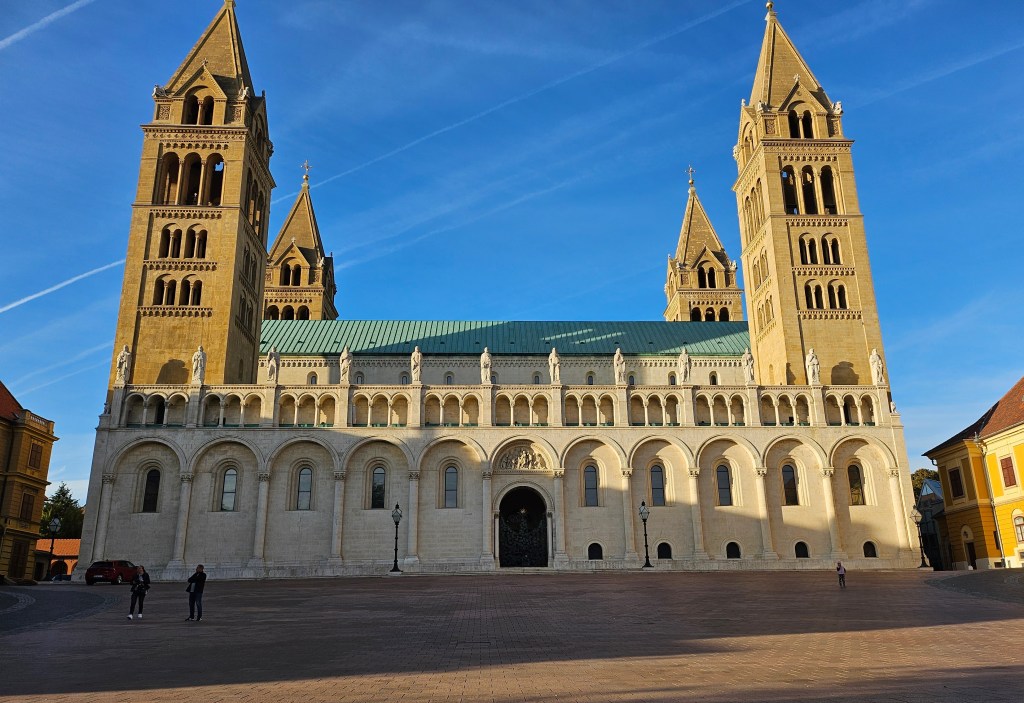
I knew that I would not have enough time to see everything that Pécs has to offer, so I wished to maximise the time that I did have. I initially went to the Jakovali Hassan Pasha Mosque, but the on-line information that it opened at 9am was incorrect, so instead I went on to Pécs cathedral, dedicated to Saints Peter and Paul, which did open at 9am. This large church was extensively reconstructed in the 19th century. The interior walls and ceiling are richly decorated. Although I appeared to be the sole visitor for most of my time in the cathedral, an organist was playing the organ at full volume, presumably getting in some early morning practice. As well as going into the main body of the cathedral and its side chapels, one could also descend into the crypt and climb to the top of one of the cathedral’s four towers with good view over the city below.
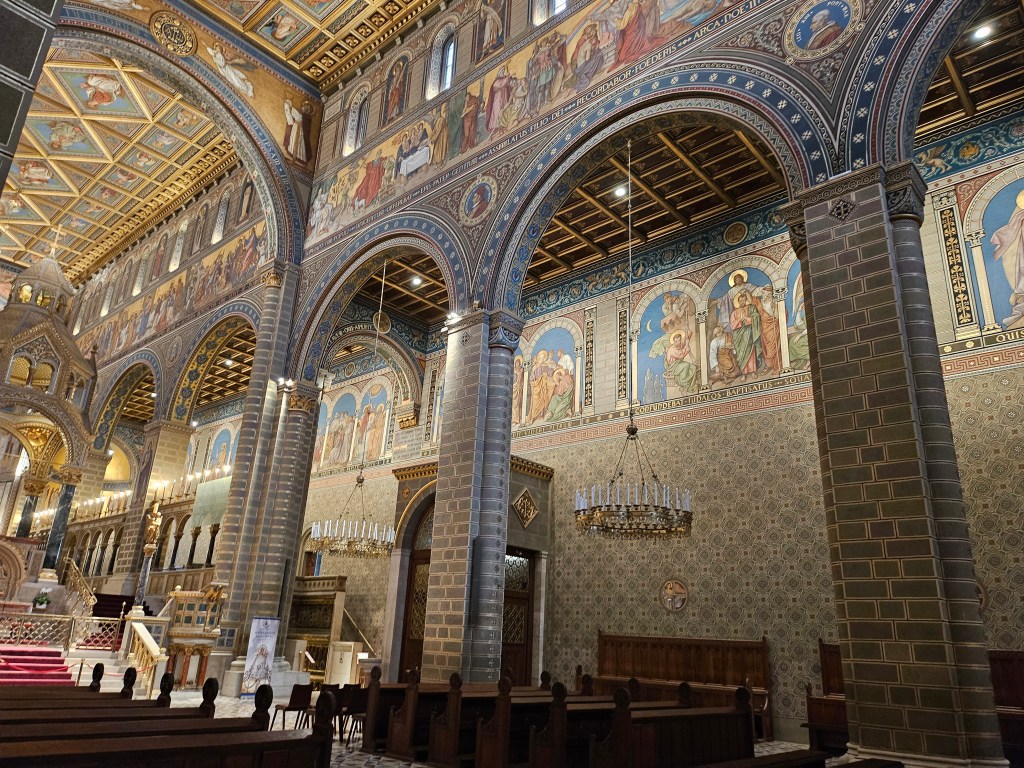
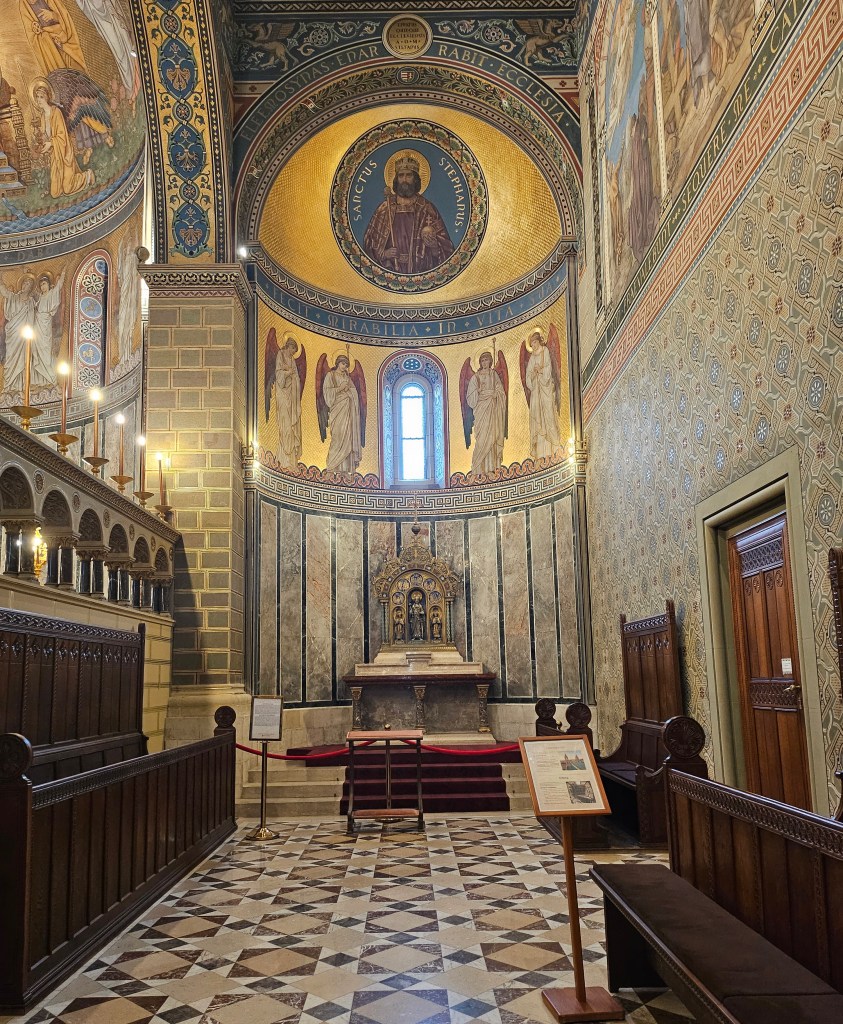
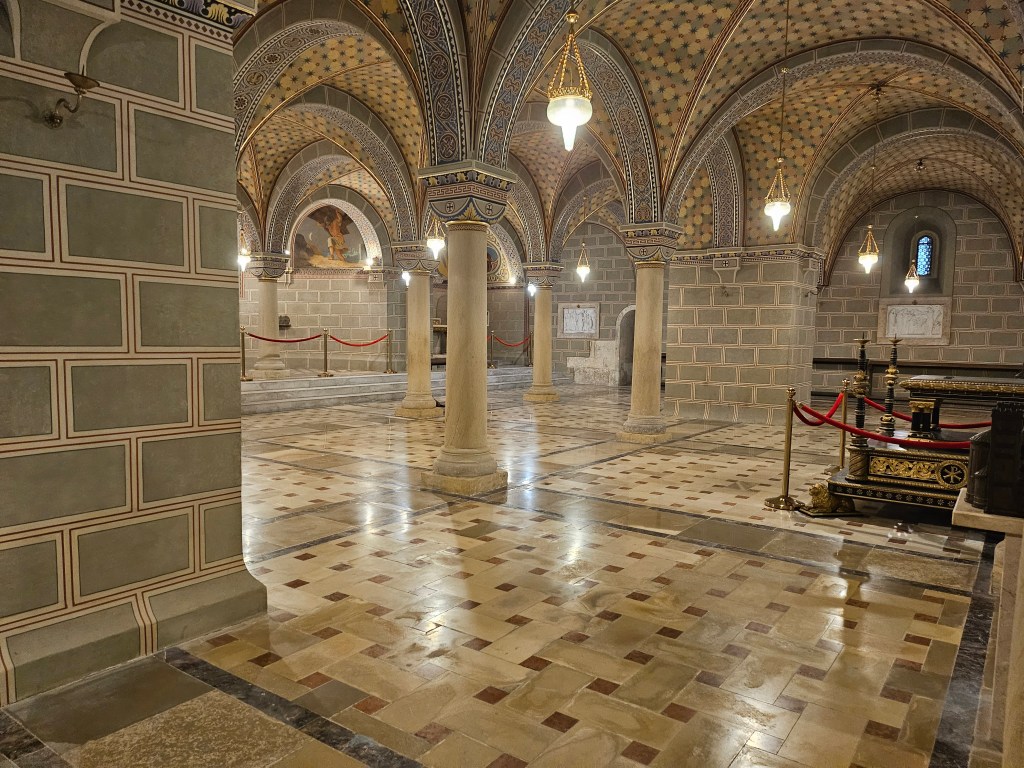
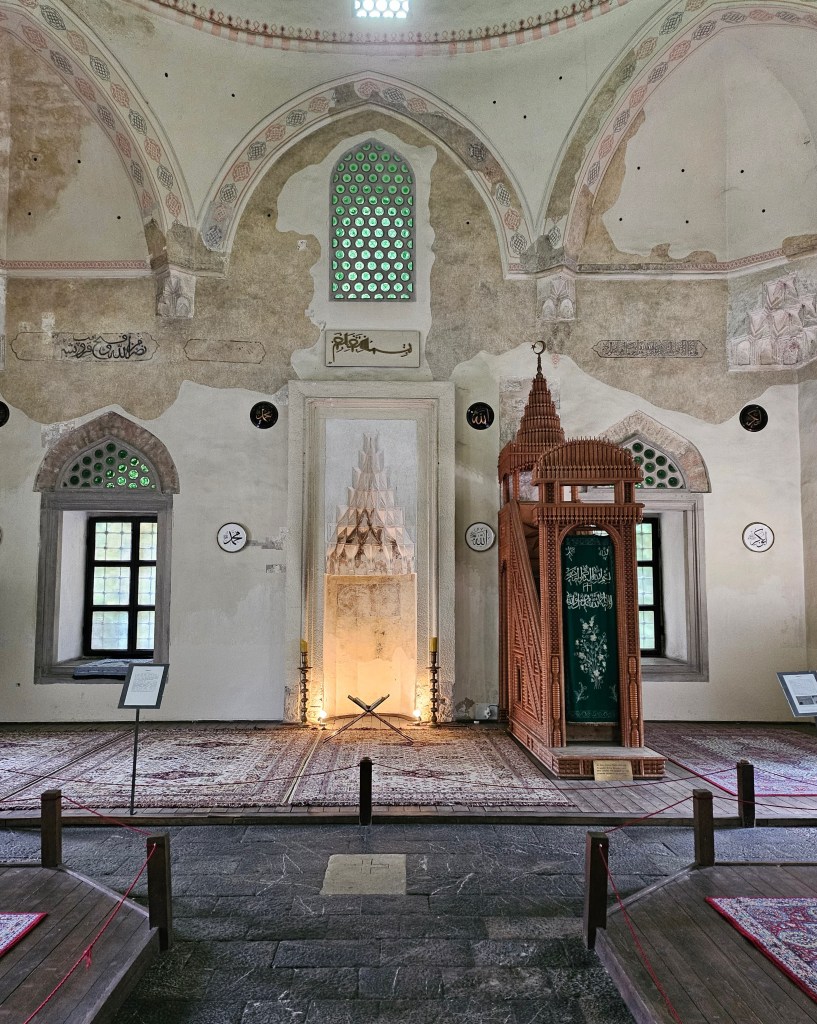
By the time that I had finished in the cathedral, the Jakovali Hassan Pasha Mosque had opened. This is both a working mosque and a museum. It was built in the early 17th century, but after the Austrians recaptured Pécs from the Ottomans in 1686, it became a hospital and later a Catholic chapel. In the 1960s it reverted to being used again as a mosque. I visited the small museum and then went into the main prayer hall.

The Early Christian Necropolis of Pécs is a UNESCO World Heritage Site and one of the largest Roman burial sites outside Italy. About 20 decorated tombs have been found, as well as more than 500 other graves. I explored the uncovered tombs by following a series of subterranean passages taking me to different levels. One particularly large mausoleum is accessed via a different entrance across the road from the site of the main necropolis.

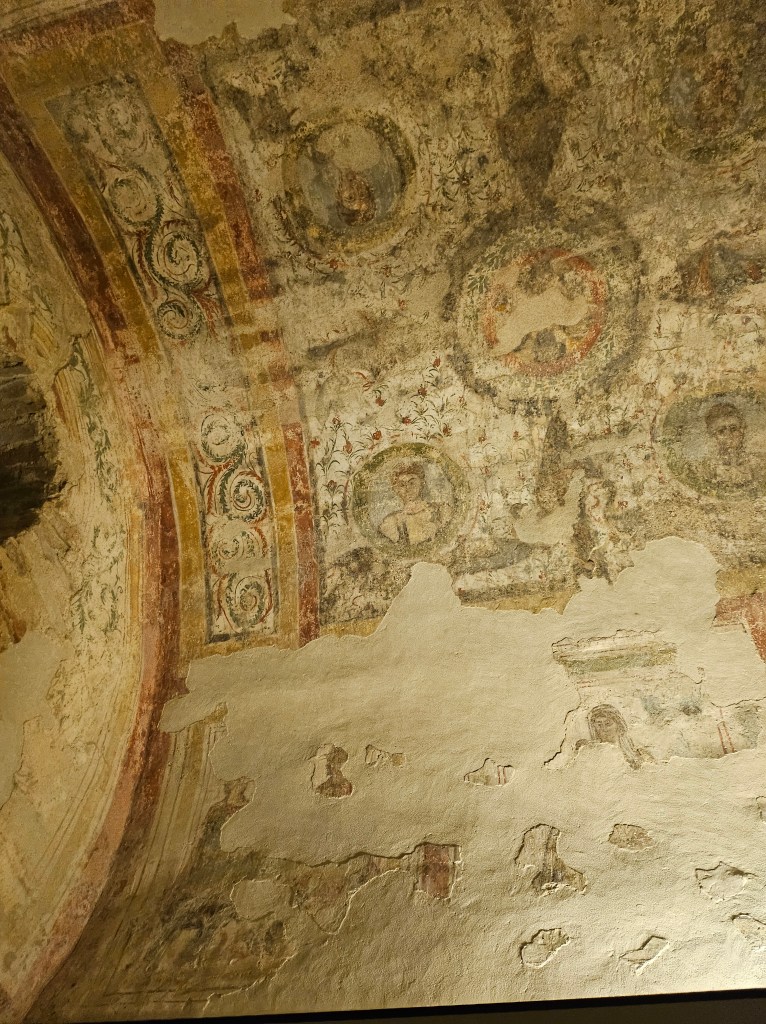
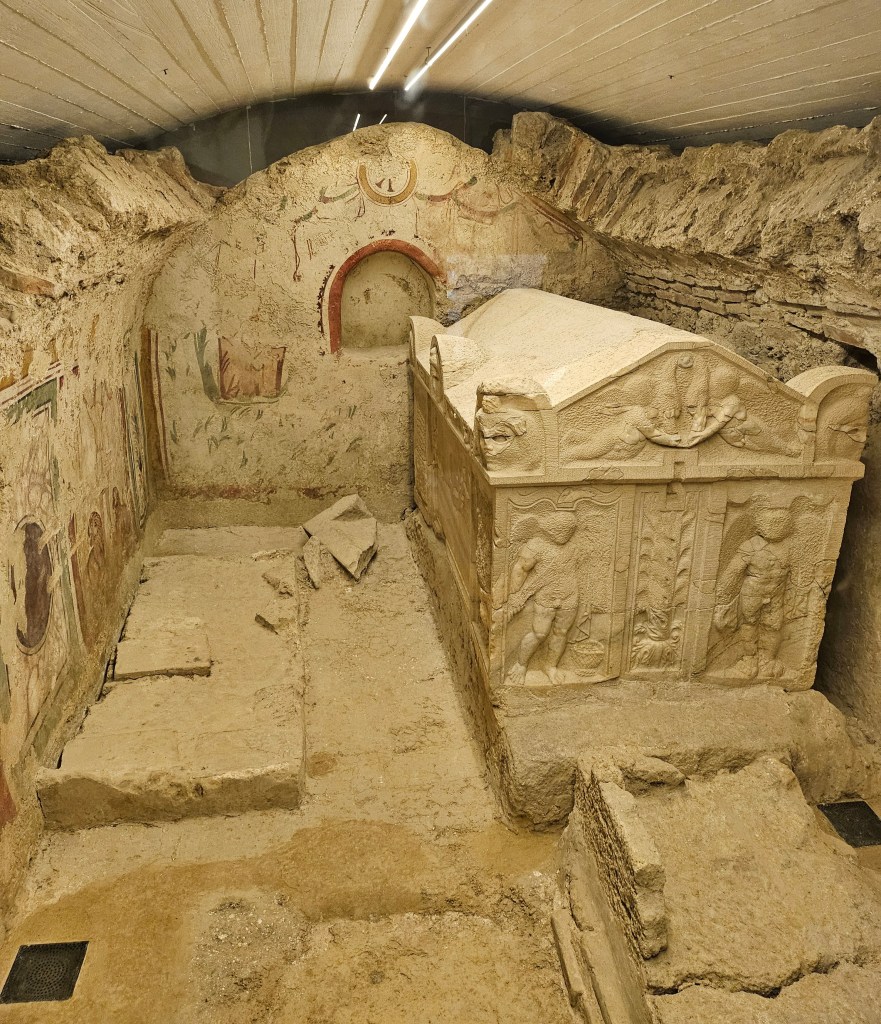
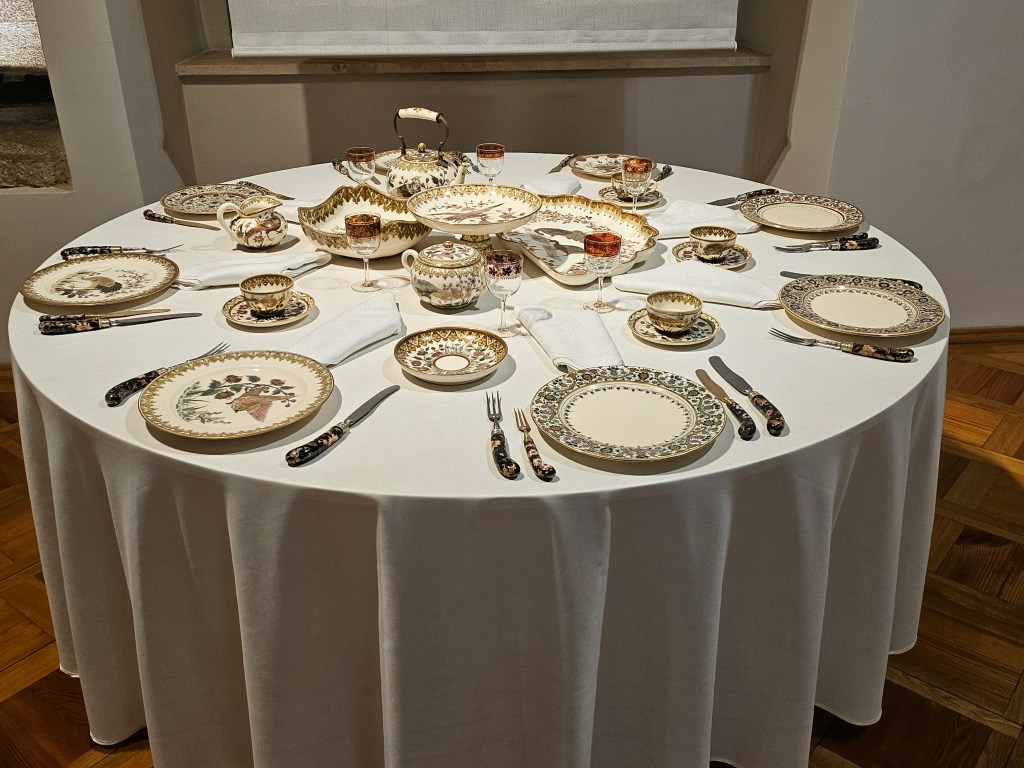
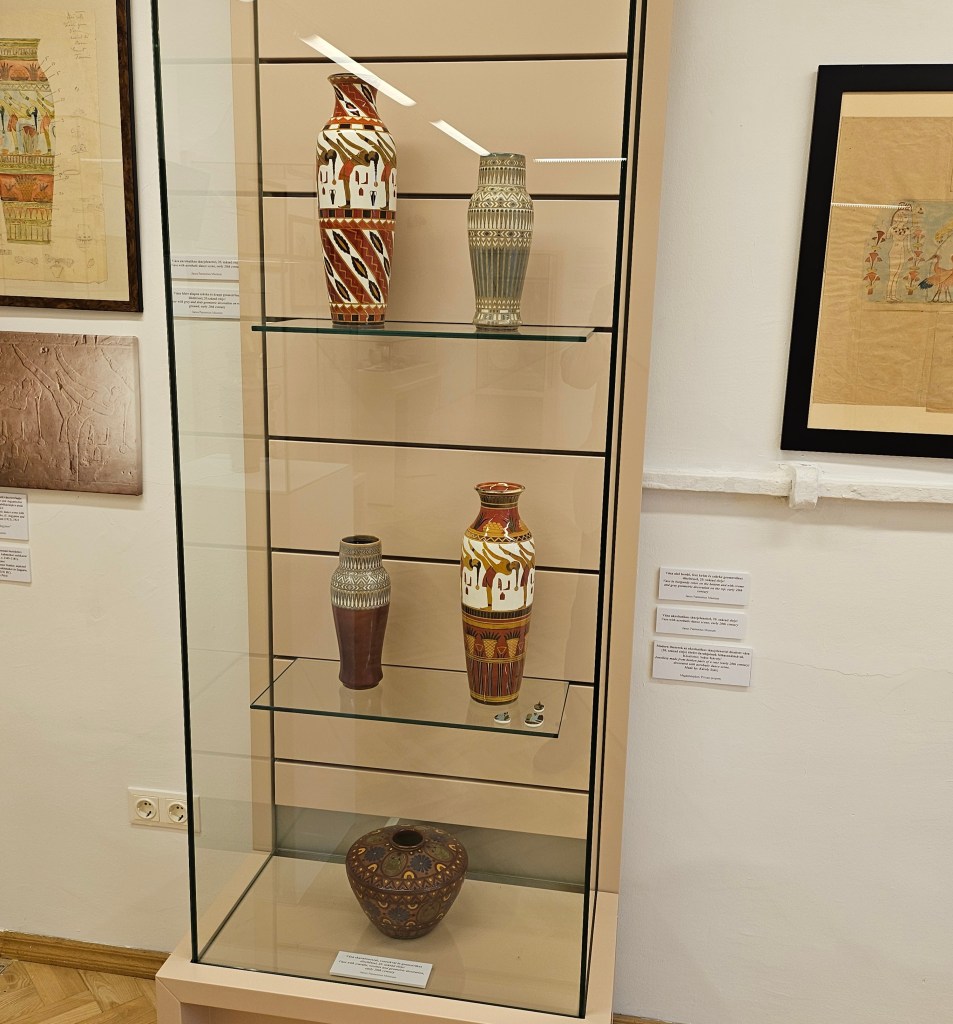
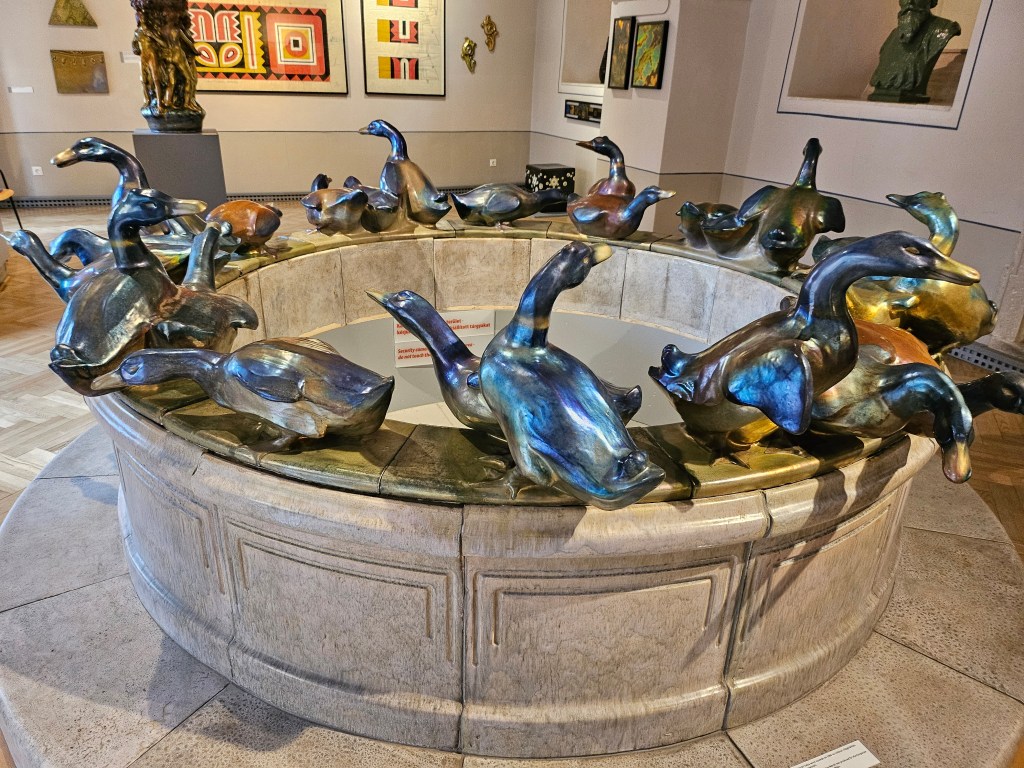
There are a lot of museums and galleries in Pécs that I could have gone to, but sadly the time constraints of this trip meant that I could not fit them all in. For my final visit in Pécs I decided to go to the Zsolnay Museum. Miklós Zsolnay founded a porcelain factory in Pécs in the 19th century, which is still in production today. In the the vicinity of the factory the whole district is known as Zsolnay, but the Zsolnay Museum is in the centre of the city. The museum contains examples of Zsolnay handicraft from different periods ranging from tableware to roof tiles. Egyptian motifs seem to be a recurring favourite.
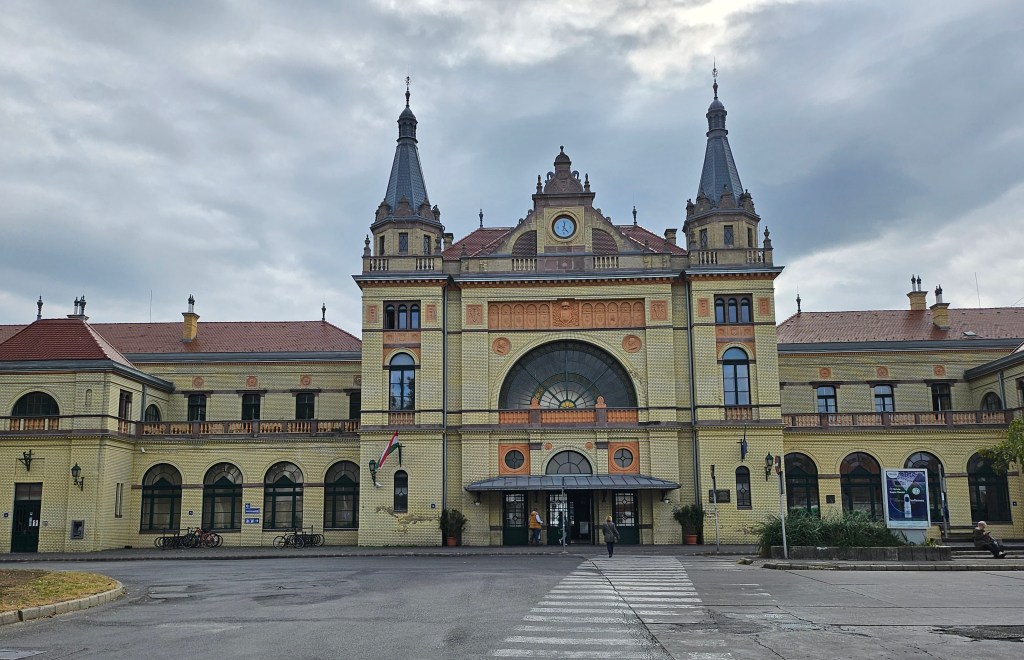
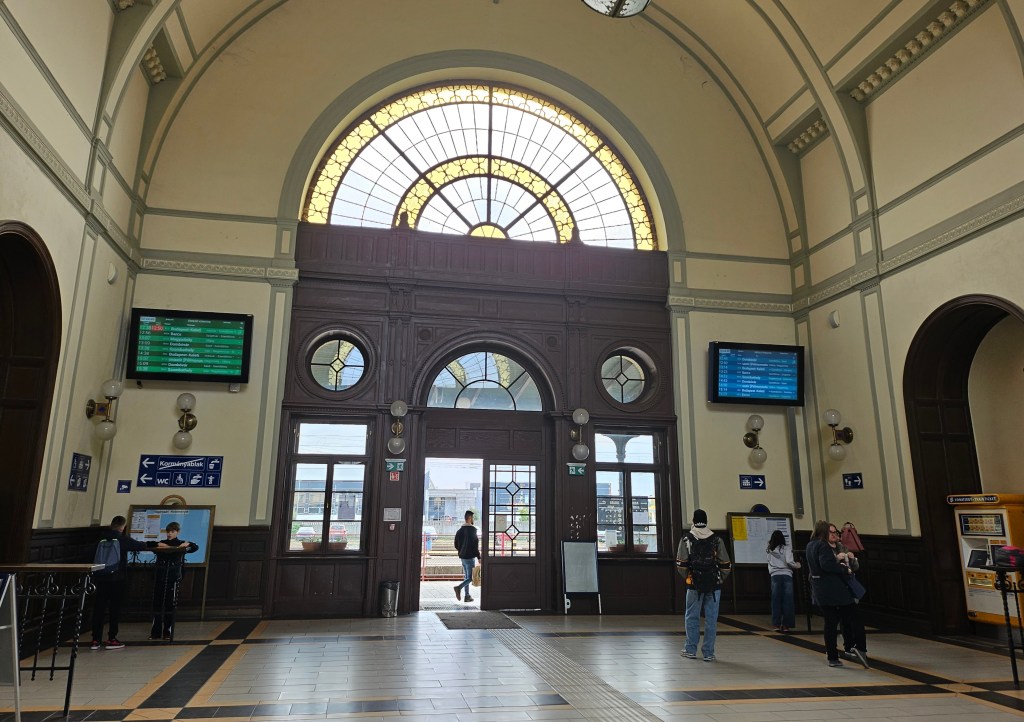
Feeling slightly disappointed that I didn’t have time to go anywhere else in Pécs, I made my way to the station to catch the 13:14 departure to Budapest. While waiting for the late incoming train to arrive I had time to explore the rather grand station building. In the main waiting room there was a book exchange where you could take a book to read on your journey, with a promise to return it or replace it with a different one. All the available books were in Hungarian, although I was rather taken with a number of guidebooks to various European countries dating from the 1960s. I suspect that very few Hungarians from that period would have been able to use the guides to the western European countries.

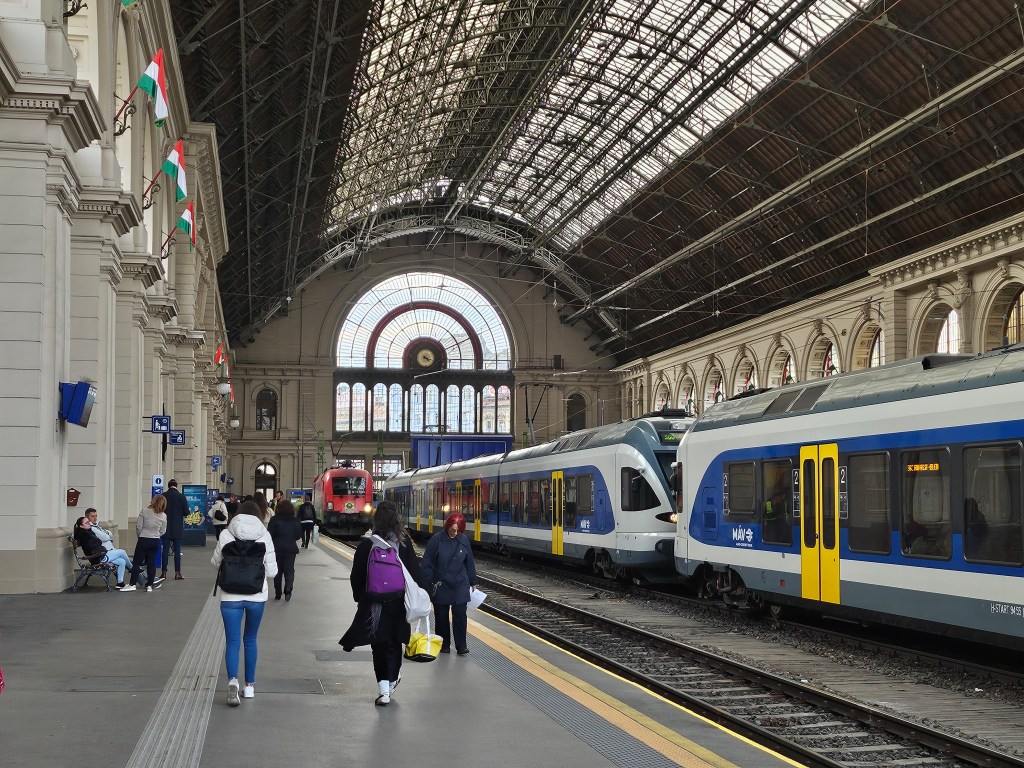
As all public transport in Hungary is free for the over 65s, the cost of my three hour journey to Budapest was just that of the required seat reservation, equivalent to about £1.40. Due to the late arrival of the incoming train and the need to take its locomotive to the other end, it departed from Pécs seven minutes late. Congestion on the approach to Budapest meant that a little more time was lost and the train arrived at the monumental Budapest Keleti station at 16:15.
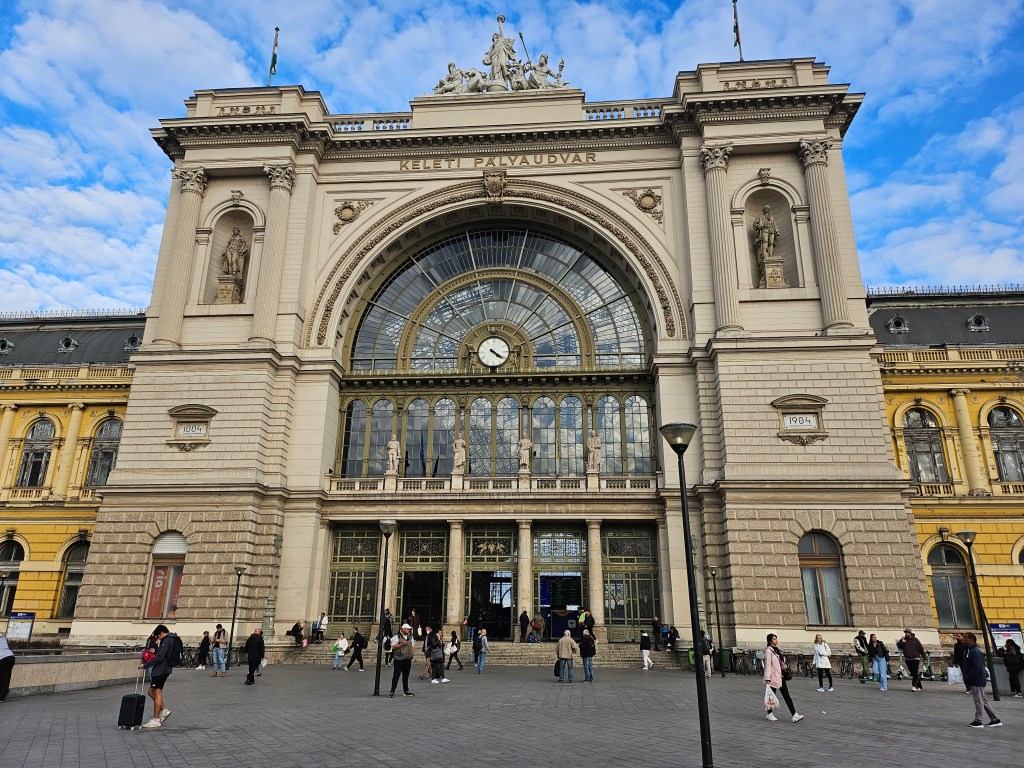
From Keleti I caught the Metro to my hotel, but being over 65 meant I did not need to buy a ticket. When I got off the train at my stop there was an announcement that revenue checks were taking place at the station and all tickets must be shown at the exit. Once I had ascended to the surface level, I was greeted by a large squad of ticket inspectors. I just showed the one who stopped me my ID card, which he carefully looked at to check my date of birth, before thanking me and sending me on my way.
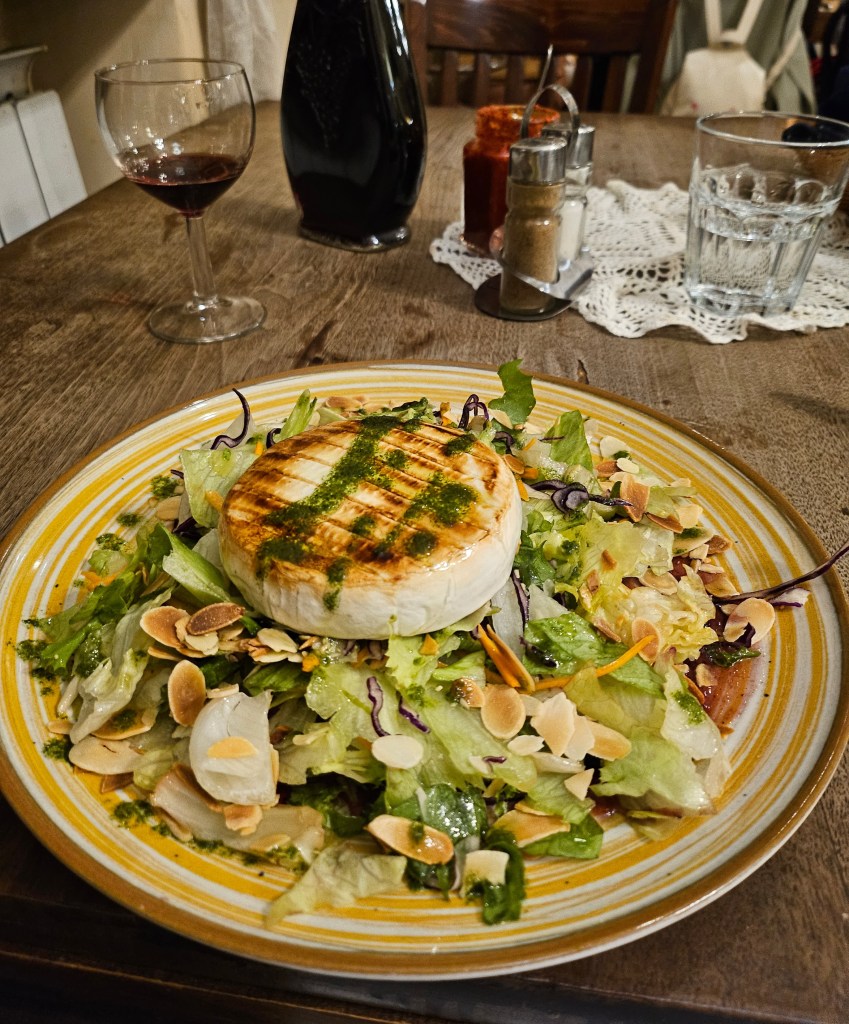
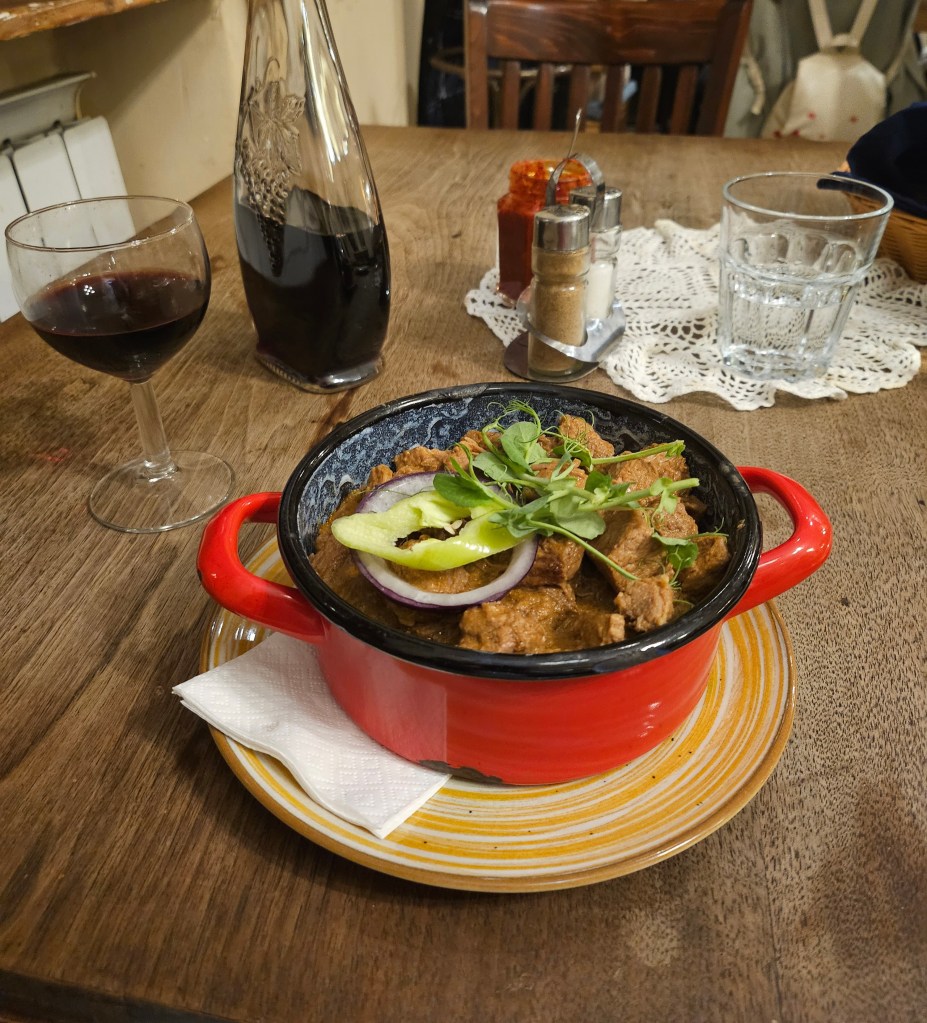
That evening, by the time I had checked into my hotel and had the welcome drink that they gave me, it was time to go to the restaurant where I had booked a table for a final night’s dinner. This was just a short walk from my hotel. I had baked cheese salad to start with, followed by beef goulash and a carafe of Hungarian red wine.
Day 9 – Thursday 16th October 2025 –Budapest to London
I had visited Budapest for a second time (after a forty year gap) two years earlier in 2023. So I had seen many of the places that I wanted to on that occasion, and my visit this time was primarily to enable me to catch a flight home. Nonetheless, I still had a morning to see some new things.

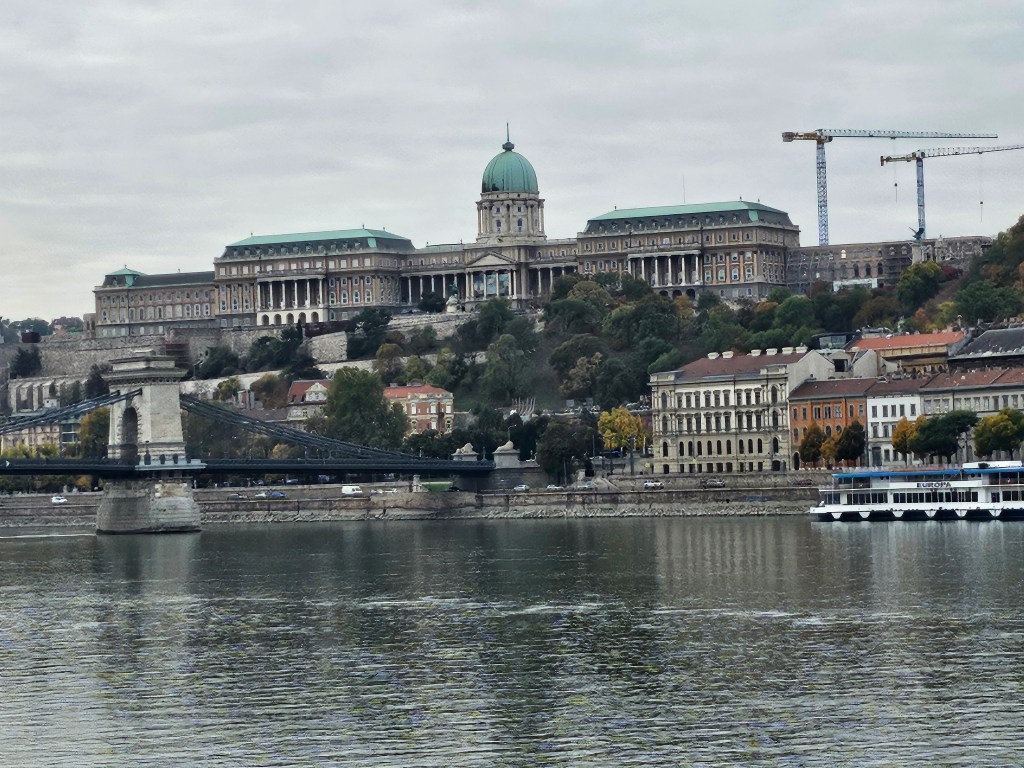
I got up fairly early and caught the Metro into the city centre, emerging at the station next to the Hungarian Parliament building. From there I walked along the east bank of the Danube, before crossing the river on the Szechenyi bridge. This famous chain bridge was designed by an Englishman, William Tierney Clark, and is similar in design to his bridge across the Thames at Marlow, When I was last in Budapest the Szechenyi bridge was closed to pedestrians while it was under repair.
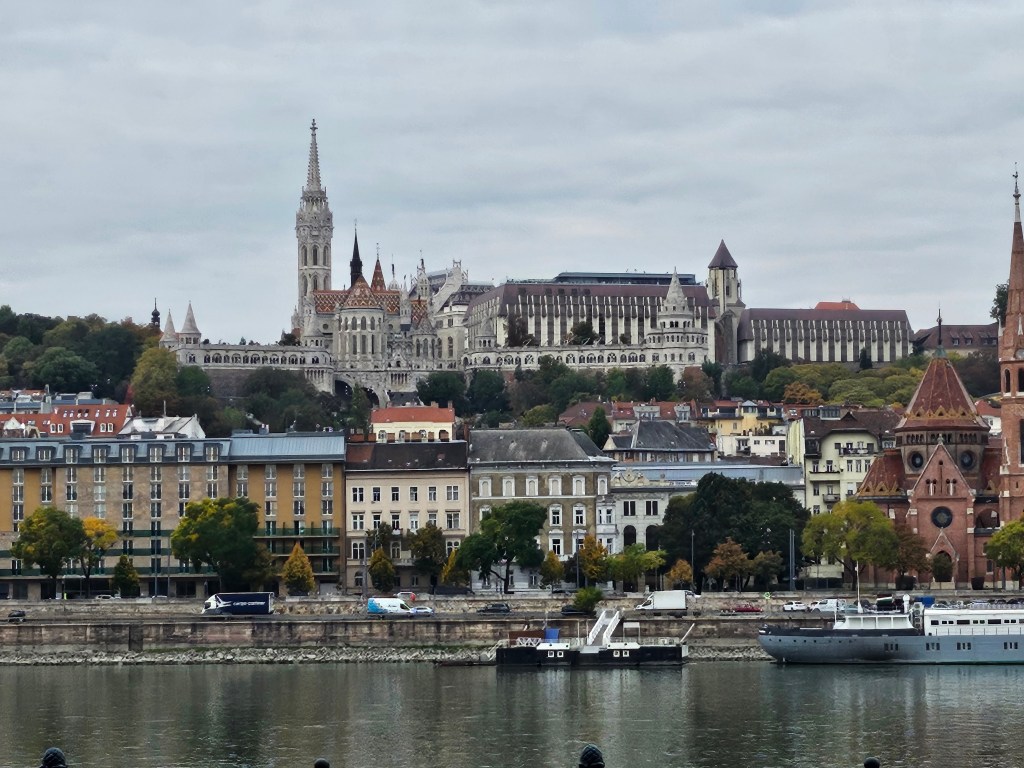
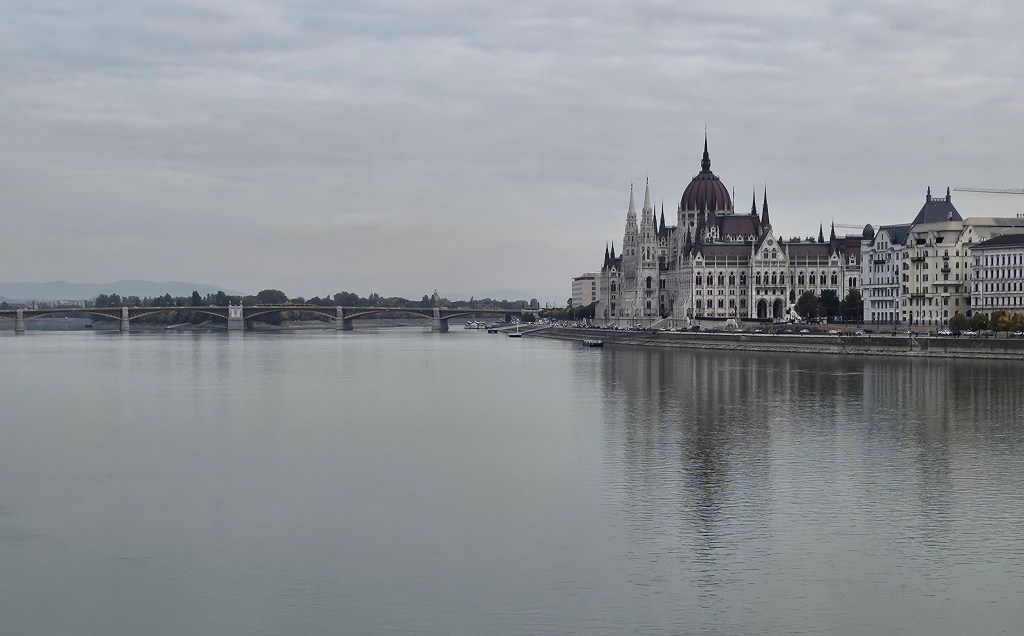
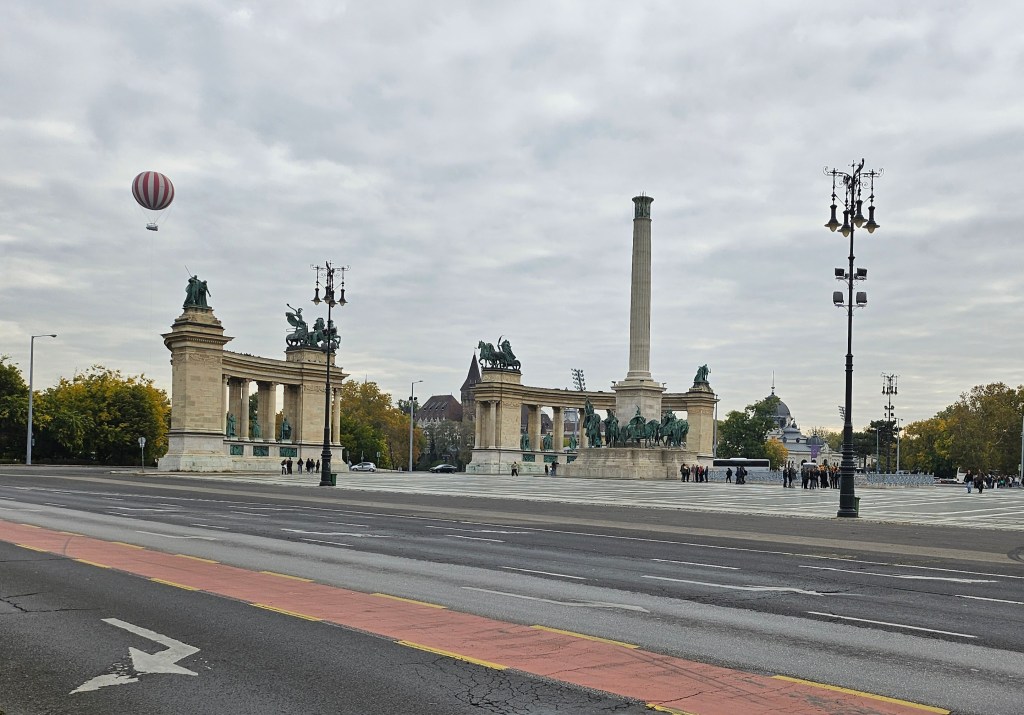
From the west bank of the Danube, I caught a bus to the north east of the city centre and got off at Heroes Square (Hősök tere) with a tall monumental column in its centre. My purpose in going there was to visit the Museum of Fine Arts, but since I arrived before its 10am opening time, I went for a short walk in the nearby City Park (Városliget).
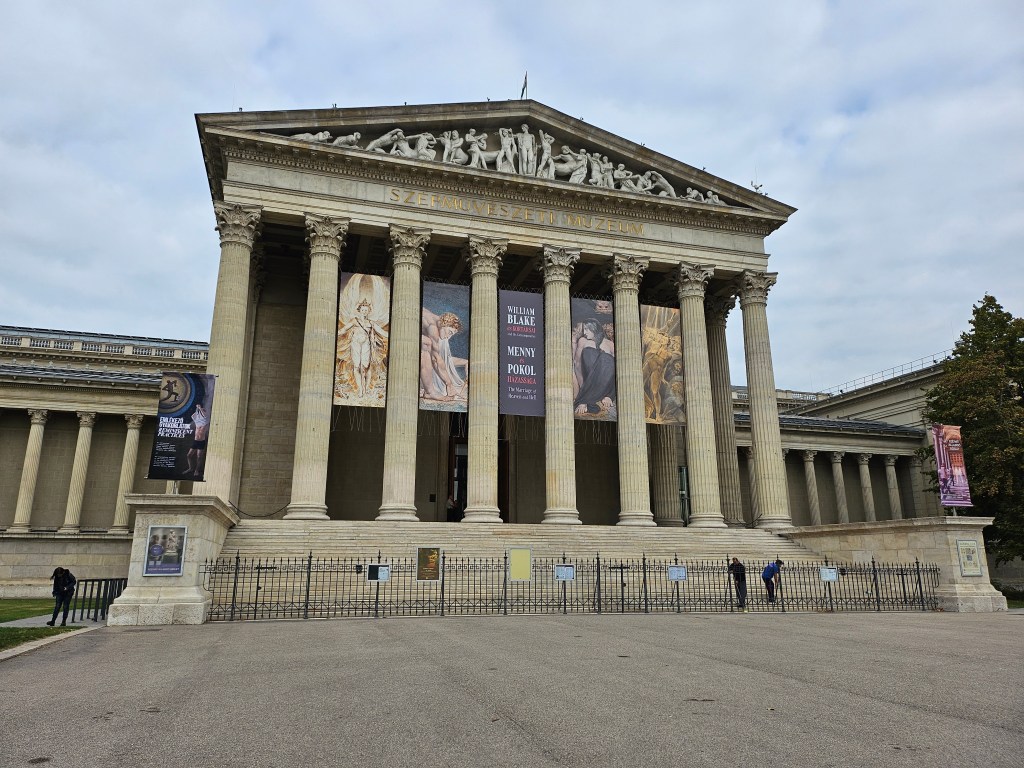
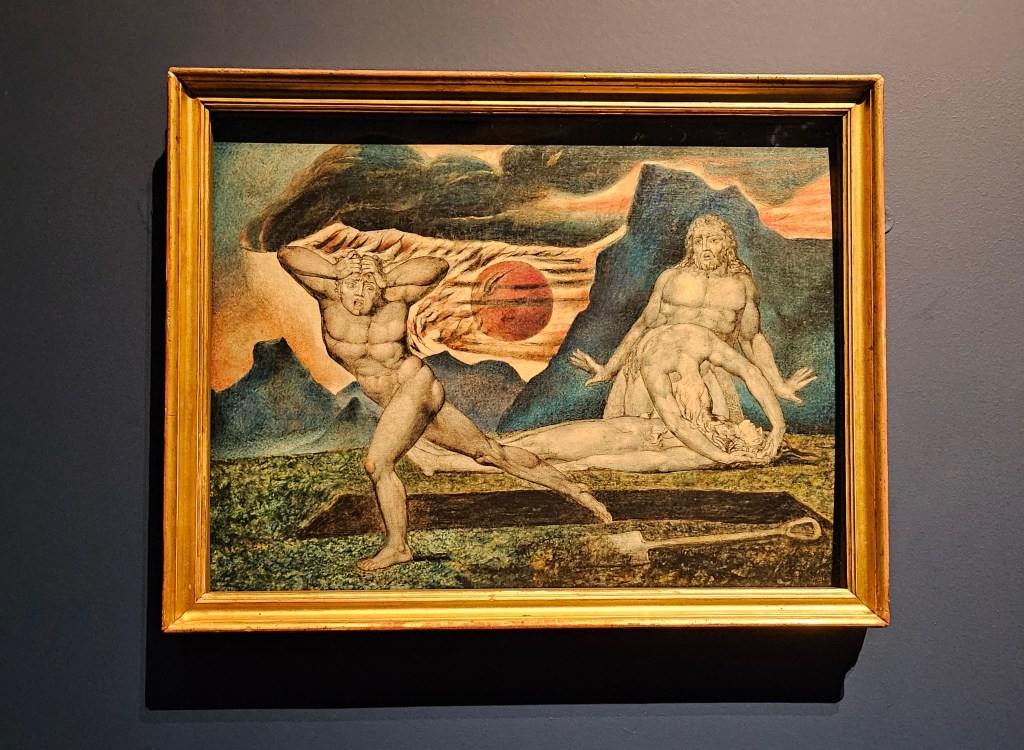
The National Gallery of Hungary is in the castle on Buda Hill, which I had been to on my previous visit. The Museum of Fine Arts is the main gallery in Budapest devoted to the works of non-Hungarian artists. One of the reasons for visiting was that they had a special exhibition of William Blake prints alongside some works of his contemporaries. I have always liked Blake as an artist and a poet. It always seems a bit strange to visit an exhibition in a foreign country where the items on display are nearly all on loan from the UK – in fact, this exhibition had previously been on at the Fitzwilliam Museum in Cambridge and prior to that at Tate Britain. Maybe because there was an additional charge to see the Blake exhibition, I had it entirely to myself, which I am sure would not have been the case had I been to it when it was in the UK. It was a large exhibition, taking up one wing of the ground floor of the Museum. When I had finished with William Blake, I explored the rest of the Museum of Fine Arts, which has a comprehensive collection of European art.

I then caught Metro line 1, which was built in 1896, making it the oldest underground electric railway in the world after the London Underground. The Hősök tere station, where I got on, still feels very old fashioned. There is no connection between the two platforms except by crossing the road at street level and the platforms are very short, barely fitting the tiny three car trains which run on this line.
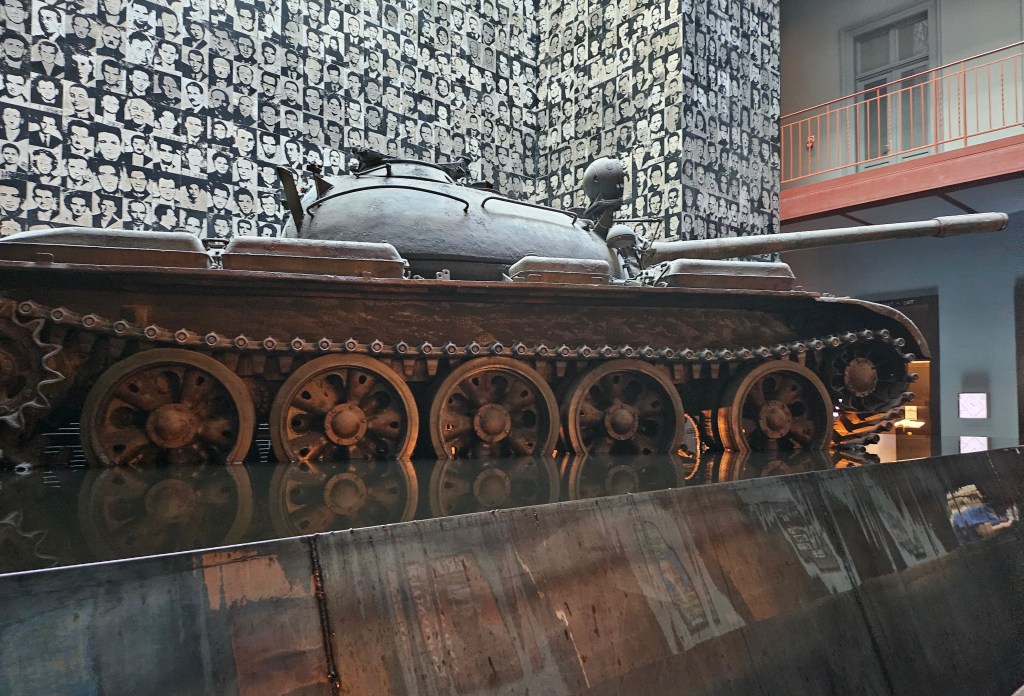
My final visit was to the House of Terror, which I had heard about from Misha Glenny’s BBC Radio 4 series The Invention of Hungary. After my visit to the Hungarian National Museum two years earlier, I have always been a little wary of Hungary’s portrayal of its recent past, but I thought the House of Terror was well worth the time. It is located in the former headquarters of the Arrow Cross Party (the fascist group that seized power in Hungary towards the end of World War II) and subsequently the ÁVH (the secret police of Communist post-war Hungary). I had an audio tour, which was detailed and although I had a flight to catch, I did not wish to skip too much. Also, your speed of progress through the exhibition is limited by some of the audio-visual effects. For example, you take a lift to descend very slowly to the former cells, while it plays a film about the executions that took place in the building.


By the time I emerged from the House of Terror, I had no time to lose and needed to go straight to Budapest Airport to catch my flight home. As it turned out I needn’t have been concerned, as an Airport Express bus came along as soon as I arrived at the bus stop, there were no queues at security and my flight was 25 minutes late. The flight did not recover any of the delay on the way back to London and I arrived home just after 8pm that evening.
Conclusion
This trip had been been rather more rushed in places than I ideally I would have wished – I would have liked to have stayed much longer in both Graz and Pécs, had my itinerary permitted. Also just using Prague as a stepping stone on my way from Gothenburg to Graz, without spending significant time there seemed a bit wasteful, but Prague is the European city that I have previously visited most often. As always, I learned a lot. I found Osijek and Pécs fascinating places, and as yet not on the radar of the main European tourist circuit.
 Europe Explored