
“Kes otsib, see leiab” (He who seeks shall find) – Estonian proverb
Continuing the account, with the third and final part, of the recent trip I took with my wife to the Baltic States.
Day 7 (part) – Wednesday 17th September 2025 – Valga to Tartu
Nearly as soon as we had stepped off the LTG train that had brought us from Riga we could see the Estonian Elron train approaching. It pulled in across the platform from where we had arrived and disgorged its passengers, nearly all of whom made the transfer to the train we had just left. Twenty minutes after we had arrived in Valga, we were on our way again.
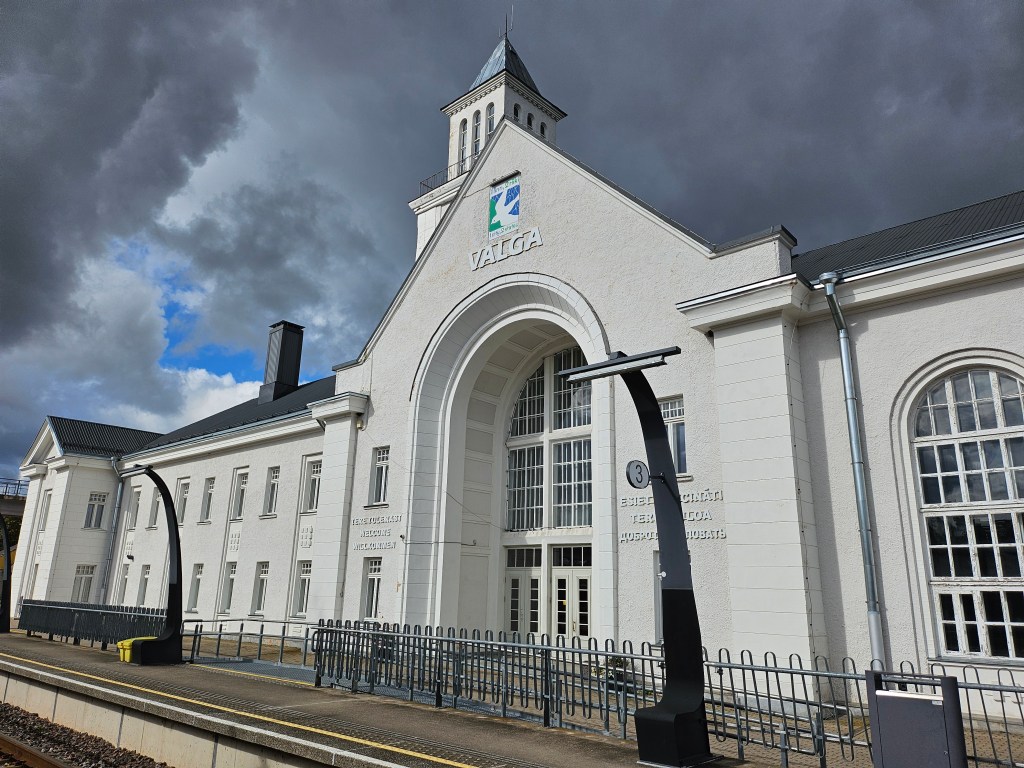
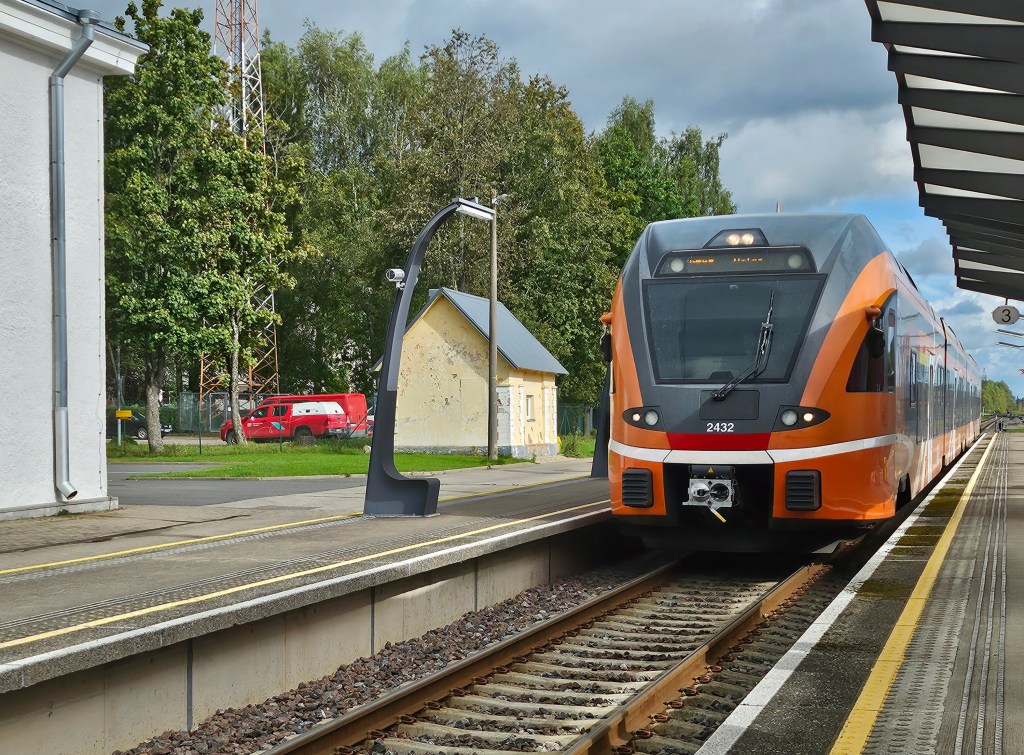
The train we were on was going all the way to Tallinn, the capital of Estonia, but we stayed on it for only an hour, getting off at Tartu station just after 3pm. Tartu is the second largest city in Estonia and is the location of the country’s oldest and most prestigious university. It is immediately noticeable that Estonian is a completely different language to Lithuanian or Latvian, being Finnic in origin, rather than Slavic as in the other two Baltic states.
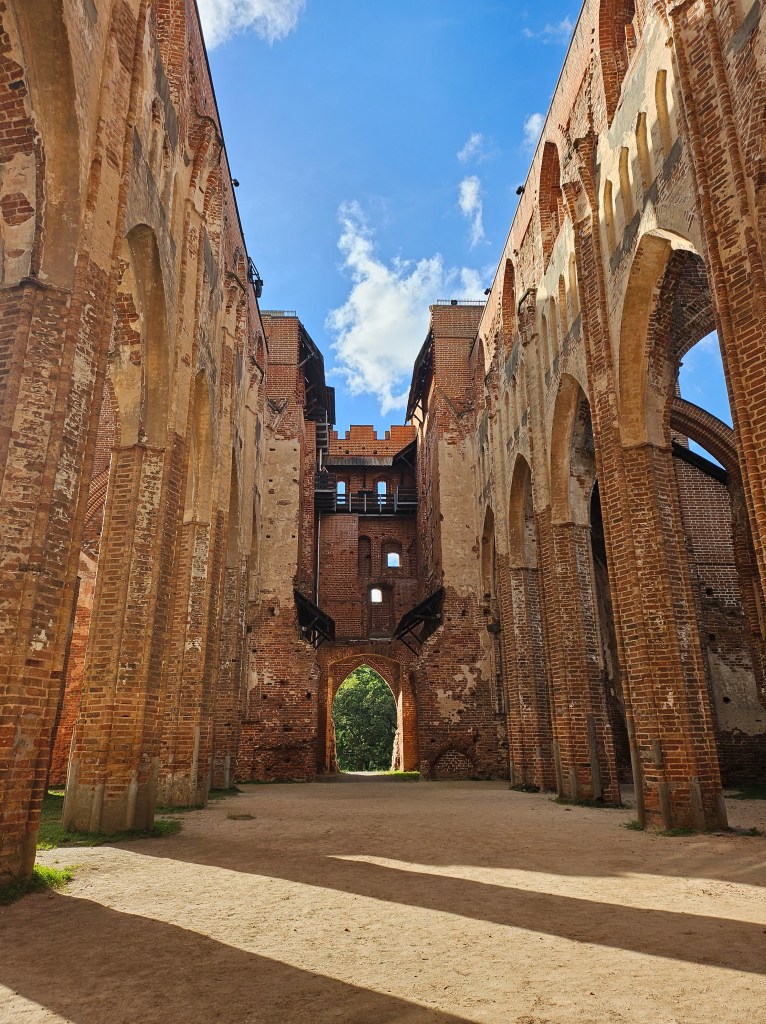
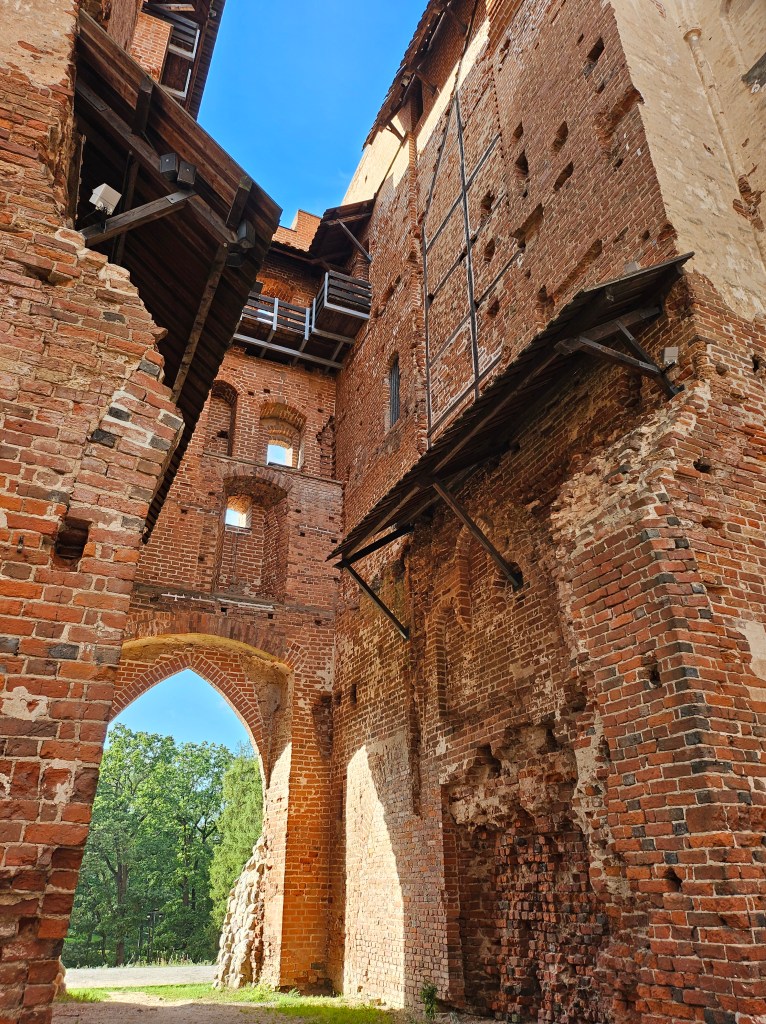
Rather than going straight to the city centre, we first went up a hill on top of which are the remains of Tartu Cathedral. The former cathedral fell into decline during the Reformation and by the end of the 16th century had been abandoned. We climbed the high towers at one end of the cathedral for good views over Tartu and the surrounding countryside, although some of the things that the display boards suggested you might see were obscured by tree growth.
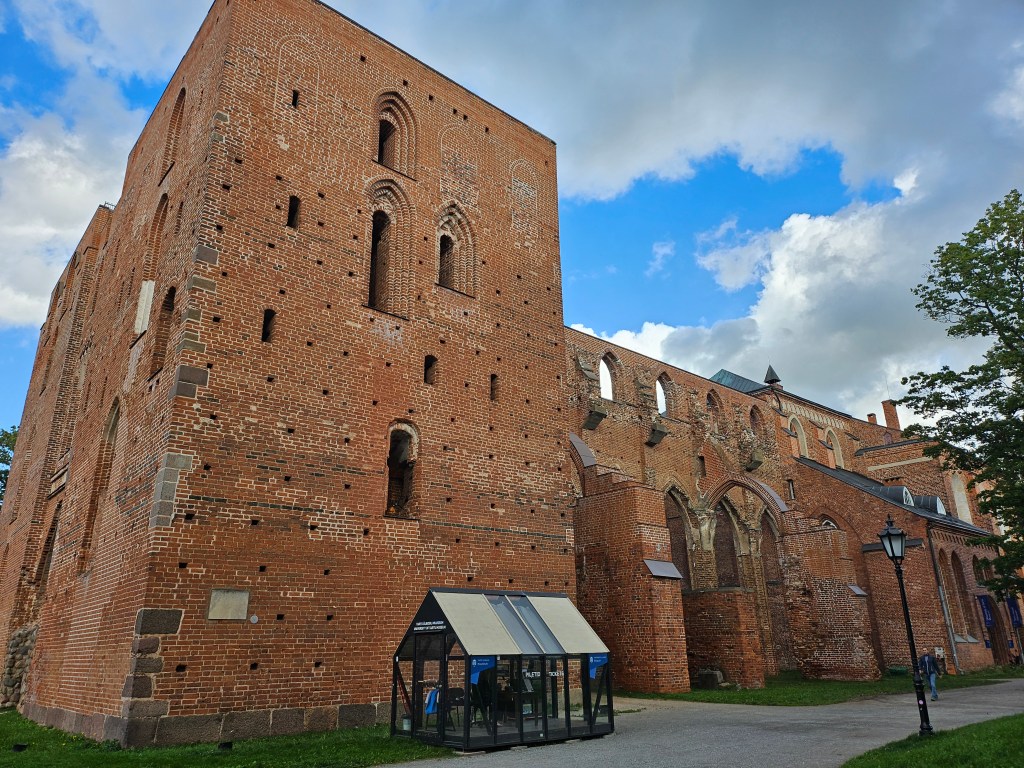
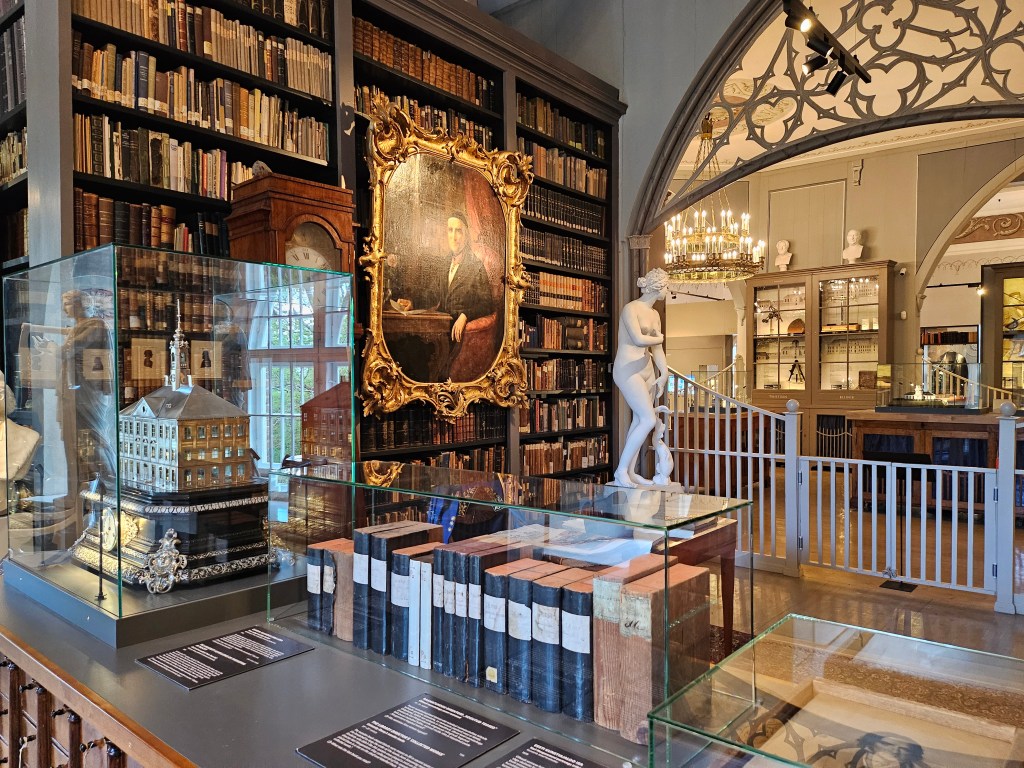
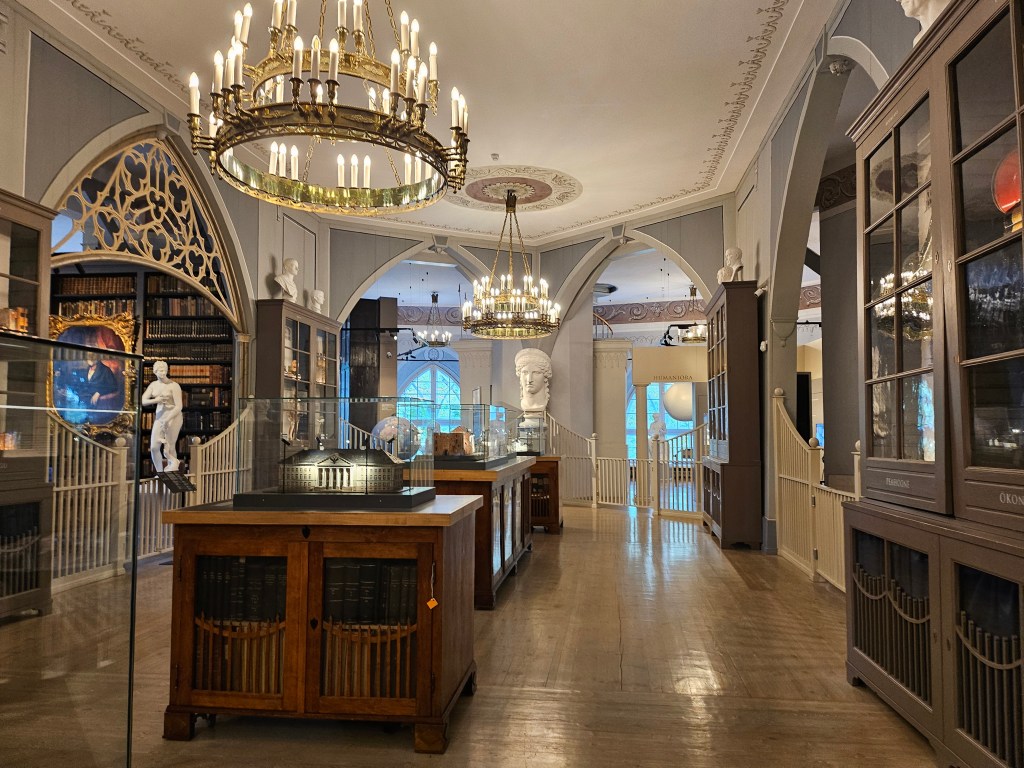
At the other end of the ruined cathedral from its towers is a building that was once the library of the University of Tartu and now contains the museum of the university. This has fascinating exhibitions about the university’s history. The university was founded in 1632 during the period of Swedish rule by Gustavus Adolphus, the King of Sweden. In the 19th century, although now in the Russian Empire, teaching was in German and many of the academic staff were German. Only in 1919, when Estonia became independent for the first time did it become a predominantly Estonian language institution. During the Soviet Occupation from the end of World War II to 1991, there was strong Soviet influence on the curriculum. It is claimed that the colours of the Estonian flag (blue, black and white) were derived from the caps worn by members of one of the university’s student societies, at a time when other forms of nationalist sentiment were suppressed.
When we had finished in the museum we descended the hill, going past the main building of the university, into the centre of Tartu, where our hotel was located. Although the decor and furniture of the hotel seemed fairly old-fashioned, in keeping with Estonia’s high-tech reputation, we could unlock our hotel room using our mobile phones. We had dinner in a nearby German Wirtshaus, where I dined on schnitzel and German wheat beer.

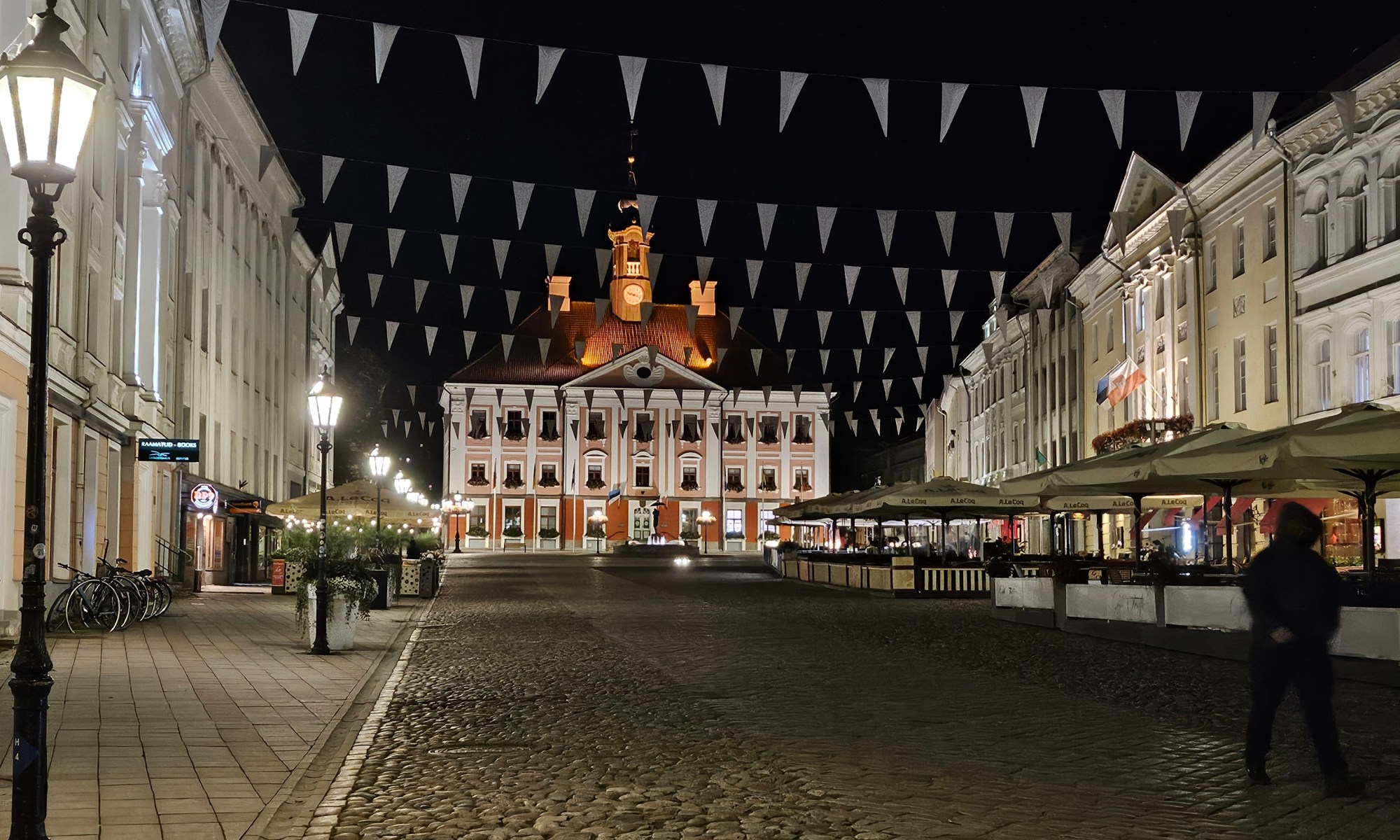
After dinner, we went for a walk in the dark to explore the city centre. We went past the Angel’s and Devil’s bridges which carry higher level walkways across roads, then into the city’s main square in front of the town hall. The city’s art museum is also in the main square and leans at an alarming angle, due to sinking foundations built on the marshy riverbank. The angle of lean is greater than that of the Leaning Tower of Pisa. Finally we ended up at the outside of the massive St John’s church. While on our walk we were passed by a bus leaving Tartu on its way to St Petersburg in Russia, a reminder that Russia is not far away.
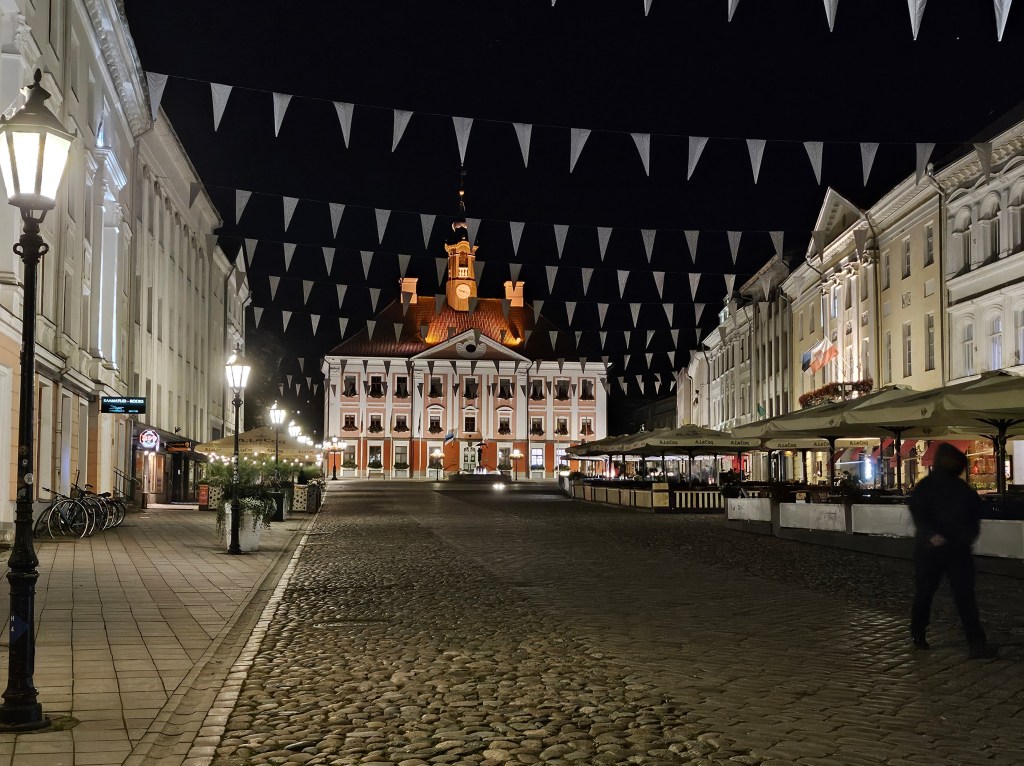
Day 8 – Thursday 18th September 2025 – Tartu
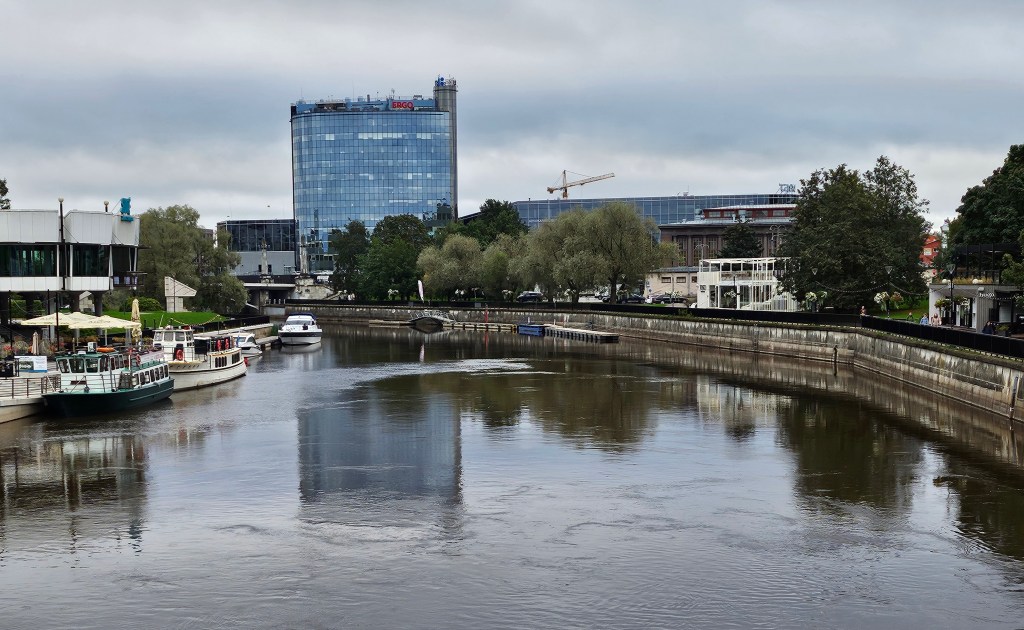
After breakfast in our hotel we walked via the Tourist Information Centre in the Town Hall across the Emajõgi river to go to the Estonian National Museum on the eastern edge of the city. On the bridge over the river were descriptions of various improvement projects for the city which the citizens of Tartu would be asked to choose between in a forthcoming referendum.
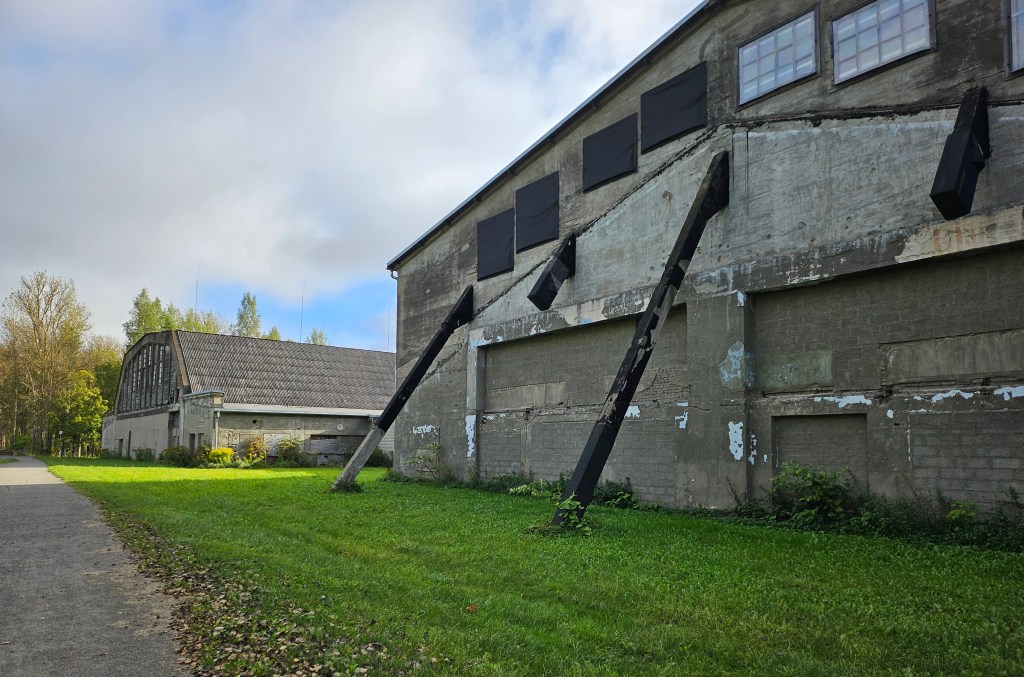
While walking along the road leaving the built up area of the city we saw some rather decrepit buildings which looked like they were aircraft hangers. Some quick research revealed that this was part of Raadi airfield, once home to the Soviet long-range strategic bomber fleet, and allegedly high on NATO’s list of Soviet targets during the Cold War. A bit of exploring led us to find the remains of a barbed wire fence which once surrounded the airfield.

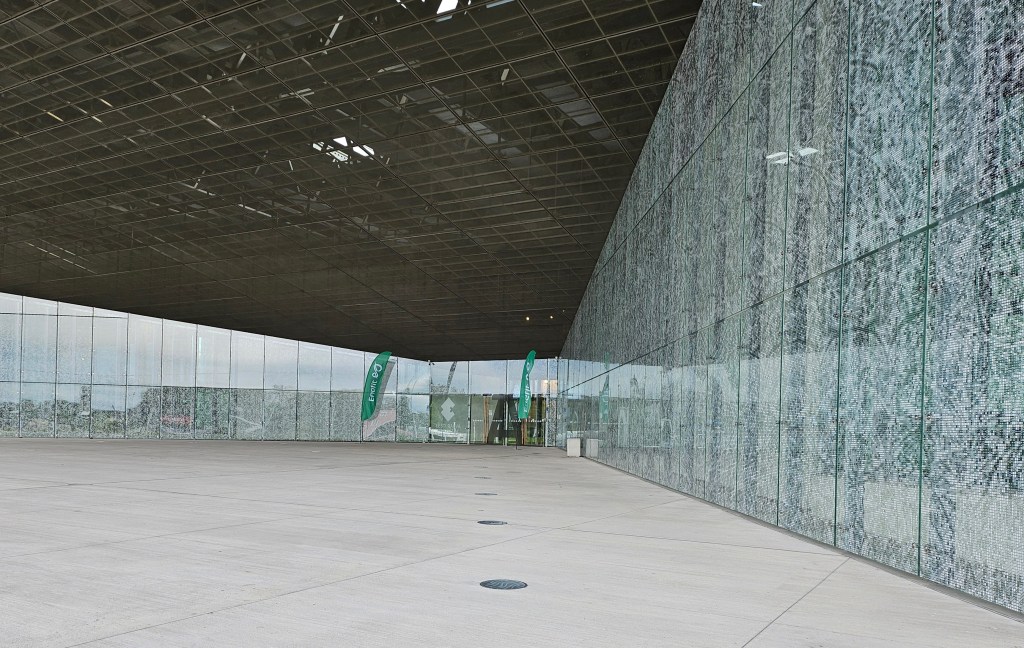
The Estonian National Museum is in a new massive purpose-built building which first opened in 2016. It is also located on part of the former bomber base. The main exhibition covers the history of Estonia from prehistoric times to the present day. Your entrance ticket acts as a device to translate the displays into your own language. If you hold your ticket against any explanatory text it changes the language to your own. I found particularly moving the section of the museum which presented through artefacts the contrasting experiences of Estonians in Estonia during Soviet occupation with those of members of the Estonian diaspora in the rest of the world. We also visited an exhibition ‘Echo of the Urals’ about the indigenous Finno-Ugric peoples who live in a wide area from the Scandinavian Baltic through to Siberia.
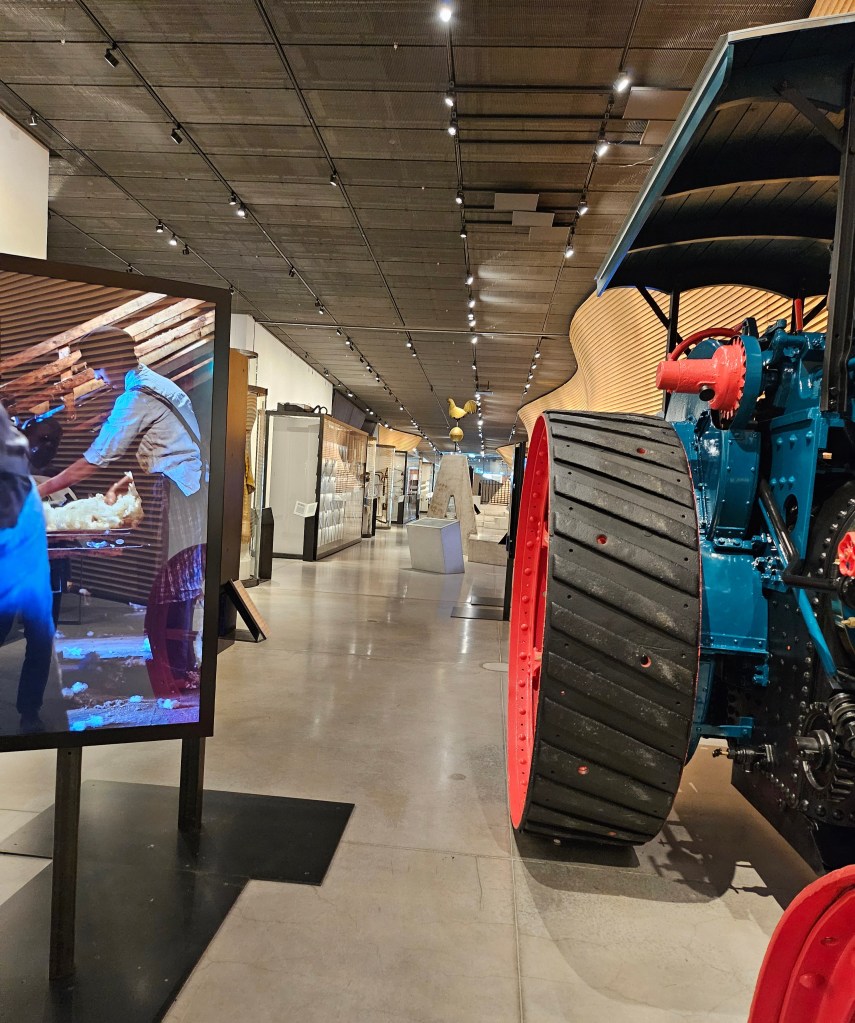
Near the Estonian National Museum is the Upside-down House, which is exactly as described. We decided not to pay it a visit on our walk back to the city centre.

Just this side of the Emajõgi river is Tartu City Museum. It was not quite what we were expecting, as rather than providing a coherent history of the city, it instead has 17 mini-exhibitions each being about a different district of Tartu. While some cover the history of their district, others focus on describing the characteristics of the district as it is now.
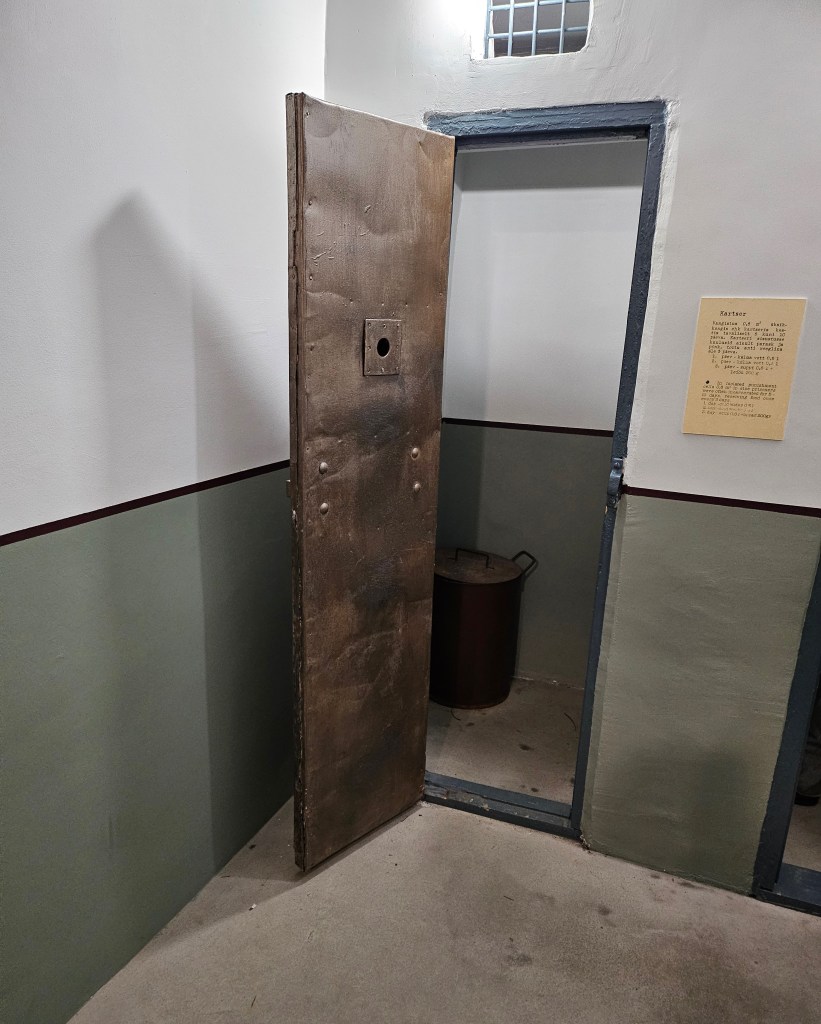
Next stop involved a walk to the north-west of the city centre to visit the former KGB cells. Situated in the so called ‘grey building’, it tells a similar story to the former KGB headquarters that we had visited in Vilnius a few days earlier. One of the cells has an exhibition about Alexander Solzhenitsyn, not that he ever visited Tartu, but because the manuscript of The Gulag Archipelago was smuggled out of the Soviet Union via Tartu.

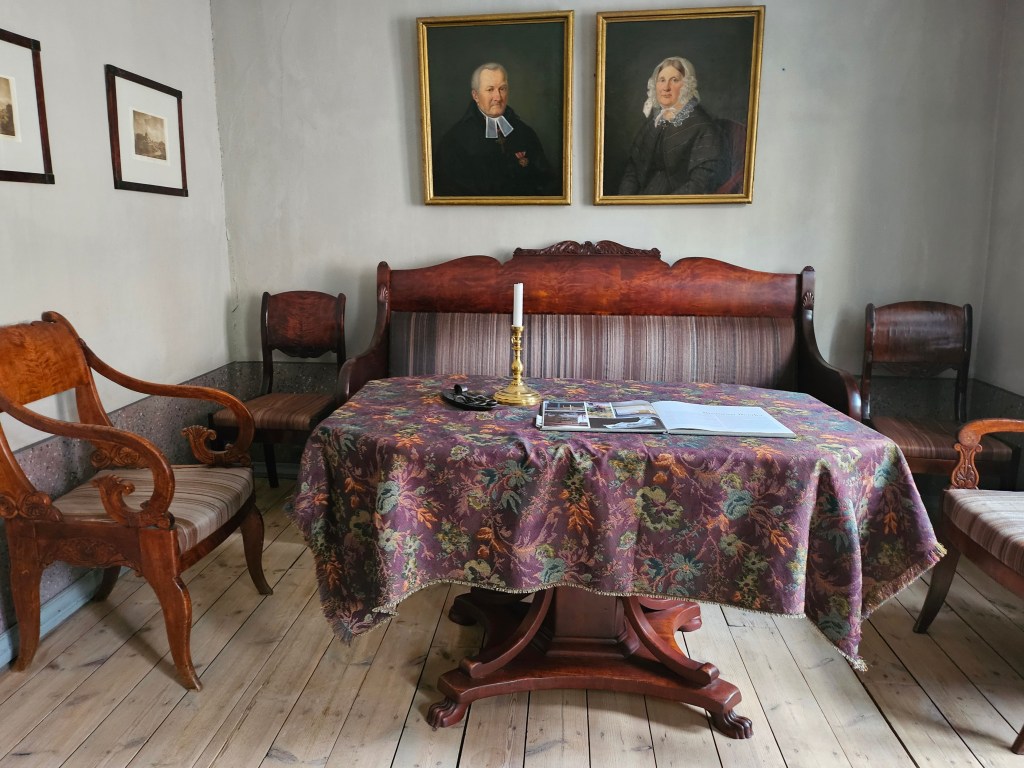
Our final visit in Tartu was to a 19th century Tartu citizen’s house. This small four-room wooden building is furnished in the style of the middle class occupants from that period.
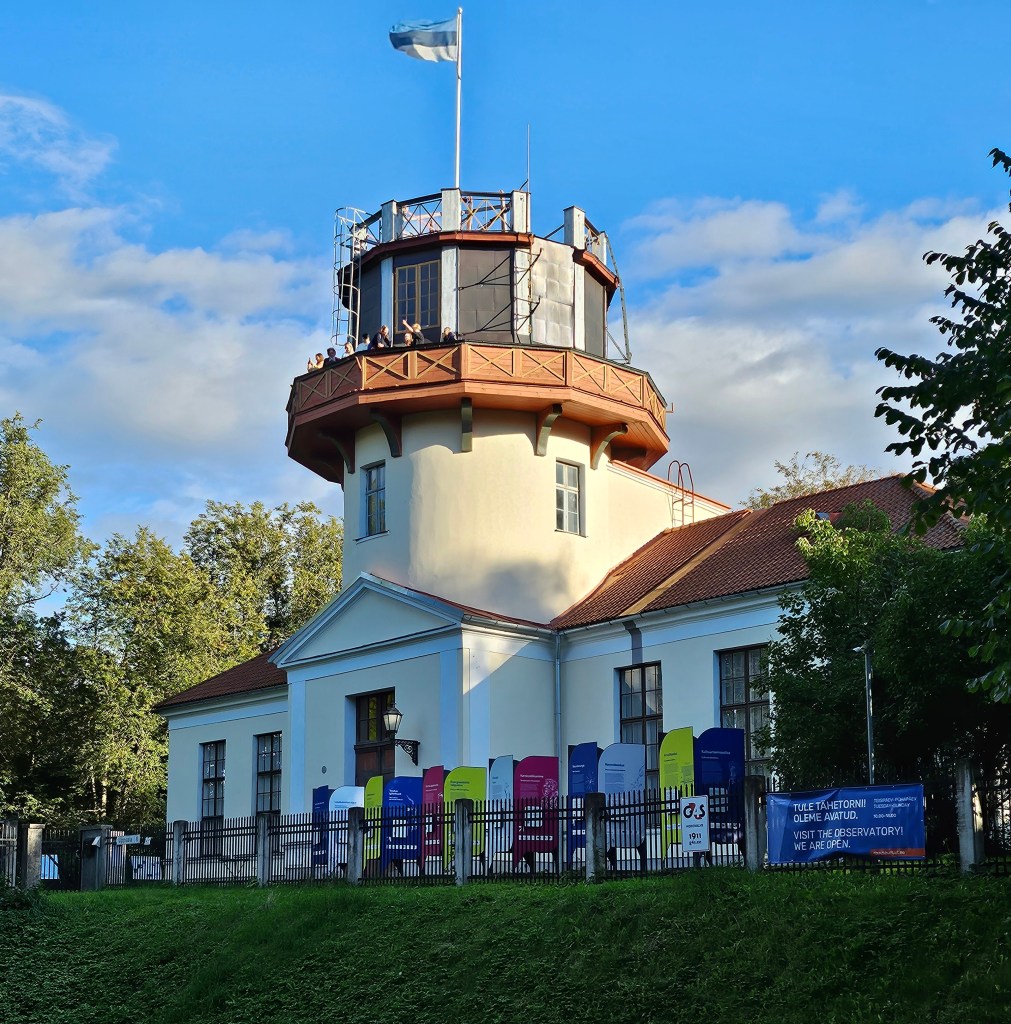
We then finished our walk round Tartu, going in the Botanical Garden, walking past Tartu Observatory and finding a sculpture of Oscar Wilde and Eduard Vilde (an Estonian writer) sitting on a bench. Although they were contemporaneous, there is no evidence that they ever met. The sculpture is just a joke on the similarity of their surnames.
That evening we decided to eat more modestly, so we just went to a grill bar for our dinner, where I had a burger. On the way back, we called in at a beer cellar, so that I could sample some of the locally-brewed Pühaste beer.
Day 9 – Friday 19th September 2025 – Tartu to Tallinn
After breakfast we made our way to Tartu railway station. Although arriving in good time for its 09:17 departure, our train was already sitting at the platform, despite having come from Valga. It is a 2 hour 40 minute journey to Tallinn. We occupied ourselves by trying to spot things on an eye-spy sheet (designed to keep children quiet on car journeys) that we had acquired from Tartu Tourist Office. At one point I had to break off from spotting to buy tickets for a future trip. The tickets went on sale that morning – inevitably at the time they were released we were passing through an area of poor mobile connectivity.
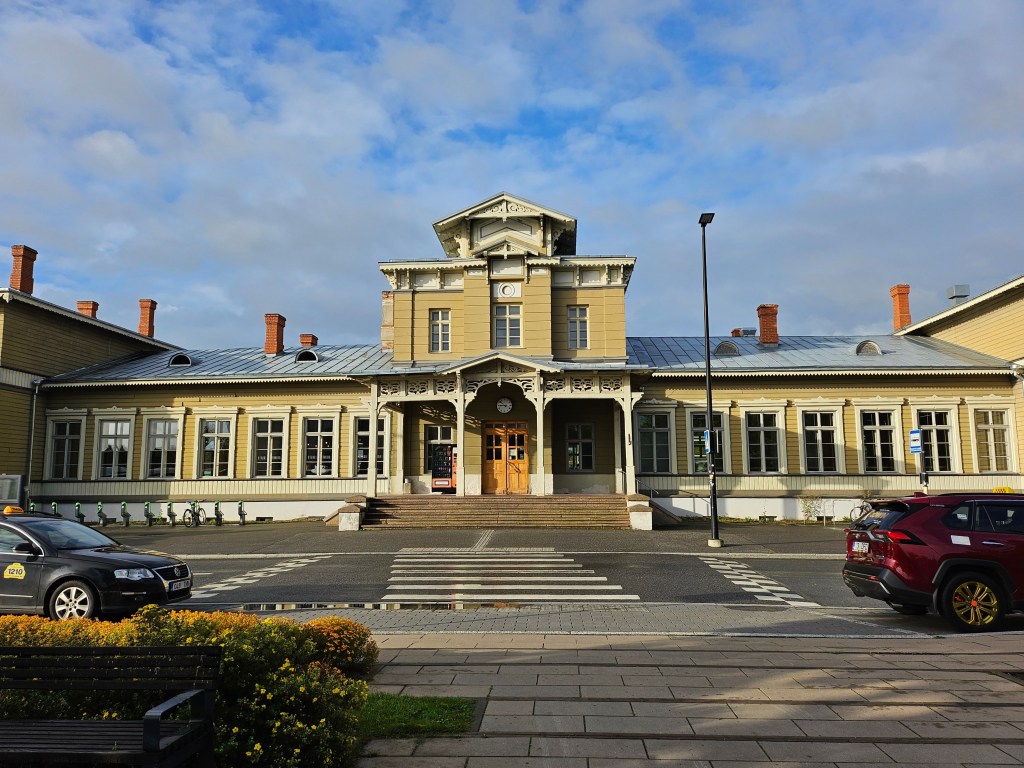
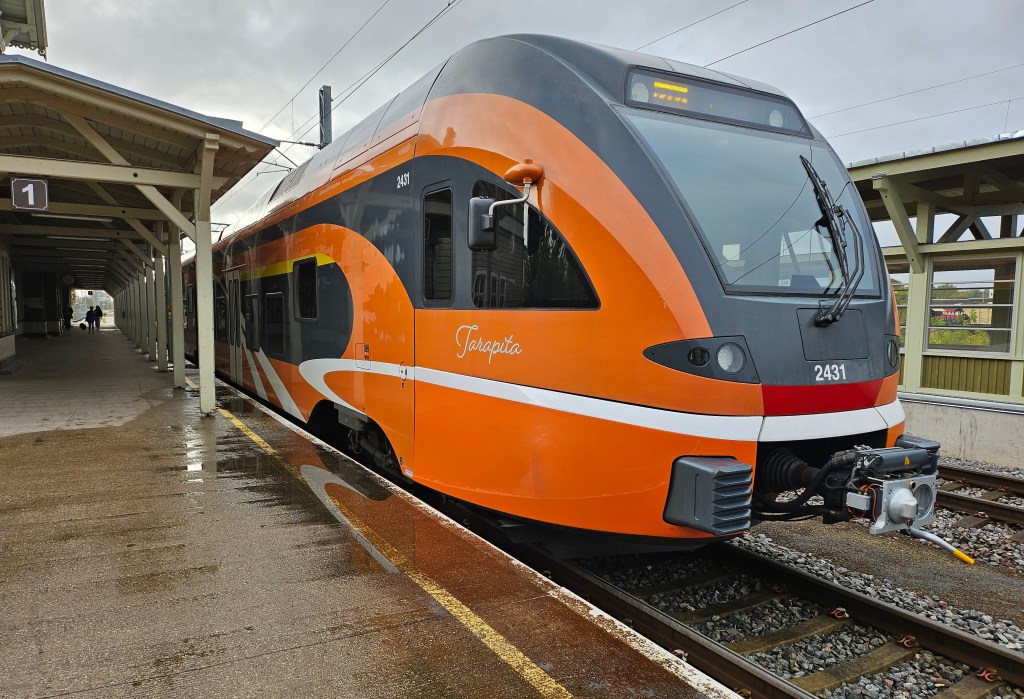
As we reached the outskirts of Tallinn, the heavens opened and there was a torrential rainstorm. Fortunately, by the time the train pulled into Tallinn’s Balti Jaam station the rain had eased considerably. We walked a short distance through the park on the other side of the ring road from the station to reach our hotel.
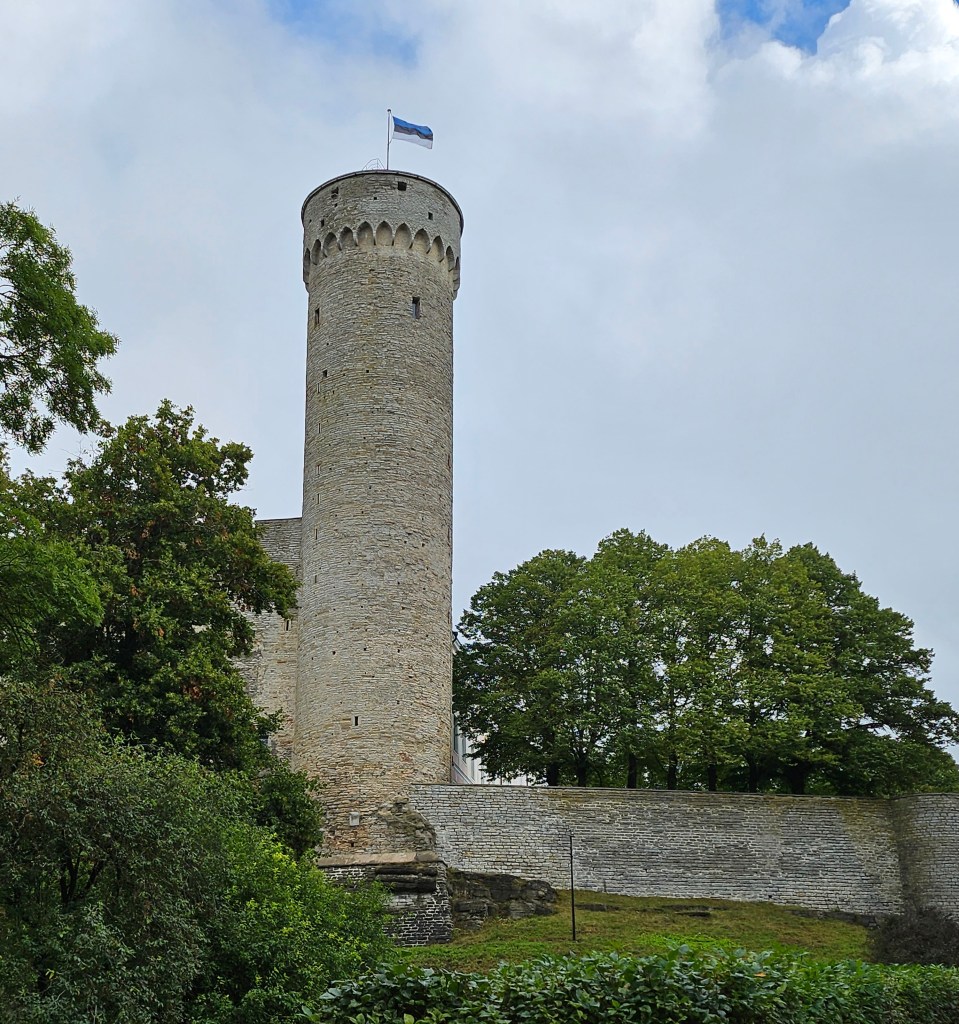
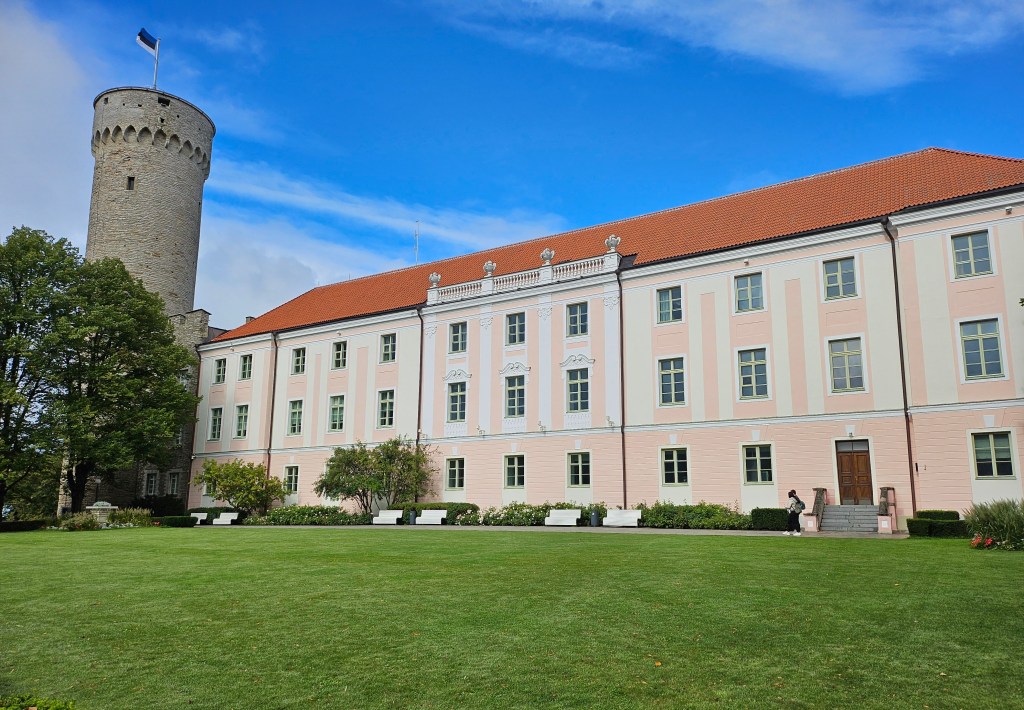
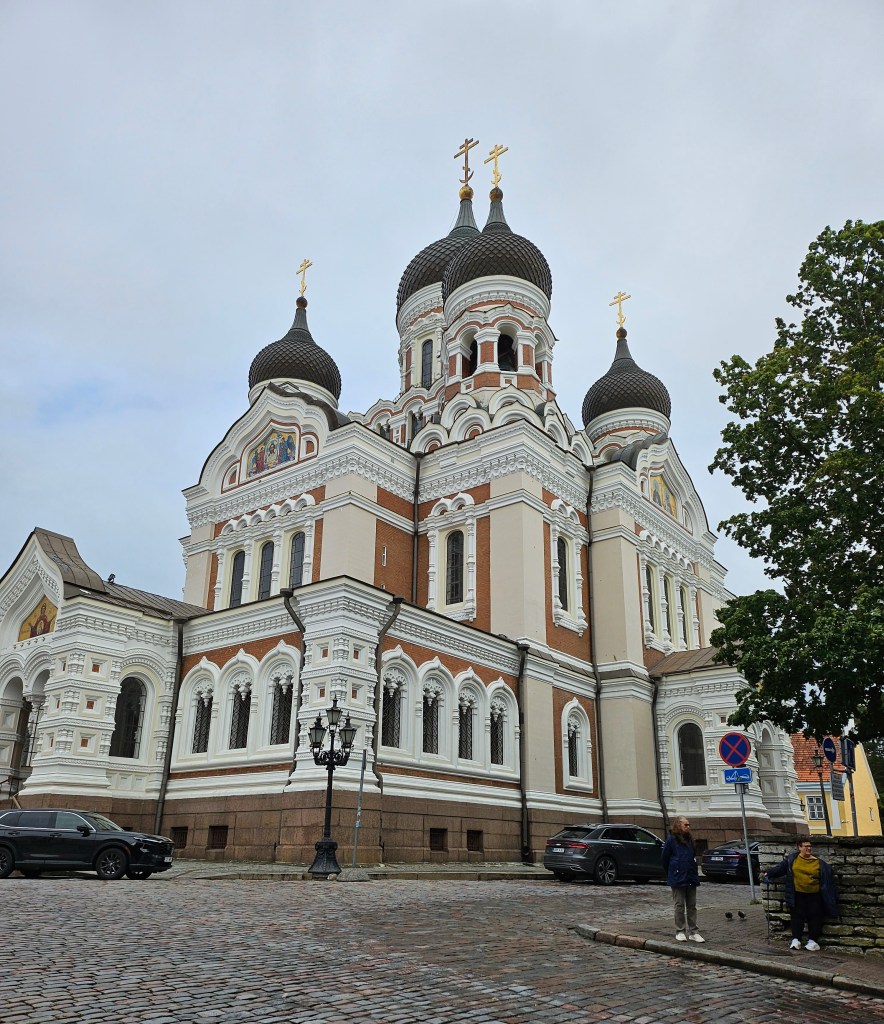
After leaving our bags, we went up Toompea Hill opposite to reach the main government district. The castle on the top of the hill contains the Estonian Parliament and is not generally open to the public. Directly opposite the Toompea Castle is Alexander Nevsky cathedral, which we were able to enter. This Russian Orthodox church was built at the end of the 19th century, when Estonia was part of the Russian Empire. The interior of the cathedral is richly decorated with Orthodox iconography, but, as in Riga, no photography was allowed.
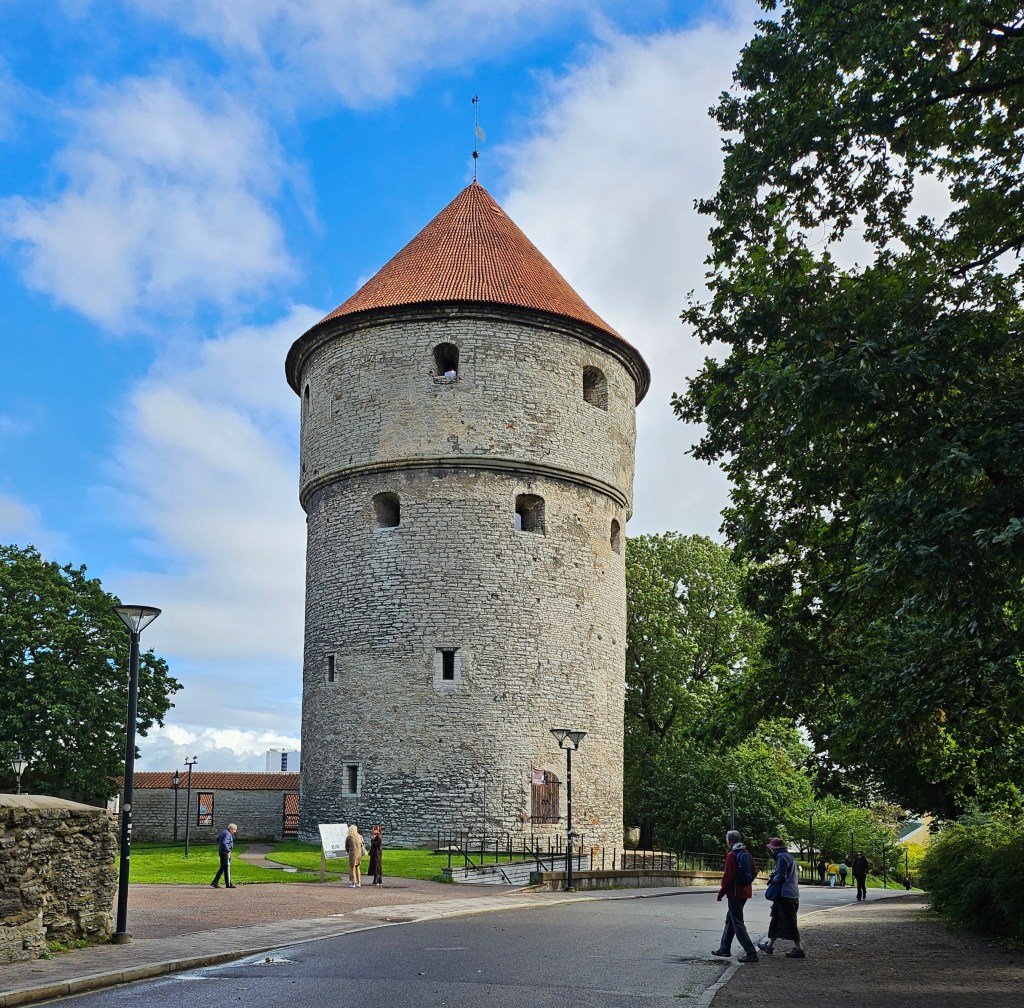
On the other flank of Toompea Hill is the Kiek in de Kök tower, its name derived from Low German implying that you can see into the kitchens of nearby houses from the top. The tall tower is part of the city walls of Tallinn. During part of its history a branch of the Brotherhood of Blackheads was based in the tower, who became responsible for operating the Tallinn Fire Brigade. There are exhibitions on Tallinn’s history on the different floors of tower and from the top there are good views across Tallinn to the harbour area.
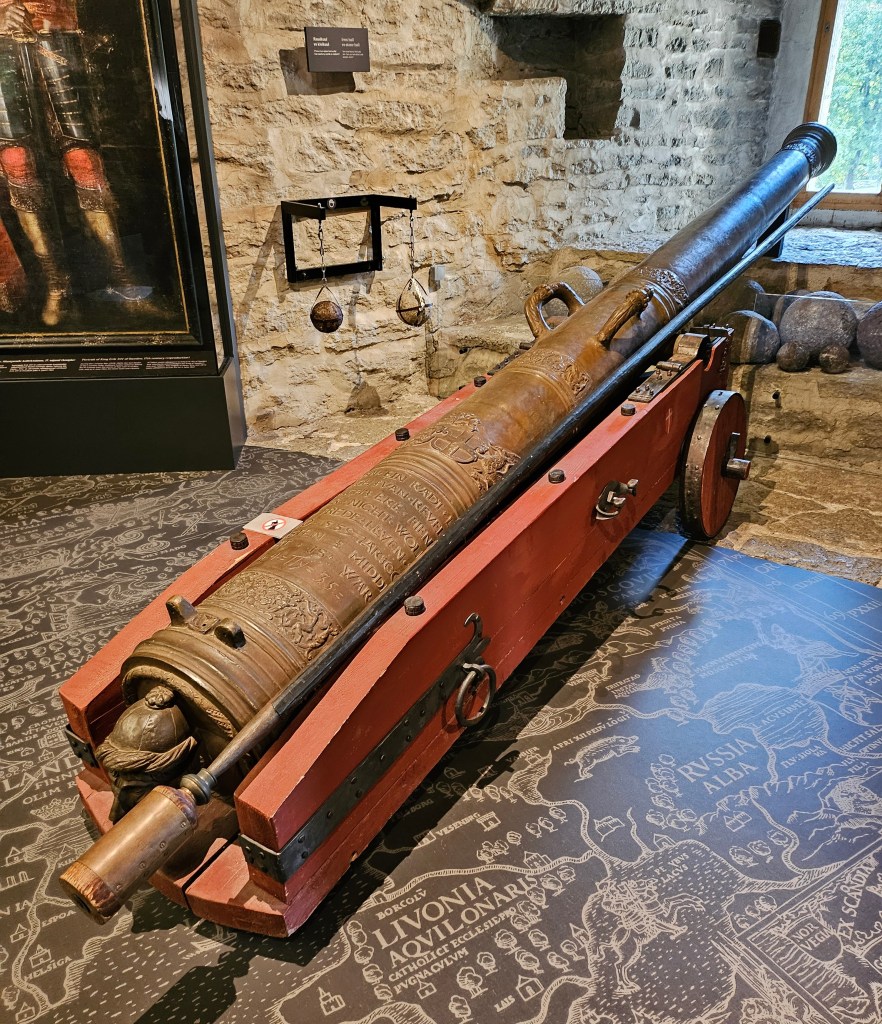
When we had finished with Kiek in de Kök we walked along the city walls and climbed three further smaller towers. One of these contained a special exhibition of the café culture in Tallinn, which survived through Soviet times.

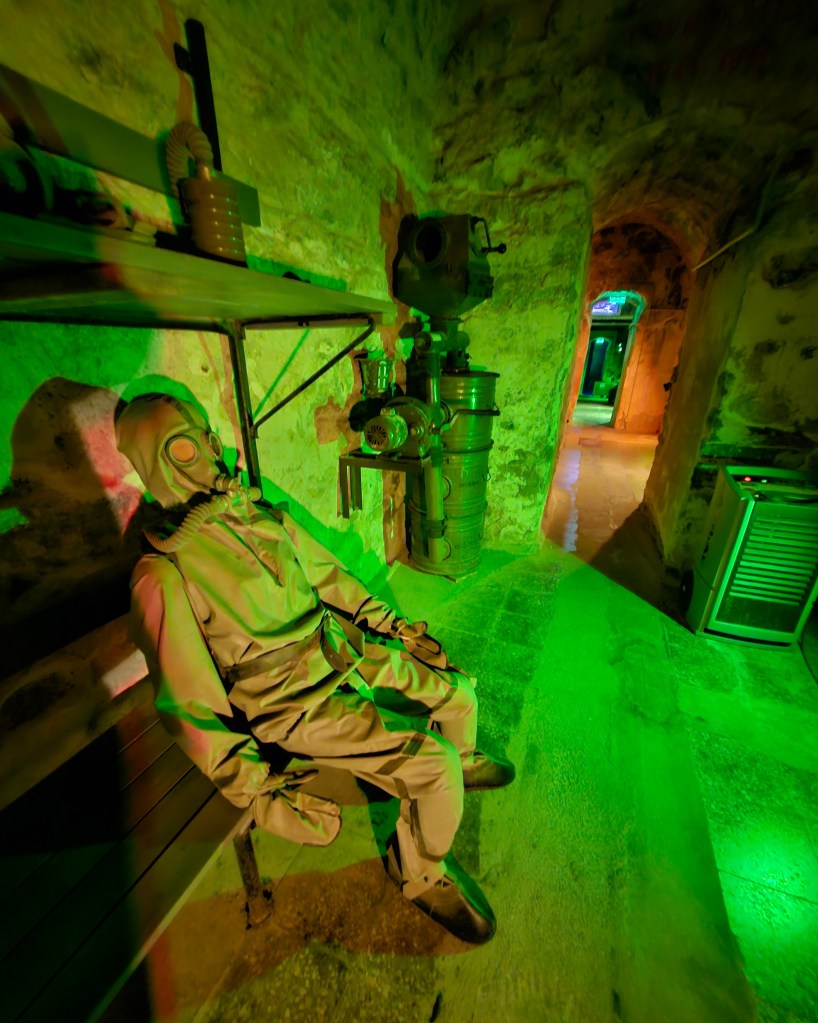
Also included in our ticket to the Kiek in de Kök tower and the city walls was access to the city bastions. These tunnels were originally built during Swedish occupation and have seen a variety of uses. These have ranged from being part of the city’s defences, a prison, a Cold War nuclear shelter, and a hangout for punks in late Soviet times. The initial part of the tunnels had an exhibition on Estonia’s civil defence since the 1930s and the final part of the bastions are given over to a museum of carved stone. In total we spent exactly four hours in the the various parts covered by our ticket. We know this because the ticket is timed to operate a number of electronic gates as you move between the parts and is valid for four hours from purchase. At the final gate, it let me through but a couple of seconds later would not let my wife pass, as she had just breached the time limit.


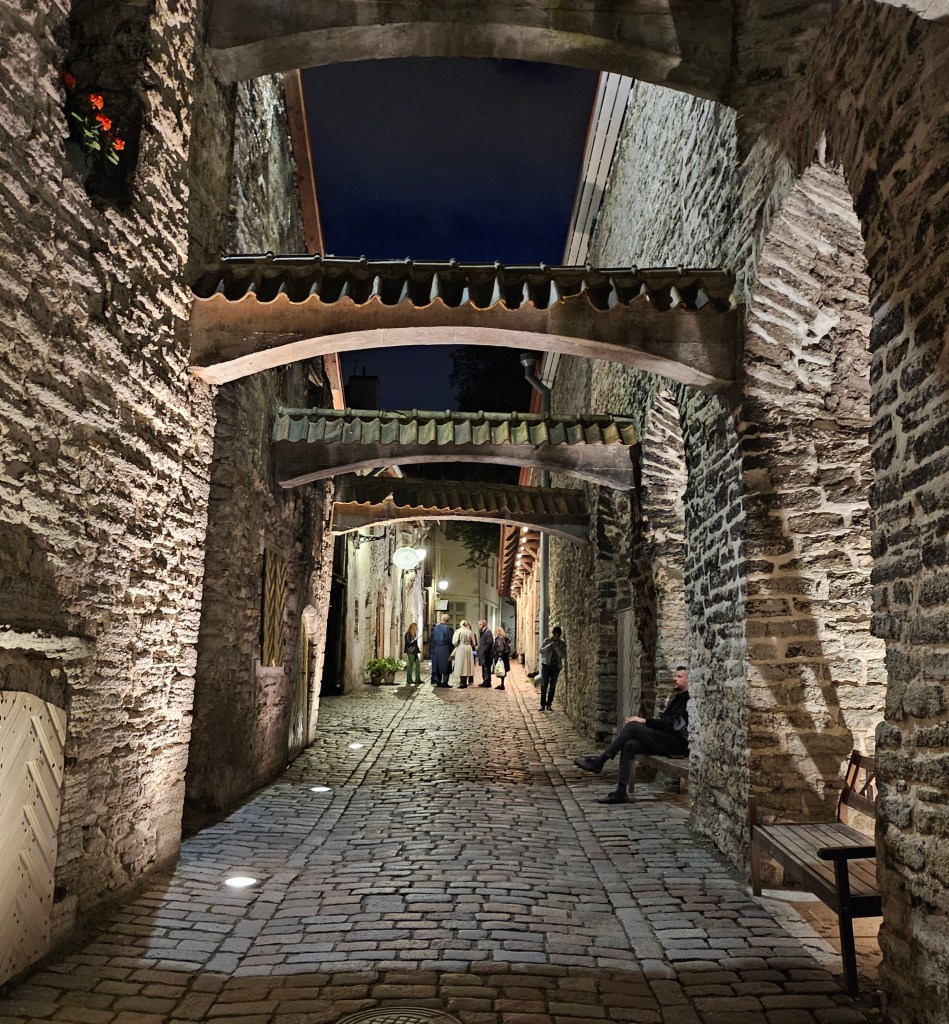
Before returning to our hotel we had a brief walk in the lower town, including calling in at the Tourist Information Centre. For dinner that evening we had booked a table in very good pizzeria, where I had a spicy Diavolo pizza followed by ice cream. We explored a bit more more after dinner – the area around Tallinn’s Town Hall was heaving with people.

That evening we discovered that there had been an incursion into Estonian airspace over the Baltic by three Russian MiG fighter aircraft. Given that Polish airspace had been closed by Russian drones the day before we departed on this trip, we had some worries that this latest incident did not bode well for our departure in a couple of days.
Day 10 – Saturday 20th September 2025 – Tallinn
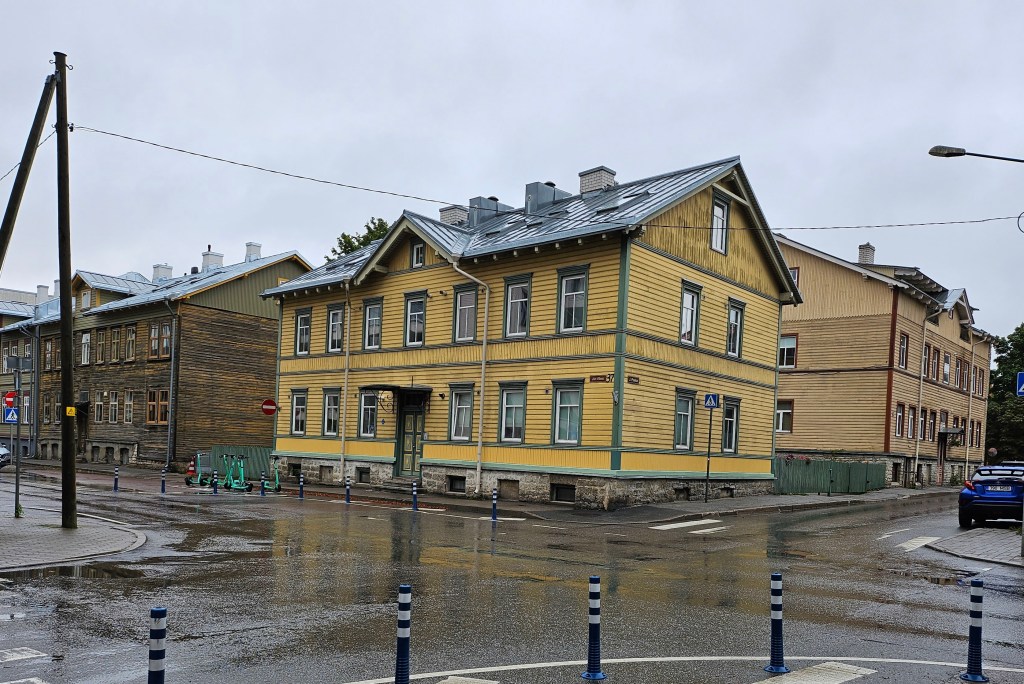
It was a rather damp morning as we set off to walk to the Kadriorg Park on the edge of the city. The picture postcard streets of the city centre soon gave way to the drab monotony of Soviet era apartment blocks. However, once we turned off the main boulevard leading away from Tallin, we entered a residential area mainly of wooden houses. Judging by some of the estate agency signs, these wooden houses are much sought after.
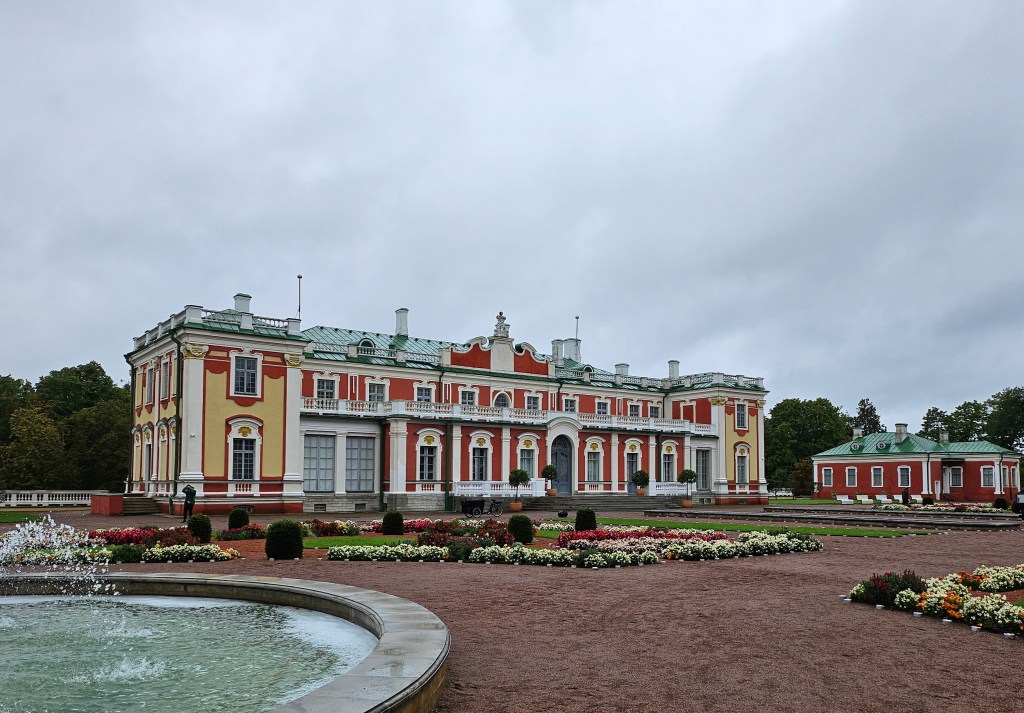
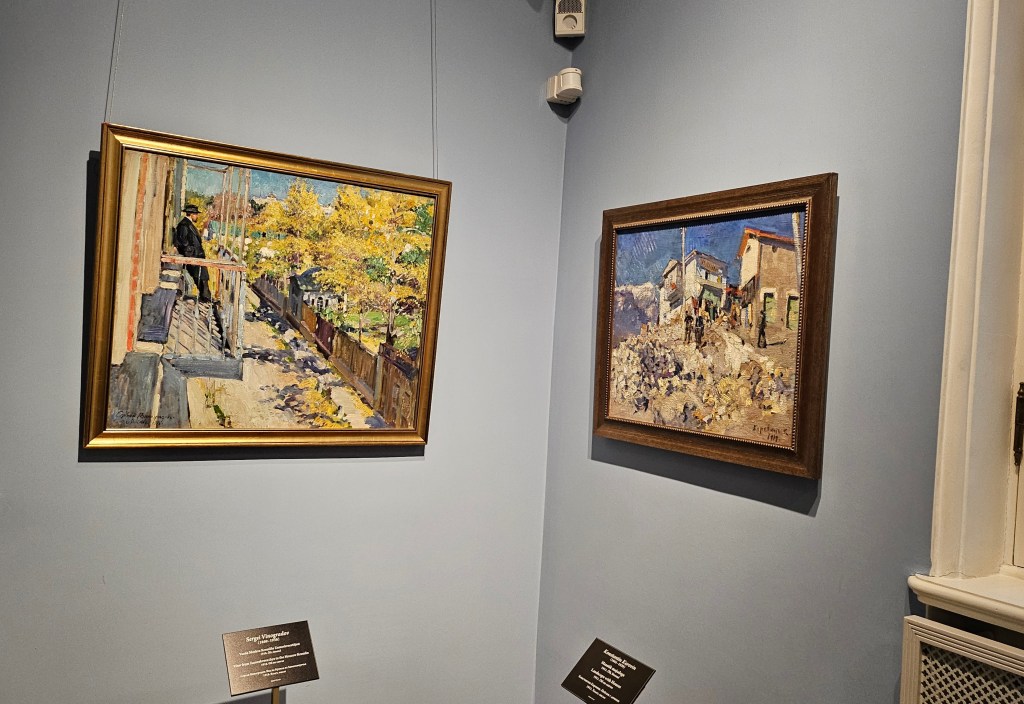
We eventually reached the park. Our first stop was at the Kadriorg Palace. This baroque mansion was commissioned by the Russian Czar, Peter the Great, as a seaside home. Although he and his wife Catherine visited it on a number of occasions during its construction, it was not completed until after Peter’s death, after which Catherine showed no interest in visiting. It now houses part of the Estonian National Art Museum, primarily containing their collection of foreign art. (Also in the park is another gallery which contains the National Museum’s collection of Estonian art, which we did not have time to see.) As well as the collections in the Kadriorg Palace, you can also admire the restored interior decoration of the building. I was particularly taken with the Russian Impressionist art that was on display, which was very different to other Russian art that I have seen. Influenced by the French Impressionists, Russian Impressionism largely died out in the Soviet Union, being out of favour compared with Soviet Realism.

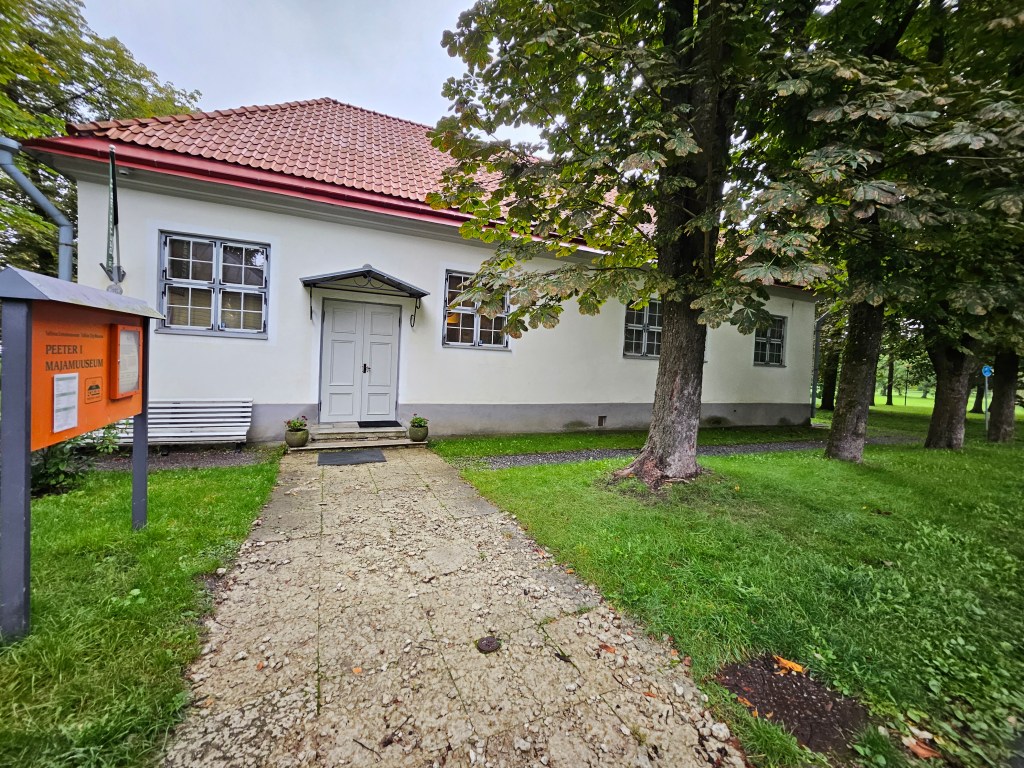
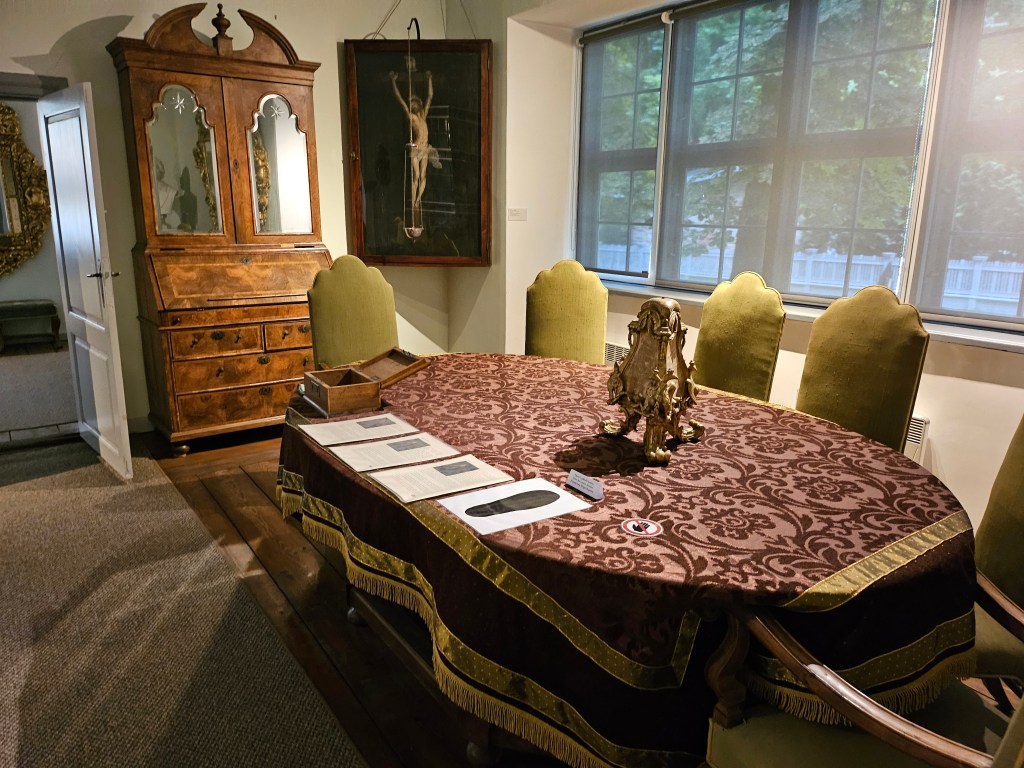
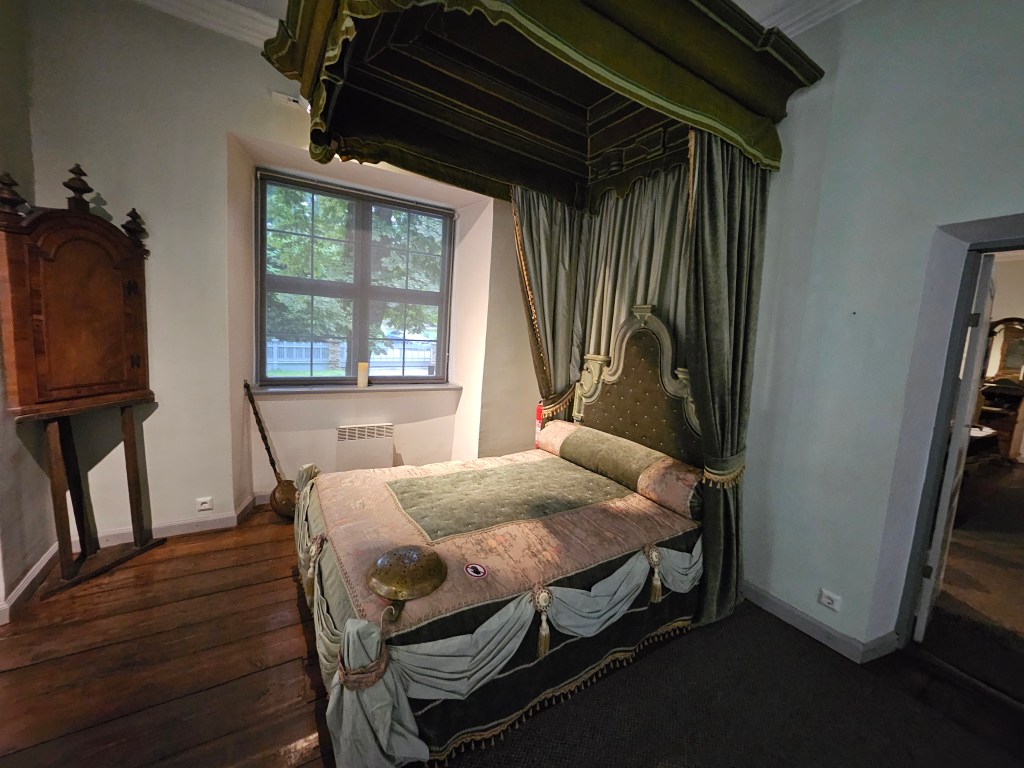
Also within the park, a short distance from the Kadriorg Palace, is the official residence of the President of Estonia. Just beyond that is the modest cottage where Peter the Great lived during the building of the Kadriorg Palace, which was first opened as a museum in 1806. It is still furnished as it would have been in the 18th century.
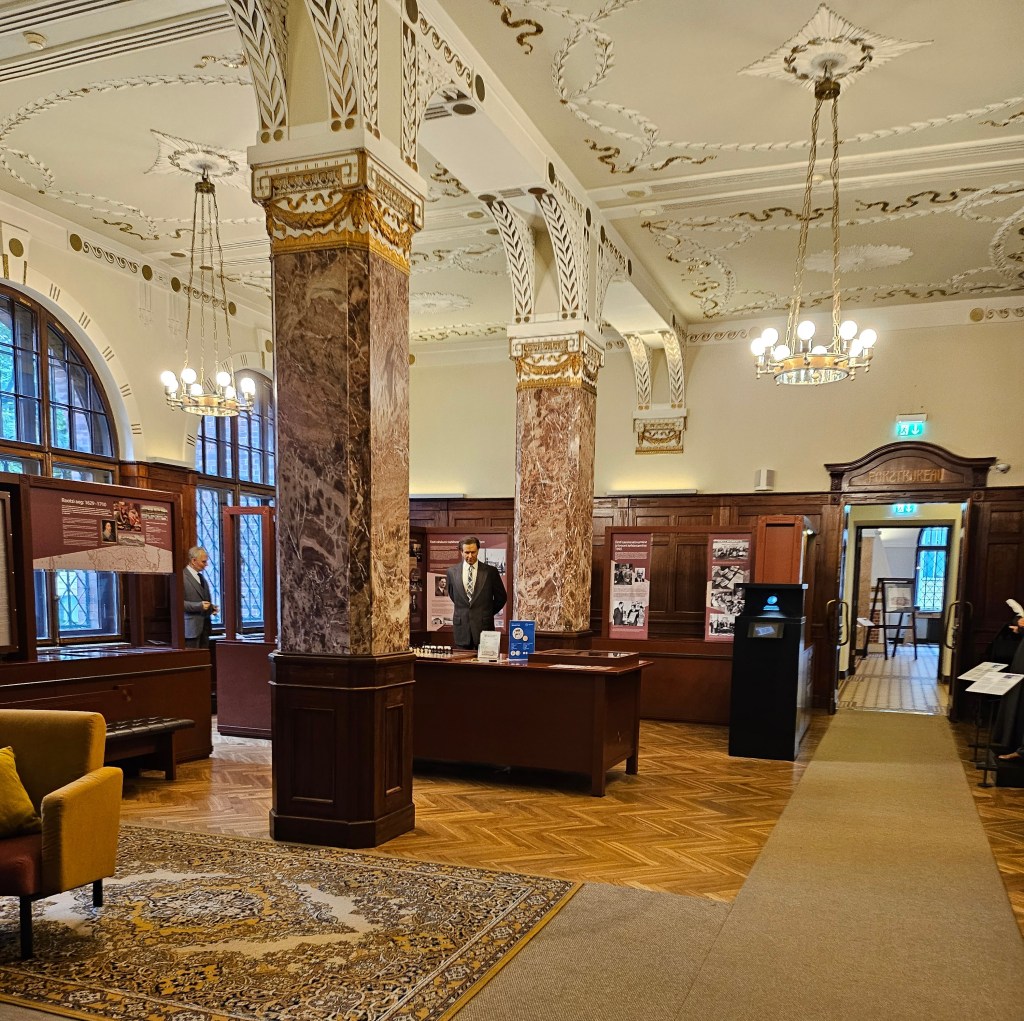
We then returned to the centre of Tallinn, following a different route to that which we used to come out to the Kadriorg Park. Our next point of call was at the Estonian National Bank (Eesti Pank). It is built in the traditional solid style of central bank buildings, and houses a museum on its first floor. The museum covers the history of the building and of Estonian currency, before Estonia joined the Euro in 2011. It also has a section which explains the operation of monetary policy within Estonia and the eurozone more generally.
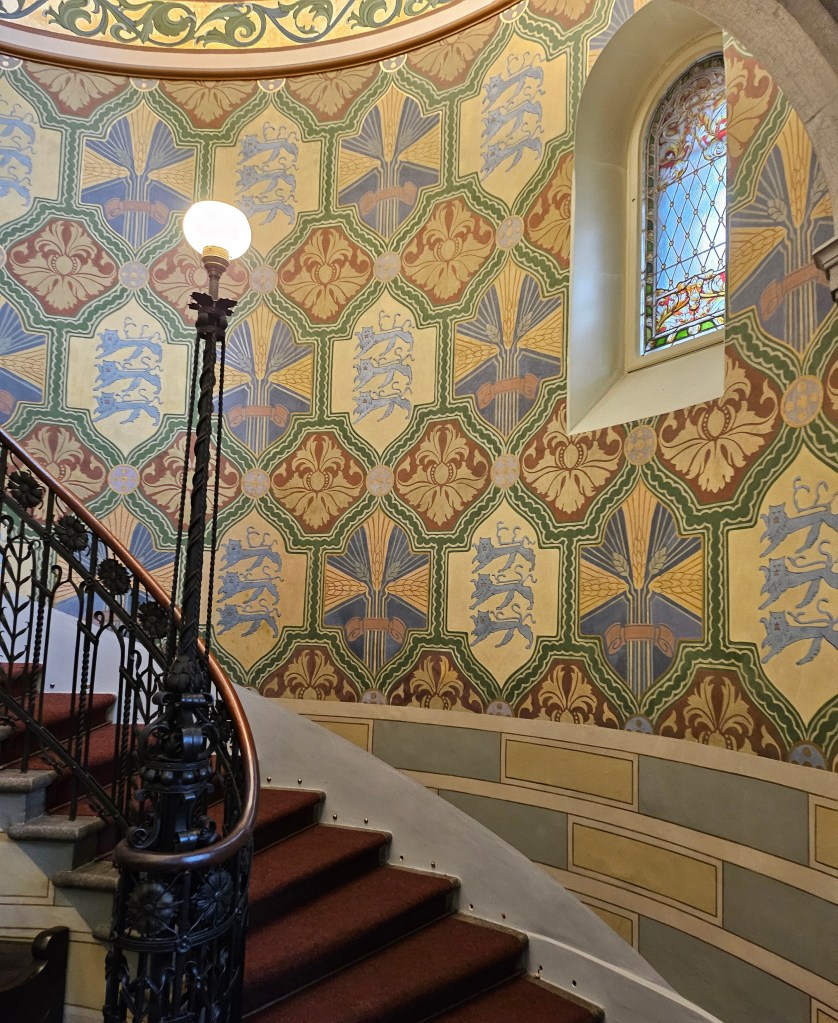
When we crossed the road after leaving the museum we were canvassed by a social democrat for the forthcoming local elections. Although we explained that we were not eligible to vote in Estonia, the young man who stopped us was keen to engage in conversation and gave us a free sweet for our time.
We then walked back through the city centre to Tallinn People’s Museum. At the time of our visit It did not appear to have any permanent exhibitions, but had three special exhibitions. These covered the use made of lock-up garages across the city, the Tallinn tram network, and Tallinn in the 1920s.
Our final museum visit was to the Great Guild Hall. This is located next to the Russian Embassy, which appears to have a permanent police guard, and the barriers outside it are covered in anti-Russian posters. The Great Guild Hall houses a museum of the history of Tallinn from earliest times. Due to its location on the Baltic coast, Tallin was a major Hanseatic port, with a significant German presence in the city up until World War II, even though Tallinn had been in the Russian Empire from 1710 until it became part of the first independent state of Estonia after World War I.
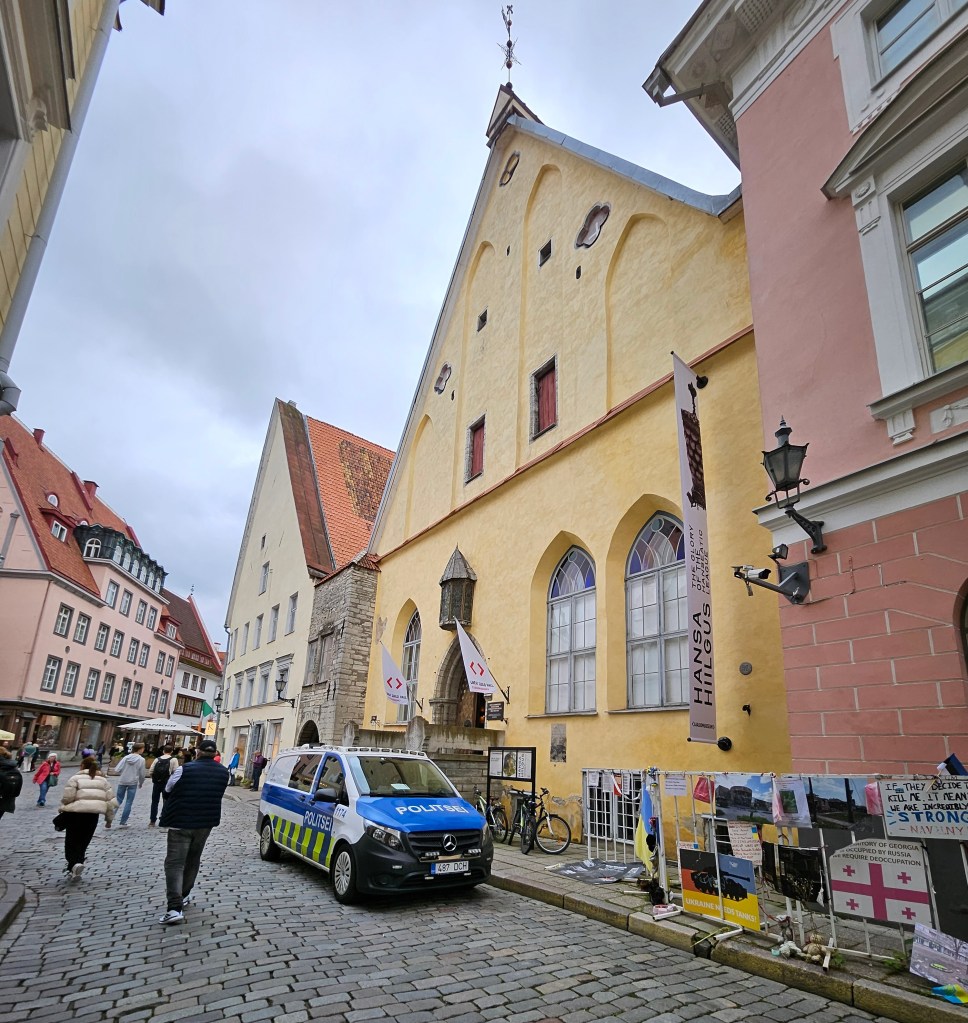

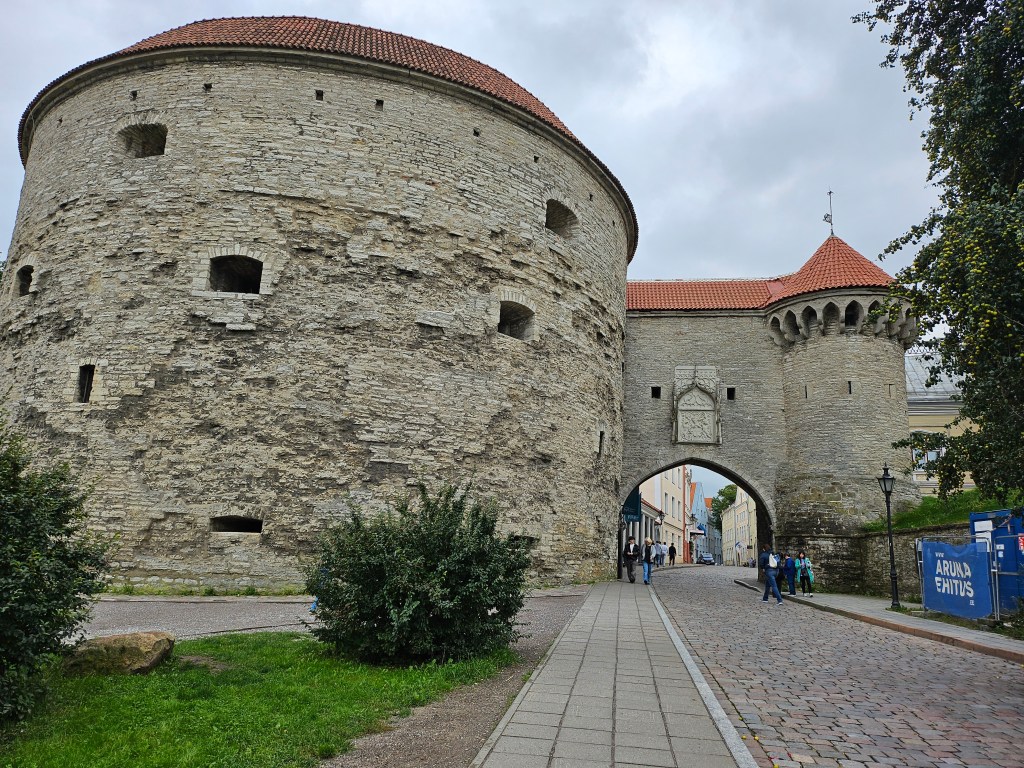
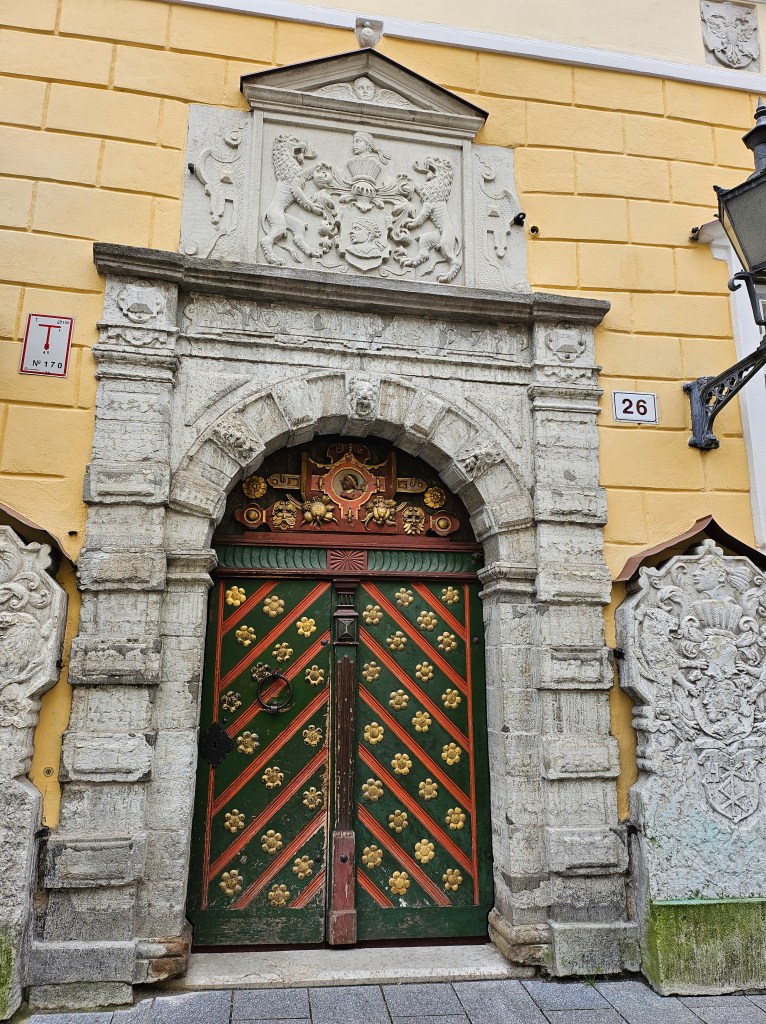
After leaving the Great Guild Hall we continued to walk round some of the bits of Tallinn that we had not seen yet. We went past Fat Margaret, a massive tower that guards one of the entrances to the city and now serves as a maritime museum. Sadly, we did not have time to look inside. We looped back via the Three Sisters, a group of architecturally distinct houses, which are now an upmarket hotel, and Tallinn’s House of the Blackheads (which is not quite as grand as the one in Riga).
That evening we dined in a cellar restaurant, where I shared a cheese plate with my wife as a starter, followed by pork with sauerkraut and roast vegetables. After dinner, there was time for a final walk round the city centre in the dark.
Day 11 – Sunday 21st September 2025 – Tallinn to London
That morning we headed straight from our hotel to a nearby bus stop to catch a bus to Tallinn airport, where we arrived in plenty of time for our 11:25 flight. As airports go, Tallinn seemed quite pleasant, with even a free gym in the departure area. Our plane departed more or less on time, but a strong headwind against us all the way back meant that it landed at Stansted about 20 minutes late. Nonetheless, we were home by early afternoon.
Final thoughts
My wife and I found this trip to the Baltic States, countries that we had never been to before, incredibly interesting. Although we noticed the differences between the three countries, they also had much in common, in particular their shared recent history, which has made them very wary of the continuing Russian threat. Both Latvia and Estonia have significant Russian populations, the treatment of whom could be a cause for problems in the future. The 11 days that we spent there enabled us to only scratch the surface of what these countries had to offer and I am sure that there is plenty of scope to learn a lot more from further visits.
 Europe Explored
Very interesting. Lovely photos.
LikeLike