
“Piper at the Gates of Dawn” (Pink Floyd album, based on the title of a chapter in The Wind in the Willows.)
Having not been on a full multi-city Europe Explored trip for several months, my wife and I decided to visit the three Baltic states. It was our first time visiting countries that had once been part of the Soviet Union and we found the history of these countries fascinating. Our journey will be described over the course of three posts, one for each country.
Day 1 – Thursday 11th September 2025 – London to Kaunas
To complicate our departure there was a strike on the whole of the London tube network on the day we were setting off. An additional worry was that Russian drone incursions had closed Polish airspace for a number of hours on the day before we left. On previous occasions when I needed to get to Stansted Airport before the London Underground has started running, I have used a couple of buses to reach the Stansted Express. I was wary of using that route on a tube strike day, as I was unsure that we would be able to board a full bus part way through its route and was worried that the traffic could be gridlocked. So instead we set off very early and caught a bus to a different train line and then had a 30 minute walk to pick up the Stansted Express. This worked very well, such that we caught the Stansted Express nearly an hour earlier than we really needed.
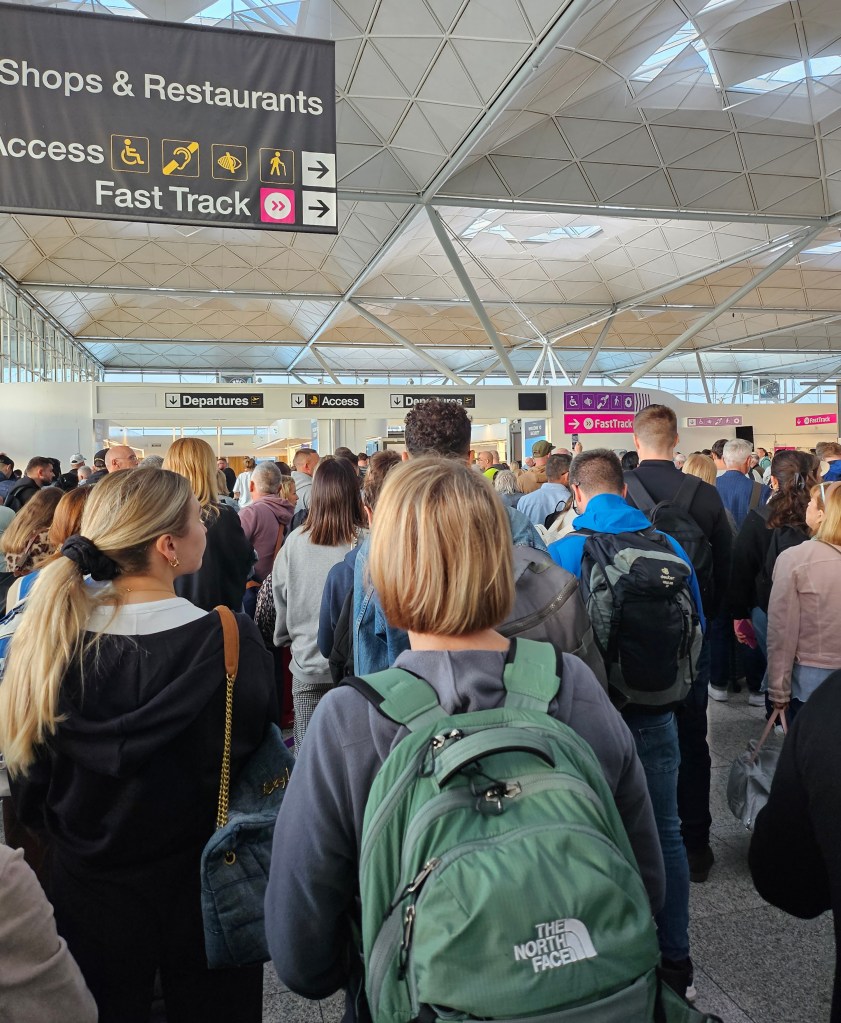
On arrival at the airport we were prevented from going through security, due to the fire alarm going off. This can only have happened just as we were arriving, since the waiting crowd grew considerably in size over the half hour that we were prevented from entering. I overheard one of the staff speculating that the alarm had been caused by somebody smoking in a toilet. Initially the departure board was indicating that our flight would be slightly late. However, by using an aircraft tracking app on my phone, I saw that Ryanair had swapped the late arriving plane which was due to take us with one starting at Stansted. Consequently, boarding started early and we were ready to depart ahead of schedule. But the captain then announced that air traffic control restrictions over Denmark would delay our departure by about 15 minutes.
I noticed that the route we took to Kaunas was not the most direct one via Poland, but a slightly more northerly one over the Baltic, presumably because of the previous day’s problems with Russian drones. We landed on schedule at 3pm (Lithuania is two hours ahead of London). There were no delays at passport control and we had plenty of time to find the stop for the 29 bus to take us to the city centre, which left at 1530. It was not full on leaving the airport, but soon filled up at the next few stops, mainly with children on their way home from school.
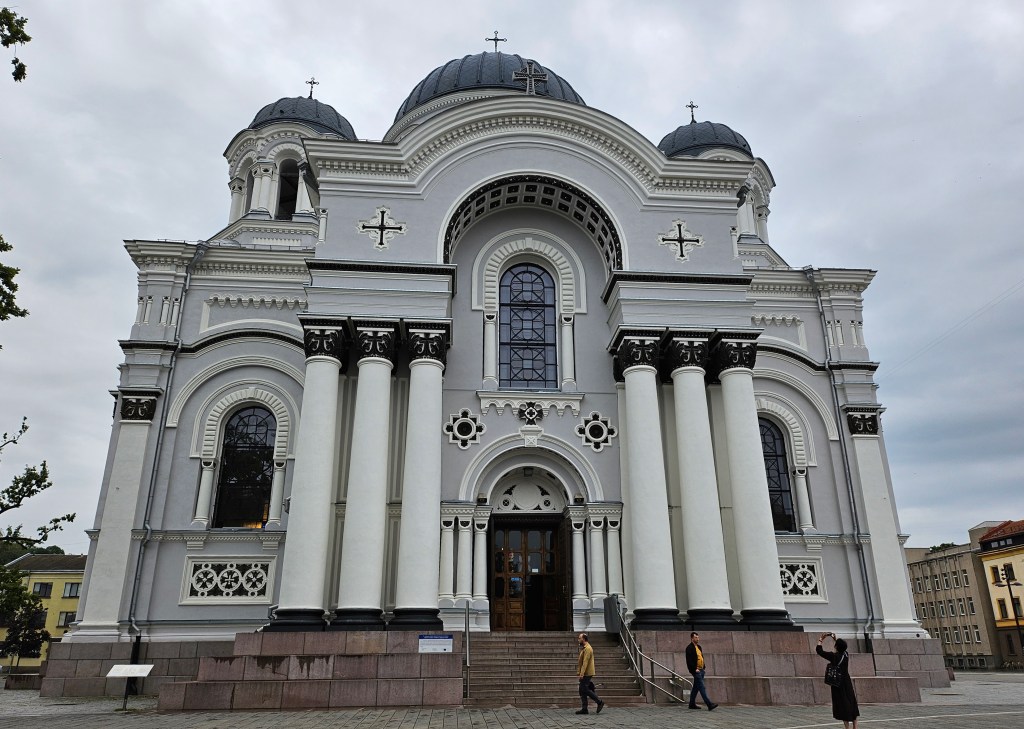
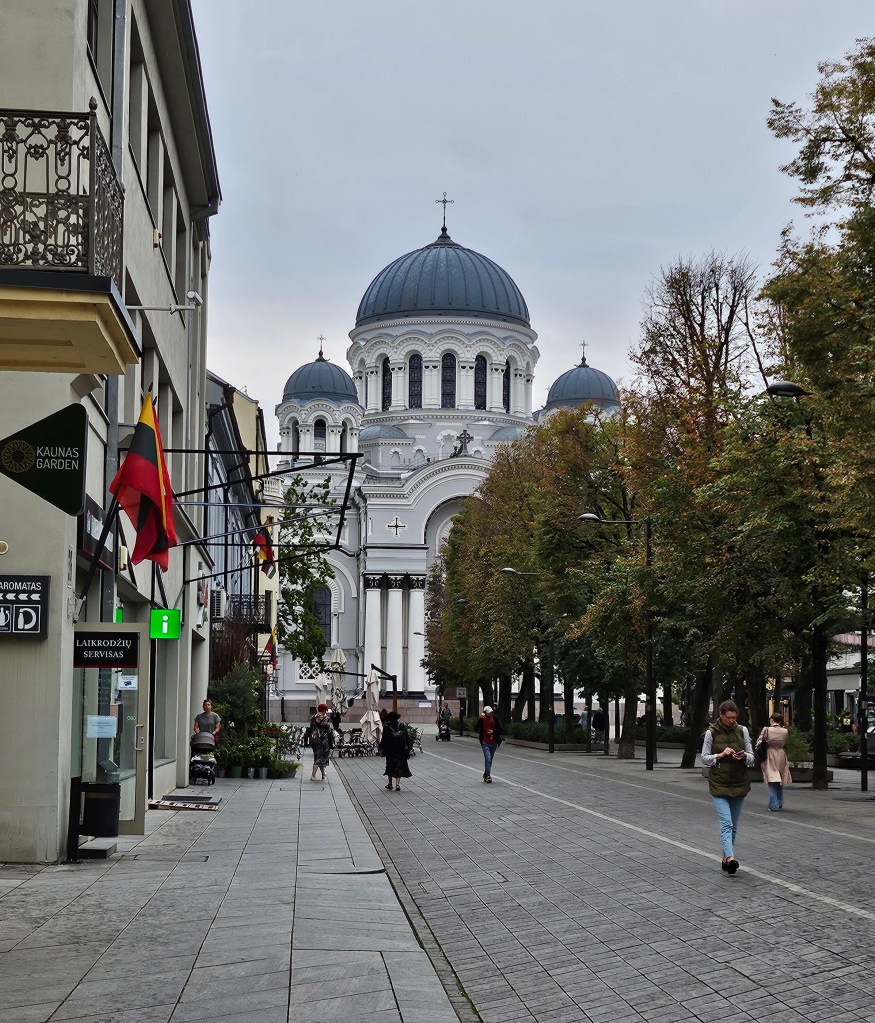
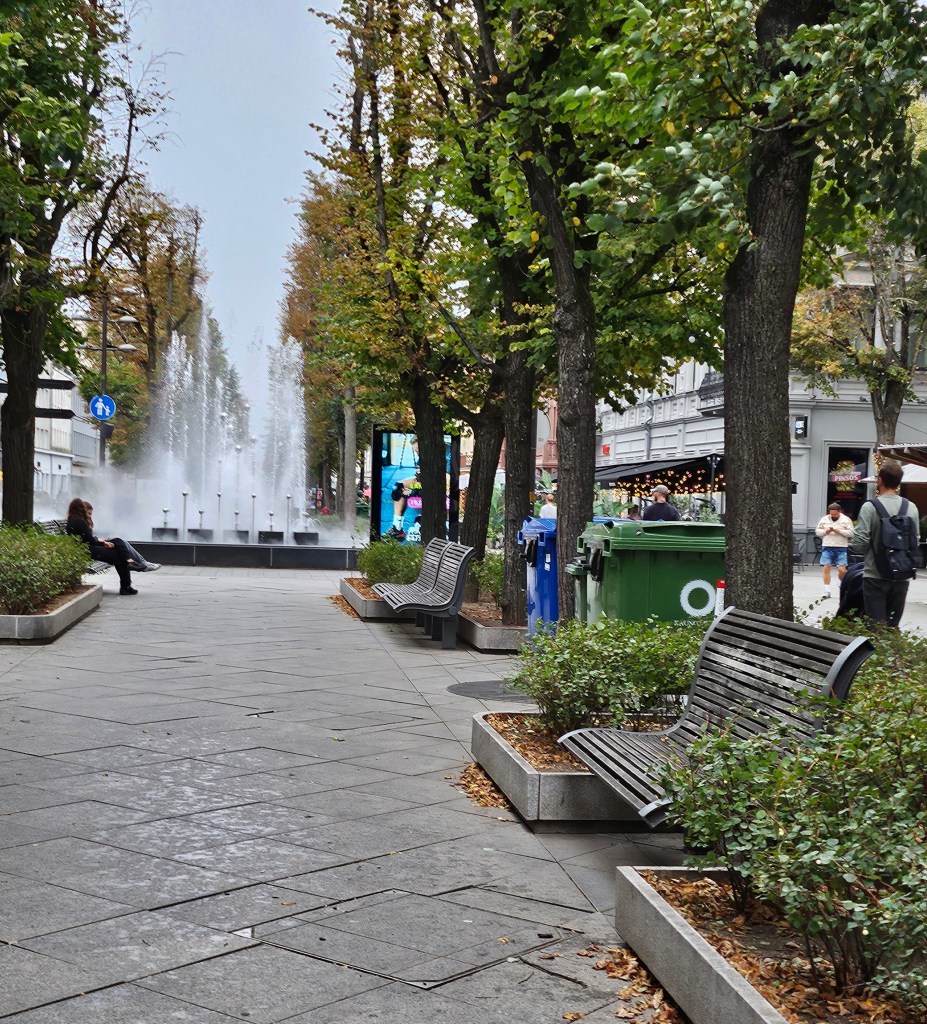
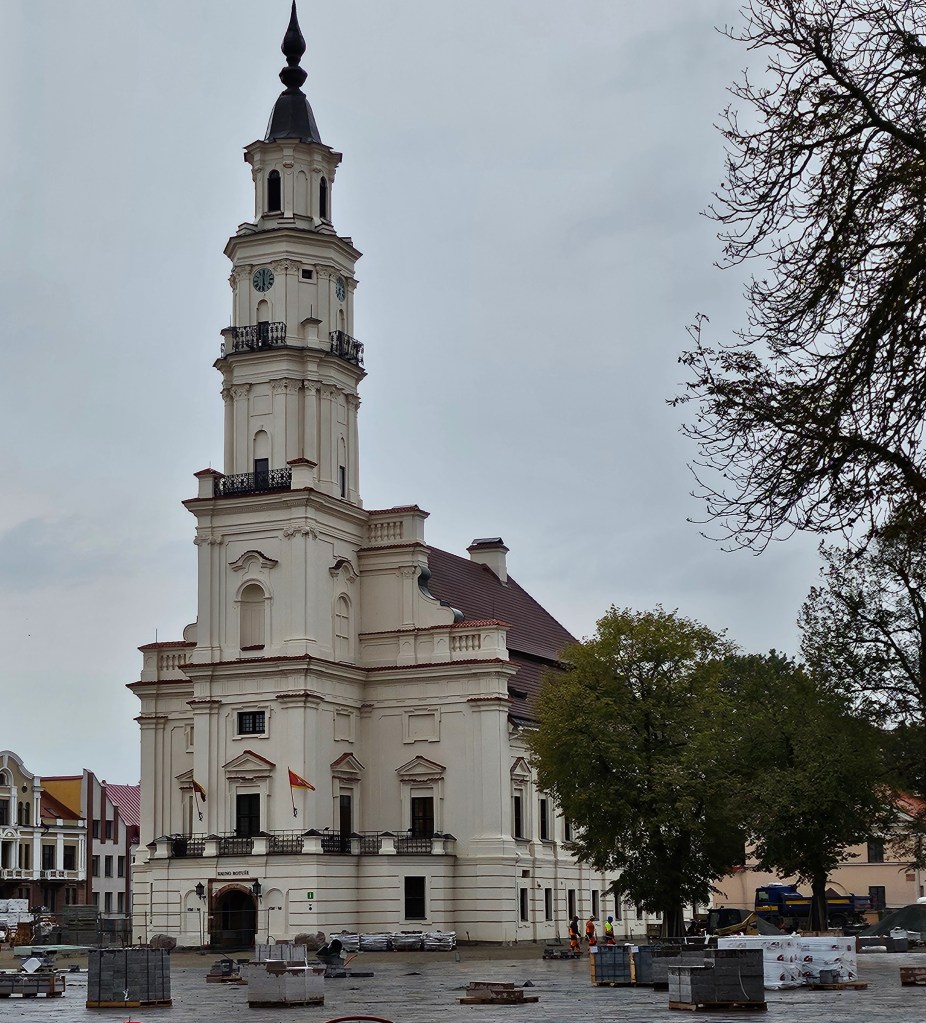
The bus deposited us in the city centre a short distance from our hotel. After checking in, we set off to get a feel of the layout of the city, taking our umbrellas, as rain was threatening. Our hotel was on the edge of the New Town, near the impressive St Michael the Archangel church. This church was built in the 1890s as a Russian Orthodox garrison church for the occupying Russian forces, but is now a Catholic church. It stands at one end of the broad pedestrianised Liberty Avenue, which is lined with restaurants and shops. We followed this to enter Kaunas Old Town, where a narrower street took us to the Town Hall square, which is currently being dug up and the paving relaid.
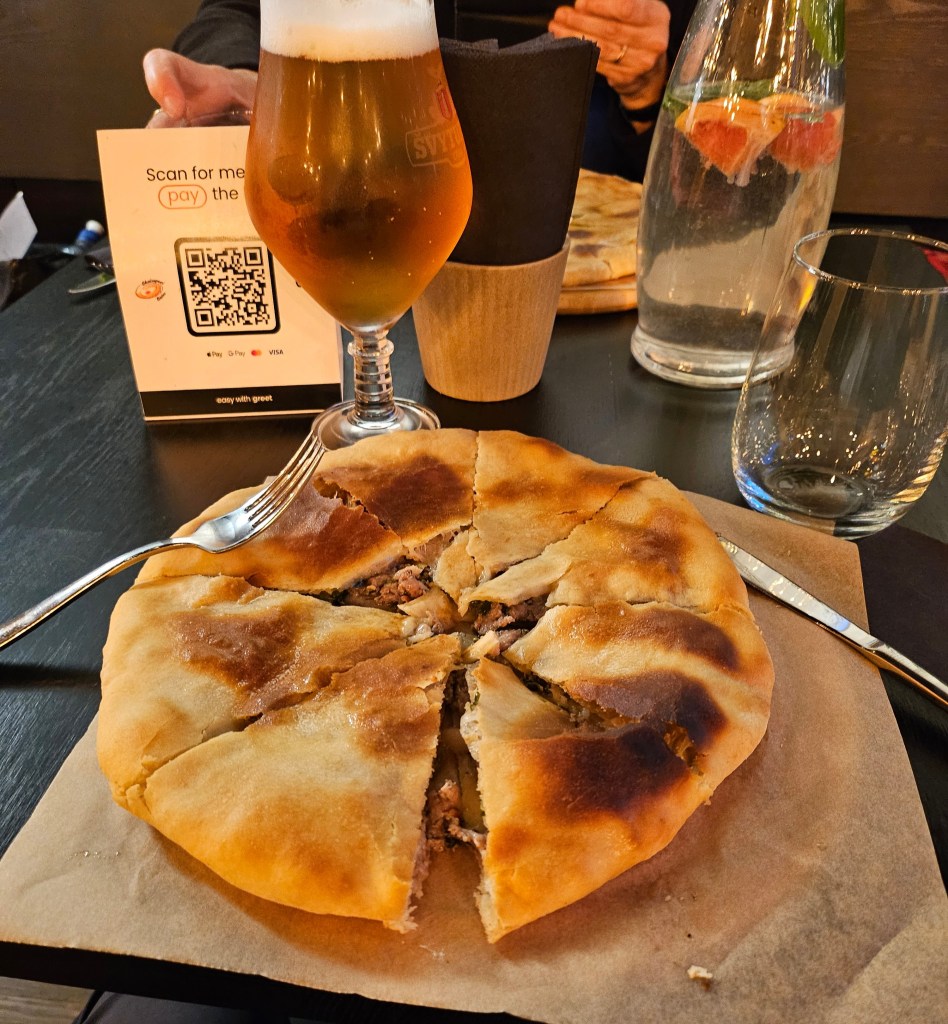
On the way back, we started looking for somewhere to eat. We first tried a pub, which despite having a blackboard menu outside, had stopped serving food. Instead we visited a Georgian restaurant where I had a Kubdari, a baked dough stuffed with minced meat.
Day 2 – Friday 12th September 2025 – Kaunas
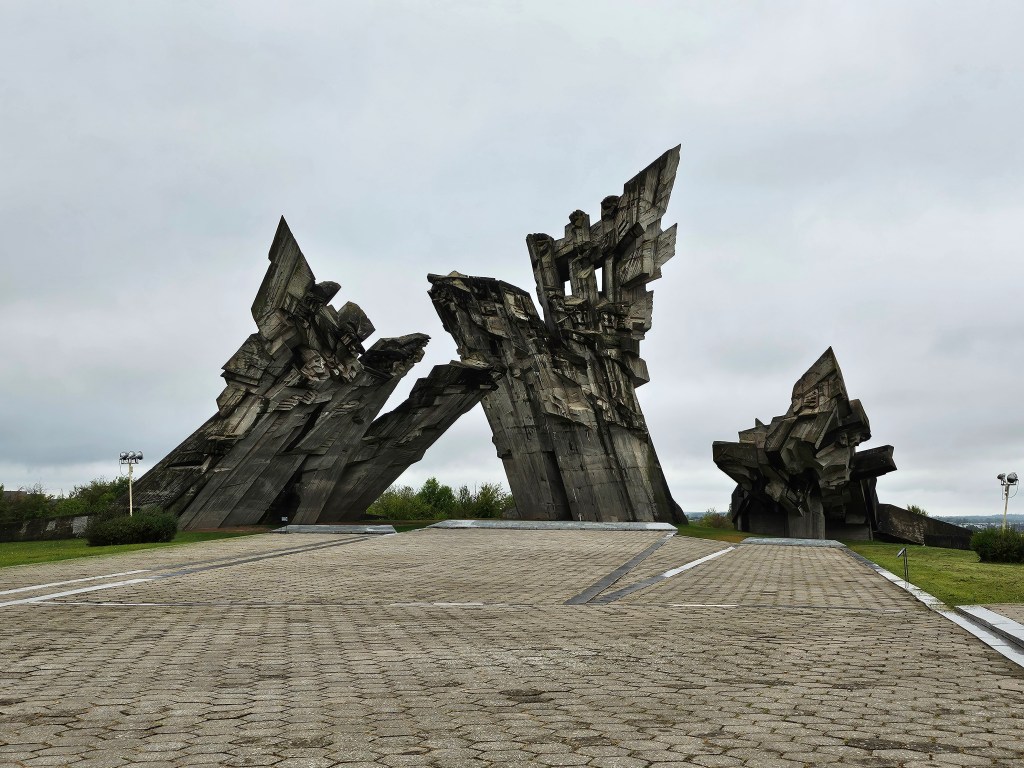
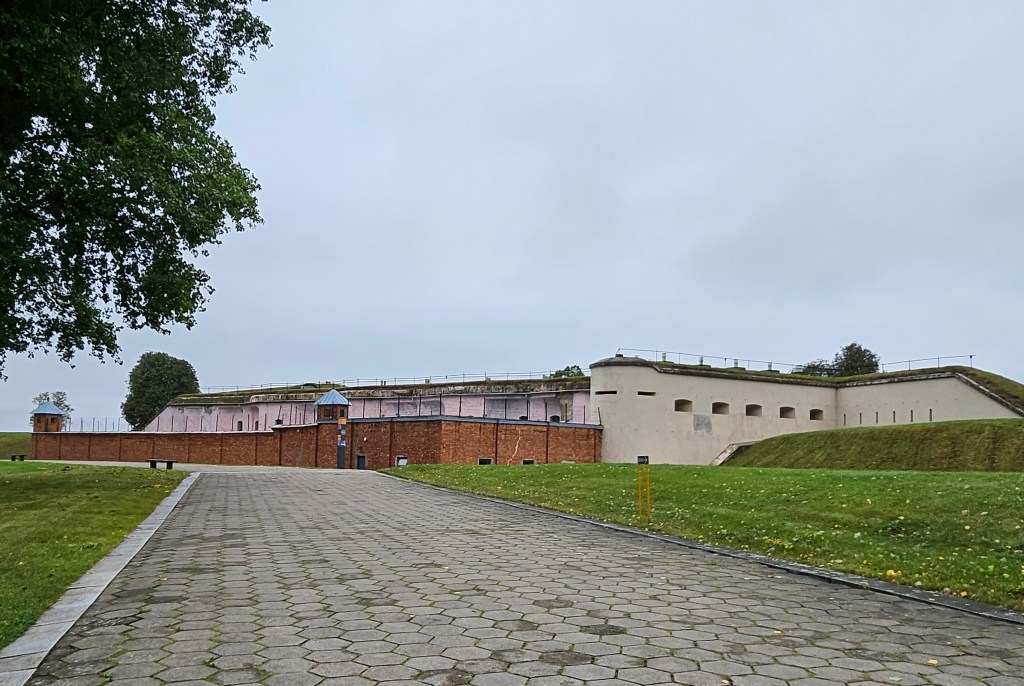
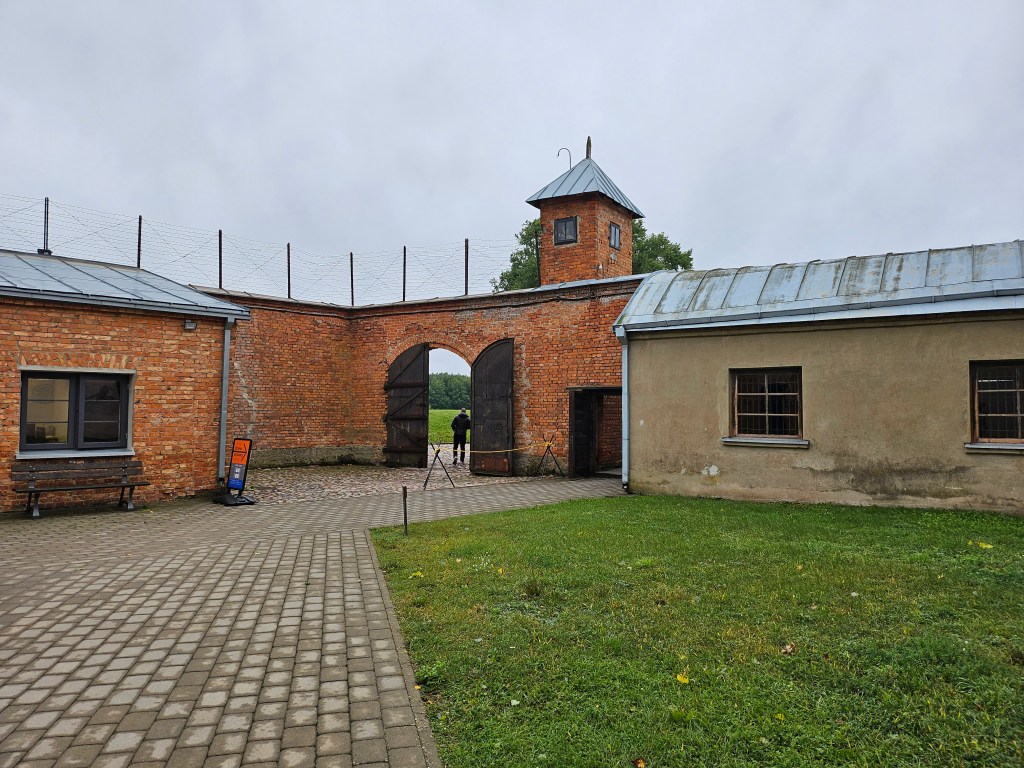
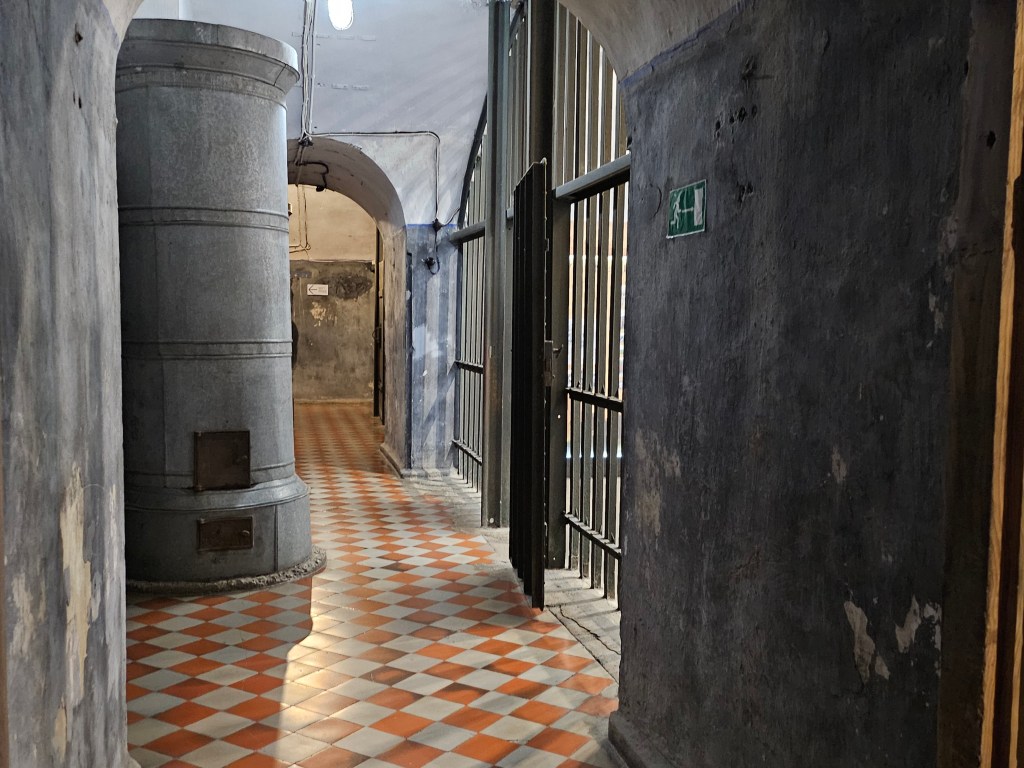
The early morning rain was easing as we set off after breakfast to catch a bus to the edge of the city. Our destination was Kaunas’ Ninth Fort. It is so called because it was the ninth of a series of defensive forts built by the Russian Empire to protect the city in the years prior to World War I. In this respect it proved to be ineffective, as Kaunas fell to the German army following a short siege in 1915. When the Soviet Union occupied Lithuania in 1940, following its independence after WWI, the NKVD used the Ninth Fort as a prison to house political prisoners. When Nazi Germany conquered Lithuania in 1941, the Ninth Fort was the scene of the mass murder of Jews who were brought not only from Lithuania, but from across Europe to be shot and buried in a mass pit just outside the fort. It is estimated that at least 30,000 and maybe as many as 50,000 people were murdered here. Just outside the fort is a memorial to the victims which was erected in 1984. After World War II, the Soviets once again used the fort as a prison for a number of years.
Within the fort you can view its former cells, many of which house information boards telling you of its grim history. One of the rooms told about the Forest Brothers, the insurgency against Soviet occupation that lasted for about five years after World War II. When we had finished looking round we caught a bus back to the centre of Kaunas. Not long after setting off, the bus broke down and we had to get on a very crowded following bus to continue our journey.
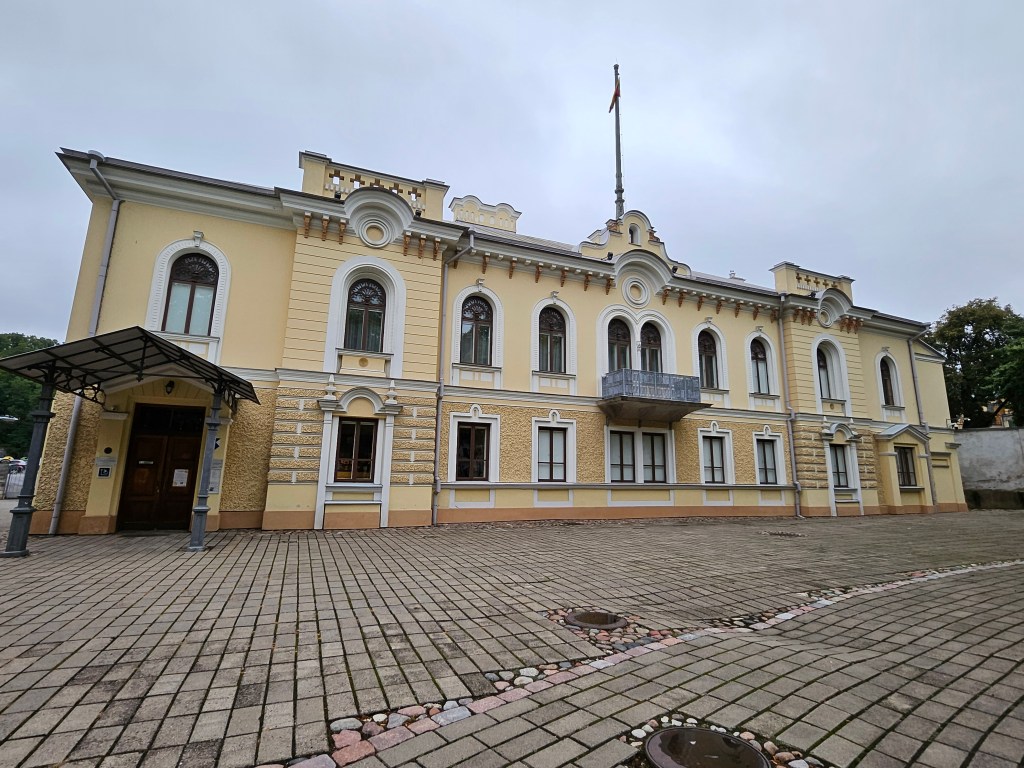
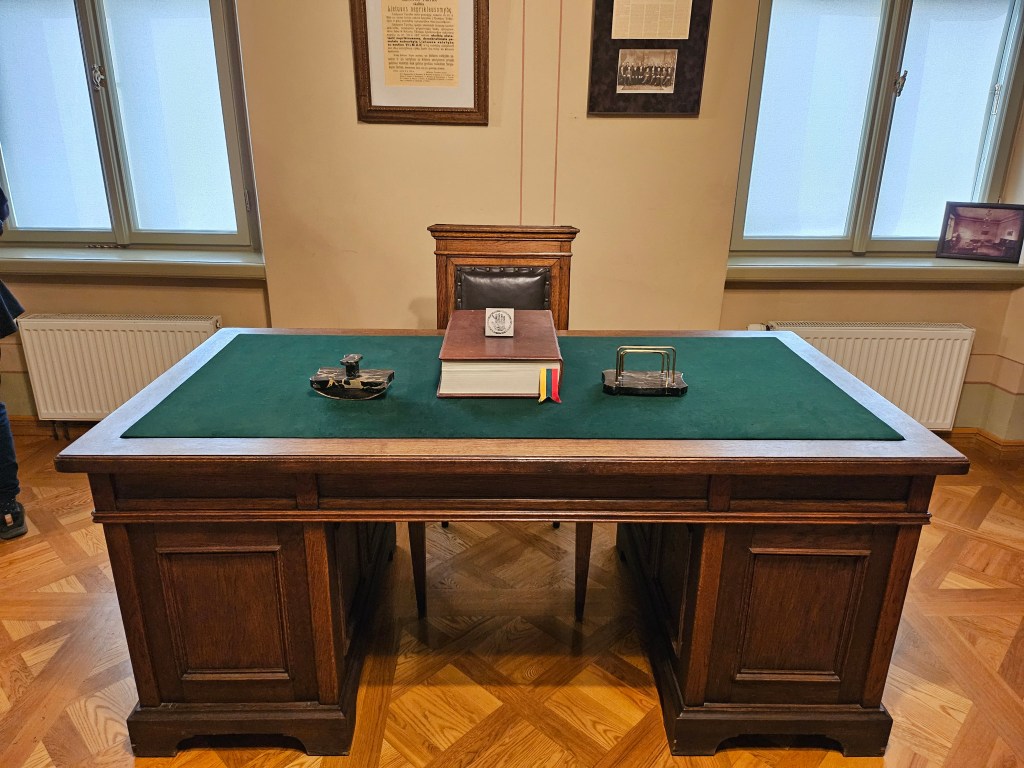
Our next stop was at the former Lithuanian Presidential Palace in Kaunas. When Lithuania first became an independent country in 1920, Poland captured the historic capital, Vilnius, and its surrounding region and incorporated them into Poland. Consequently, Kaunas became the capital of the newly independent country. The former Presidential Palace is a fairly modest building, which was once the family home of a minor official in the Russian Empire. Inside there are exhibitions on the first two floors describing the administrative history of Lithuania over the past two centuries, and information about the people who held the office of President during Lithuania’s first period of independence between the two World Wars.
We had then intended to visit the nearby Kaunas Town Hall, which houses the city’s museum. As we approached on the muddy track through the building site that was surrounding the town hall, we could see various wedding parties also heading for the building. Inside we were told that although the museum was open, because of the weddings scheduled that day, we would not be able to access all of the building. When we enquired further, we established that if we came back after 3pm, the last of the weddings should soon be over.
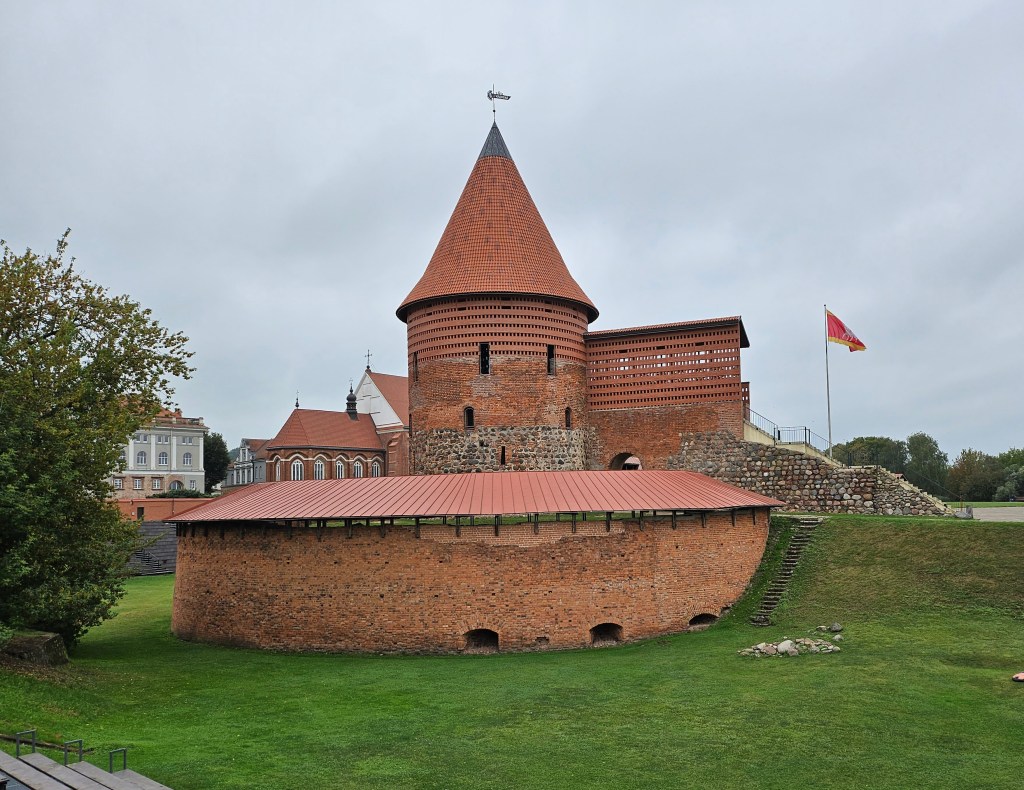
So instead we spent the intervening three hours exploring more of Kaunas. We went to Kaunas Castle, first built in the 14th century, but destroyed and rebuilt many times. You can just visit the main tower of the castle which was extensively rebuilt in 2010.
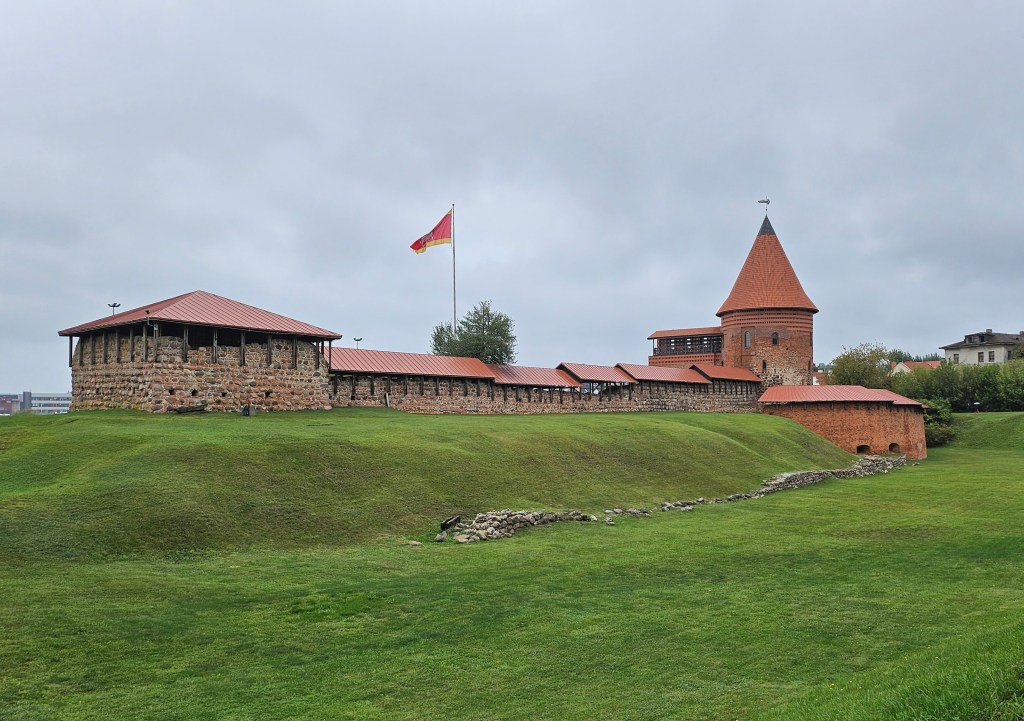
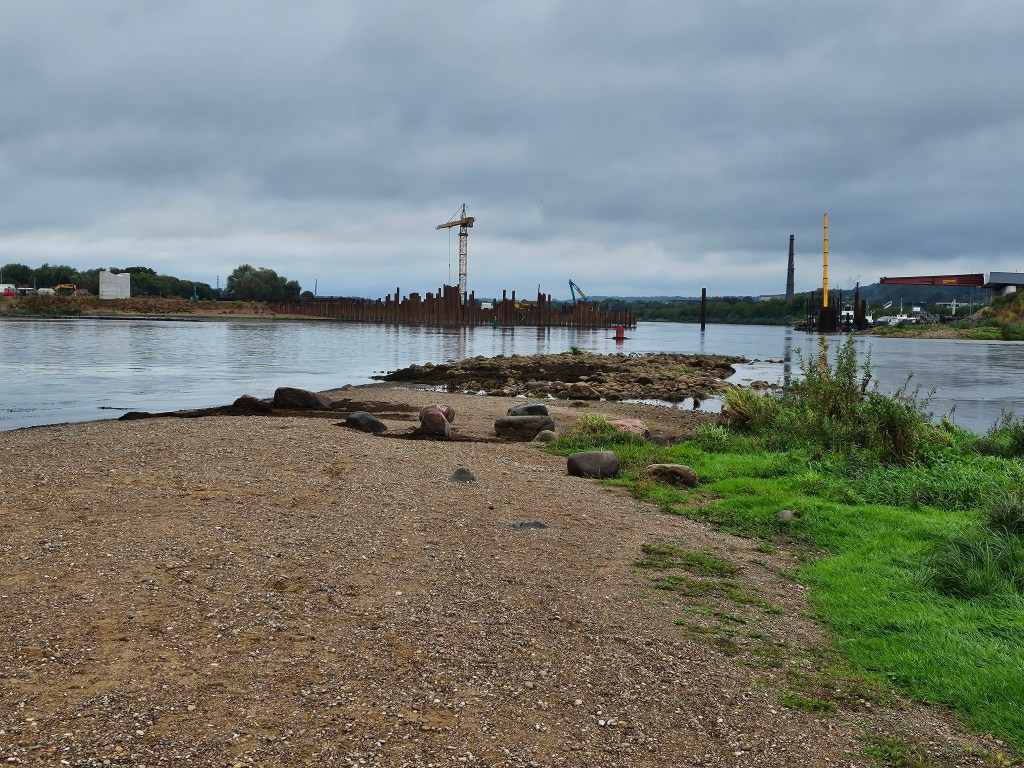
As it was just starting to rain as we left the castle, we went into the nearby St George’s church. It is a Catholic church, built in the Gothic style in the 15th century, but used as a warehouse in Soviet times. By the time the time we left the church, the rain had stopped, so we walked to the confluence of the Neris and Neumas rivers. As we walked along the banks of these rivers, we came across a number of post-wedding celebrations, consisting of a gazebo from where sparkling wine was being served to the bride, groom and guests.
We called in at a couple more churches on our walk. Vytautas the Great, on the bank of the Neumas, is the oldest church in Kaunas. We then headed to the centre of the old town to visit the Cathedral of St Peter & Paul. Our visit there was slightly truncated, as the guests for another wedding started to take their seats.
It was now 3pm and so we walked the short distance back to Kaunas Town Hall. The city museum is located on a number of floors in the building. We had an extremely informative audio guide, accessed by an app on our phones. I thought it was an excellent museum, which told us a lot about the history of Kaunas. As we worked our way up through the building, the weddings had finished for the day, so we were able to access the main hall where the ceremonies had taken place and go out onto the town hall balcony overlooking the square. At the time of our visit, there was no access to the tall tower which adorns the bulding. We only finished in the town hall close to its closing time.

Walking back from the town hall, both the road through the old town and the broad Liberty Avenue in the new town were lined on both sides with market stalls stretching for about a mile. The local population was out in force and appeared to be doing a lot of their shopping from these stalls. The majority were selling food and drink, which it would have been difficult for us to bring back with us, but my wife did buy a hand-carved wooden spoon from one of the stalls.
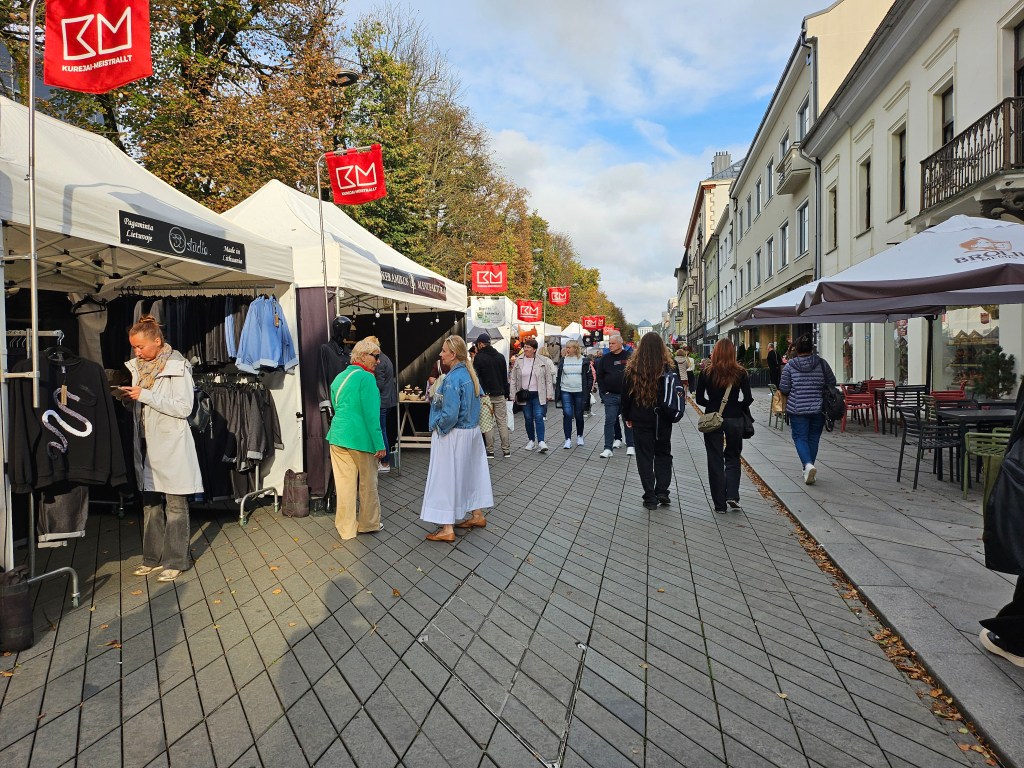
That evening we went to an Italian restaurant, of which we noticed that there were a large number in Kaunas. I had arancini to start with, followed by a chicken and asparagus risotto. When we left the restaurant, after 8pm, we observed the market stallholders starting to wrap their stalls in the the plastic film that is sometimes used to secure suitcases at airports, presumably because they would be selling from them again in the morning.
Day 3 – Saturday 13th September 2025 – Kaunas to Vilnius
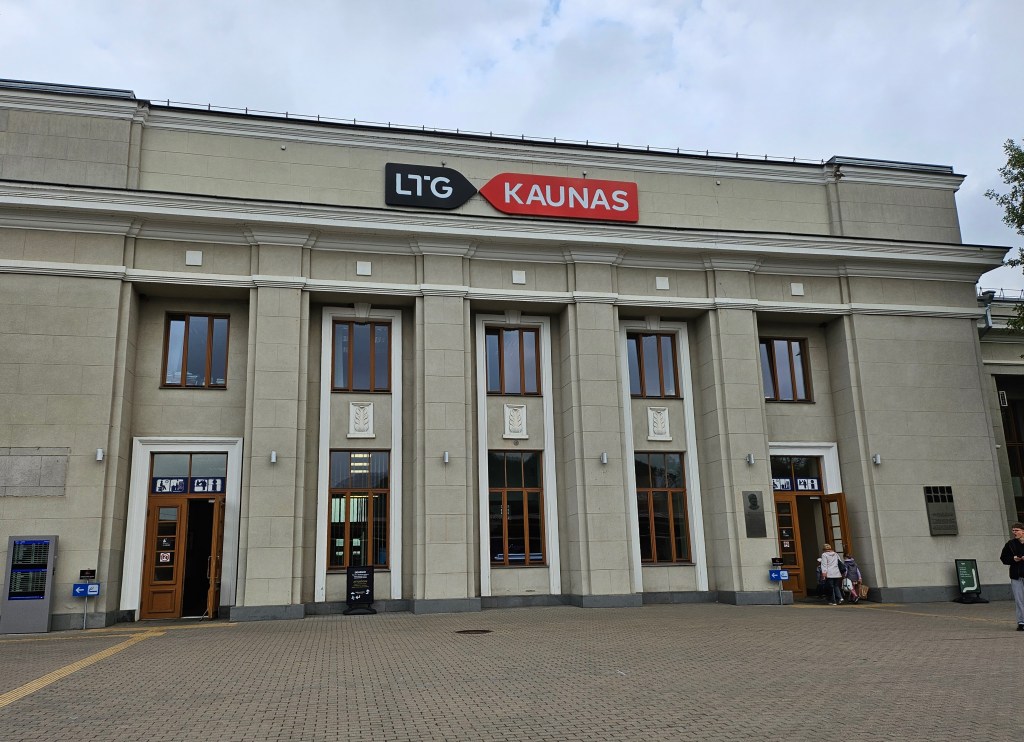
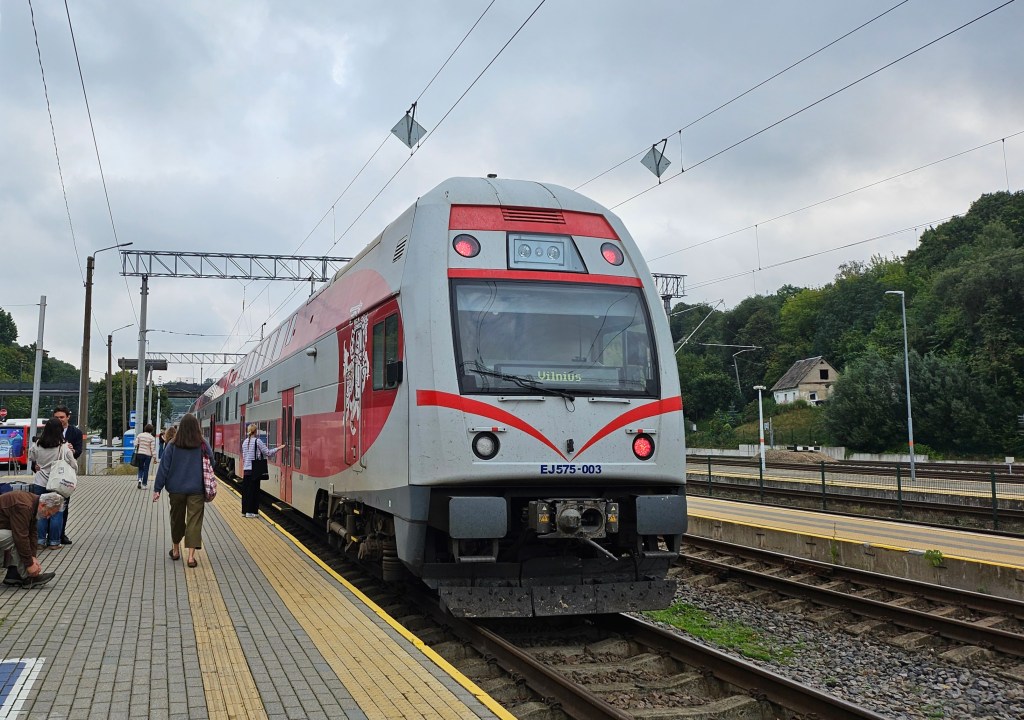
After breakfast we set off on the short walk to Kaunas station. The station building appeared to be inaccessible unless you went through a subway under the main road that ran in front of it. We were catching the 0925 departure and the double-decker train was already waiting at a platform when we arrived. It steadily filled up with passengers on its hour and twenty minute journey to Vilnius. Although it was behind schedule at some of the intermediate stops, the train arrived in Vilnius more or less on time.
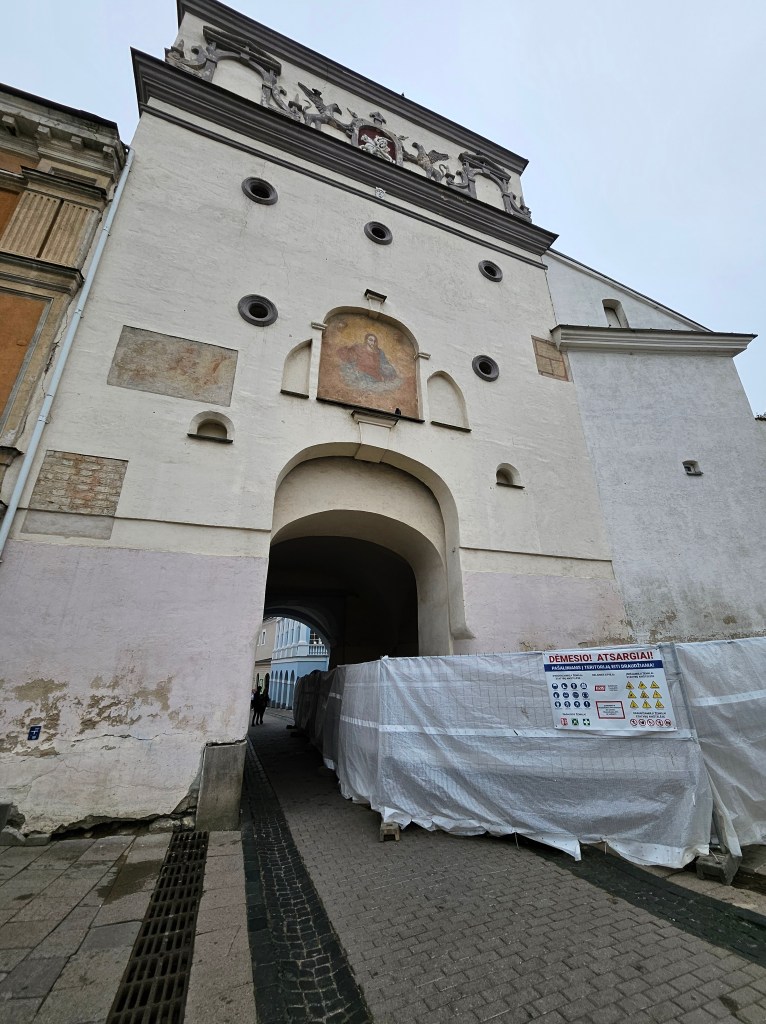
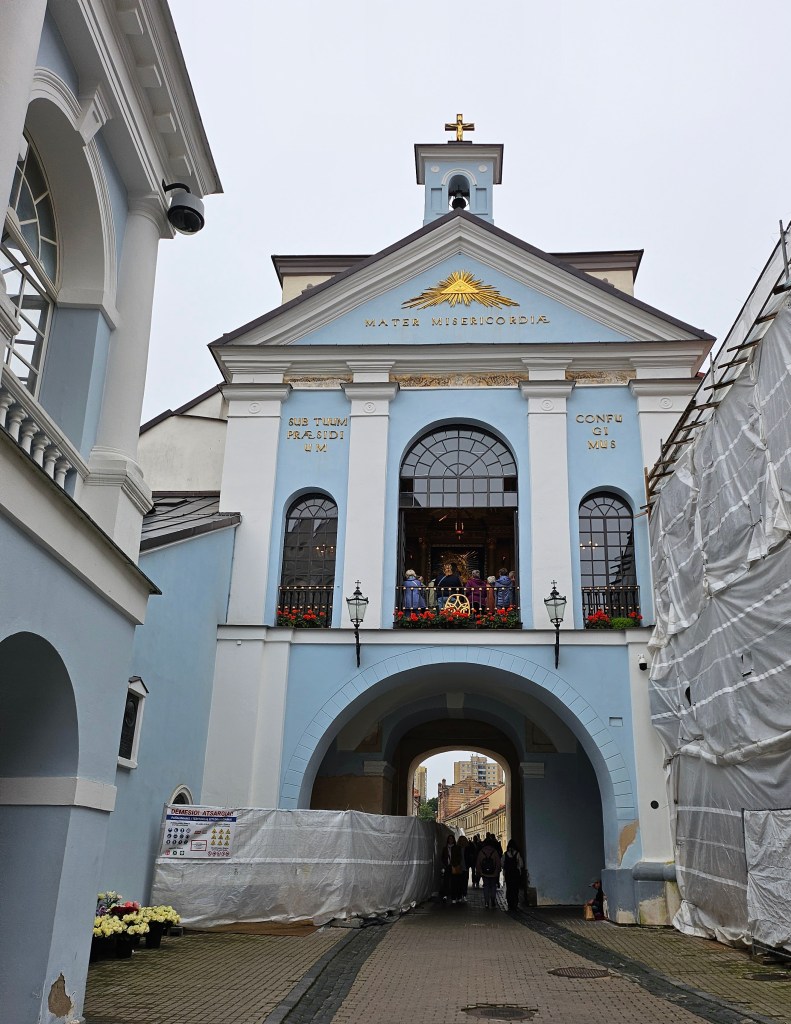
Stopping briefly to drop off our bags at our hotel, we continued via the nearby Gate of Dawn (or Gates of Dawn, as named in some guidebooks) to enter Vilnius old town. It is the last surviving gate in the city walls and houses on top a chapel dedicated to the Virgin Mary. On walking down the main street from the Gate of Dawn, it was immediately apparent that there were many more tourists in Vilnius than we had encountered in Kaunas. We walked the full length of the old town to reach the Palace of the Grand Dukes of Lithuania at its far north.
The Palace of the Dukes of Lithuania was originally built in the 15th century and was subsequently used by the Kings of Poland during the time of the Polish Lithuanian Commonwealth. It was largely demolished in 1801. The current palace was rebuilt in the 21st century, only being fully completed in 2018. It now houses the national museum. One can buy different tickets for four different parts of the palace – we chose to buy the complete set, although, in retrospect the first two were the more interesting (and the more time consuming). In the basement, one can see the remains of the foundations from the original palace and learn about the early history of Lithuania. On the upper floors the history continues through to the 20th century. The second part of the tour let us view the reconstructed historical interiors of the palace. The third area contained exhibitions of weaponry and musical instruments – the space that was supposed to be devoted to an exhibition on everyday life, had been used instead for a temporary art exhibition. The final exhibition space contained the Grand Dukes’ treasury and a special exhibition of artwork from Pidhirtsi Castle in Ukraine.
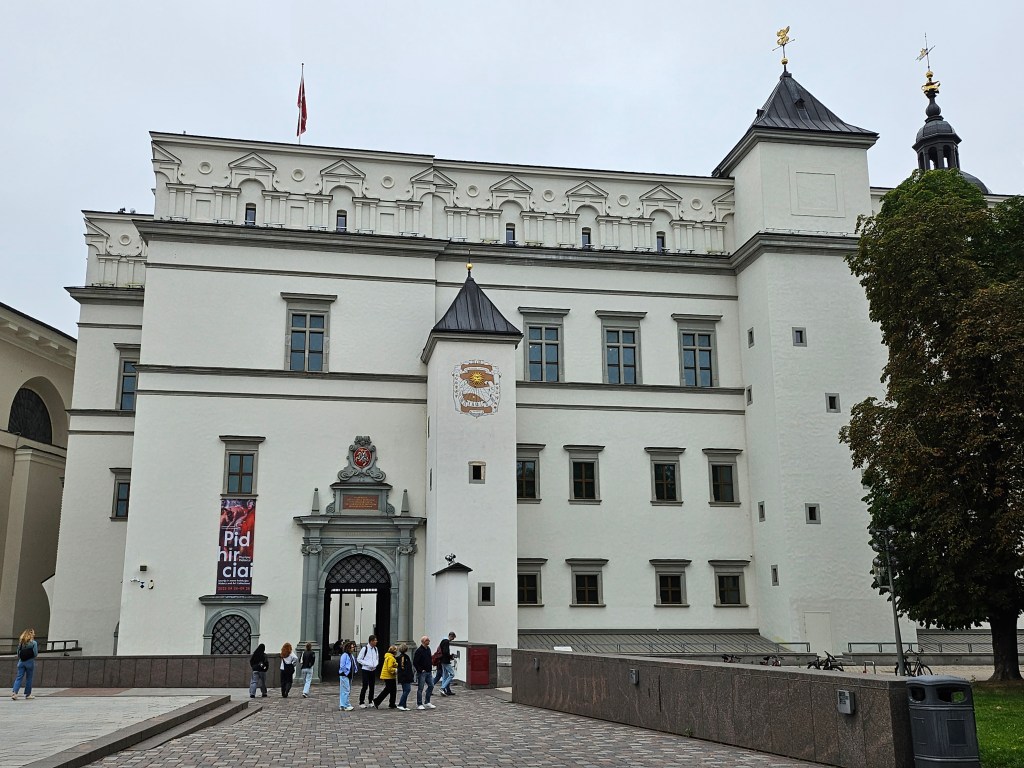


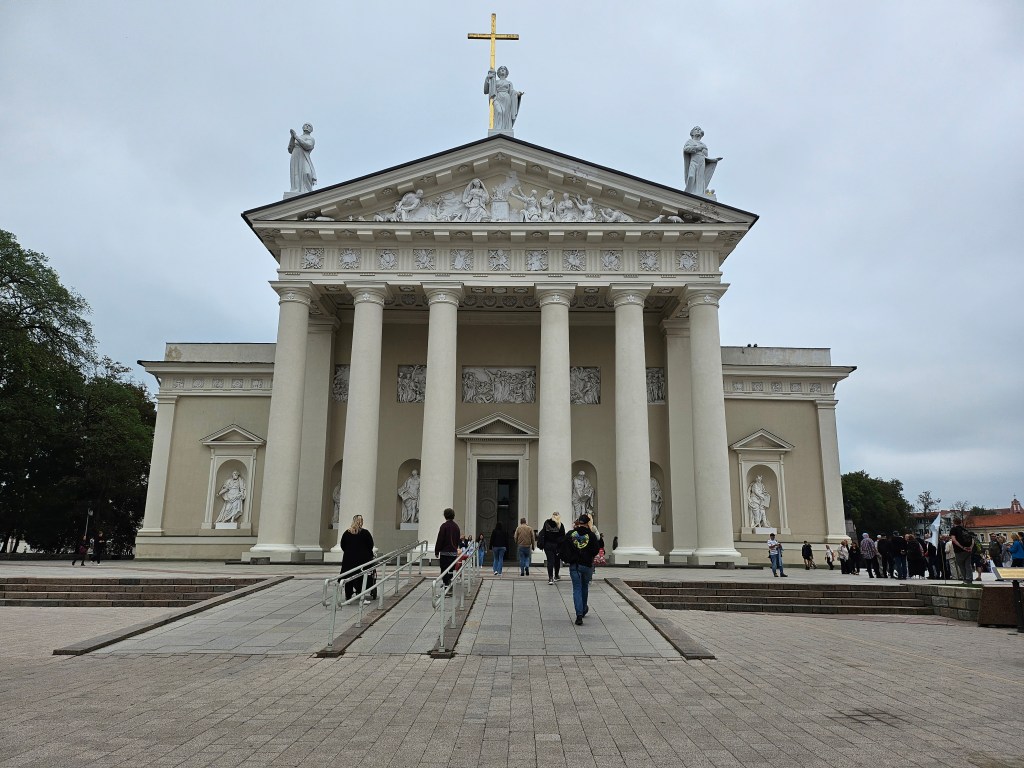
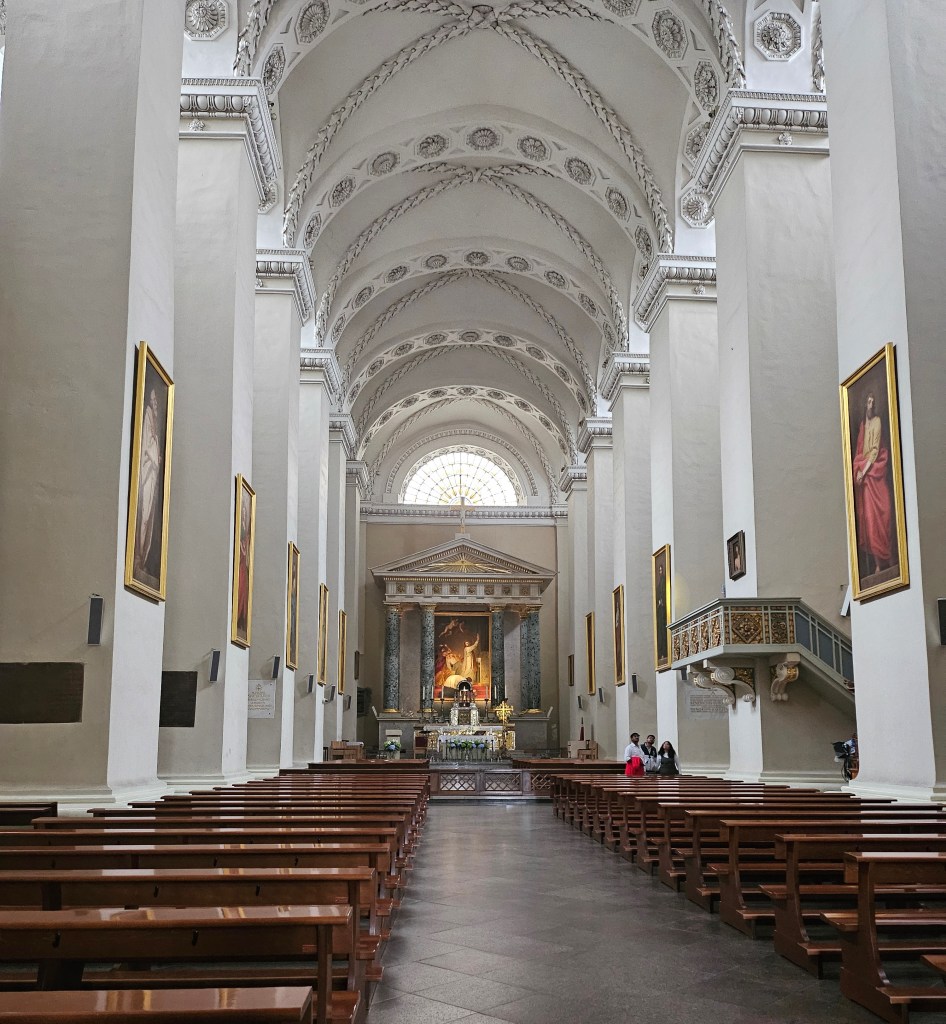
Next to the Palace of the Grand Dukes of Lithuania is Kaunas Cathedral, dedicated to St Stanislaus and St Vadislaus. It is the major Catholic church of Lithuania. It has a separate free-standing bell tower. We had a brief look inside the cathedral, but decided not to climb the bell tower. In the square outside the cathedral, they were putting the finishing touches to the start and finish area for the Vilnius marathon, which was taking place the next day.
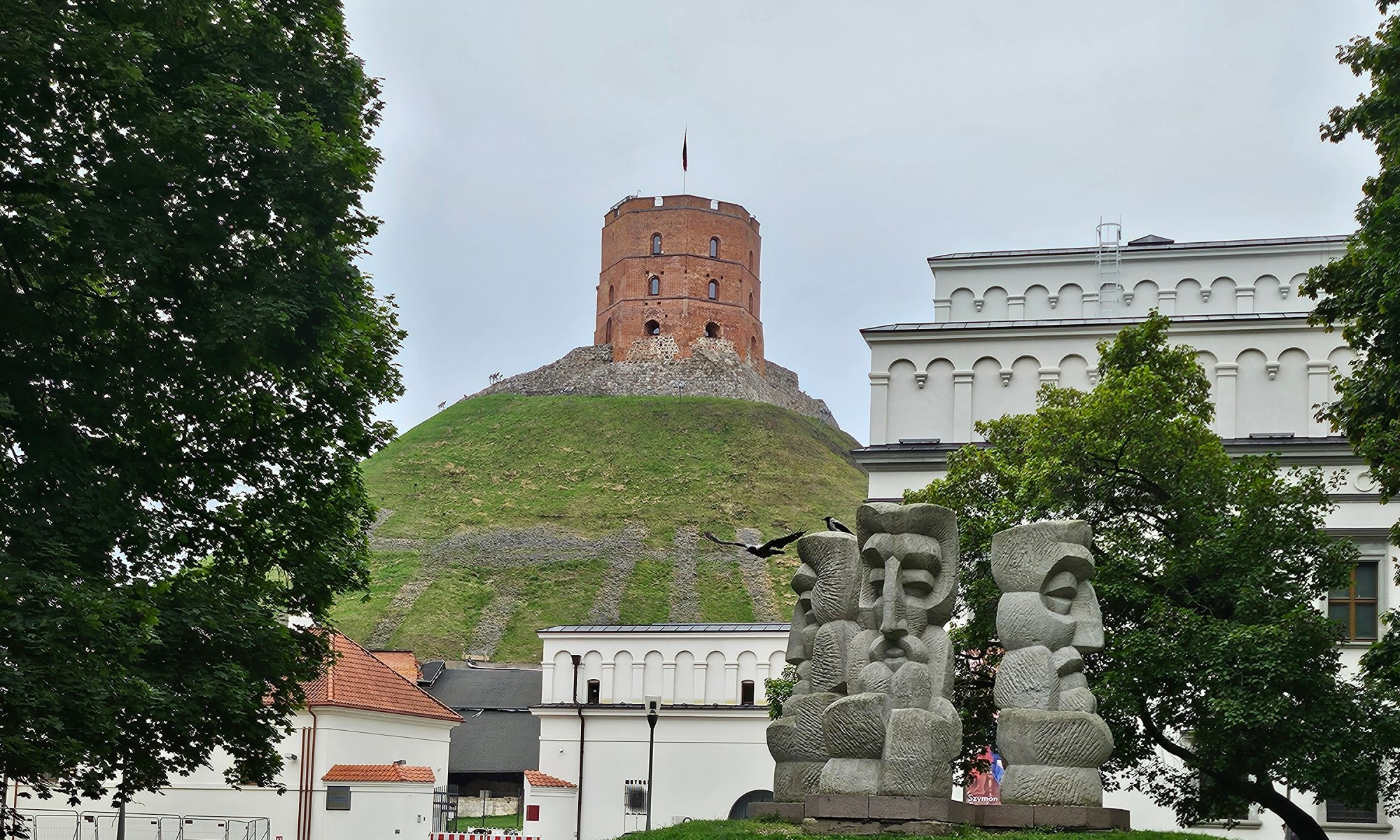
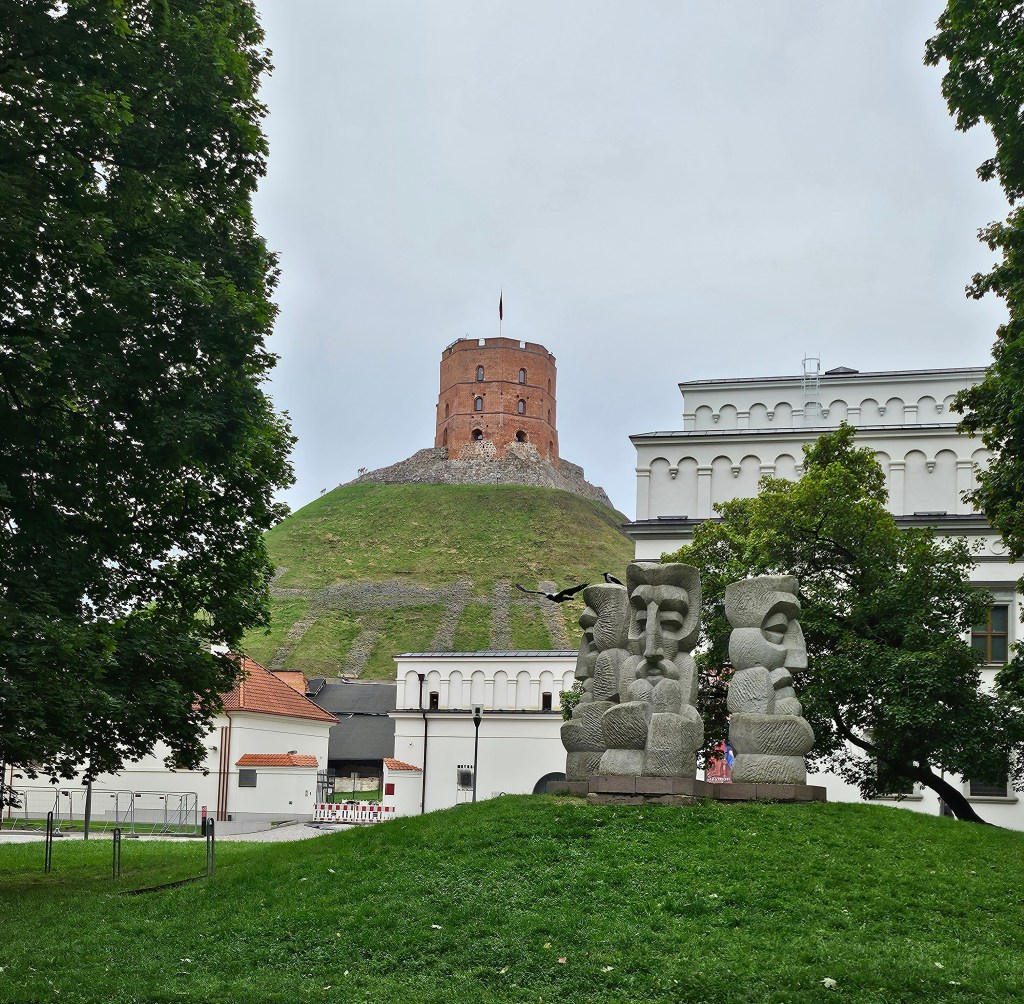
Next we went up Gediminas’ Hill to visit the castle tower on its summit. To get there we had to skirt round the Arsenal of the castle complex, which until recently had housed the National Museum of Lithuania, but is currently closed for renovation. There is a short funicular railway which climbs to the top of the hill, but this was also closed at the time of our visit, so we had no option but to walk up. The walk to the top was rewarded with good views over Vilnius and beyond. The castle tower at the top contains a small museum, covering the history of the castle and of Vilnius more generally. Gediminas’ Hill was one end of the Baltic Way, the human chain formed in 1989 to link the capitals of the three Baltic Soviet Republics to press their claim for independence.
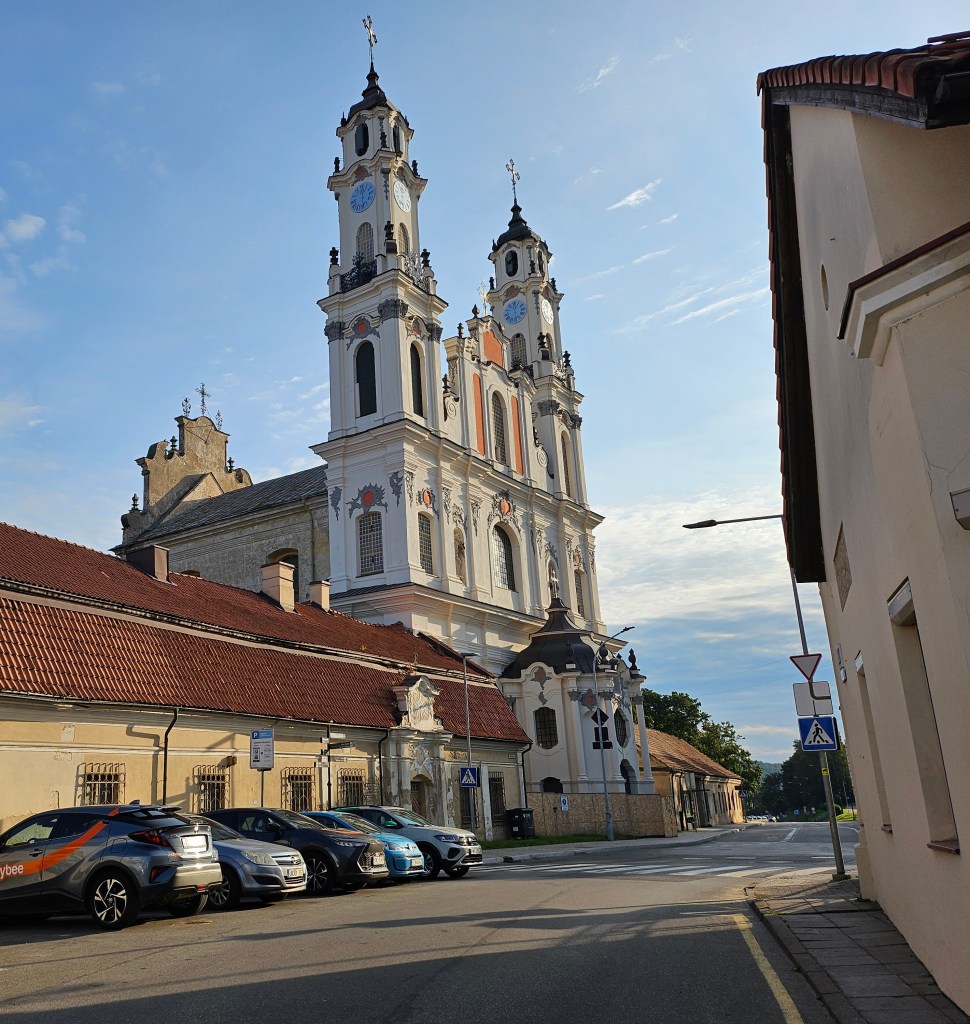
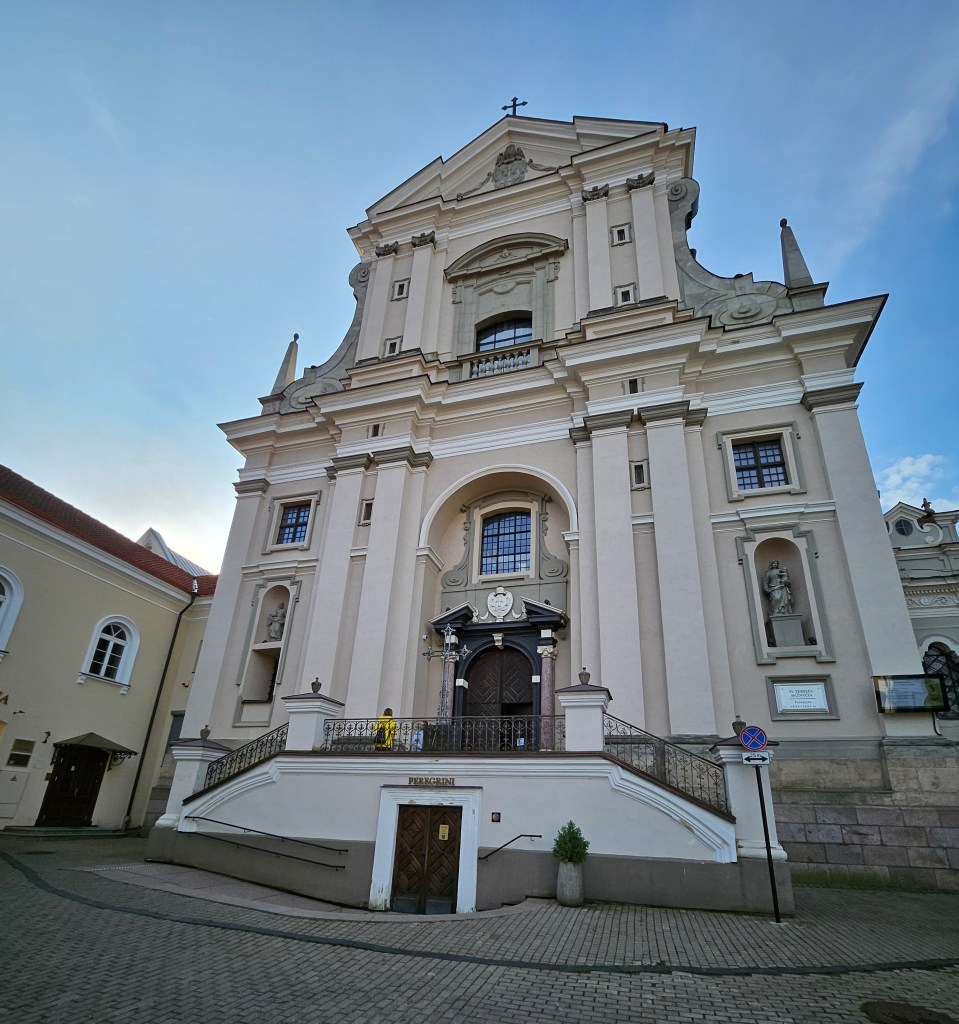
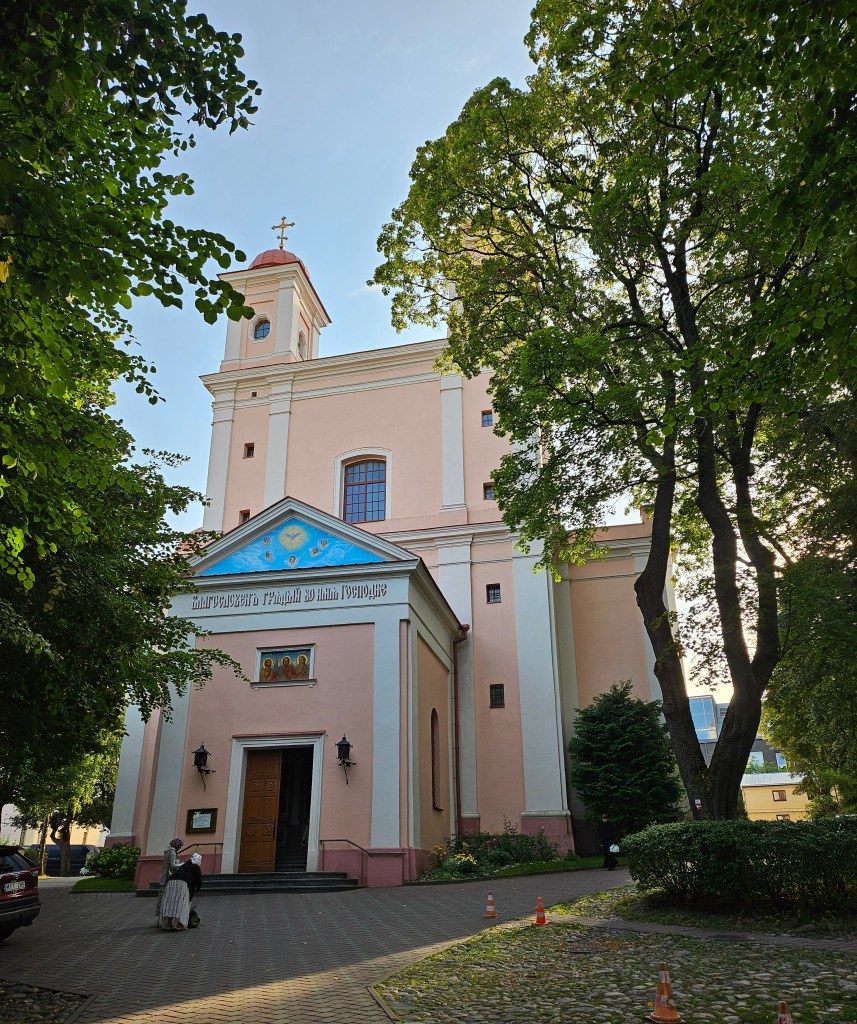
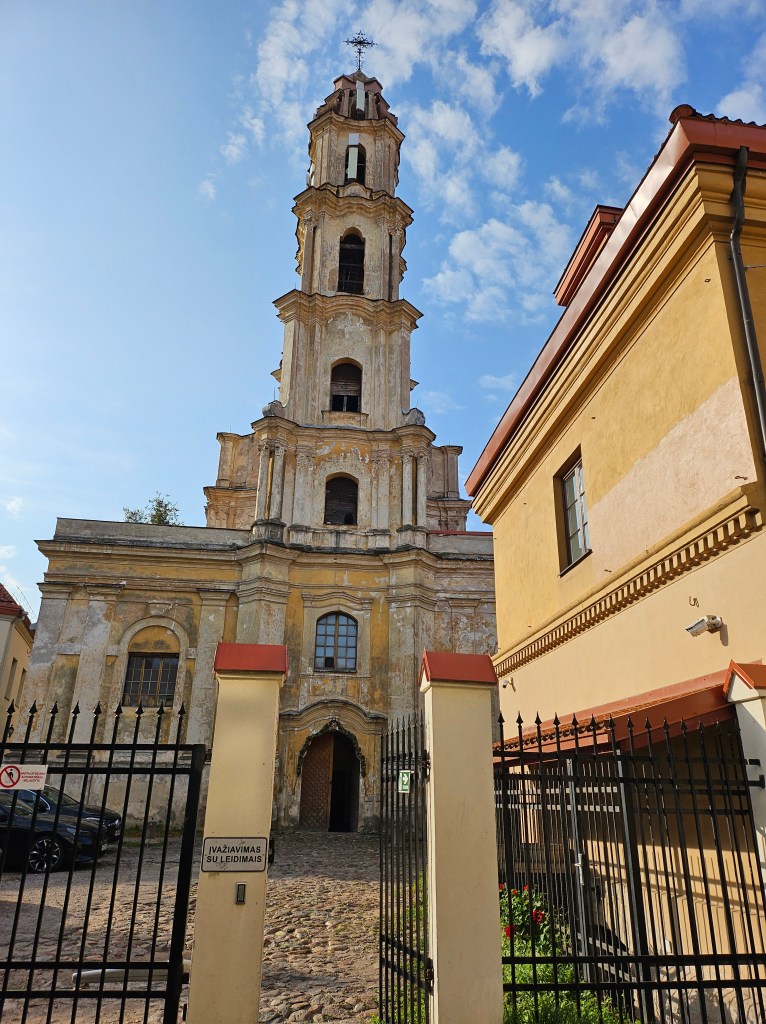
We walked back to our hotel via the old town, looking in at a number of churches that we passed on route. The centre of Vilnius has churches from a variety of denominations including Russian, Ukrainian and Lithuanian Orthodox, Catholic and Lutheran.
That evening, being Saturday, we had taken the precaution of booking a table for dinner in a restaurant just over the road from our hotel. There I had fried bread smothered in melted cheese and garlic as a starter, followed by beef shashlik.
Day 4 – Sunday 14th September 2025 – Vilnius
As we were not having breakfast in our hotel, we left early and paid a visit to the chapel devoted to the Virgin Mary, within the Gate of Dawn. This opens at 7am and by getting there early we avoided the queues that build up later. No photography is allowed within the chapel itself.
We then embarked on a walk from a leaflet we had acquired, visiting some of the main sights which make the centre of Vilnius a UNESCO World Heritage site. A lot of churches were included in the walk, but being a Sunday morning many were being used for services. We would be using this walk route on and off throughout the day. We followed it past the site of the now destroyed main synagogue to the north west of the city centre, catching an occasional glimpse of the stragglers in the Vilnius Marathon.

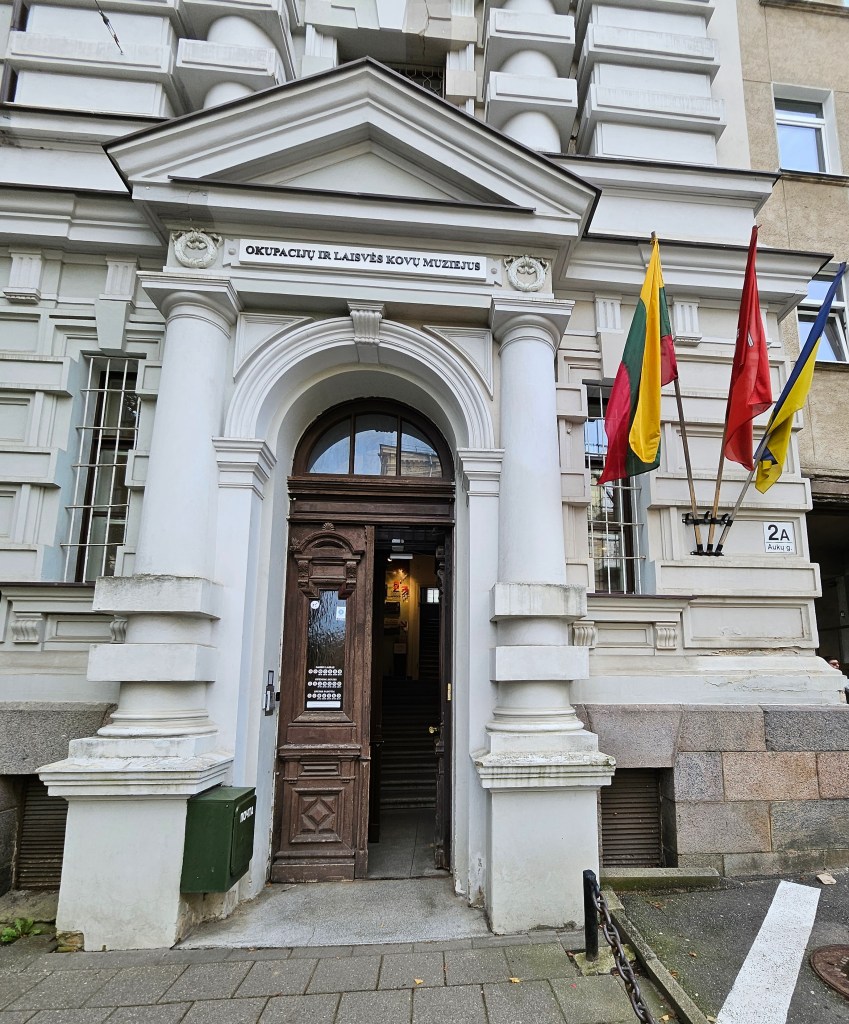
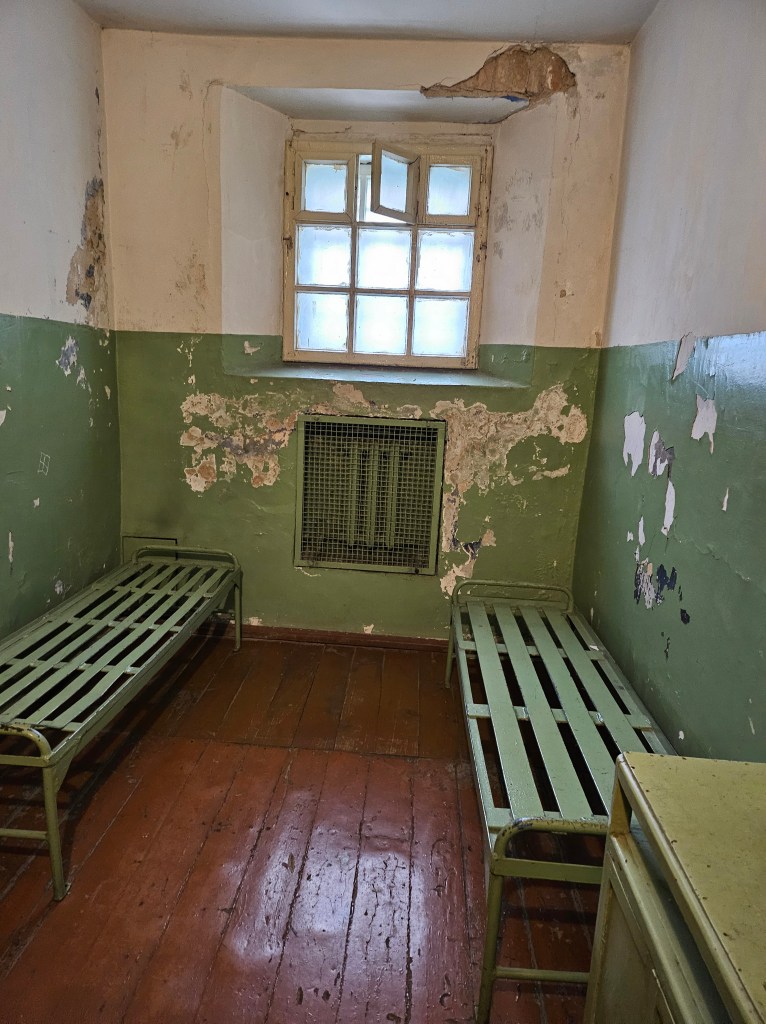
Our first stop was at the former KGB headquarters in Vilnius which now contains the Museum of Occupation and Freedom Fights. In the basement were the cells of those being detained for interrogation. During the period of Nazi occupation of Lithuania in World War II, the Gestapo used the building for the same purpose.

Up until World War II, Lithuania had a significant Jewish community, which was all but wiped out by the Holocaust. A short walk from the former KGB headquarters is the Museum of the Culture and Identity of Lithuanian Jews. This provide a lot of information on the rich history of the former Jewish inhabitants of Vilnius and elsewhere in the country.
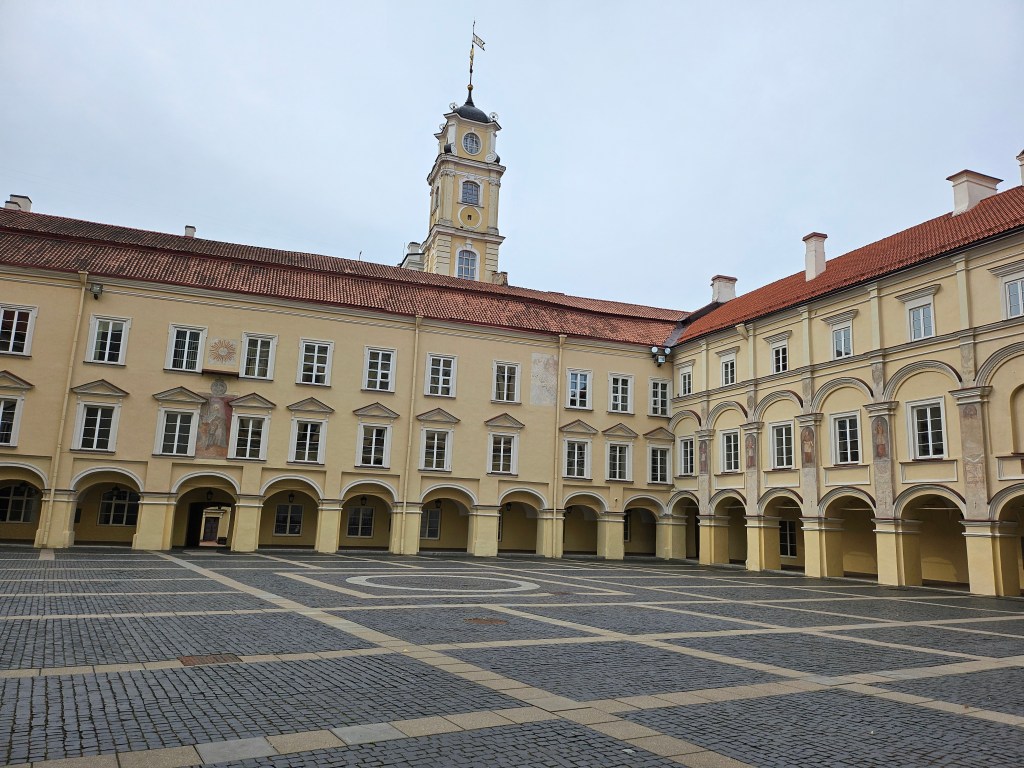
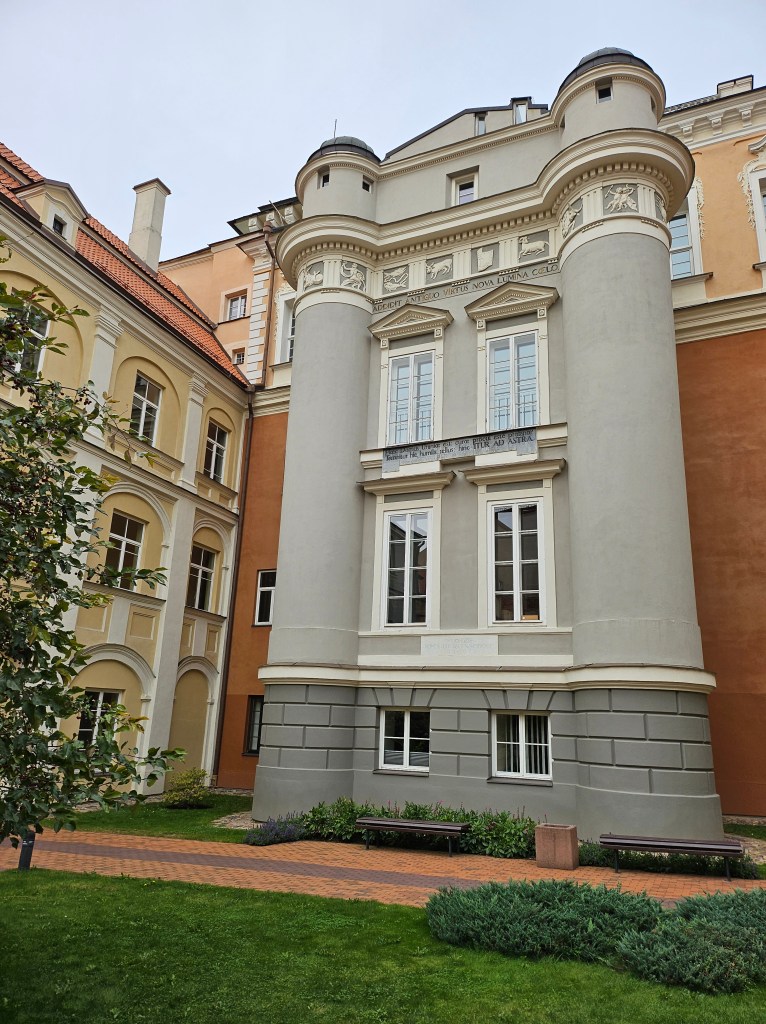
We then continued following our walk which brought us to Vilnius University, founded in 1568. You can walk through some of the courtyards of the university in the centre of Vilnius. In the main courtyard there is a church, rather strangely dedicated to two St Johns – the Evangelist and the Baptist.
Nearby is the House of the Signatories, where the Act of Independence was signed in 1918, leading to the establishment of Lithuania as an independent country for the first time. The building now contains a museum, a large part of which was devoted to the diplomatic representation of an independent Lithuania in Italy, the USA and a number of other countries during the period from 1945 to 1990 when it was occupied by the Soviet Union.
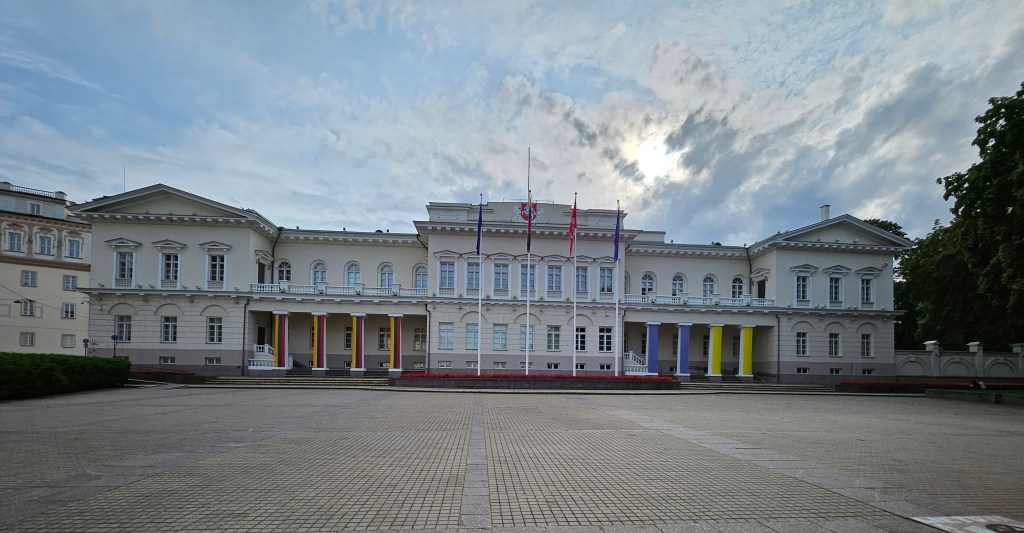
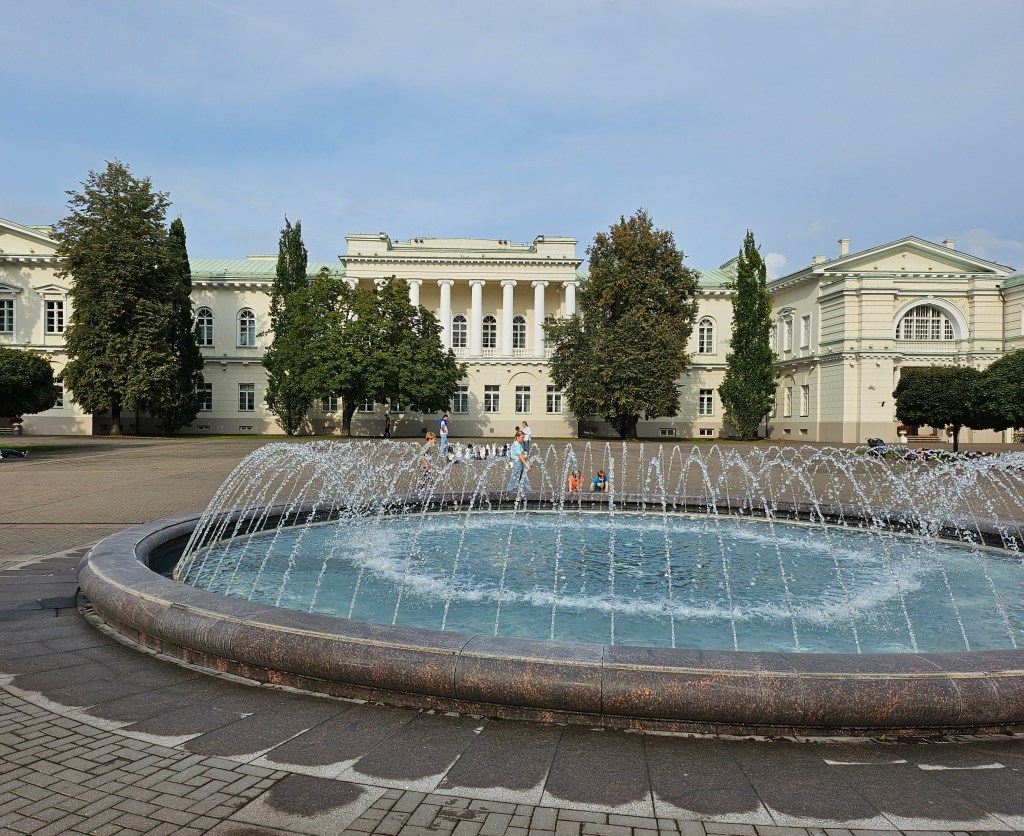
We then walked to the Presidential Palace, which is rather more grand than its counterpart in Kaunas (which served in this role during the first period of Lithuanian independence, when Vilnius was under the control of Poland). We initially sat in the Palace gardens, which are often used as the place for group photographs when Lithuania hosts EU or NATO summits, before walking round to see the impressive front façade.
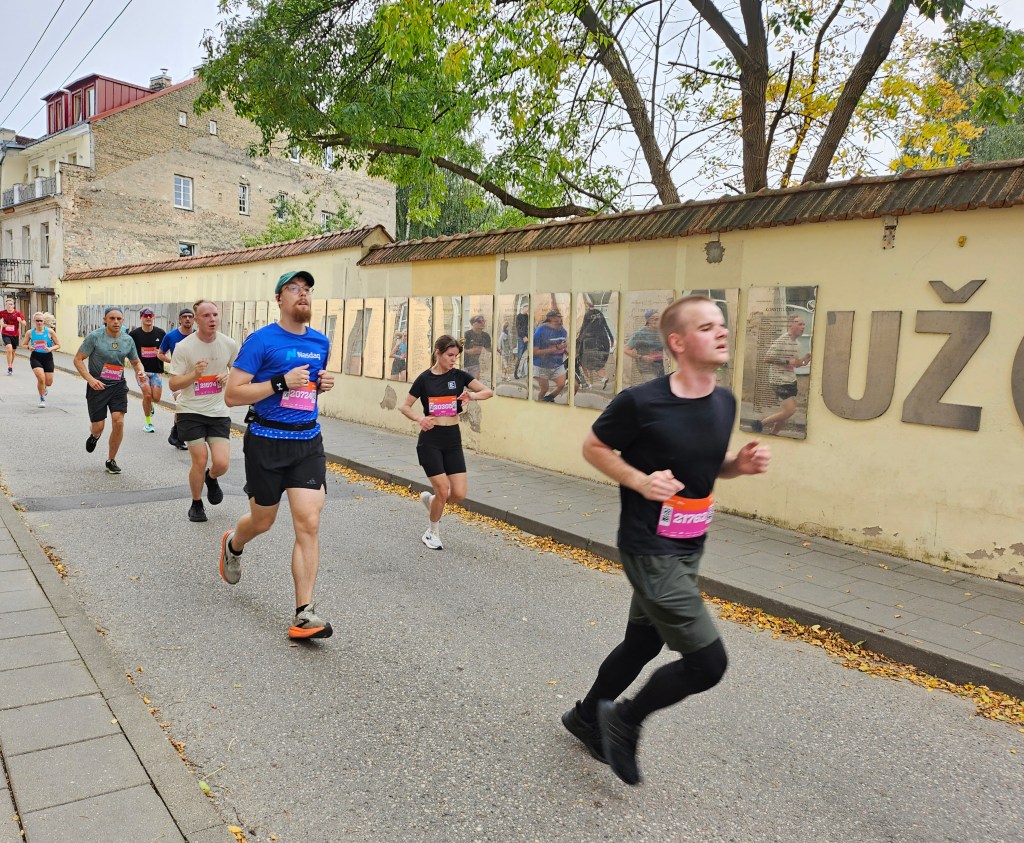
We continued to follow our walk to take us to Užupis on the other side of the Vilnia river. During this stage of the walk, we encountered an afternoon road race, being held in conjunction with the Vilnius marathon which had taken place that morning – the shorter afternoon event seemed to have rather more competitors than the marathon. Prior to World War II, there was a large Jewish population in Užupis, but subsequently it became a very run down area. In immediate post-Communist times it became a Bohemian enclave attracting artists and similar-minded people. In 1997, on April Fools day, Užupis declared independence and issued its own tongue-in-cheek constitution. From Užupis we walked back to our hotel, briefly looking inside a couple of churches that we had unable to view previously.
That evening we fancied a more modest dinner, so we went to a fish and chip restaurant near the station. On learning that we were from England, the woman who was serving wanted to know how their fish and chips compared with those in England. I told her that they compared very favourably, but in England the mushy peas accompanying the fish and chips are usually served hot.
[To be continued – coming next: Latvia.]
 Europe Explored