
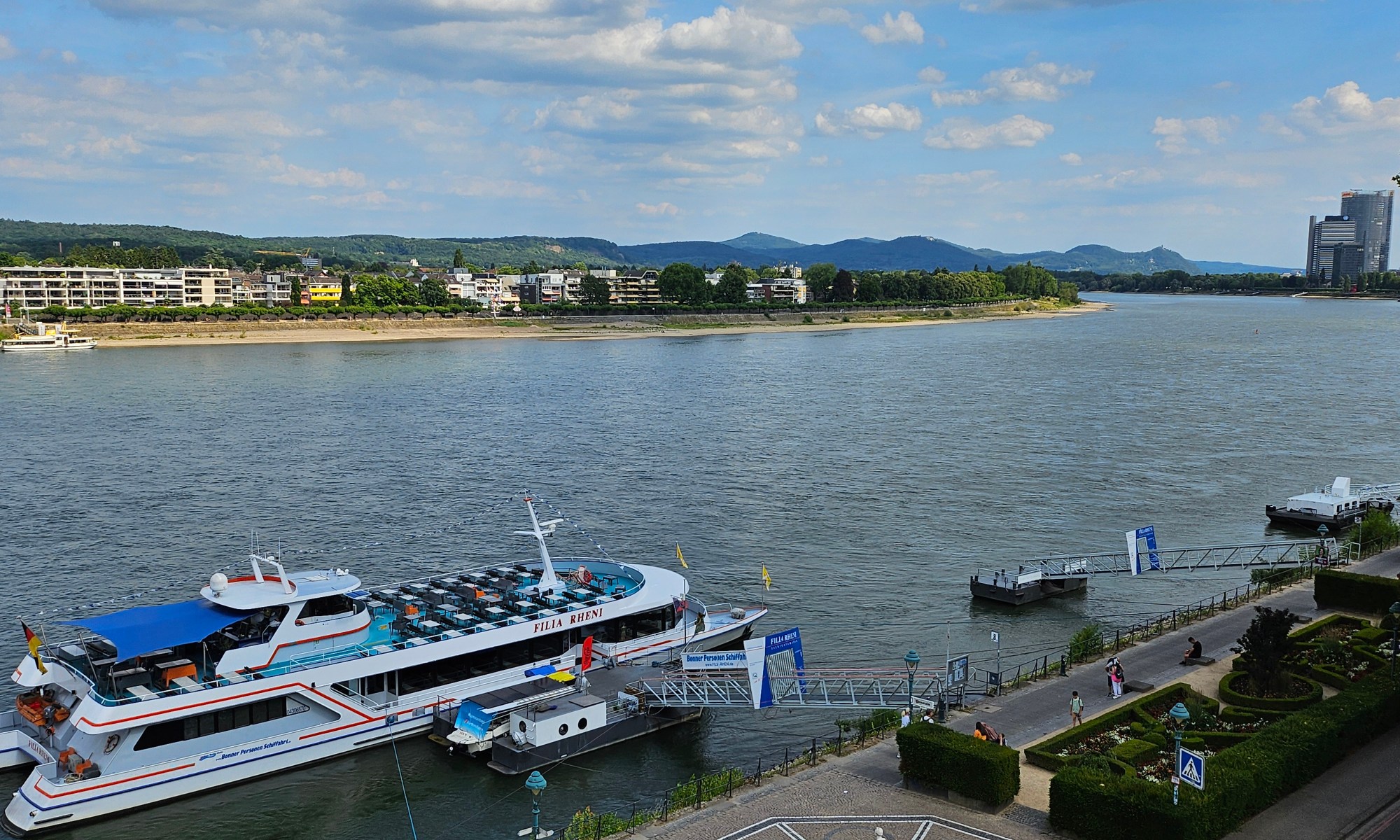
“Zum Ziele führt dich diese Bahn” (“This path leads you to your goal”) – from Die Zauberflöte
I had been due to attend a wedding on 11th July, but sadly this had been called off a few weeks beforehand. I decided to use the freed up time to make a short trip, the primary purpose of which was to see Bonn Opera’s production of Mozart’s Die Zauberflöte (The Magic Flute). Not being able to book as far in advance as I normally do, the train fares were not quite as cheap as I would have liked. I found it was marginally cheaper to book the entire journey as one transaction from Deutsche Bahn International, but for a variety of reasons that became apparent, this may have been a false economy.
Day 1 – Thursday 10th July 2025 – London to Bonn
I was catching the 09:01 departure from St Pancras to Brussels. That week I think Eurostar had been struggling with a shortage of usable trains and on the two days before my trip I had noticed that the same 09:01 departure had left London sufficiently late for the connection to the DB ICE train at Brussels to be missed. I was therefore relieved when boarding started half an hour before departure and we left on time.
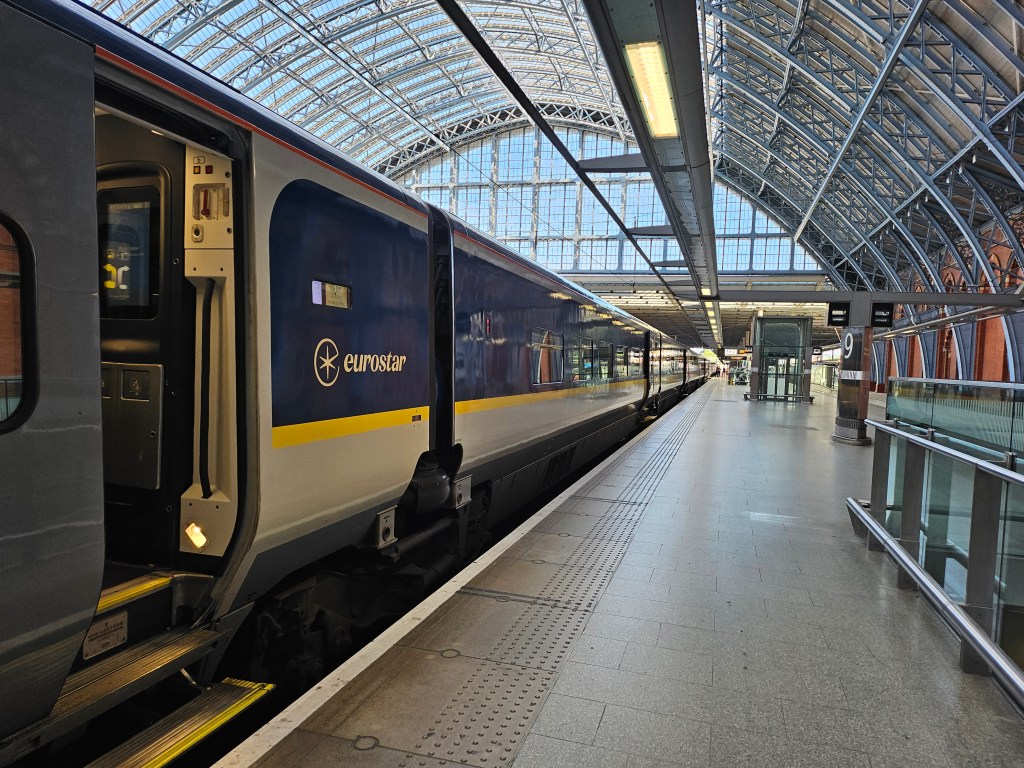
Normally when travelling by Eurostar, I change my allocated seat to one with a nicely aligned window towards the front of the train, so that I can make a speedy exit at Brussels, given they have now blocked access to the connecting passage to allow for customs checks. However, I discovered that, because of my Deutsche Bahn International booking, the option to change seat was not offered when I went to my booking on the Eurostar website. As I had been given a seat right at the back of the train, ten minutes before it arrived in Brussels I walked through the carriages to the very front, so that I would not be delayed.
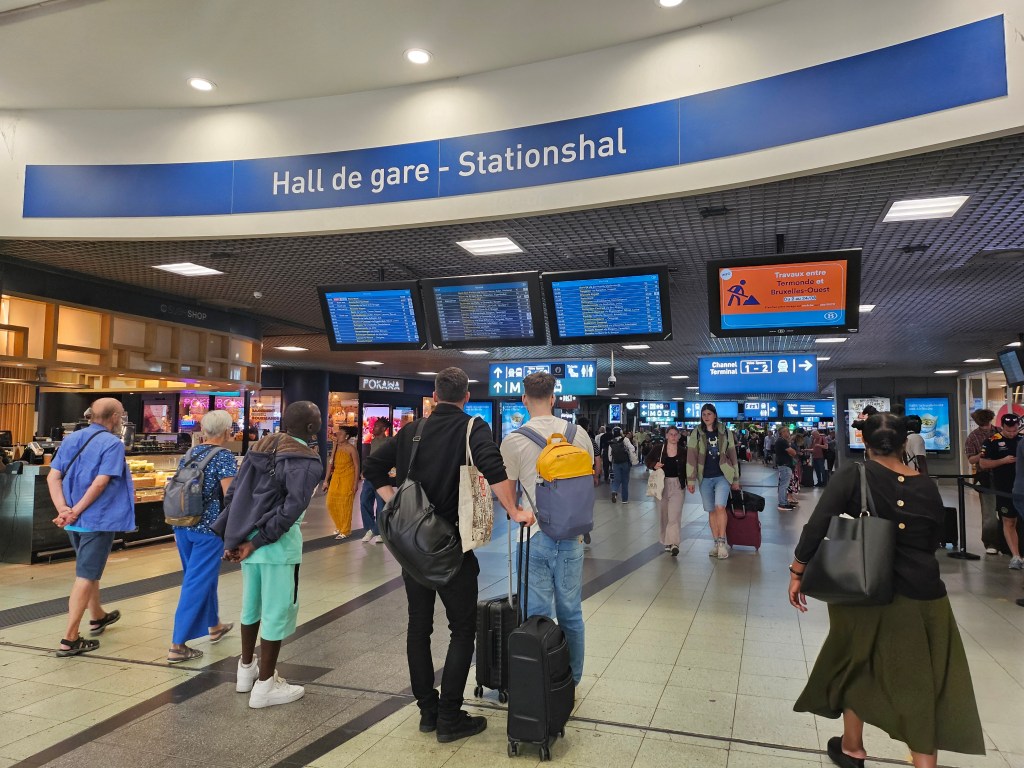
I made it to the platform in good time to where the DB ICE train was waiting to depart at 12:25. There was a large crowd waiting on the platform, but the train doors had not yet been opened. When they did eventually open, only about five minutes before departure, it was fairly chaotic inside. I discovered that the preceding train, two hours earlier, had been cancelled, and that its passengers were now trying to travel on the 12:25 departure. Fortunately, I had a reserved seat, but on leaving Brussels there were many passengers standing in the aisles. Further hordes tried to get on the already packed train at Liège and Aachen, which delayed it, such that it was about 10 minutes late leaving Aachen. I think the German border police may also have got on at Aachen, but given the fullness of the train, it was impossible for them to move through the carriages. Not long after leaving Aachen the train suddenly ground to a halt – after a while there was an announcement that this was due to a technical problem with the train. Fifteen minutes later we started moving again, initially quite slowly, before regaining full speed.

We eventually arrived at Köln Hbf at 14:45, 30 minutes late. When I got off the train the station was in chaos. Nearly all trains were being shown as massively late, my 30 minute delay was quite modest compared with others. I next needed to catch a train to Bonn and my ticket was valid on any local train. At that time of day there are three trains an hour to Bonn, so I did not think it would be a problem. However, I had not envisaged the lottery that finding the next train would be. The problem was that the delay estimates and the supposed platforms kept on changing. I went to try to catch the 14:56 departure. When I got to the platform, it was shown as the next train and a train duly arrived at 14:56 – but it wasn’t the expected train to Bonn. By this stage a different late running train to Bonn was being shown as being due to leave in a few minutes from another platform, but when I got there there was no sign of it and it was not shown on the platform departure board. In the meantime, the 14:56 was now shown as going from a different platform to that indicated earlier. It eventually pulled in 10 minutes late – it too was packed with standing room only. Fortunately it did not lose any more time on the half hour journey to Bonn.
When I arrived in Bonn, I walked to the hotel I had booked. It was slightly strange, as it was unstaffed after 4pm. As I was walking through the door of the hotel, I received a phone call from them to tell me how I could get my key, but as they hadn’t quite packed up for the day they gave it to me in person.
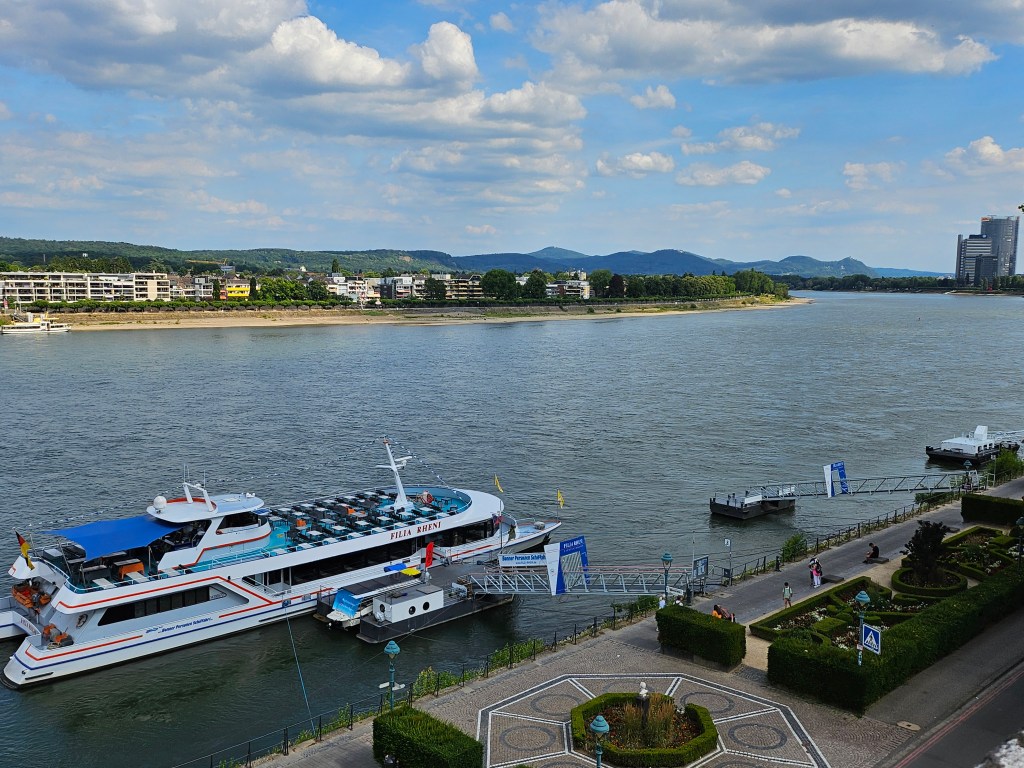
Had I arrived in Bonn on schedule, I would have tried to visit one of the museums that afternoon, but now there was insufficient time to justify the entrance fee. So instead, after I had dropped off my bag, I just went for a walk to reacquaint myself with the city that I had previously visited in 2016. It was a warm afternoon, and I bought myself a raspberry ice cream, which I ate while going for a walk along the banks of the Rhine.
That evening I went for dinner in a restaurant where I had booked a table in advance. The first couple of restaurants that I had tried to book would not offer tables for one person in the evening – I had never encountered that problem before. The place that I had booked was pleasant enough. I had a half schnitzel, served with blood sausage, fried potatoes, apple sauce and gravy. To drink I sampled the local Kölsch beer.
After I returned to my hotel that night, I noticed a strong smell of burning from the street outside. It appeared that there was a small fire in a restaurant a couple of doors away. The fire brigade turned up with three fire engines and the fire was extinguished quickly.

Day 2 – Friday 11th July 2025 – Bonn
On my previous visit to Bonn, nine years earlier, I had visited the Haus der Geschichte, the museum of the history of the Federal Republic. This is one of four Federal Government museums in Germany, all of which I have visited at least once (two of the others are in Berlin and one is in Leipzig). I knew that this time the Bonn museum was closed for a year long refurbishment, but that they had a number of special exhibitions located in the foyer area of the museum. Given that the Haus der Geschichte opens at 9am, before any of the other attractions that I wanted to visit, I went there first, walking along the bank of the Rhine from the city centre.
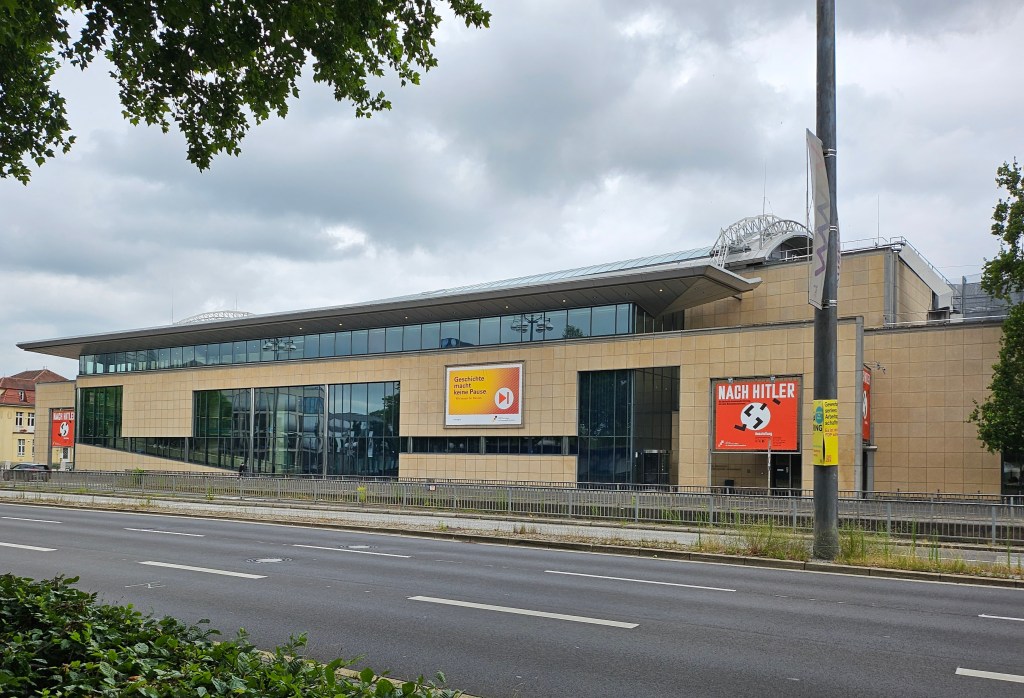
The exhibition that I particularity wanted to see was Nach Hitler (After Hitler), describing the attitudes of different post-war generations to the country’s Nazi past. The exhibition confronted the views of many of the so-called witness generation who repressed any recognition of the role played by those involved in perpetuating Nazi ideology. It was only with the “children’s generation” of the late 1960s and 1970s that this denial started to be exposed.
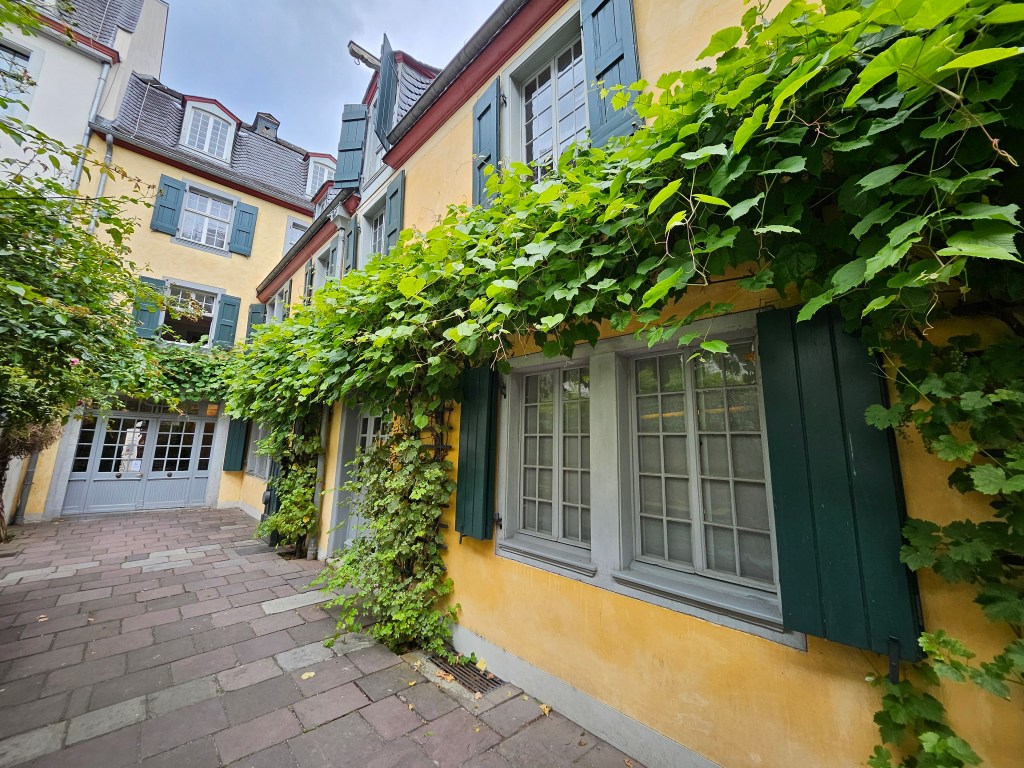
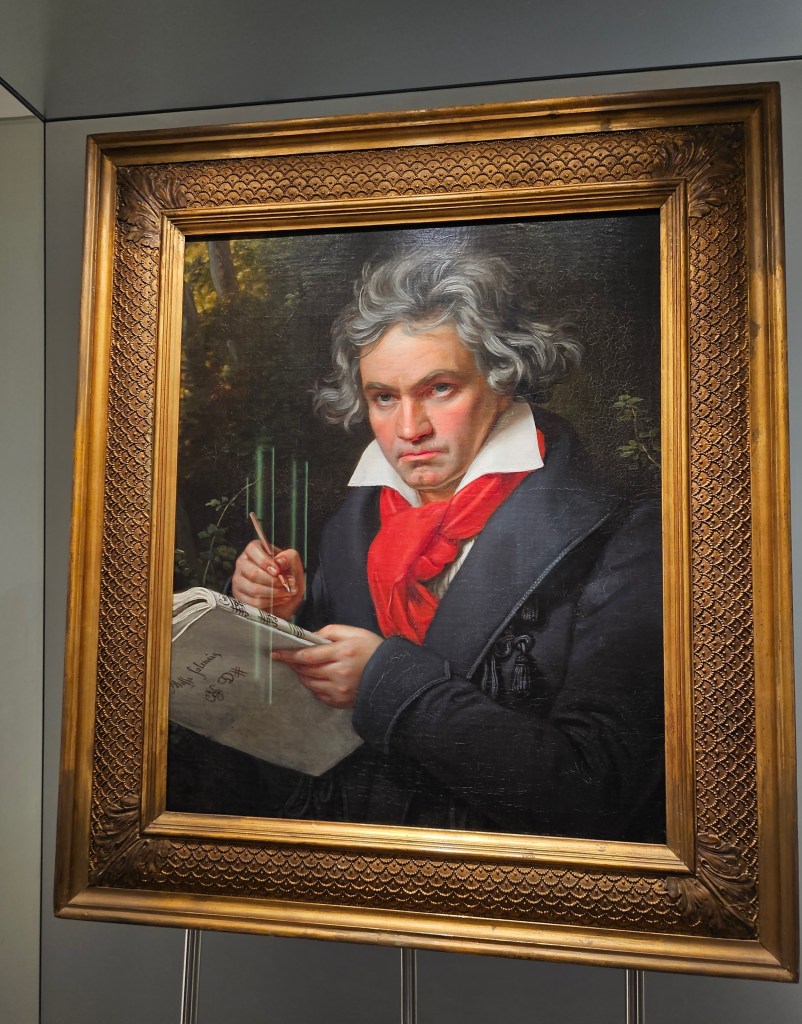
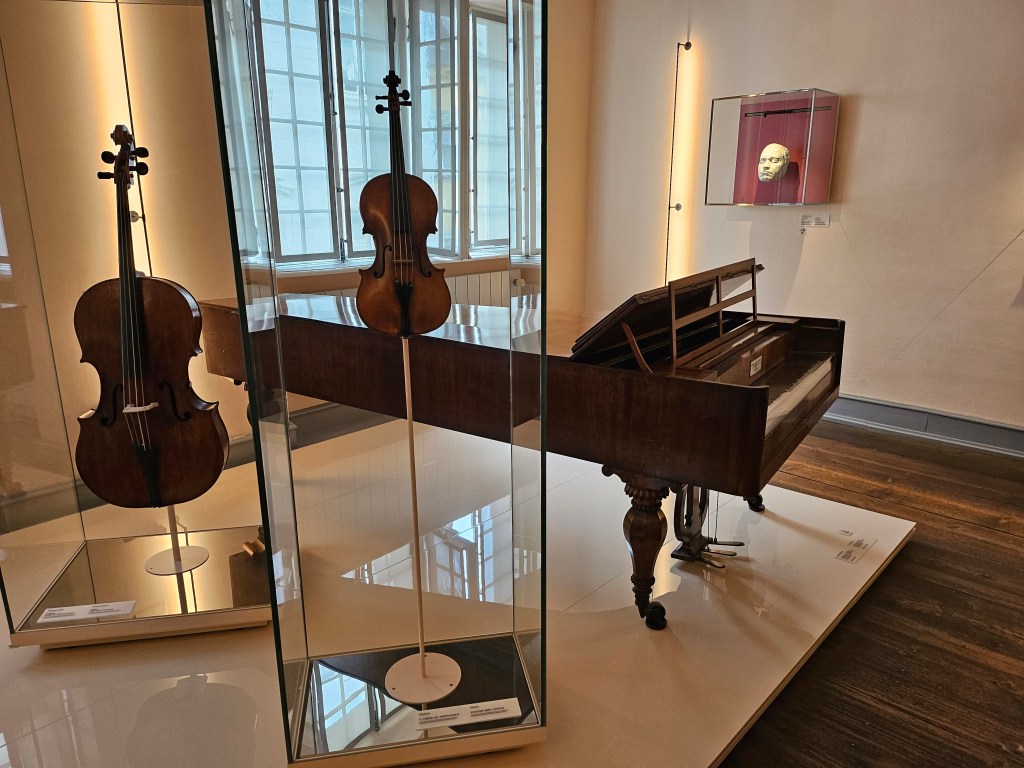
I then walked back to the centre of the city to visit the house which was the birthplace of Ludwig van Beethoven. This had been done up since my previous visit, with a separate ticket office and gift shop across the road from the original building. It also seemed much busier than I recalled. Beethoven lived in Bonn for the first 22 years of his life before moving to Vienna. By all accounts, he was notoriously grumpy, falling out with even his best friends and not usually retaining domestic staff for very long. The comprehensive audio-guide that I used to guide me round the house meant that it was not until early afternoon that I was ready to move on.
My next stop was a museum that I had not been to before, the LVR-LandesMuseum, a museum of the Rhineland region. It begins with the Neanderthals who once lived in this part of the Rhine Valley, then moves on to cover the Roman settlement of the area. These are presented conventionally, with displays of artefacts and information boards. However, from the Middle Ages through to the present day, the history is told through the art of the different periods.
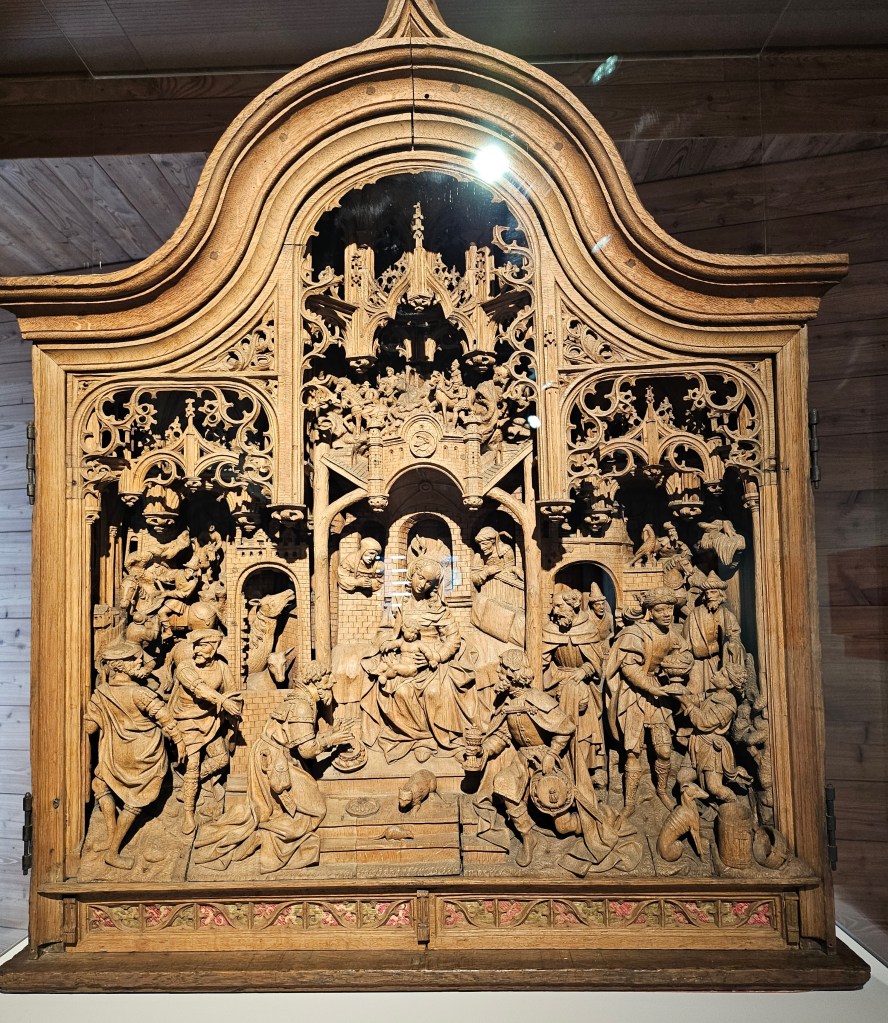
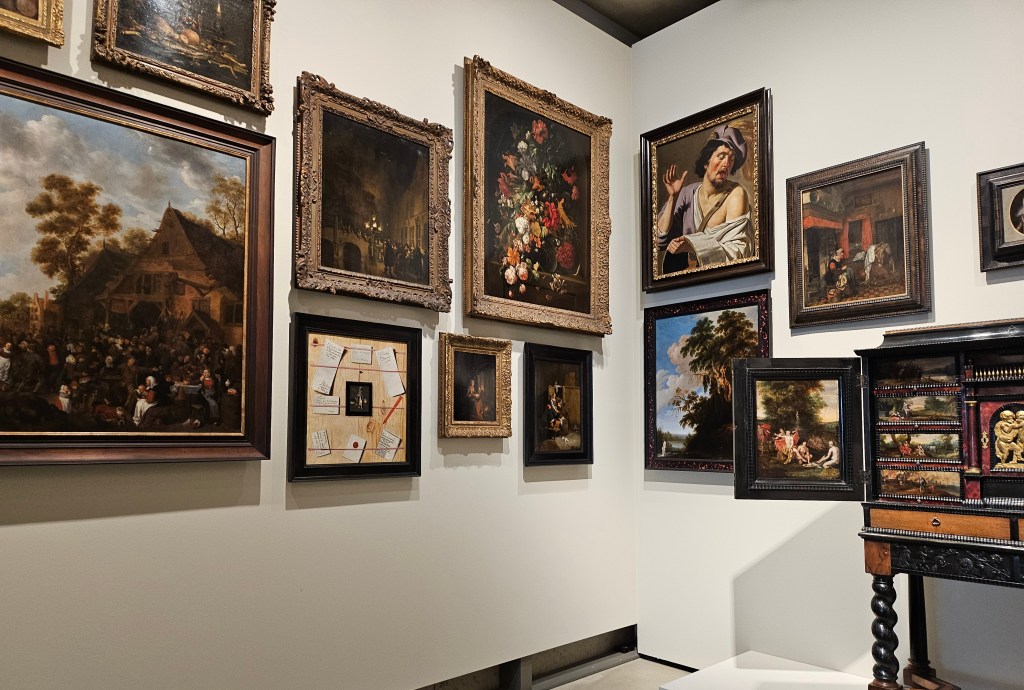
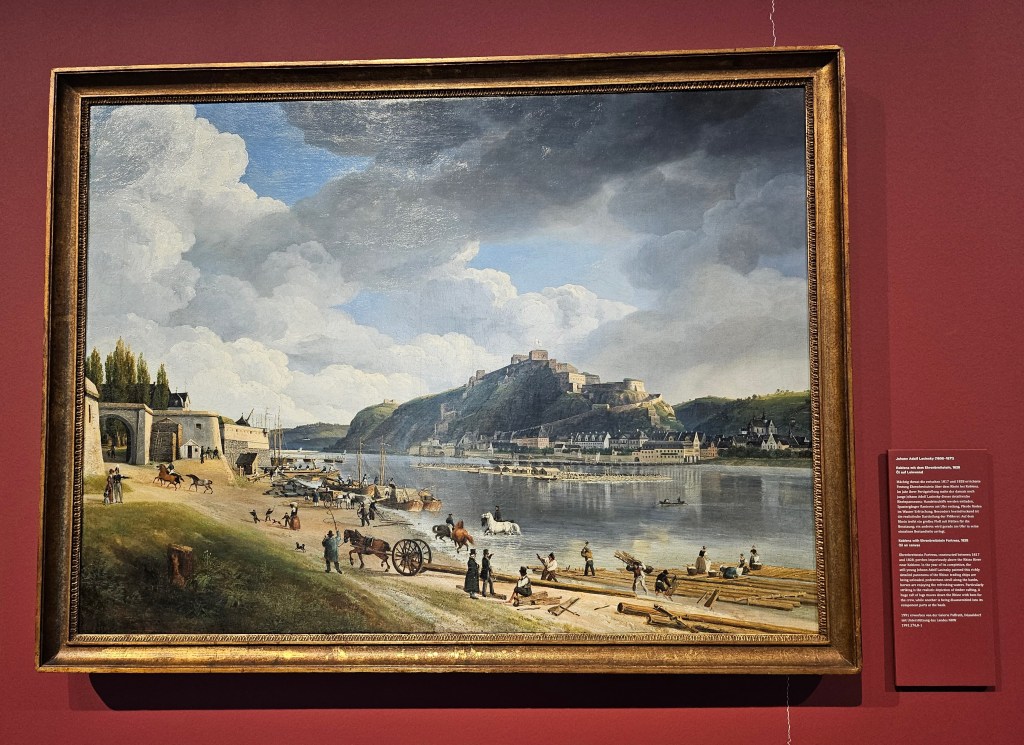
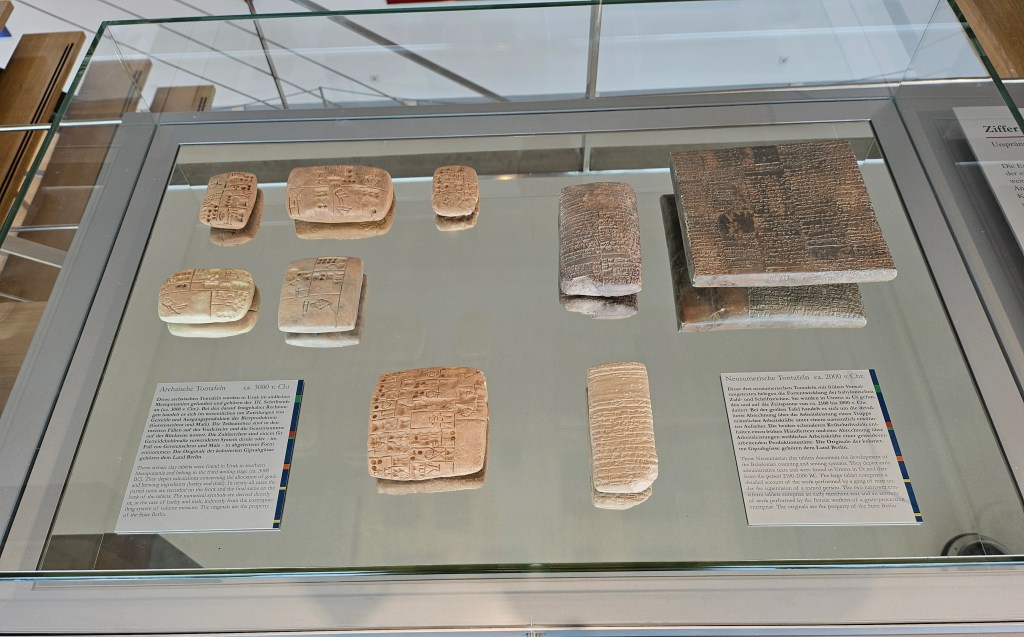
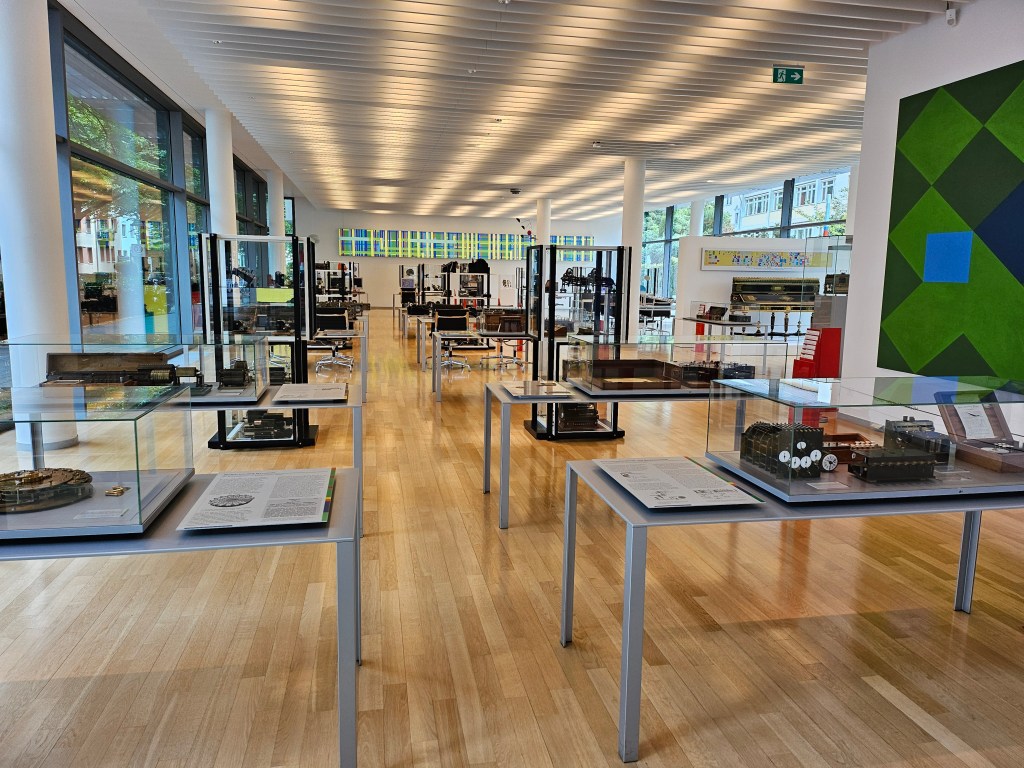
My final museum was a revisit was to the Arithmeum, a museum of calculation through the ages, located within the building of the Institute for Discrete Mathematics. It contains a collection of devices ranging from abacuses through to microchips. You are allowed to operate many of the early calculating machines on display (or replicas, for the more fragile ones).
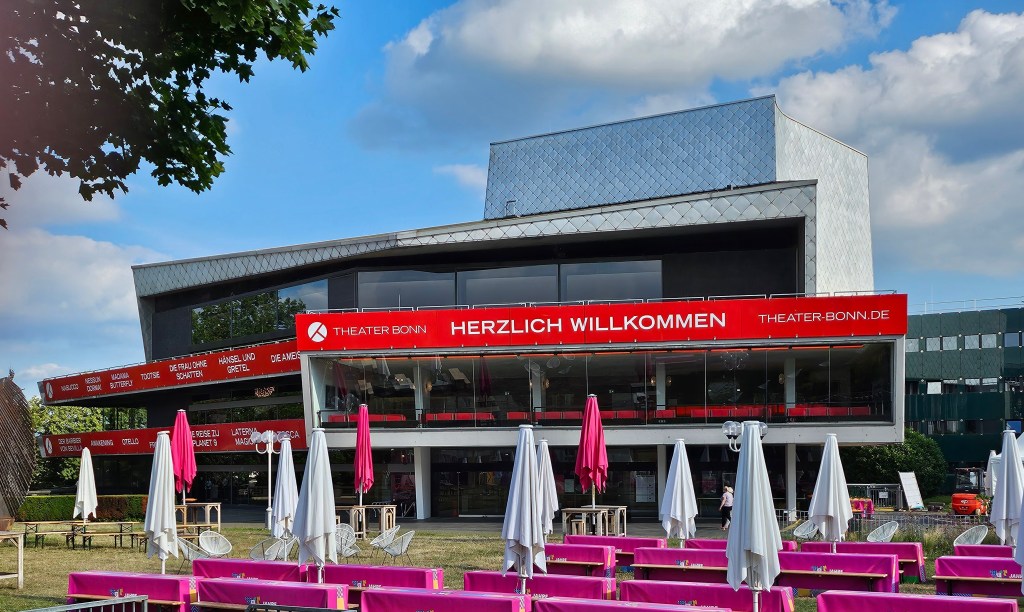
A day of tramping round a warm Bonn meant that I needed to return to my hotel to have a shower and a change of clothes before I would be fit to go to the opera. I had not booked anywhere to eat that evening, as I only wanted an early light meal. But being a Friday evening, the first place I had identified as a possible eating place was already full by the time I arrived. Not wishing to waste too much time, I went to a fairly basic burger bar near the opera house, which nonetheless produced tasty, freshly cooked food.
From there I went to Bonn’s opera house, located on the bank of the Rhine next to the Kennedy Bridge. I arrived in good time, so was able to enjoy a Kölsch beer on the outside balcony in the early evening sun. Die Zauberflöte (The Magic Flute) was Mozart’s last opera, first performed in Vienna just two months before his death. There is a connection with Bonn, as Mozart’s widow arranged for the score to be first published in Bonn, shortly after his death.
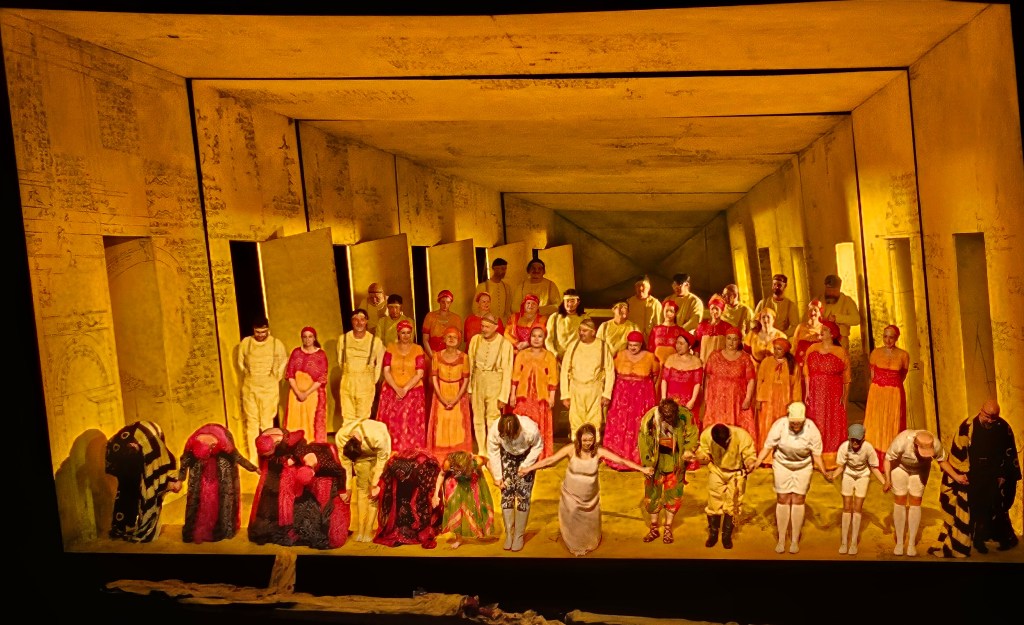
This performance of the Magic Flute was the last of its run in Bonn, and the opera house was virtually completely sold out. Because I had booked it slightly later than I would have liked, I had to content myself with only a second row seat in the dress circle. I really enjoyed the performance, which was suitably anarchic. I thought that the singers playing Tamino and Papageno gave especially good performances. The Queen of the Night is one of the most difficult parts in the whole of opera, so I am reluctant to criticise, but I felt the acting was too static. Being the last performance, at the end the audience gave the cast an ecstatic send off with two curtain calls – for the second, Papageno carried Papagena on stage piggyback.
Day 3 – Saturday 12th July 2025 – Bonn to London (via Cologne)
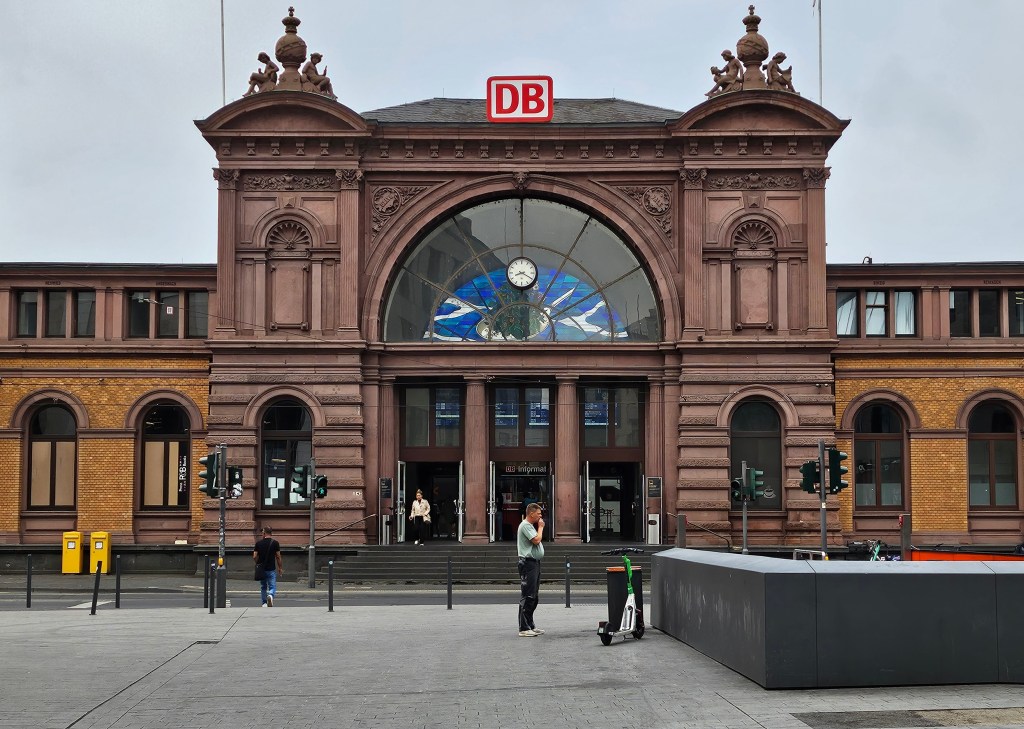
I walked through the centre of Bonn to the main station to catch a train to Cologne. As I did so, the finishing touches were being applied at a number of locations that would be hosting a music festival later in the day. Given the problems two days earlier, I was pleased to see that when I arrived at Bonn Hbf the next train to Cologne at 0833 was shown as running on time. It indeed did depart within a minute or two of its advertised time. But from the outset it started to lose time, seemingly stopping at every signal, the lines appearing to be clogged with freight trains that morning. I knew there was planned engineering work affecting Köln Hbf that weekend and I feared that the final run into the station would be slow, because of fewer platforms being available, but thankfully the final approach was made without further delay. Nonetheless, the train arrived at Köln Hbf 30 minutes late on a scheduled 30 minute journey.
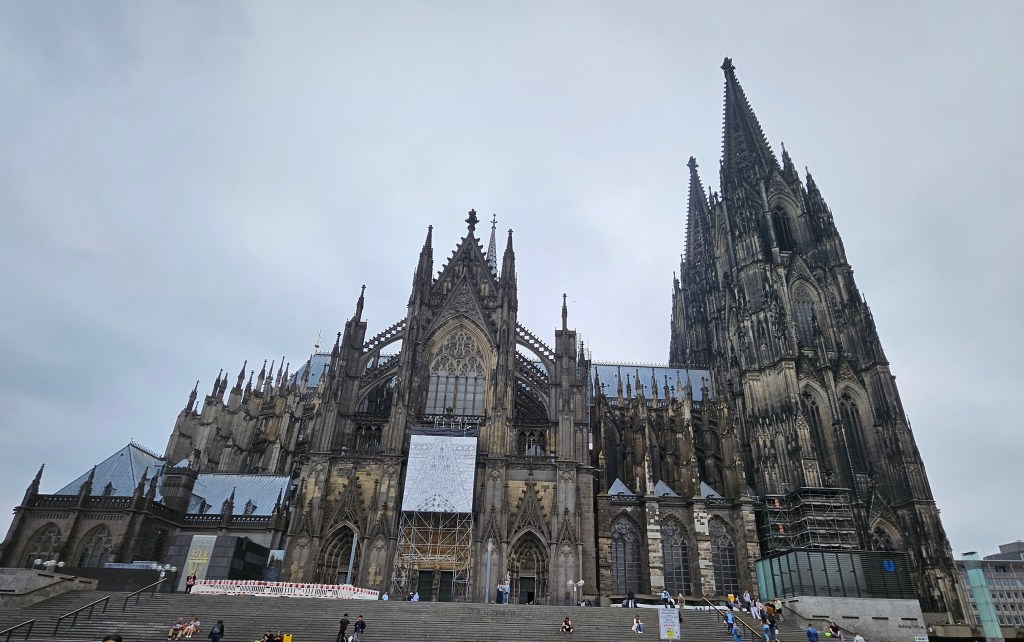
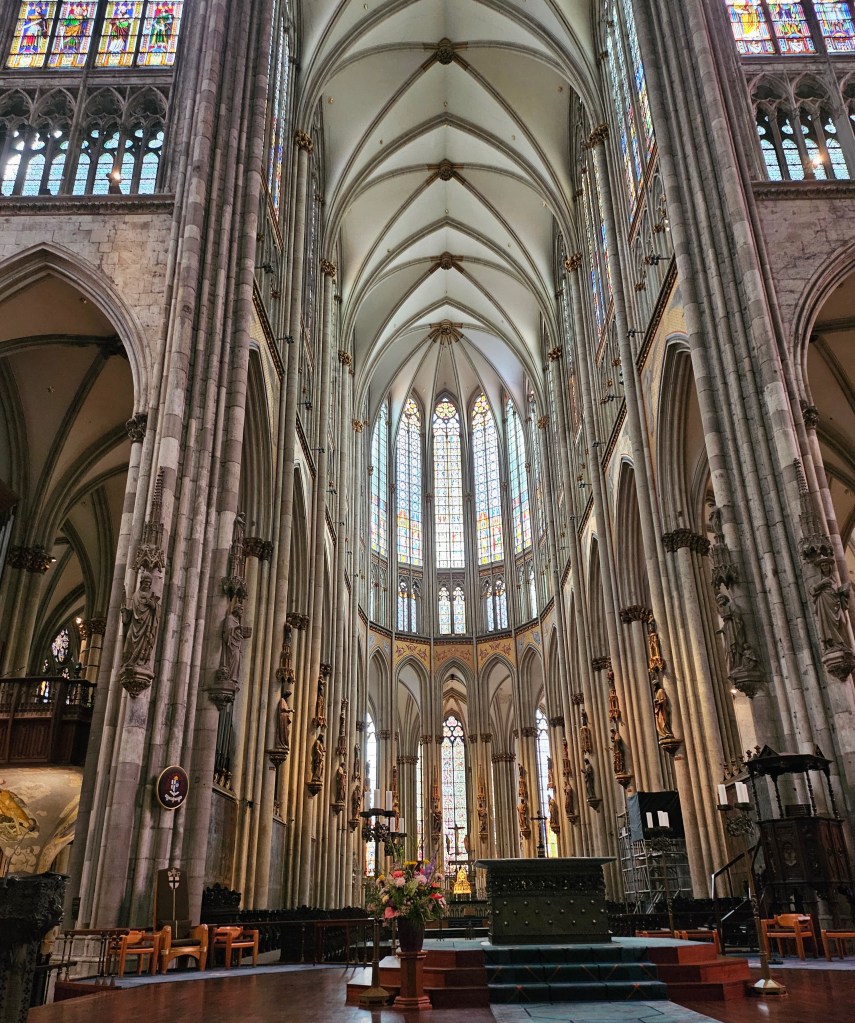
Cologne cathedral is right next to the station, so I paid it a visit before the other places in Cologne that I intended to go to had opened. As there was a Mass still being celebrated, the normal access by the main west doors was closed, and I instead had to enter through the north door. Strictly my bag was too large to allow entry, but I managed to blag my way in. Shortly after I entered the Mass concluded and the restrictions on going to parts of the cathedral were lifted. On previous visits to Cologne, I had climbed the cathedral’s south tower and visited its treasury, so I decided not to pay to do these again.
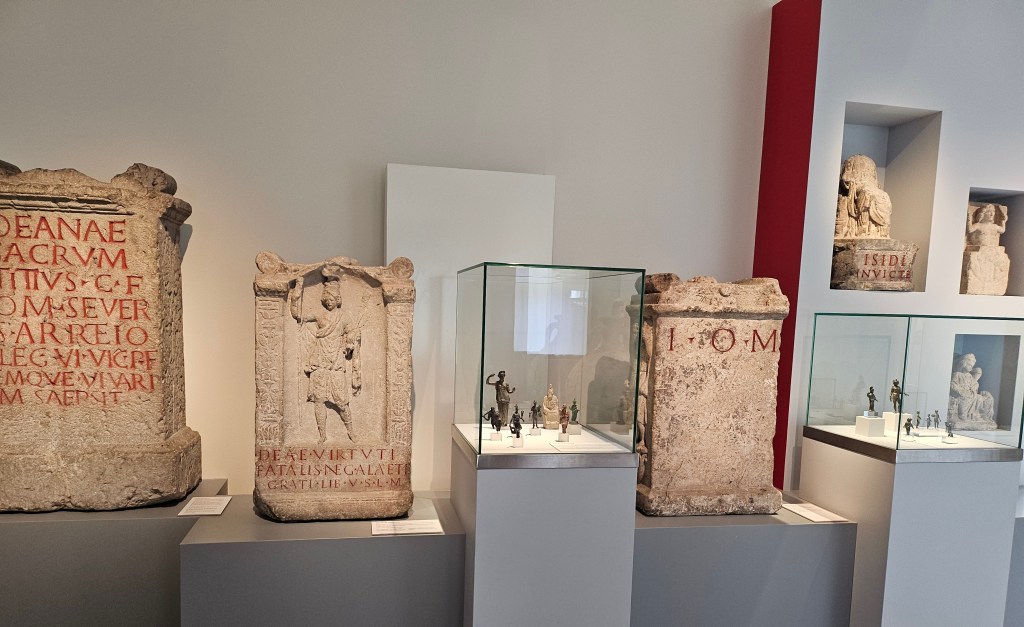
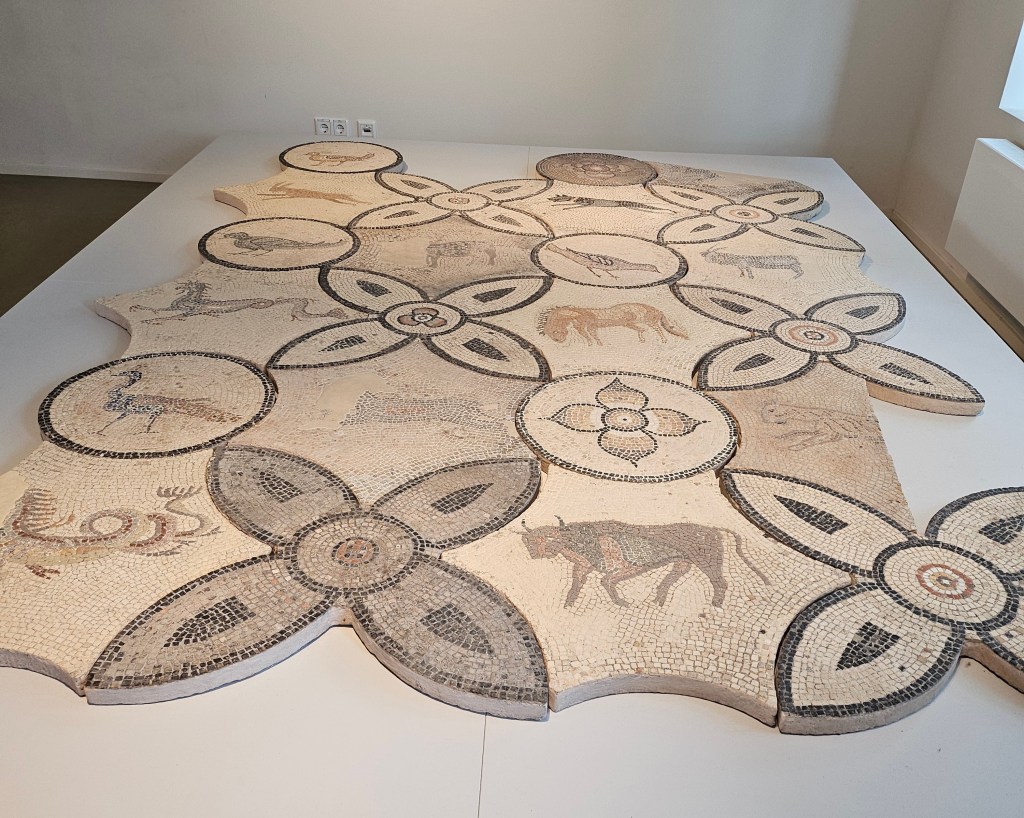
Next to the cathedral is Cologne’s main Roman museum, which I recall being so enormous, that on a previous visit we were discouraged from entering by the woman on the desk, despite having well over an hour before it was due to shut. However, at the moment this museum is closed for a major refurbishment and a small selection of the artefacts from it are on display in building called the Belgian House on the edge of the main pedestrianised city centre. I went there next. It consists of a couple of rooms of exhibits on two floors, but I can’t imagine anyone suggesting that an hour would be insufficient to see it all.
After calling in at a bakery to buy a filled roll for a late breakfast or early lunch, I strolled gently to the EL-DE House, Cologne’s former Gestapo headquarters, where I had pre-booked a guided tour for noon. The building was requisitioned by the Gestapo when the building was nearing completion in 1935 and they remained there until the Americans captured the city in 1945. I thought that the tour guide was very good and he clearly explained the history of the building, showed us the basement cells and the inner courtyard, and narrated the stories of some of the people incarcerated there.
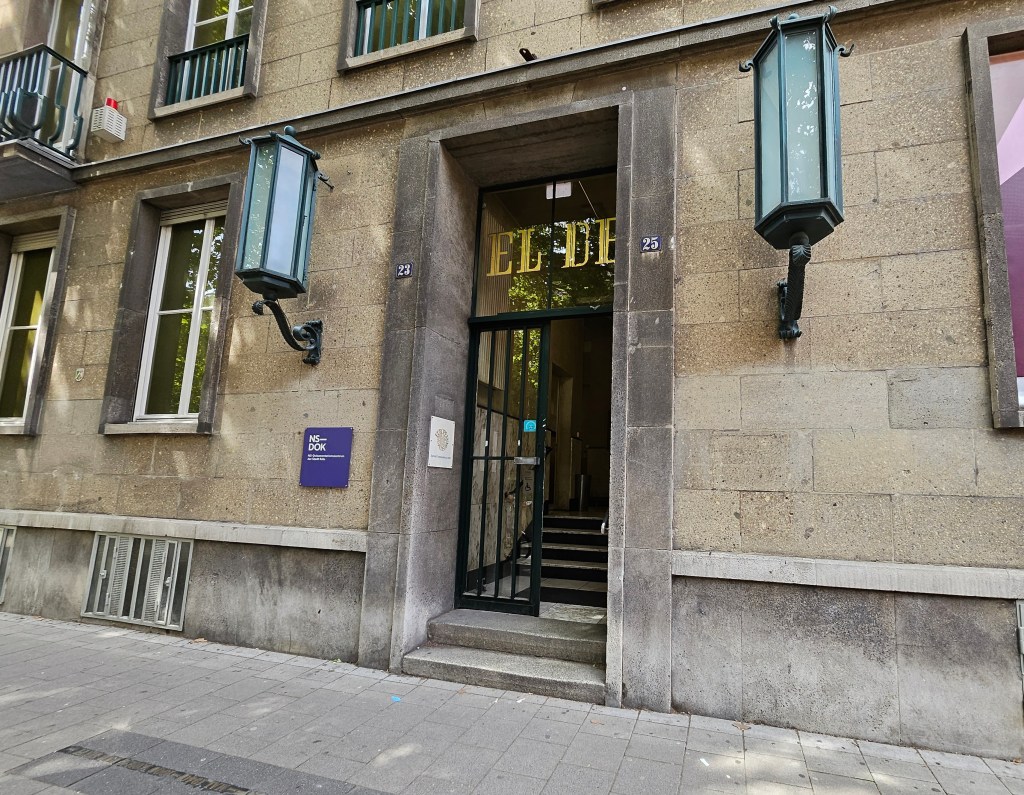
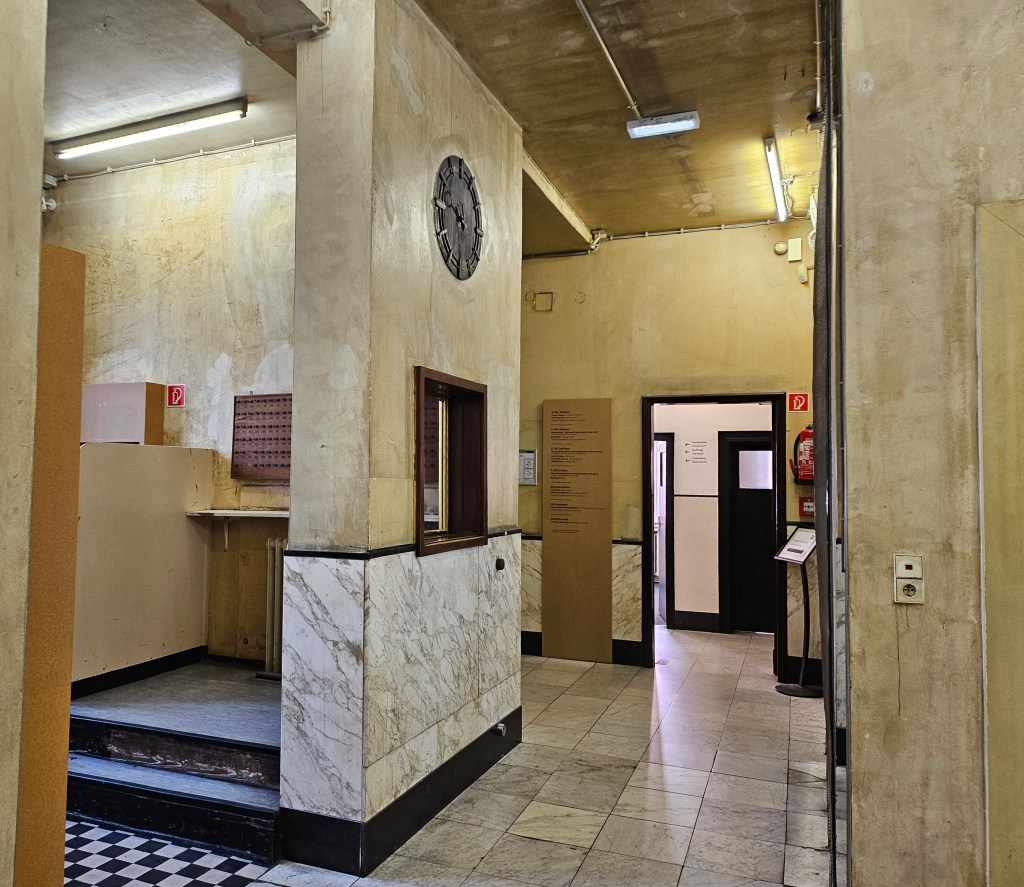
Initially, the building was used for interrogation of mainly political detainees, who would normally only be held there for a few days before either being released or sent on to a prison. There were 10 basement cells, nine for housing prisoners and one used for interrogation. Originally, each cell housed just one or two prisoners, but as the war progressed the ability to quickly process prisoners broke down and people were incarcerated for months, with up to 20 per cell. Each cell had a small skylight opening to the pavement, protected by bars . Local residents must have been aware of what happened within as there were official complaints about the noise and the smell. The Gestapo was a very bureaucratic organisation, never employing more than 100 people to control the whole city – relying on informers to identify many suspects. The majority of those who worked in the building were in clerical roles – a euphemistic language was used in the records: torture was called “enhanced questioning” and execution “special measures”. As the cells became more and more overcrowded during the war, the solution was to hang inmates in the courtyard.
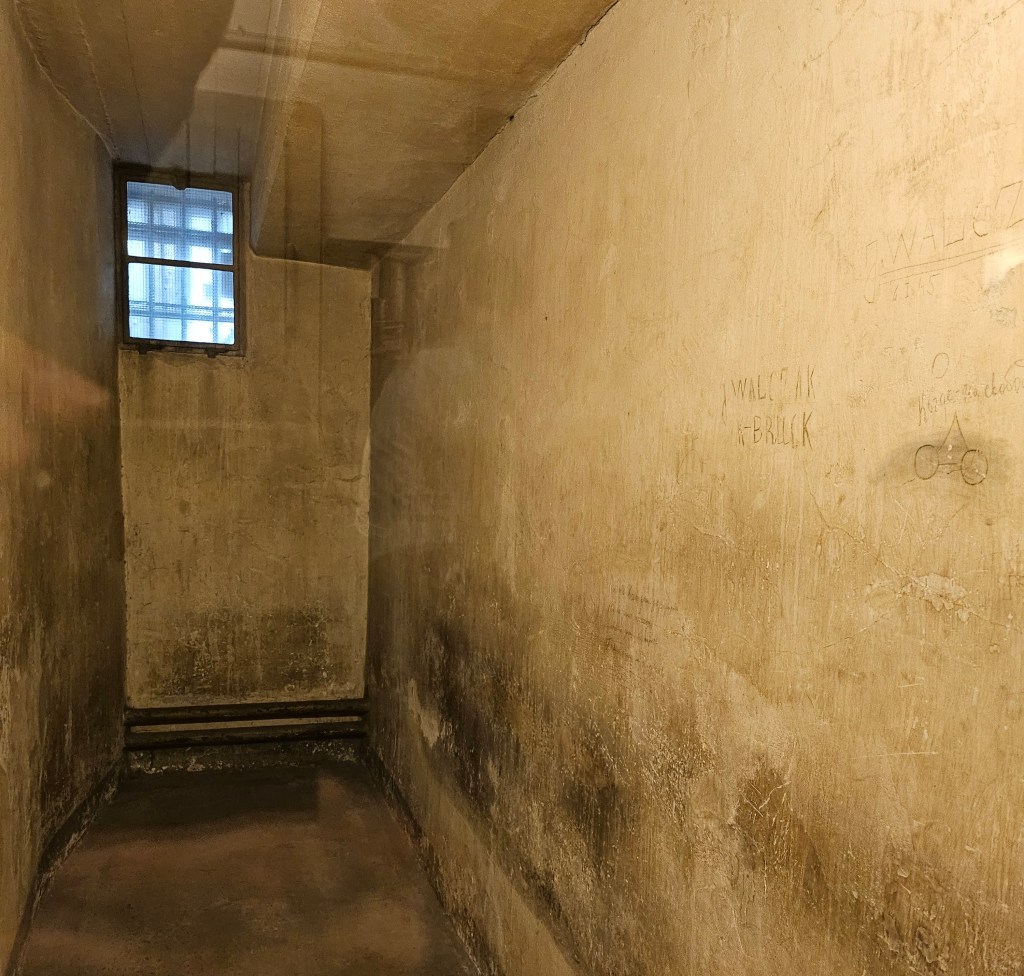
I found the whole place quite disturbing. But equally depressing was the post-war struggle to get the place recognised for what it was. After the war, the city authorities took over the building, using it as the city’s registry office for a while, with the former cells being used as a storage area. It was only after some activists broke into the building in the 1970s and made a record of the inscriptions left on the cell walls by the inmates, that a campaign was launched to preserve the building as a memorial to its dark history. It did not open to the public in this role until 1997. The guided tour lasted until 1:30pm. I then took the opportunity to visit the exhibitions on the upper two floors of the building, which described life in Cologne under the Nazis. I could have spent several hours studying these in detail, but after about another hour I had to leave to catch my train home.
It is a good job that I actively monitor how my trains are running, as Deutsche Bahn International from whom I had bought my ticket had not notified me that the timetable had changed and it was departing from Köln Hbf 15 minutes earlier than shown on my ticket. (I have had similar problems with DB International in the past. Despite loading my ticket onto the DB domestic app, it seemed incapable of sending me any notifications about how the trains I booked were running. This seems ironic, as if you buy a ticket from the domestic DB website, the app will bombard you with notifications about trivial changes.)
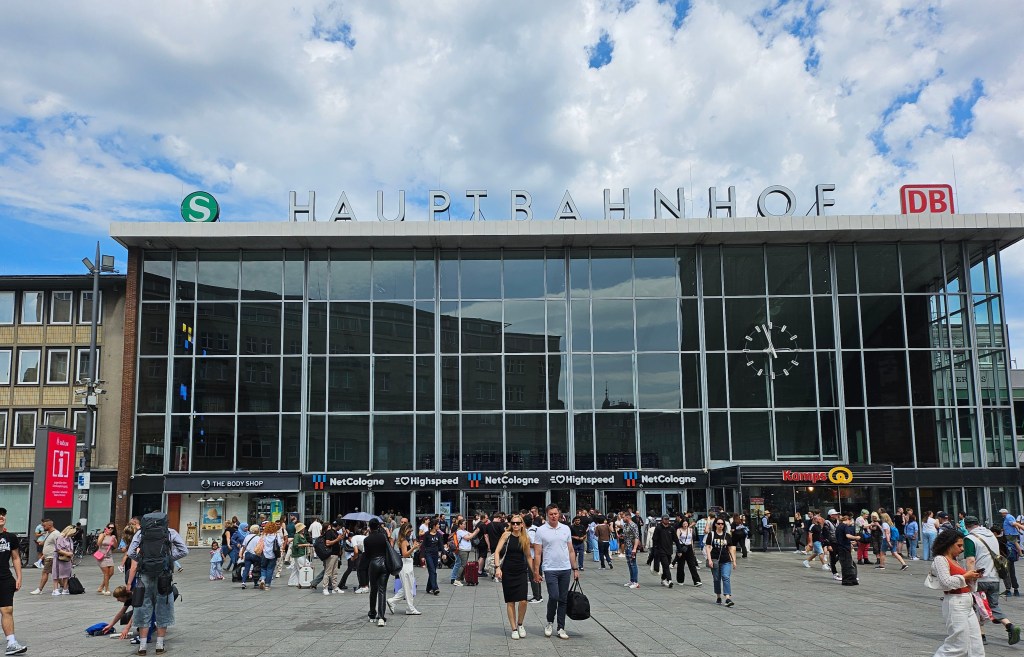
Give the previous problems at Köln Hbf, I arrived in good time. Once again DB had cancelled the previous train to Brussels and the platform was already crowded by the time I arrived. My train pulled in early, despite the platform departure board claiming that it was a train to different destination. I got on quickly and found my reserved ‘window’ seat, which was 90% wall, with just a small gap behind the seat in front from which you could look out. Because the previous train had been cancelled, as on the journey from Brussels, the aisles were packed with passengers who did not have seats.
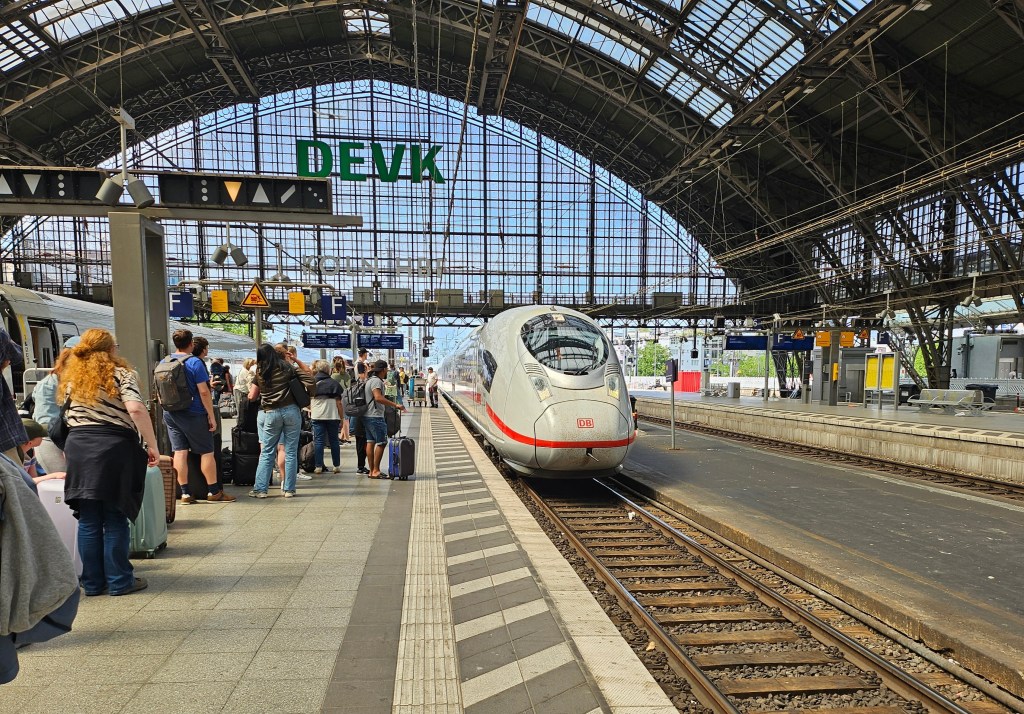
I had initially assumed that the revised timetable was due to the engineering works closing a number of platforms at Köln Hbf that weekend, but this was not the case. We left on time and were not delayed leaving the Cologne area. Everything seemed to be going well until we stopped just outside Aachen, to be informed that the line ahead was closed due to trespassers, with an estimated 30 minute wait for it to be cleared. In the event, we managed to start moving again after about a 20 minute delay.
We left Aachen 20 minutes late, but according to the train’s on-board display and the DB app we were miraculously back on time approaching Liège. This was in fact completely incorrect, as I discovered from looking at SNCB’s (Belgian railway’s) real-time information. The reason for the revised timetable on this weekend, was that the high-speed line in Belgium was shut and we had to take the original line to Brussels. We did not recover any of the delay and arrived into Brussels Midi just over 20 minutes late.
By the time I got to the concourse at Brussels Midi, it was already the time that my Eurostar ticket said I needed to check in by, but I ignored that and instead went to search for some food to eat on the journey home, not wishing to pay the rip-off prices on the Eurostar. (It was a good job I did this, as the Eurostar on-board cafe did not have any food at all, just drinks.) Eurostar had been sending me emails suggesting that I use my loyalty points to upgrade my seat. Normally, I don’t think it is worth it, but I might have been tempted this time to get some food on the way back, but the DB International booking could not actually be upgraded in this way.
My train from Brussels that evening should have been an Amsterdam starter, which is normally not good for punctuality. However, because of problems on the Dutch high-speed line that day, the Eurostar services to Amsterdam had been cancelled and my train was starting in Brussels. Passengers were allowed to board early and my carriage was very empty. This was fortunate as my request for window seat had been ignored, but I was easily able to move to a free window seat.
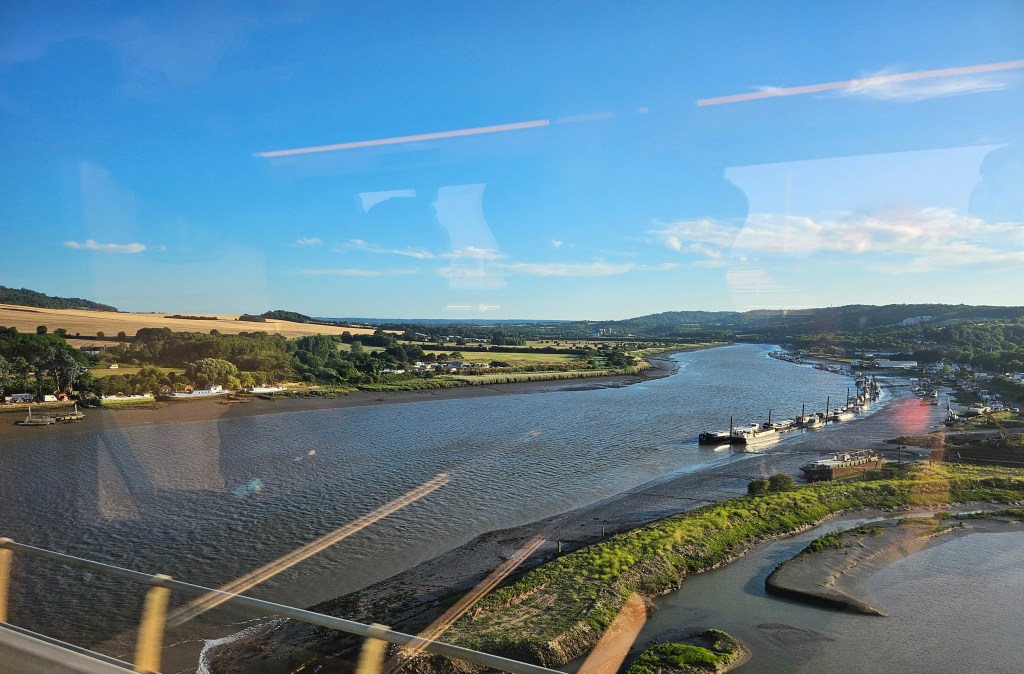
I got back to London on-time at 8pm, but my train woes for the day were not quite over. Normally I travel home by the Central line, but my part of it was closed for engineering work that weekend, so I decided to use the Victoria line to Walthamstow instead. However, when I got to the Victoria line platform it was blocked by a faulty train whose doors wouldn’t close properly, which took about 15 minutes for it to be taken out of service. When I got to Walthamstow, there was no sign of either of the two buses that would take me directly home, so instead I caught the SL2, the Superloop bus I had used on my circumnavigation of London a couple of weeks previously. However, by starting at Walthamstow bus station, I covered the section of route I had omitted when Superlooping due to the SL1 and SL2 routes overlapping.
Conclusion
Once again I thought it worthwhile to make a special excursion to see an opera. I didn’t think Bonn Opera quite matched the very high standards of Gothenburg, but it was still very enjoyable. Deutsche Bahn’s sad decline was all too evident, with every DB train I caught being significantly late. One final insult from my DB International booking was that the Eurostar loyalty points from my trip were not added to my account – I had to ask Eurostar to add them manually.
 Europe Explored