

“Homage to Catalonia“ (George Orwell)
This trip was designed to weave together some places I had not been to before, some I had been to a very long time ago, and some from more recently where I had not had enough time on my previous visit. This first post describes my time in Spain, while the next will cover France.
Day 1 – Wednesday 26th February 2025 – London to Barcelona
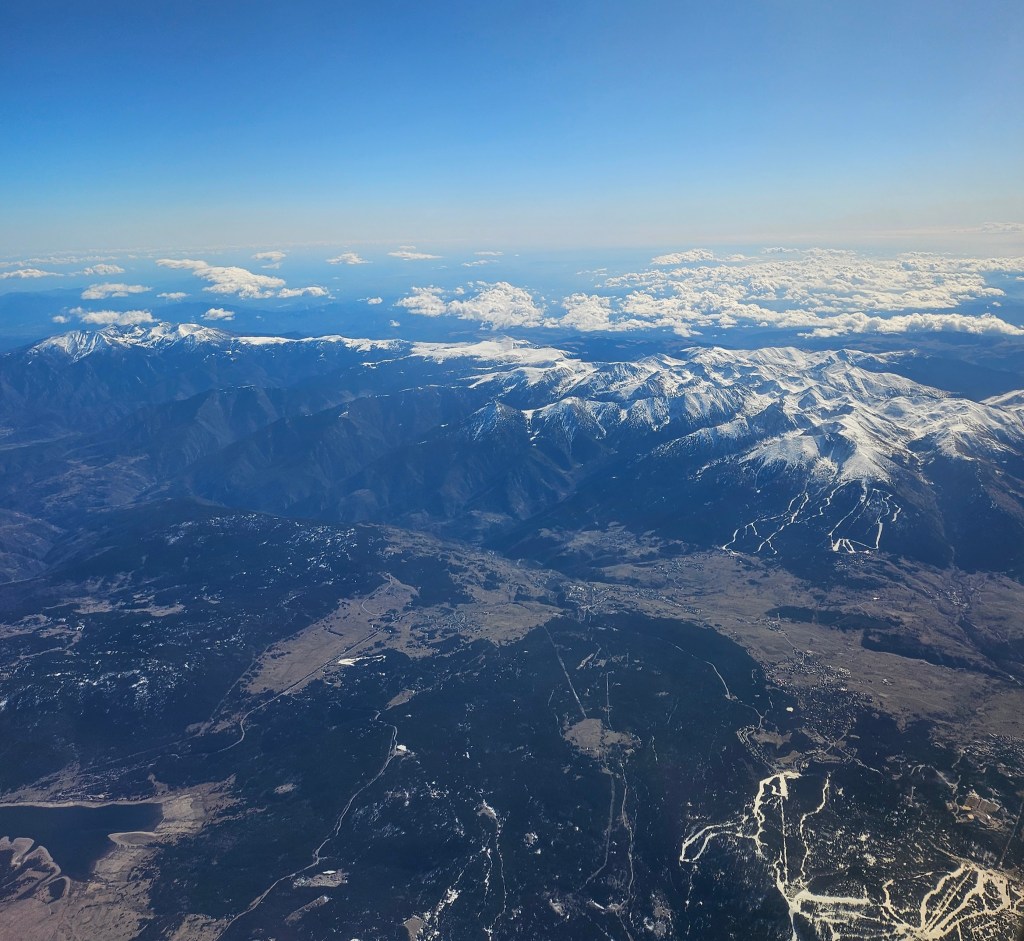
To catch my flight to Barcelona from Stansted Airport at 09:25 an early start was required, but it was still after the London Underground had started running, so I did not have to rely on buses to connect with the Stansted Express. This journey is now very familiar and on this morning passed without incident. Boarding of the plane started early and we left exactly on time. It was cloudy with no views for most of the flight until we reached the snow-capped peaks of the Pyrenees, where the plane started its descent into Barcelona. During the flight I became concerned that my phone would not recharge from the power-bank I always take with me on my travels. I feared that my phone had developed a fault, which could potentially cause me a lot of problems, but I later discovered the phone charged fine from the mains, but was very temperamental when charging from the power-bank.
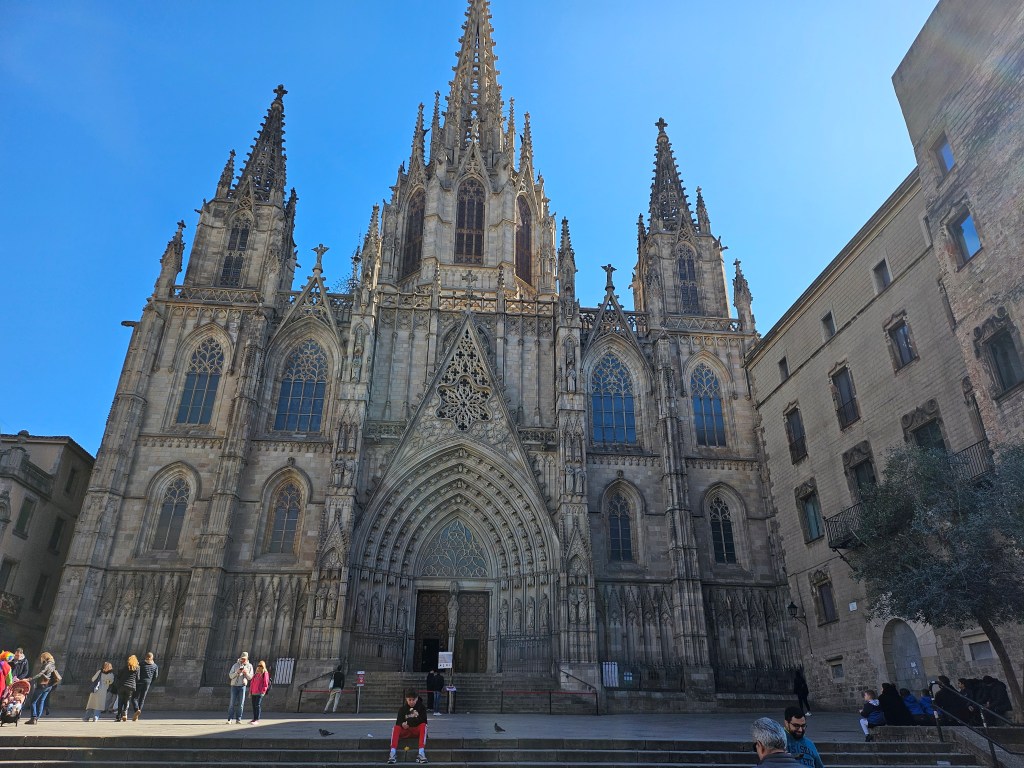
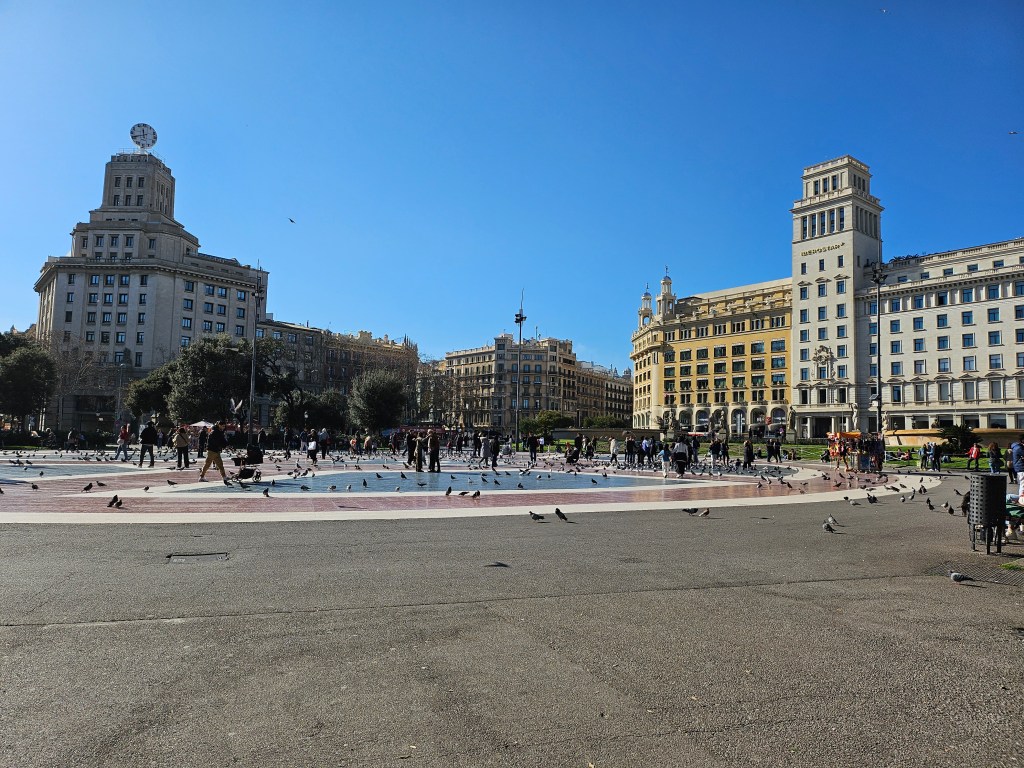
From Barcelona Airport I caught the Metro into the centre of the city, where I went straight to the Museum of the History of Barcelona (MUHBA) located in various sites near Barcelona’s cathedral. The main building of the museum, which is in the Casa Padellàs, outlines the development of Barcelona from being a Roman settlement through to the Spanish Civil War and beyond. After visiting a number of adjacent locations of the museum, I went on a short walk to explore some of surrounding Barcelona, including a wander down some of Las Rambalas. From there, I made my way to my hotel.
In Catalonia, as in the rest of Spain, proper restaurants tend not to open in the evening until 8:30pm at the earliest. As I had had an early start and did not want to wait that long, I went instead to a pizza restaurant which opened earlier. Here I had some potato croquettes, followed by a folded over calzone pizza.
Day 2 – Thursday 27th February 2025 – Barcelona
Long before departing on this trip I had booked a ticket to view La Sagrada Familia, the still unfinished basilica designed by Antoni Gaudi. My ticket was for a 9am admission, so I left my hotel in good time to walk to the Sagrada Familia, arriving in time to take a few photos of the exterior before it was time to go in. Construction of the basilica started in the 1880s and may not be fully complete until the 2030s. On my one previous visit to Barcelona in the 1980s, I recall visiting it when it was no more than a building site and not thronged with the huge visitor numbers that come these days.
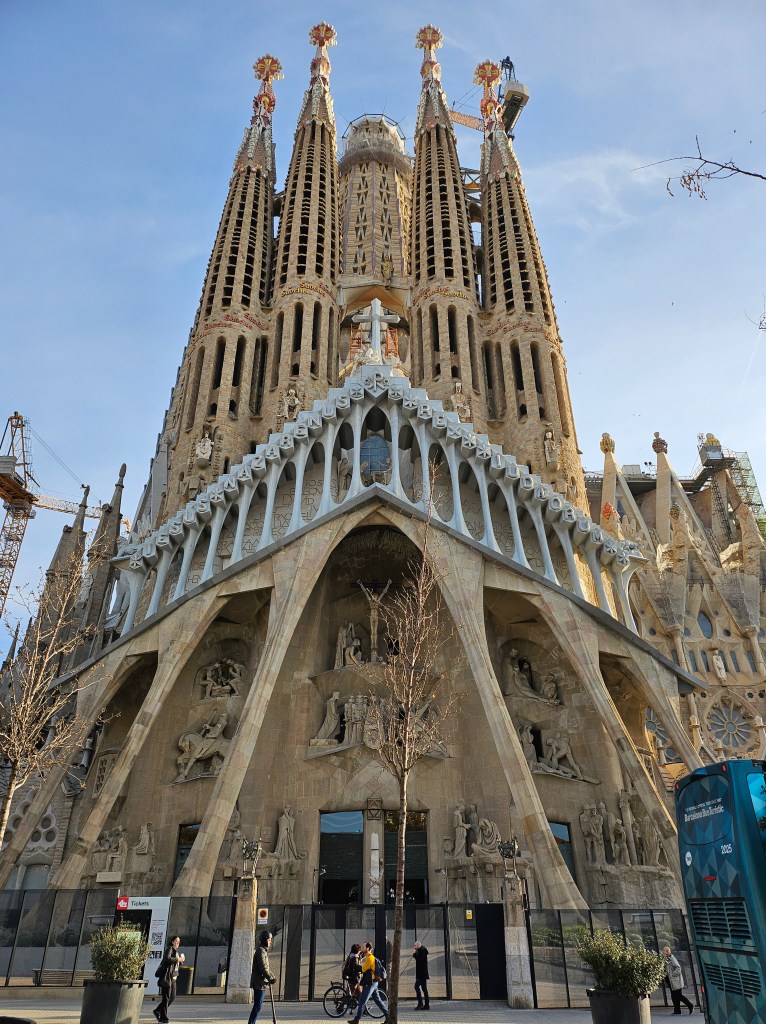
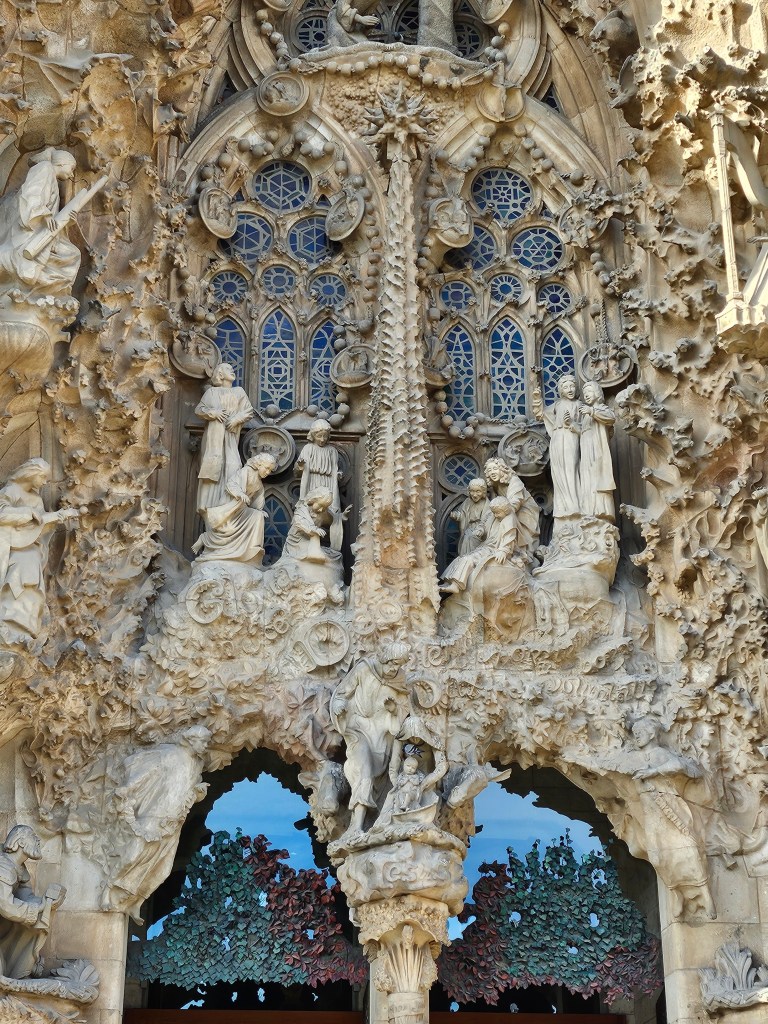
The main body of the interior of the Sagrada Familia is now largely complete, the basilica having been consecrated in 2010, although a number of external spires are still to be added. When you book your ticket you are encouraged to download a dedicated app, which includes an audio-guide to assist you as you move around inside. Entry is via the Nativity Façade on the east side of the building, festooned with elaborate carvings. The interior of the basilica is bright and multicoloured. The basic ticket that I had purchased did not give access to the crypt nor to ascend one of the towers, but did include a visit to the museum located beneath the basilica which gave more information about its history and construction.
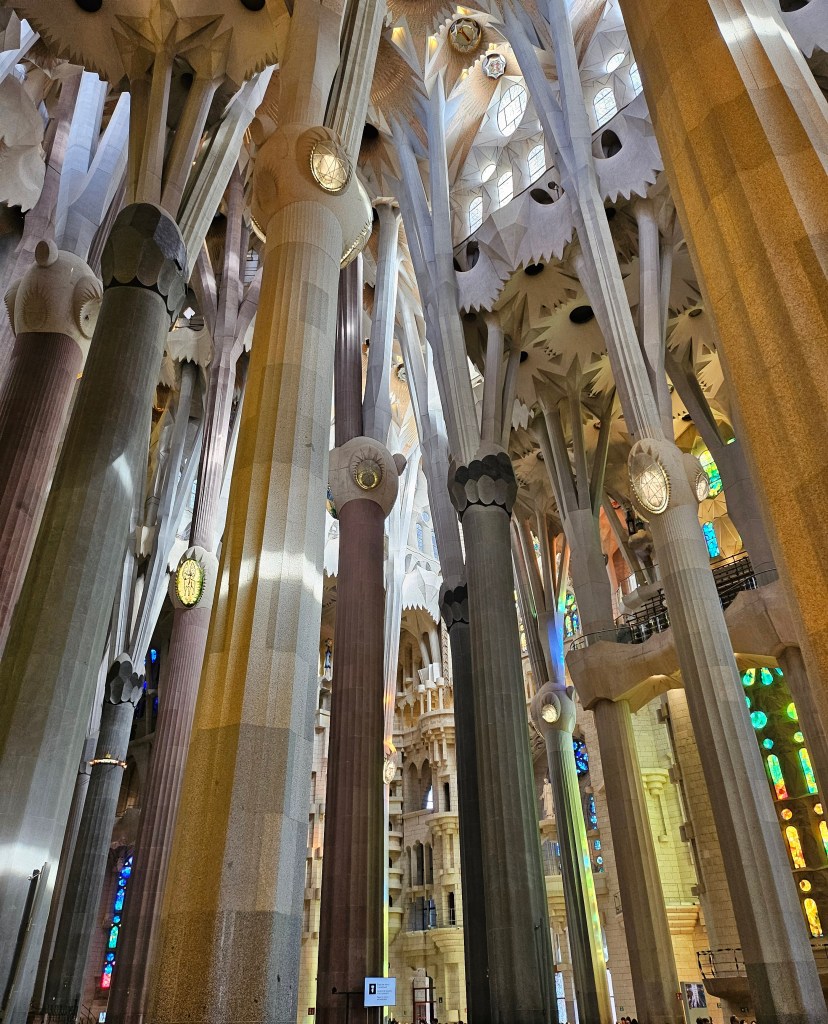
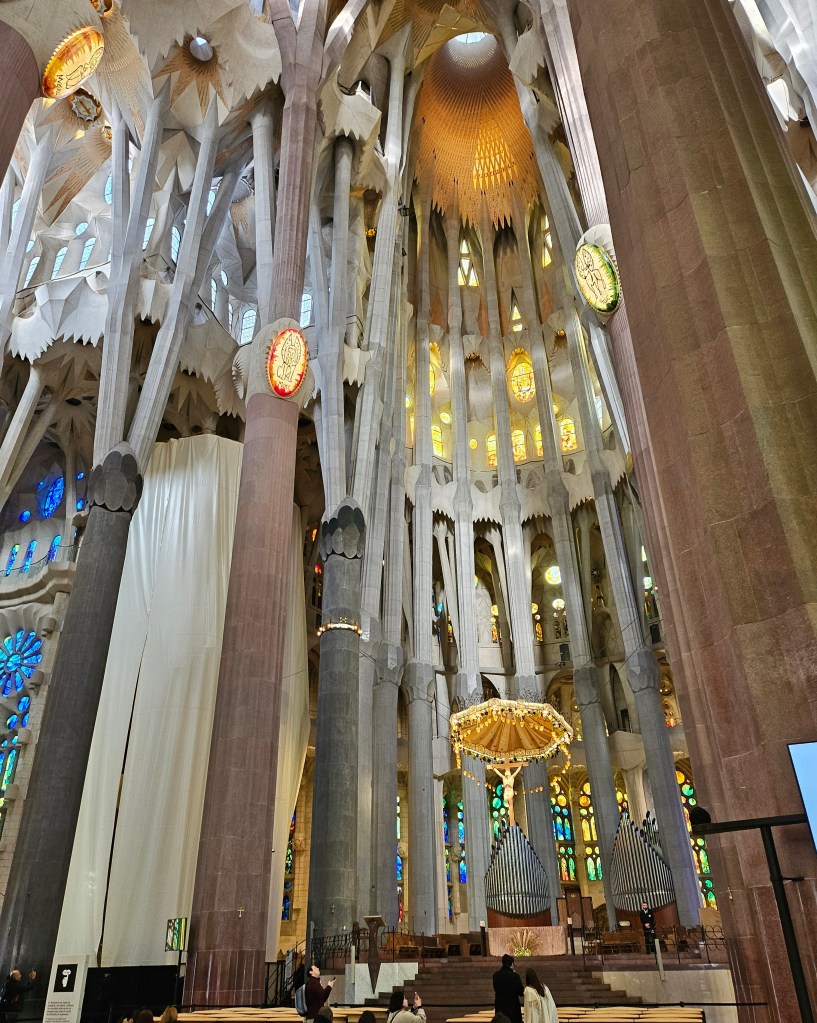
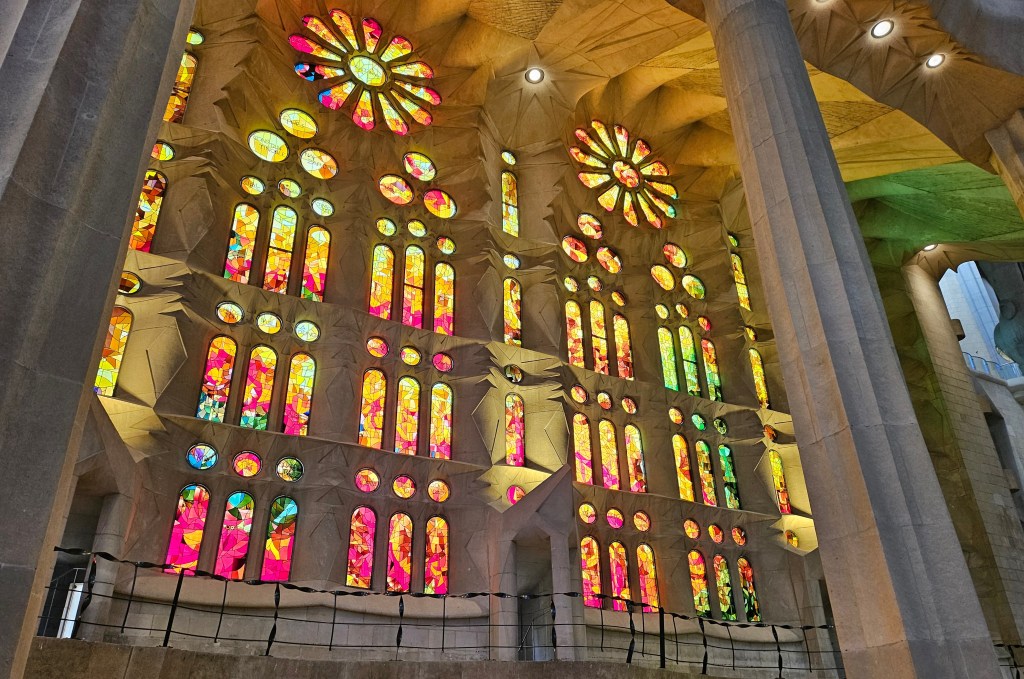
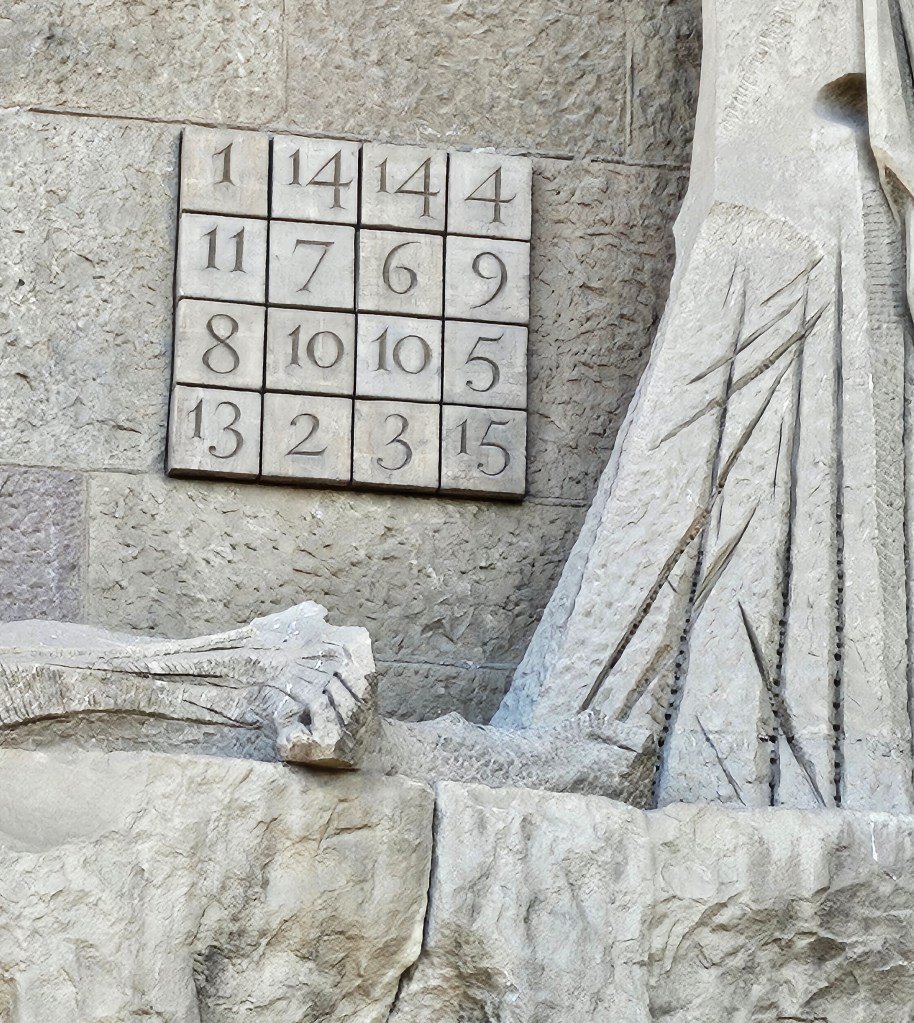
On leaving the Sagrada Familia by the Passion Façade I noticed a 4×4 magic square carved into the wall. Unlike a normal 4×4 magic square, which uses the numbers 1 to 16 to have every row and column sum to 34, in this one they sum to 33, the age of Christ at the time of his death. This is achieved by replacing the numbers 12 and 16 in a normal 4×4 magic square with an extra 10 and 14. However, in this magic square not only does every row and every column sum to 33, but also the diagonals, the four corner 2×2 squares, the central 2×2 square, and the four corner numbers.
By the time I had finished in the Sagrada Familia it was 10:30 am. In retrospect, I may have made a mistake to have bought in advance a timed ticket for noon for Park Güell on the northern edge of the city, as this meant I didn’t really have time to visit somewhere in between, but would have a bit of time to kill. I used this window to buy and write a postcard home. I then visited a post office to post it and a cafe to have a toasted sandwich as an early lunch.
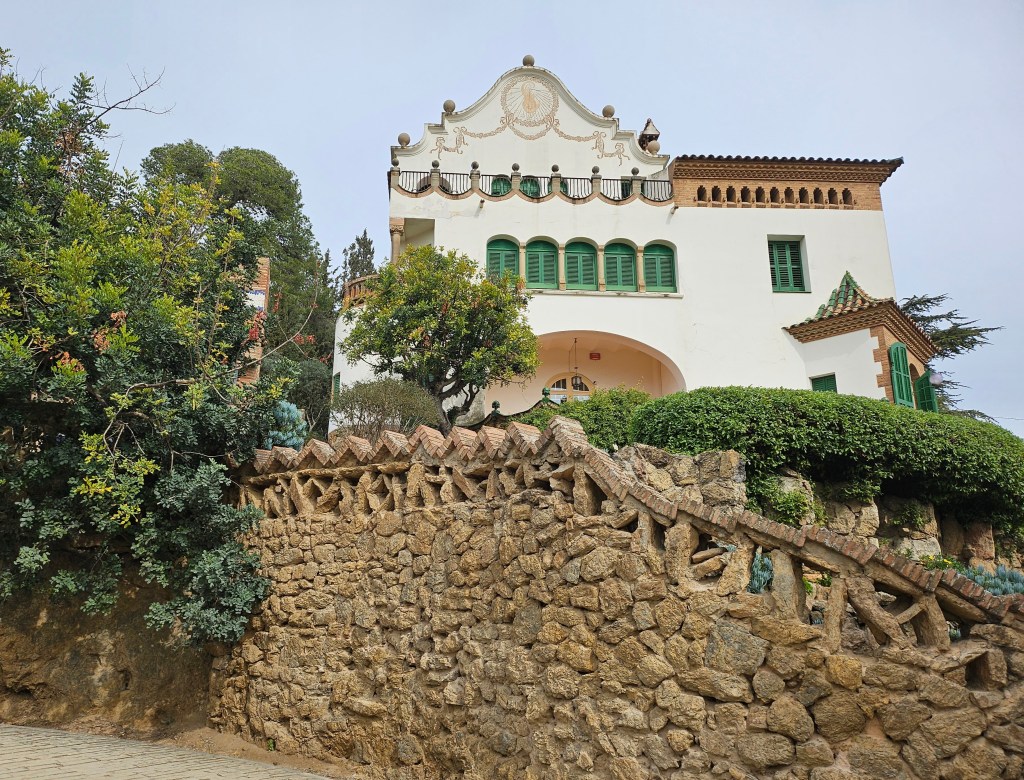
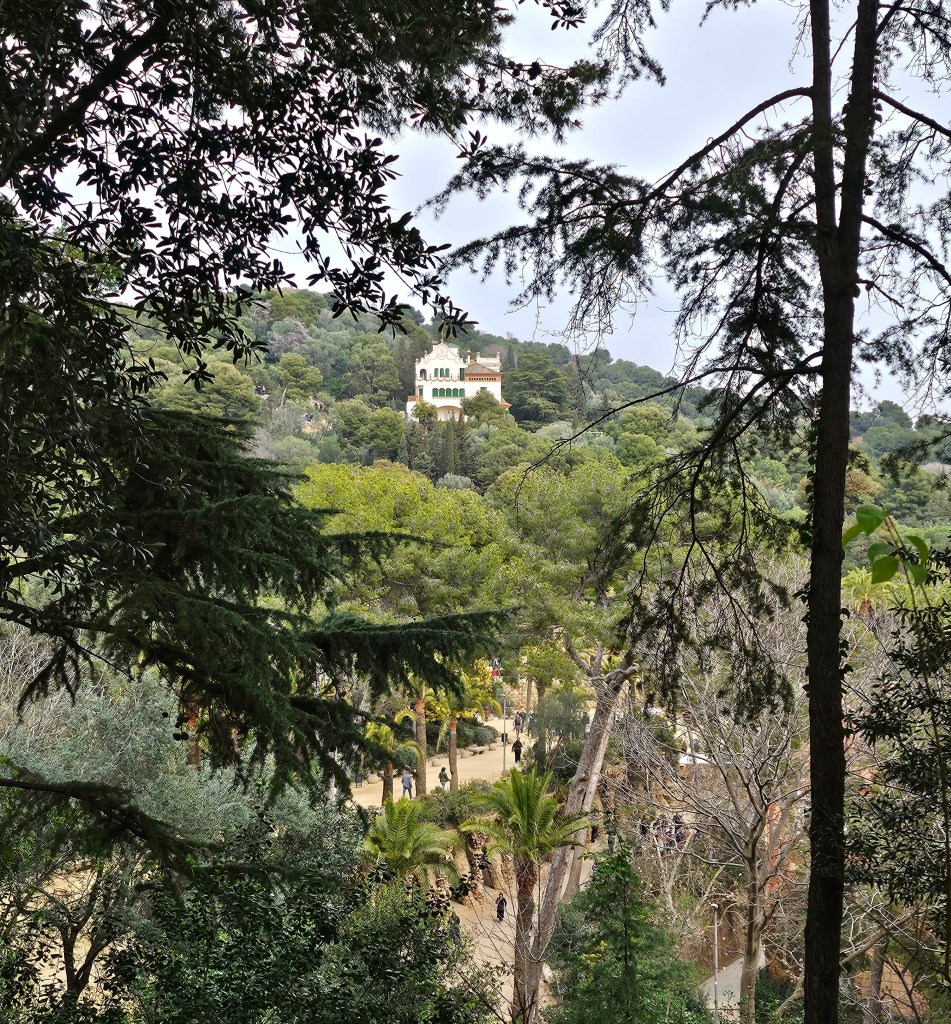
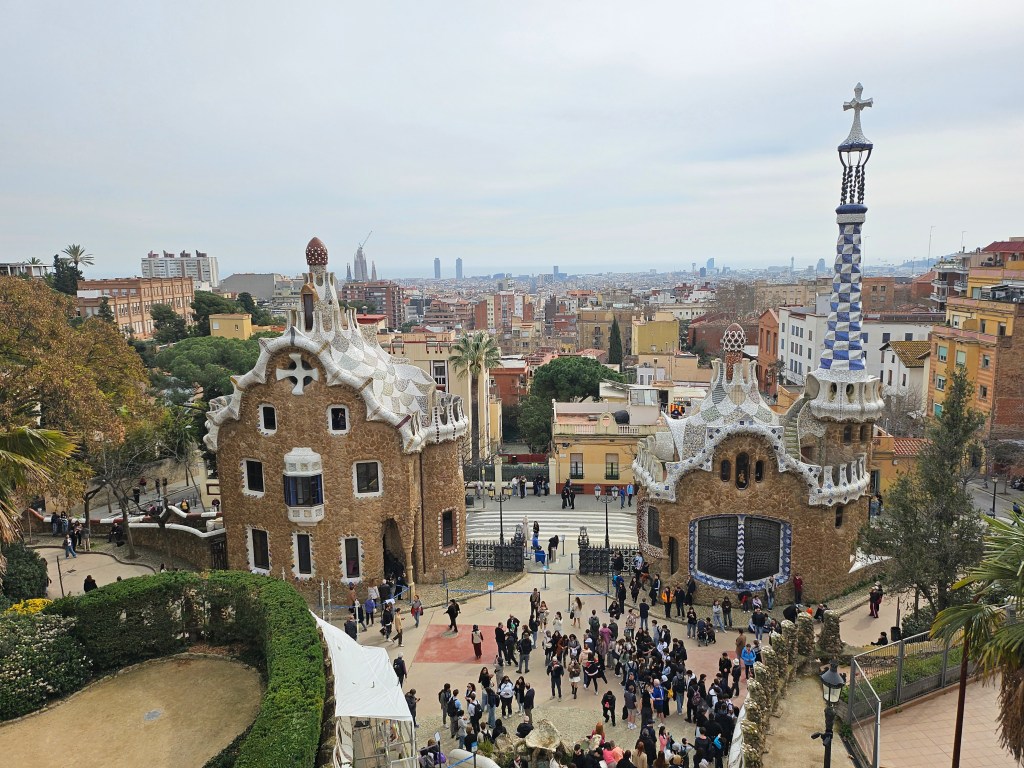
Park Güell consists of ornamental gardens dotted among various Gaudi-designed buildings and other structures, built at the start of the 20th century and first opened to the public in 1926. It was a pleasant place to wander around and spend a couple of hours exploring over lunchtime. Even in February, some parts of the park were quite busy, but it was easy enough to find some quieter spots. The park afforded great views over Barcelona with the Mediterranean Sea visible in the distance.
For my final visit of the day, I walked back to the centre of the city to find the Catalonian Museum of Music. This was appropriately located above a music school and as I approached I observed students carrying their instruments arriving and departing. The museum presented examples of musical instruments from throughout history and an informative audio-guide was available to accompany your visit. I appeared to be the only visitor during my time there. One gallery had had its showcases pushed to one side and chairs installed for an event that evening, with a barrier to obstruct access. As there was nobody about, I did not think it wrong to ignore the barrier and have a look at what I would otherwise have missed. Not surprisingly, given their predominance in Spanish and Catalan music, the museum had an extensive collection of guitars. In the final room, there was a collection of instruments which you were invited to play yourself, provided that you treated them with respect. Unfortunately, having no musical talent at all myself, I had to forego that opportunity.
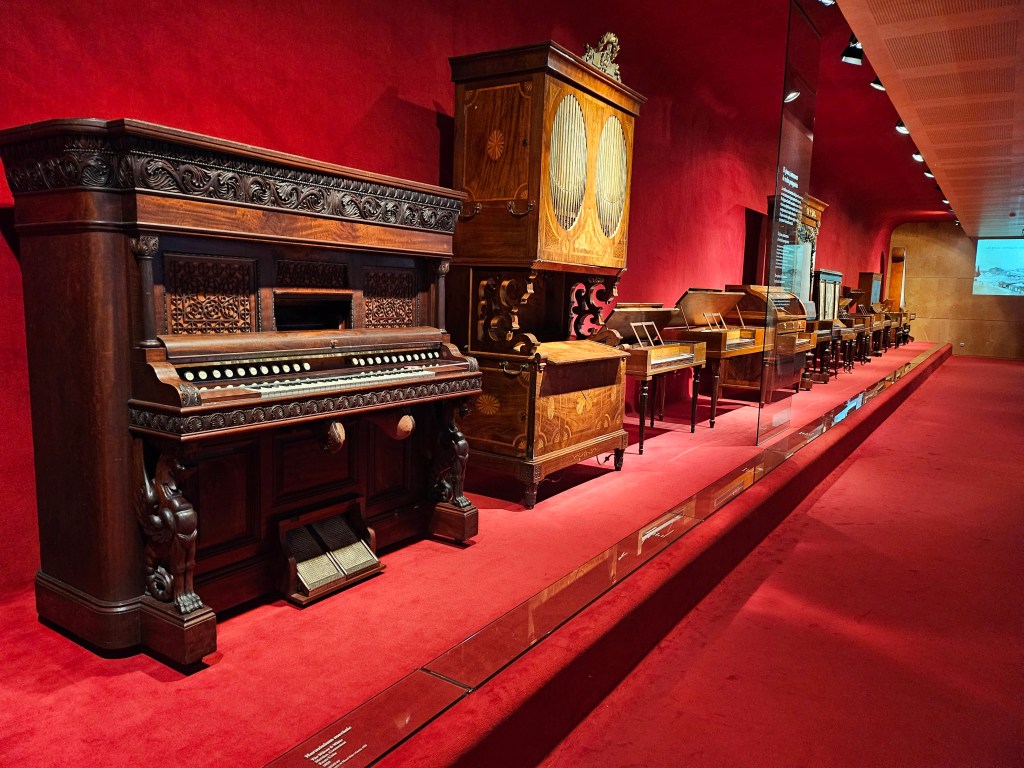
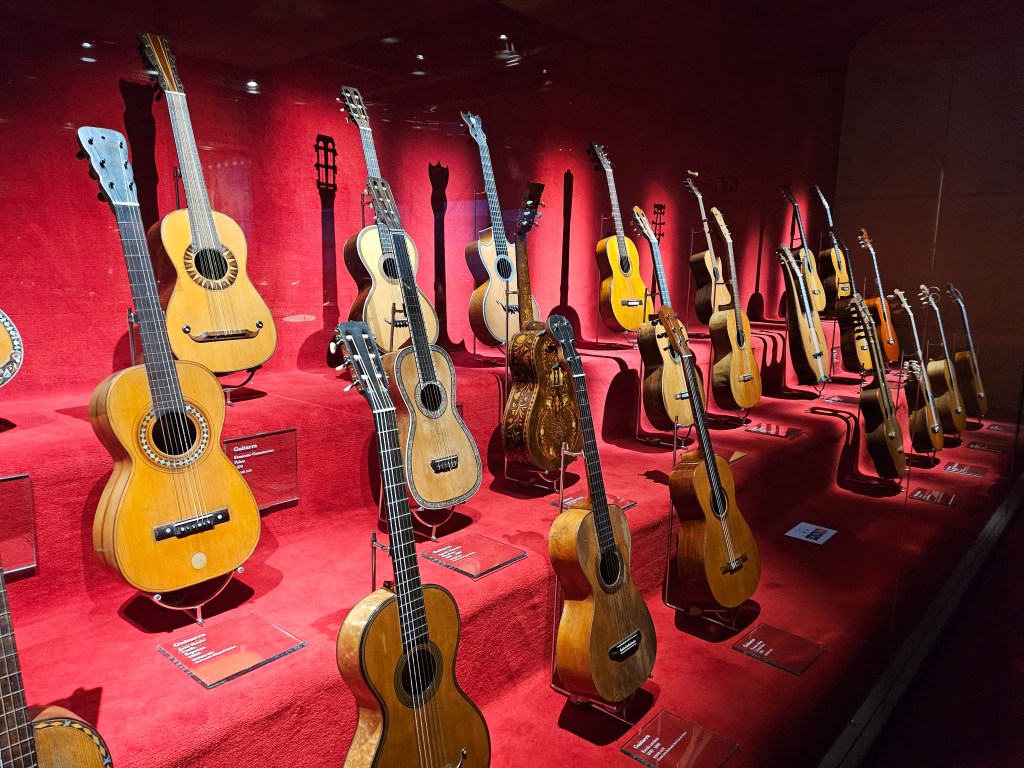
That evening, the late opening of Catalan restaurants caused me to again to choose somewhere else to dine. Compared to my first night, I at least went somewhere vaguely traditional by going to a tapas bar, where I had cod croquettes and hummus to accompany my beer.
Day 3 – Friday 28th February 2025 – Barcelona to Girona
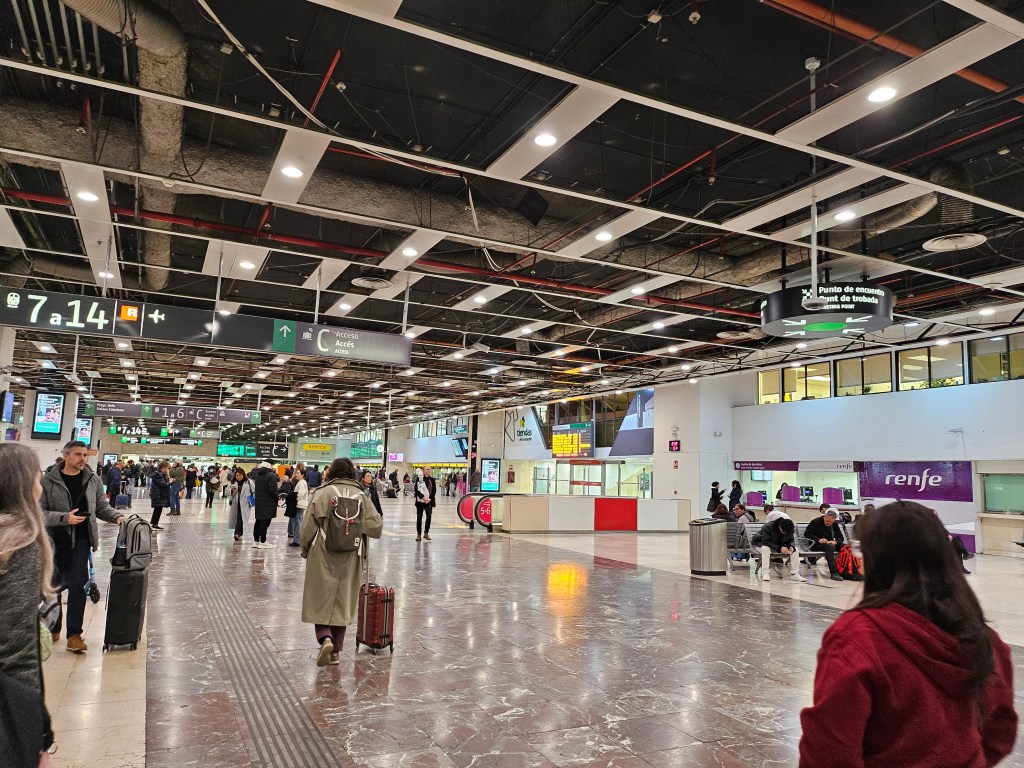
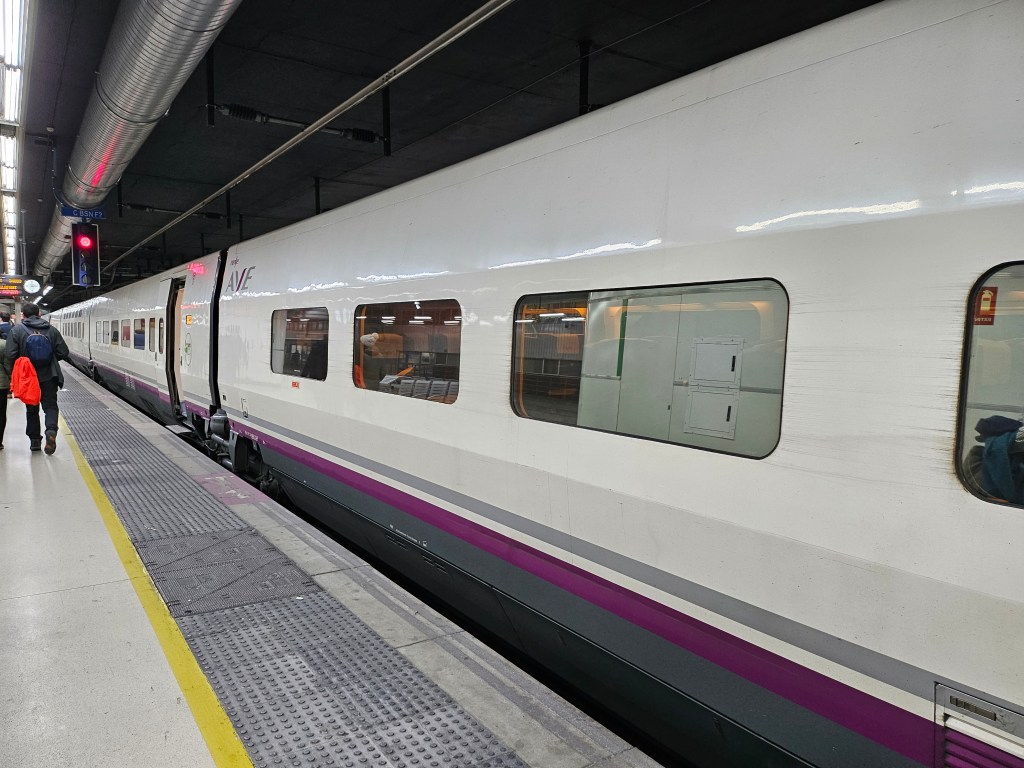
A few days earlier I had received an email from RENFE informing me that the train I had booked to go to Girona had been rescheduled and was now leaving 24 minutes later than originally planned. I walked from my hotel to arrive at Barcelona Sants in good time for the now 0934 departure. Being on the high speed line, I had to join the queue of people going through security before I could go down to the platforms to board. The train was quite busy, but it was a fairly short ride before I got off at Girona.
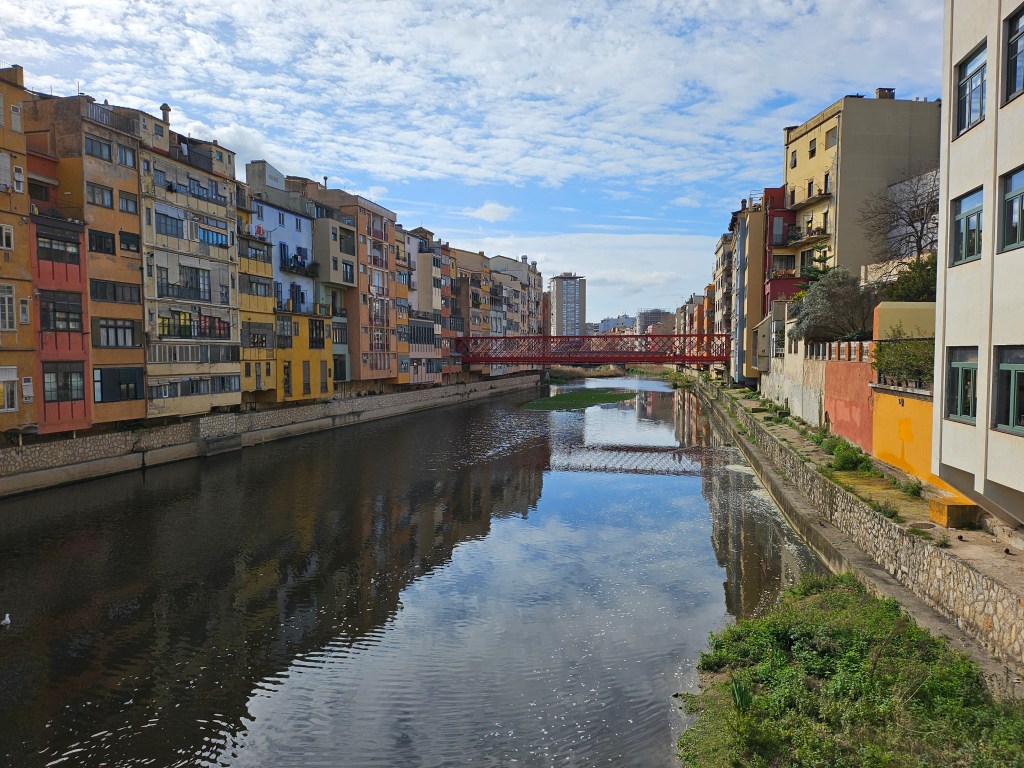
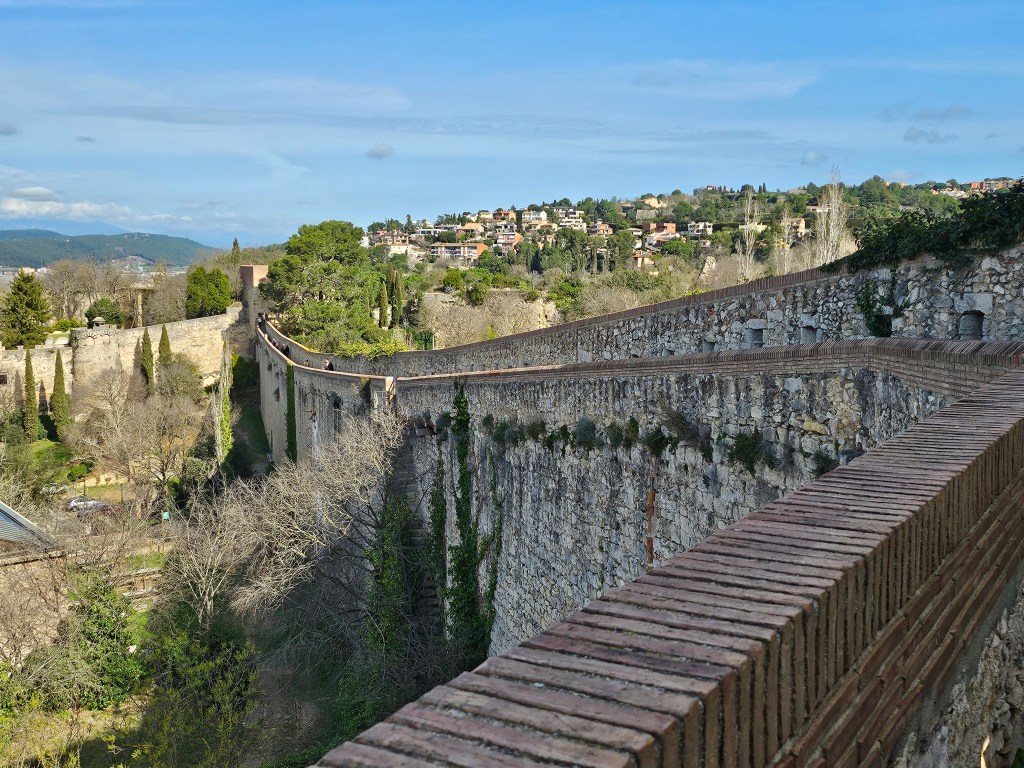
I dropped off my bag at the hotel I had booked just outside the old walled city before going off to explore. To get to the old city of Girona I had to cross the Onyar river, which I did on a pedestrian bridge one along from the red metal bridge built by Gutave Eiffel in 1877. I then climbed up to access the city walls, which I walked along for about half their length giving good views of the city and surrounding countryside.
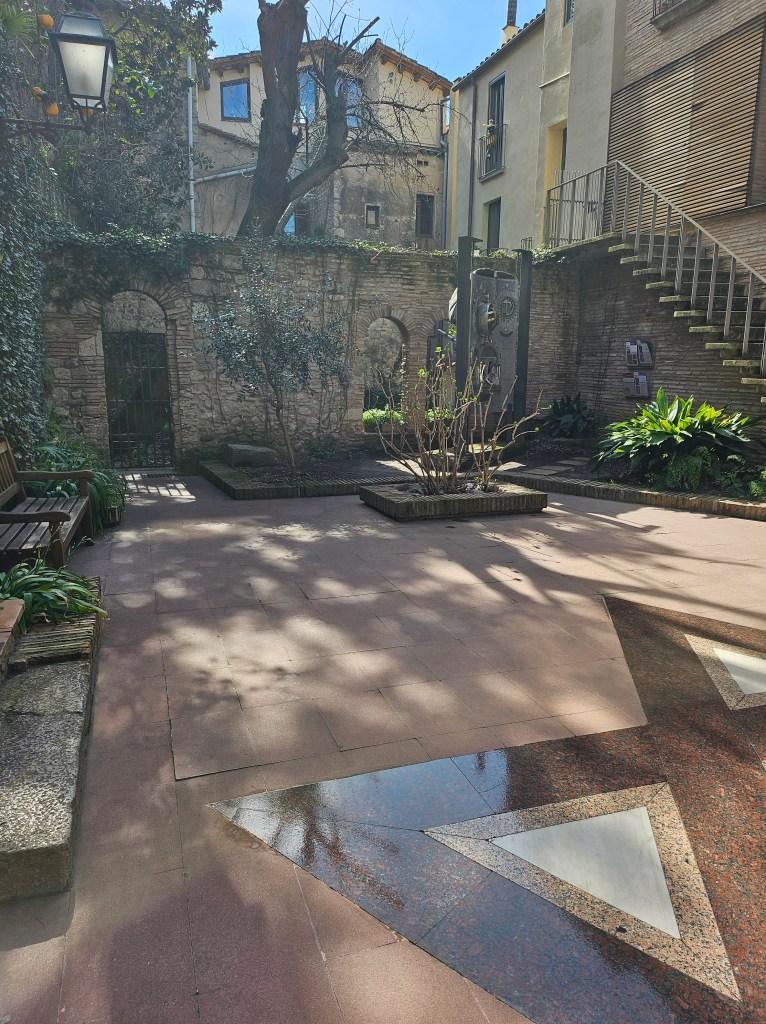
As with many Spanish cities, Girona had a thriving Jewish community until the Jews were expelled (or forced to convert) in 1492. Only following Franco’s death in 1975 was the Jewish heritage of Girona allowed to be explored. In the former Jewish quarter (the Call), there is now a museum of Jewish history located in the restored former home of the medieval Jewish scholar, Nachmanides, in which I spent some time.
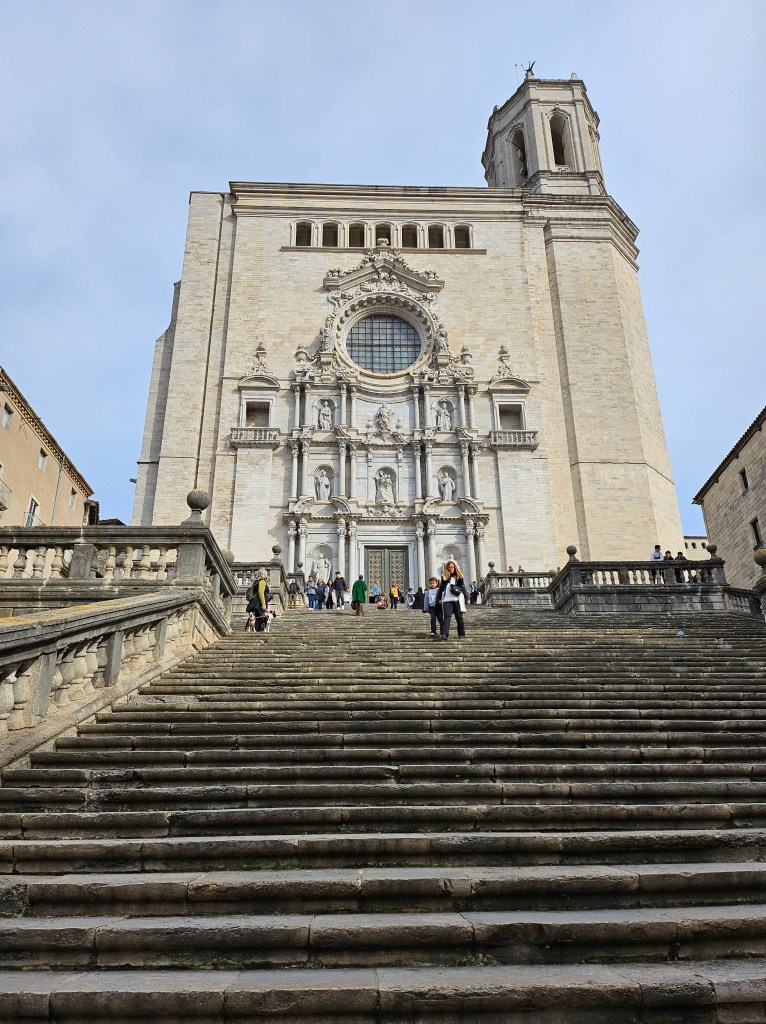
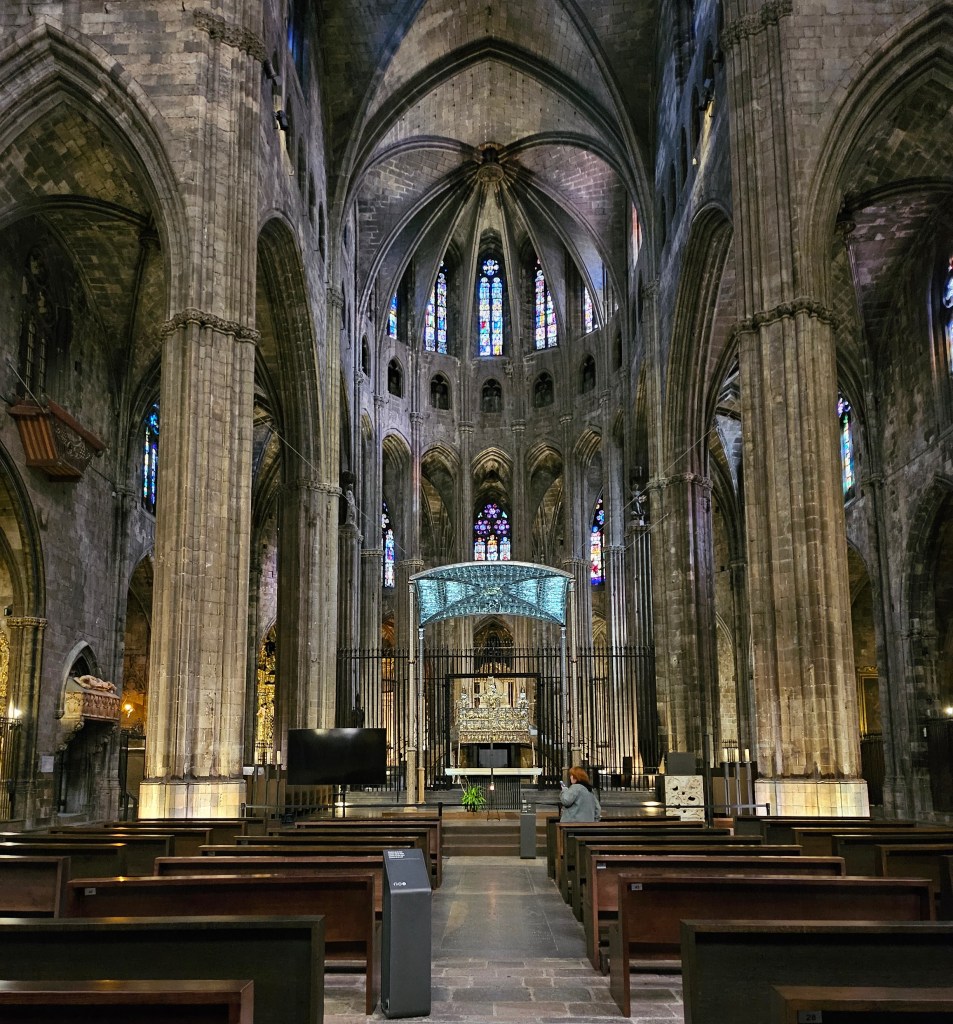
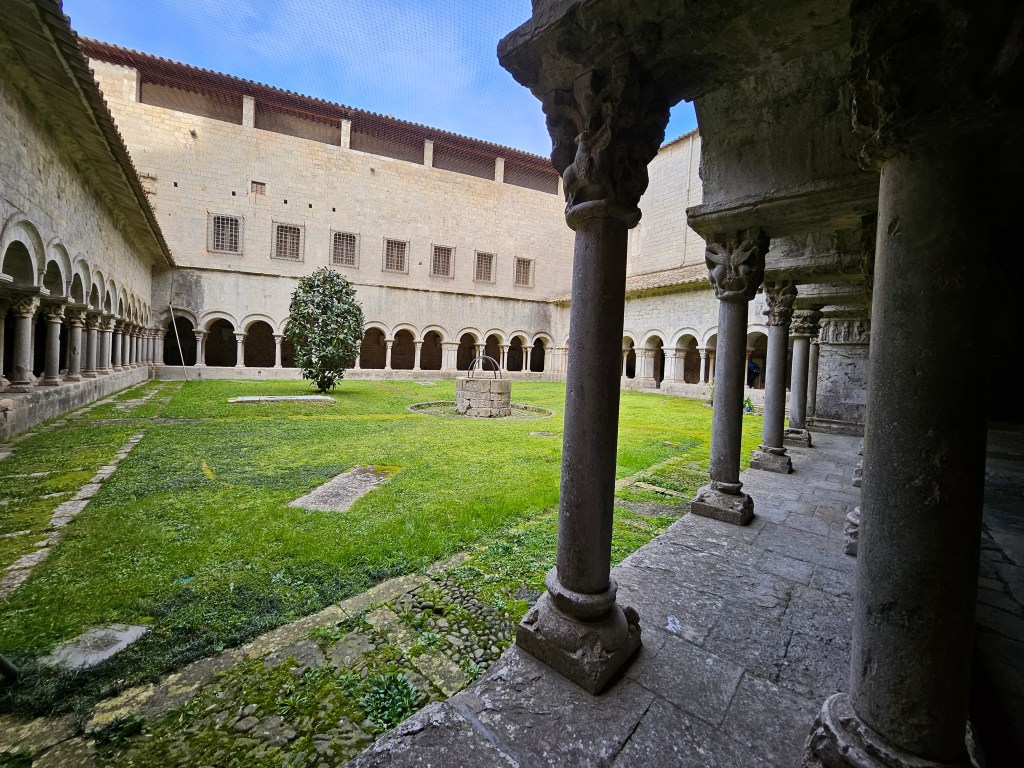
I next went to the city’s art gallery, which has an interesting collection, although a predominant focus on early religious art. The art gallery is adjacent to Girona Cathedral, which I toured with the help of a very detailed audio-guide. The cathedral has the widest nave of any Gothic cathedral in the world, being nearly twice as wide as Notre Dame in Paris. Off the main nave are numerous chapels dedicated to a variety of saints. One of them used to be dedicated to Charlemagne, who was venerated in Girona and locally made a saint. It was only following pressure from the Catholic hierarchy in the early 20th century that Girona stopped referring to ‘St Charlemagne”. The cathedral has a magnificent external staircase leading up to the west façade, which I descended when I left.
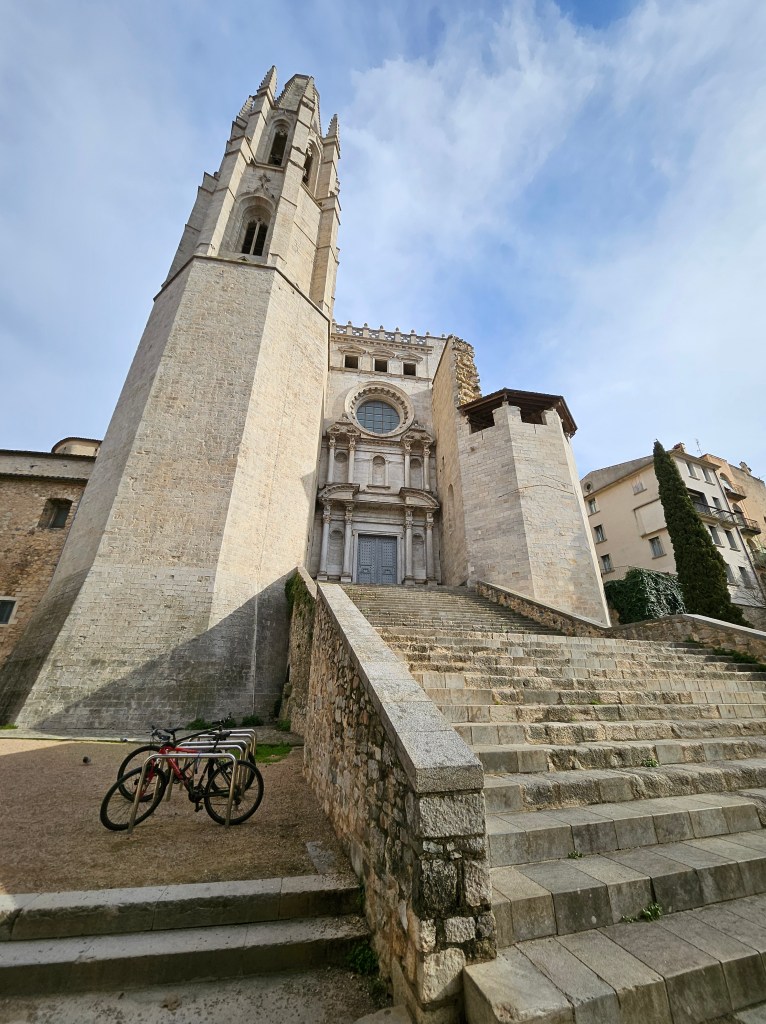
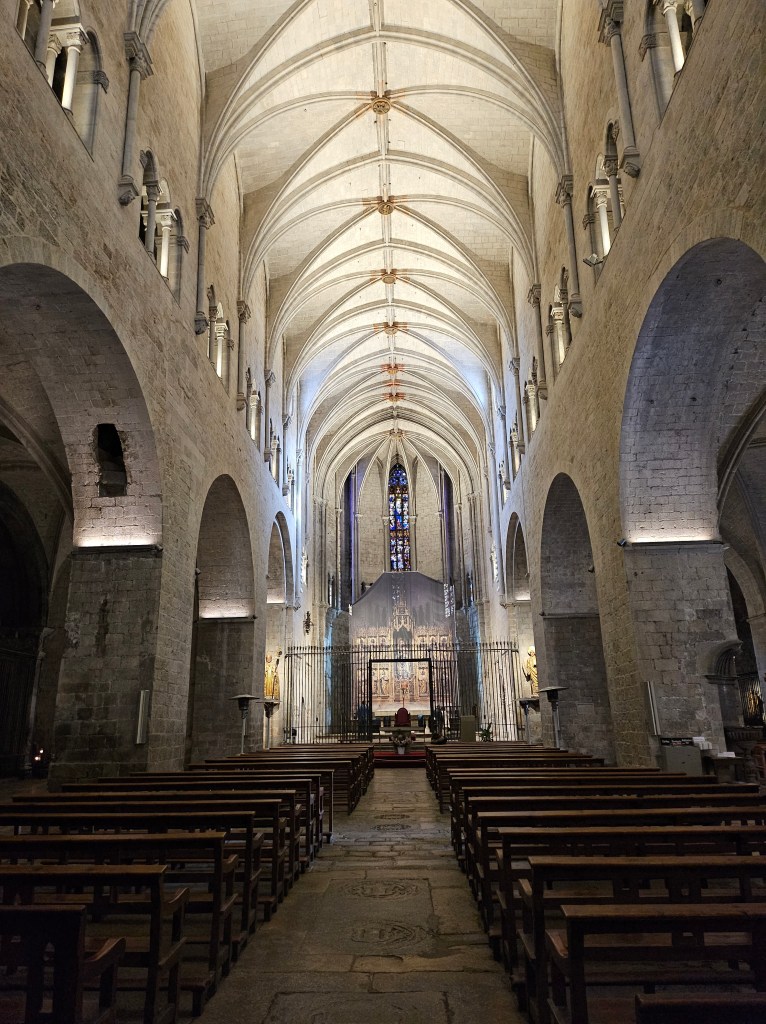
From the cathedral I went the short distance to the Basilica of St Feliu (St Felix). This was the main church in Girona, prior to the cathedral being constructed in the 11th century. One of the sides of this impressive building forms part of the defensive walls of the city. By the time I had finished looking round St Feliu, I realised that I would not have time to do justice to Girona’s main city museum, so that will have to wait until another time.
When I was still in Barcelona I took the precaution of booking a table for dinner in Girona. The restaurant I chose looked very reasonably priced, but had the oddity of having menus which updated on-line in real time, depending on what was available, and they seemed to adopt dynamic pricing, with each dish priced very precisely down to the last cent. When I booked on-line, I just received a notification that they would let me know if any tables were available. Having not heard from them 24 hours later, I made a follow-up enquiry – this elicited a message from them saying that the table would only be confirmed if I then replied to their latest message. The restaurant only offered booking for one of three sittings in the evening – early, middle or late, with a promise of discounts on some dishes on the early and late sittings. They also gave dire warnings that if you did not turn up on time for your chosen sitting, your table would be released.
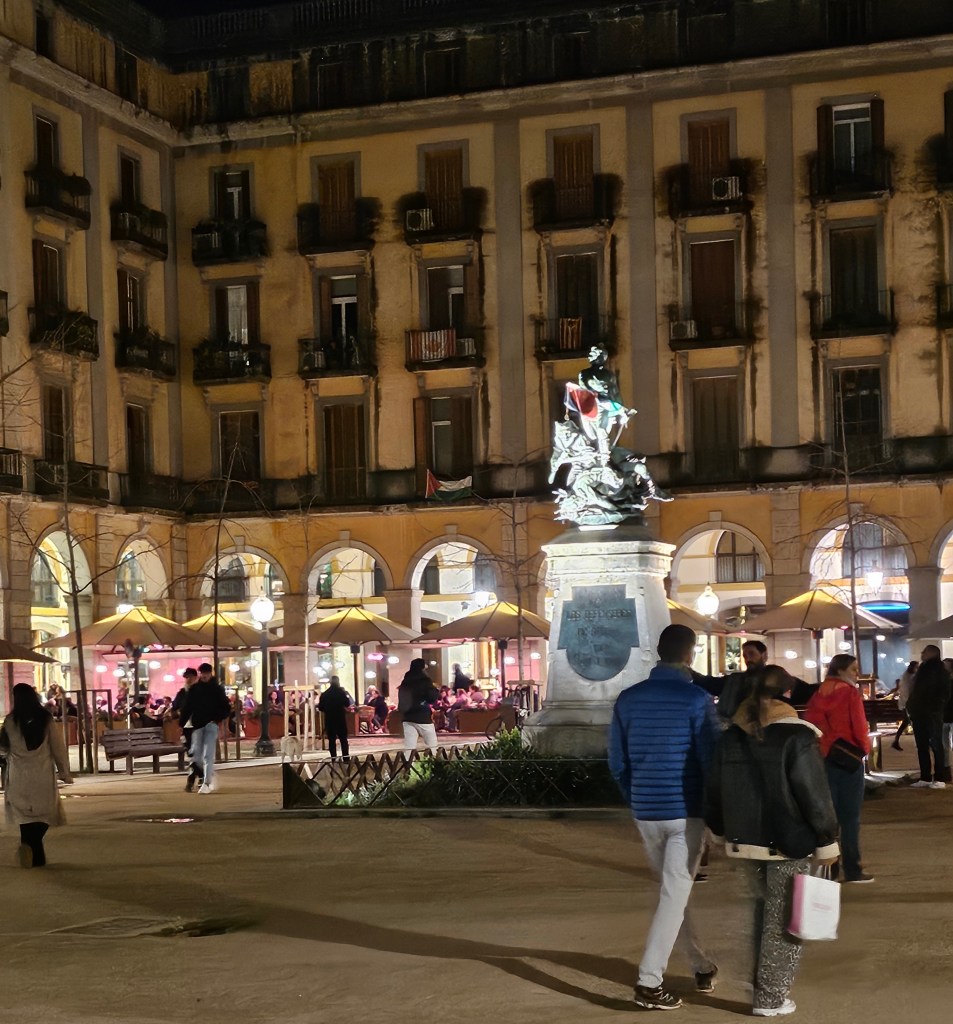
So I ventured out to the restaurant, which was located in the Plaça de la Independència, to be there in time for my chosen early sitting. Inevitably, when I arrived a couple of minutes after the time I had booked, the restaurant was still shut. It eventually opened about 10 minutes late. The table bookings had all been transcribed by hand into a large ledger, which the elderly manageress spent some time looking through to find my name. Despite all its idiosyncrasies, the meal I had was very good and very reasonably priced. I started with vegetable soup, followed by lamb shank. I then had mascapone ice cream with fig for dessert. I ordered a beer while I waited, not having spotted that the wine list also had small bottles of wine. So to accompany my meal I had a small bottle of the local red wine, which went very well with the lamb.
[Coming next: Part Two – France.]
 Europe Explored