
“Workers of the world, Unite! …” (Friedrich Engels, Karl Marx)
In recent years I have visited most of the major cities in Germany, most recently being a trip along the Baltic coast from Hamburg to Poland last October. My wife and I had a number of places in Germany we still wanted to go to – the downside being that they did not make a particularly coherent itinerary, with none of them directly accessible by one train ride from the other. Given the sad decline in Deutsche Bahn’s punctuality, journeys with connections are not usually without problems. Nonetheless we decided to put together a itinerary of the places we wished to visit. The furthest away was Leipzig, a city I last was in during communist times in 1985 (my wife had never been). This account is split into two parts – the first one recounting our travels up to, and including, Leipzig, and the next one telling of the journey back.
Day 1 – Wednesday 11th September 2024 – London to Liège
Although I had been to Liège only a few months previously on my way to Luxembourg, I had insufficient time to see all that I wanted in the city and it made a convenient staging post on the way to Germany.
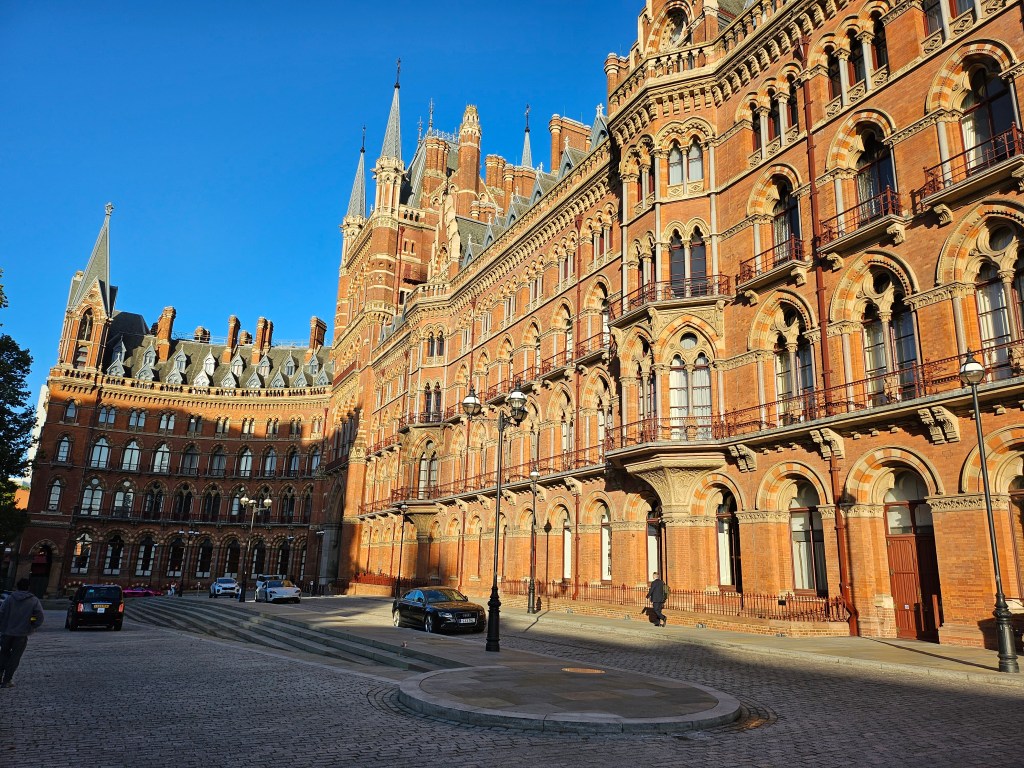
We were catching the same 09:01 Eurostar from St Pancras, as I had on my previous trip. As before, there seemed to a tour party which had block-booked seats in our carriage. The train departed promptly and arrived at Brussels Midi a couple of minutes late just over two hours later. The connecting passage at Midi is still shut. Before, this was due to works going on there, but I suspect now that it is a permanent feature to ensure that everyone has to go past the customs post at the end of the platform. Leaving by the front of the platform is slower, but it did not matter on this occasion as we had plenty of time to catch the 12:28 train to Liège.
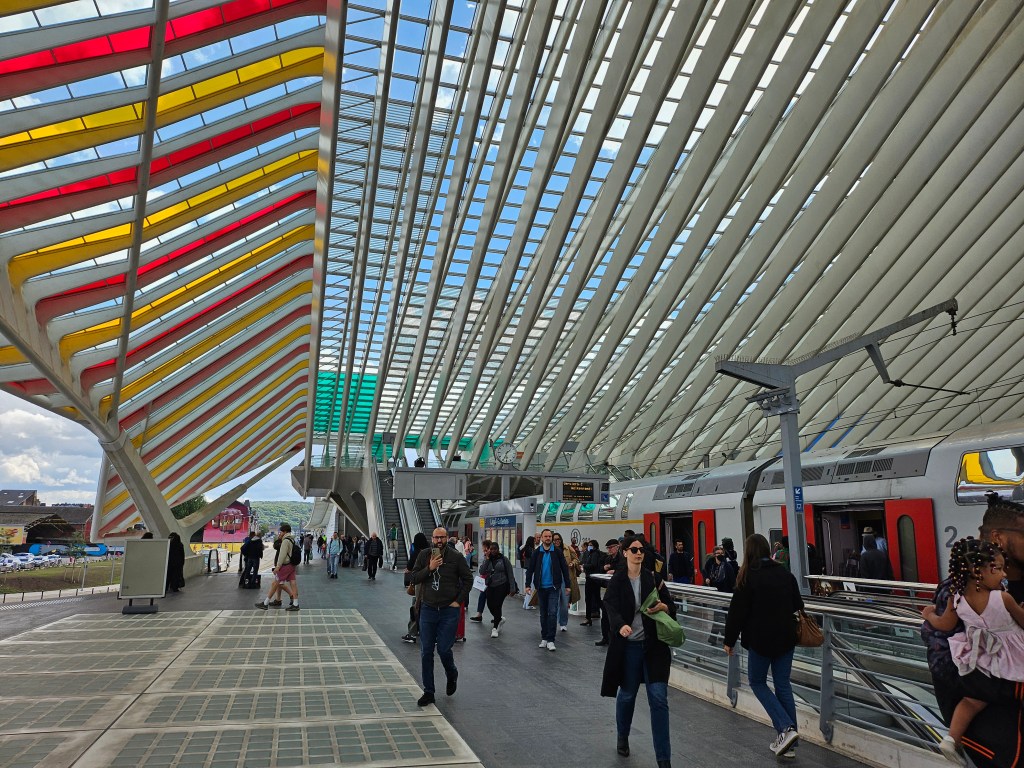
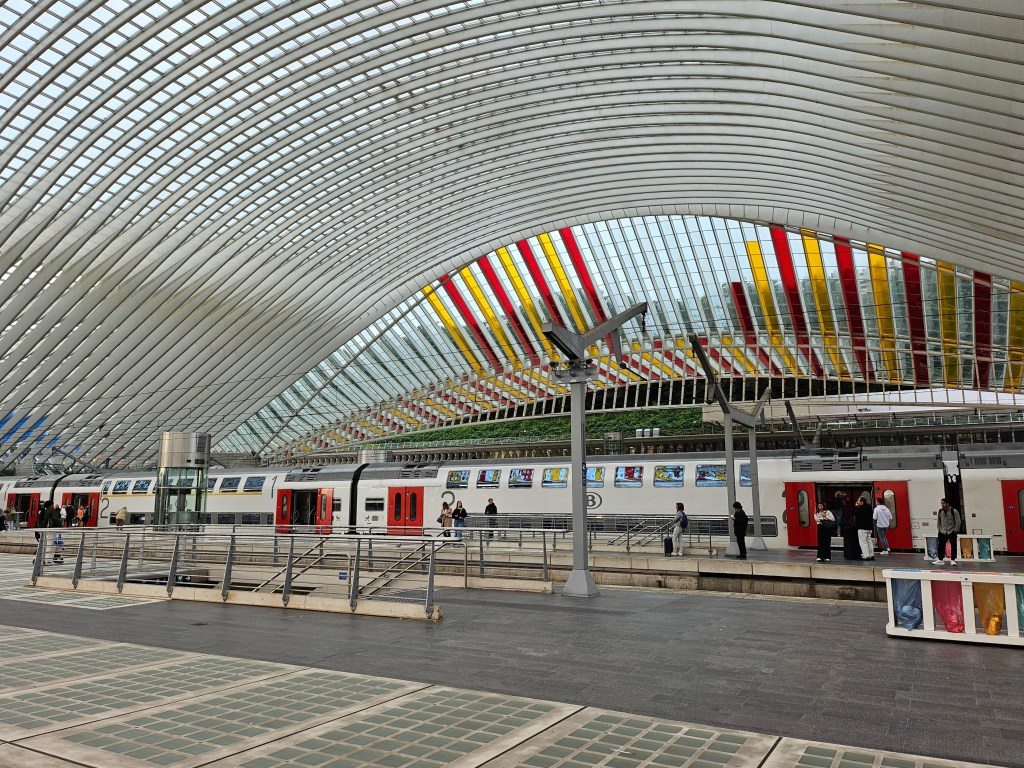
We arrived at the architecturally interesting Liège-Guillemins station. Here I temporarily parted company with my wife, as on my recommendation she was catching a train to Liège- St Lambert to visit the Musée de la Vie Wallonne (Museum of Wallonian Life) where I had spent the afternoon on my previous visit.
I instead walked across the pedestrian bridge over the River Meuse to visit the Boverie, Liège’s main art gallery. The permanent exhibition is quite small, with the majority of space being available for special exhibitions – but at the time of my visit they were in the process of setting up a new special exhibition. What the permanent exhibition lacked in size, it made up for in quality with works by Monet, Pissarro, Magritte and Ingres, among others.
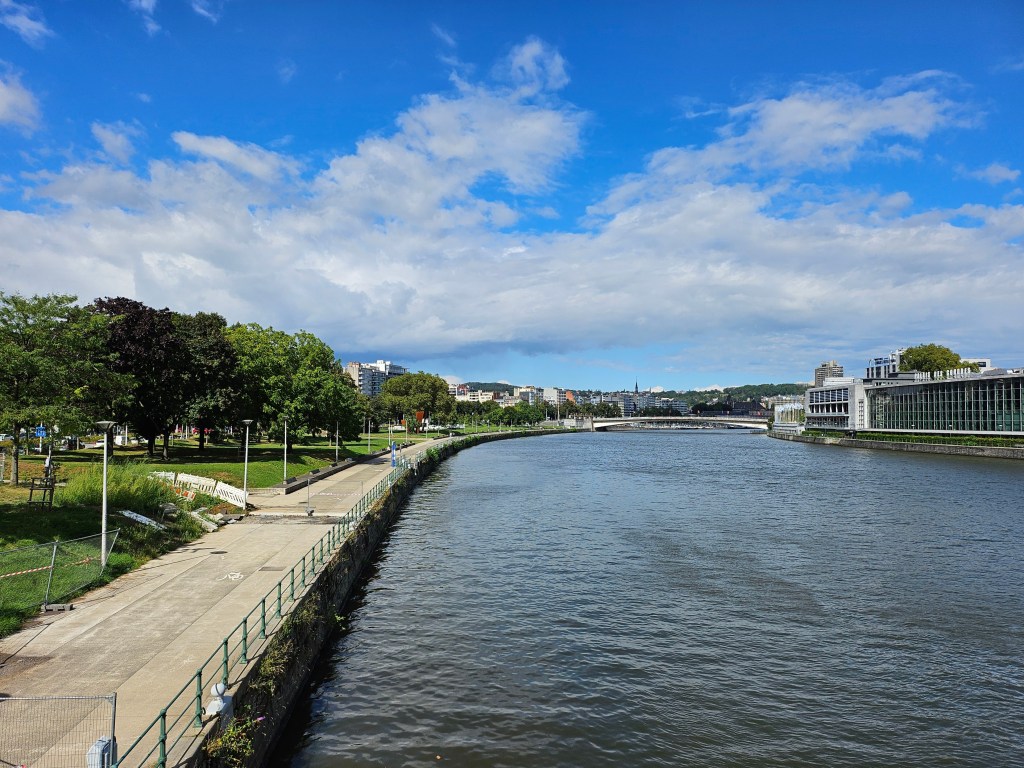
When I had finished at the Boverie, I walked back across the Meuse to check out the restaurant I had eaten in last time. It does a very good value daily special, but this day’s special was not particularly to our taste, so instead I walked to another restaurant near Guillemins station to book a table for the evening.
I then hopped on a train to St Lambert to visit the Grand Curtius museum. It contains a mixture of exhibitions – archaeology and the early history of the city, decorative arts, and an extensive collection of hand-held weapons ranging from swords and daggers to sub-machine guns.
From the Grand Curtius it is just a short walk to the Musée de la Vie Wallonne, where I had arranged to meet my wife at 5pm. It had been raining on and off for most of the afternoon, but it had cleared up sufficiently for us to risk the 45 minute walk back through the centre of the city to our hotel near Guillemins station.
The hotel was the same one I had stayed in last time, in which all the rooms were cartoon themed. Last time I had Gaston, a hapless office boy, but this time our room featured Natacha, a flirty air hostess, who seemed to get into scrapes by hanging out with various dodgy characters.
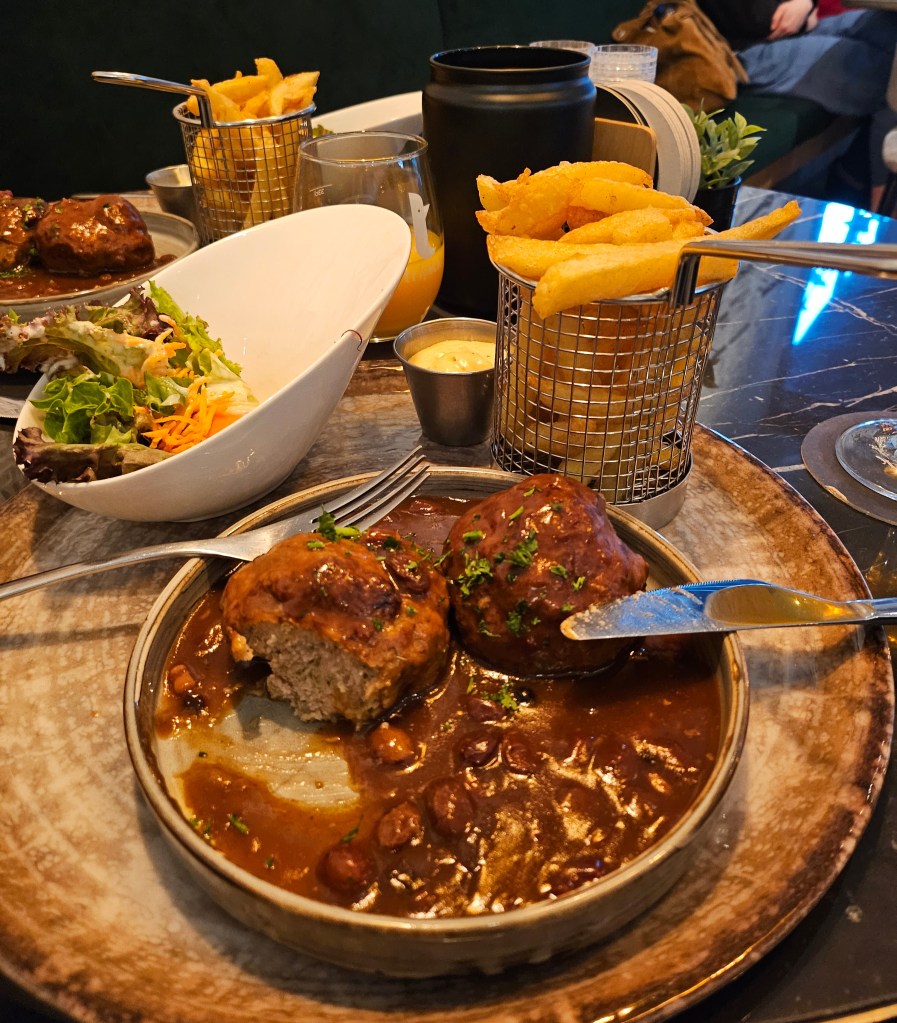
We then went to the restaurant I had booked for dinner. As an added bonus, by taking a card from the hotel reception we were given a free drink in the restaurant. As it served Tripick beer, which I had for the first time on my previous visit to Liège, I again drank Tripick 6 to accompany my meal. We dined on the local speciality Boulets Liègeoise. On return to the hotel, we also had free welcome drinks waiting. I tried the slightly weaker Tripick 5, which I thought was more flavoursome than the Tripick 6.
Day 2 – Thursday 12th September 2024 – Liège to Wuppertal
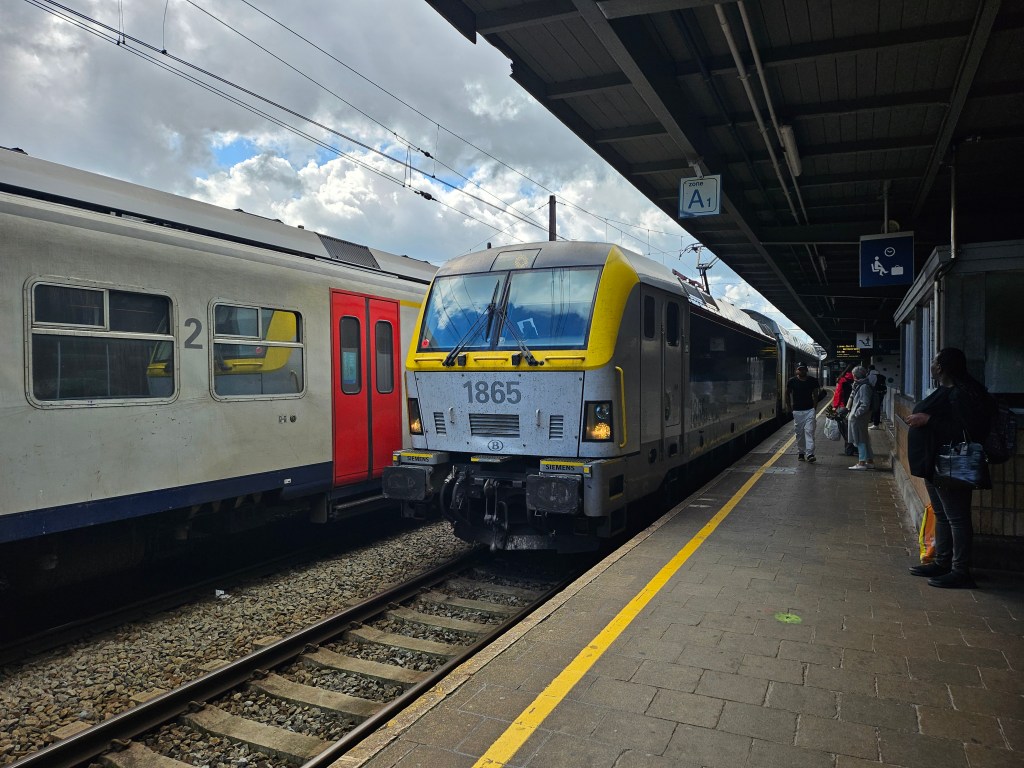
When I checked on the Deutsche Bahn app to see whether our train from Liège was running on time I discovered that it was shown as only starting at Liège that morning, rather than in Brussels, as timetabled. Other than that, it was shown as being on time, so we made our way to Liège-Guillemins station in good time to catch our 09:14 departure. However, when we arrived at the station the departure boards were telling a different story and the train was indicated to be 22 minutes late. It in fact arrived at the platform shortly before the timetabled departure time, but when we got on it was announced that it would wait for passengers coming from Brussels, who would have had to have caught a SNCB Belgian train to connect. The train was a brand new ICE 3 neo, but the problem about where it was starting meant that none of the seat reservations were being displayed. (We only bought seat reservations on this train after buying our original tickets, because it was predicted to to have high loading.) The train left 26 minutes late, and it was only after we entered Germany, that the DB app recognised that it was not on time. However, it was predicting that it would claw back some of the delay before reaching Cologne, where we needed to change. The opposite happened and the delays grew longer, as it was very slow going through Aachen, where the train filled up with passengers.
As we approached Cologne Hauptbahnhof, the DB app was advising that we would only connect with a train about an hour after the one originally intended. However, I noticed that we might just catch the 10:52 to Wuppertal, if we could get to its departure platform within three minutes. It was starting from Cologne and I could see it standing on platform 1 as we pulled into platform 4. Fortunately, we just made the connection which saved us a half-hour wait.
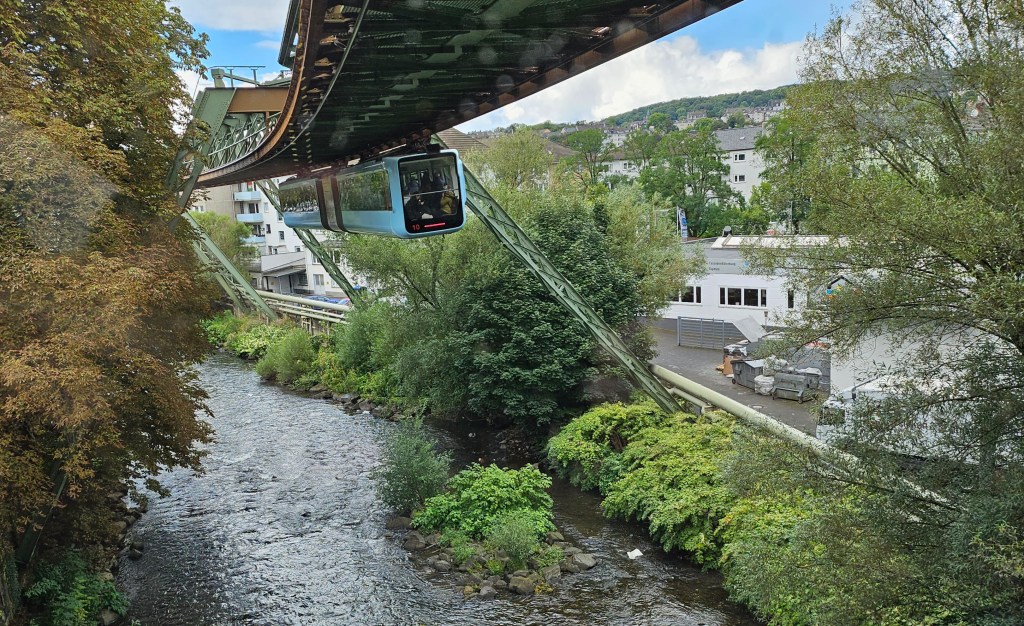
Shortly after leaving Cologne the train was filled with the sound of everybody’s phone gone going off at once, as there was a test of the German national emergency alarm system. This local train was more or less on time throughout its journey and arrived at Wuppertal on time at 11:36. The entity of Wuppertal was only created in 1929 when the two towns of Elberfeld and Barmen in the valley of the River Wupper merged. Wuppertal Hbf is located in Elberfeld. One of the main reasons for coming to Wuppertal was to ride on the Schwebebahn, the suspended monorail, with its unique (within Europe) hanging carriages, that runs along the valley for 13km. We walked to Wuppertal Hbf Schwebebahn station which is a short distance from the main station where we had arrived. You can buy a 24 hour ticket from ticket machines on the platform, which meant we would not need to worry about how many times we went on the Schwebebahn. We discovered that the ticket machine on the platform in the direction we wished to travel was not working so had to cross over to the other side to obtain the ticket that we needed. The Schwebebahn appears to be well used by the local population – despite running every four minutes during the day, all the trains we caught while we were in Wuppertal were crowded.
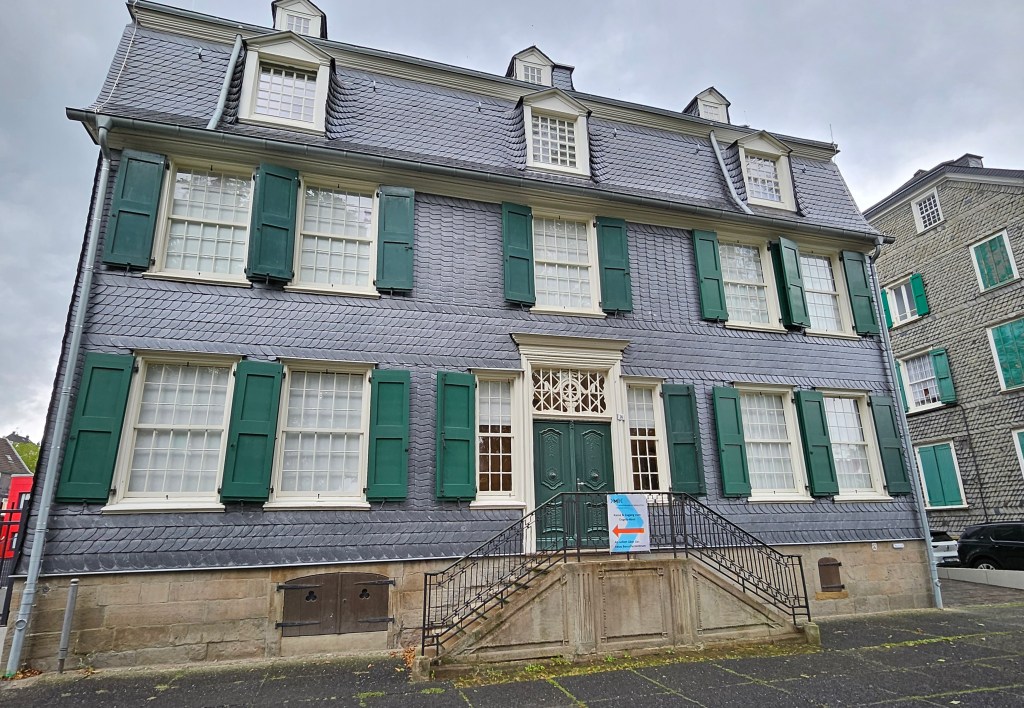
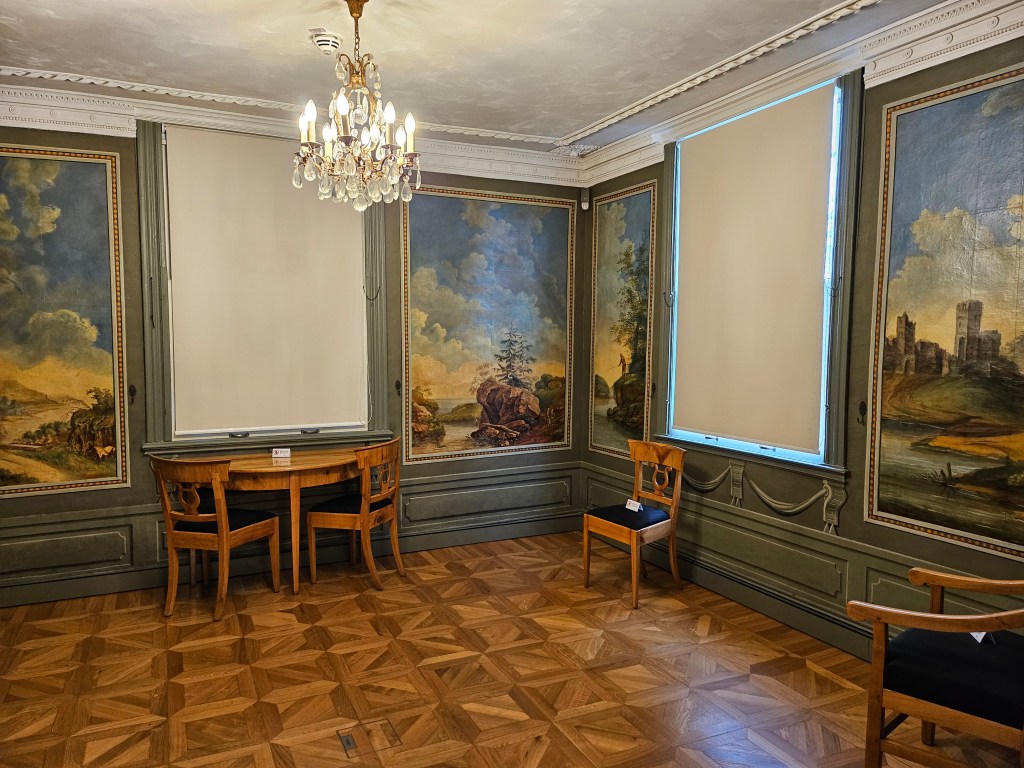
Our initial journey on the Schwebebahn was to Adlerbrücke station in Barmen, travelling above the river throughout our route. From here we went to Friedrich Engels House. This was the very bourgeois family home of the Engels family, where Friedrich’s grandparents lived at the time of his birth – his birthplace house opposite no longer exists. Next to the Engels House there will be an industrial museum, but at the time of our visit this was still in the course of development. The Engels family were wealthy mill owners who owned a number of sites along the Wupper Valley. Friedrich Engels’ father made him leave school a year early to start an apprenticeship at the family firm. He was already developing radical ideas and was more interested in being a journalist than working in textiles. His father made him accompany him to Manchester, so that he could work at one of the factories which the family owned there. When in England he met up again with Karl Marx and continued to support him throughout his life. When Marx died in 1883 with only one volume of Das Kapital having been published, Engels devoted much of the rest of his life overseeing the completion of two further volumes.
On returning to Adlerbrücke station we travelled to the end of the Schwebebahn line at Oberbarmen, where we had to get off, before boarding again to travel the length of the line in the opposite direction. The advantage of beginning at the terminus station is that you can bag the seats right at the rear of the train, which have the best views. From Oberbarmen we went all the way to Vohwinkel. At the Stadion/Zoo station the line stops following the river and travels above the roads, climbing slightly to reach Vohwinkel. At Vohwinkel we again had to get off before we could return in the opposite direction. This time we went as far as Alte Markt in Barmen, where we went for a short walk to see Barmen Town Hall.
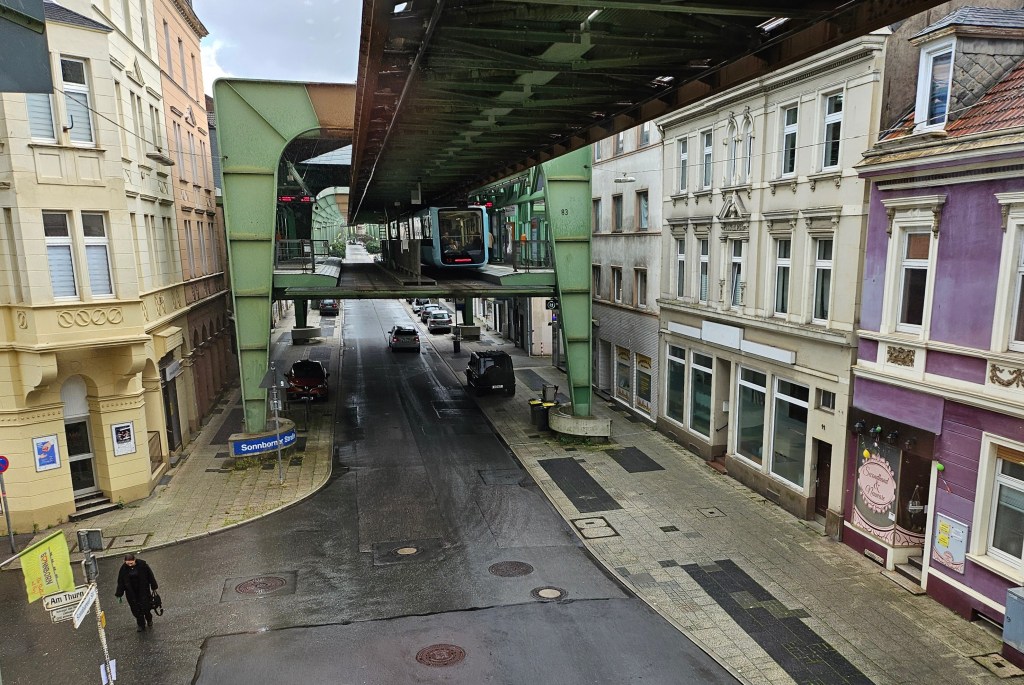
We then caught the Schwebebahn again to Ohligsmühle station, from where we walked to Elberfeld’s Alte Stadthalle. It was not far from there to our hotel, which was fortunate as it was just beginning to rain.
After checking in at the hotel, the rain eased so we went to visit Elberfeld’s Jewish Museum on the site of the former synagogue, which had been burnt down during Kristallnacht. When we arrived at the museum there was sign outside saying it was open, but the door was locked. When we rang the doorbell, a young man appeared who seemed surprised that we wished to visit. He asked us to wait while he checked that the museum was fit to be viewed. He returned to say it was all right to go in and apologised that all the information was only in German. We reassured him that while our conversational German is fairly poor, we can usually understand a lot of written German. The museum described the small Jewish communities in Wuppertal and surrounding areas, mainly linked to the textile industry, before they either fled or were murdered by the Nazis.
We then went for walk round Elberfeld, including climbing the evocatively-named Tippen-Tappen-Tönchen steps, to see some of the architecturally interesting houses and to keep an eye out for potential locations for dinner that evening.
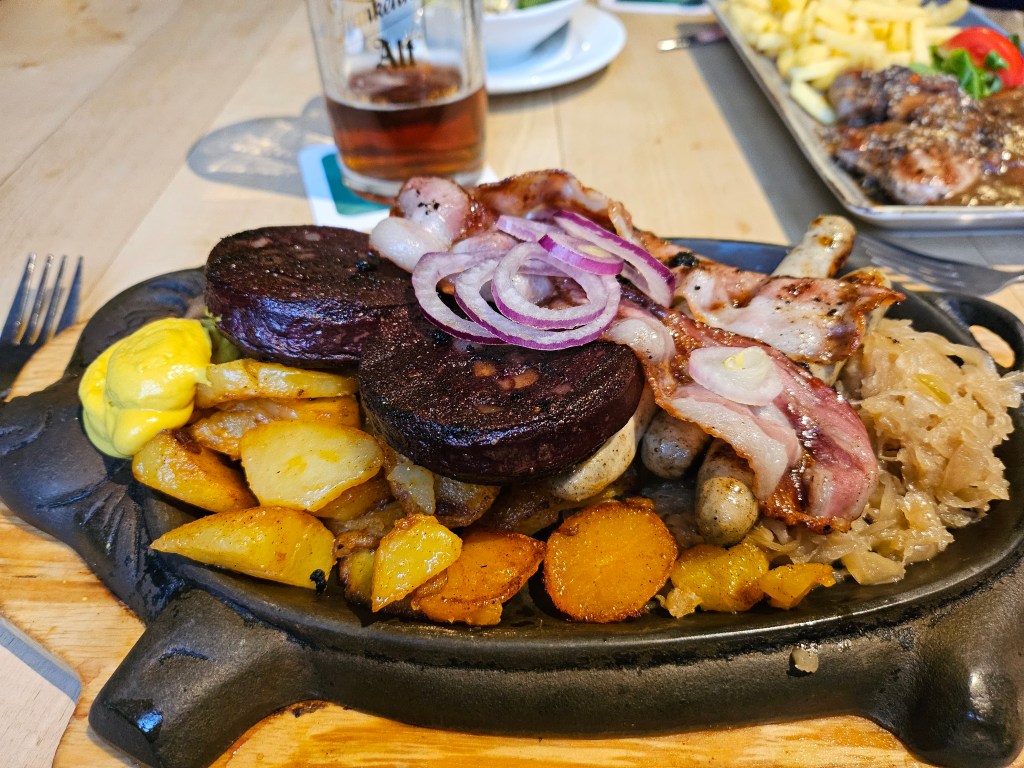
We chose a pub not far from our hotel, where I ordered a Schlachteplatte, a mixed grill of different sausages and meats served with fried potatoes and onion. I drank Frankeheim Alt beer, brewed in nearby Dusseldorf.
Day 3 – Friday 13th September 2024 –Wuppertal to Göttingen
When we awoke, there was a notification from the DB app telling us that our train had been cancelled and replaced with an ersatz train running to the same timetable, but the seat reservations we had bought would not be valid. What this meant in practice was that a shorter train was being used. I had only bought seat reservations subsequent to the original ticket purchase, because DB were advising of high demand for this train. You are supposed to be able to reclaim the cost of seat reservations if the train does not run, but when I tried after we returned by clicking on the seat reservation booking, I got a message saying that I could only claim for journeys in the past! If I tried via the ticket booking, it only let you claim for a delayed or cancelled journey.
After breakfast at the hotel (the only hotel breakfast we we having on this trip) we walked the short distance to Wuppertal Hauptbahnhof. Most of the trains on the departure board were shown as late, so much so that the backlog of late trains meant that the departure board struggled to find space to display the details of the few train which were running on time. Our train, which was originally coming from Cologne, was initially shown as being on time. However, when we went to the platform another train was shown as departing from there first, which would not be consistent with ours being on time. After a while, when our train was now late, the other train just disappeared from the departure board without ever having arrived at the platform, and ours rolled in six minutes late. As expected it was already nearly full, but we were lucky to get a couple of the remaining seats.
At subsequent stations, the train became standing room only, and when the train left Bielefeld, as well as the vestibules, all the aisles in the carriages were full of standing passengers. However, the train did recover its delay and arrived in Hanover on time at 11:19, giving us 20 minutes to make our connection. We had stayed for a night in Hanover on a family holiday in 2015, so we used the short amount of time we had there to venture out of the station and remind ourselves of the immediate vicinity.
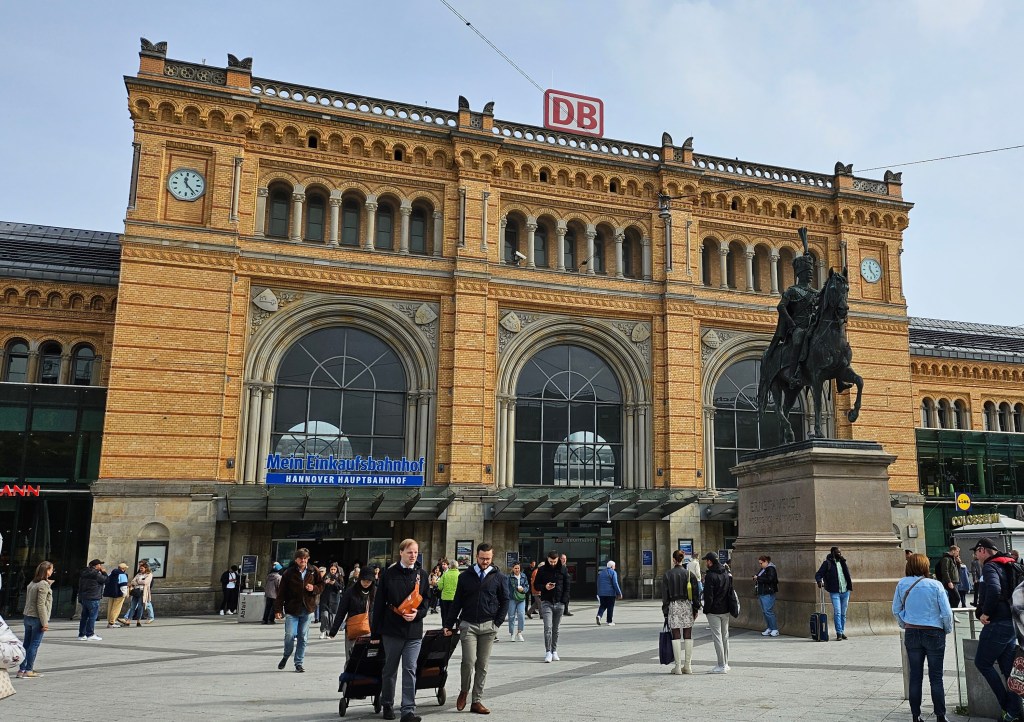
Our next train was also full, but at least on this one our seat reservations worked and we arrived in Göttingen just a couple of minutes after the due arrival time of 12:15. Göttingen station is a little way from the centre of the city, but our walk into town was enlivened by there being a scale model of the solar system with an information board about each planet being placed at the appropriate distances down the street. I also took the opportunity to call in at a small bakery, where I bought a filled roll for my lunch.
Göttingen was the pre-eminent European university for mathematics and science in the 19th and first part of the 20th century, until the Nazis drove out the Jews (and much of the other talent also left). The purge of Göttingen scientists may well have cost Germany the war, as the research programme on nuclear physics was abandoned as ‘Jewish science’. There are information boards dotted around the city giving more information about scientists who had worked there. The first one we saw on the way from the station was about Ludwig Prandtl, who had written the textbook on hydrodynamics that I had used in my second year at university.
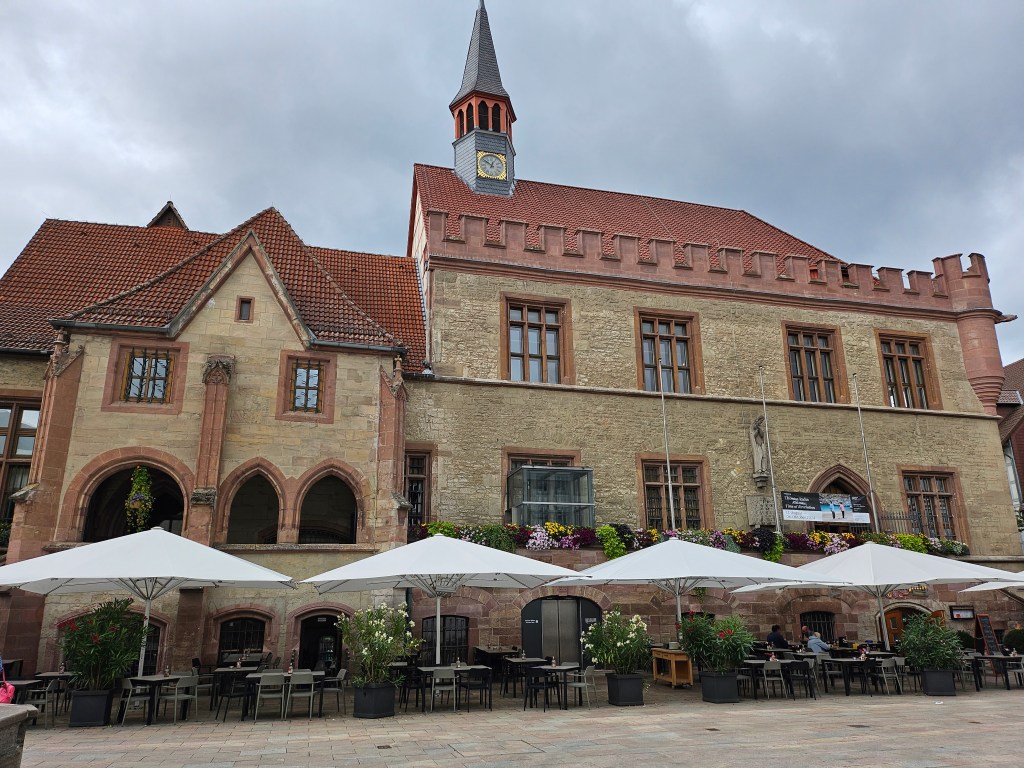
At the tourist information office, my wife picked up a booklet giving a town trail which we were to follow on and off for the rest of the afternoon. We first went in to the old city hall opposite the tourist information office, which has an ornately decorated entrance hall. The town trail took us past the Jakobi Kirche, where we went inside. There was going to be an organ concert later that evening in the Jakobi Kirche, which we considered attending, but in the end decided not to.
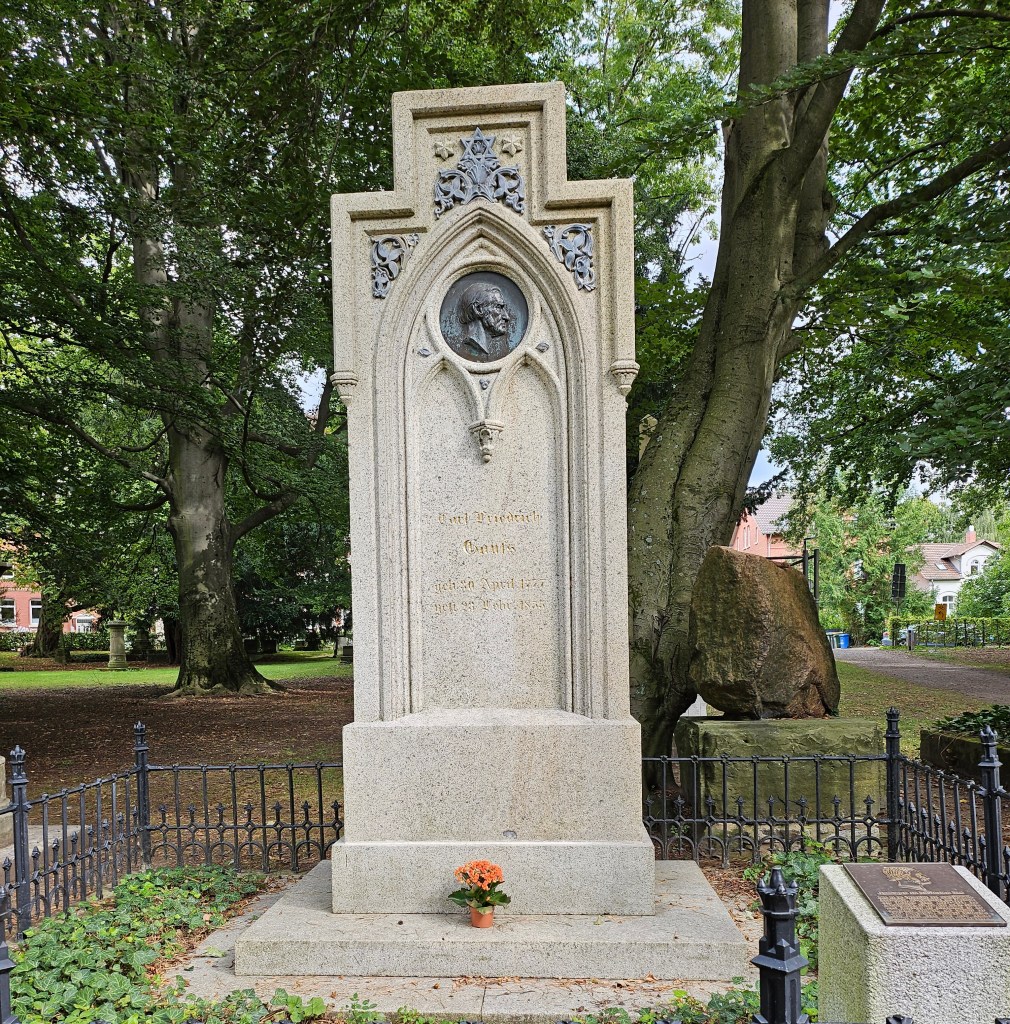
After a slight detour to go through the botanical gardens, we made another detour from the town trail route to visit the grave of Carl Friedrich Gauß (1777 – 1855), the mathematician, physicist and astronomer, who did so much in many different areas. Another famous mathematician who is also buried in Göttingen is David Hilbert whose tombstone is famously inscribed with “Wir müssen wissen; Wir werden wissen.” (“We have to know; We will know.”) Unfortunately, Hilbert’s grave is in the municipal cemetery which is closed on Friday afternoons.
We also stopped at the city museum, which was only partially open when we were there. We found the exhibition City, Power, Faith, Göttingen in the 16th century very interesting.
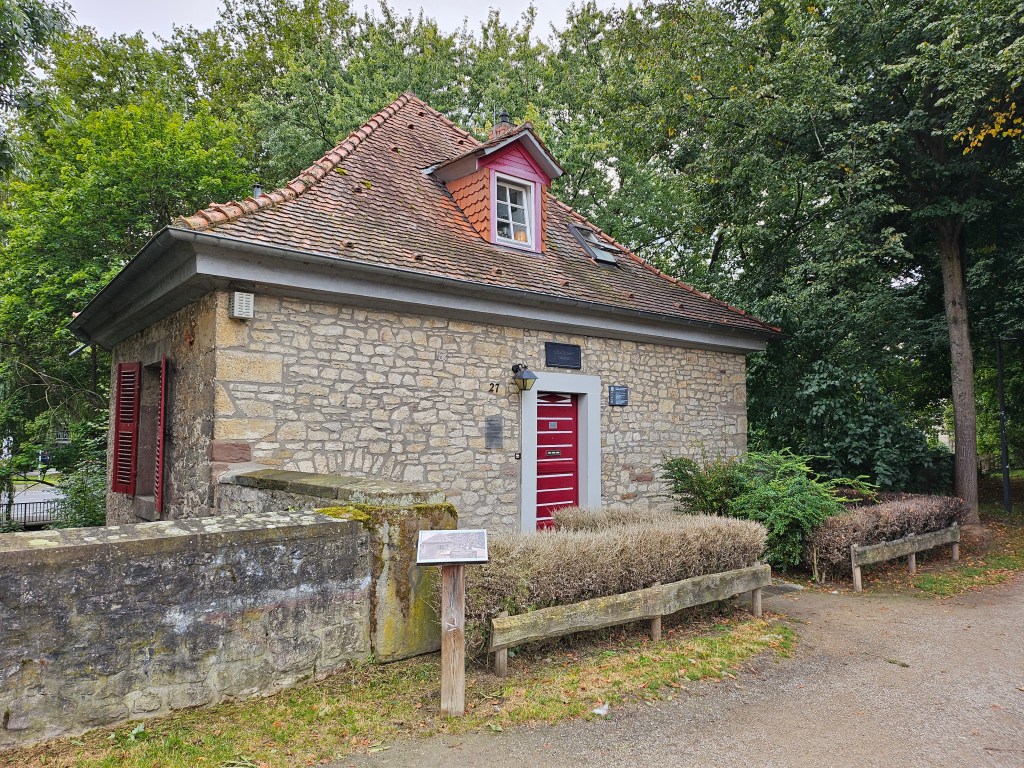
After calling in at our hotel, we continued the town trail to go past the cottage on the city walls where Bismark had lived while a student in the city, and also to Gauß’s observatory. We concluded our walk by going to an Ethiopian/Eritrean restaurant. I had first tried this cuisine in Oslo in June, and on this occasion I had a very tasty dish of lamb cooked with spinach and curly kale, served with injera, rice and couscous.
Day 4 – Saturday 14th September 2024 –Göttingen to Leipzig
When we left our hotel on this morning, our train from Göttingen was shown as being on time, but inevitably by the time we got to the station the departure board was showing a delay of 5 minutes. While we were on the platform waiting for the train to arrive the delay grew to 10 minutes. By the time we reached Fulda, where we had to change, the delay was 16 minutes. Even so, we still had five minutes to make our connection which we thought should be plenty of time. Our reserved seats on the train from Göttingen were right at the front of 14 carriages, so we walked towards towards the middle of the train before we got off to minimise the distance we might have to walk on the platform. However, at Fulda the connecting passage between the platforms was right at the back and by the time we reached the platform for our departure to Leipzig, the train had already arrived. Additionally, the train was in two non-connecting parts and the half containing our reserved seats was further down the platform, so we had to run to make sure we got on the right half.
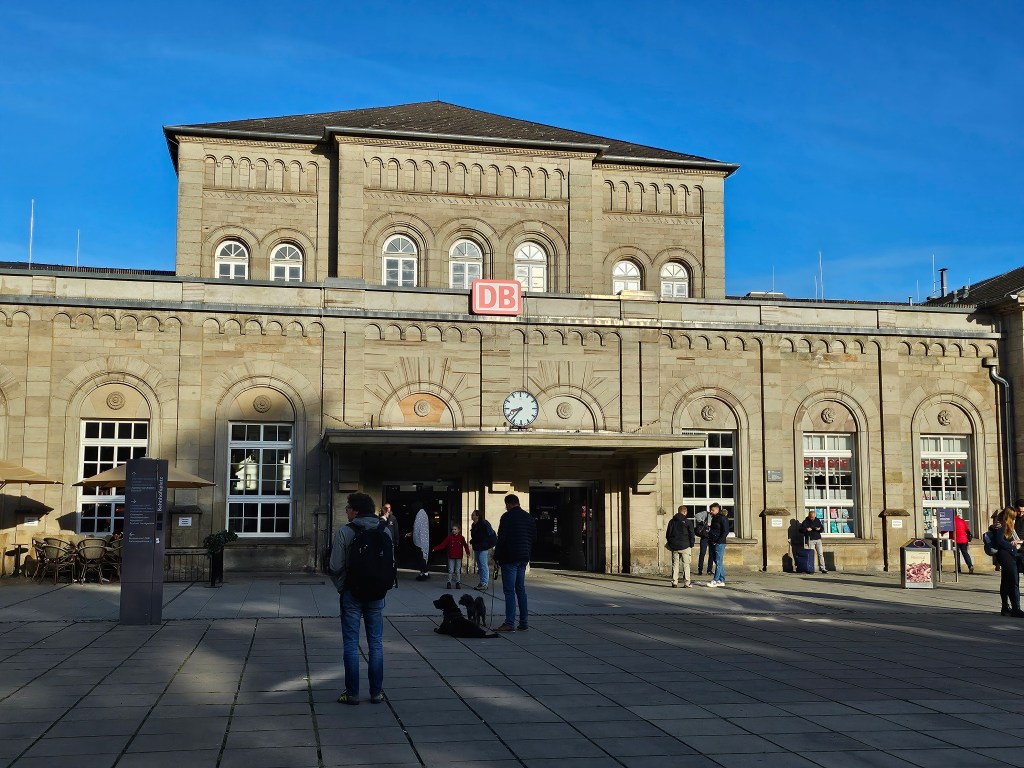
The train from Fulda was initially fairly empty but started to fill up, mainly with RB Leipzig supporters on their way to that afternoon’s home game, as it stopped at stations on the way. We arrived in Leipzig at lunchtime to be greeted at the station by policemen in full riot gear, presumably awaiting the arrival of supporters of Union Berlin, who were going to be RB Leipzig’s opponents that afternoon.
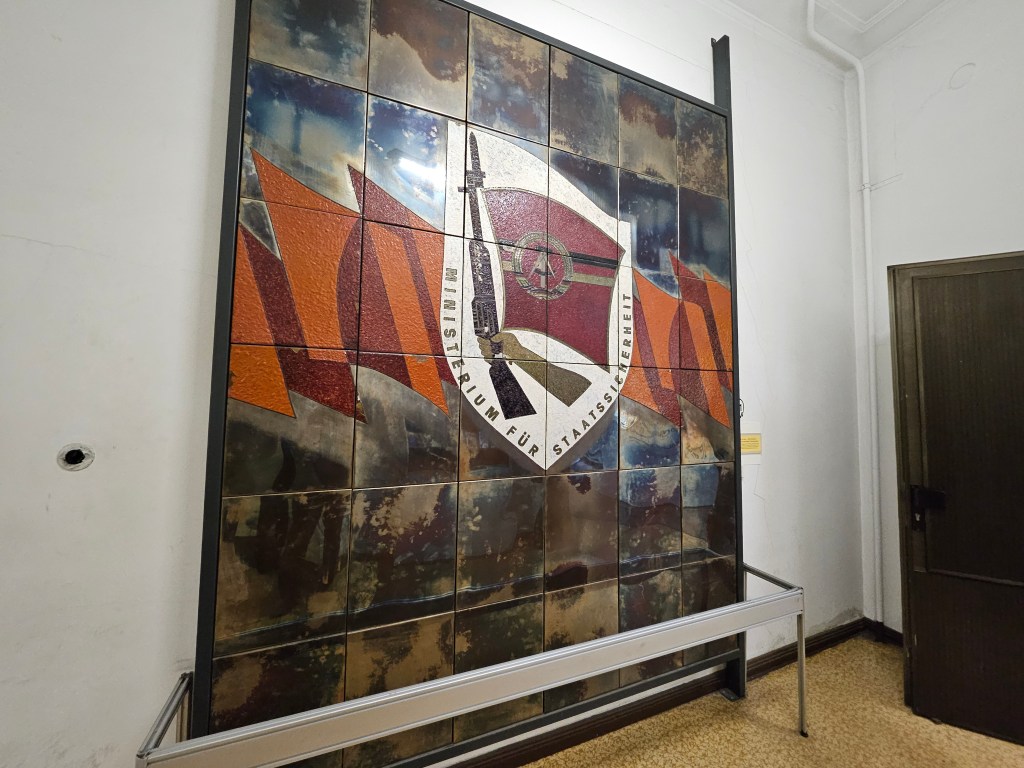
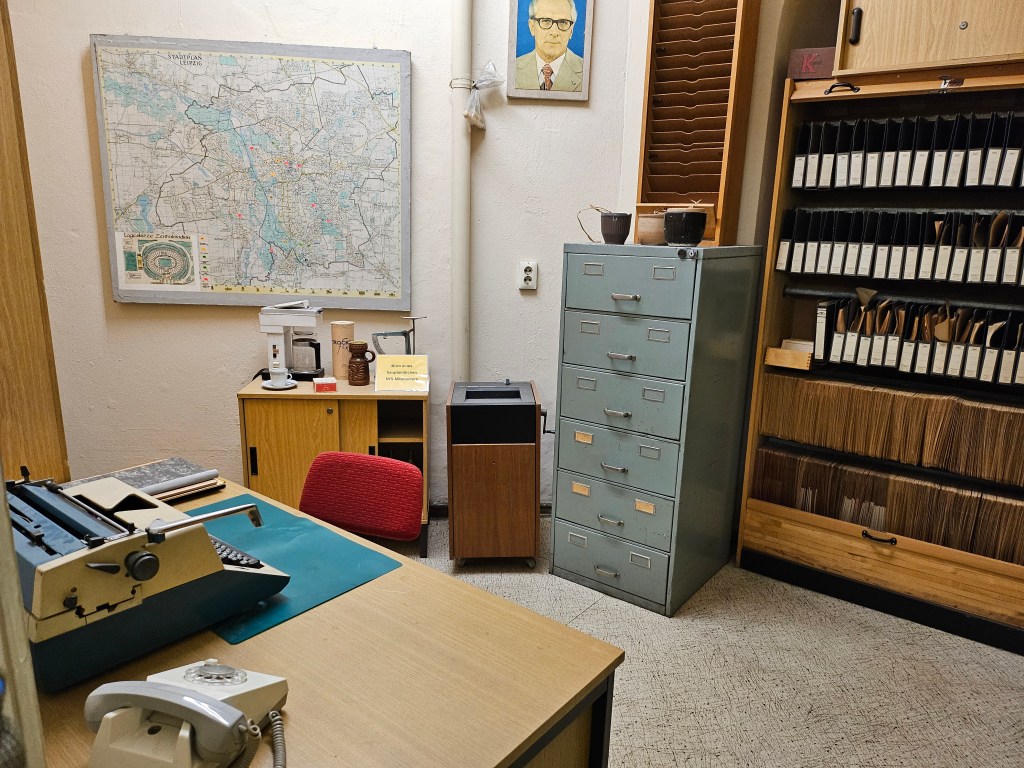
After calling in at the tourist office to obtain a walk booklet, our first visit in Leipzig was to the Runden Ecke (Round Corner), the building that had served as the headquarters of the Stasi in the city. Part of the building contains the Stasi Records Archive, similar to the one I had visited in Berlin the previous year to see if there were any records about me from my visit to the DDR in 1985. Another part of the building is now a museum of the Stasi’s activities in Leipzig, for which we obtained an audio guide to provide more information. The Stasi methods ranged from the sinister (secret executions) to the laughable (for example, trying surreptitiously to obtain samples of body odour from a large number of people, to use as a bank of smells for future investigations.) The Stasi even had its own law school where you could obtain a degree by, for example, writing a thesis on how to detect potential escapees from the country. In post-unification Germany, these Stasi law degrees were valid and gave you the right to practise as a lawyer.
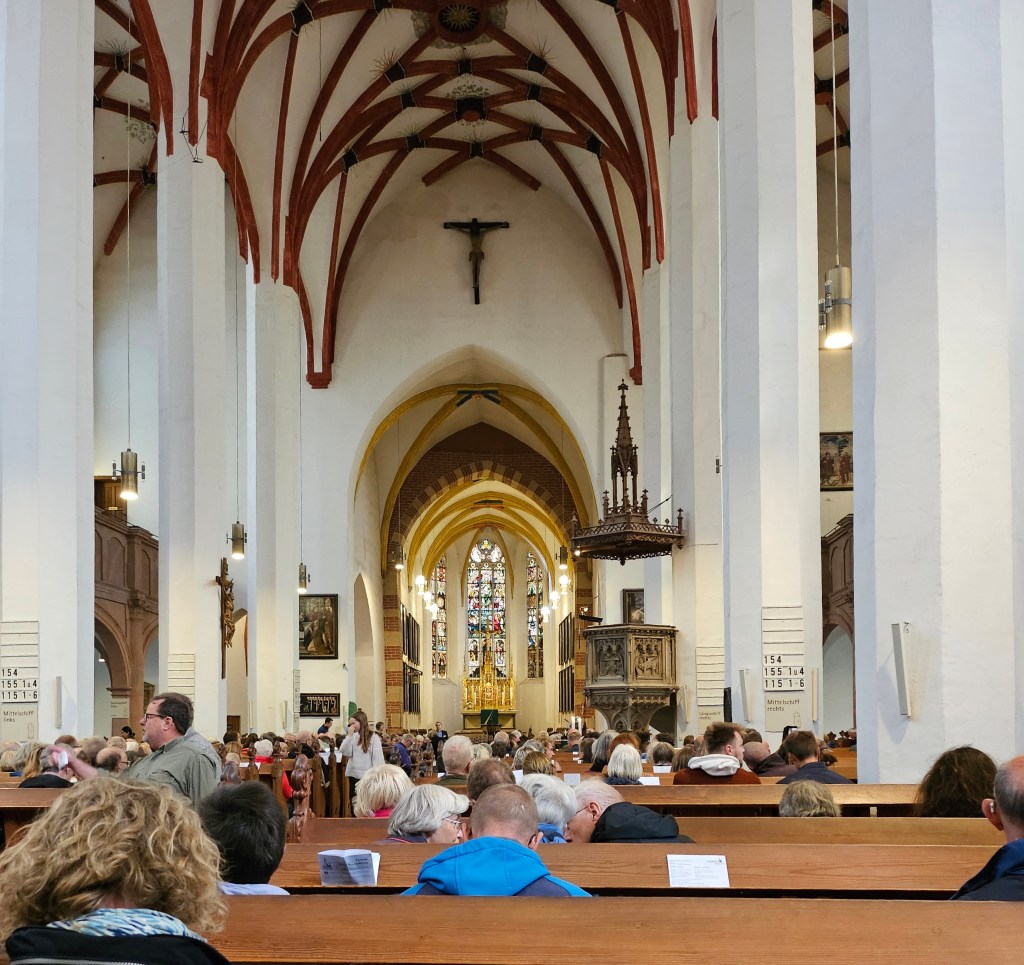
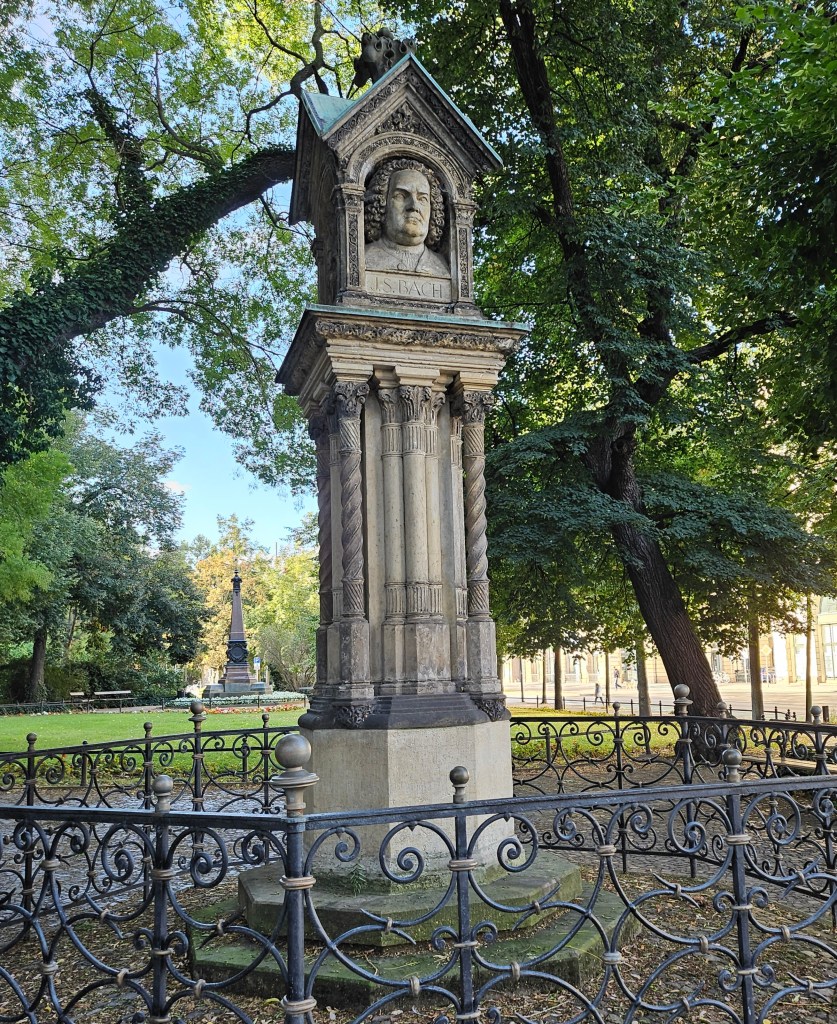
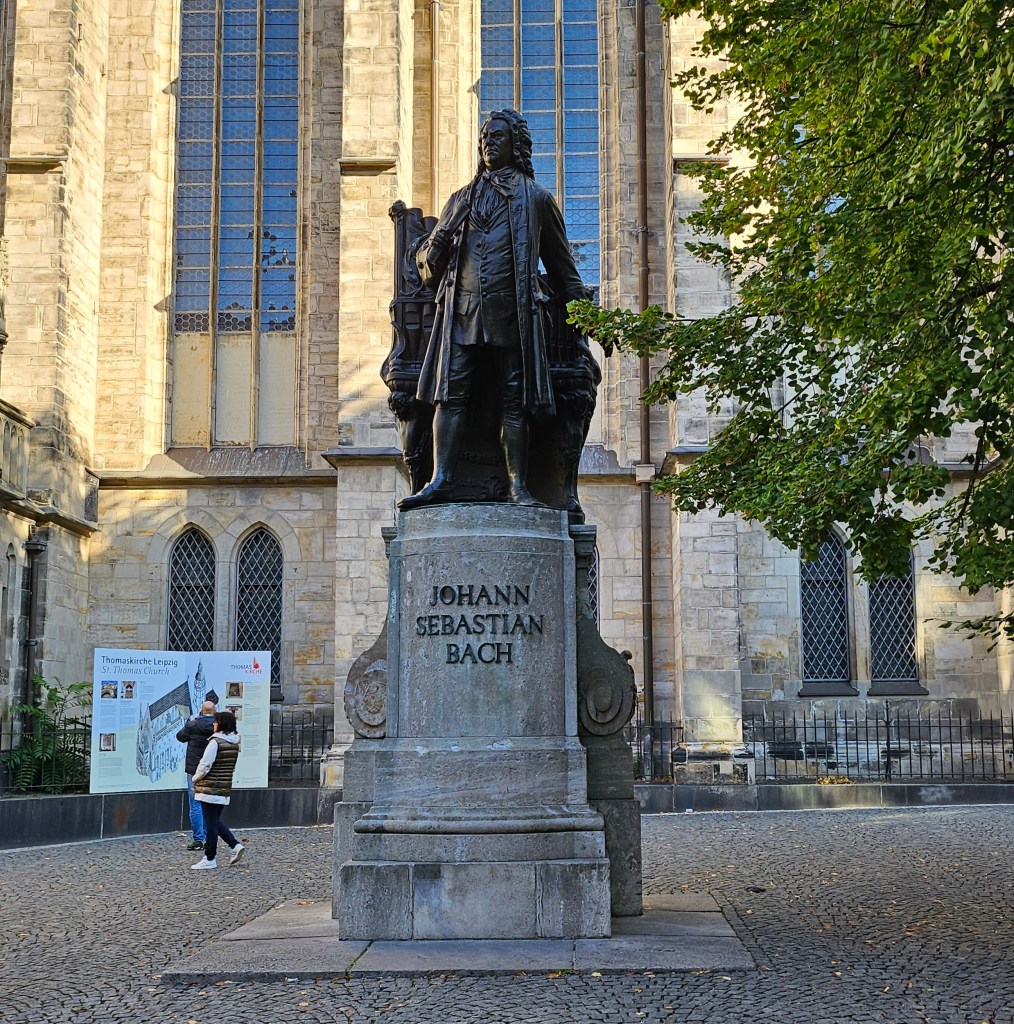
The previous evening I had discovered that there would be a concert in the Thomaskirche (where J S Bach had been cantor for over 20 years) at 3pm that Saturday afternoon, with music provided by members of the Gewandhaus Orchestra. On my previous visit to Leipzig in 1985 I had obtained tickets for a Friday evening organ concert in the Thomaskirche, so was interested to see how it had changed 39 years on. In 2024, rather than purchasing tickets in advance you just needed to buy a programme on the door to gain admission. We arrived about 15 minutes before the event was due to begin and were surprised that the church was already nearly full. Unlike in 1985, in 2024 the performance, described as a Motette, was based round a church service, including a sermon from the pastor in German, which seemed to be largely about death. As we were expecting just one Bach cantata to be performed, the service lasted rather longer than anticipated. Once the congregation had started to disperse we took the opportunity to view J S Bach’s grave in the high altar.
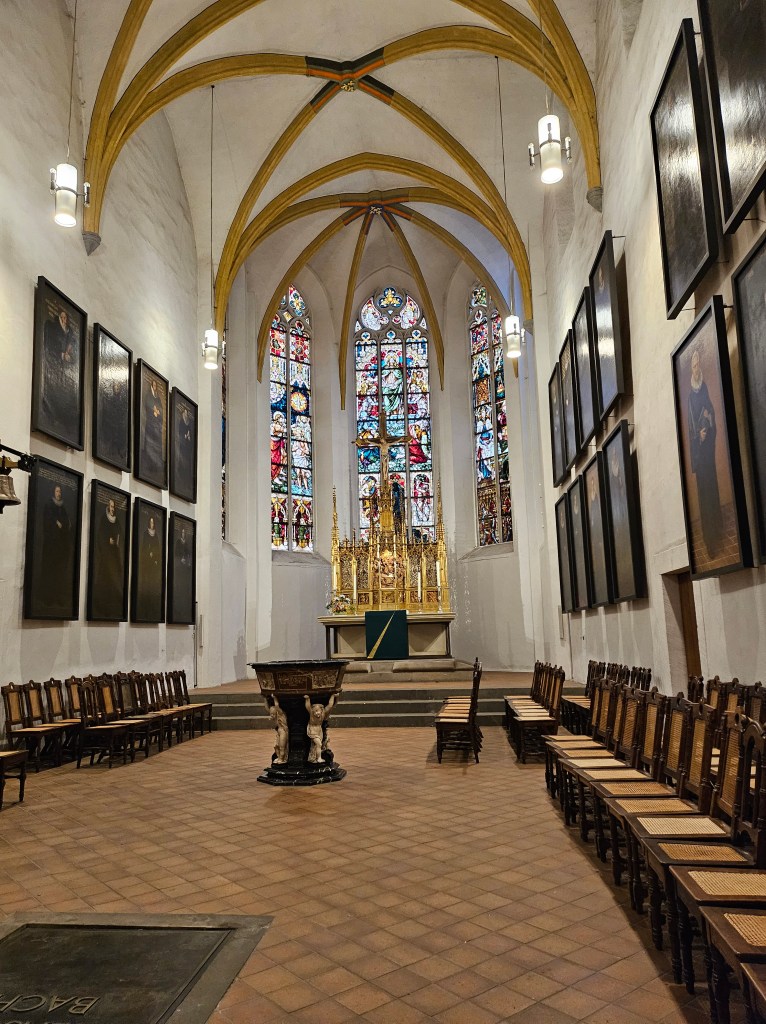
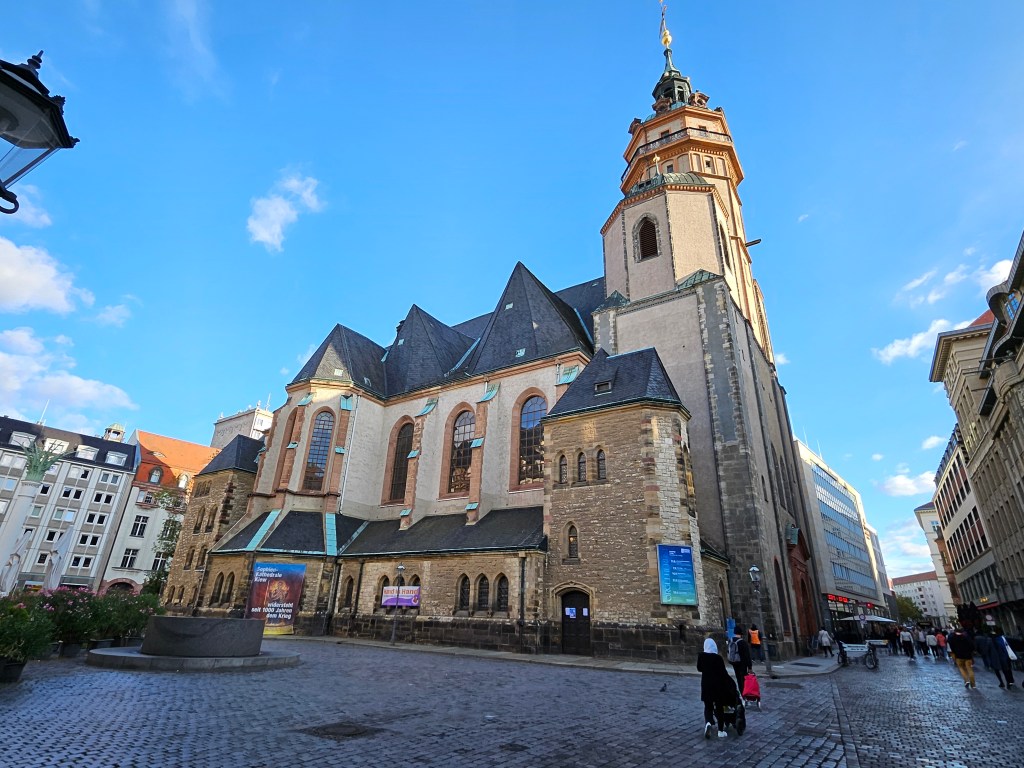
After we left the Thomaskirche we went to our hotel via the Nikolaikirche, the focal point of the Monday night protests in 1989 which eventually led to the downfall of the communist regime, and, ultimately, the DDR itself.
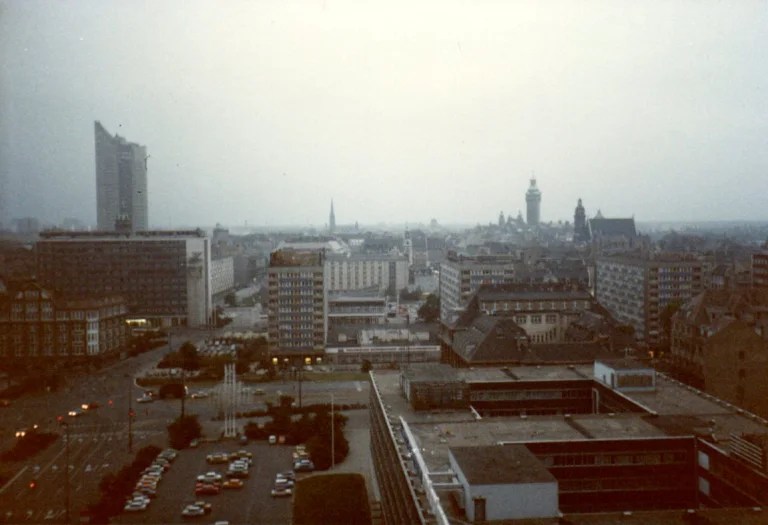
I had deliberately chosen to stay in the same hotel in Leipzig as I had in 1985, requesting a room with a view in the same direction as I had back then. In 1985, it was known as the Interhotel Merkur and was the top hotel in Leipzig, where most western visitors were obliged to stay. I wrote about my time there in a previous post, describing how I and my travelling companion were approached by a pair of prostitutes in the hotel bar. Subsequent research has revealed that the Merkur was the centre of the Stasi entrapment network and the use of Stasi-sanctioned prostitutes was commonplace. I am glad to say that there was no longer any sign of prostitutes operating in the hotel, and presumably the bugging equipment has now been removed from the rooms, but the view of the city centre from the hotel bedroom was remarkably unchanged.
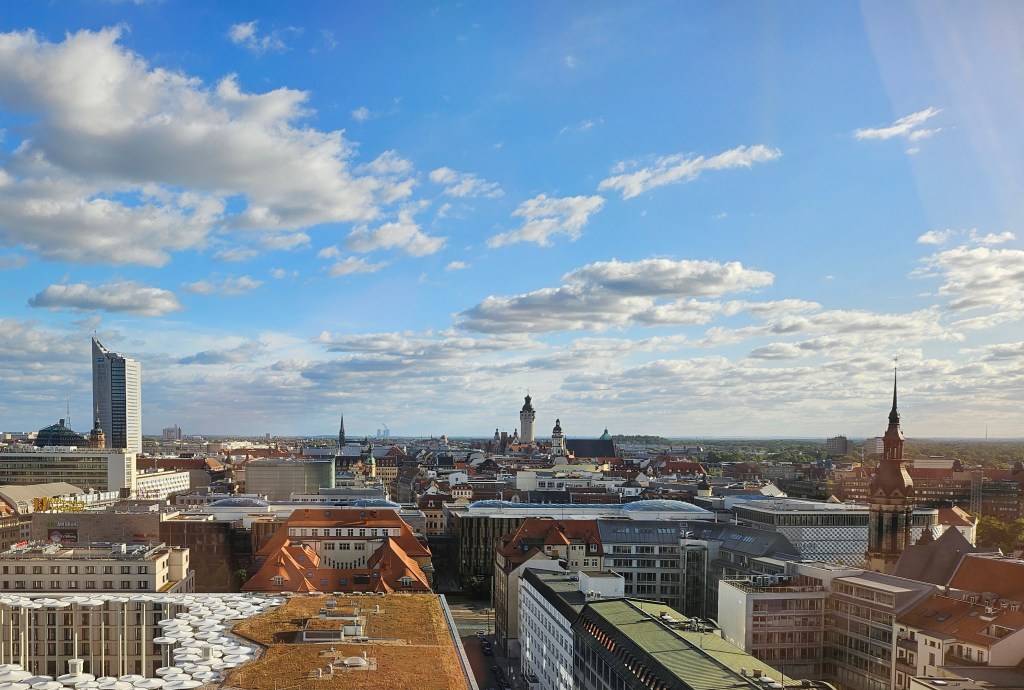
We continued some of our city trail from the booklet we had obtained on our way to dinner. Being a Saturday evening, I had taken the precaution of booking a table in a restaurant hidden in a city-centre courtyard. This proved to be a sensible move as the restaurant was very busy, but the service was attentive, and the food good. For dinner, I had a roulade of beef and vegetables served with a dollop of cream.
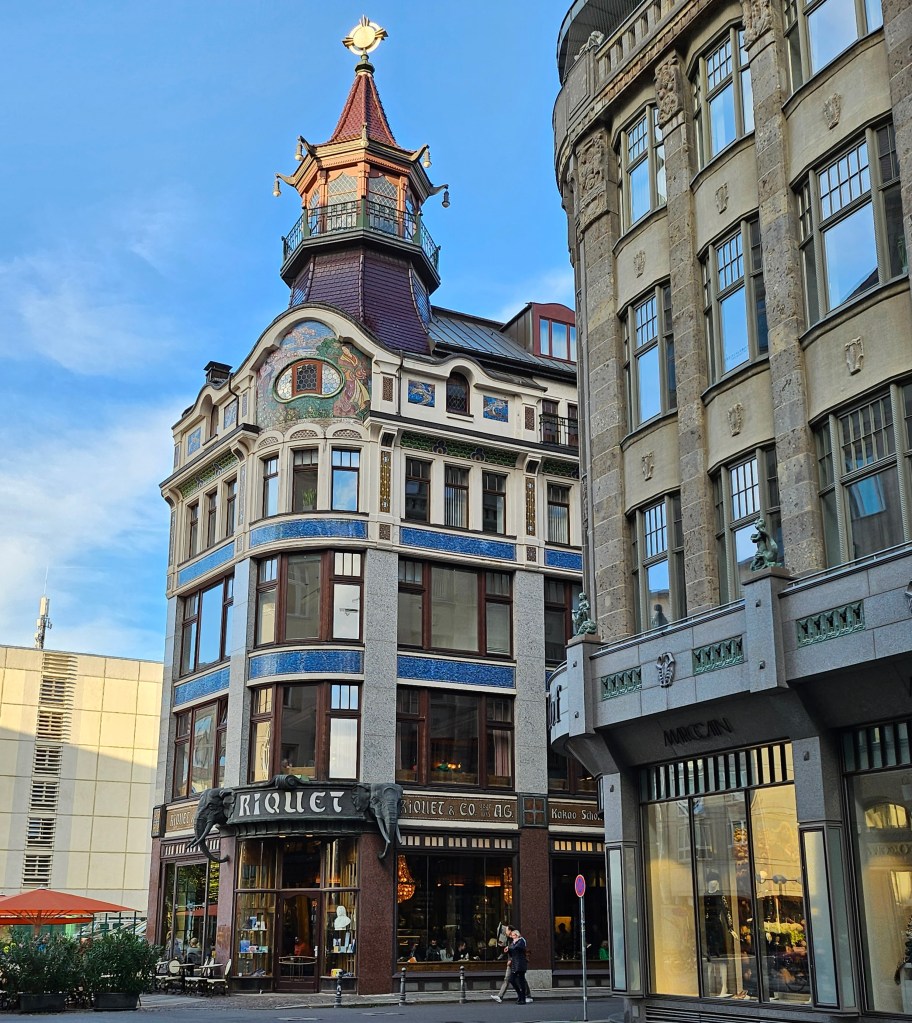
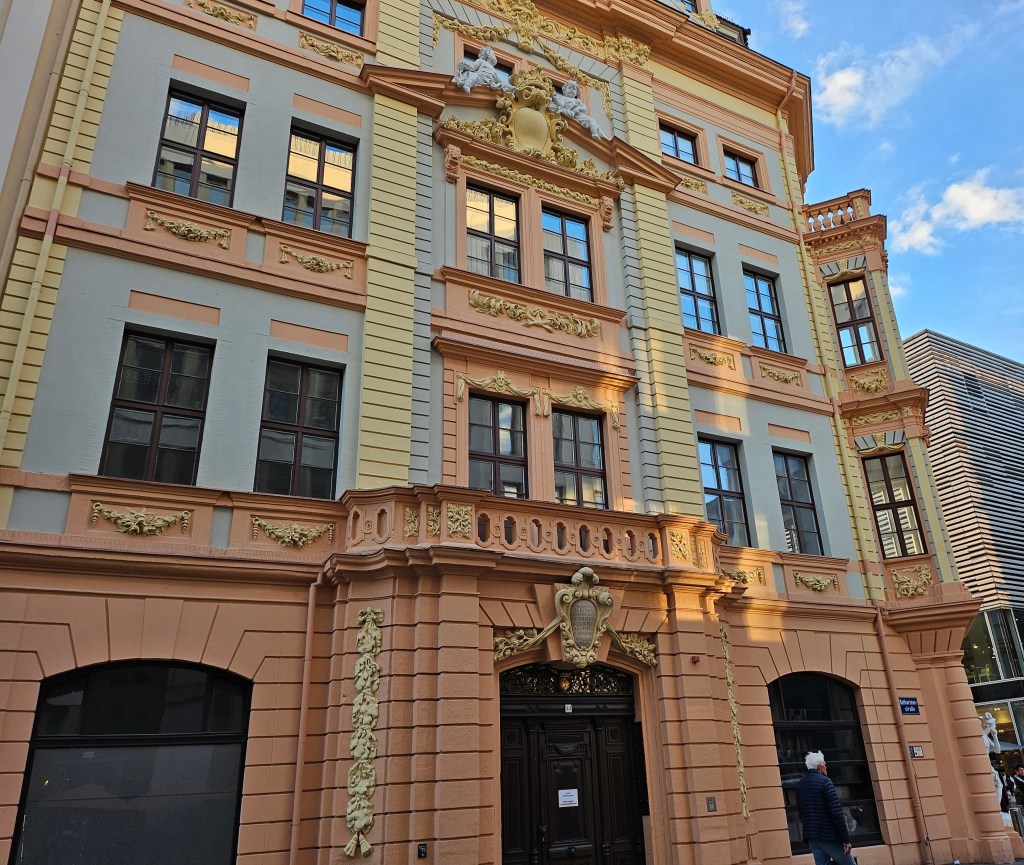
Day 5 – Sunday 15th September 2024 –Leipzig
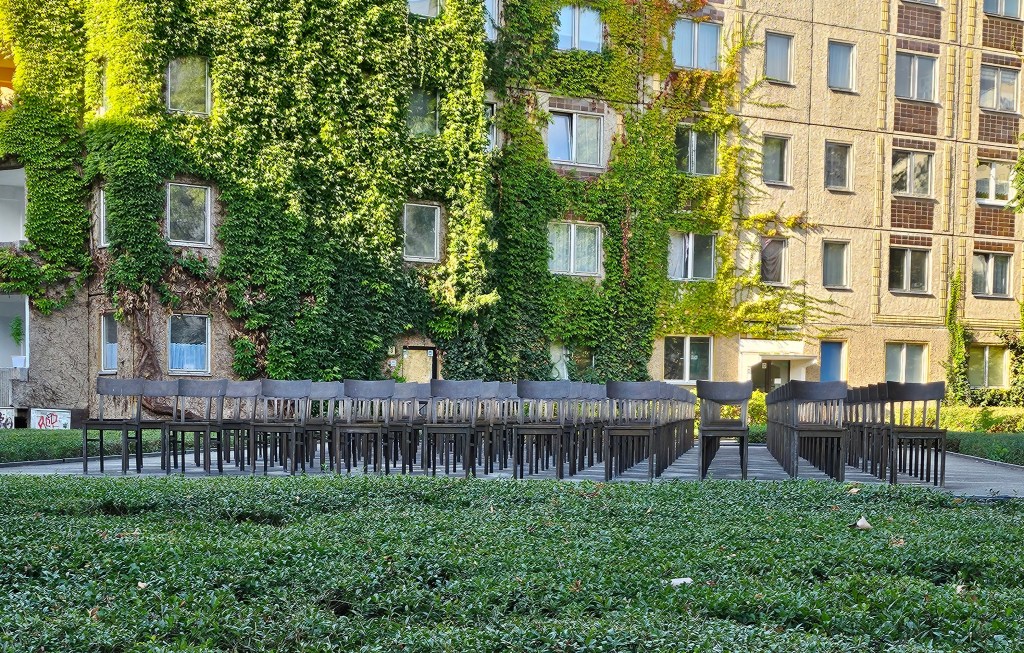
Before any of the attractions we wished to visit had opened we continued the walk round Leipzig from the booklet we had acquired the previous day. At one point we deviated slightly to go just outside the inner ring-road to view the Holocaust memorial, situated on the site of Leipzig’s synagogue which had been destroyed during Kristallnacht and never rebuilt. The memorial consisted of 140 empty chairs, each one representing 100 of the 14,000 Leipzig Jews who never returned to the city, most of whom had been murdered by the Nazis.
We timed our walk so that we arrived at the Bach museum, opposite the Thomaskirche, when it opened at 10am. In 1985, I had also tried to visit this museum, but it was inexplicably closed and I had to content myself on that occasion with just peering in through the windows. I am pleased to say that 39 years later it was open as advertised. We had an audio-guide to assist us through the museum which covered the extended Bach family, J S Bach’s time in Leipzig and his musical legacy. The museum is located in the former family home of the Bose family, close friends of the Bachs, across the street from the site of the old St Thomas School (which no longer exists) where Bach lived.
Next stop was the Zeitgeschichtliches Forum. This is a museum of the former East Germany since 1945. This was the last of the four excellent museums run by the museum of the history of the Federal Republic of Germany that I have visited – the other three being The House of History in Bonn, and the Tränenpalast and the Museum of Everyday Life in the DDR (both in Berlin). The Zeitgeschichtliches Forum was comprehensive, documenting the history of the land that was the former DDR from the end of World War II to the present day. We spent so long exploring the permanent exhibition that we sadly concluded we did not have time to visit the temporary exhibitions on the top floor.
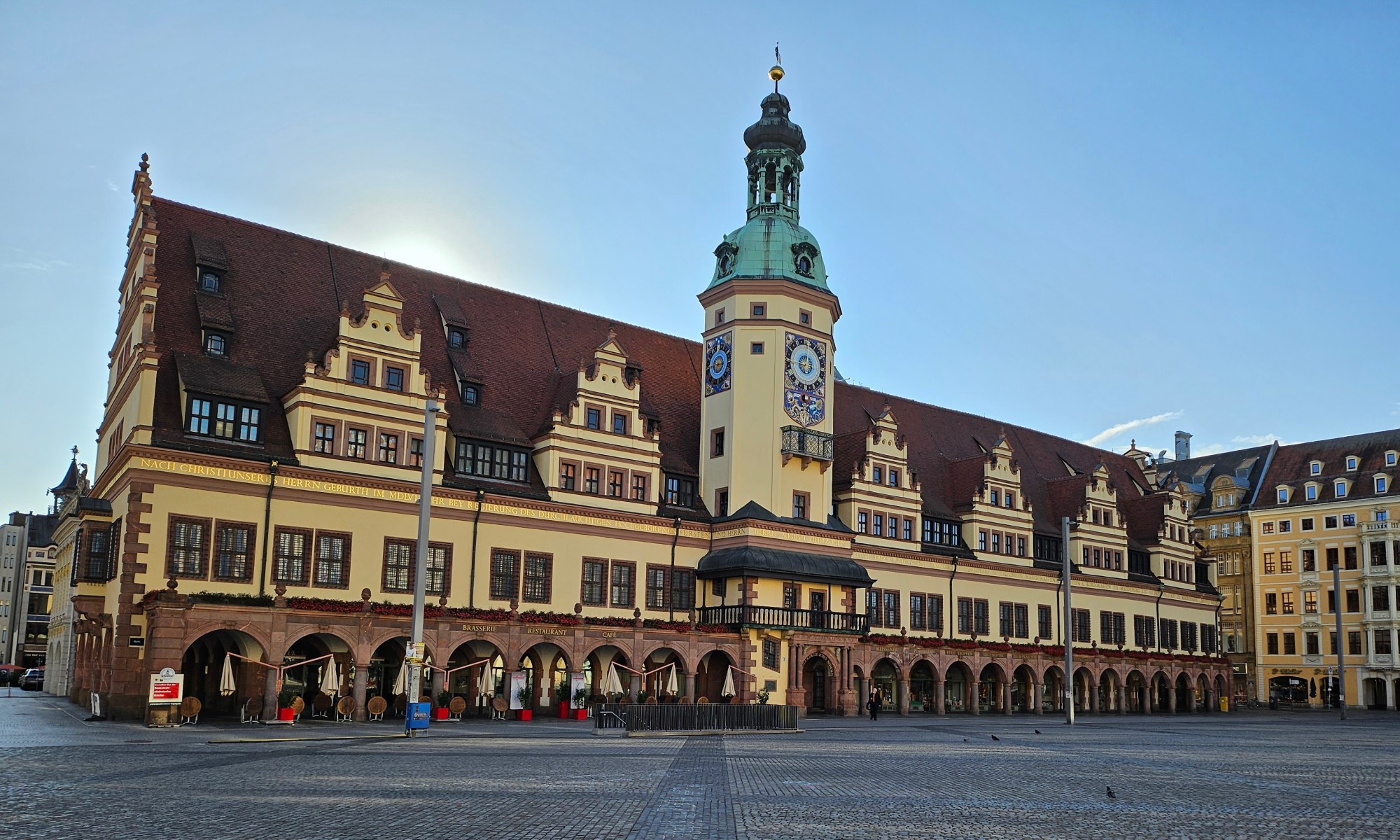
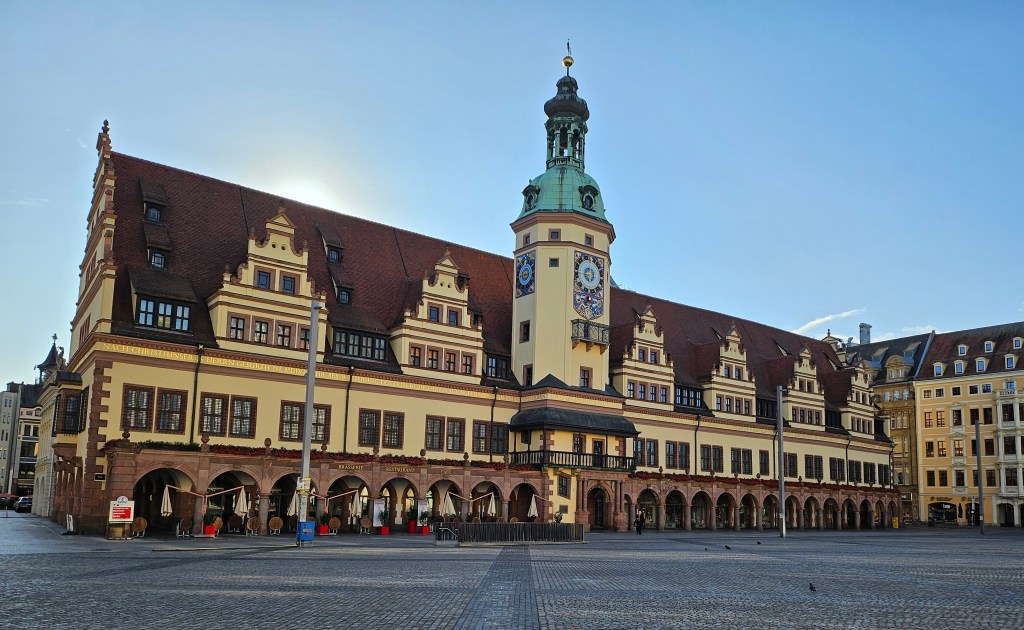
We then walked the short distance to the main market square, on one side of which is the impressive looking old town hall. This houses the main museum of the city of Leipzig. As with the Zeitgeschichtliches Forum, it was free to enter. There was an audio-guide available for download onto your phone. The first floor, which contained an ornate ballroom and the council chamber, covered Leipzig’s history from early times to the the Battle of The Nations, where Napoelon was defeated at the the beginning of the 19th Century. (There is a massive monument on the edge of Leipzig on the site of the Battle of the Nations, which I visited in 1985. We didn’t go there this time, although we could see it in the distance from our hotel bedroom window, as it was hosting a pop concert that weekend.) The second floor of the old town hall was devoted to Leipzig’s history from the defeat of Napoleon to the present day.
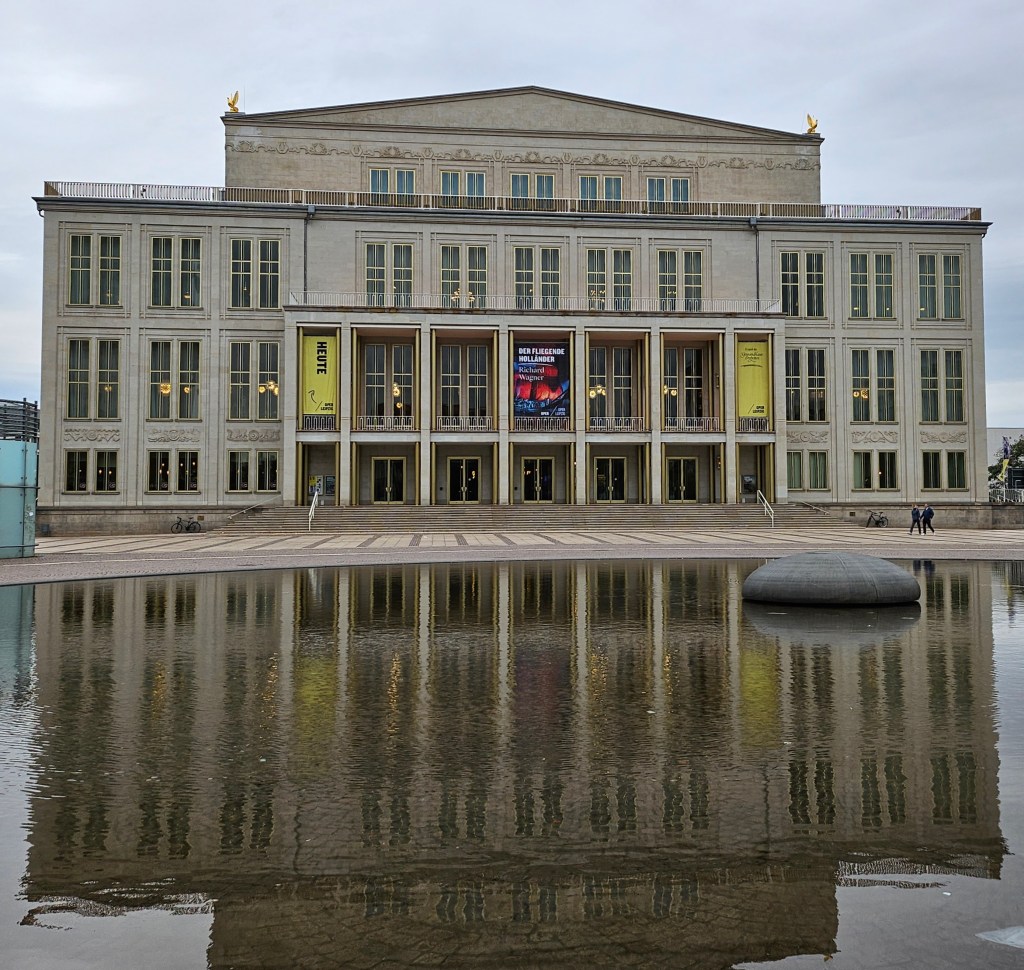
We had spent so long in the three museums we had visited on this day that we had no time to view the city’s main art gallery. Instead we carried on our city walk taking us to Augustusplatz (formerly Karl-Marx-Platz), scene of some of the larger demonstrations in October 1989, flanked on one side by the Opera House and on the other by the Gewandhaus Concert Hall. From there we went to look at where Mendelssohn lived in Leipzig, before returning to our hotel.
As we arrived back at our hotel it started to rain. We were slightly worried that Storm Bruno which had been wreaking havoc to our east in Austria and Czechia, might impede our intended departure from Leipzig the following morning. Because of the rain we did not want to venture too far to find dinner. We found an Italian restaurant just outside the inner ring road a short walk from our hotel. There we dined on pizzas – although the toppings were generous and of good quality, we were slightly disappointed that the bases did not appeared to have been cooked from fresh pizza dough.
[To be continued – our journey from Leipzig to home.]
 Europe Explored