
“Beautiful plumage” (Description of the Norwegian Blue parrot – Monty Python sketch.)
Day 5 (continued) – Friday 7th June 2024 – Kristiansand
My ferry from Hirtshals in Denmark docked in Kristiansand on time at 15:30. Disembarkation was relatively speedy – a connecting passageway was attached to the side of the ship almost as soon at it had stopped moving and within a couple of minutes the doors were opened to allow the foot passengers to walk off. Despite Norway not being a member of the European Union, it is in the Schengen Area, so there were no immigration checks to be conducted. Following the passageway brought me into the town of Kristiansand near the railway station. From there it was a short walk to the hotel I had booked, where I called in briefly to drop off my bag.
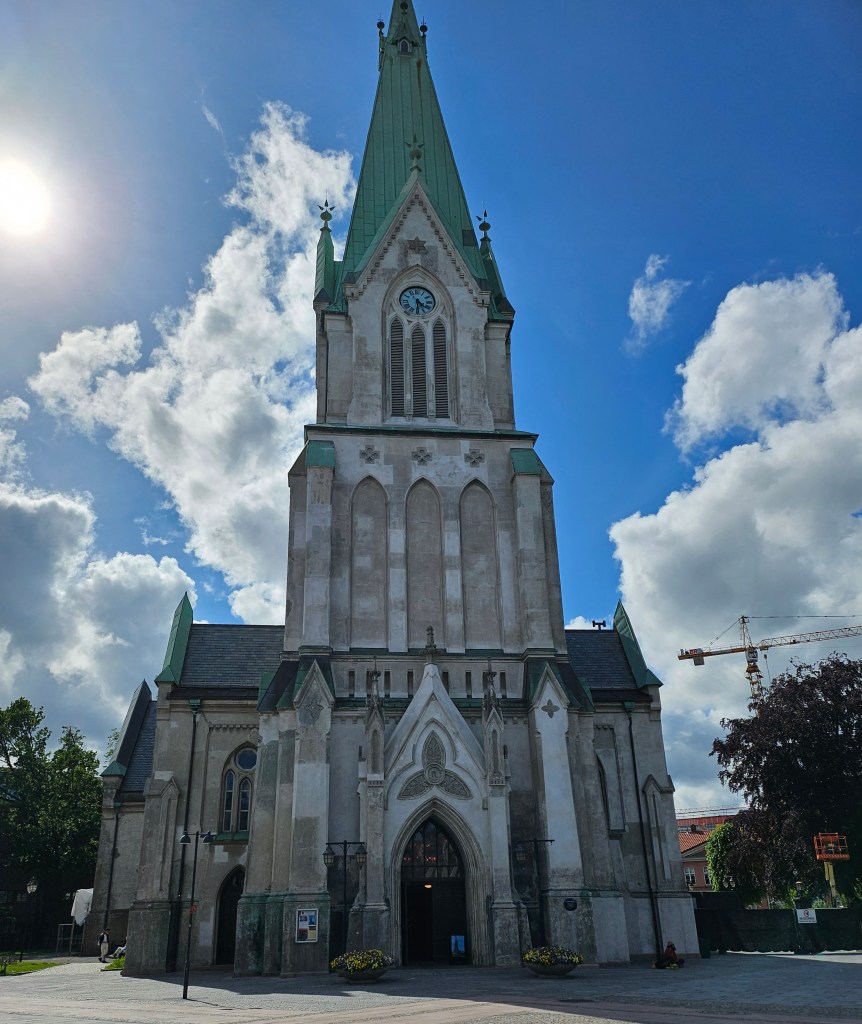
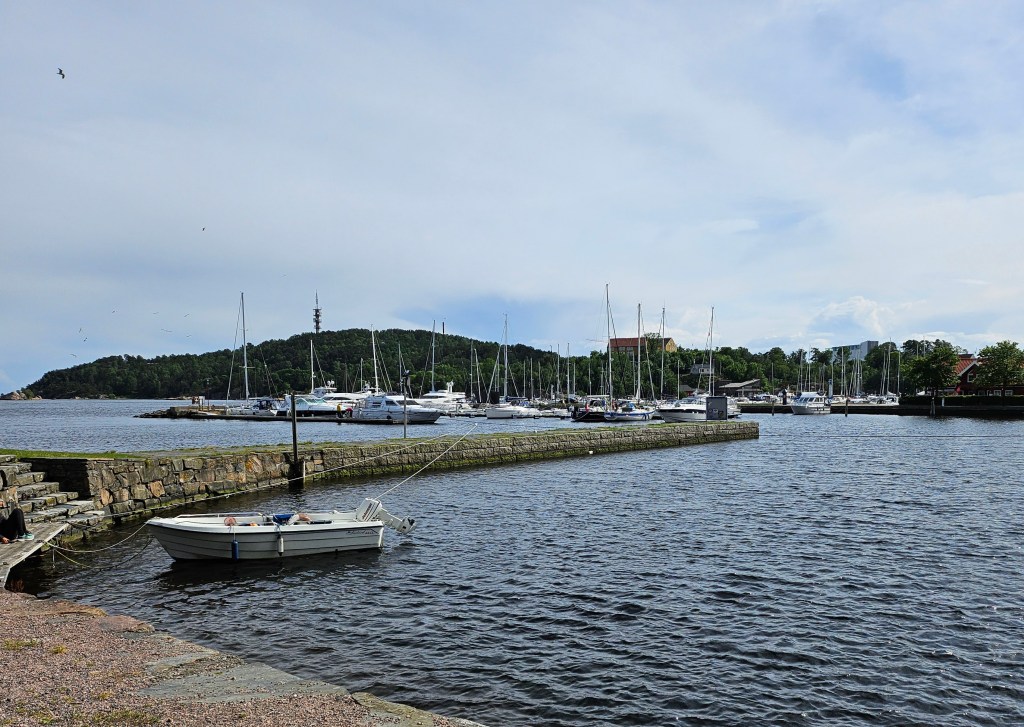
I then set off to explore Kristiansand. As it was now after 4pm, when Kristiansand’s museum closes, I contented myself with wandering about to get a feel for this small coastal city. I walked through the city centre and past Kristiansand’s cathedral to reach the eastern harbour area, which is only used by small boats, unlike its western counterpart used by the ferries. Located on a promontory is the circular Christianholm fortress, which I circumnavigated observing that it appeared to be being used for some form of function that evening.
When I returned to the city centre I noticed that the bars and restaurants were already very busy, being a Friday evening. Rather than go to my hotel, I called in at a promising looking pub, where I ordered fish and chips to eat. I remembered from my previous trip to Oslo that Norwegian beer prices were astronomical. I was therefore pleasantly surprised to discover that in this pub the beer was reasonably priced by UK standards and considerably cheaper than you would expect to pay in London.
Day 6 – Saturday 8th June 2024 – Kristiansand to Oslo
As I was catching the 07:51 train, I had an early breakfast in the hotel. They had warned me, when I checked in, that at weekends full breakfast was only served from 07:30, and before that time only a limited offering would be available. However, I found that this hotel’s ‘limited offering’ was more varied than the full breakfast provided in some of the other hotels on this trip.
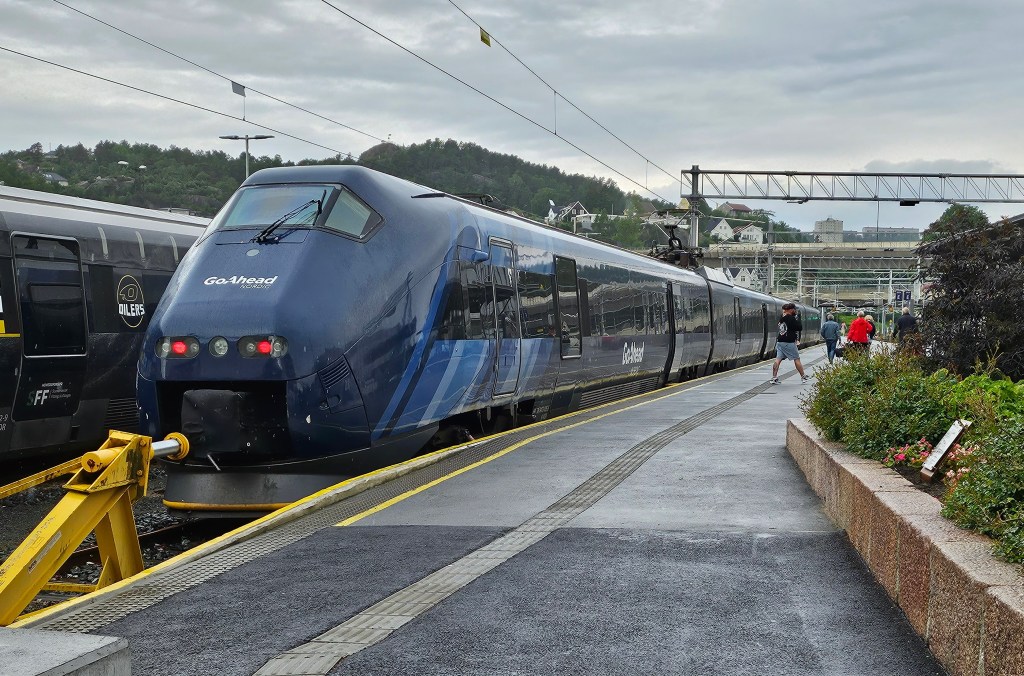
When I left the hotel it was raining steadily and I was thankful that it was only a short walk to Kristiansand station. When I arrived my train was already waiting at the platform and I boarded quickly to get out of the rain. The train was operated by the private company Go Ahead Nordic. My seat was in a spacious compartment adjacent to the buffet car. Although I was only travelling standard class, I thought that this was one of the most comfortable and pleasant carriages that I had used on any of my European trips – which was fortunate, as I would be spending over four and a half hours on this train.
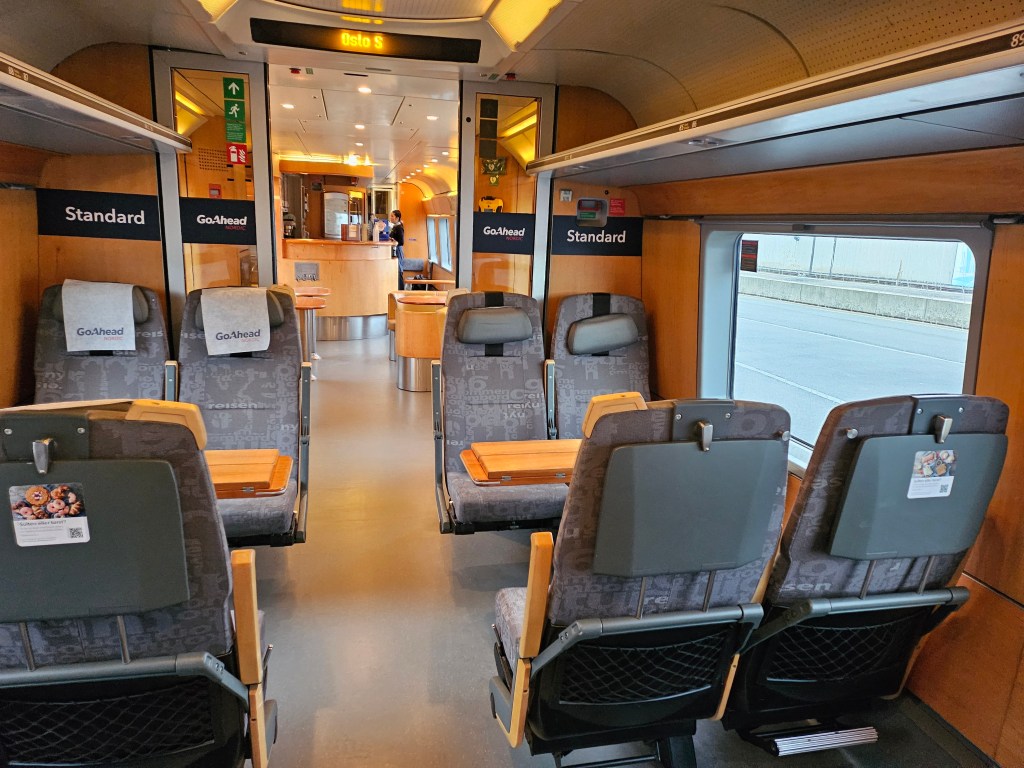
Rather than following the coast, the railway line from Kristiansand headed inland through thick forests, as the rain lashed down outside. Despite the remoteness, the train’s WiFi worked perfectly throughout. When planning this trip I had considered having a break of journey on the way to Oslo in Kongsberg to visit the nearby silver mines, but in the end decided to have an itinerary with more time in Aarhus and Oslo, which I think was the correct decision.
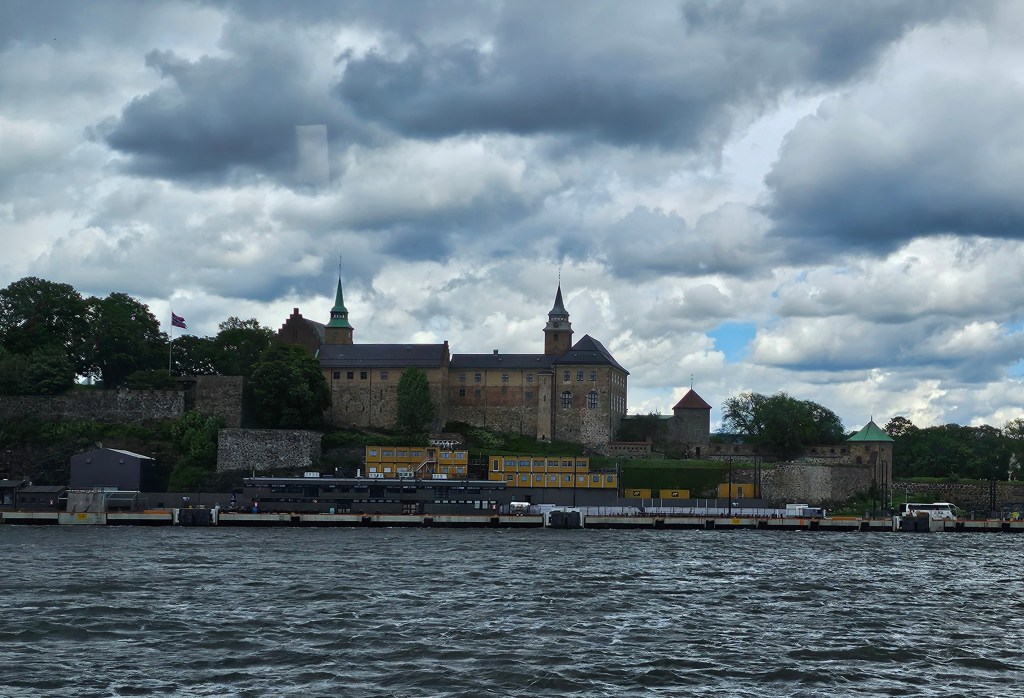
The train arrived on time at Oslo Sentral at 12:25. I had spent a couple of days in Oslo in 2019, but realised that there was so much more to see than I had had time for on that occasion. So wasting no time I walked briskly to my first stop, the Akershus Castle. This medieval building has at times served as a defensive military fortress guarding the approach to Oslo from the sea and also as a royal residence. While in Oslo I was using an Oslo Pass that I had purchased on my phone on the train just before I arrived in the city, which provided free admission to the places I wished to visit, as well as free use of public transport. As an audio-guide was available for Akershus Castle at no extra cost, I took one to guide me round the fortress. The castle contains the royal mausoleum where several Norwegian monarchs are buried.
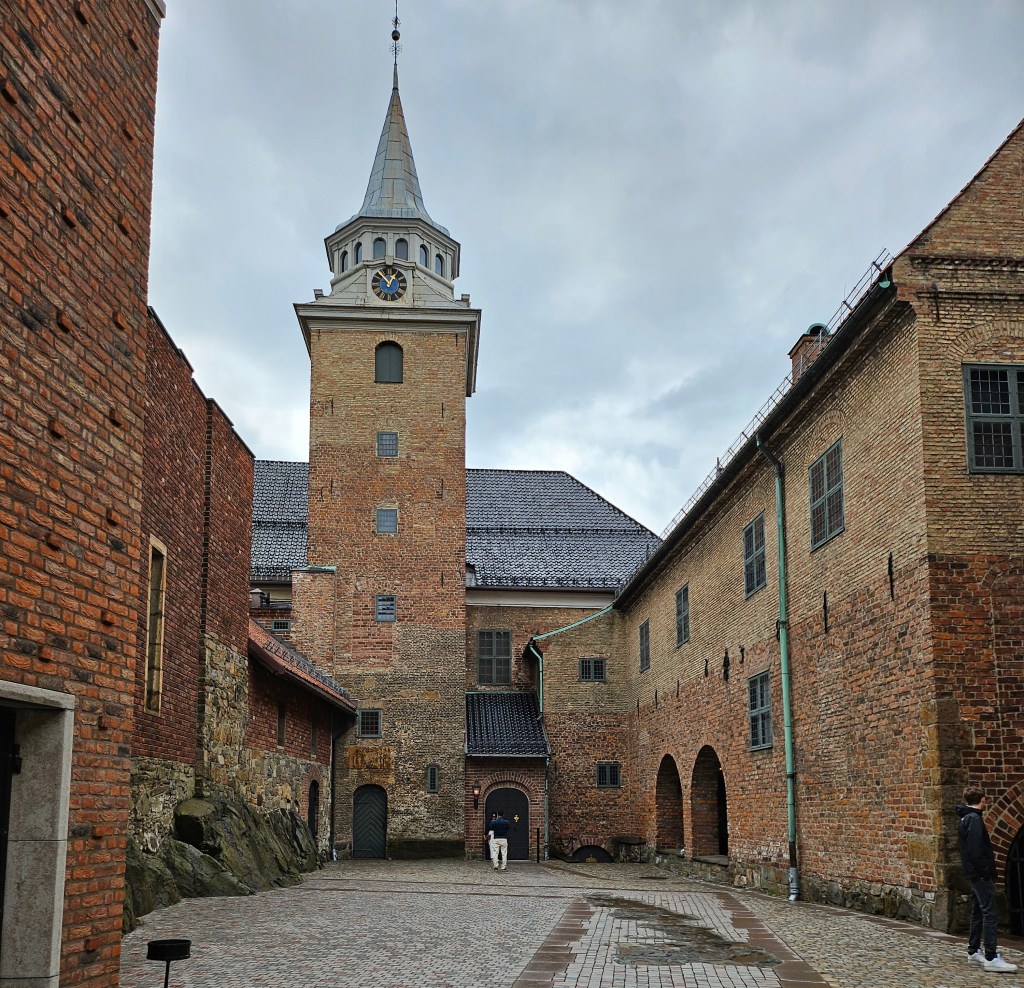
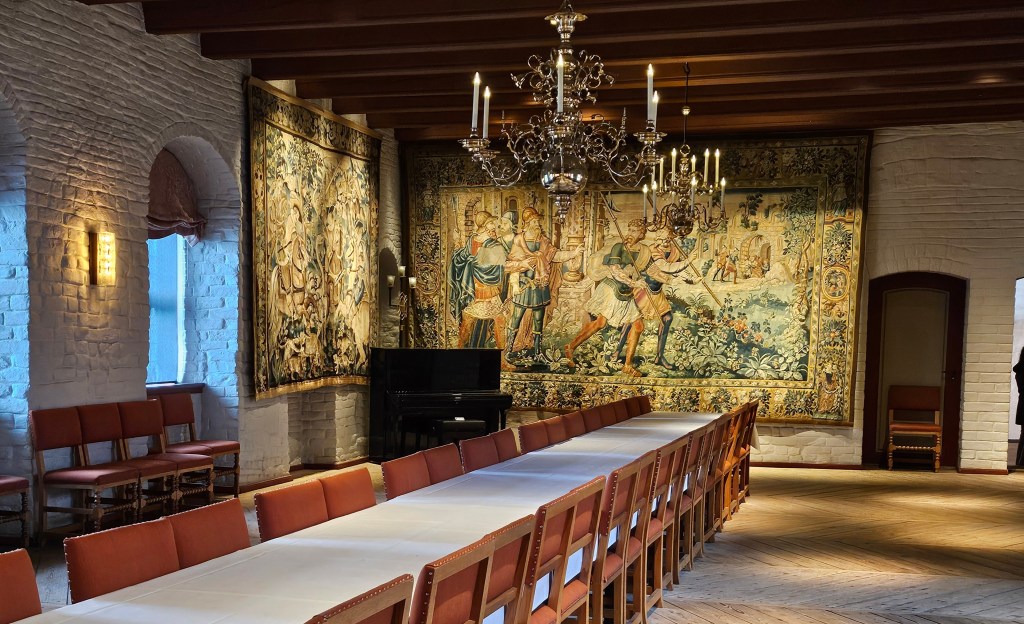
After my tour of Akershus, I went to the nearby Norwegian Resistance Museum located within the castle complex. Although there had been only limited fighting to oppose the German invasion of the country in 1940, the resistance movement was active throughout the occupation and the puppet Quisling led government generally despised by the population.
From the castle I descended to the harbour-front area. As I approached my next stop, the Nobel Peace Centre, it started to rain and continued to do so for the rest of the afternoon. The Nobel Peace Centre houses exhibitions devoted to the Nobel Peace Prize, which unlike the other Nobel Prizes, is awarded each year in Oslo. In addition to displays on the Peace Prize’s history and objectives, there was a large exhibition devoted to Narges Mohammadi, the jailed Iranian human rights activist, who was the 2023 recipient of the prize.
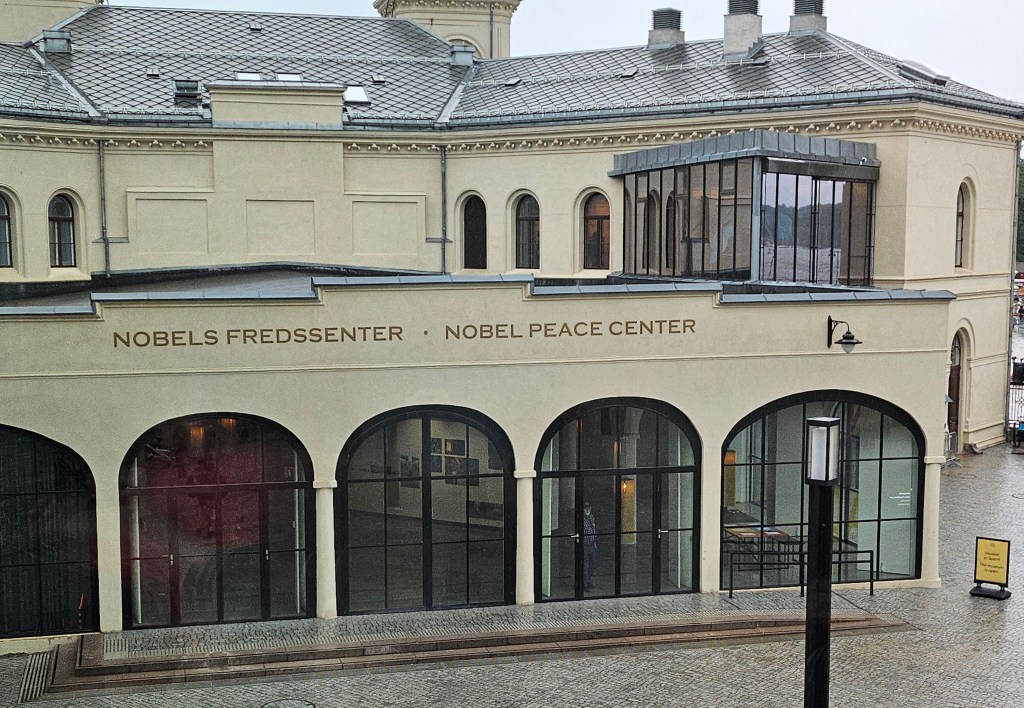
Next door to the Nobel Peace Centre is the National Museum, which was fortunate as it was raining hard when I left. The misleadingly named National Museum is Norway’s major art gallery. It was shut at the time of my visit in 2019, to allow the works to be moved to this new purpose built building. It has a comprehensive collection, on a par with other major galleries around the world. It was busy when I entered and I soon realised that the two hours I had before closing time would not be enough to do everything justice. So I decided to concentrate on the paintings, which were on the top floor, rather than the sculpture and applied art on the ground floor. I loaded an audio-guide onto my phone to accompany my visit. There is a room devoted to the works of Edvard Munch. Other Scandinavian artists are well represented in the collection, and it also includes major works from other masters. By the time I had finished looking at the paintings, there was only time for a quick walk through the other areas before closing time.
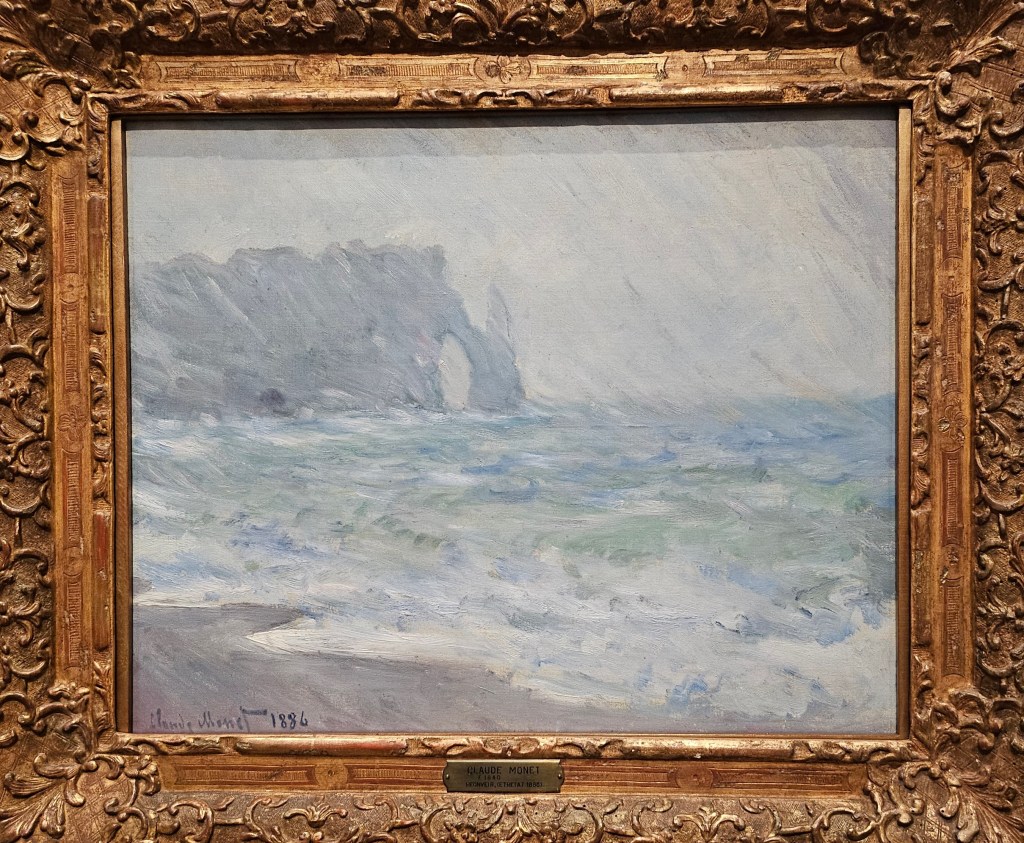
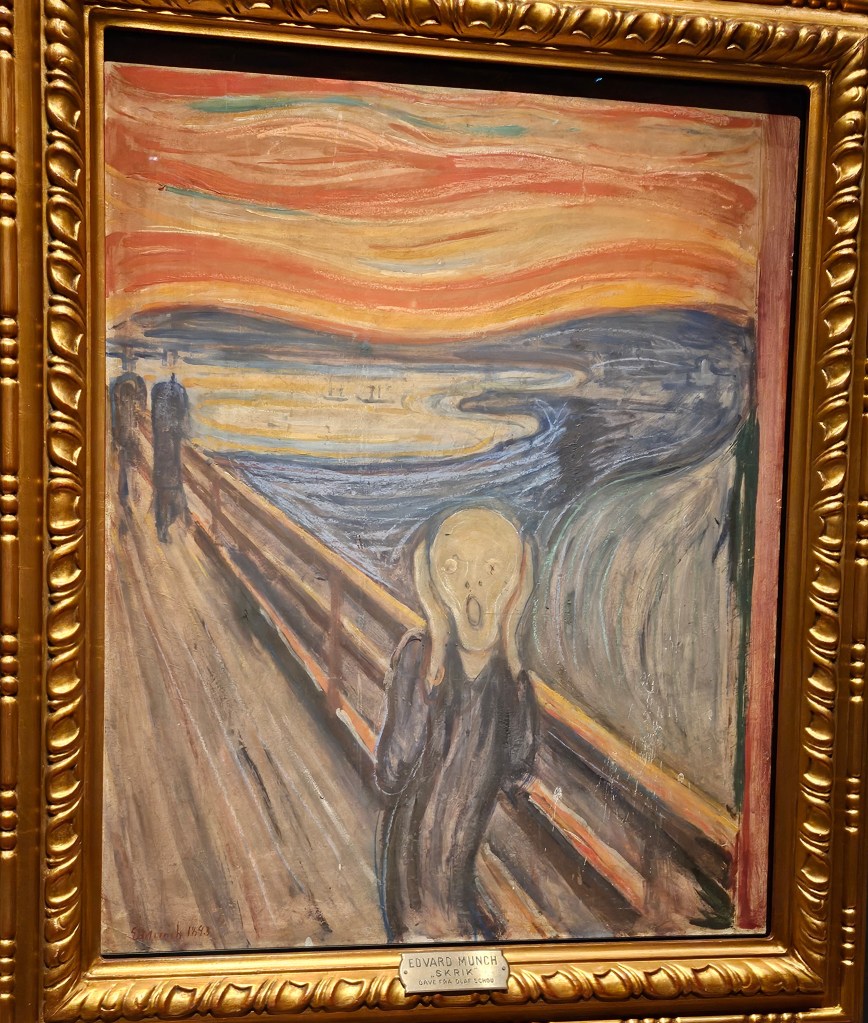
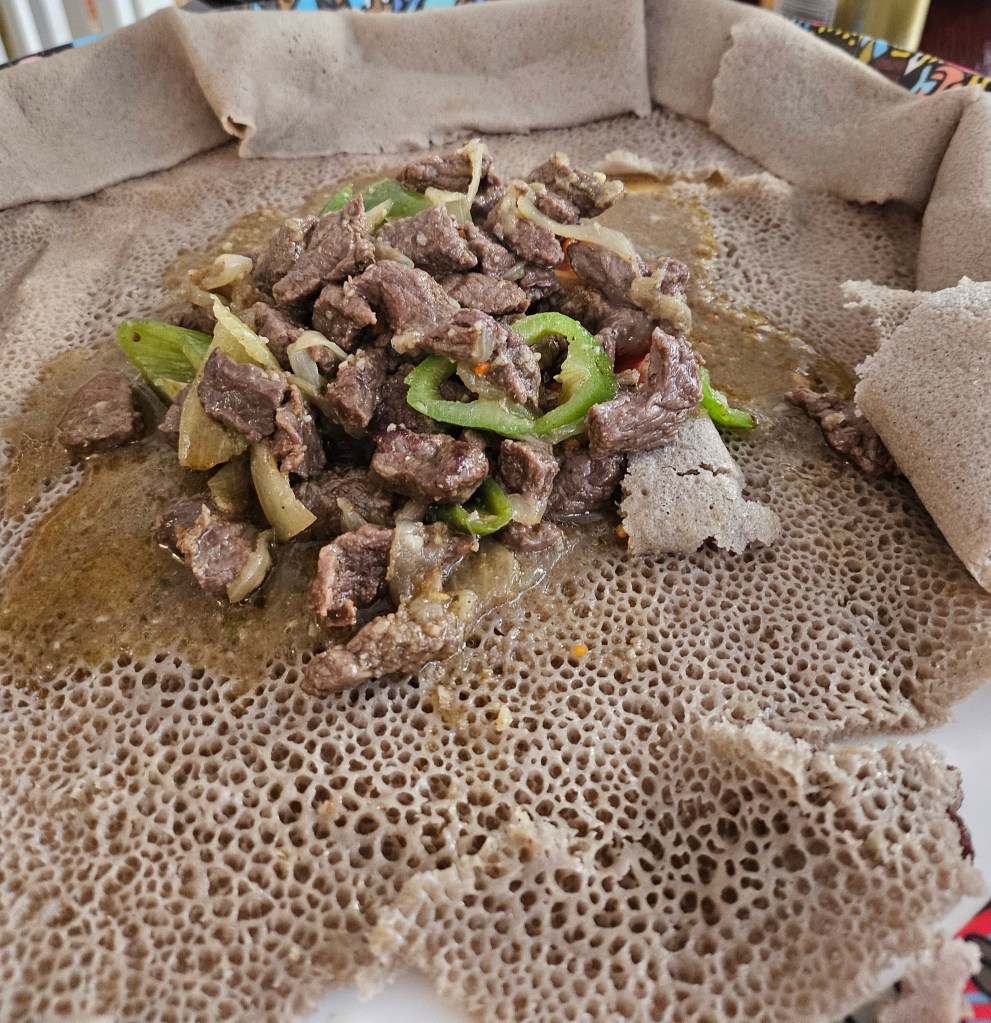
From the National Museum I caught a tram to the north of the city to the same hotel as I had stayed in on my previous visit to Oslo. That evening I visited a nearby Eritrean restaurant. The place was nearly full and the majority of the customers seemed to be of East African origin. Despite some help from a friendly waitress, I was not quite sure what I would be getting when I ordered tibs with injera. This turned out to be a meat stew served with a sour pancake. As the restaurant had no cutlery, the locals on the adjoining table were amused by my initial attempts to eat the food. They showed me the correct way, which was to pour the bowl of tibs into the middle of the injera and then tear off pieces of injera from the side with which to pick up mouthfuls of tibs. The meal was very tasty, although my eating of it was somewhat inelegant.
After dinner, I went the the nearby chess pub, The Good Knight, where all the tables have inlaid chess boards and when buying a drink at the bar you can pick up a chess set and a clock to play a game.

Day 7 – Sunday 9th June 2024 – Oslo
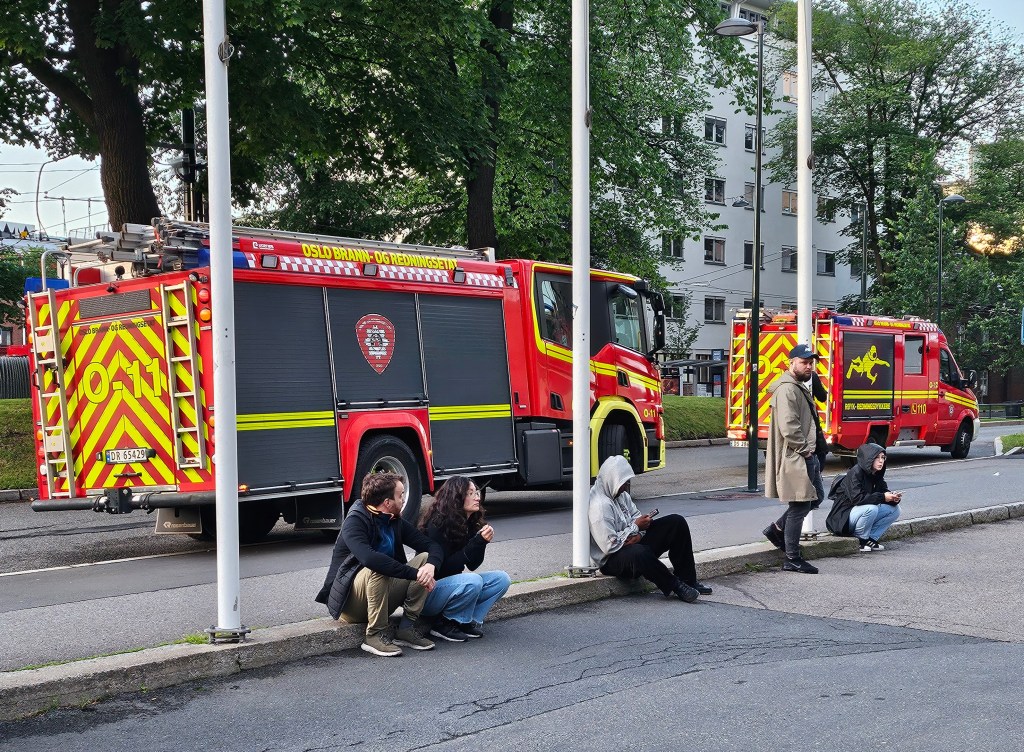
I was rudely awakened at 4:30am by the fire alarm going off in my hotel. I quickly put on some clothes and descended the stairs from my room on the ninth floor to wait outside the hotel. Not all the guests had managed to get dressed, with some in pyjamas and dressing gowns and one woman who was just wrapped up in a duvet. Rather than wait with the crowd at the back of the hotel where the fire exit had led to, I walked round to the front to see what was happening. There were a number of fire engines, police cars and an ambulance outside. After a short while, the all clear was given and I was allowed to return to my room. However, when I returned I discovered the room was without power. As it was now daylight, it was not too much of a problem, except that the bathroom had no natural light. When I got up, I started to work out how I could safely shower in the the dark, but eventually the power came back on just before I needed to.
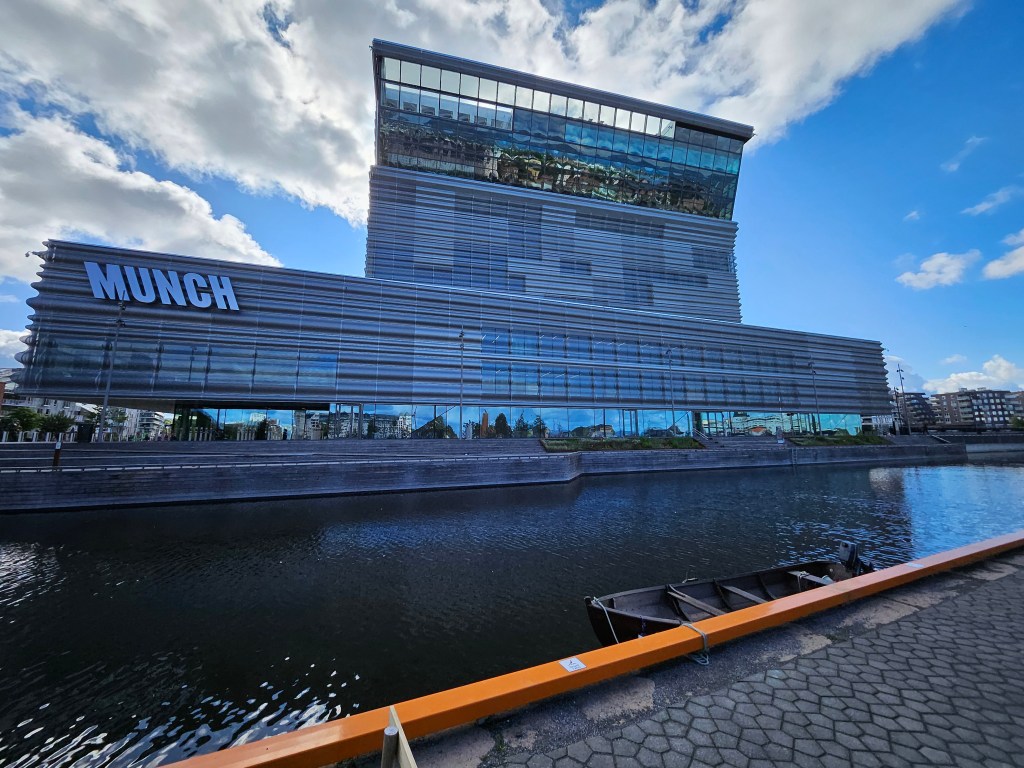
When I set off after breakfast, thankfully the rain of the previous afternoon had gone, but it was much colder than I was expecting for June. I walked to the Munch Museum, located in a modern building on the waterfront. Although a large building spread over several floors, I found the contents a little disappointing. I thought that the exhibition of Munch’s drawings that the British Museum had in 2019 had done a much better job of explaining Munch’s works in the context of his life than the Munch Museum did. Most of his more famous paintings are in the National Museum which I had seen the day before, rather than in the Munch Museum.
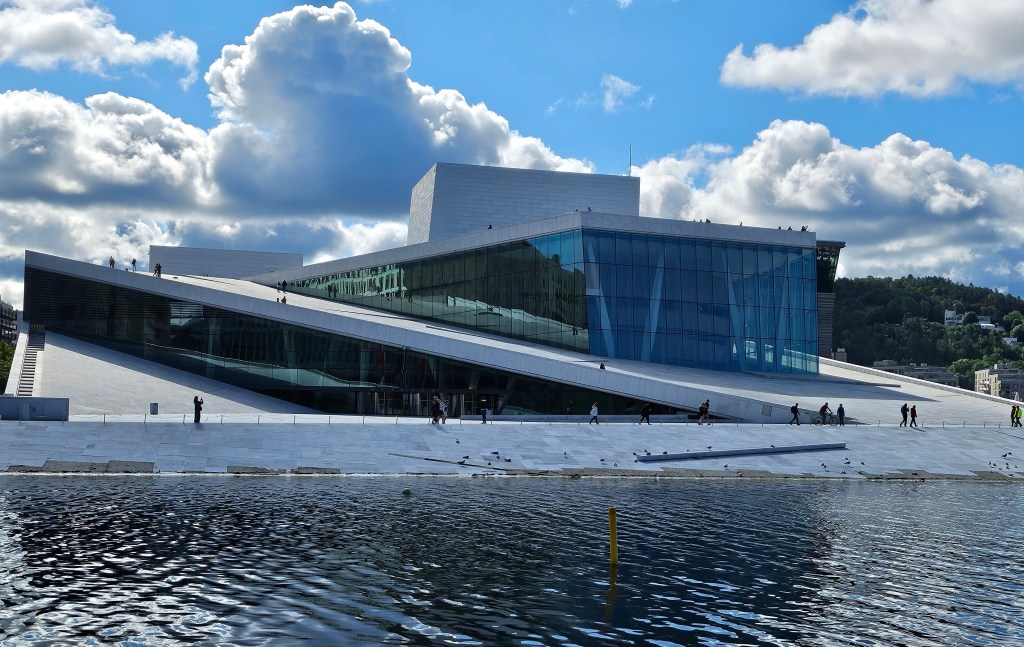
On leaving the Munch Museum I went via the nearby Oslo Opera House, where you can walk on the roof of the building. From there I walked across the centre of the city to the Historical Museum near the Royal Palace. It is part of the University of Oslo and focuses largely on ancient history, with Egyptian, Roman and Viking exhibitions.
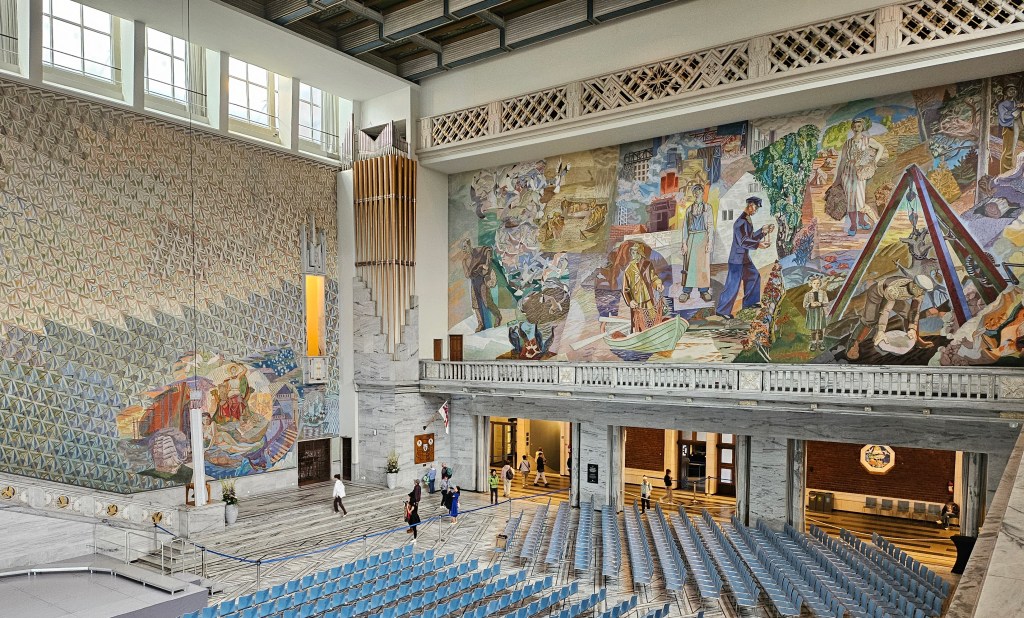
Next I went to Oslo City Hall, where the Nobel Peace Prize is awarded every year. It still functions as the headquarters of local government for the city. Entry is free, but you have to go through a full airport style security check before you can go in. Oslo City Hall was built in the 1930s, but only fully opened in 1950. The main hall, as well as the other rooms including the council chamber, are decorated with large murals.

I decided to go on a tour of the islands that form an archipelago in Oslo Bay. But rather than pay for one of the many privately operated cruises that were on offer, I instead decided to use the public transport ferry service which tours the islands, which I could use for free with my Oslo Pass. Shortly after the boat set off, a storm came in which forced me to retreat from the outside deck for a while. I considered getting off at one of the islands, but in the end chose not to, as I would have had to wait an hour for the next ferry to take me off, and given the inclement weather I did not want to be wandering about without shelter. So after an hour visiting a number of the islands in Oslo Bay the boat returned to the harbour-front location from where I had set off.
For my final visit of the day, I immediately caught another boat included in the Oslo Pass, to the so-called ‘museum island’, which is actually a peninsular also accessible by bus. I had spent most of my time in Oslo in 2019 on museum island, where half a dozen museums are located. In 2024, the Viking Ship Museum closed for major redevelopment which is scheduled to take a few years. As I did not have much time left before places would be closing for the day, I decided to revisit the Fram museum that I had also been to on my previous trip to Oslo. The museum houses the Fram, the polar exploration ship used for expeditions by both Amundsen and Nansen. The museum also contains the Gjøa, smaller than the Fram, being the first ship to traverse the North West Passage. You can clamber on board both ships, as well as view exhibitions on the history of Arctic and Antarctic exploration.
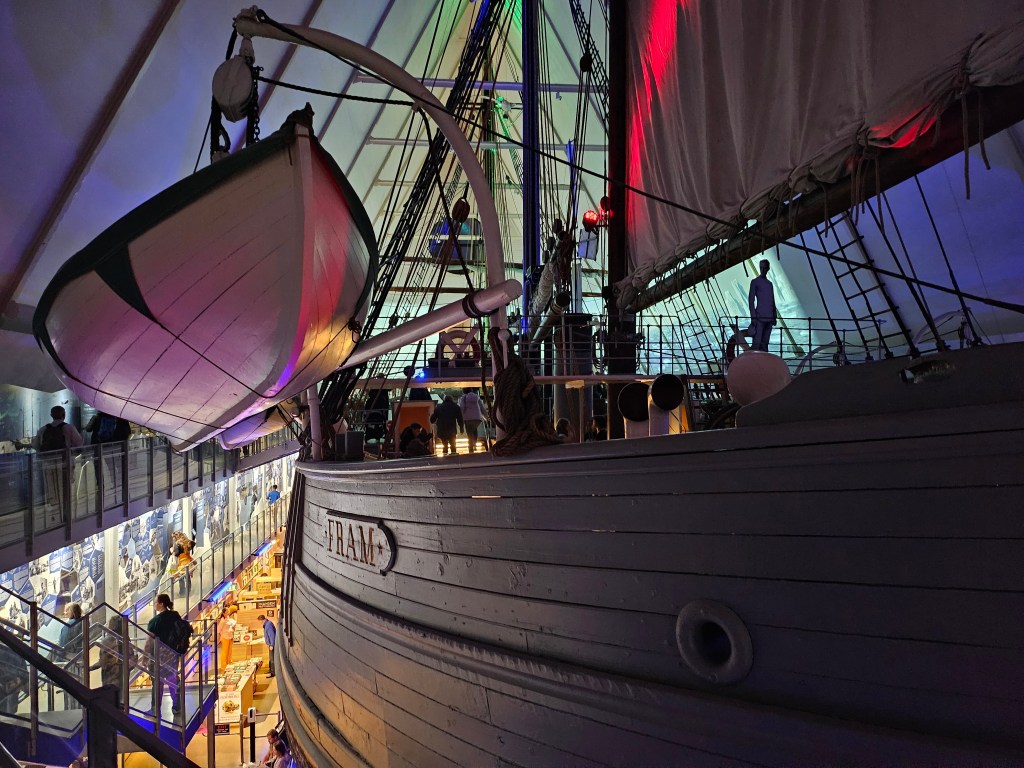
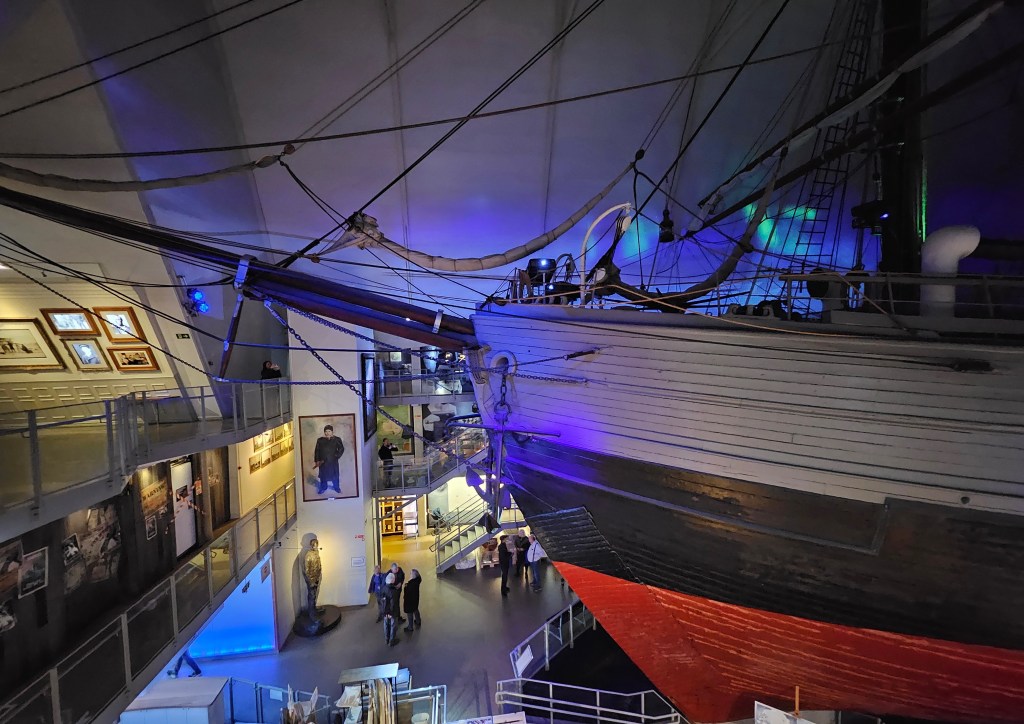
I caught a boat back from museum island to Oslo harbour-front and then a tram to my hotel. That evening, I ate in the same Vietnamese restaurant that I had dined in in 2019. The pork with cashew nuts that I had on that occasion was no longer on the menu, so instead I chose pork with vegetables and rice. I then paid a visit to a pub next door to the Vietnamese restaurant that had an interesting selection of beers and a friendly barmaid to advise on your choice.
Day 8 – Monday 10th June 2024 – Oslo to Flåm
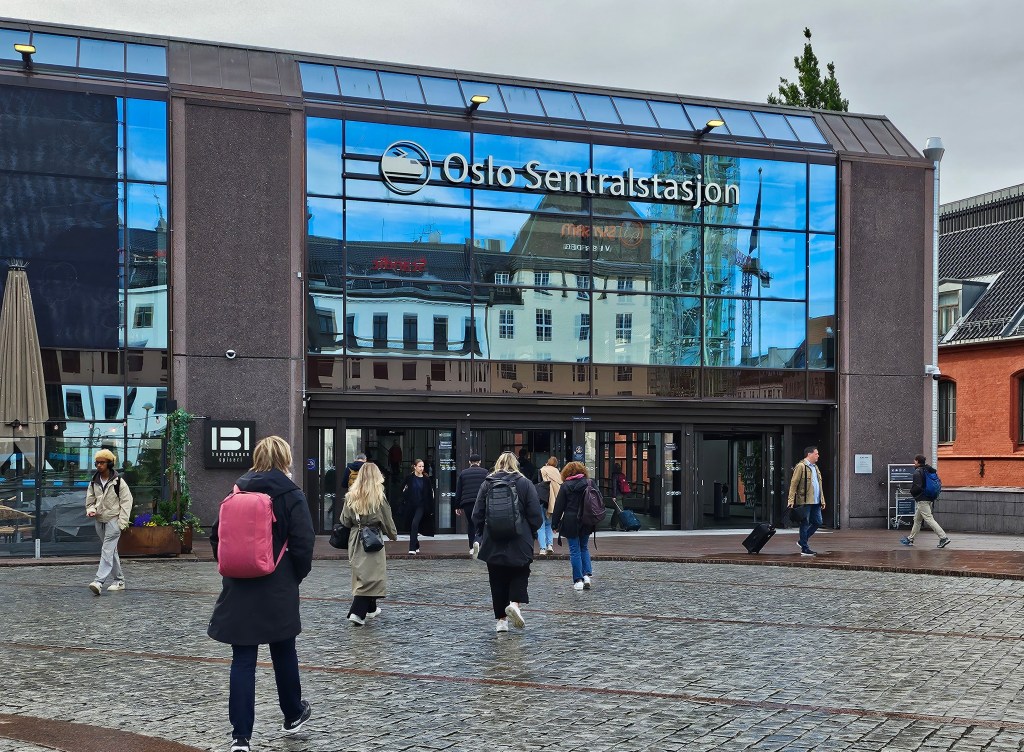
It was raining again when I departed from my hotel to go to Oslo Sentral station, so I caught a tram for a couple of stops to get there. I was catching the 08:25 train to Bergen and the platform was busy with people waiting before the train pulled in. All the seats in my carriage were occupied, but fortunately the small child who had been allocated the seat next to mine spent most of the journey in the children’s play area situated at the end of the carriage. The majority of the other passengers near me were American and their loud and inane conversations were already annoying me before the train even left Oslo.
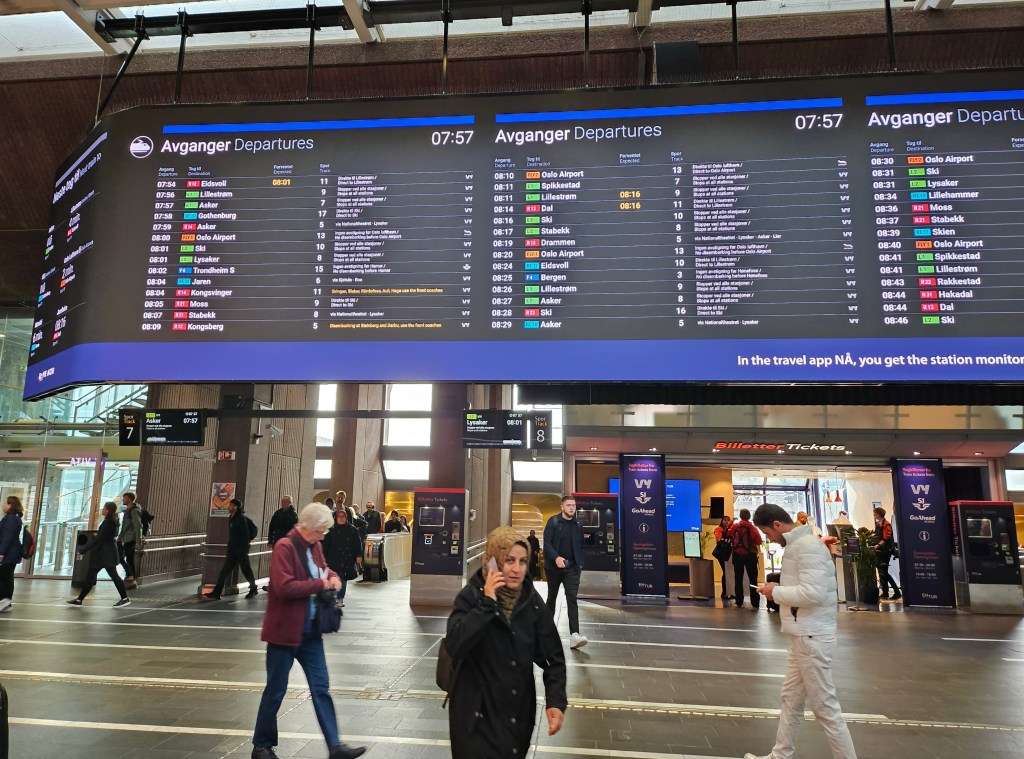
Because of an earlier problem on the line, the train left a few minutes late and initially lost more time as it got held up escaping the Oslo suburbs. Fortunately, four of the loud Americans who were occupying the seats immediately in front of mine complained to the conductor about the lack of a window next to their seats and were moved to an alternative location on the train, giving my ears a bit of a rest.
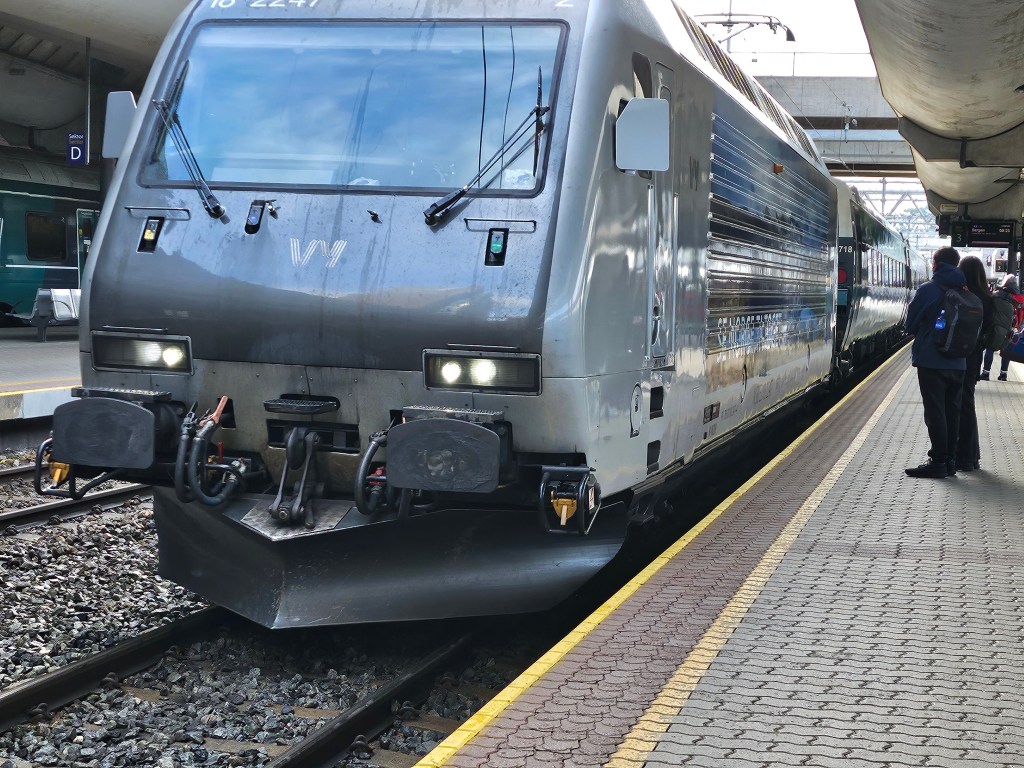
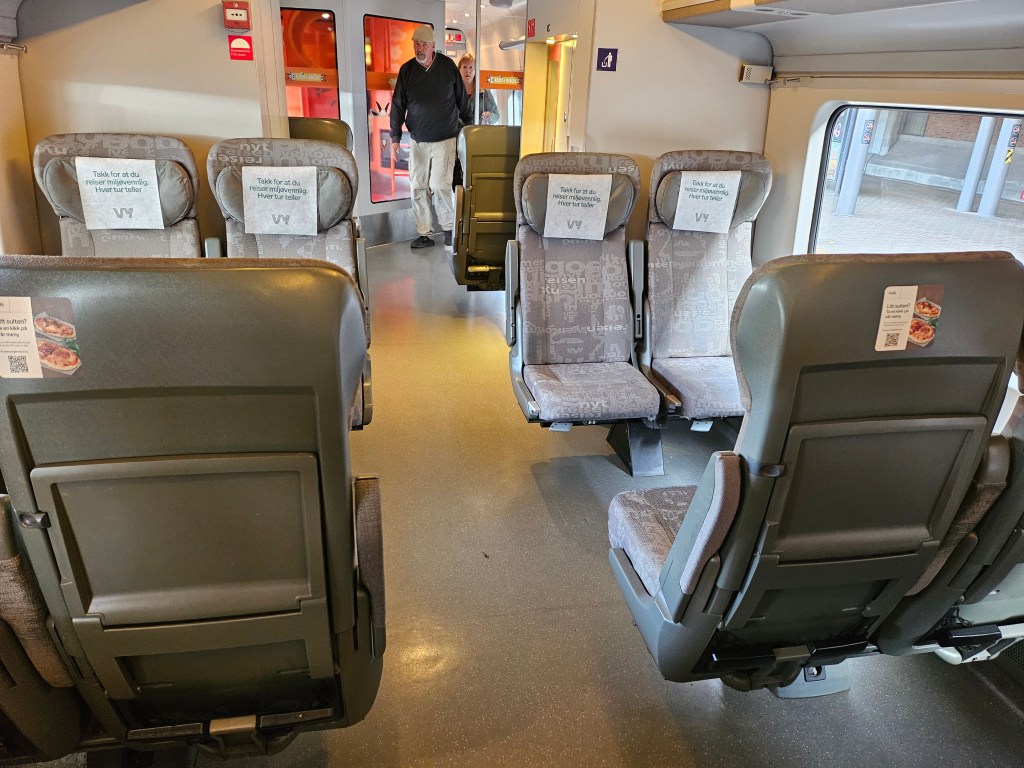
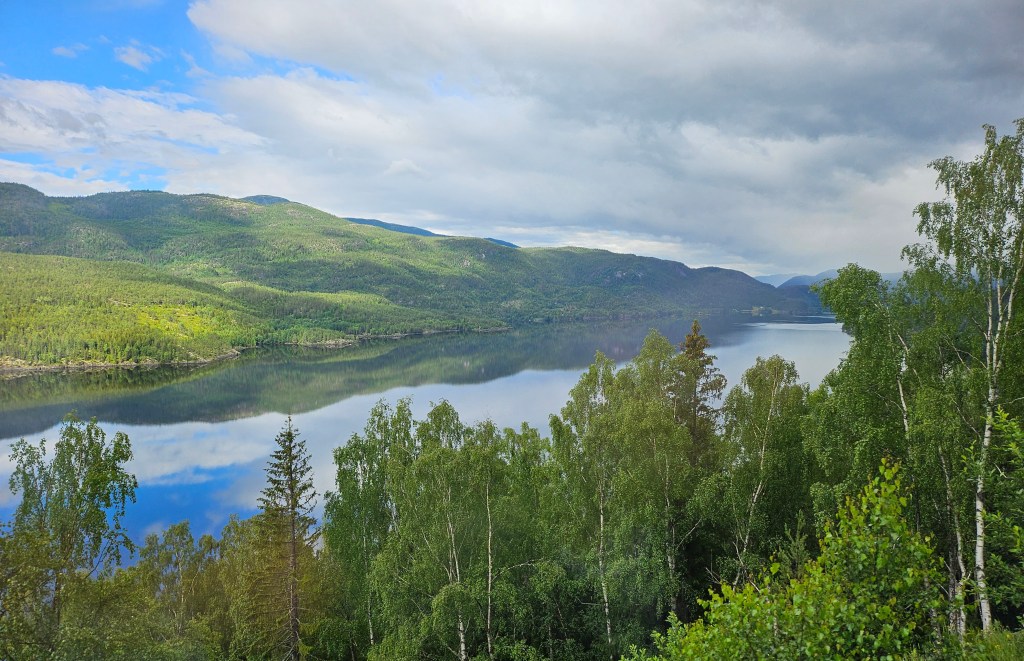
For the first hour or so, the journey was the reverse of the route I had taken two days earlier to arrive in Oslo from Kristiansand. Only once we had passed through Hokksund did the route deviate. The train started to slowly climb and the scenery became more dramatic. Encouragingly, the rain stopped and glimpses of blue sky started to appear. Initially I got excited when I saw occasional patches of snow on the distant hills.
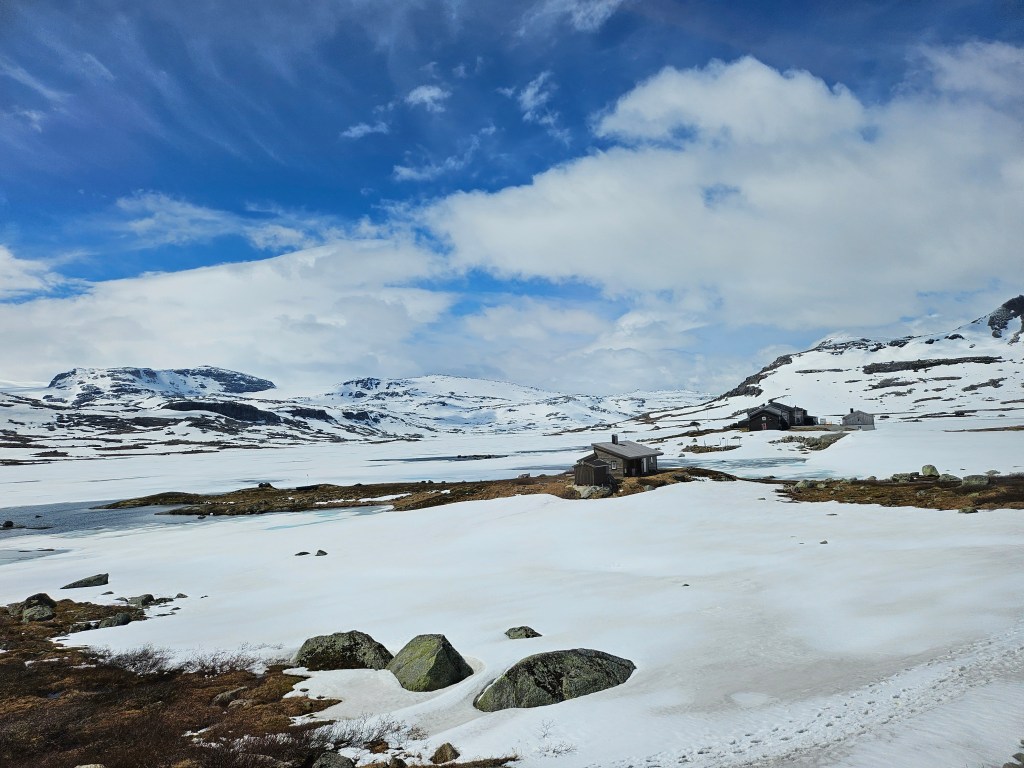
The Bergen railway line, which opened in 1909, was a major feat of engineering. Much of the route is subject to heavy snowfall throughout most of the year and in the time since it first opened a number of tunnels have been added to the route to ensure year-round working. As the train climbed further, the snow was now all around rather than just seen on the distant hills. The highest station on the route is Finse, at 1222m. After leaving Finse for the final half hour before I had to change, the views were spectacular with unbroken snowfields stretching from the line for as far as the eye could see.
The train arrived at Myrdal just a couple of minutes late, where I had 20 minutes to connect to the train to Flåm. A large number of people from my train from Oslo were also changing with me. I had not realised quite how much the journey to Flåm was a fixture on the tourist circuit, particularly for Americans. While listening to my fellow passengers, I detected a few other European nationalities, but nobody else who was obviously British.
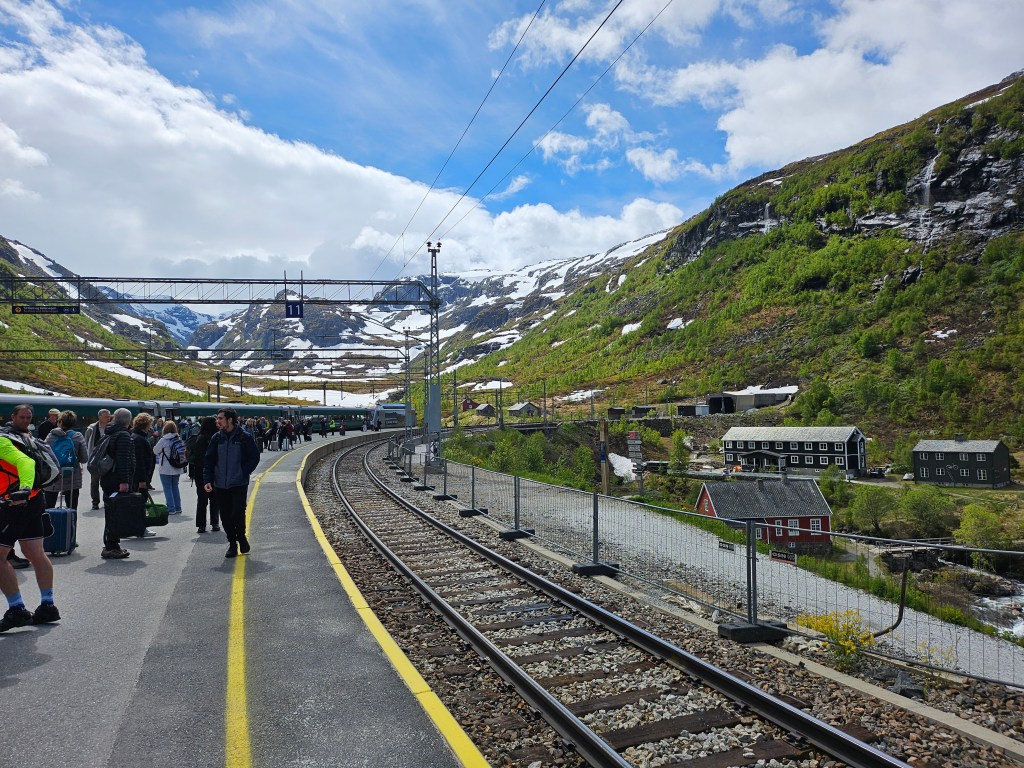
The train that was coming from up Flåm was a few minutes late arriving and eventually set off 10 minutes late on its return. The old fashioned carriages were almost completely full. The Flåmsbana railway was opened in 1941 during the German occupation of Norway and was originally used for freight. It descends steeply from Myrdal through a series of tunnels where the line corkscrews though 360°. The right to run trains on the line is in the hands of a private company, but the trains are still operated and staffed by Vy, the Norwegian state railway. The private company sets the fares and timetable and it is now run purely for the tourist market. Consequently, the fares are suitably expensive and are outside the normal Norwegian railway fare structure.
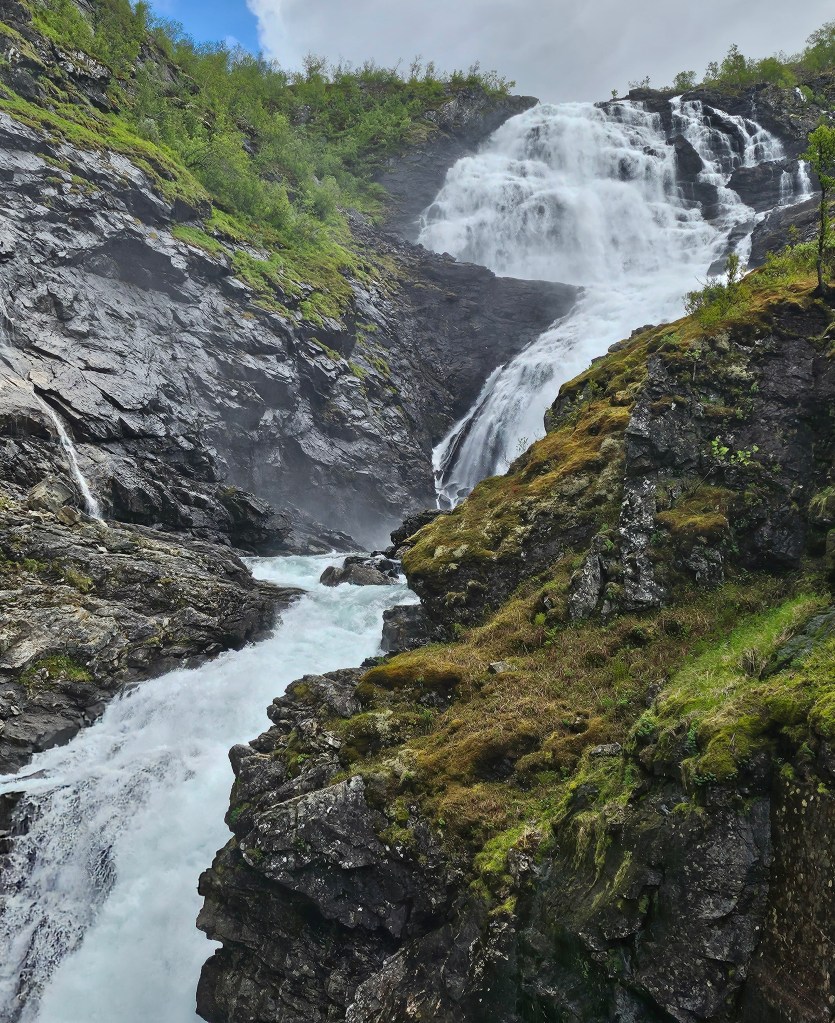
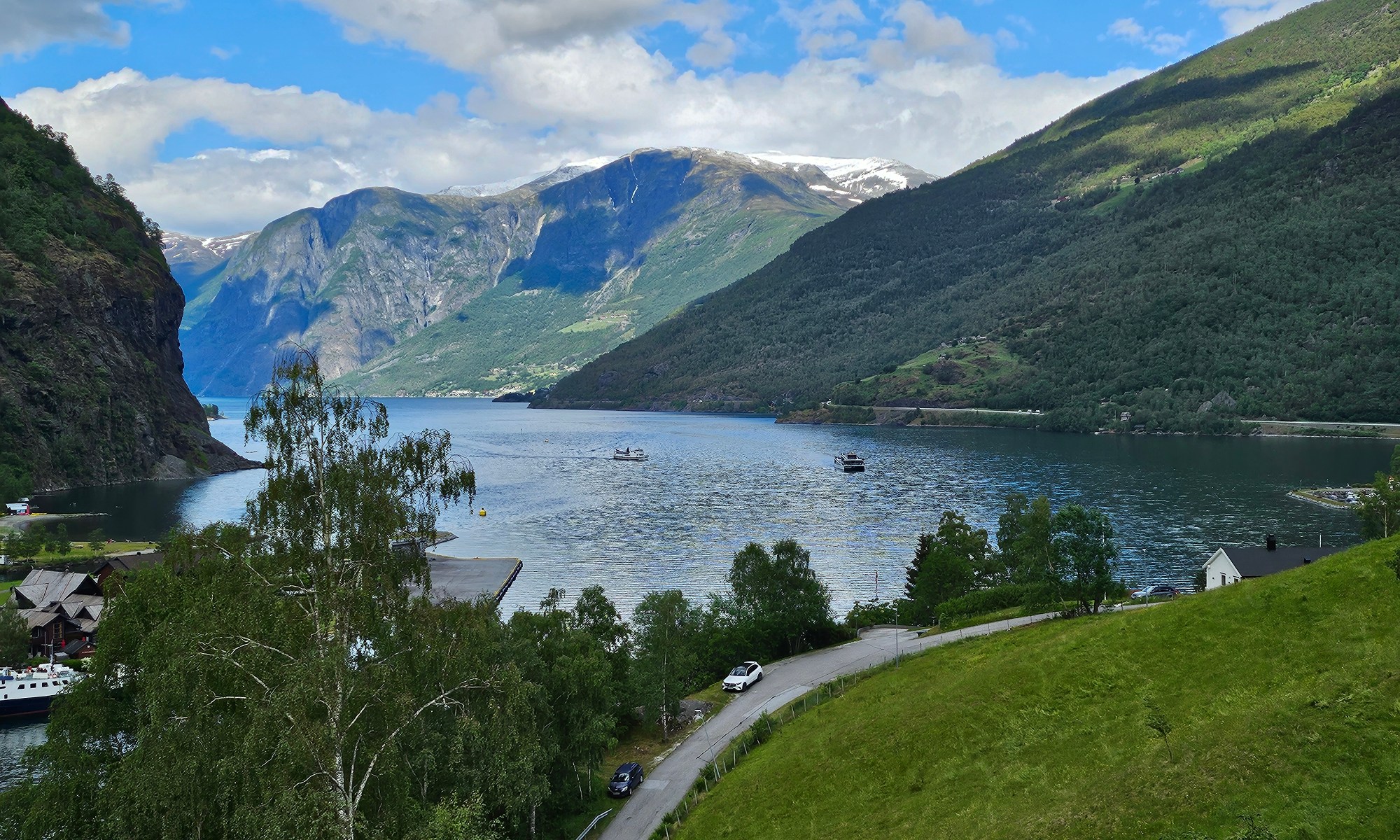
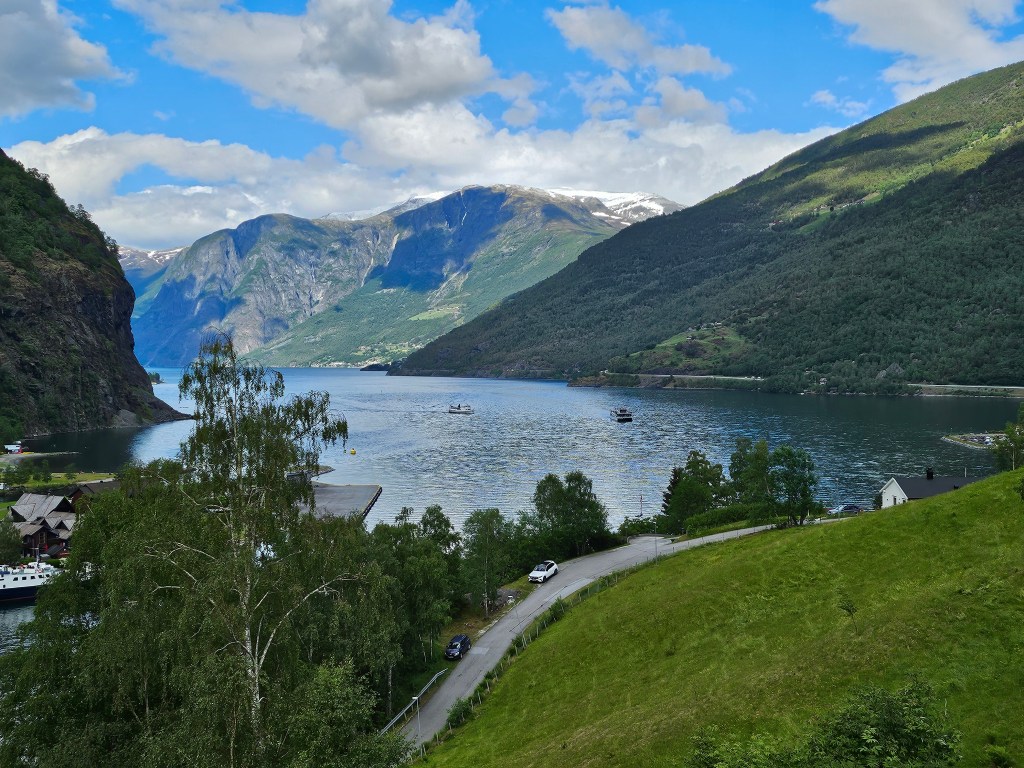
The train makes a scheduled five minute stop so that you can get off to take pictures of the Kjosfossen waterfall. From there it continues down the steep valley until it arrives in Flåm about an hour after leaving Myrdal. Flåm is a small village at the head of the Aurlandsfjord. When I alighted the centre of the village was busy with visitors. As well as those who come by train, many also travel by boat up the fjord from Bergen. Next to Flåm station is a small railway museum which provides information on the building of the Flåm railway. When it initially opened the line was steam hauled, but within a few years (still under German occupation) it was electrified, with the electricity generated by a small hydro-electric power station fed by the Kjosfossen waterfall.

After about an hour of wandering about in Flåm I concluded that I had seen everything within the village. As the weather had now improved significantly and it was a warm sunny afternoon, I decided that I should plan a longer walk to get some exercise and escape from the throngs milling about in the centre of Flåm. I had picked up a map of walking trails, so decided to follow a couple of those, but first I called in at my hotel, so that I would not be encumbered by having to carry a bag.
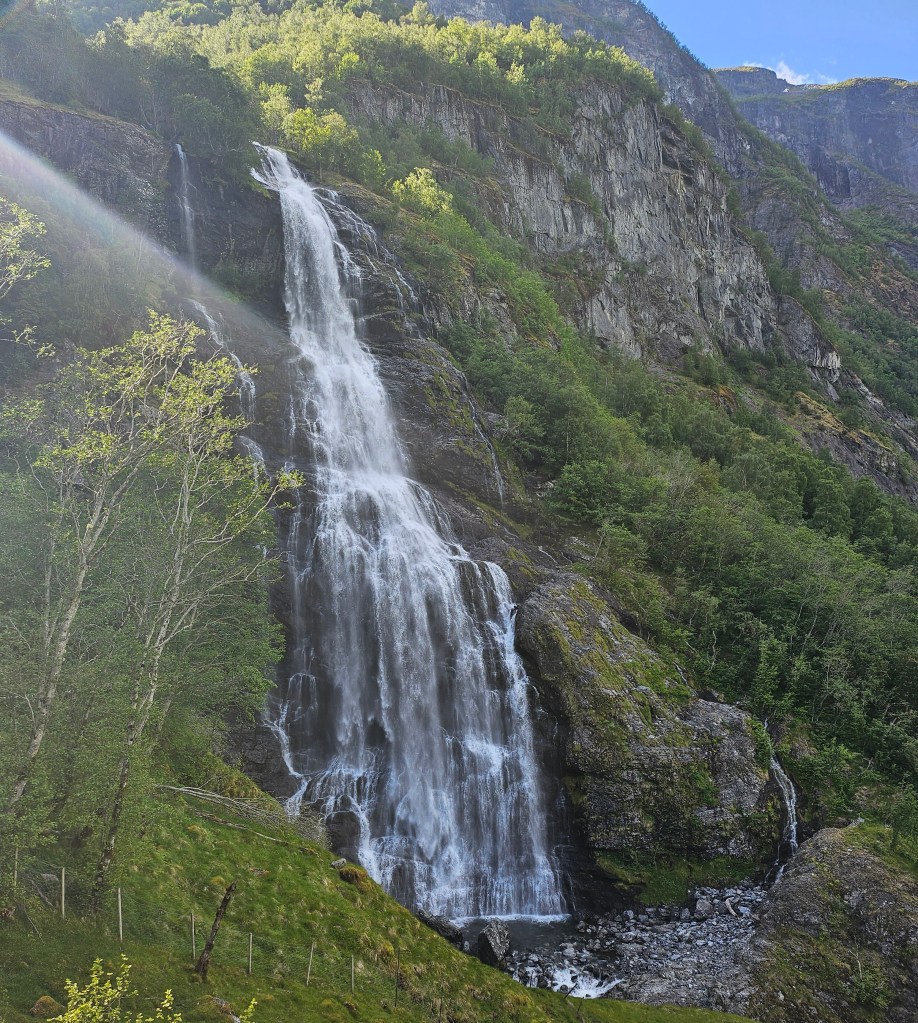
Initially, I did a circuit on the hill behind my hotel and then set of on a longer walk to visit the Brekkefossen waterfall located further up the valley, about half way up the valley side. I started by walking along the valley floor for a couple of miles, then steeply up the side of the valley to reach the waterfall. The climb was worth it as the view both of the waterfall and down the valley were spectacular.
By the time I got back to my hotel, I needed to shower before I was fit to go out again. Once the day trippers leave Flåm, there are very few places to eat that are open in the evening. I went to a pub that brews its own beer, where there is a restaurant on the upper floor. Arriving a little later than when I normally go out to eat meant I had to have a drink in the downstairs bar area while waiting for a table to become free. I had a very tasty starter of beetroot hummus followed by a burger. When I had finished eating I returned to the pub area to continue sampling their own-brewed beers. By the time I left, the sun had dipped below the surrounding mountains and Flåm was now much more peaceful.
Day 9 – Tuesday 11th June 2024 – Flåm to Bergen
Overnight an enormous cruise ship had docked in Flåm and was completely spoiling the view of the fjord. When I went to catch the first train of the day to leave Flåm at 08:25, the first of the passengers were starting to disembark from the cruise ship and Flåm was becoming busy again. The train retraced the route I had taken the day before to reach Myrdal just under an hour later.
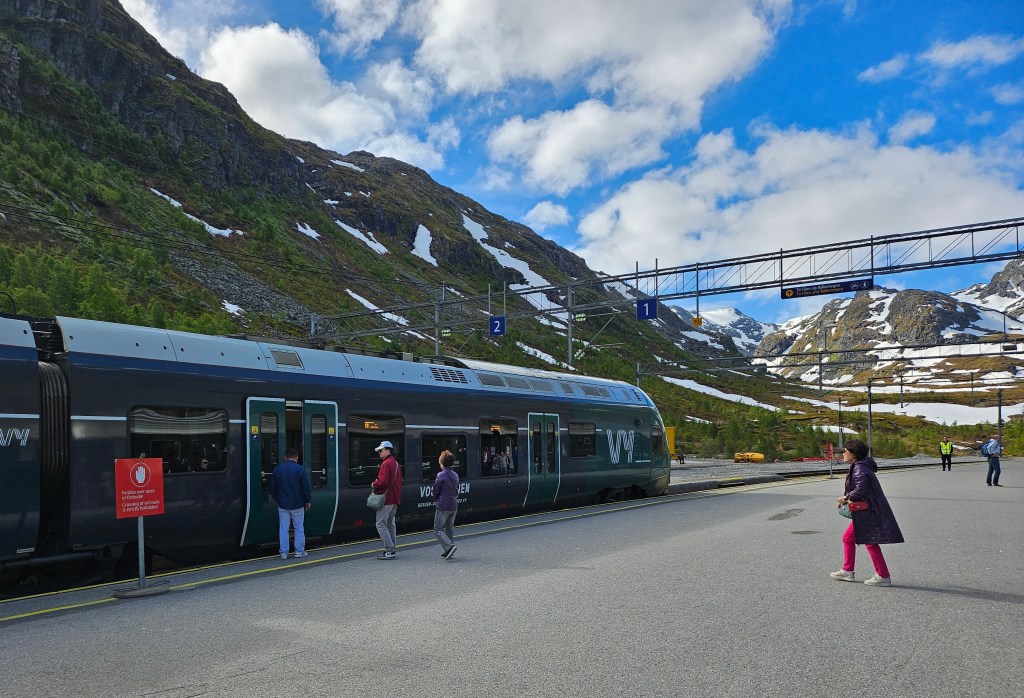
At Myrdal the train to take me to Bergen was already waiting in the opposite platform and it departed ten minutes after I got on. This train was fairly empty and I initially had a whole carriage to myself, which enabled me to switch seats from side to side to take advantage of wherever the best views were. As we descended, the snow began to disappear. At the intermediate stations more passengers got on and the train started to fill up. The final approach to Bergen was along the side of the Sørfjorden, which separates the mainland of Norway from the island of Osterøy. At the penultimate station before Bergen a man with a huge dog got on and took the spare seat next to me. The dog was so large that it would not fit in the space around the man’s seat – it either had to block the adjacent aisle or, when people wished to get past, sit on my legs.
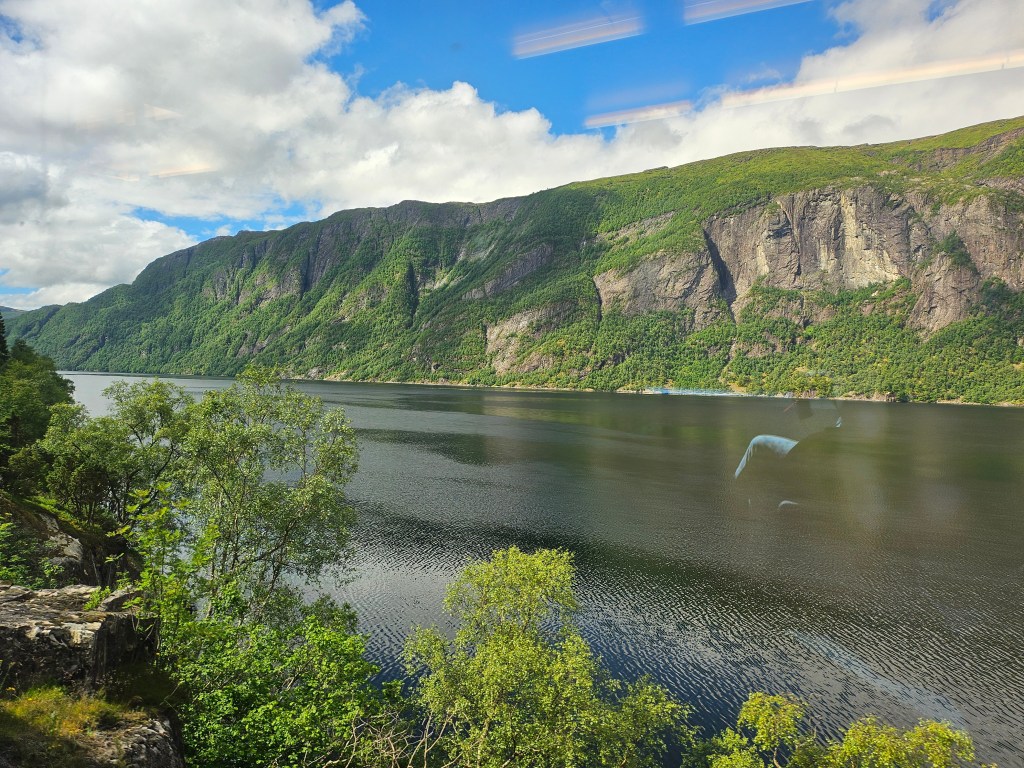
The train arrived on time in Bergen at 11:32 and I walked the short distance to the fish market area, where I called at the Tourist Information Office to buy a Bergen Card for my time in the city. As in Oslo, the Bergen Card would give me free entry to museums and free travel on public transport. Unfortunately, some of the potential attractions were closed during my time in the city. In particular, there is a large Hanseatic museum which is currently being refurbished. Google Maps suggested that part of it was still open, but when I investigated it turned out to be just the gift shop.
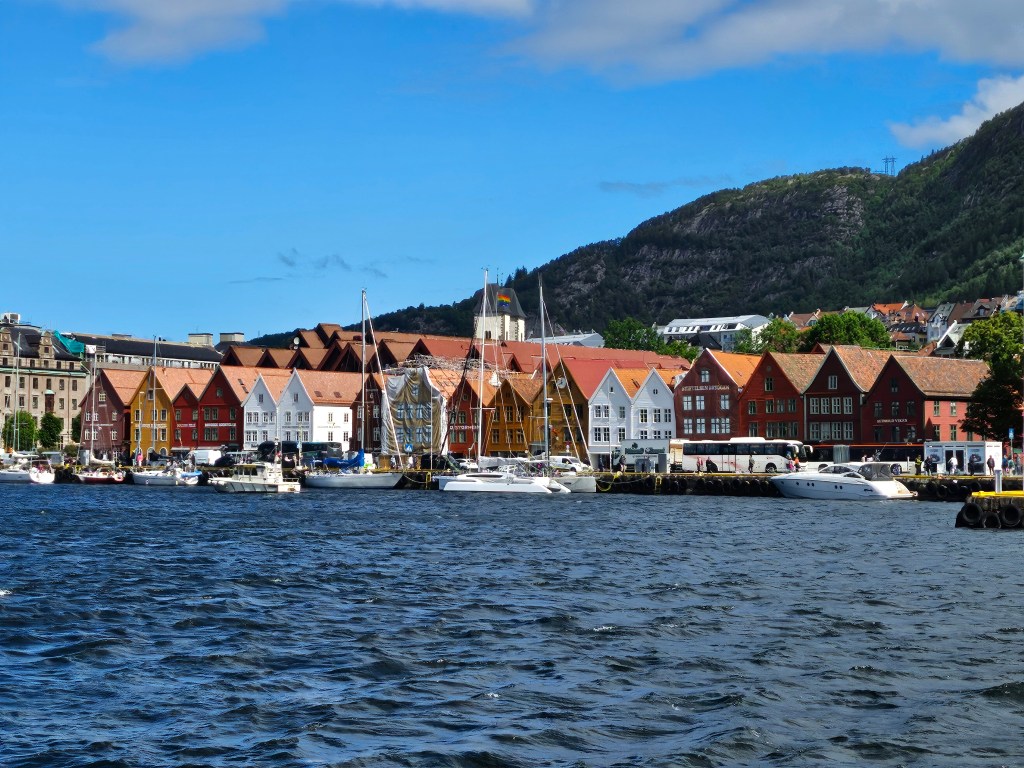
My first visit in Bergen was to the Bryggens Museum. This is an archaeological museum in the Bryggens waterfront area, which tells the history of the city. Many of the exhibits were found in a major archaeological excavation in 1955 following a fire which destroyed a number of the wooden buildings in Bryggen.
When I left the Bryggens Museum, my plan had been to visit the nearby Bergenhus Fortress. However when I tried to walk there I encountered thousands of school students walking in the opposite direction completely blocking the pavements and streets. A bit of research led me to discover that they had been attending a free concert in the grounds of the fortress, which was a prelude to a three day music festival starting the next day featuring acts such as Stormzy. Consequently, the fortress was out of bounds for casual visitors.
Instead I walked to the south of the city, to visit Bergen’s Maritime Museum, which is part of the University of Bergen. This is a rather old-fashioned, but nevertheless interesting, museum. I used an app downloaded on my phone to provide additional information, as many of the displays only had text in Norwegian. I spent a couple of hours in the Maritime Museum.

When I had finished in the Maritime Museum, there wasn’t really time to visit anywhere else, so I did a bit more exploring of the parts of the city centre that I had not yet been to. While I was in my hotel, I checked the details of my flight back the following day. The airline confirmed that it should be departing on time. By chance, I went to look Bergen Airport’s website where I learnt the unwelcome news that there was a threatened strike from noon the next day, which would mean my flight would be cancelled.
I departed for dinner still thinking about my options for escaping from Bergen, which somewhat took the gloss off my final evening’s dinner of meatballs and mushy peas. When I returned to my hotel, I further researched the options should Bergen Airport be shut. There was no availability on trains back to Oslo the following morning, but anyway they would not get me back in time to catch a flight from Oslo to London. My best bet seemed to be to catch a couple of buses (taking all day) to Stavanger airport, where there was a similarly timed evening flight to London as the one I was due to catch from Bergen. According to the Norwegian TV news channel’s website negotiations about the strike were ongoing, but had they not concluded by midnight the strike would go ahead. I decided to stay up until midnight to find out the outcome and if the strike was on, I would buy the necessary bus and plane tickets. However, at about ten minutes after midnight the news reported that the official arbiter had stopped the clock and the talks would continue through the night. At that point I went to bed.
Day 10 – Wednesday 12th June 2024 – Bergen to London
I awoke early, before 5am, and immediately checked the news on my phone. Thankfully the airport strike had been settled at 2am and I could now spend the day further exploring Bergen, rather than having to embark on an arduous journey home. Feeling much relieved, I went back to sleep for another couple of hours.
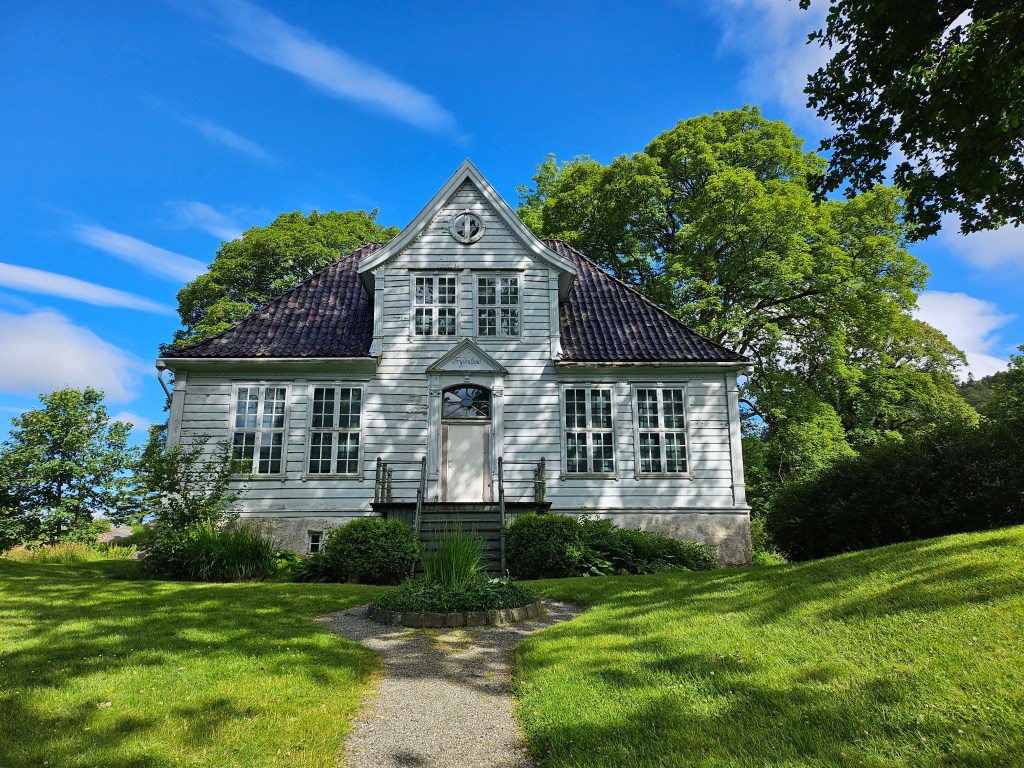
When I left the hotel, I caught a bus to the north of the city to visit Gamle Bergen. This is similar in concept to Den Gamle By in Aarhus that I had been to the previous week, but smaller in scale. There are a number of old buildings by the side of Bergen Bay, with some of them staffed by actors in period costumes playing out various roles, giving a snapshot of life in the early 19th century. Unlike in Aarhus, most of the site is not enclosed, so it would not be difficult to wander in without getting a ticket.

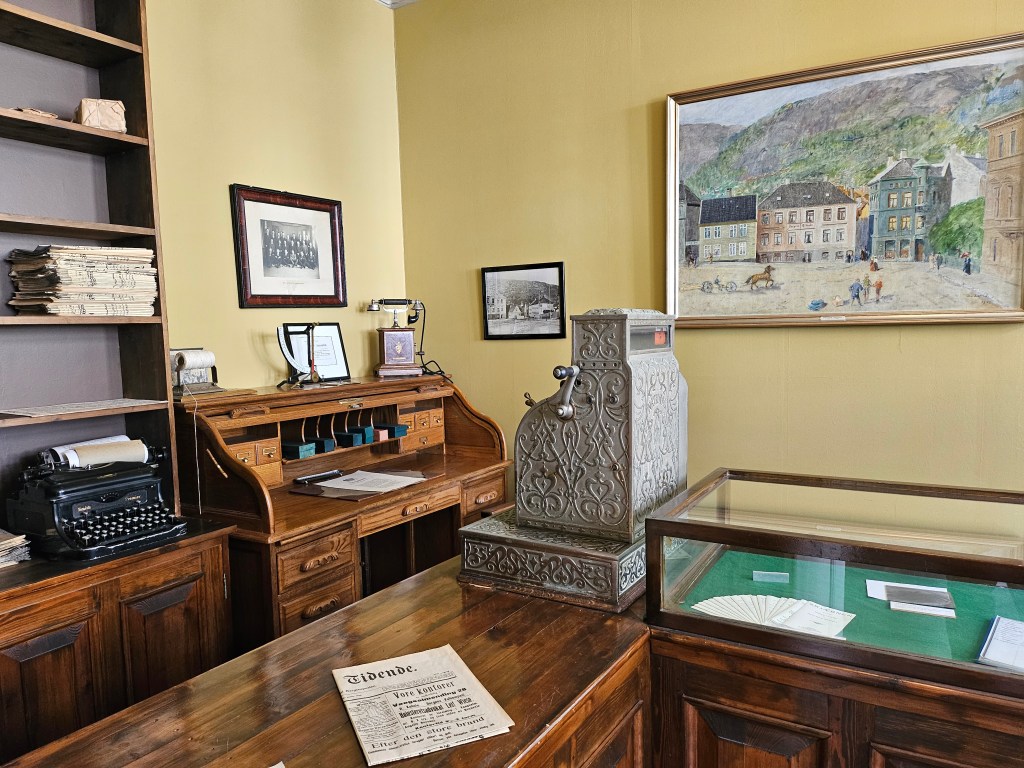
Next I caught a bus again to take me part way back to the centre of Bergen to visit the Norwegian Fisheries Museum, located in a former warehouse on Bergen Bay. The museum has exhibits on several floors and although there were a couple of school parties there at the time of my visit, it was quite easy to avoid them. While I was in the Fisheries Museum my phone started to make a loud siren-like noise, with a pop-up message from the Norwegian police entitled ‘danger’. Fortunately, when I had been scanning the news channels the previous evening to find out about the airport strike, I had found out that this was going to be the day that Norway tests its emergency alarm systems.
A short distance from the Fisheries Museum is the Storeblå Aquaculture Visitor Centre. I believe that this exhibition is sponsored by the salmon farming industry, so I was somewhat sceptical about its objectivity. Nonetheless, I thought it gave a good overview of the pros and cons of fish farming, including comparing enclosed tanks with netted areas in the open sea. The industry has not been without its problems, particularly with disease, and it explained how these are being tackled.
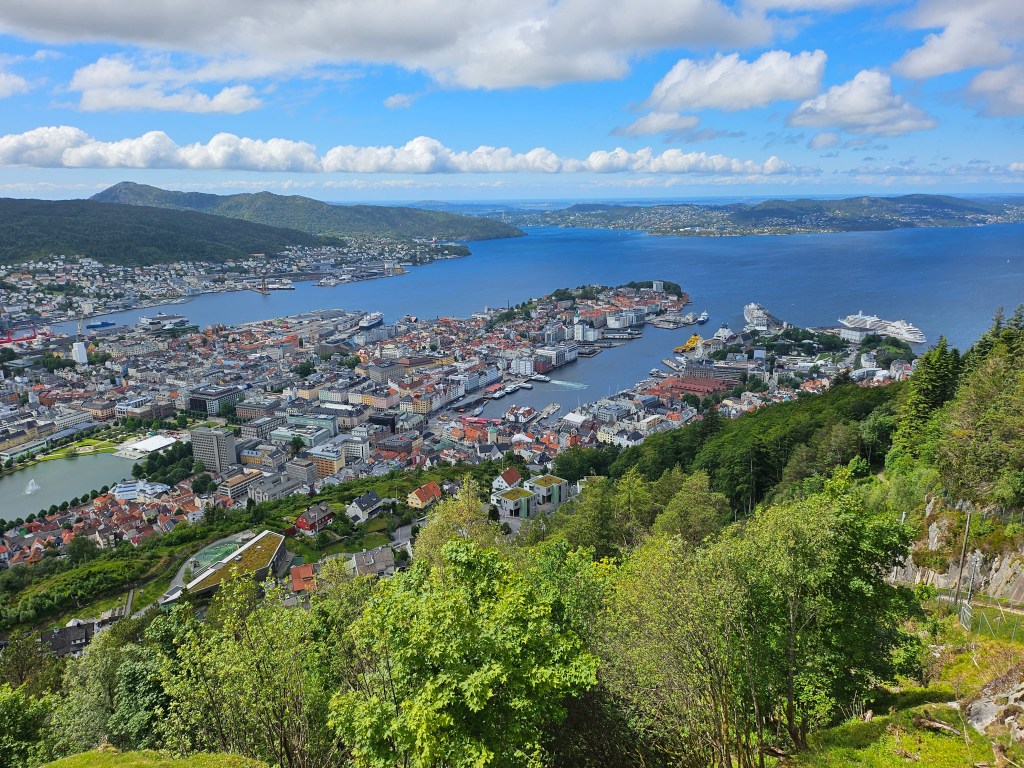
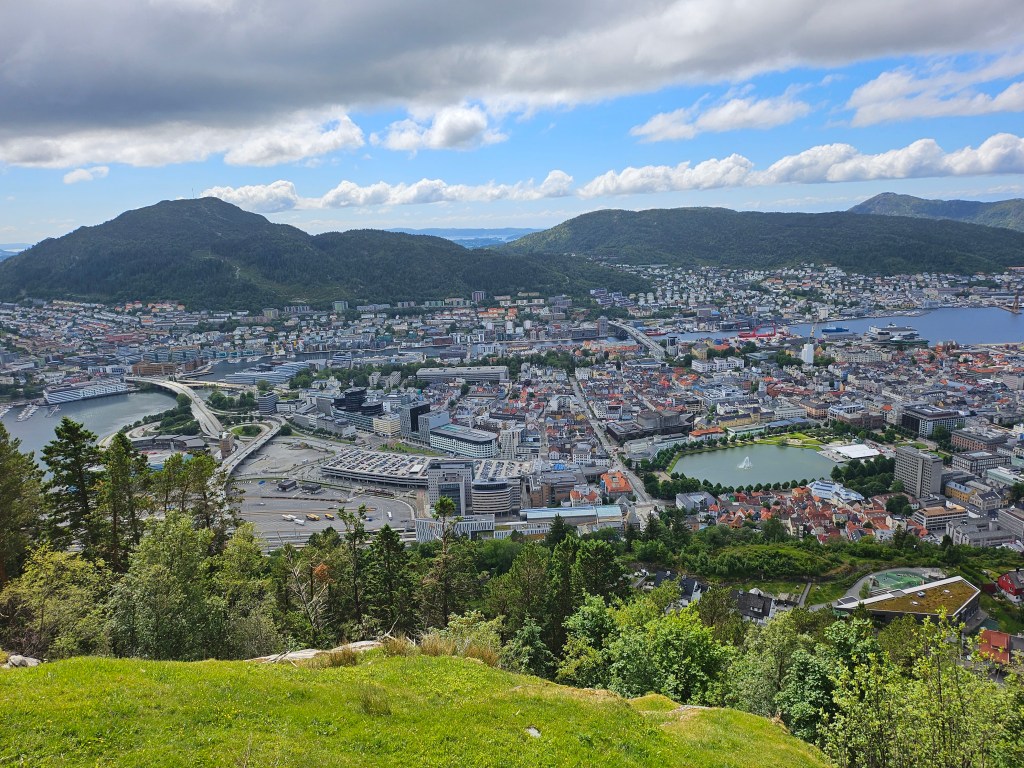
I caught a bus back to Bergen’s city centre. From there I took the funicular railway that runs to the top of Mount Fløyen, the hill that overlooks Bergen. This seemed to be a popular thing to do – although departures were every 10 minutes, each compartment was filled. At the top there were a large number of people admiring the view and frequenting the cafe and shop at the summit. From the top, you get an idea of the size of Bergen, which is Norway’s second city, as the built up area spreads for many miles up the fjord on which it is located.
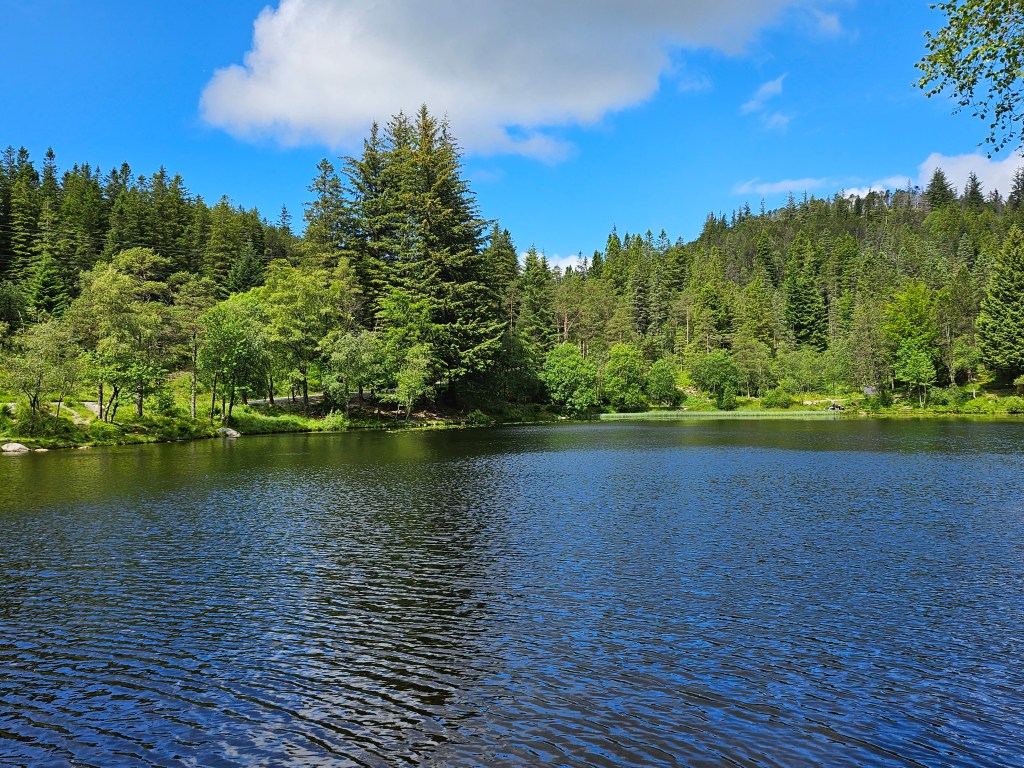
The top of Mount Fløyen is wooded and I chose to go for a walk. It did not take long to escape the crowds and I followed paths through the woods to reach a very scenic lake. Having obtained a return ticket for the funicular, I returned the way I came, although, in retrospect, it might have been quite pleasant to walk down.

When back in the city centre, I went to Bergen cathedral. For a city of Bergen’s size, the cathedral is quite small and, being a Lutheran church, rather plain inside. Embedded in the outer wall is a stray cannon ball fired during the Battle of Vågen in 1665. This was a naval encounter between the Dutch and British in Bergen’s harbour area, which the Dutch won, possibly because the local Norwegian commander misunderstood his orders about which side he should be supporting.
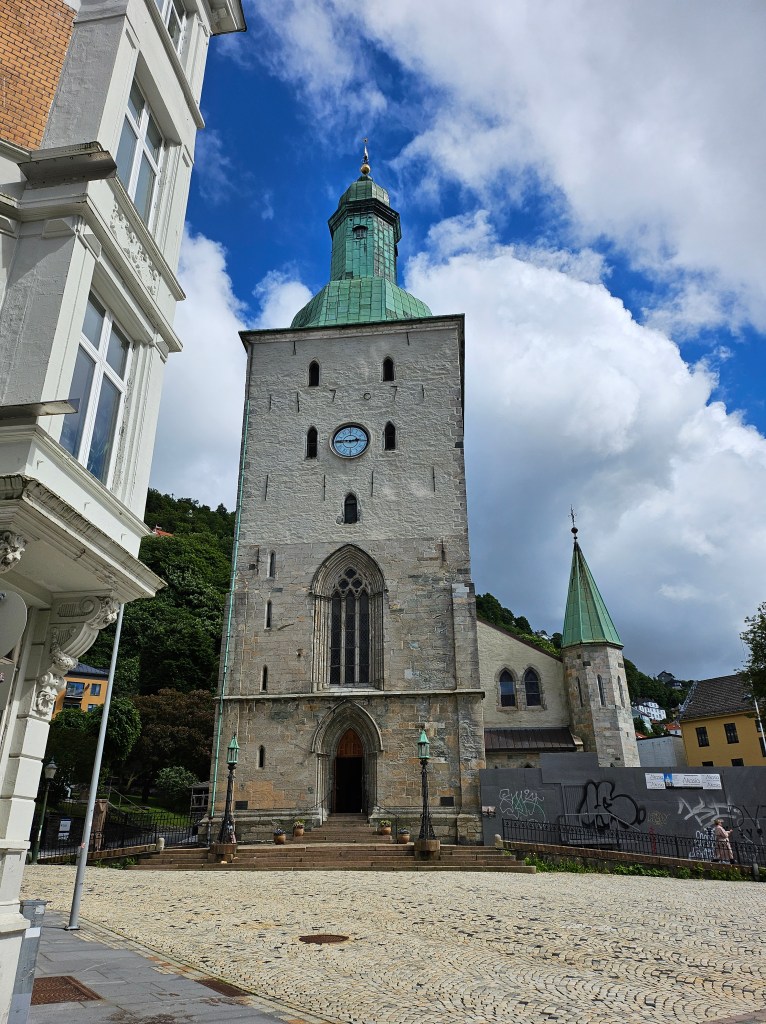
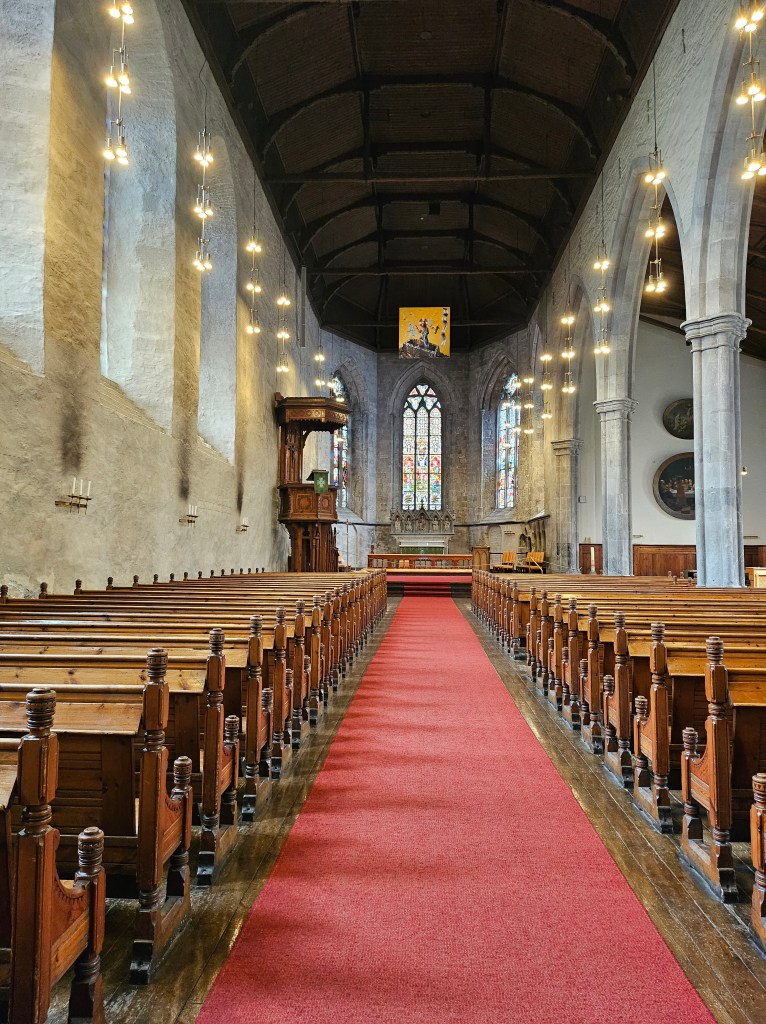
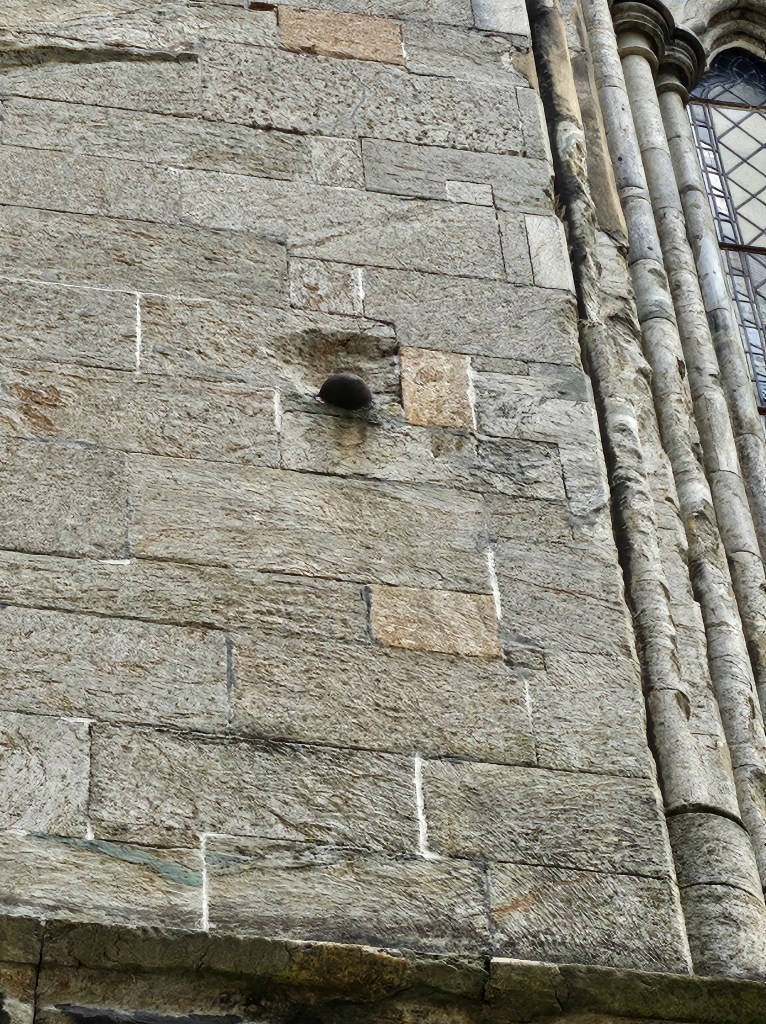
It was now late afternoon, so rather than trying to squeeze in another visit I just bought an ice cream and went to sit by a lake in a large city park to eat it. By the time I had done that it was time to make my way to the airport to go home. Bergen airport is about 15 miles from the city centre but is connected to it by the Bergen Light Rail, travel on which was included in my Bergen Card. While in the suburbs, the Light Rail runs on its own dedicated tracks, but in the city centre it shares the space with cars and other road vehicles, so in my book it’s a tram network. I caught the tram/light rail at about 4:30pm, and initially progress was slow due to road traffic congestion. Once the tram reached its own dedicated space, things speeded up and it reached the airport 45 minutes after it set off.
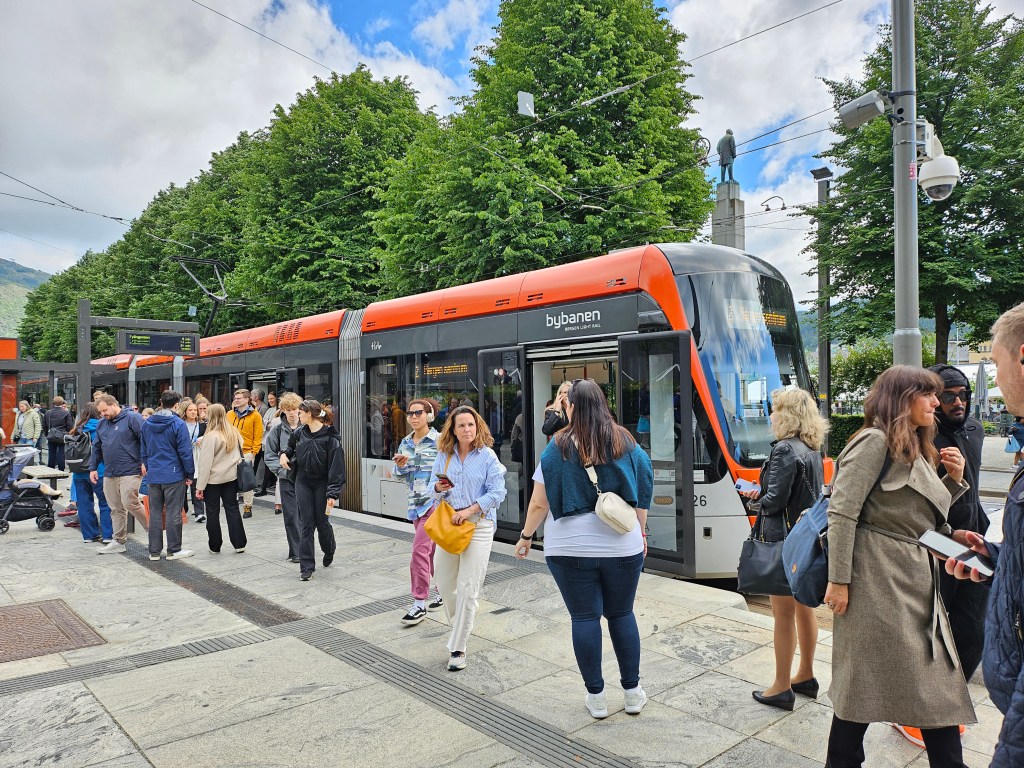
Bergen airport was spacious, with not many people using it that evening. There were no queues at all for security or passport control. Ryanair does not fly to Bergen, so I was travelling back to London with Norwegian, who fly to Gatwick rather than my usual Stansted. Boarding started early, and as the plane was not particularly full, we were able to start moving a few minutes before the advertised departure time of 19:00. The skies were clear and there were glorious views of the Norwegian cost from Bergen to Stavanger. Having being educated about them at Storeblå earlier that day, I managed to spot a few fish farms in the open sea.
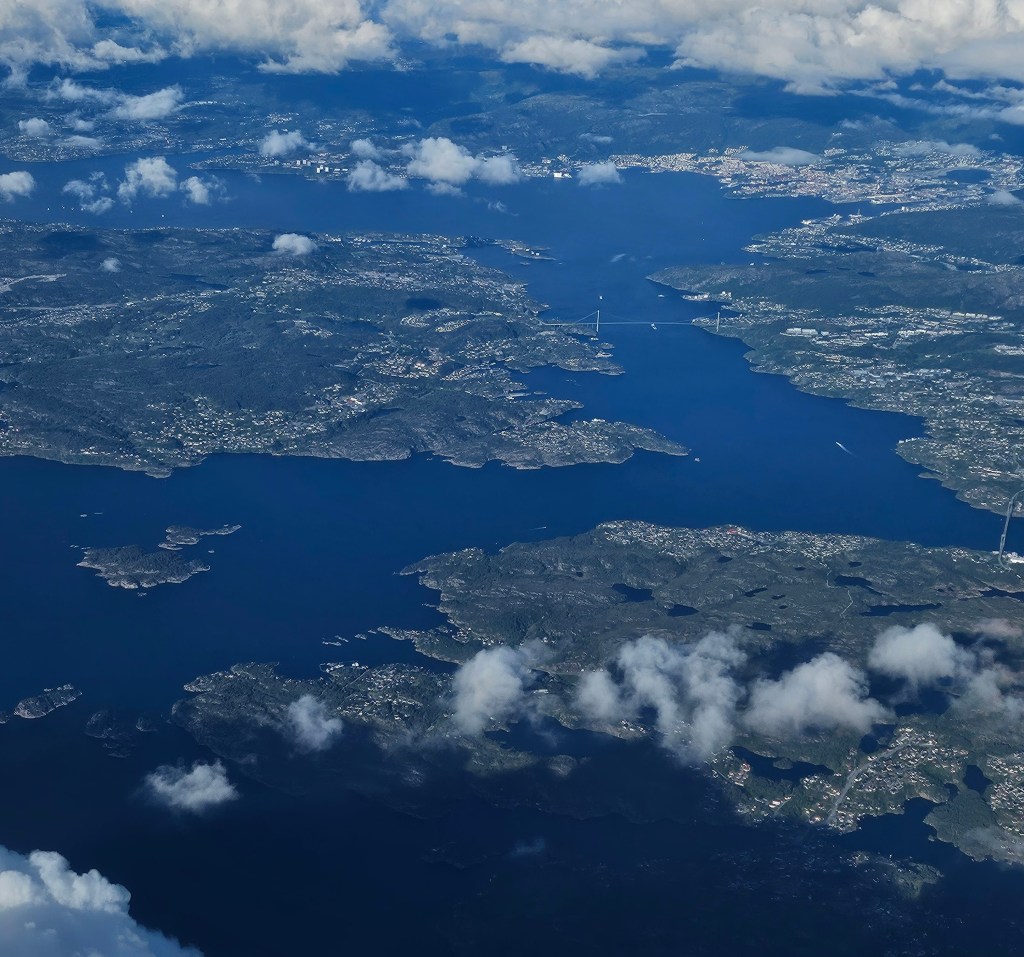
The plane arrived at Gatwick at 19:45, some 35 minutes early. Despite being further from home than Stansted, it did not take me any longer than my journey from Stansted normally takes and I got back home rather earlier than anticipated.
Normally I avoid the summer months for travel and this was the first Europe Explored trip undertaken in June. I’m not sure whether it was because of this, or just the nature of the Norwegian fjord coast, but I was more aware of mass tourism over the last few days of this trip than in others that I have been on. I wondered to myself whether I was being hypocritical in deprecating the impact that mass tourism was having, being just another tourist myself. But I rationalised that, since I travelled by myself rather than in a large group and did not converse loudly with those around me, my impact on the surroundings would be considerably less.
 Europe Explored