
“We are red. We are white.
We are Danish dynamite!”
(Chant of Danish football fans at the Euro 92 tournament -won by Denmark.)
My only previous visits to Denmark and Norway had been two trips to their capitals, Copenhagen and Oslo in 2018 and 2019, not counting my return from Sweden via Copenhagen airport last September. So the purpose of this trip was to explore a bit more of these countries, although there was also quite a bit more of Oslo that I wished to see.
Day 1 – Monday 3rd June 2024 – London to Odense
Although I decided not to visit Copenhagen again, I couldn’t find any suitably timed or priced flights to go directly elsewhere in Denmark. So I ended up booking a flight to Copenhagen airport in order to get to Odense. That left me with a quandary about the type of train ticket to purchase from the airport to get to Odense, given I couldn’t be sure that the flight wouldn’t be delayed nor certain how long it would take to get through the airport. Fully flexible tickets, such as I would have to buy had I just bought one on arrival, were about three times the price of an advance ticket committing you to a particular train. However, for a very modest supplement on the cheapest advance price, you can buy a DSB ‘Fri’ ticket which allows you to cancel it with a full refund, providing you do so at least 30 minutes before your train is due to depart. So I decided to buy an advance ‘Fri’ ticket for a train to Odense departing an hour after my plane was due to touch down.
My flight was due to leave Stansted Airport at 09:40, so an early, but not very early, start from home was required. The now familiar journey to Stansted passed without incident, and I got through security with virtually no queue, possibly by inadvertently wandering into the fast track lane. I then sought my favoured quiet spot in which to wait until my gate number was announced.
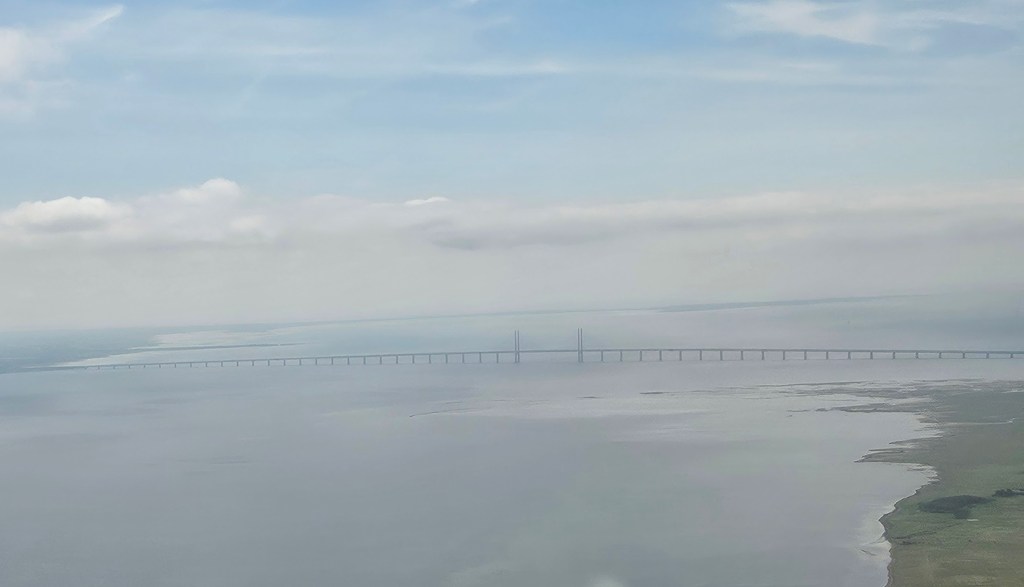
The plane to take me to Copenhagen was starting from Stansted that morning, meaning that our departure was not reliant on the punctuality of an incoming flight. Everyone was boarded well before the scheduled departure time of 09:40 and we left exactly on time. Unusually for a Ryanair flight I had nobody sitting next to me. The route to Copenhagen was largely over the sea, with patchy cloud most of the way, so there was not much to see, although I did get a good view of the Øresund Bridge, linking Sweden with Denmark that I had crossed last year, as the plane came in to land at Copenhagen.
I disembarked from the plane at the scheduled arrival time of 12:25, which I hoped meant that there would be no problems catching the 13:26 train that I had booked, although I recalled that the budget airlines’ non-Schengen arrival gates are a very long way from the main terminal building at Copenhagen. I was right that it was a long walk, but there were no queues at all at passport control for those, like me, who had EU passports. So after a brisk 10 minute walk I was at the airport railway station with a 50 minute wait for my train.
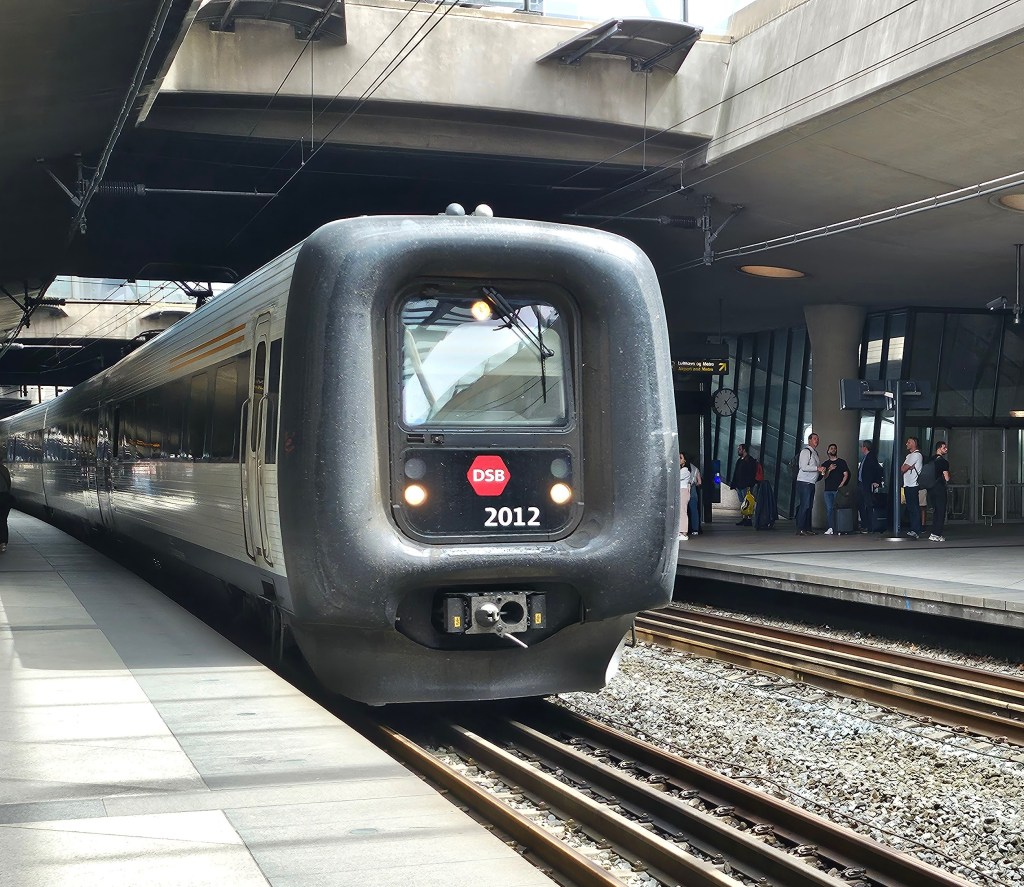
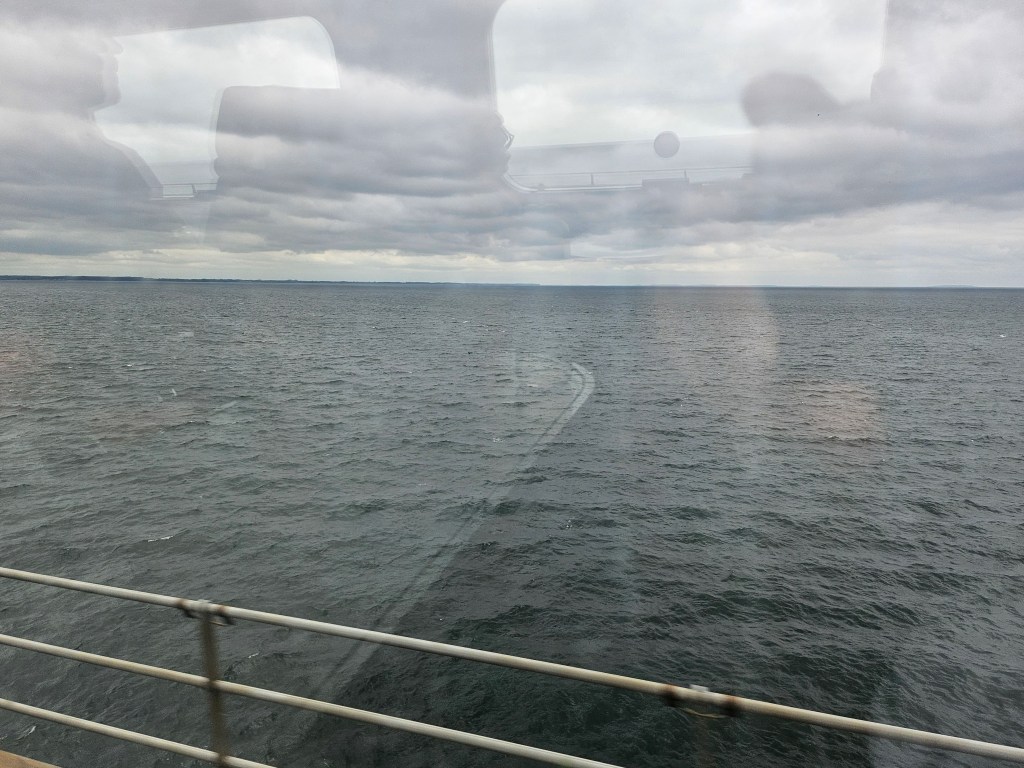
The train which was starting from the airport pulled into the platform on time and was fairly empty when it departed at 13:26. After a few minutes it arrived at Copenhagen’s main station, where it had a ten minute scheduled wait to allow it to reverse direction. During this time the carriage that I was in filled up with passengers and all the seats surrounding me became occupied. The high speed line on Zealand was closed for engineering work at the time of my journey, so the original rail route was used. As Odense is on the island of Funen, the Great Belt waterway had to be traversed when crossing from the island of Zealand. The railway line went in a tunnel, then on a bridge – this link was opened in 1997 replacing the previous ferry service. Road transport uses two bridges (the western one being shared with trains) and the road link opened in 1998.
I arrived in Odense a few minutes late at 15:13. It was a short walk from the station to the hotel I had booked so I went there first and dropped off my bag. Being Monday, many of the Odense attractions were closed, and those that were open on a Monday mostly shut at 4pm. Odense is famous for being the birthplace of Hans Christian Andersen, but I had decided not visit his birthplace as it seemed a bit of a tourist trap. Instead I went for a walk round Odense to get a feel for the geography of the place. Despite being Denmark’s third city, it felt rather provincial and lacking in big city vibes. When my walk took me past Hans Christian Andersen’s House and Museum there were a number of tour parties waiting outside and I felt vindicated in my decision to give it a miss.
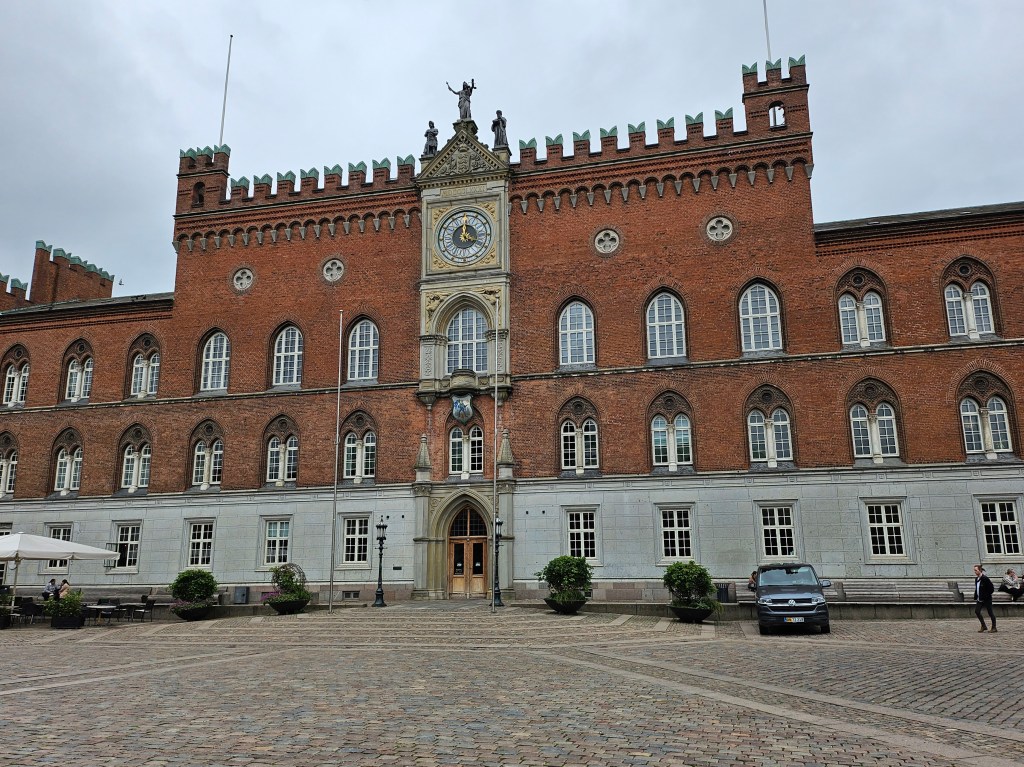
That evening I ate in a busy restaurant in the city centre and had a really flavoursome meal, which given Denmark’s reputation for high prices when eating out, I thought was actually very good value. After dinner, I went for a further walk to the north of the city to the harbour area. Odense is an inland port, being a few miles from the coast. Like many cities’ former docks the area is being redeveloped and it was being used for a variety of water-sports that evening.

Day 2 – Tuesday 4th June 2024 – Odense to Aarhus
In contrast to much of the rest of Europe, Scandinavian hotels invariably include breakfast in the basic room price, so I was having a hotel breakfast every morning on this trip. After breakfast, I continued my exploration of Odense working out a route via St Canute’s Cathedral and the large St Alban’s Catholic Church to arrive at my first visit of the day for when it opened at 10am.


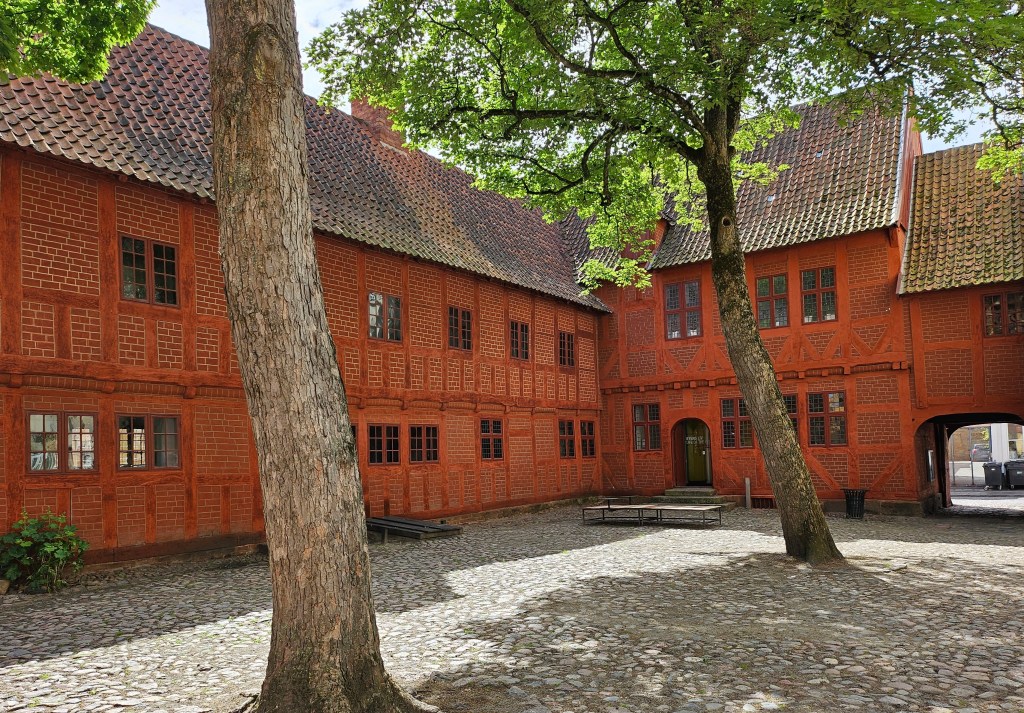
The Møntergården Museum of Odense consists of a large modern building which houses the exhibition about the history of Odense and the island of Funen, but additionally there are many older historic buildings arranged around several courtyards, which also act as exhibition spaces. I spent about 90 minutes exploring the whole of the Møntergården complex, but felt that I could (and perhaps should) have spent longer.
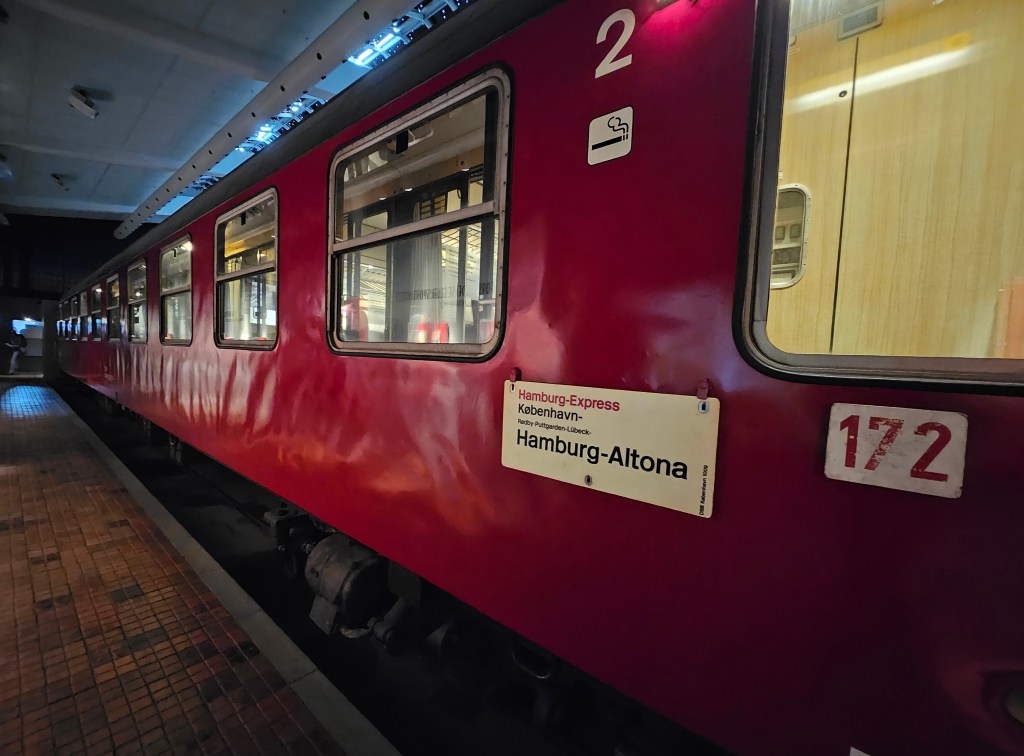
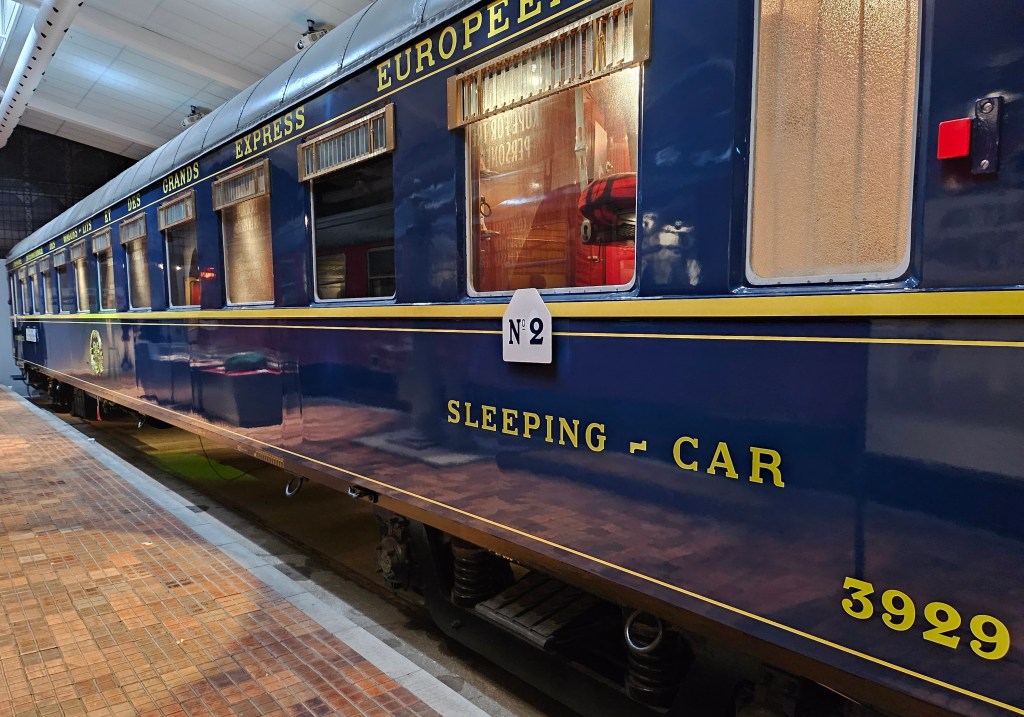
The reason for not dwelling too long in the Møntergården was so that I could also visit Denmark’s National Railway Museum, which is adjacent to Odense station. This comprehensive railway museum has a large number of locomotives and carriages parked on radial lines in a semi-circle in the main exhibition hall, as well as other railway engines outside. On the sides of the main hall and in the upstairs balcony were exhibition spaces devoted to a number of topics. One of the main exhibitions was split between a history of the early days of Interrail and the even earlier heyday of the international Wagons Lits Pullman trains. As I was nearing the end of my viewing of the museum, I heard an announcement that in a few minutes time there would be an opportunity to have a ride on the miniature railway that circled the outside areas of the museum. I decided to revert to my childhood and took a seat on the little train for a five minute ride. I then finished looking round inside before making my way across the road to Odense Station.
I was catching the 1410 departure to Aarhus. The departure screens were warning of a points failure in the Fredericia area which was causing trains to be delayed and some to terminate short of their final destination. Fortunately, my train arrived on time and was not unduly delayed by the problems. However it was a very busy service, with nearly all the seats in my carriage being occupied and I had to evict somebody who was already sitting in my reserved seat. To get off the island of Funen and onto the mainland of Jutland, the train crossed the Little Belt Bridge – this is much shorter than its Great Belt sister and has no tunnel.
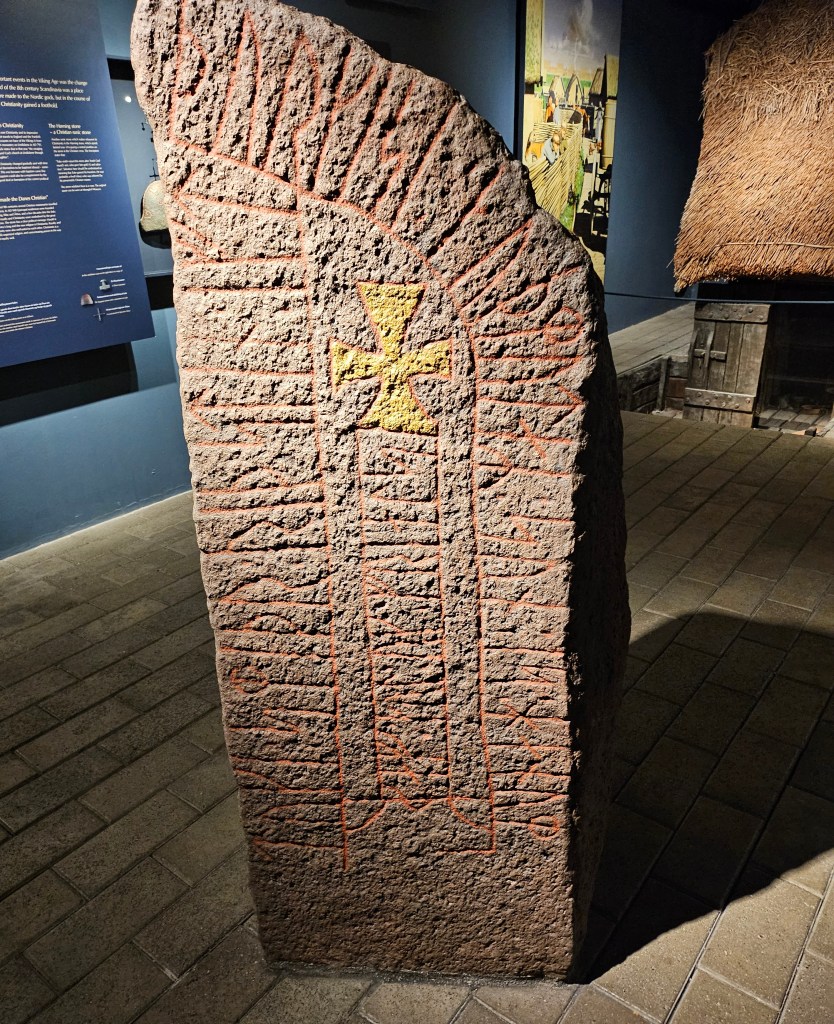
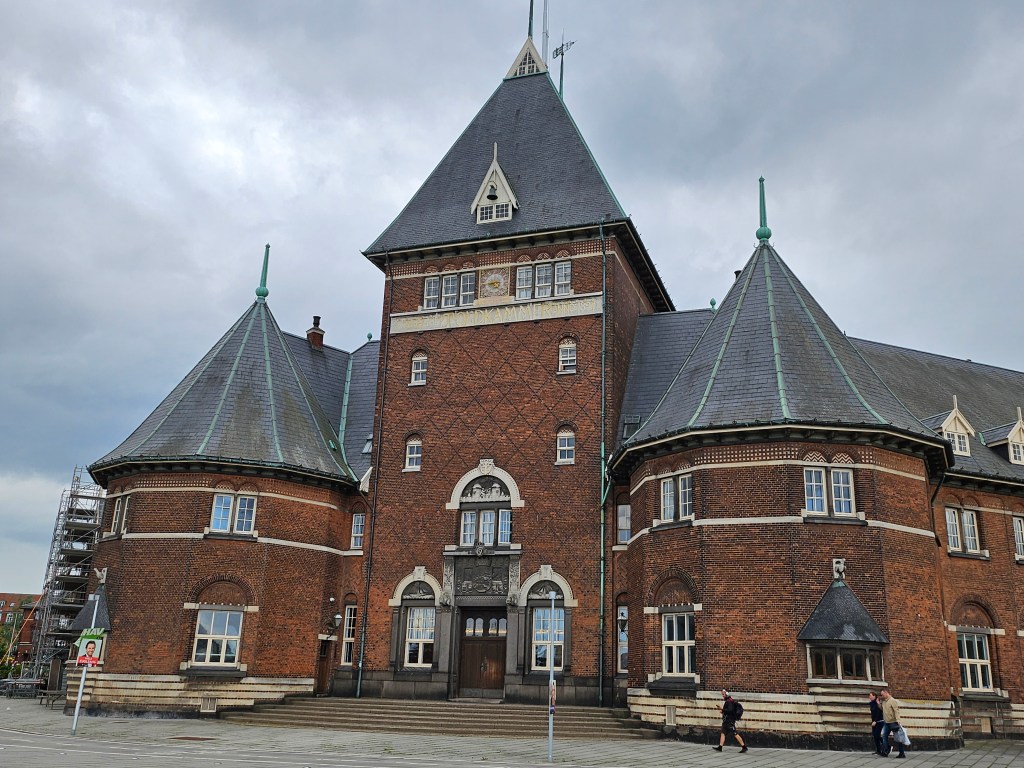
The train took an hour and a half to reach Aarhus, arriving a few minutes late at 15:45. From the station I set off on foot towards the city centre, stopping briefly to drop of my bag at my hotel near Aarhus City Hall. Although built in the 1930s, the City Hall has a modern design which made me think that it looked like a fire station. I continued via the main shopping street to reach the Viking Museum which is located below modern shops on the site of the excavation of a Viking settlement. At the time of my visit, the museum appeared to be unstaffed – you paid on entry at a ticket machine. The museum was not large, but contained various Viking artefacts that had been found on the site and elsewhere, including some rune stones.
Walking through Aarhus and Odense the streets, houses and even the railway station were bedecked with posters of the different candidates in the forthcoming European Parliament elections. There were also canvassers trying to solicit your vote. Near the Viking museum I was offered a packet of Haribos if were to take a leaflet from the Radikal party. (Radikal is actually the main centrist party in Denmark, equivalent to the UK’s LibDems. Post-war Danish politics has been dominated by the centre-left Social Democrats. The main opposition has come from the centre-right Venstre party. Confuslingly, Venstre in Danish means left.)
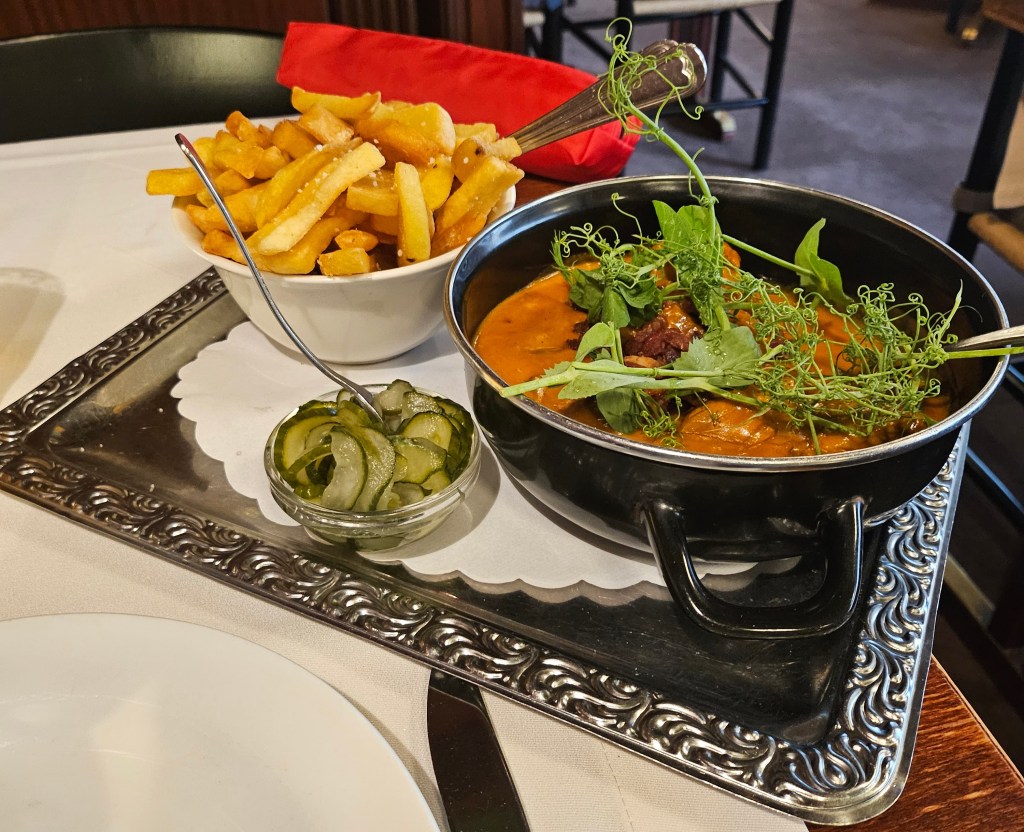
That evening I went for dinner in a restaurant the other side of the City Hall from my hotel. I had asparagus soup to start with (which also contained meatballs), followed by a casserole of beef, sausage and bacon served with cucumber salad and chips. The portions were enormous and I really struggled to finish.

Once I returned to my hotel I started to watch Danish TV’s Leaders’ Debate for the Euro elections. Bizarrely, it was being held in the open air in a park, where behind the stage a railway line ran, so that every now and then you would get shots of trains passing behind the politicians as they answered the questions. Eleven parties were represented in the debate, which meant the time allocated to any one individual was rather limited. It was unseasonably cold that evening, so the audience was all wrapped up in coats and scarves, whereas only some of the politicians were wearing coats or thick jumpers. (I wondered if the others had donned thermal underwear underneath their suits or dresses.)
Day 3 – Wednesday 5th June 2024 – Aarhus
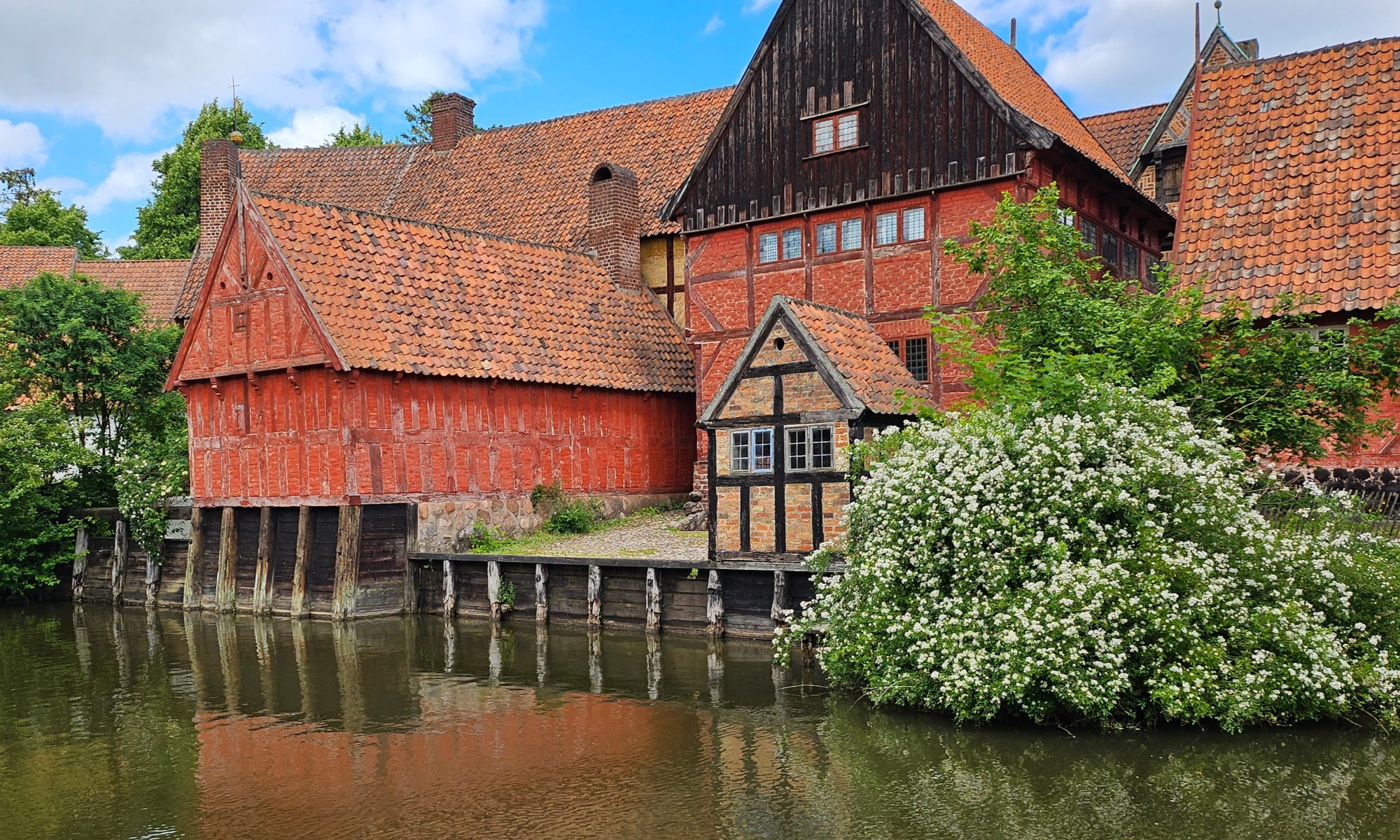
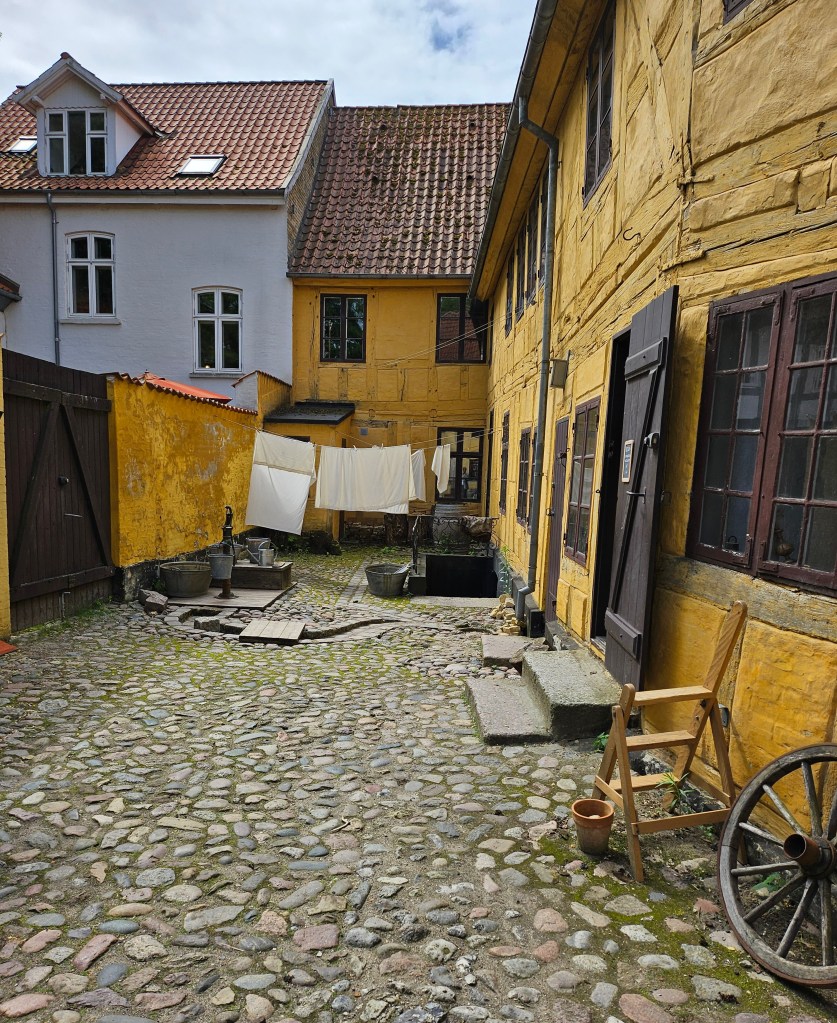
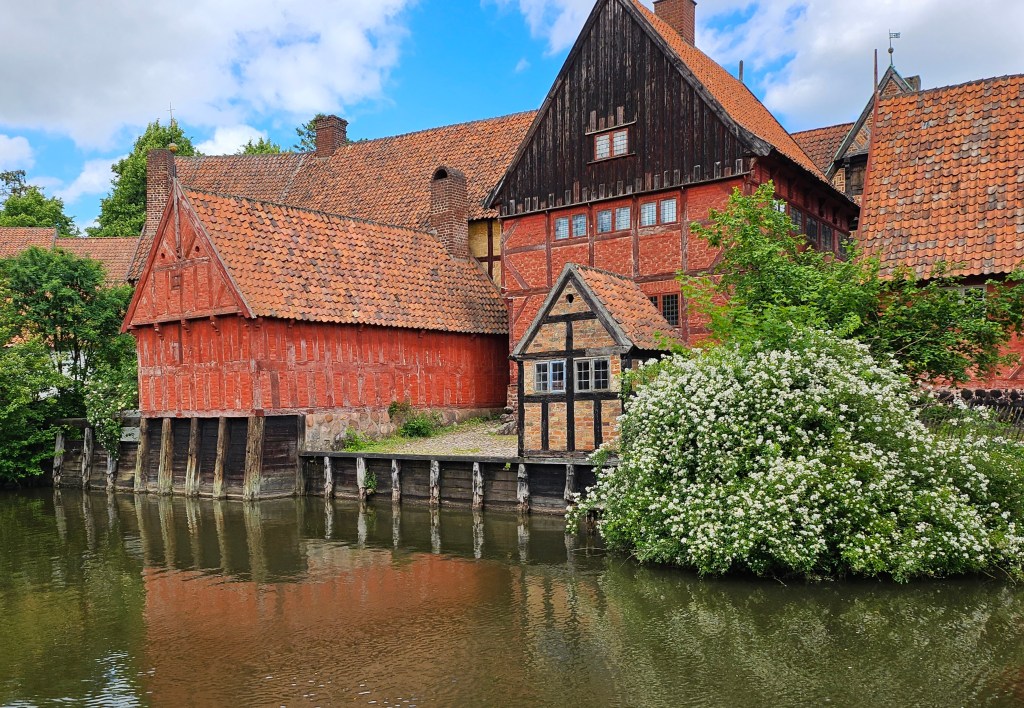
I was to spend most of this day in Den Gamle By, Aarhus’s open-air old town museum. I walked there to arrive when it opened at 10am. Den Gamle By, located next to the Botanical Gardens and first opened in 1914, consists of a large number of buildings from different periods which you can go inside – these range from private apartments to a variety of shops. The buildings are clustered into four main historical periods for their interior decoration: 1864, 1927, 1974 and 2014. I found it slightly disconcerting that 2014 is now considered history – in the family home you could wander around, it was explained what a CD was.
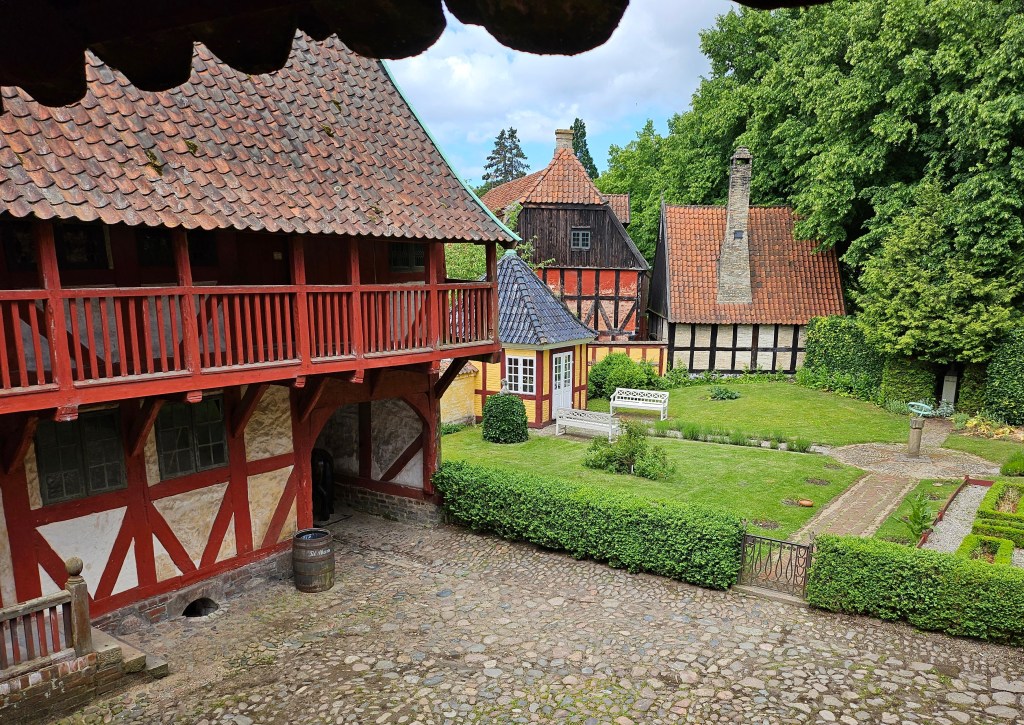
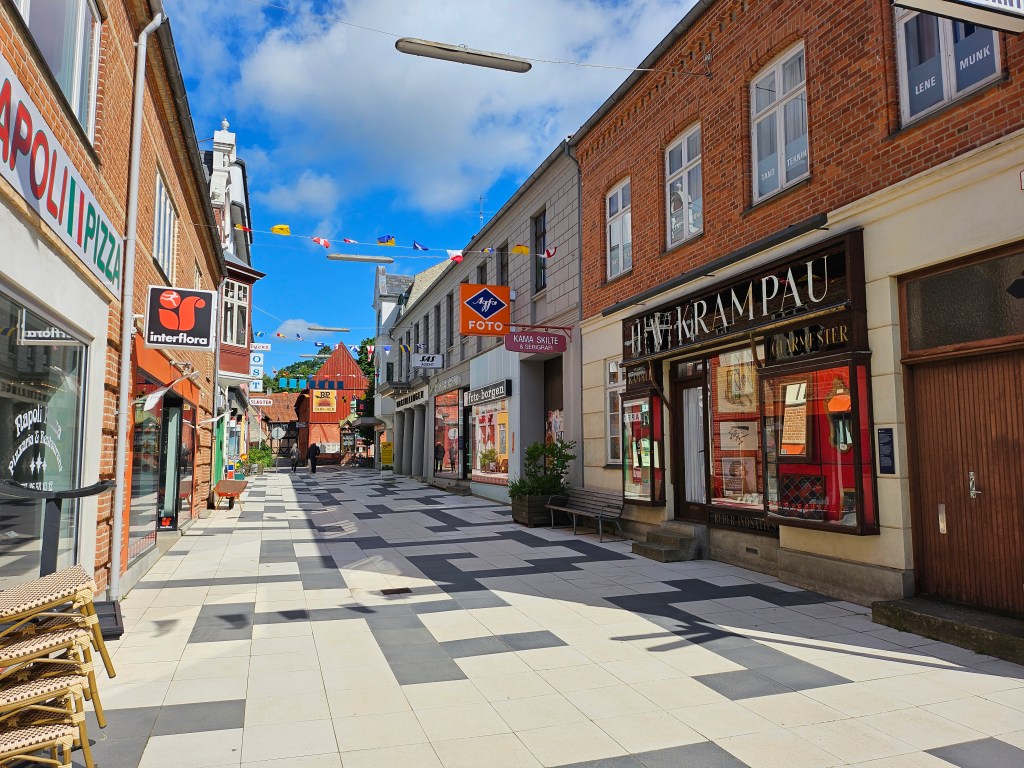
Within the Den Gamle By complex, located underground beneath a row of 1974 shops, is a museum telling the history of Aarhus. Aarhus developed rapidly in the industrial 19th century, utilising its position to become a major port linked to the railway network, so that by the start of the 20th century it had become Denmark’s second city. Around this time the citizen’s of Aarhus helped fund the building of royal palace in the suburbs, which is still used as a summer residence by the royal family every year.
I spent nearly five hours wandering the whole of Den Gamle By, making sure that I did not miss anything. There were occasional rain showers, but when they came I took shelter by diving into a building and invariably they had stopped by the time I emerged.
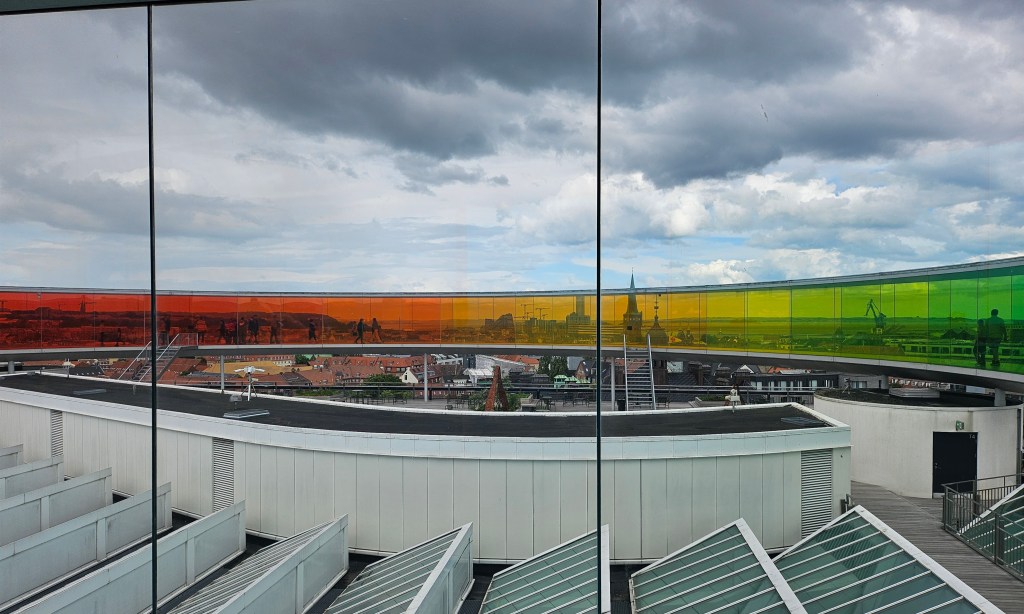
I finally left Den Gamle By at about 3pm and walked the short distance to ARoS, the main art gallery in Aarhus. Given this cost about the same as Den Gamle By to enter I found it a little disappointing. Despite supposedly having an extensive collection of Danish and Scandinavian art, the majority of items on display at the time of my visit were contemporary exhibits, most of which I found rather pretentious. Probably the best thing about ARoS was the rainbow panorama walkway on its roof, which you could you walk round giving 360° views, albeit tinted in the colour of whatever part of the rainbow you were at.
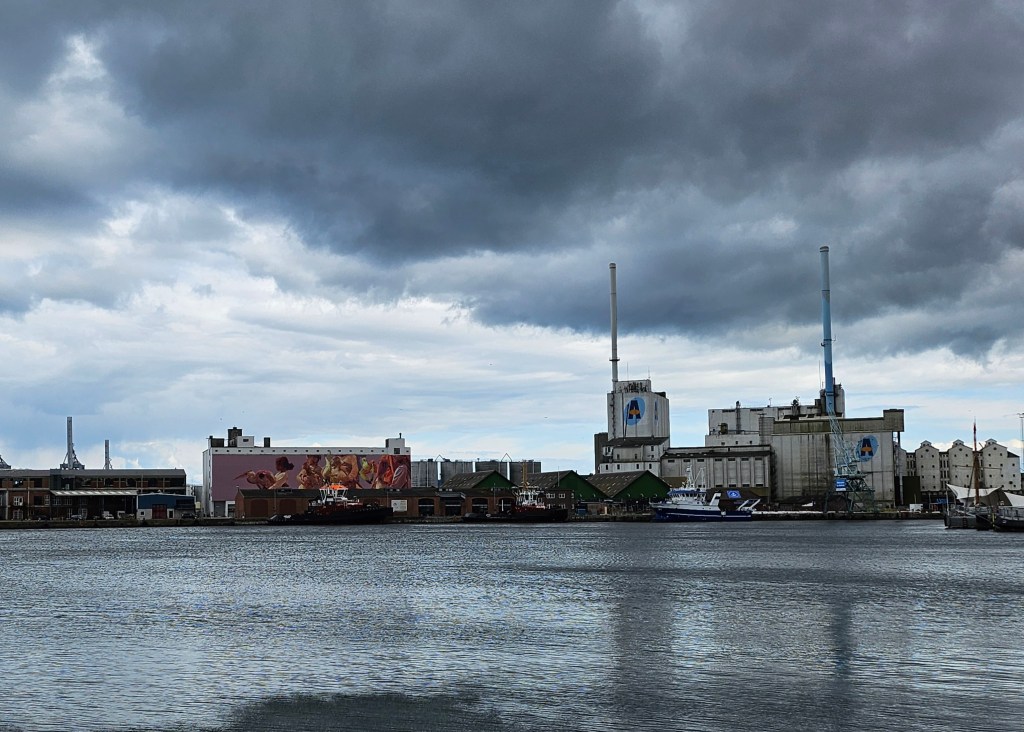
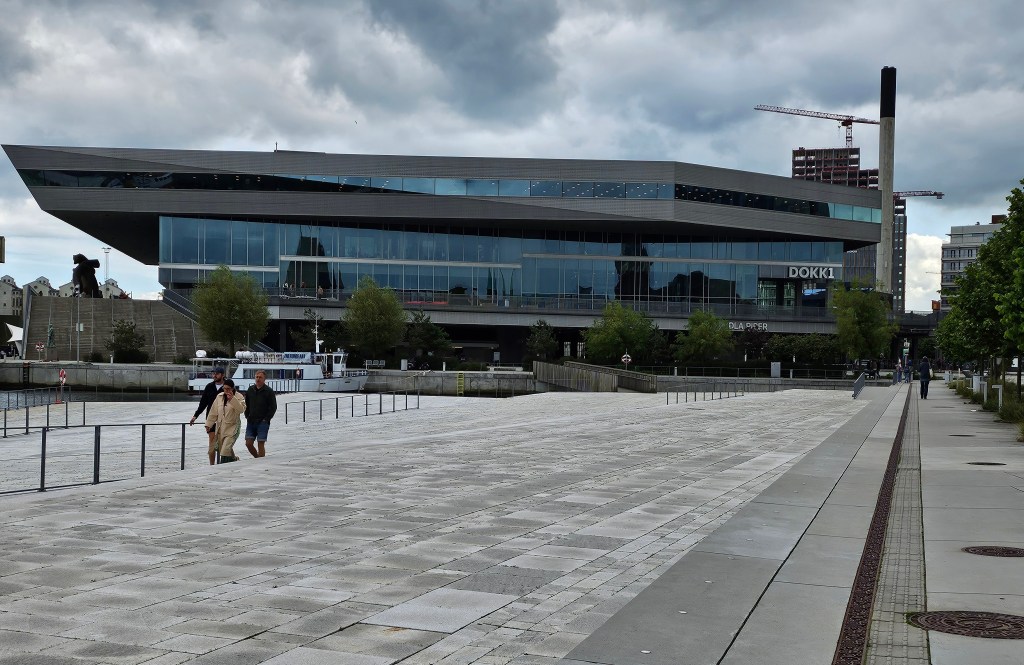
That day was Constitution Day in Denmark when, although not an official public holiday, schools are closed and most people are given the day off work. This may explain the large number of families with children in ARoS that afternoon. When I left ARoS and walked through the same main shopping street that I had been down the previous day, it was now deserted, with all the shops and most of the cafes shut. Given Aarhus is a port city, I felt that I should not leave without going to have a look at the harbour area. One of the large modern buildings on the harbour-front is Aarhus’s main public library. As I was finishing my exploration of the area, the rain returned, but fortunately I managed to get back to my hotel before it became too hard.
I slightly delayed venturing out to find dinner until the rain had eased. When I did, I went to an Indian restaurant for a curry. Although perfectly adequate, the quality didn’t match up to a couple of curries I had had when eating out recently in different parts of the UK.
Day 4 – Thursday 6th June 2024 – Aarhus to Aalborg
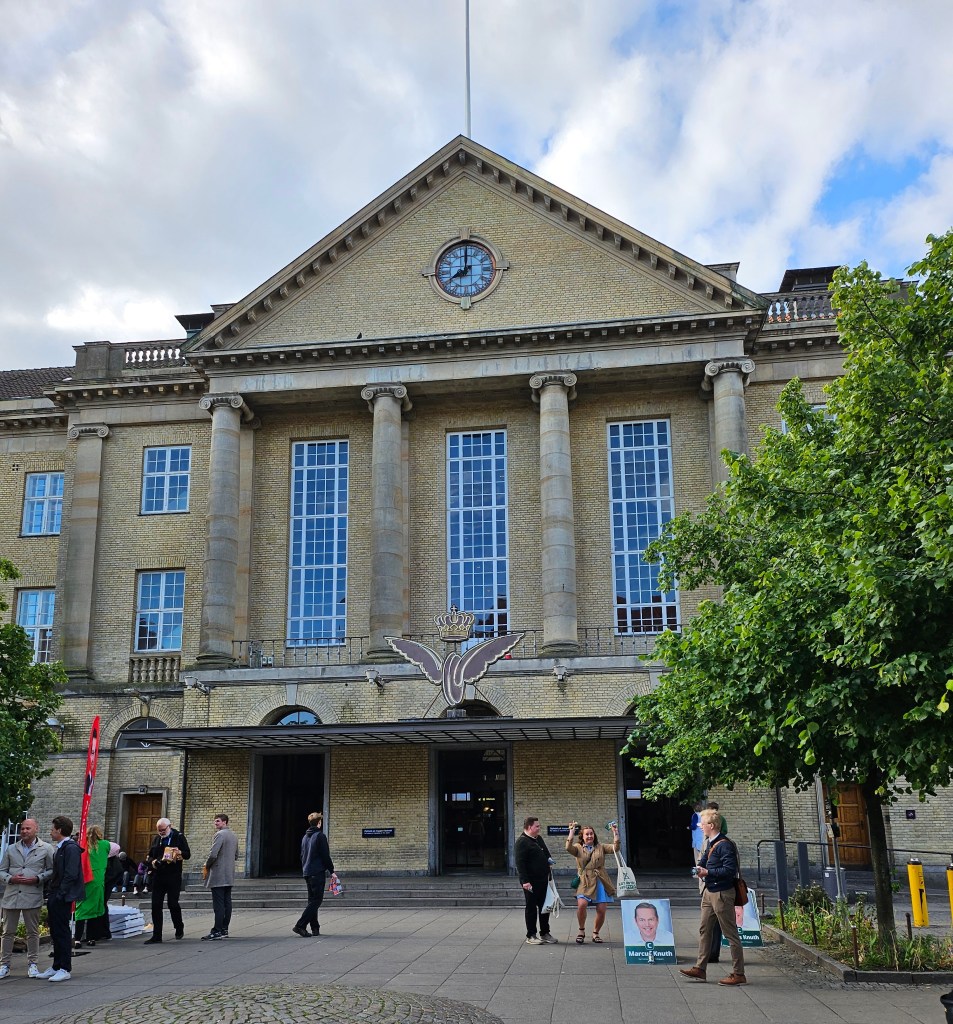
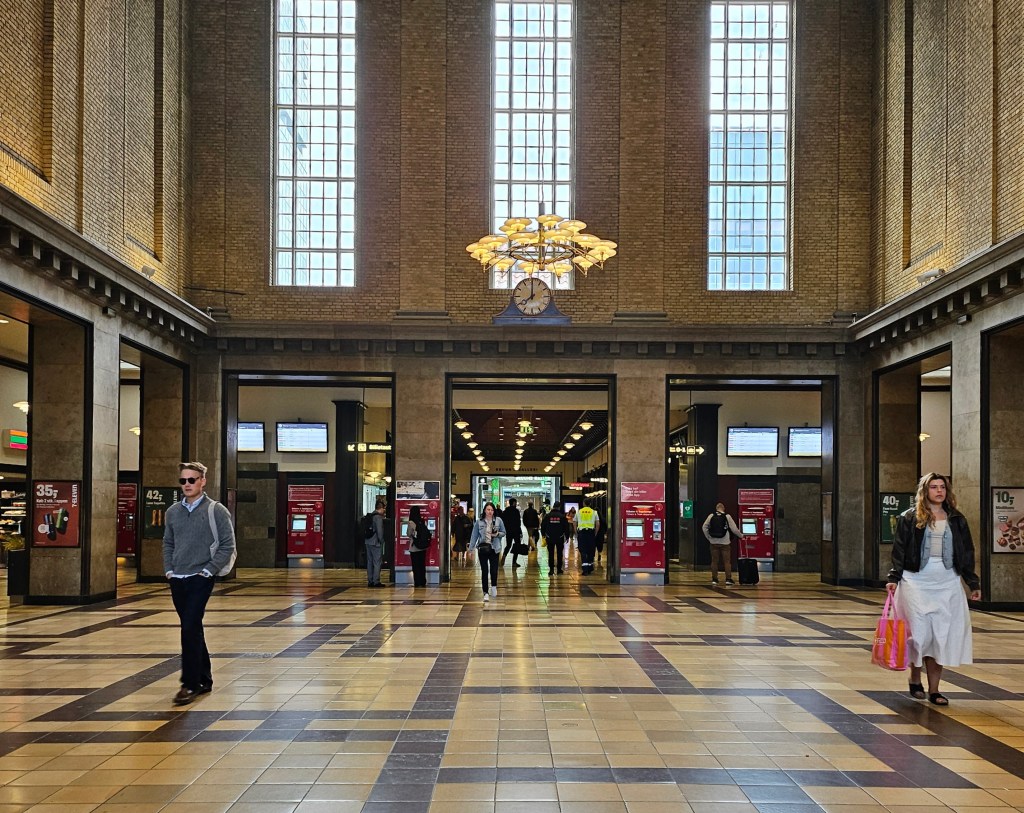
A short walk from my hotel, dodging the canvassers for the Euro elections, brought me to the rather grand Aarhus station in good time for my 08:20 to Aalborg. The train pulled into the platform a few minutes before it was due to depart and 90 minutes later it arrived in Aalborg.
Rather than initially exploring Aalborg, I crossed the road from the station to find the bus stop for the the number 13 bus, which arrived after a short wait. This bus took me off the mainland of Jutland and onto North Jutland island, where I alighted at Lindholm Høje. A walk down a lane brought me to a rickety gate to a field, which I went through and up a short slope to encounter the extensive Viking burial site. My entire view was filled with mounds and stones, enhanced by there being initially no other visitors. On the edge of the site is a dense wood, from where the loud cawing of the crows added to the atmosphere of the place. Downhill in the other direction from which I had come was a small Viking museum. This was split into two parts: the first covered the Lindholm Høje site with examples of artefacts found from excavations, as well as describing the burial and cremation rituals used by the Vikings; the second was dedicated to pre-history in the wider Limfjord area.
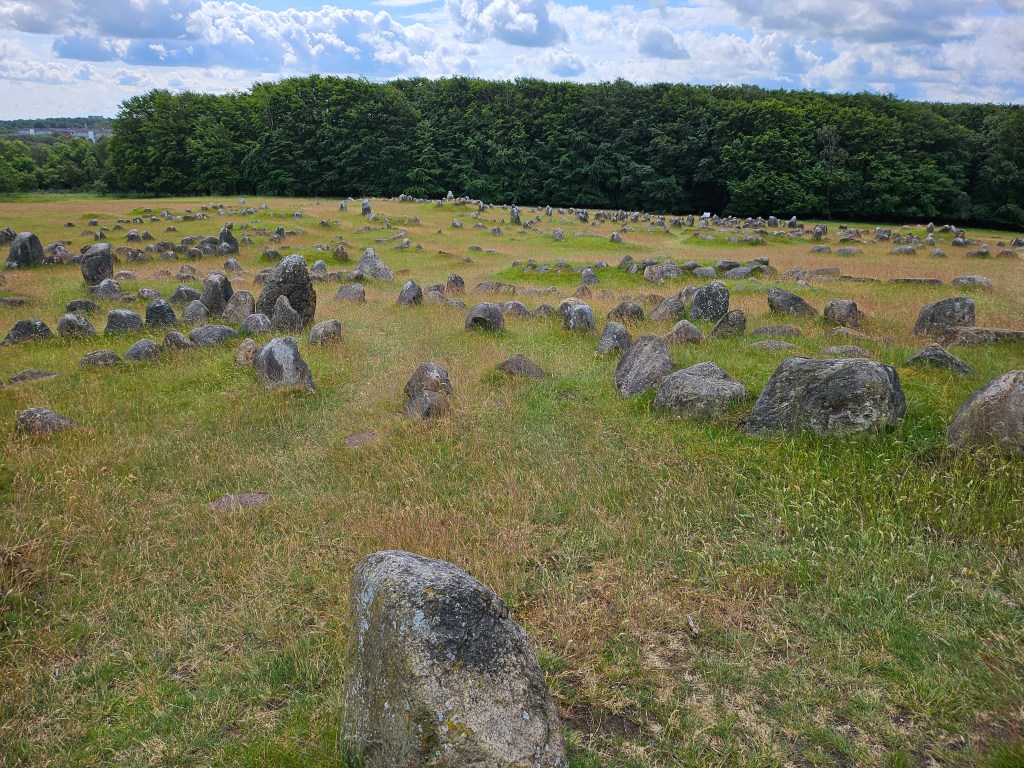
When I had finished in the museum, I walked back through the burial site again to find the bus stop for the number 13 bus in the reverse direction to take me back to Aalborg. As rain was promised that day, I thought I would get my bearings by initially walking round the centre while it was still dry. When the rain did come, I baled out into the nearest place to go inside. The Utzon Centre is an exhibition space designed by, and dedicated to the work of, Jørn Utzon, who grew up in Aalborg. As there was a new exhibition only due to be opened that evening, entry was half price at the time I arrived. Jørn Utzon is most famous as the almost completely unknown architect who in 1957 won the competition to design the Sydney Opera House. His uncompromising attitude nearly bankrupted the Sydney city authorities and caused him to be sacked as architect. I would recommend Tim Harford’s Cautionary Tale on the whole sorry saga. The main exhibition open at the time of my visit to the Utzon centre was about the Sydney Opera house.
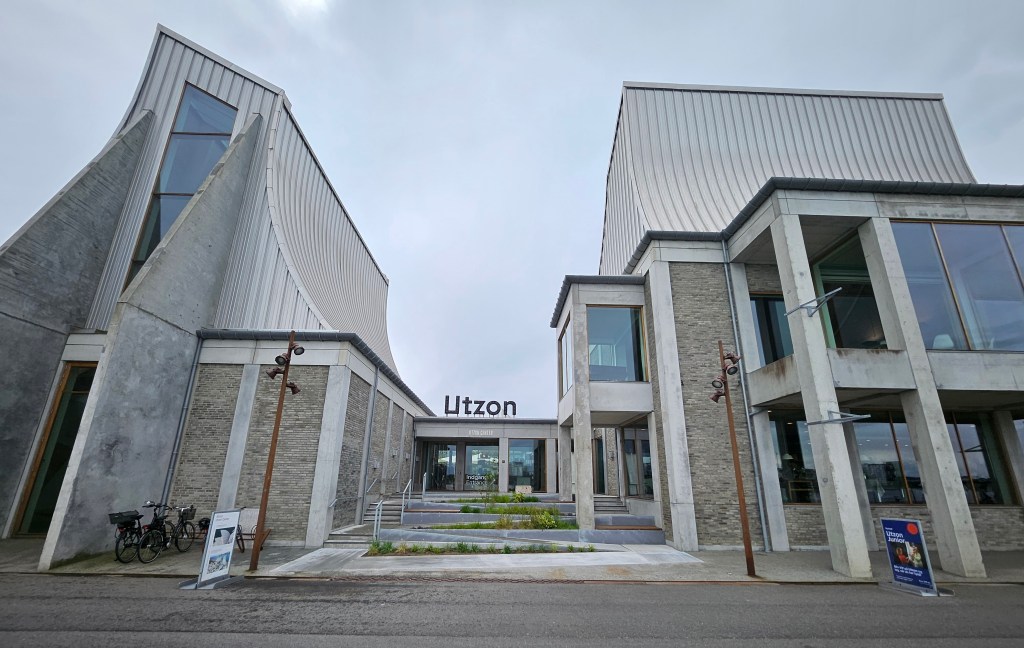
Fortunately, it had stopped raining by the time that I left the Utzon Centre and I continued my exploration of the city centre, making my way to the Aalborg Historical Museum. Aalborg is now the fourth largest city in Denmark, but in the second half of the 20th century the city and the surrounding North Jutland Region were in decline. A major effort was made, which would in the UK be called ‘levelling up’, to improve the area’s prospects. Aalborg University was founded in 1974 among other initiatives.
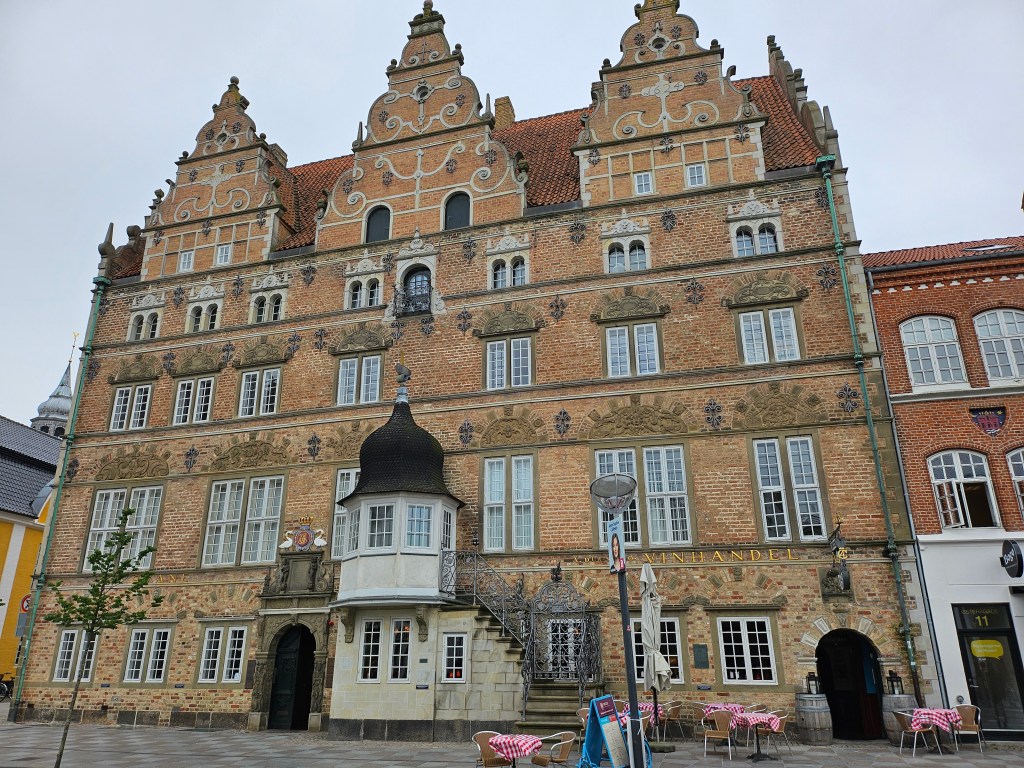
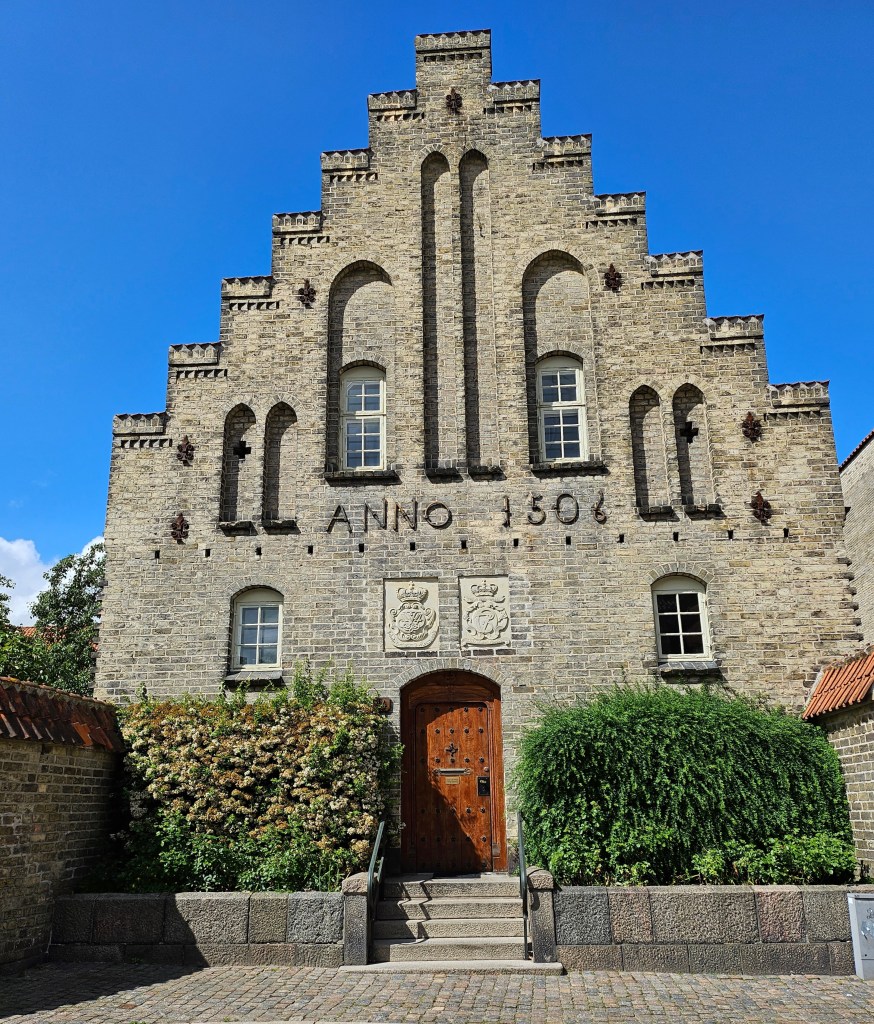

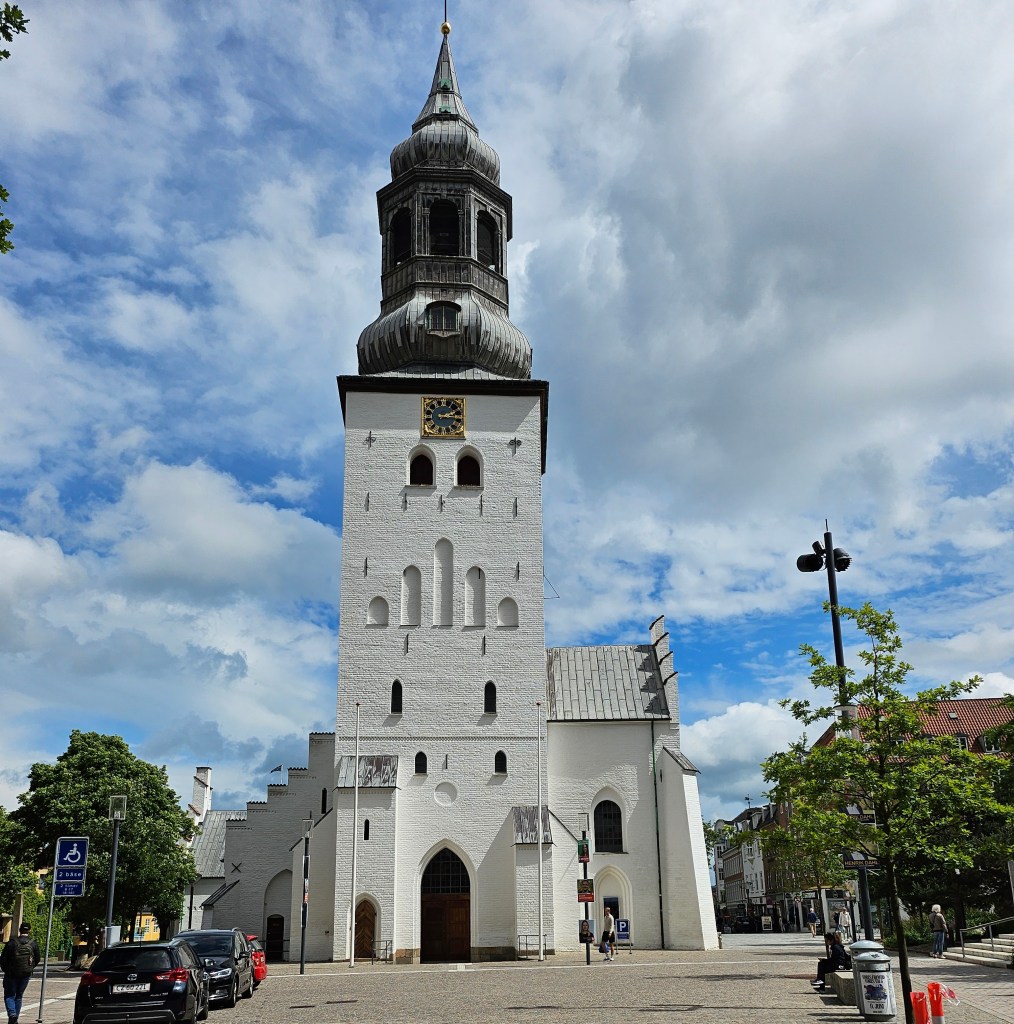
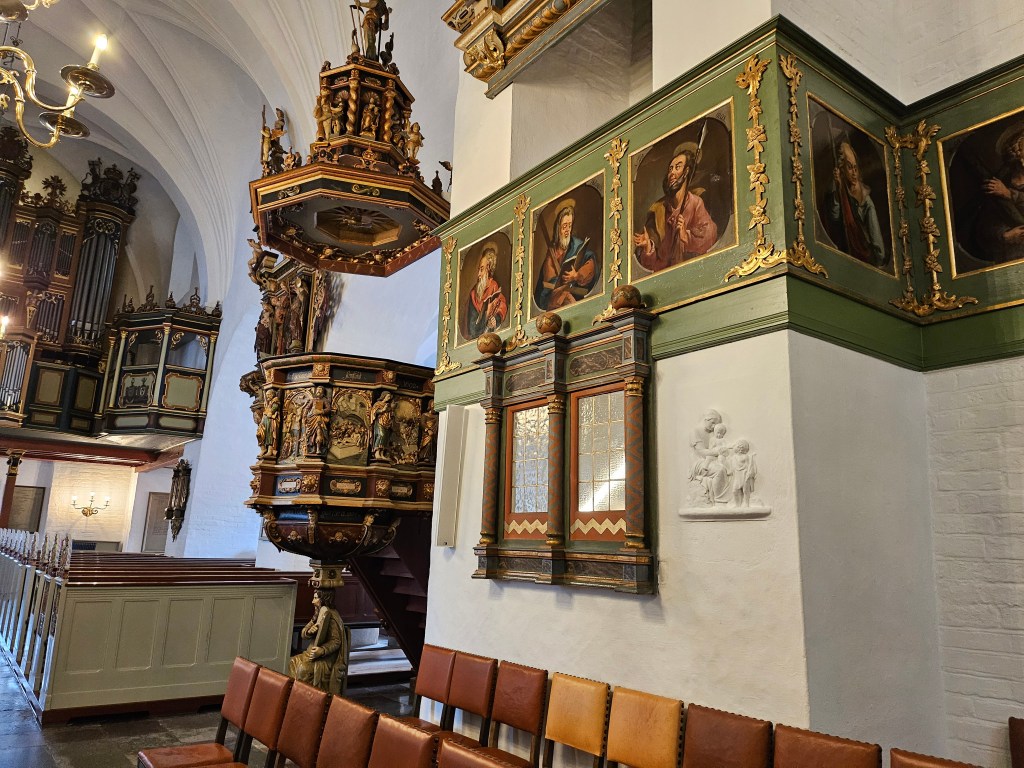
I also had a look in the Budolfi Kirke (St Botolph’s church), the Lutheran cathedral for Aalborg and then went on to the Gråbrødrekloster Museum. Like in Aarhus, this museum is located beneath the main shopping street and was again self-service. You had to use your payment card to summon a lift to take you down to the excavations below street level. Unlike Aarhus, this was not Viking, but rather the remains of a mediaeval Franciscan monastery.
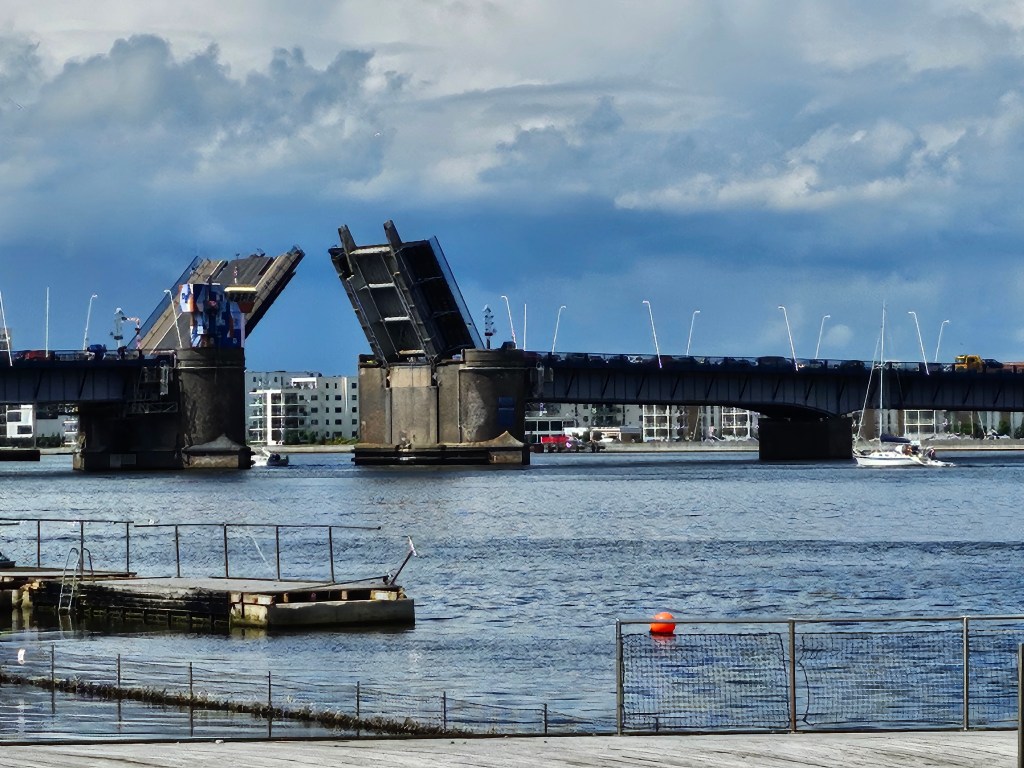
While I was walking along the Limfjord (the stretch of water that separates North Jutland island from the mainland), the road bridge I had crossed by bus earlier in in the day was raised to allow a couple of yachts to sail through.
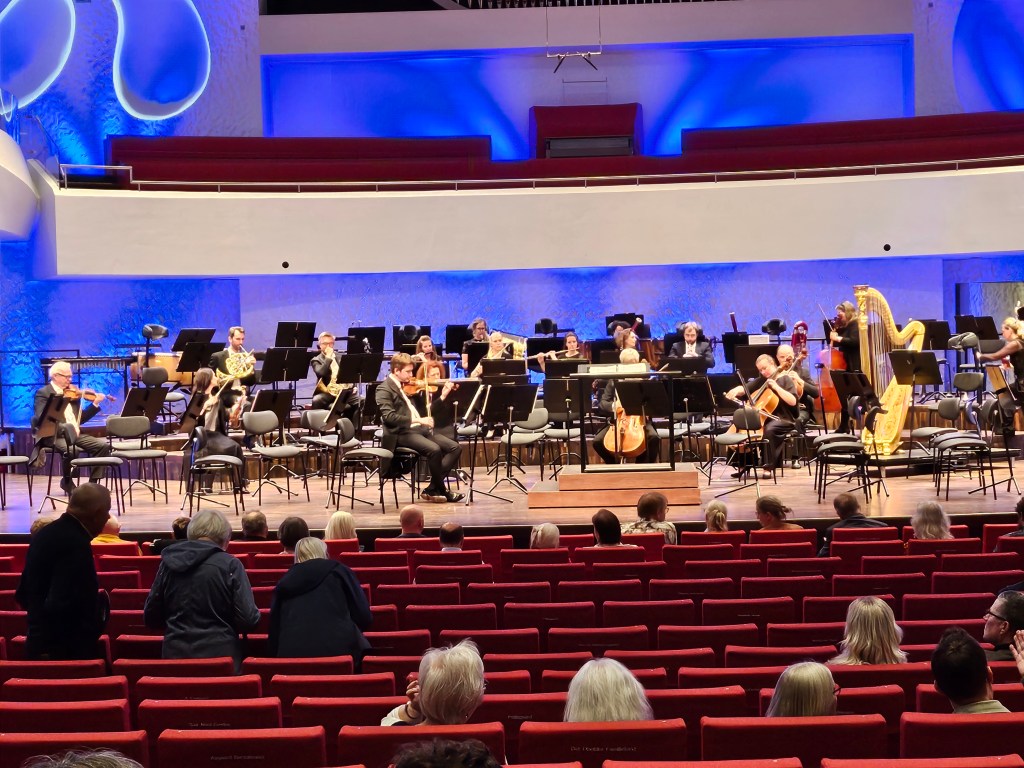
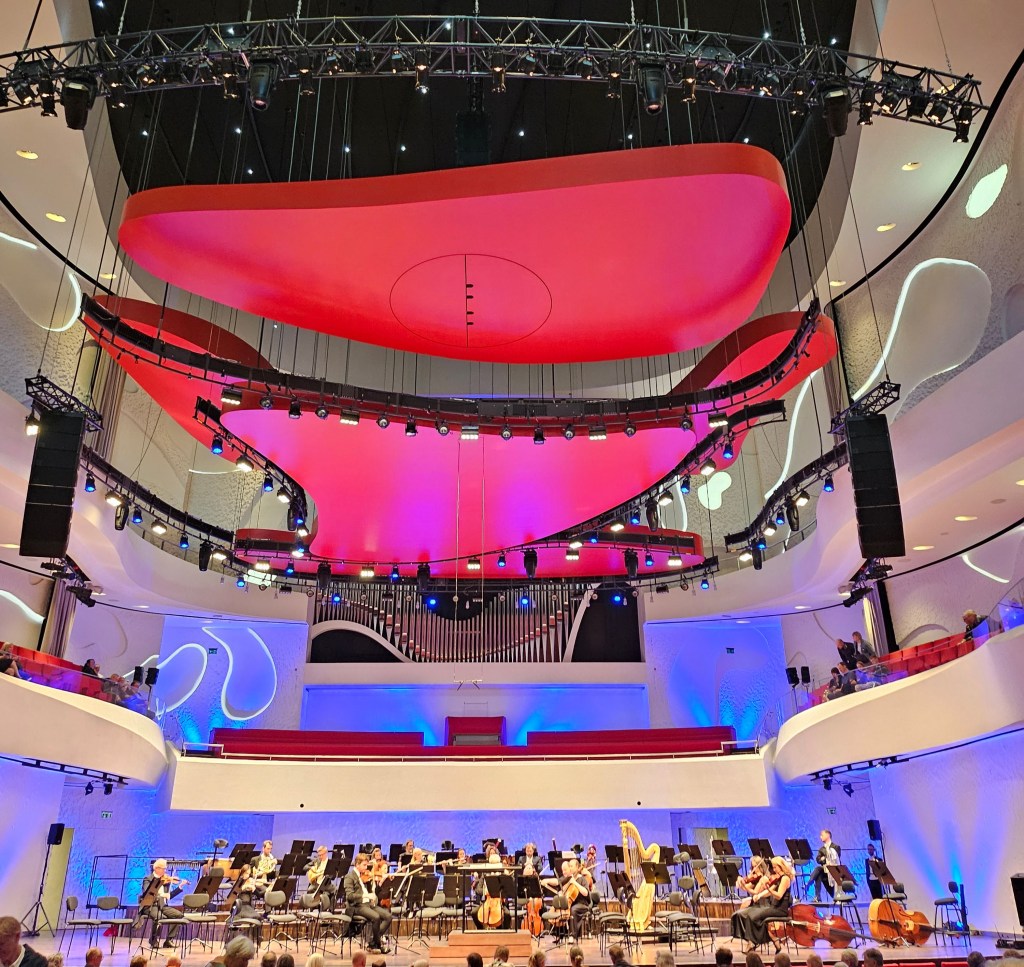
As I had arranged a visit to Aalborg Concert Hall that evening, I had an early dinner of Danish potatoes followed by a burger. The ticket I had was free (but had to booked in advance) for Aalborg Symphony Orchestra’s introduction to their forthcoming season. It was only after I had booked my ticket that I realised that as well as playing extracts from the works that they will be performing over the next year, there would be talks and interviews with the musicians. These being wholly in Danish rather passed me by. Nonetheless, the whole experience was enjoyable, not least to be able to go inside the modern Mussikens Hus concert hall, where I had a good seat in the middle of the main auditorium.
Day 5 – Friday 7th June 2024 – Aalborg to Kristiansand (via Hirtshals)
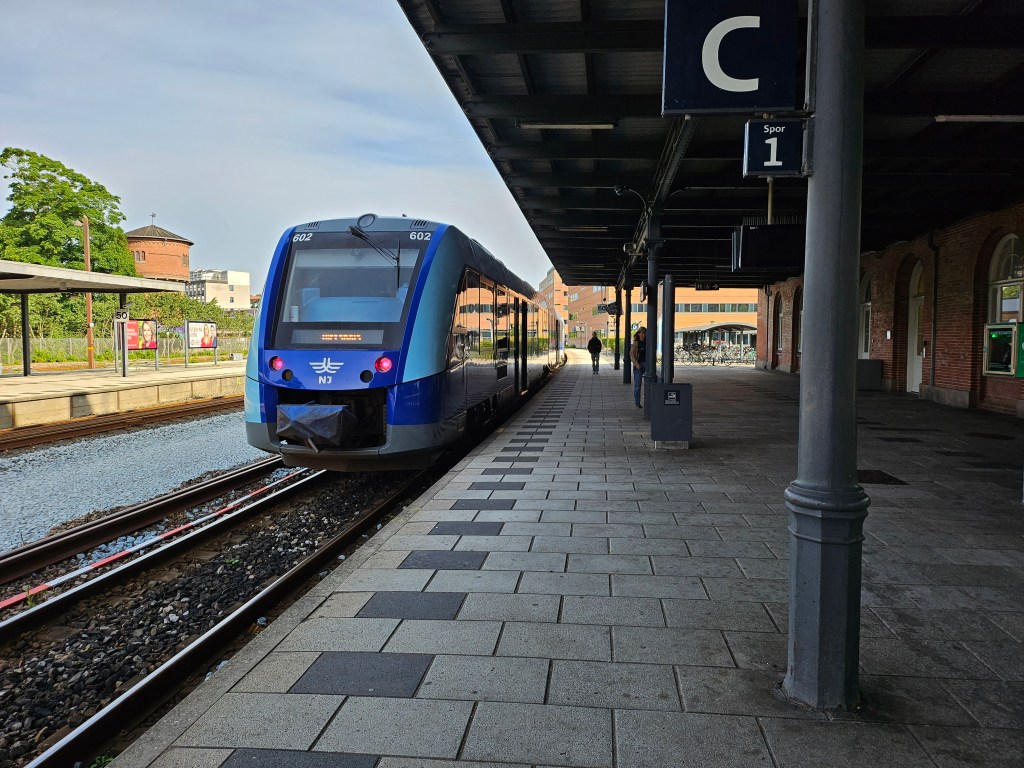
For the first time since I arrived in Denmark I was catching a train that was not being operated by DSB (the Danish National Railway), but instead one operated by Nordjyske Jernbaner (North Jutland Railways). After a little bit of confusion, caused by incorrect information on the departure screens, about from which end of the platform my train was departing and which half of the train was going through to Hirtshals, I boarded the 08:42 departure. This was much emptier than the other Danish trains I had travelled on. Shortly after leaving, I once again crossed onto North Jutland island and soon the landscape became more barren and featureless. There was a short wait at Hjørring station while the train was divided and my portion reversed direction for the final leg to Hirtshals, where it arrived on time at 09:51.
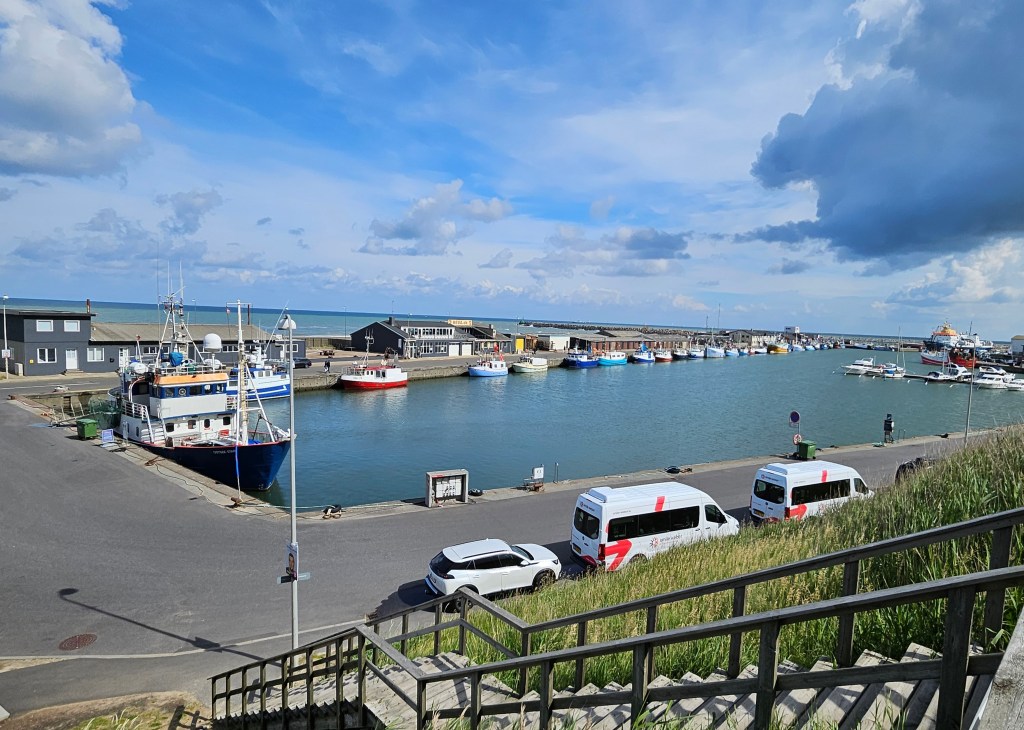
I set off to explore Hirtshals, but soon discovered that there was not much to it apart from its ferry terminal. There is a lighthouse a little way along the coast, which I believed you could go in, but I calculated that I would not really have time to go there and be back in time to check in for my ferry. Instead I contented myself with a walk through the sand dunes which separated Hirtshals from the sea of the Skagerrak. I returned to the station at which I had arrived, from where there is an elevated covered walkway which crosses a couple of roads directly into the ferry terminal.
At the terminal I was issued with my boarding card, and then found a spot where I could watch the incoming ferry arrive. I noticed that most of the incoming foot passengers were dressed as either bananas or flamingos. Fortunately, my fellow passengers waiting with me to cross to Norway were more soberly attired.
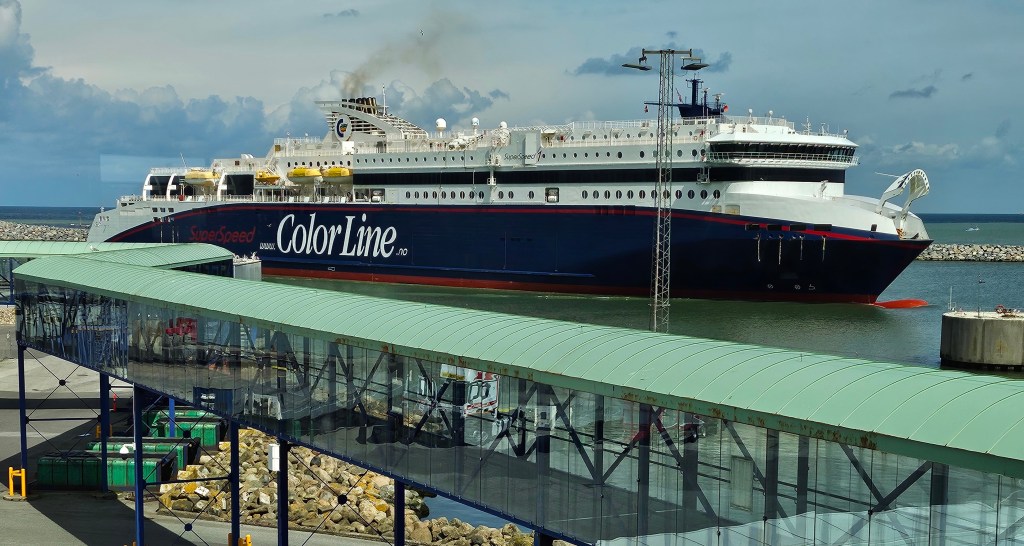
Boarding was very quick and we were soon ready to depart. I went onto the outside deck to see us leave at 12:15, but it started to rain and, once we left the shelter of the harbour, it became very windy and rather unpleasant to be there. Unlike my trip across the Gulf of Bothnia last September, no cabin was included in the similar price for the journey. Fortunately, I managed to find a seat in a quiet area for the duration of the crossing, only occasionally venturing outside when the rain eased. Also unlike the Gulf of Bothnia crossing, no free WiFi was provided on board. I decided not to buy an expensive WiFi package for the three hours needed, and also I had to turn off my mobile phone reception, as the ship did transmit a satellite mobile signal which would be even more extortionate if you connected.
Despite the strong wind, the crossing was smooth and about 20 minutes before we arrived in Kristiansand, when the Norwegian coast was near, I turned my phone back on hoping to connect the the Norwegian mobile network. However, I found my phone wanted to connect to the stronger maritime satellite signal, but after a quick dive into the phone’s settings, I managed to work out how to manually choose which network to connect to, so that I could send pictures of my arrival into Norway.
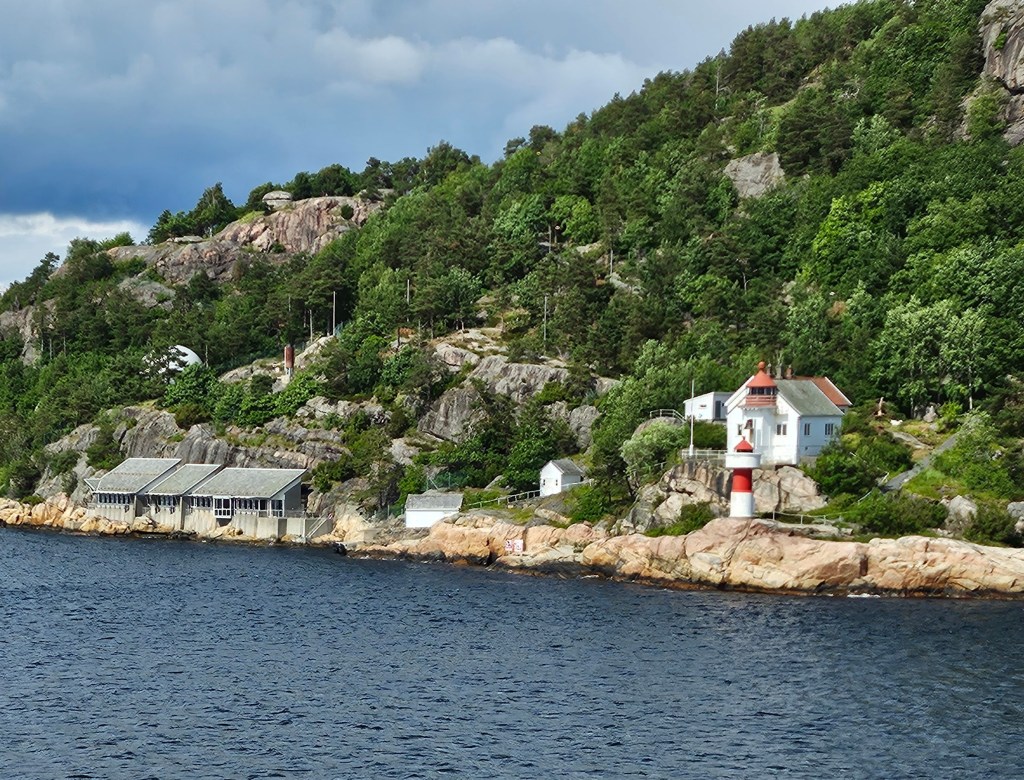
I had enjoyed my time in Denmark. Although not the cheapest of countries to visit, I didn’t think the places I visited this time were as expensive as I recalled Copenhagen being when I went there in 2018.
[To be continued – coming next: Norway.]
 Europe Explored