
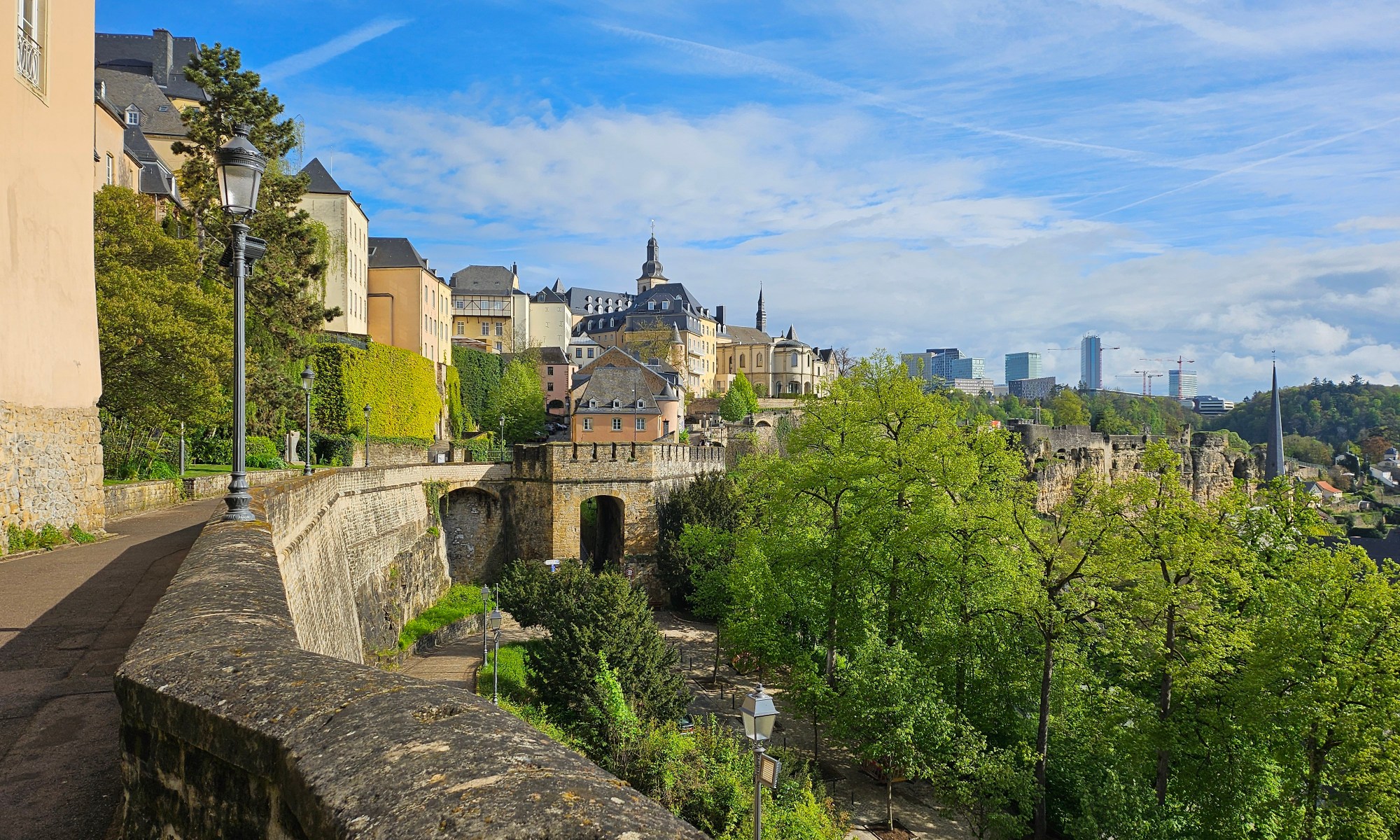
“Mir wëlle bleiwe wat mir sinn” (We want to stay what we are) – Luxembourg motto
Luxembourg is a country that I had never visited before, unless you count briefly passing through it on an overnight coach trip to Italy with my parents in 1970. Having got a taste for free travel with my Freedom Pass, an added benefit of visiting Luxembourg is that all public transport within the country is free (excluding first class rail travel).
Day 1 – Wednesday 24th April 2024 – London to Liège
I was catching the same Eurostar as I had when I went to France the previous November, the 09:01 departure from St Pancras, but on this occasion I was travelling all the way to Brussels on my ticket. In fact, I had an any Belgian stations return ticket, which normally provides good value for onward travel in Belgium, but I had overlooked that now I am over 65 the prices of off-peak Belgian trains are heavily discounted, so the saving, if any, was marginal.
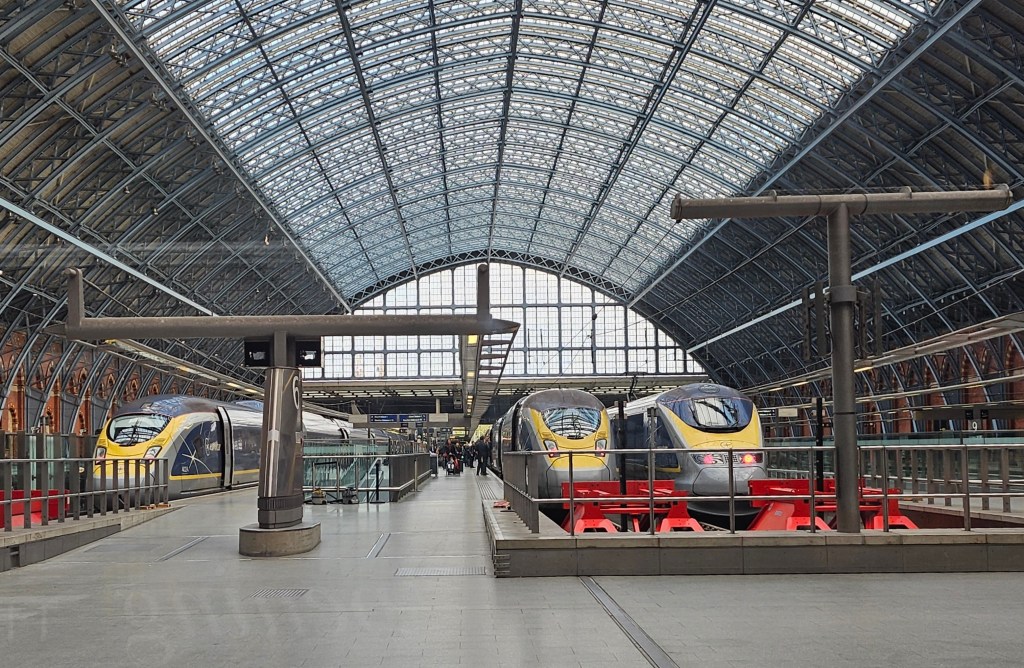
All the trains from St Pancras were running on time that morning, so the waiting area was not as unpleasantly full as it can get on some occasions. They let boarding commence 20 minutes before departure and I was first to occupy my seat in what would soon become a completely full carriage. A number of people got off at Lille Europe, so the person who had been sitting next to me moved to a newly vacated seat to give us both more room for the final leg of the journey.
Listening to the conversation around me, a large proportion of those in my carriage were elderly antipodeans who were embarking on a package tour round Europe. Their tour rep worked his way through the carriage, wearing an ill fitting suit and carrying a clipboard, asking them if they wanted beef stew or fish for dinner that night. He also advised them to visit the ‘bathroom’ on the train as there would not be an opportunity once they got on their coach. While listening to all this, I researched what package tour they were on. It was a 20 day ‘highlights of Europe’ tour, mainly by coach, finishing in Paris. The quoted price, which included breakfast each day, but only seven other lunches or dinners, was from £6,500 plus £3,500 single room supplement. They were not even visiting Brussels, but were going straight by coach to Bruges. As I value my independence, I would not enjoy a trip of this sort, and the daily rate they were paying for the experience was many times what I budget for my European explorations. Maybe I am being cynical, but given the apparent state of health of some of the participants, I would be surprised if they all made it to Paris.
As the connecting passage at Brussels Midi is not currently open, I had changed my seat reservation for one as near the front of the train as possible, so to ensure that I would not be delayed making my connection. I was not best pleased, when I made my way to the door early to get off as soon as we arrived in Brussels, to find that the exit was completely blocked by an enormous trunk belonging to the tour party’s rep.
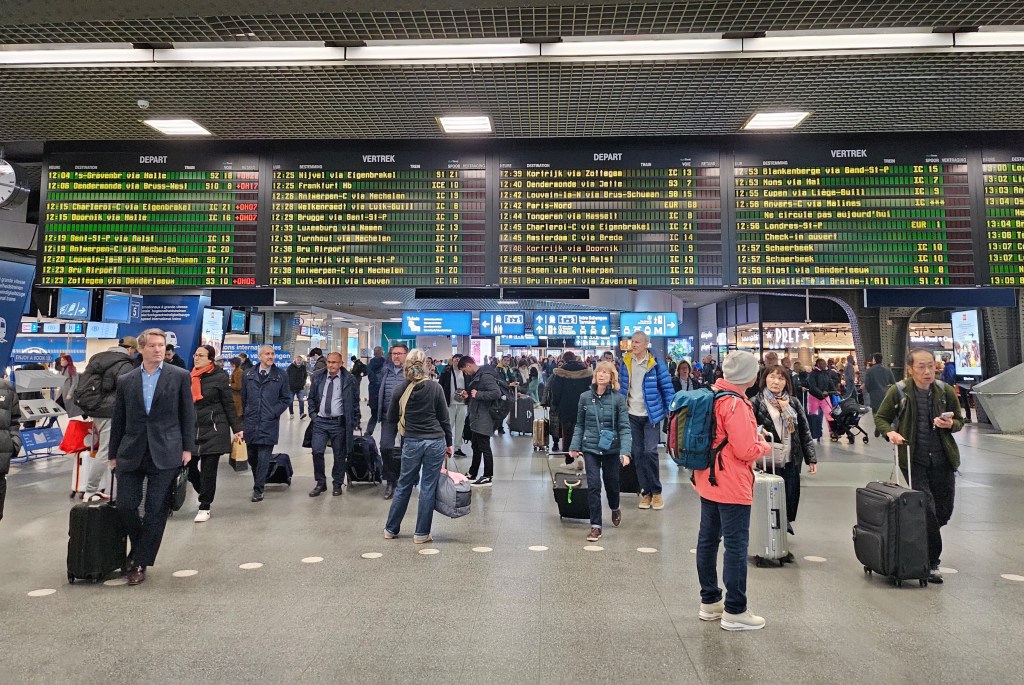
Despite arriving in Brussels five minutes late at 12:10 and the hindrance in actually getting off the train, I still had plenty of time to catch my connection to Liège at 12:28. It was a busy double-decker and I got myself a window seat on the top deck. It takes just over an hour to get to architecturally splendid Liège Guillemins station.
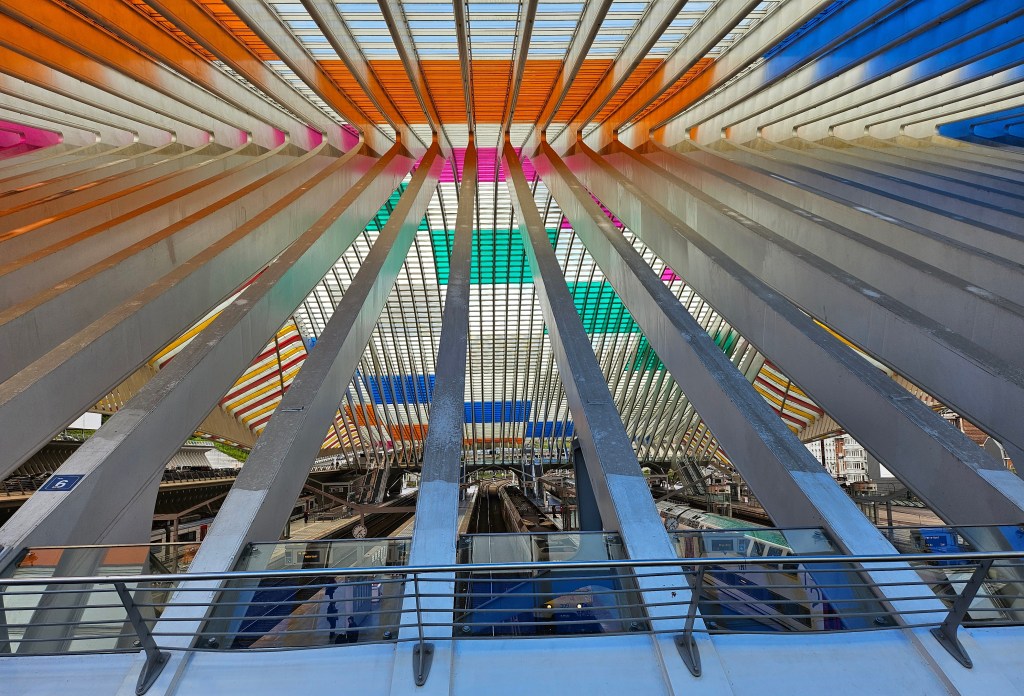
I had identified a number of possible places to visit in Liège , but with only an afternoon there realised that I would not have time to visit all of them. My choice was made slightly simpler by the main art gallery being closed by a one day strike that day. I decided that I would go first to the Musée de la Vie Wallonne (Museum of Wallonian Life). It is quite near another Liège station (St Lambert), so I decided to go for free on my any Belgian station ticket, by changing at Liège Guillemins. The trains to St Lambert run about every ten minutes, but I just missed one train, the next was cancelled, and the one after was running late, such that the one after that arrived in Guillemins before the late running train. So I got on it only to find that it too was delayed to allow the late running train to overtake it.
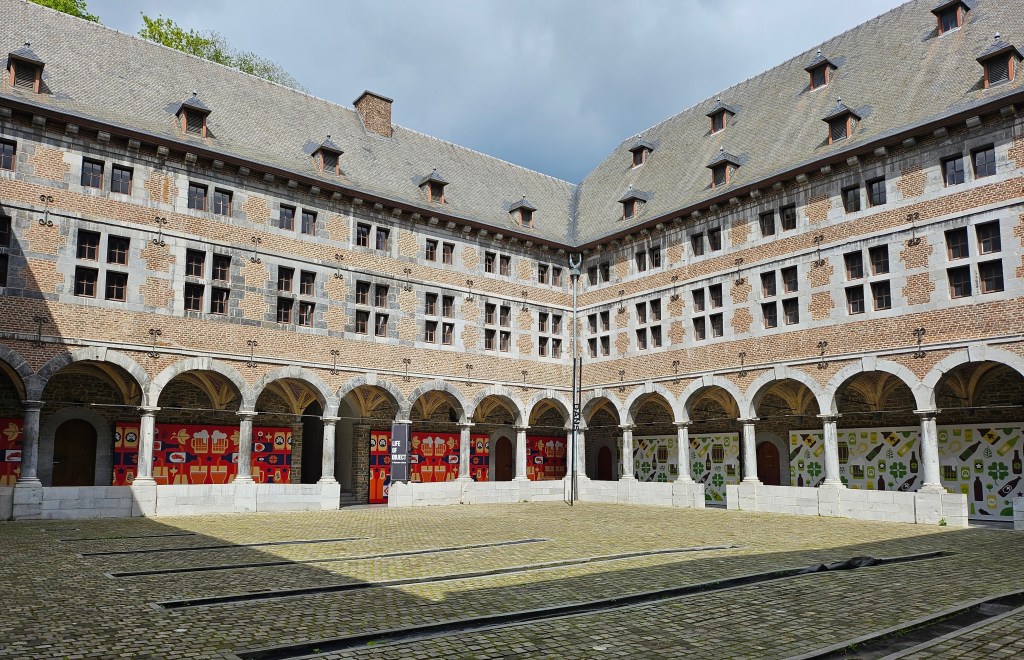
I eventually arrived at the Museum of Wallonian Life shortly after 2pm and obtained an audio-guide to accompany my visit. The museum was large and the audio-guide very detailed – there were 150 marked points on the recommended route. The museum covered the history and politics of Wallonian separatism, as well as industry and social customs of the area. I spent most of the afternoon in the museum, leaving no time for a proper visit to any other attraction in the city.
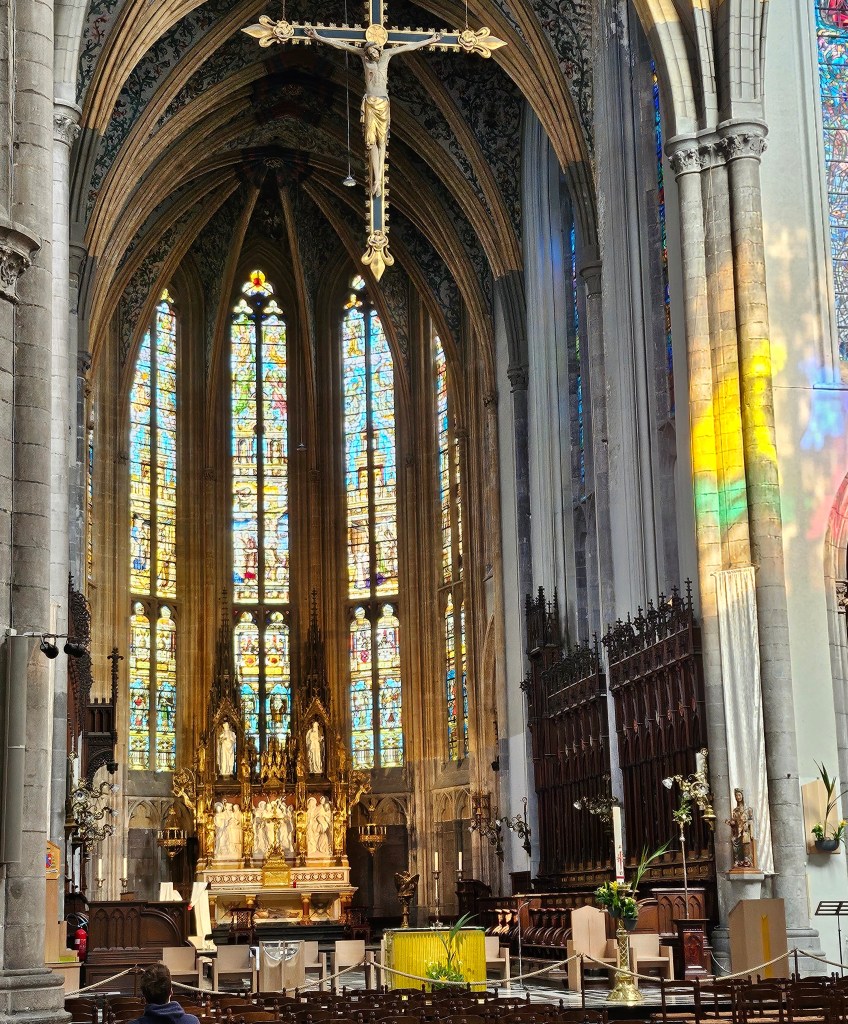
So when I left the museum I walked back to my hotel near Guillemins station, calling in only at Liège cathedral (St Paul’s) for a brief look. My modern hotel was very pleasant, themed on Gaston, a hapless office boy in a strip cartoon carried by Belgian newspapers for many years.
For dinner that night I went to a brasserie a short walk from my hotel. I chose Parmesan croquettes to start with, followed by that day’s special (beef paillarde), accompanied by a couple of glasses of draught Leffe blonde. Most of the other diners seemed to be elderly locals, all of whom were greeted warmly by the waitress, with even the chef coming out of the kitchen to talk to some of them. When I returned to my hotel I had, as a welcome drink, a glass of draught locally brewed Tripick 6%, which helped me sleep that night.
Day 2 – Thursday 25th April 2024 – Liège to Maastricht
I made the short walk from my hotel to Liège Guillemins station to catch the 09:08 train to Maastricht. This cross-border service is operated by SNCB, the Belgian national railway company, although from June 2024 it will be taken over by the private operator Arriva as part of a new Liège to Aachen service. The journey to Maastricht only takes about half an hour, the route following the river Meuse.
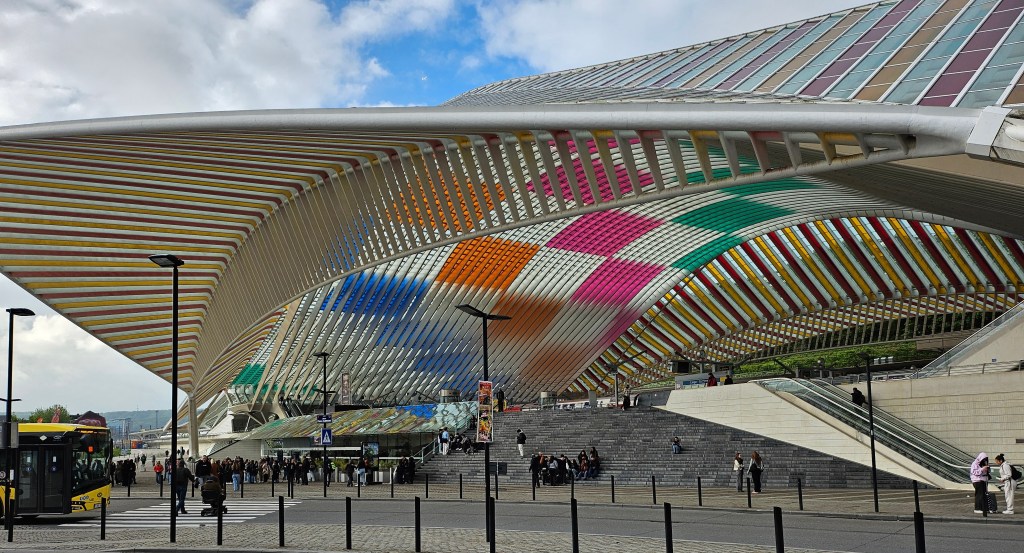
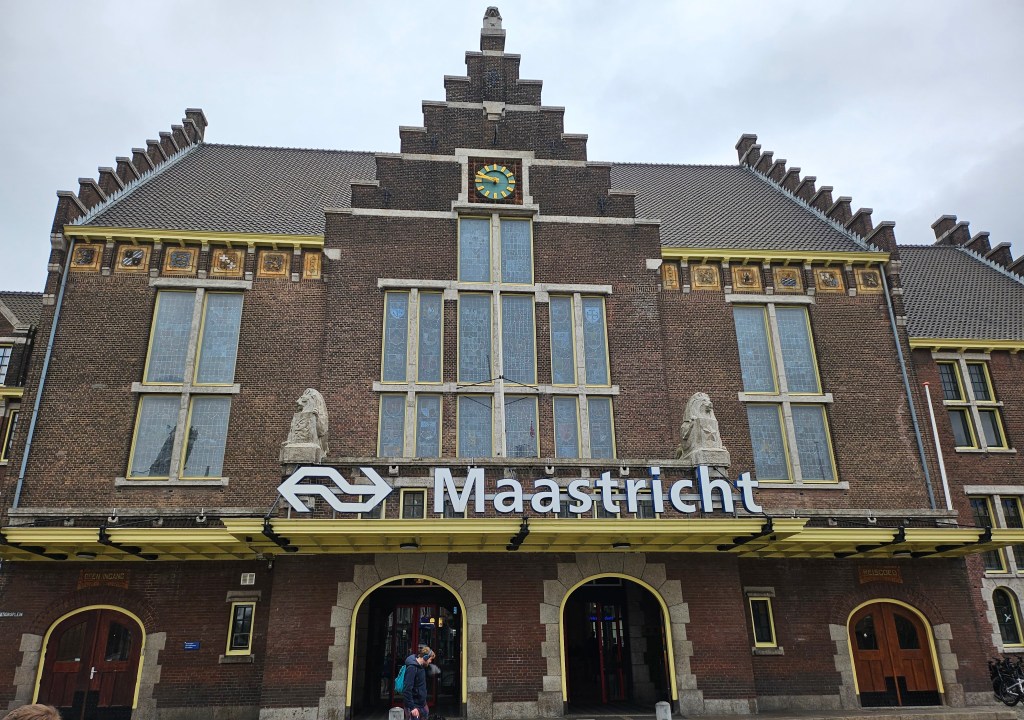
Maastricht station is rather different in style to Liège Guillemins, being a brick building dating to just before World War I. It was cold in Maastricht and it started raining shortly after I left the station.
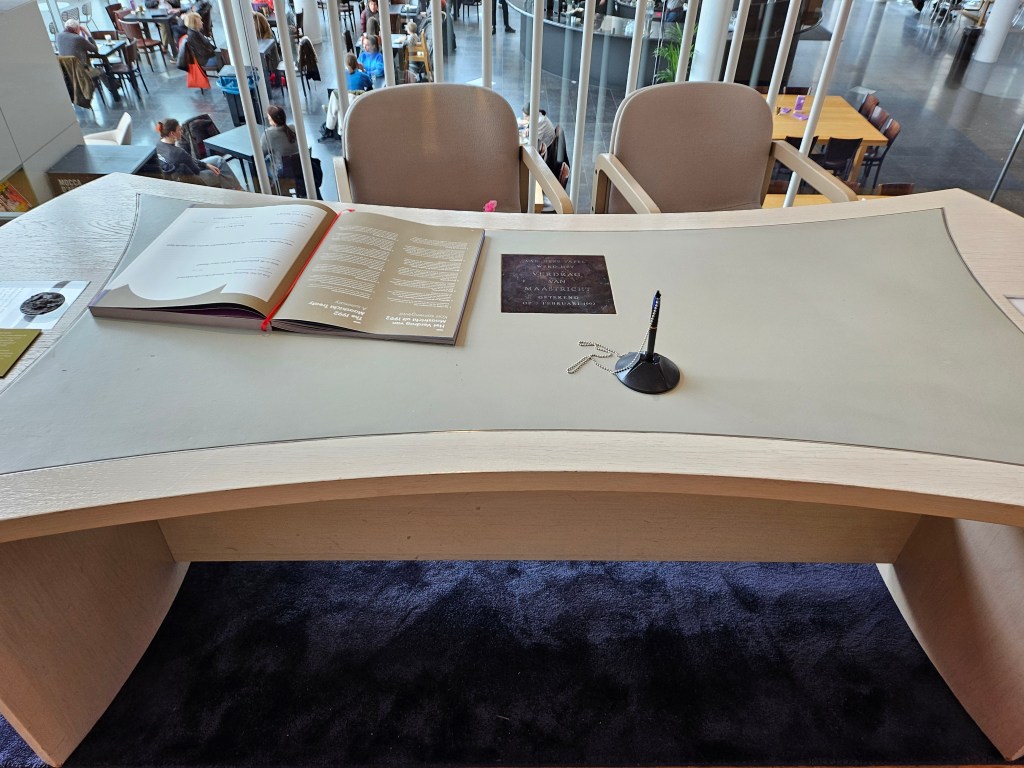
Fortunately it was not too far to my first stop, Maastricht Museum, occupying part of a modern building close to the Meuse (or Maas as it is called in Dutch). The museum covers the history of the city from pre-historic times to the present day. One of the exhibits was a Roman dodecahedron, of unknown purpose, identical to one which received some publicity in the British media when it was put on display in Lincoln museum a few days after I saw the one in Maastricht. Also within the museum was the desk at which the Maastricht Treaty had been signed in 1992 by the representatives of the 12 countries of the then EC, which led to the creation of the European Union.
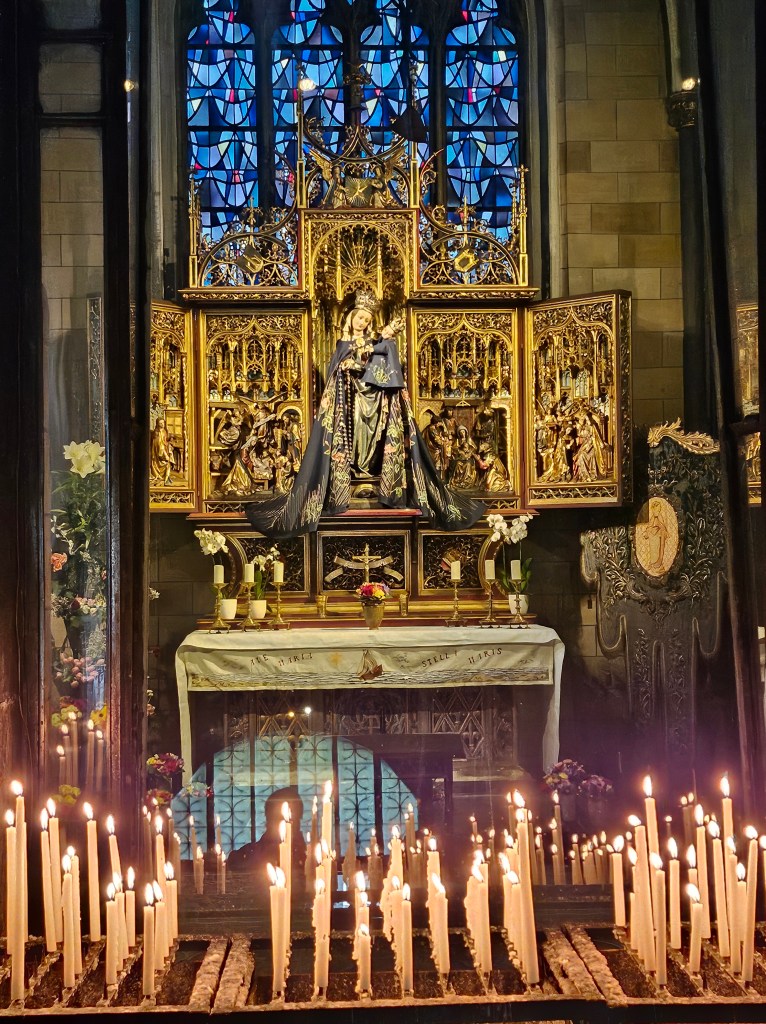
After leaving the museum I walked along the bank of the Meuse/Maas to cross the river into the old town. Although the Netherlands is primarily a protestant country, Maastricht is a Catholic city. The old town contains two basilicas: one dedicated to Our Lady and the other to St Servatius, both of which I visited on my walk around the town.
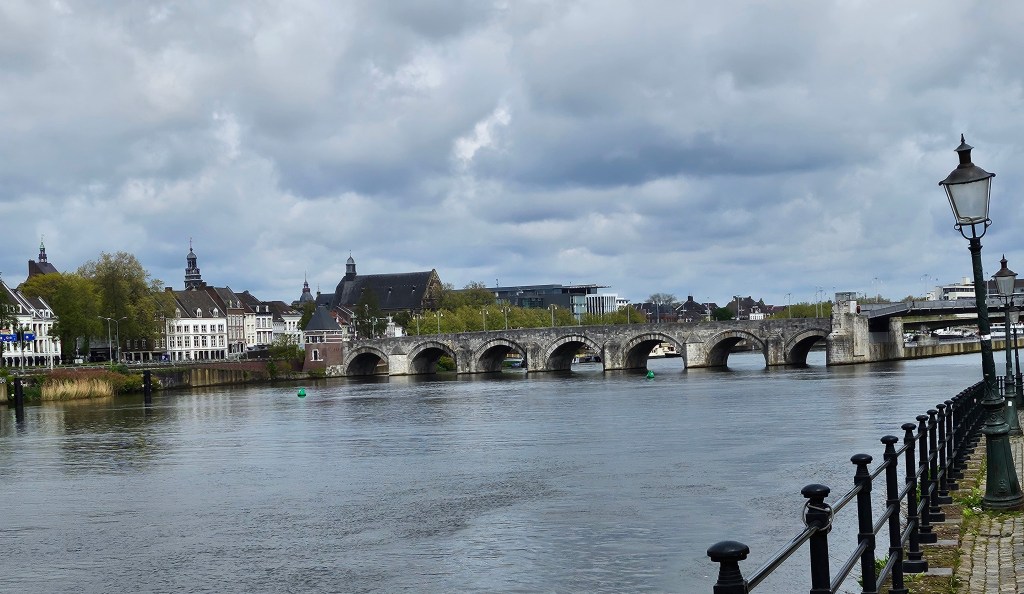
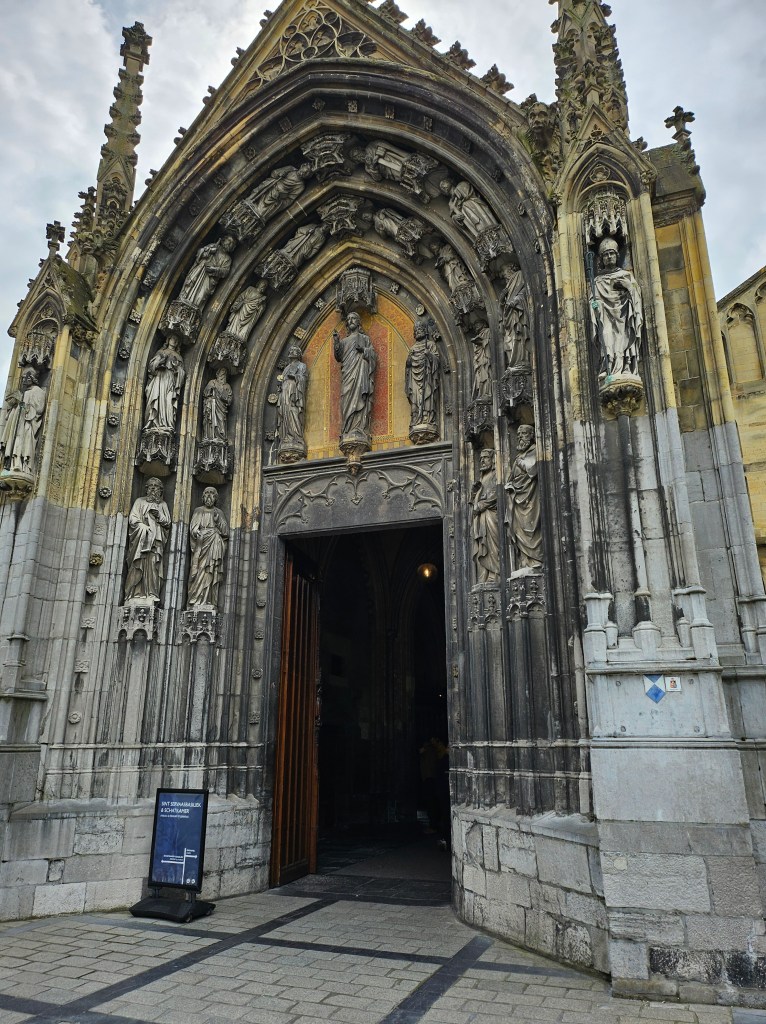
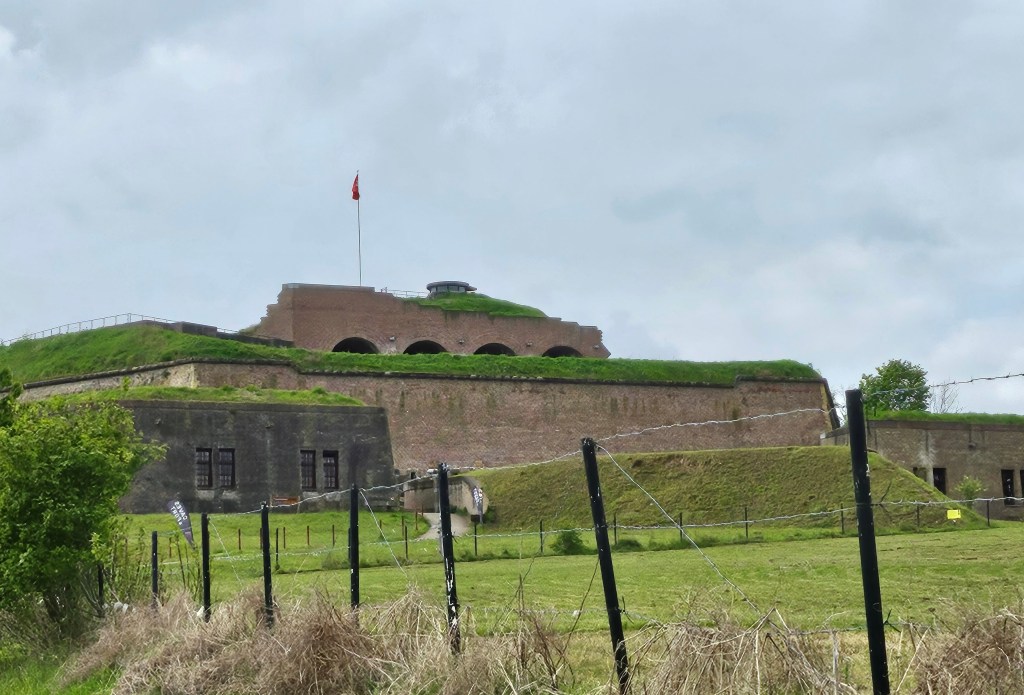
I had to truncate slightly my visit to St Serviatus to walk to the south of the city where I had booked a tour of Sint Pieter Fort, a massive fortress built in 1702 on top of the hill which dominates the approach to the city. On my guided tour, there was only one other participant, a Canadian man. Our informative tour guide took us all over the complex, from deep inside the fort to very top on the outside, where the wind made it feel very cold. The tour last for about 75 minutes.
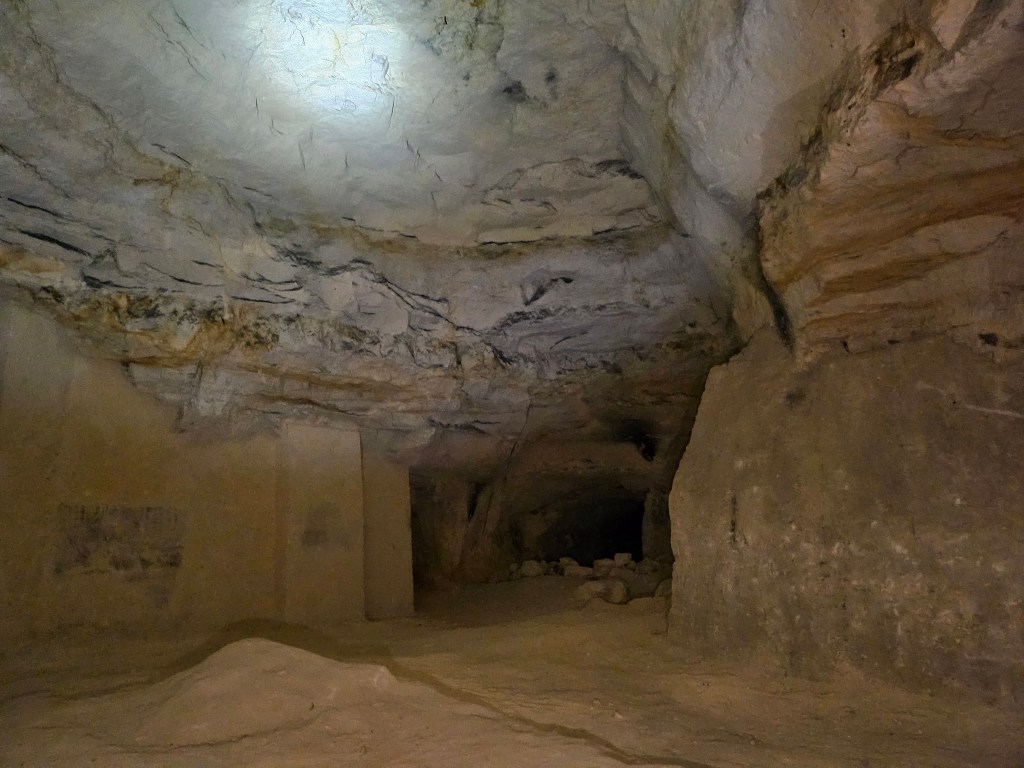
When the tour was over, I had a short wait until my next tour of the North Caves, a system of tunnels and caves which riddle Sint Pieter hill on which the fort is situated. The group for this tour was a bit larger, being about a dozen in total. The tunnels had originally been built to extract limestone for use as a building material and had at times been used as a place of refuge during wartime. Even Napoleon Bonaparte had visited the caves when he came to Maastricht.
I had originally planned to explore a bit more of Maastricht when I had finished in the North Caves at 3:45pm. But the cold weather had got to me a bit, and rain was threatening, so I decided instead to walk via a park to the hotel near the station that I had booked for the night. The hotel was odd in that it appeared to to be unstaffed. You gained entry to by pressing a buzzer on the door to be let in. You then checked in at a terminal which issued your room key card. If you wanted breakfast, you could order a breakfast bag to be delivered to your room, The hotel even had a proper bar, at which you could serve yourself drinks recording your consumption, but monitored by CCTV to make sure you didn’t cheat.
When I went out for dinner that night, the bars and restaurants were surprisingly full. I was lucky to get a table at a busy establishment where I had a warming onion soup followed by a burger.
Day 3 – Friday 26th April 2024 – Maastricht to Clervaux
I made my way the short distance from my hotel to Maastricht station to catch the 09:18 train to Liège, only to find when I arrived at the station that it had been cancelled. As the next train was not for an hour, I took the opportunity to visit some of the parts of Maastricht that I had missed out on the previous day when I had curtailed my walk. Unfortunately it was raining again, but little more than a steady drizzle.
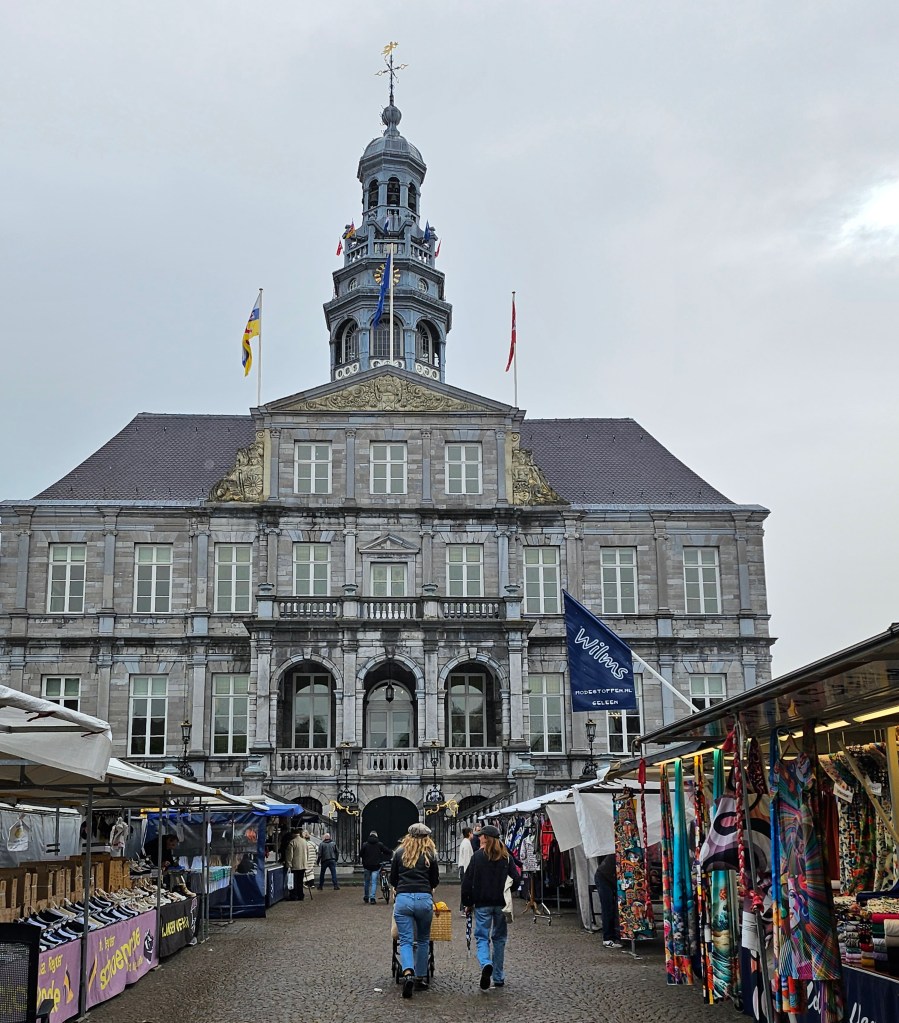
I completed a circuit of the old town, including going to Maastricht City Hall, which that morning had a market set up in the square in front of it. I returned to the station in good time for my train, which was already in the platform when I arrived. Because of the previous cancellation, the train was busy with no free seats by the time it departed at 10:18. It arrived at Liège Guillemins about five minutes late, but still in good time to catch the 11:07 departure to Luxembourg.
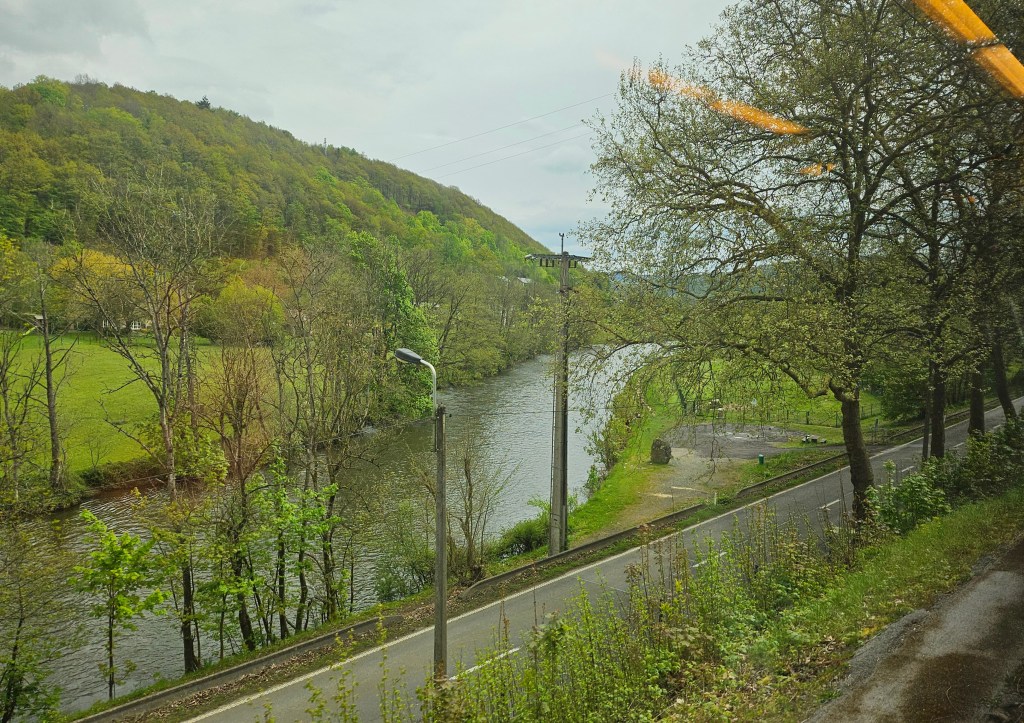
Shortly after leaving Liège the train started to follow the Ourthe river and started to climb into the densely wooded Ardennes hills. After about an hour we crossed the border into Luxembourg, and at the next station, Troisviergses, the Belgian train crew disembarked to be replaced by their Luxembourg counterparts. I got off at Clervaux station when the train arrived at 12:42.
The station is a little way from the centre of Clervaux, which is little more than a large village. Clervaux is the French name of the town, which is also known as Clierf in Luxembourgish, Cliärref in the local dialect and Clerf in German. The centre of the town is dominated by Clervaux castle, which I made my way to first, about a 20 minute walk from the station.
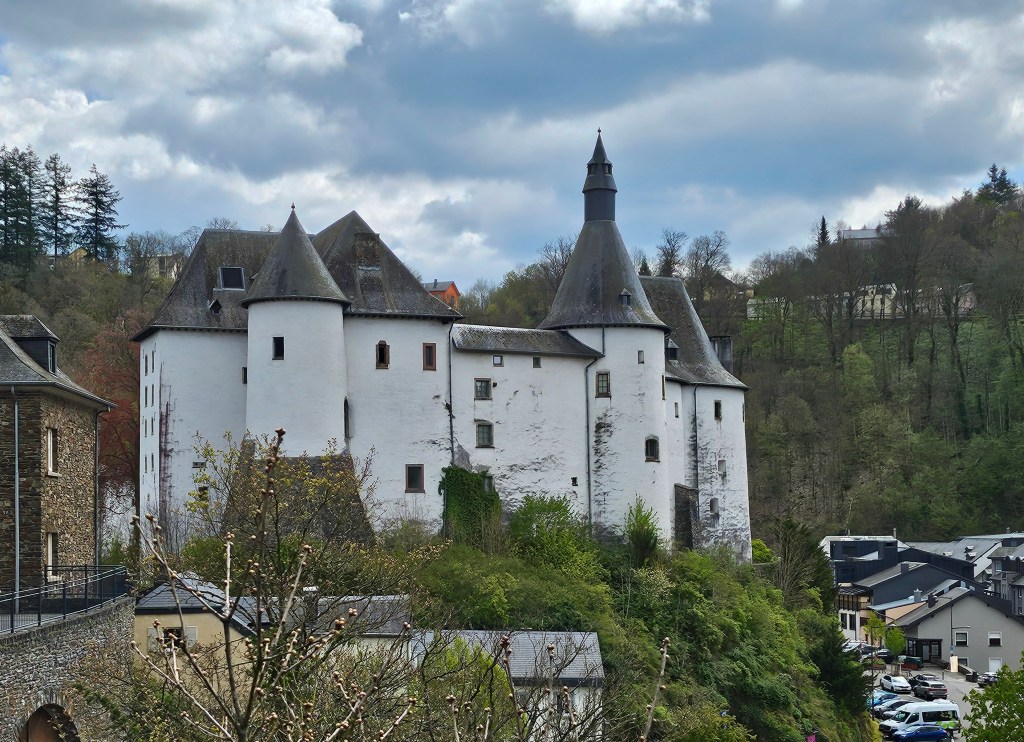
Clervaux castle hosts a number of exhibitions and museums, but on weekdays in April only one of them is open. The Family of Man is a collection of photographs portraying the human experience, curated by Edward Steichen and first displayed in New York’s Museum of Modern Art in 1955. After the initial exhibition in New York, the collection went on a world tour before finally taking up permanent residence in Clervaux castle in 1994. I spent over an hour looking round the exhibition.
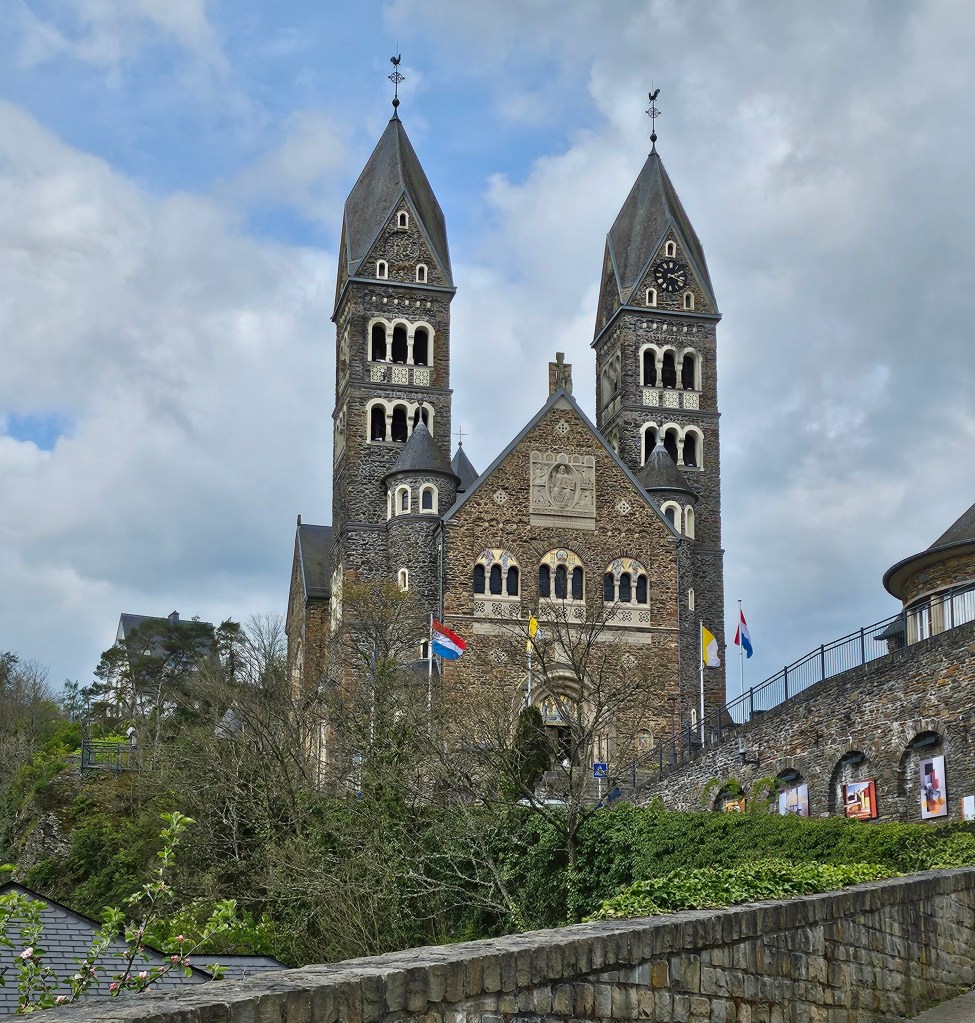
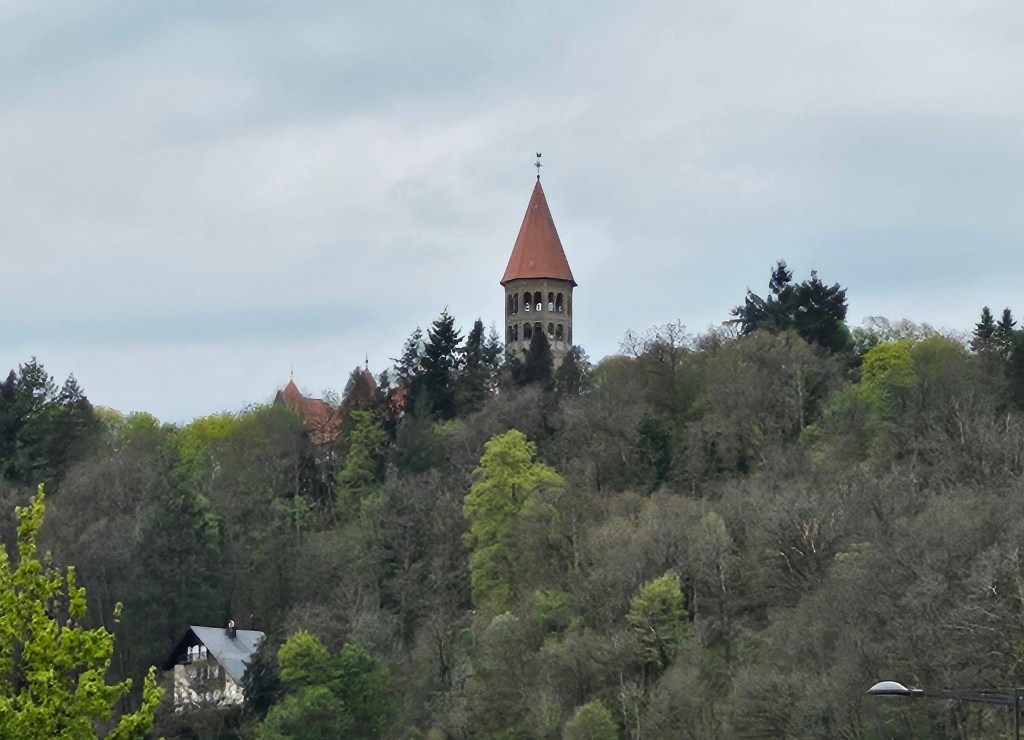
For the remainder of the afternoon I explored Clervaux, which has a number of memorials to the Battle of the Bulge (otherwise known as the Ardennes offensive) in various locations. The other major building in the town centre is the church of Saints Cosmas and Damian which I had a quick look inside. Later in the afternoon I climbed high above the town heading towards Clervaux Abbey, but did not quite go all the way to the Abbey, as I feared that it would start raining soon.
That evening I went to an Italian restaurant near my hotel where I had a pizza followed by ice cream. Shortly, after I left the restaurant the torrential rain, which had been threatening for most of the evening, finally arrived.
Day 4 – Saturday 27th April 2024 – Clervaux to Luxembourg
I got up earlier than on previous days on this trip, to ensure that I would get to Luxembourg by the time that the attractions I wished to visit first opened. I left my hotel at about 7:45am to walk back to Clervaux station to catch the 0814 train to Luxembourg.
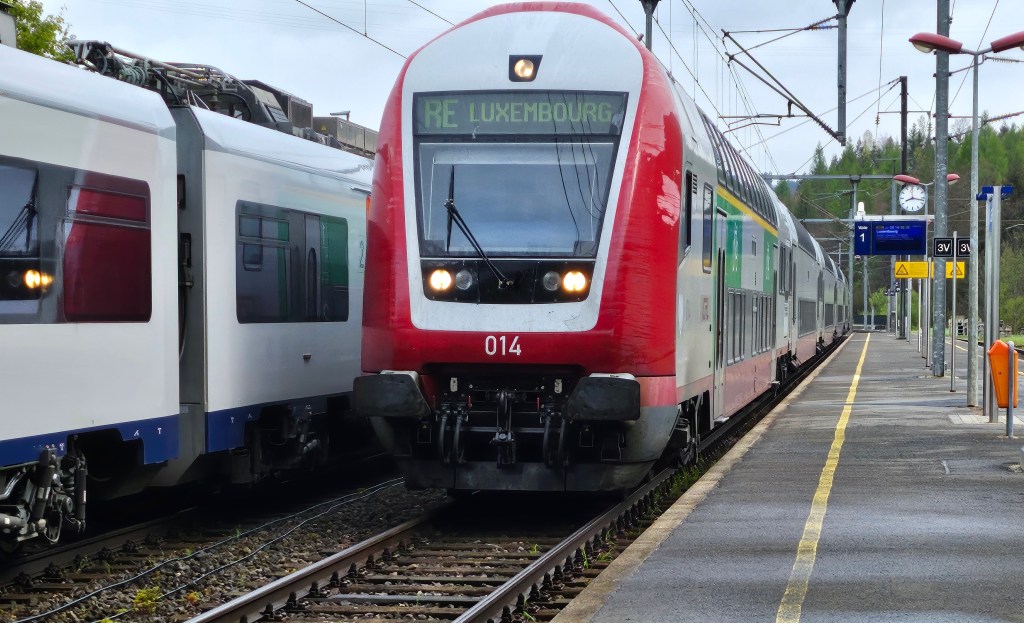
The train was a few minutes late arriving and was fairly empty throughout its hour long journey to Luxembourg. The official language of Luxembourg railways is French, with all signage and destination names solely being in French. However, the on-board announcements on the train were bi-lingual: first in Luxembourgish, then French. As with all other public transport within Luxembourg this journey was free, with no ticket required. There is no ticket office nor any ticket machines at Clervaux station.
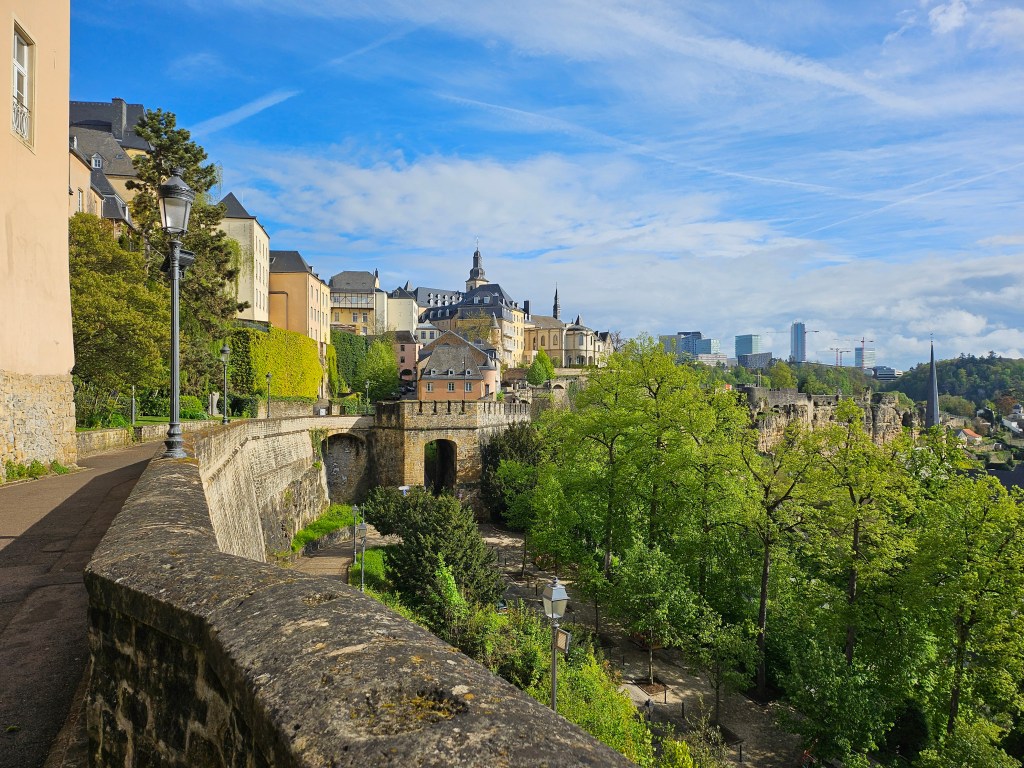
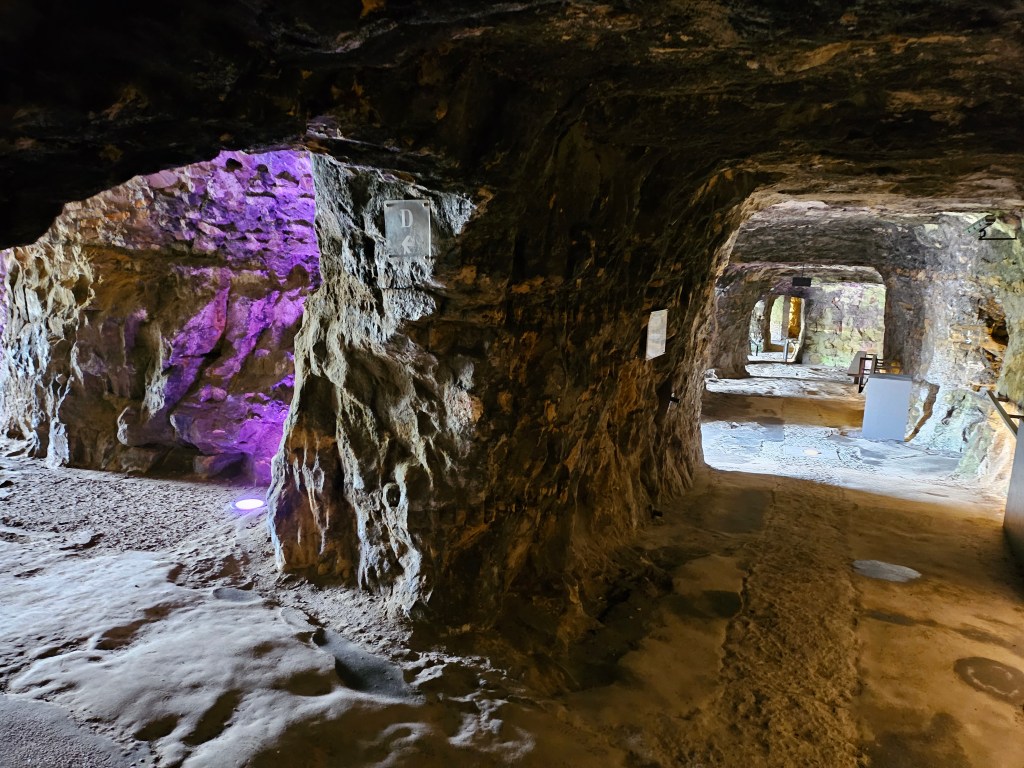
From Luxembourg’s main station I walked to my first visit of the day, the Bock casemates, via the Corniche, a route along the edge of the steep cliff atop which lies Luxembourg old town. The Bock Casemates consist of a network of tunnels and chambers carved into the rock high up on a promontory of the high plateau. They were enlarged as a defensive fortification in the 18th century. I arrived at the Casemates when they opened at 9:45am and stayed for about an hour and, by carefully studying the map I was given on arrival, made sure that I did not miss any of the passages.
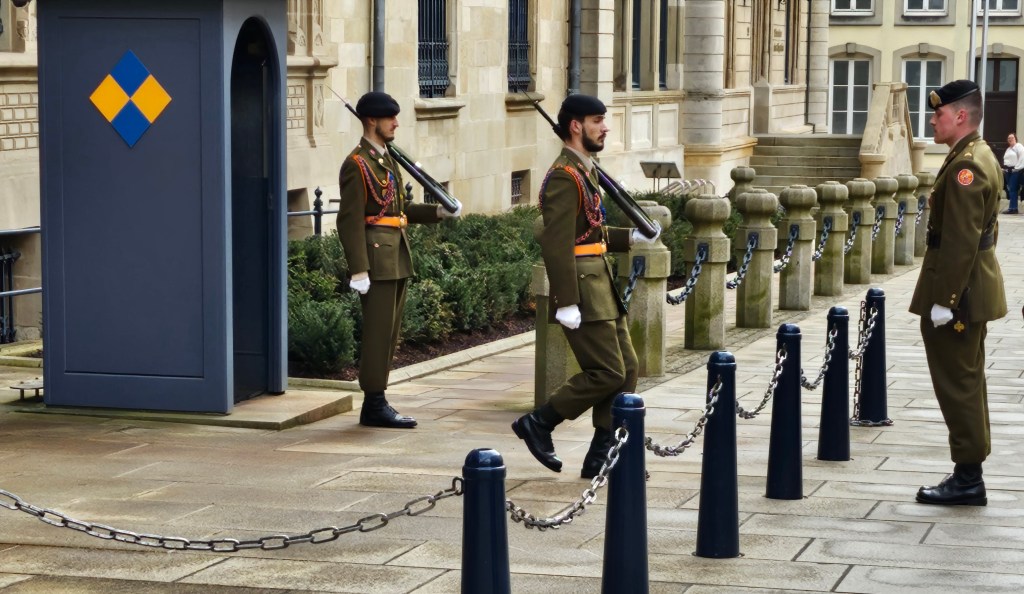
My next stop was to be the Luxembourg City Museum, but I did not take the direct route there, but instead went by the Grand Ducal Palace. I was lucky, as I happened to be at the Grand Ducal Palace just as the changing of the guard was taking place. Note that in this instance ‘the guard’ is a singular noun.
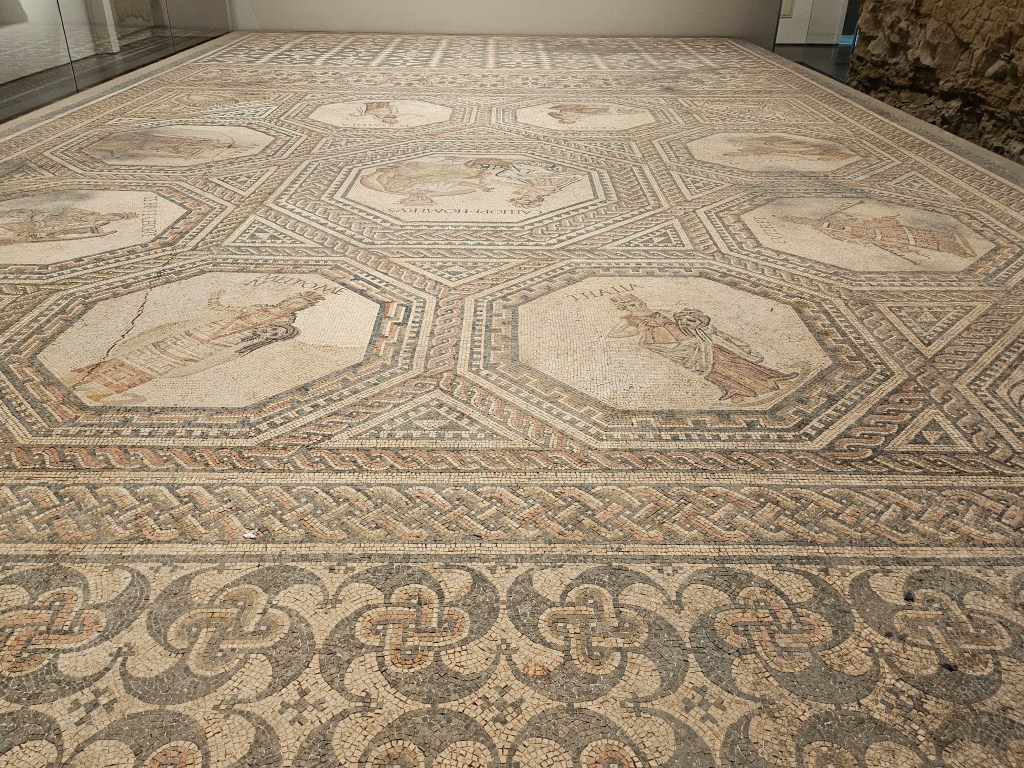
Luxembourg City Museum was fascinating and very comprehensive. There was an audio tour available via an app which you could download onto your phone. It told the history of the city from ancient times to the modern day. Although nominally the city museum, the history of the city is inseparable from the history of the country. I thought it presented this history far more comprehensively and coherently than the national museum I was to visit later.
After a couple of hours in the Luxembourg City Museum I went via a market in the main square (Place Guillame II) to the Luxembourg National Museum of Art and History. Located over several floors, it had an extensive Roman collection on its lower floors in the basement. While containing artefacts from various eras, it didn’t really piece them together to present a narrative history and I found most of the art collection was a little underwhelming.
Next I walked to Notre Dame Cathedral. A former Jesuit church, founded in the 17th century, it became a cathedral in 1870, the only cathedral in the country. It was enlarged in the 1930s.
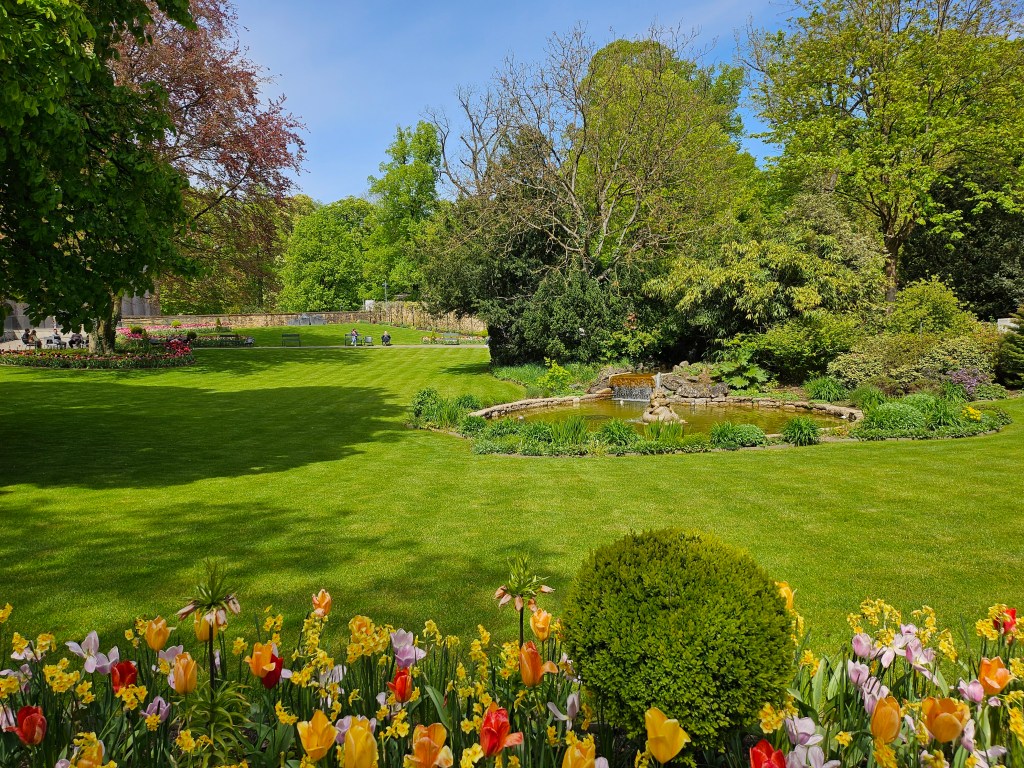
For my final visit of the day, I walked to the west of the city to visit the Villa Vauban. This is an art museum run by the city authorities and set in its own park. The main collection consisted of 17th to 19th century art, and although not very large, I found it quite interesting. At the time of my visit there was also a special exhibition, showcasing the museums recent contemporary art acquisitions, which was less to my taste.
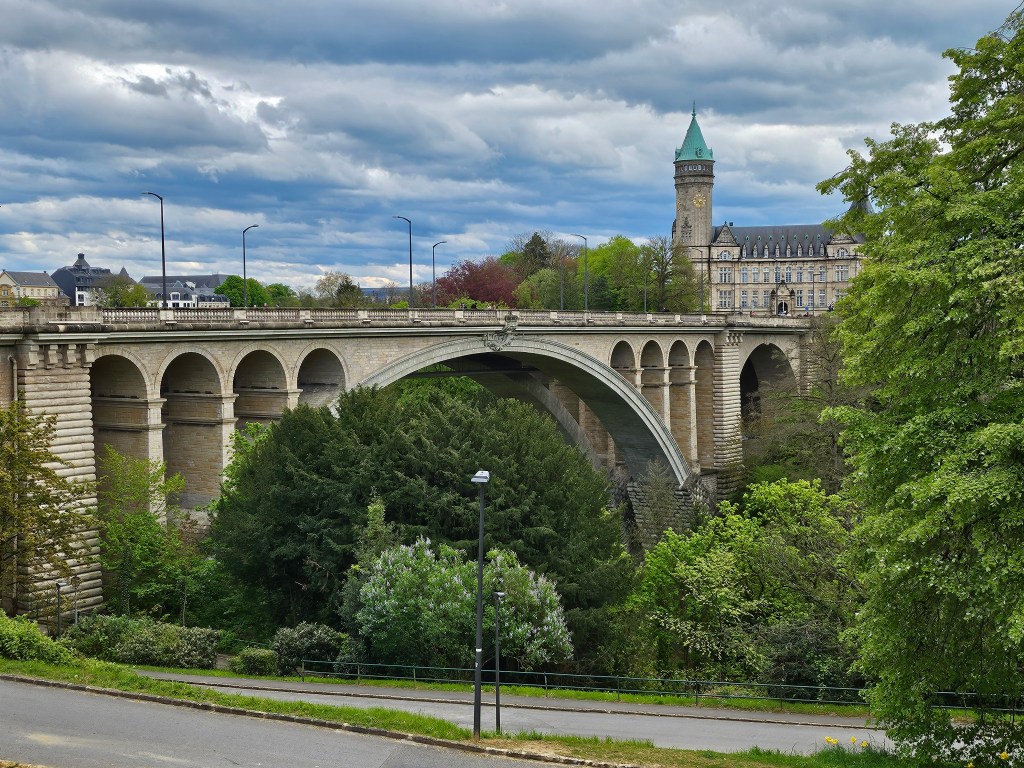
On leaving the Villa Vauban, I walked through the city’s main municipal park and across the Adolphe Bridge spanning the Pétrusse valley to go to my hotel near the station. Although one of the more expensive hotels on this trip, it was also the most basic, with the immediate surrounding area being rather seedy.
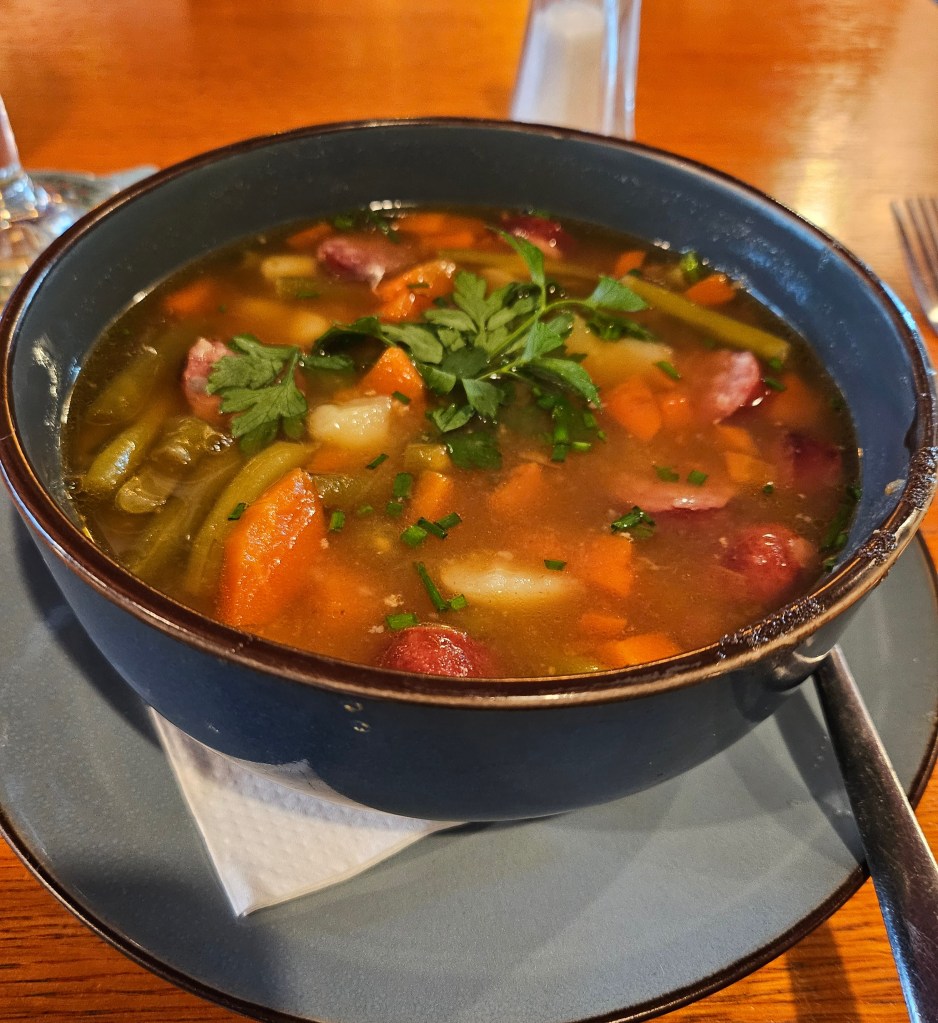
Being a Saturday night, I taken the precaution of booking a table for dinner in a bar about 15 minutes walk from the hotel. There I chose a couple of items from the specials blackboard. For starter I had a delicious home-made vegetable and sausage soup, which if my reading of the handwritten blackboard, and my translation from Luxembourgish, were correct was described as bean bag soup. To follow I had a steak, which I accompanied with a glass of Pinot Noir.
Day 5 – Sunday 28th April 2024 – Day trip from Luxembourg to Schengen and back
After breakfast in my hotel, the only one on this trip in which I was having breakfast, I walked to the other side of Luxembourg’s main station to catch the 402 bus departure at 10:00 to Nennig (in Germany), although I would only travel as far as the village of Schengen, still just in Luxembourg. As with all transport in Luxembourg this service was free. Interestingly, once the bus crossed the border into Germany, it was set down only (and pick up only on the reverse route), presumably to avoid providing free intra-Germany travel.
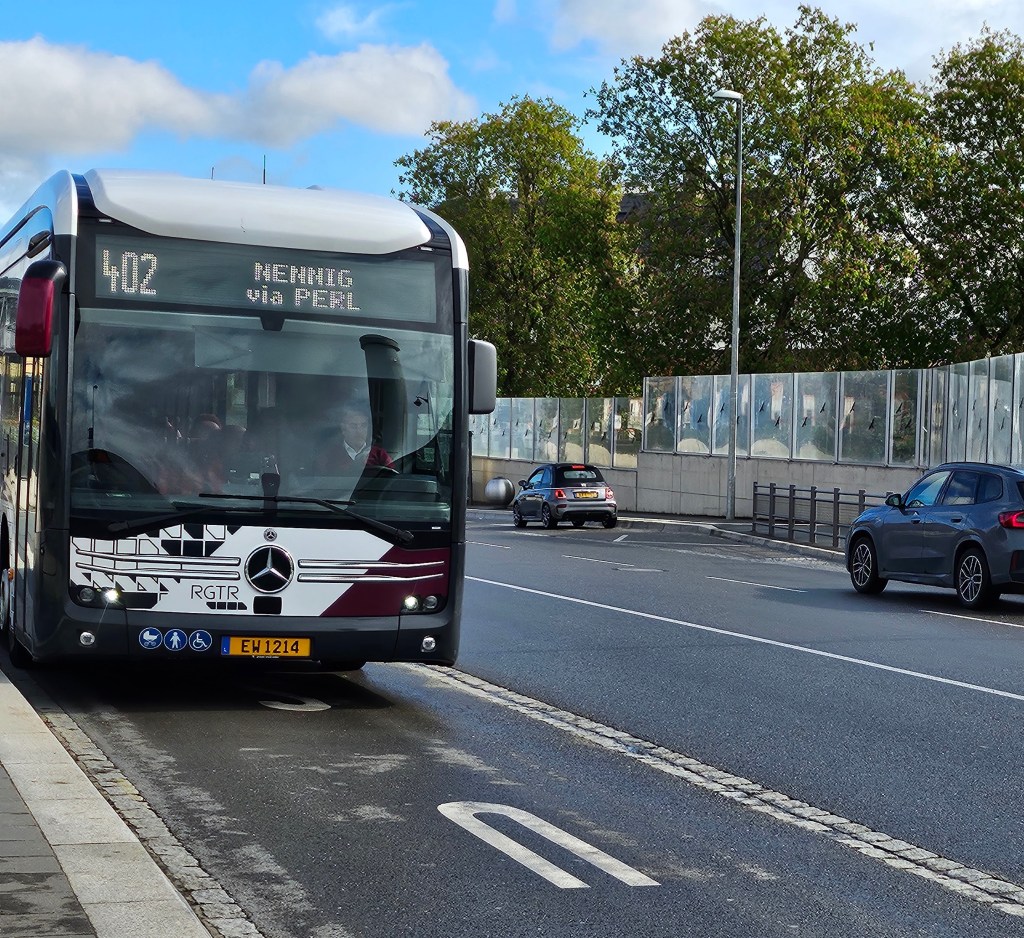
I don’t know why, but when travelling by bus on my trips, I seem to attract people who wish to ask me about the bus services, it having happened previously in Slovenia and Hungary. This bus was no exception – at the first stop an elderly oriental couple got on, who looked around the bus and came to quiz me about whether it was going to Schengen and where they should alight. After a few stops in the outer suburbs of Luxembourg City, the bus then joined the motorway and travelled non-stop to Schengen, reaching it after half an hour.
Schengen, just a small village with a population of about 500, is famous for the Schengen Agreement, which led to border free travel throughout much of the EU (although the UK, even when an EU member, never joined the Schengen area). Schengen lies on the Moselle river close to the tri-point of Luxembourg, Germany and France. The Schengen Agreement was signed on a boat on the Moselle in 1985.
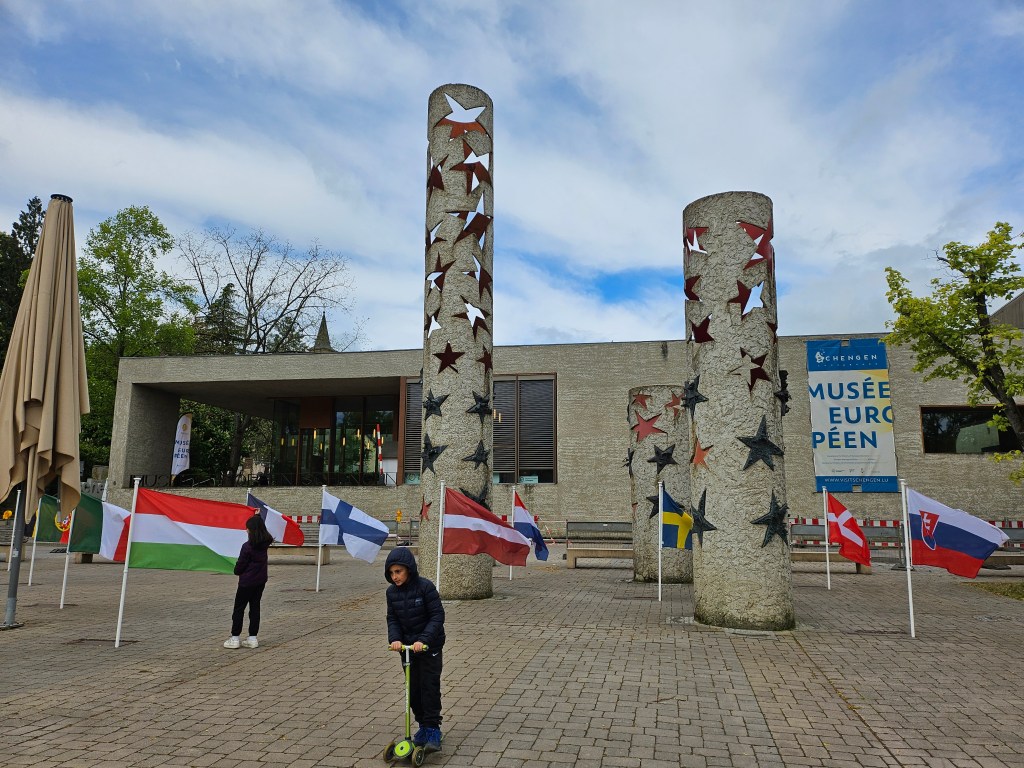
In Schengen there is a small EU museum dedicated to the history of border controls within Europe. The museum was due to close for a major refurbishment the week after my visit, and unfortunately some of the interactive displays were no longer working properly.
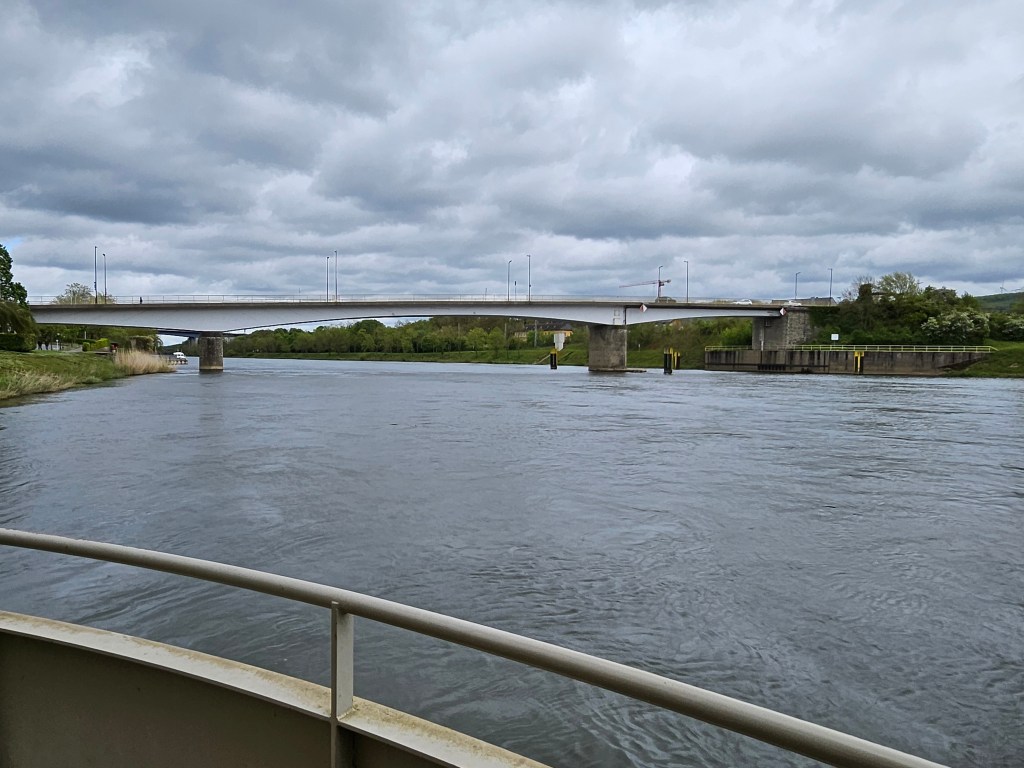
On leaving the museum, I encountered the couple who had quizzed me on the journey to Schengen, who now wanted to know about the times and locations of the bus stops for buses back to Luxembourg City. As the direct buses only run every couple of hours, and they had just missed one, I suggested it would be quicker to take a couple of buses and change at Mondorf-le-Bains. I never saw them again, so I don’t know if they followed my advice.
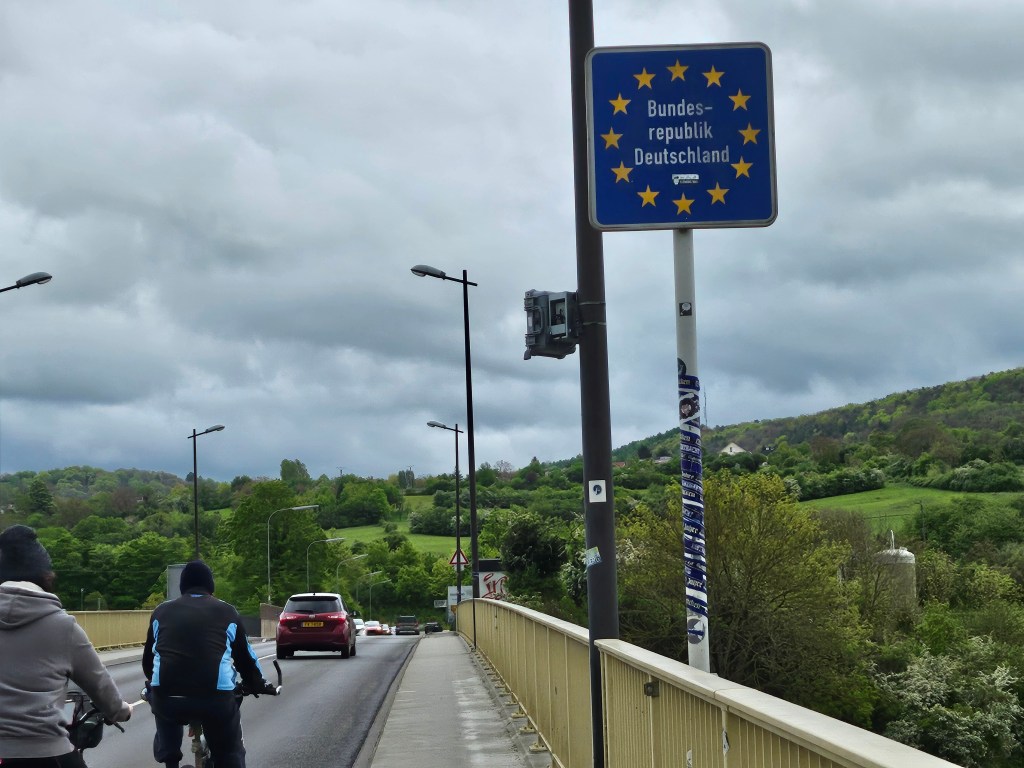
Having come to Schengen, I thought I should test the principles of border-free travel by seeing how long it would take me to walk from Luxembourg to France via Germany. You cross the border from Luxembourg to Germany in the middle of the bridge spanning the Moselle, where I started my stop watch. Just before reaching a roundabout on the German side, there is footpath which runs through fields parallel to the main road. There is no welcome to France sign on this footpath, but you know that you have reached France when you encounter a miniature Eiffel Tower.
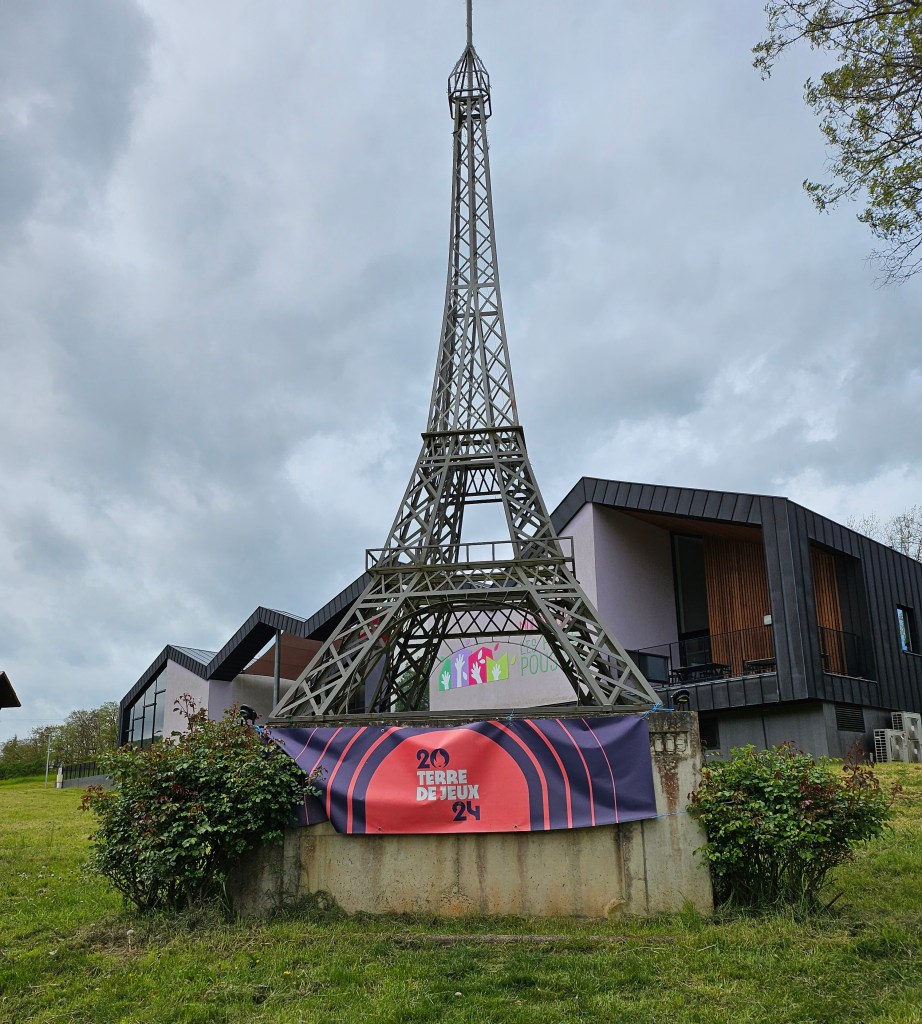
I was in France eight minutes after leaving Luxembourg. I wanted to see if I could do the return trip even quicker, given that by the banks of the Moselle the border is much nearer to the bridge across the river. However, I was not sure if my planned route was legal or even actually walkable. I went down a lane past some industrial buildings and crossed a railway line – this brought me to the banks of the Moselle by the locks used to bypass a weir on the river. The locks are in France, but once I had walked past them, I encountered a sign, in German, saying it was forbidden to pass this point. I wasn’t sure if this was just an old relic from the pre-Schengen era or was intended to prevent you accessing the area of another industrial works just on the German side of the boundary. Anyway I decided to risk it. A fenced off area prevented you making a bee-line to the bridge, but it could be bypassed. To get back onto the bridge involved a scramble up a steep muddy bank, but I crossed the mid point of the bridge and re-entered Luxembourg just four minutes after I had left France.
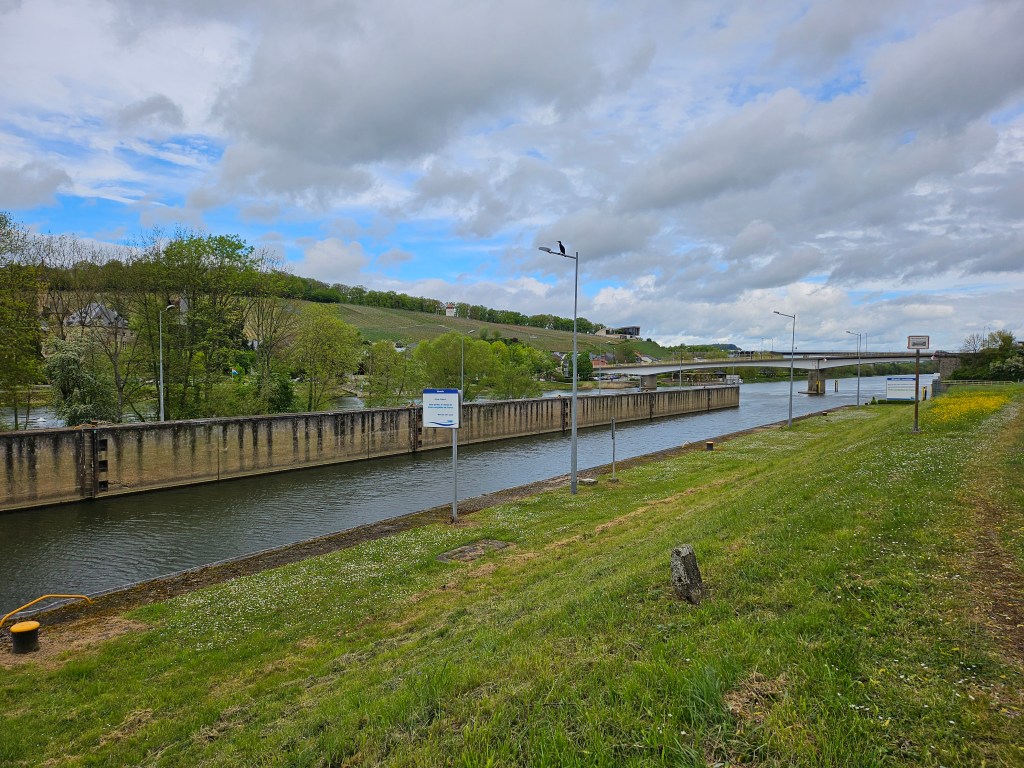
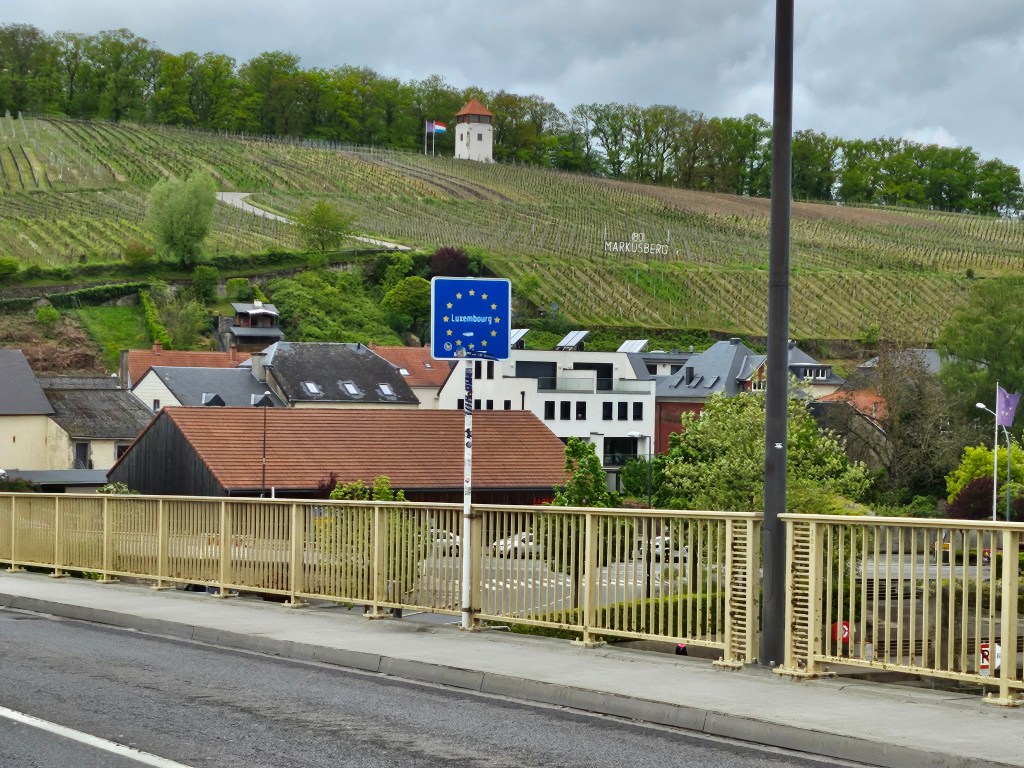
I had a little wait until the next bus to Luxembourg was due, so I had a thorough explore of the remainder of the village of Schengen. I caught the 13:18 direct bus back to Luxembourg city, which was fairly empty leaving Schengen, but filled up with passengers in the outer suburbs of Luxembourg city.
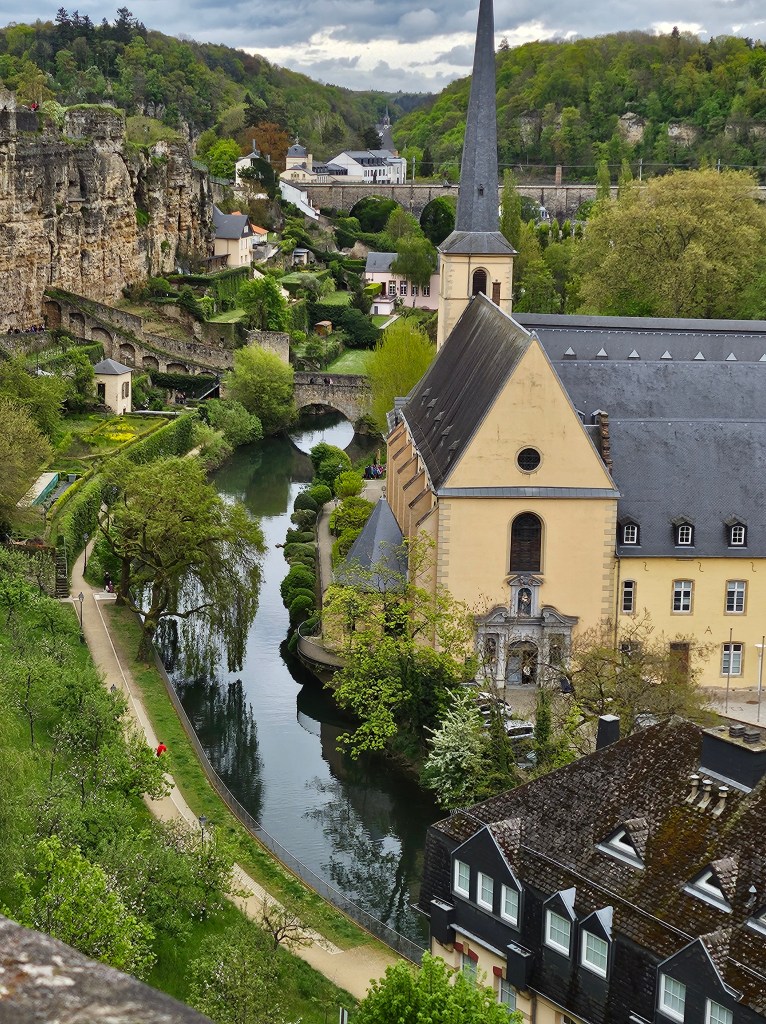
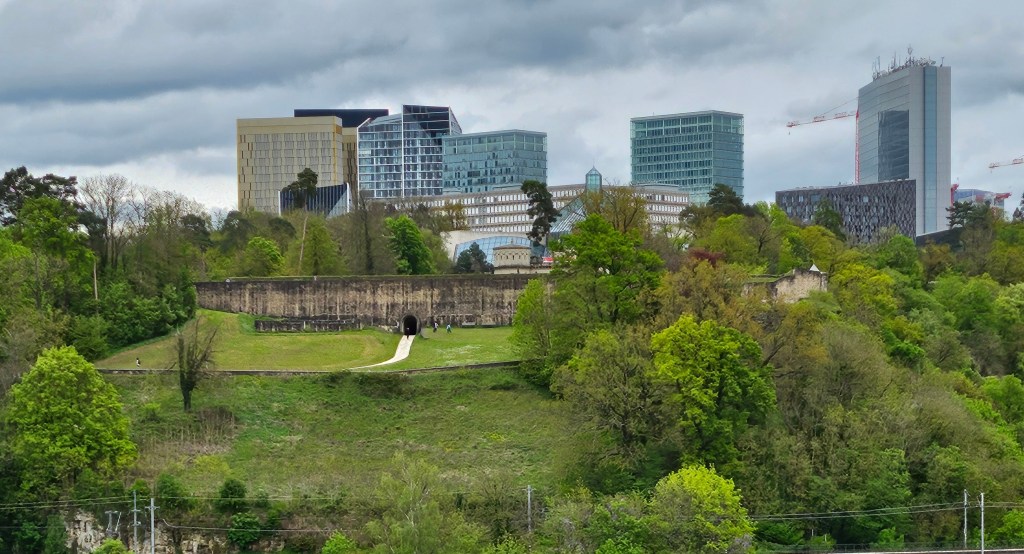
When I got back to to Luxembourg, I continued to explore some of the areas that I had not had time to do the previous day. In the Pfaffenthal valley I caught the funicular railway which takes you up to Kirchberg, the district of the city occupied by gleaming tower blocks where the European institutions are based. From Kirchberg I took a tram back to my hotel.

When I had passed through the concourse of Luxembourg station after getting off the bus from Schengen, I happened to notice that there were no trains to Brussels listed on the departure board, unlike on the previous day when I first arrived. So I thought I should check the train I was planning to catch the next morning. When I did so I discovered that the direct line to Brussels was closed for a week starting that day for engineering work in Belgium. That closure was not being shown when I had booked my trip. As I had an ‘Any Belgian Station’ ticket, I had already purchased a ticket from Luxembourg City to Arlon, the first station over the border. This ticket was now useless, as I would have to travel back to Brussels via Liège again, necessitating buying a new ticket from Luxembourg to Gouvy. Although annoying, the financial loss was not great as these cross-border tickets only cost €2.50 each.
That evening I went to a restaurant adjacent to the station, where I had pea and chorizo soup, followed by duck breast with carrot purée. Although the food was nice, the service was rather slow and inattentive, as I think there was a private function going on in a back room of the restaurant, which seemed to be occupying the waiters’ time.
Day 6 – Monday 29th April 2024 – Luxembourg to London (via Brussels)
So instead of being able to catch a direct train to Brussels, due to the unexpected engineering works I was forced to return by the route through the Ardennes that I had come on a couple of days earlier. When I first woke and checked the status of trains, I had the unwelcome news that no trains were running on that route either because of a faulty level crossing. However, by the time that I had showered and got dressed, the problem with the level crossing was being reported as rectified and trains were running again, albeit with delays.
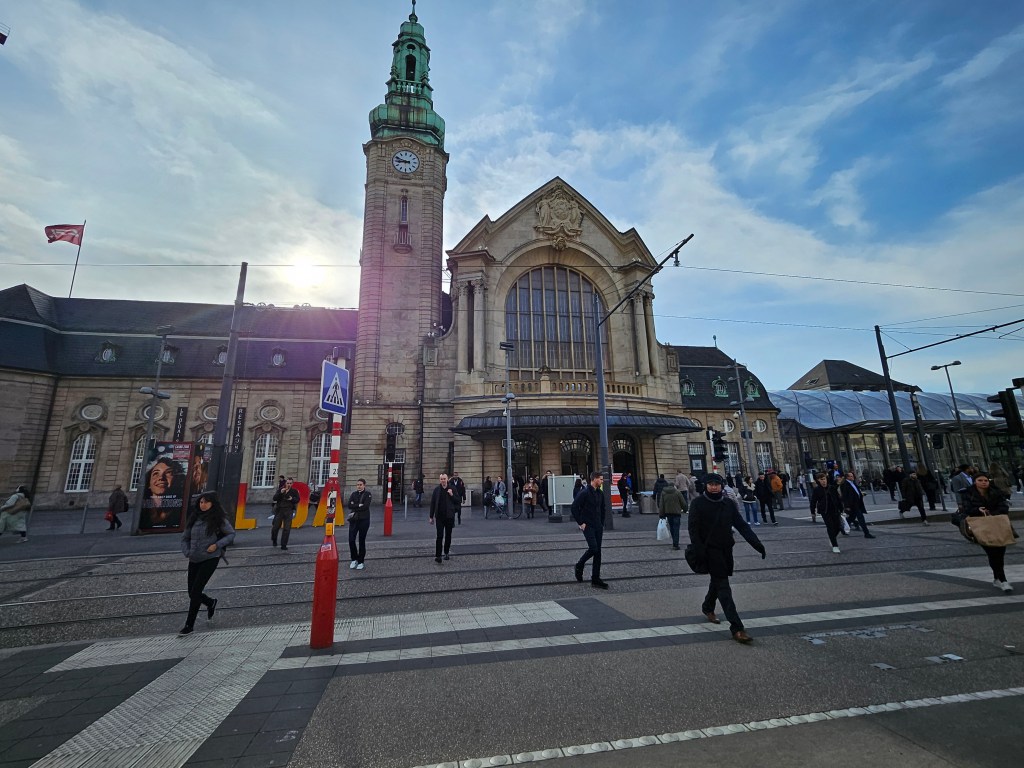
I walked the short distance to Luxembourg station to catch the 0915 departure to Liège. By the time I arrived at the station there was no longer any mention of delays on the route. The train departed on time, but shortly after leaving Luxembourg, it began to have lengthy waits at each signal and was soon running about 20 minutes behind schedule. The reason for these new delays was never explained.
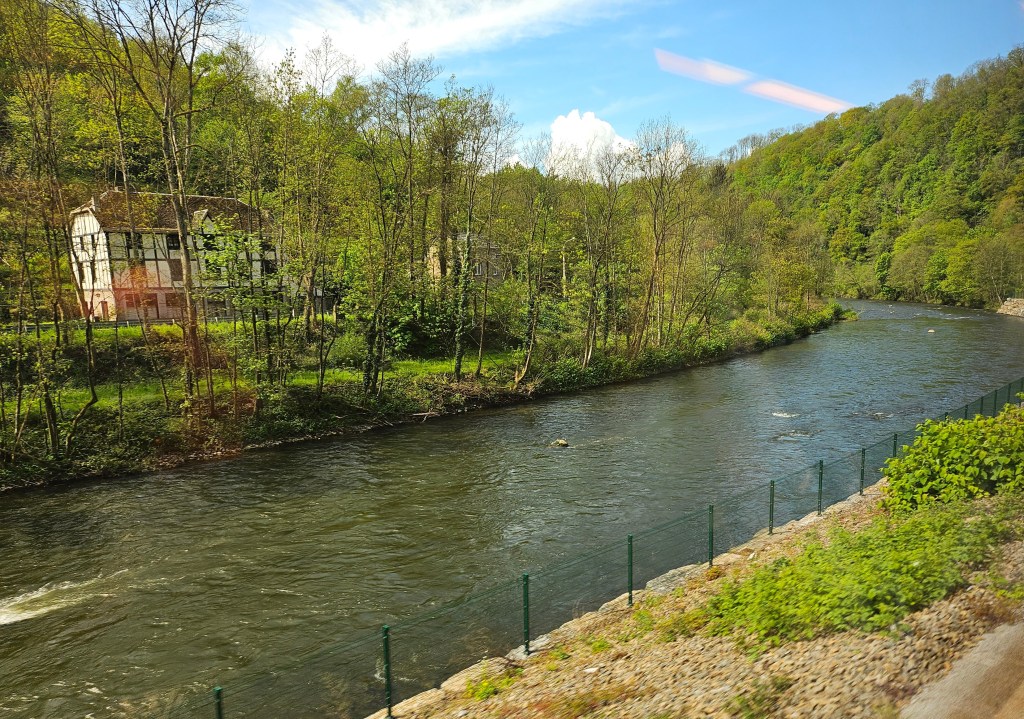
While I was deprived of travelling on a different line, as a compensation I had the scenic views as the train weaved its way through the Ardennes. Although the train from time to time made up a little of the lost time, it then gave it back again waiting to gain access to the single-track sections which make up most of this route. The train eventually arrived in Liège Guillemins at 12:10, about 15 minutes late – the fourth time I had visited the station on this trip.
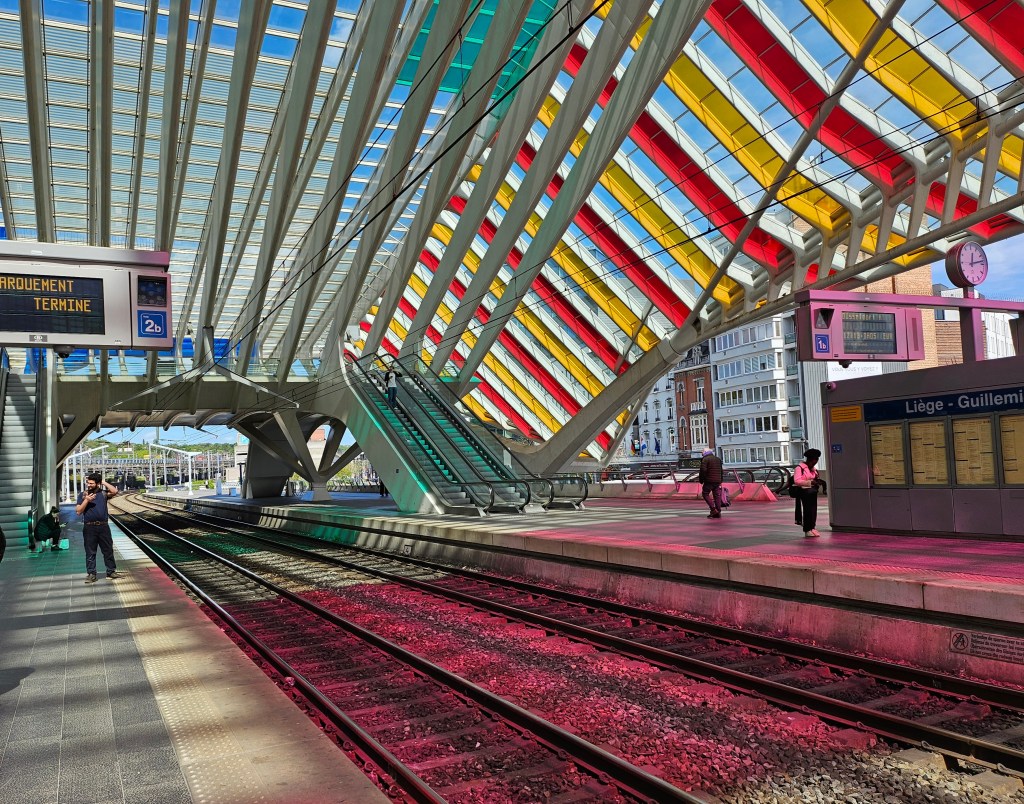
The next train to Brussels left at 12:28 and I travelled on the upper deck of the double-decker train for its hour long journey. I got off at Brussels Centrale and made my way to the Grand-Place. I had not totally decided what to do with my afternoon in Brussels, partly because I had visited on several occasions in recent years and also because Monday is the closing day for many of the museums. I discovered that tours of Brussels Town Hall were only €6 for those over 65, compared with the normal adult price of €15. So I booked myself a ticket for the next available time slot.
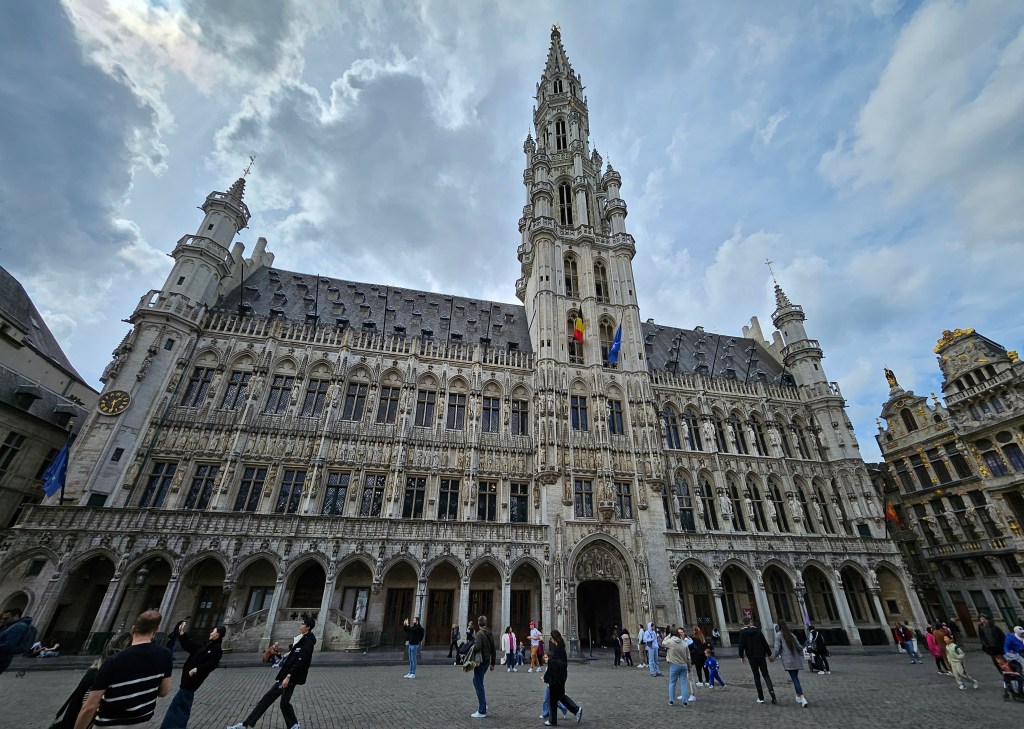
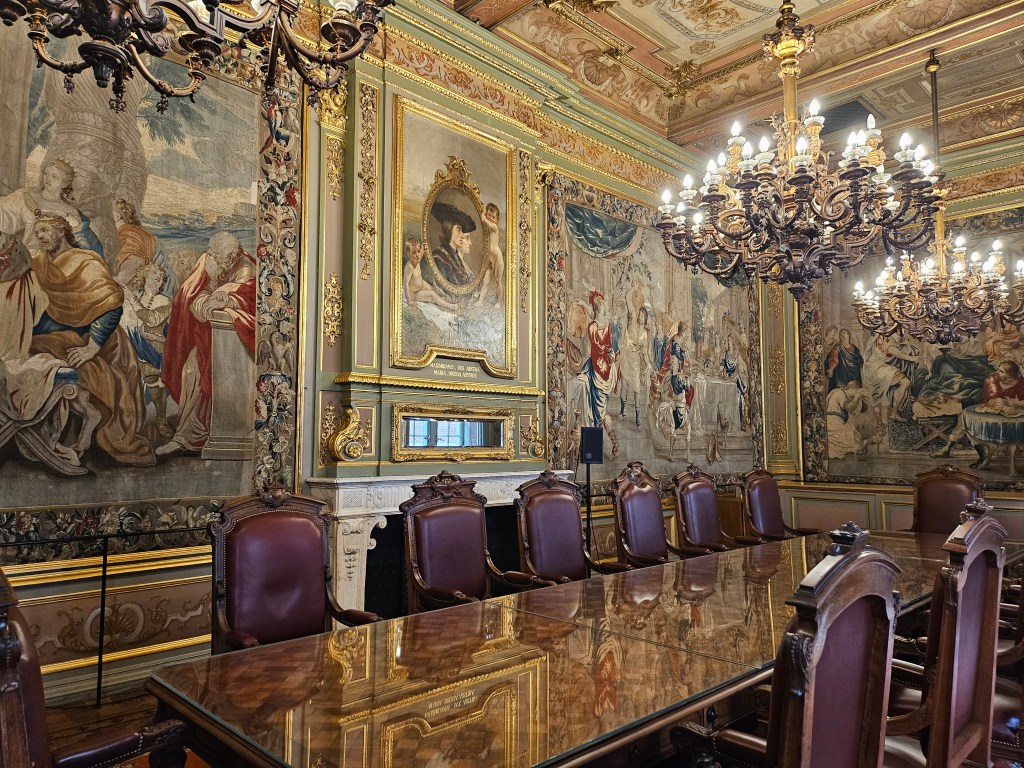
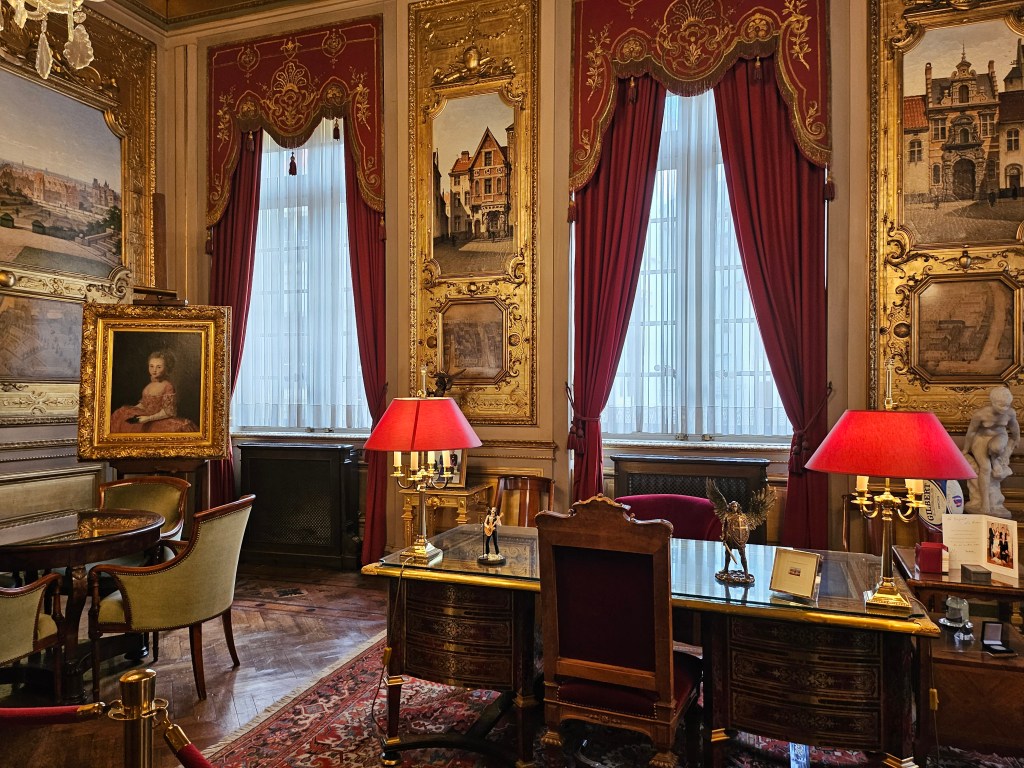
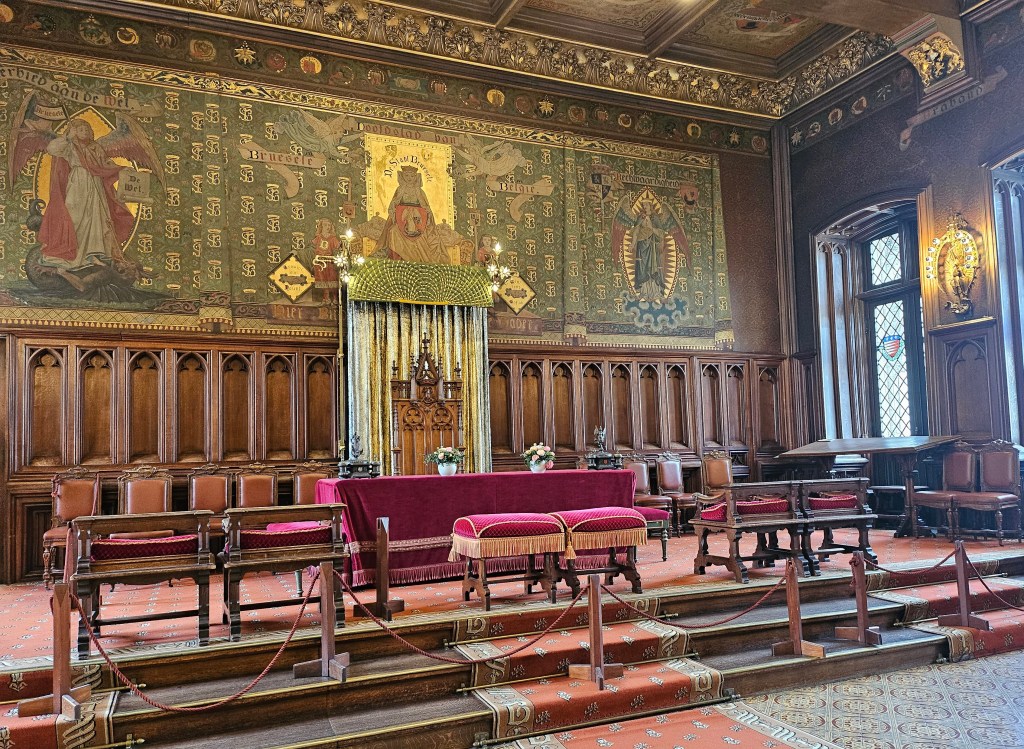
Although the tours of Brussels Town Hall have to be booked for a particular time, they are self-guided using a hand held audio-visual device. The Town Hall is a very impressive building both externally and internally, with the main part built in the 15th century and a later wing added in the 18th century. The building is now largely used for ceremonial purposes, rather than being the seat of Brussels local government. The tour was very comprehensive taking about 90 minutes to complete.
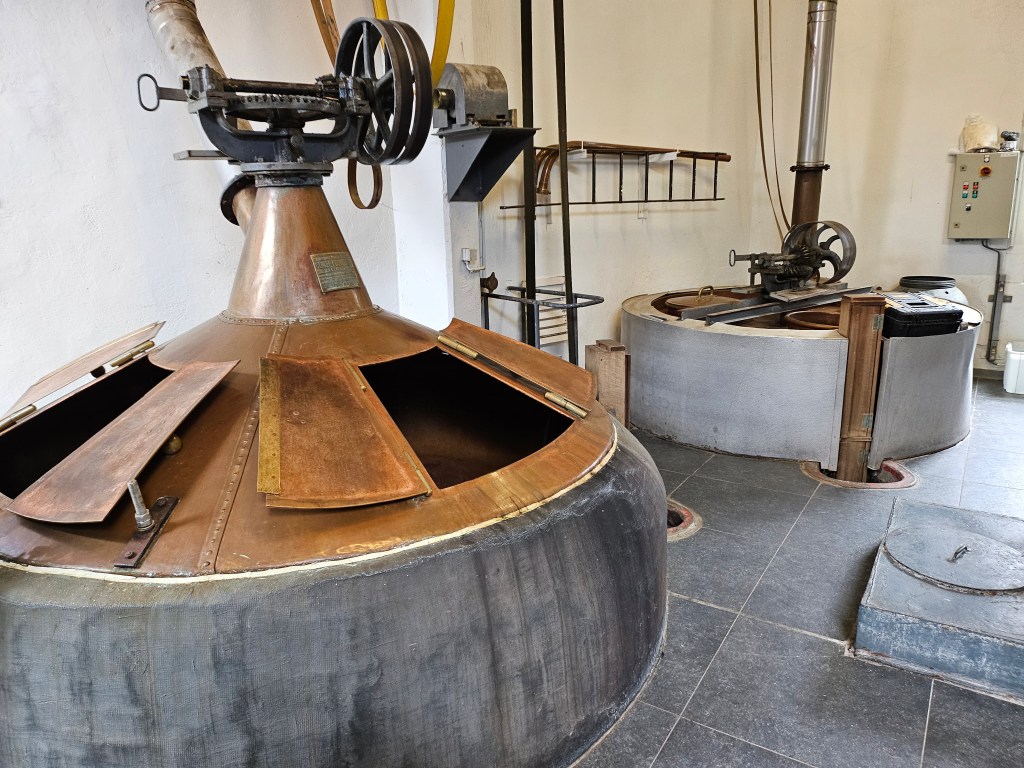
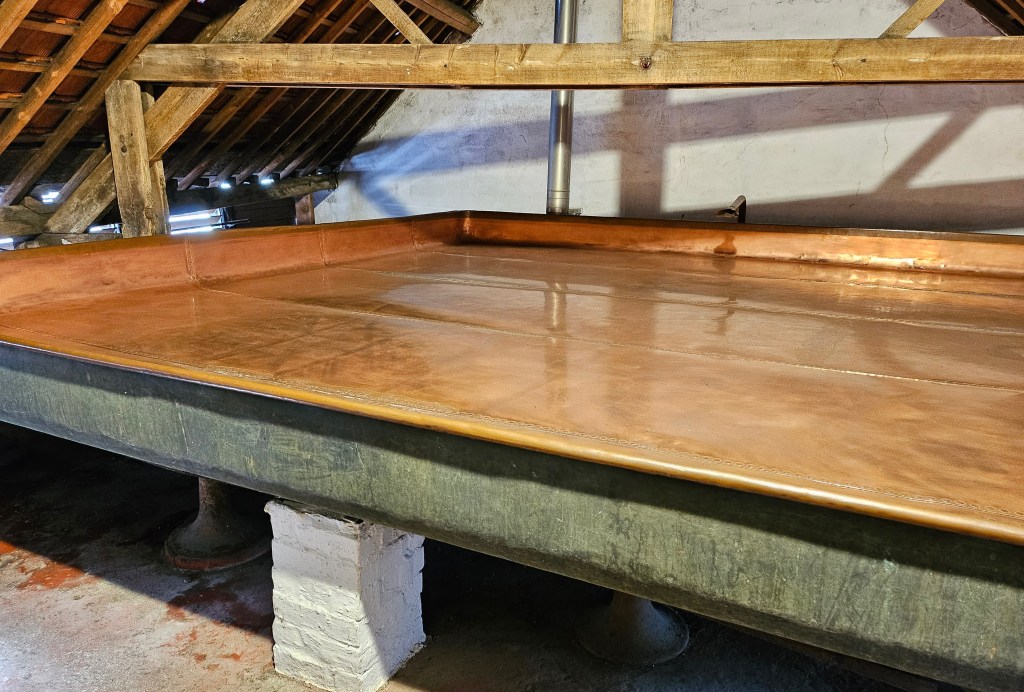
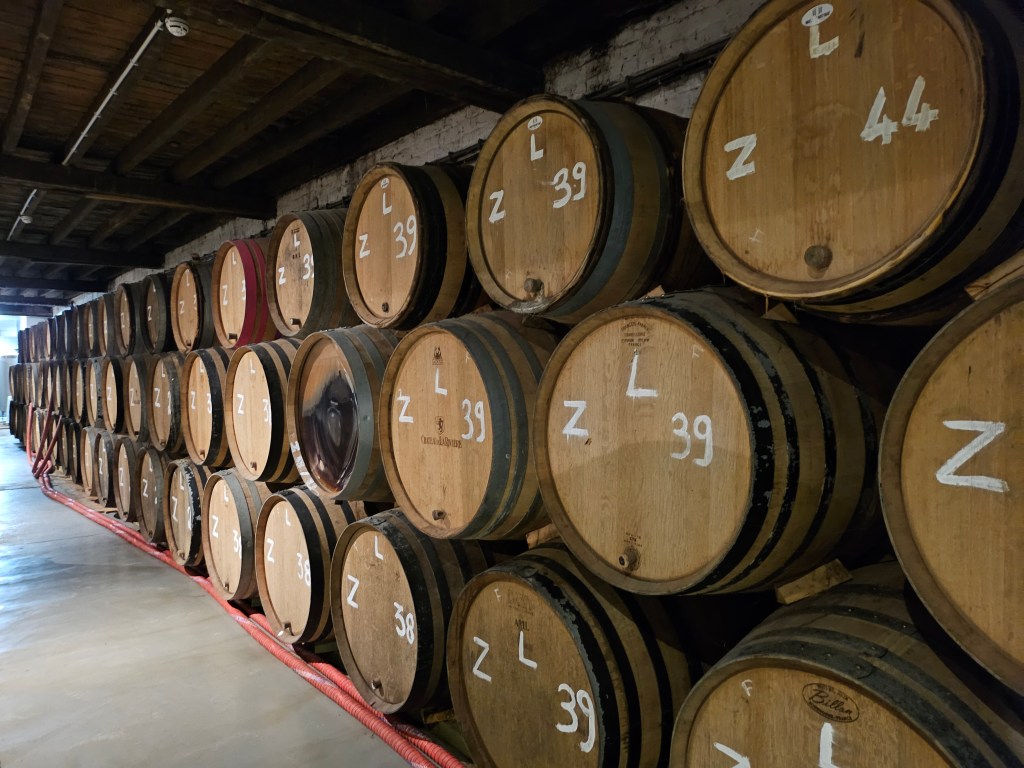
From the Town Hall I walked to the Cantillon Brewery to the south of the city in the Anderlecht district. I had previously visited the brewery about 35 years ago, so I thought a revisit was due. It is also very convenient for when you have to catch a train from Brussels Midi. The brewery only produces lambic-based beers. It relies on spontaneous fermentation of the beers by exposure to yeasts in the air. Consequently brewing can only take place in the winter months when the conditions are conducive for air-based fermentation. At the time of my visit, brewing had just ceased for the summer. After touring the working parts of the brewery, one retires to the bar for a tasting of three different brews.
A short walk from the Cantillon Brewery brought me to Brussels Midi station in plenty of time to check in for the 1756 departure to London. Brussels Midi is now in my opinion the least pleasant of the Eurostar stations from which to catch a train, which is the opposite of how it used to be. The waiting area is cramped with insufficient seats and the former cafe/bar has gone. Instead much of the terminal space is now given over to a large duty free shop, selling overpriced items that nobody seems to want to buy. Fortunately my train was on time so I was spared a lengthy wait in the overcrowded terminal, although you are now forced to board your train by going through the duty free shop.
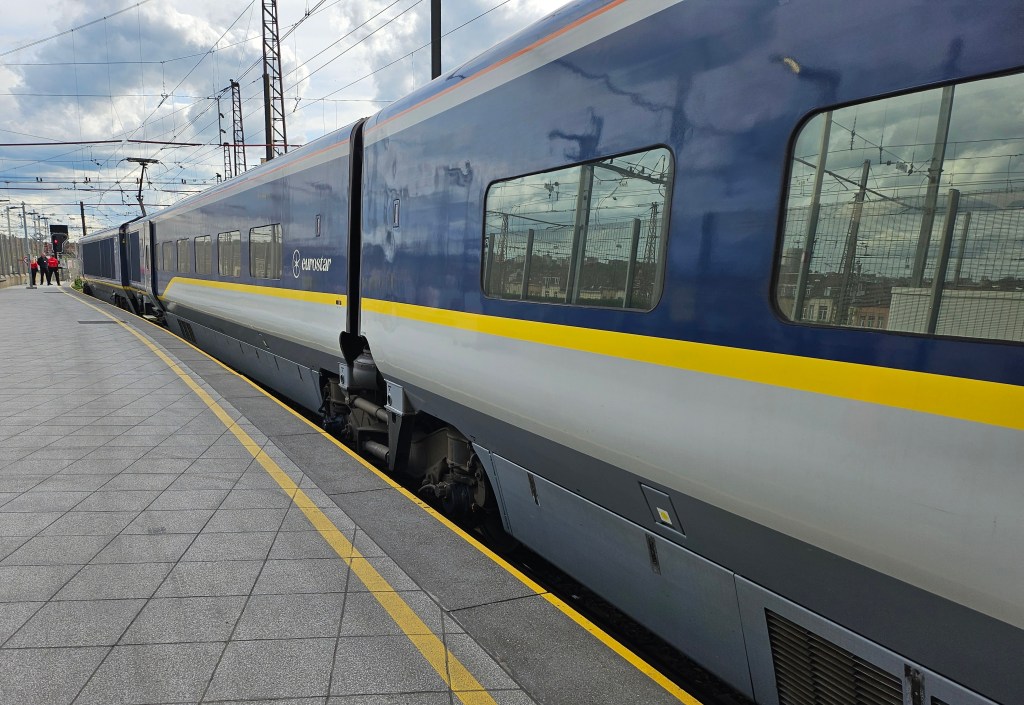
The train had one stop in Lille Europe, where my carriage completely filled up, forcing those who had switched to empty seats on departure from Brussels to return to the ones they had been allocated. It kept to time throughout its journey and arrived at St Pancras punctually at 19:00.
Although only one of my shorter journeys, I had enjoyed my trip to Luxembourg via Liège and Maastricht. I hadn’t allowed nearly enough time to explore Liège properly, but it should be easy enough to stop off there again when travelling by train to or from Germany.
 Europe Explored