
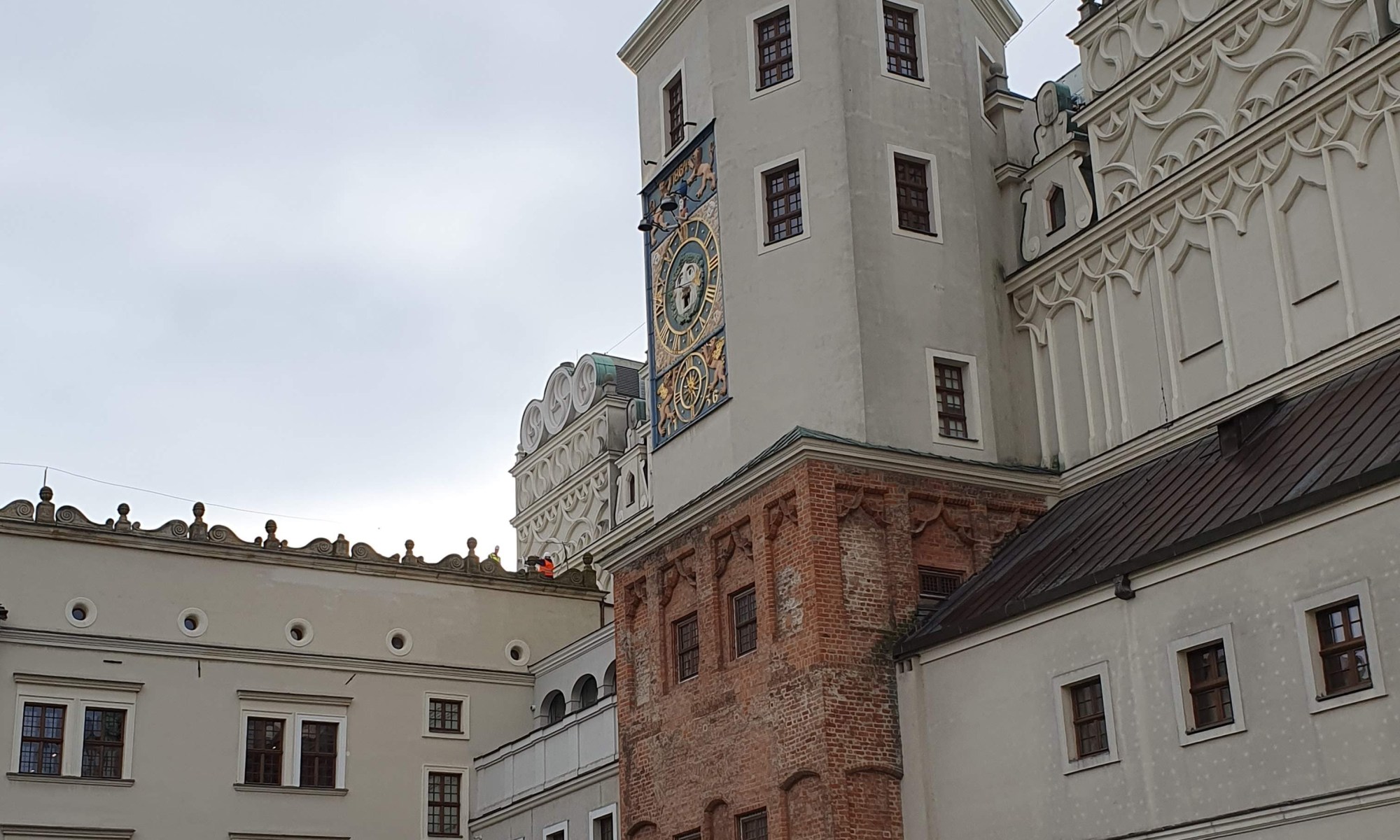
“From Stettin in the Baltic to Trieste in the Adriatic an “Iron Curtain” has descended across the continent” (Winston Churchill)
[Continuing the account of the trip made with my wife to visit a number of Hanseatic ports.]
Day 7 – Tuesday 17th October 2023 – Stralsund to Szczecin via Świnoujście
The Mecklenburg-Pomeranian day rover tickets that we had been using for most of our travels in Germany also cover the direct trains across the border to Szczecin in Poland, and when planning this trip it had been our intention to travel this way. However, at the time we were there this route had two lengthy rail replacement bus journeys. While our rover tickets would have covered these buses, we chose instead a different, longer, but more interesting route.
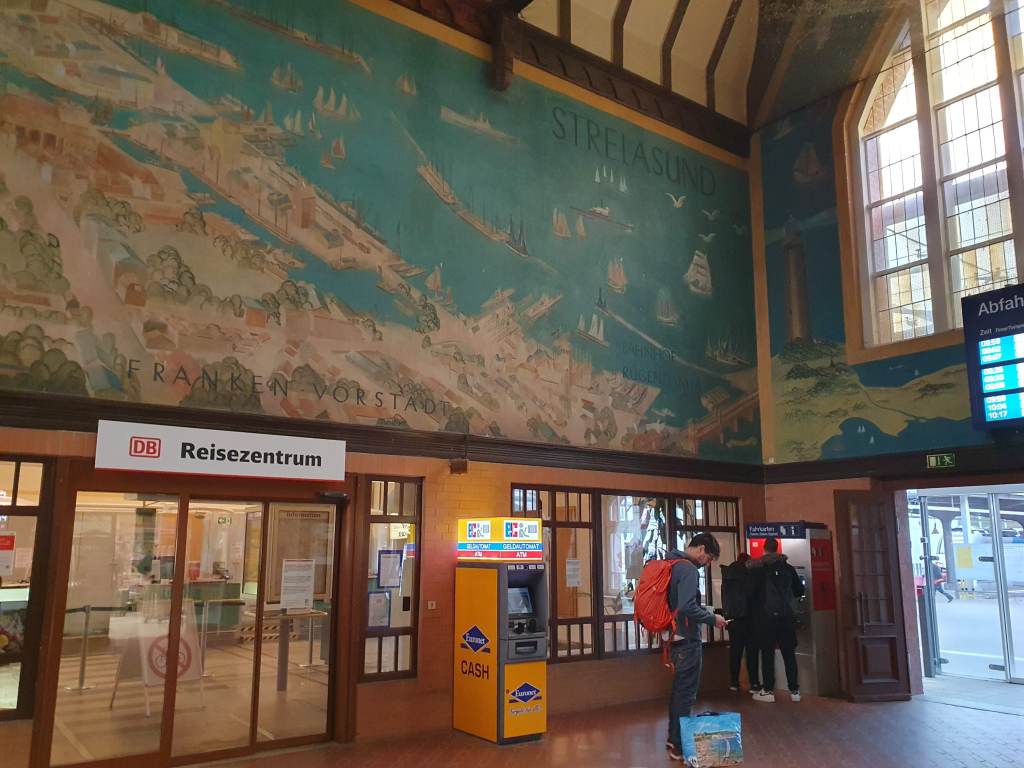
Setting off from Stralsund, I again bought a large pastry for breakfast from the baker’s shop at the station. As we only had five minutes for our first connection of the day, at Züssow, I was relieved when our train came into the platform at Stralsund on time for its 0925 departure. However, my relief was short lived, as the electronic display on board the train was showing a timetable that was running seven minutes later than the schedule we were expecting. Fortunately, the on board display was incorrect and the train kept to the times indicated within the DB app.

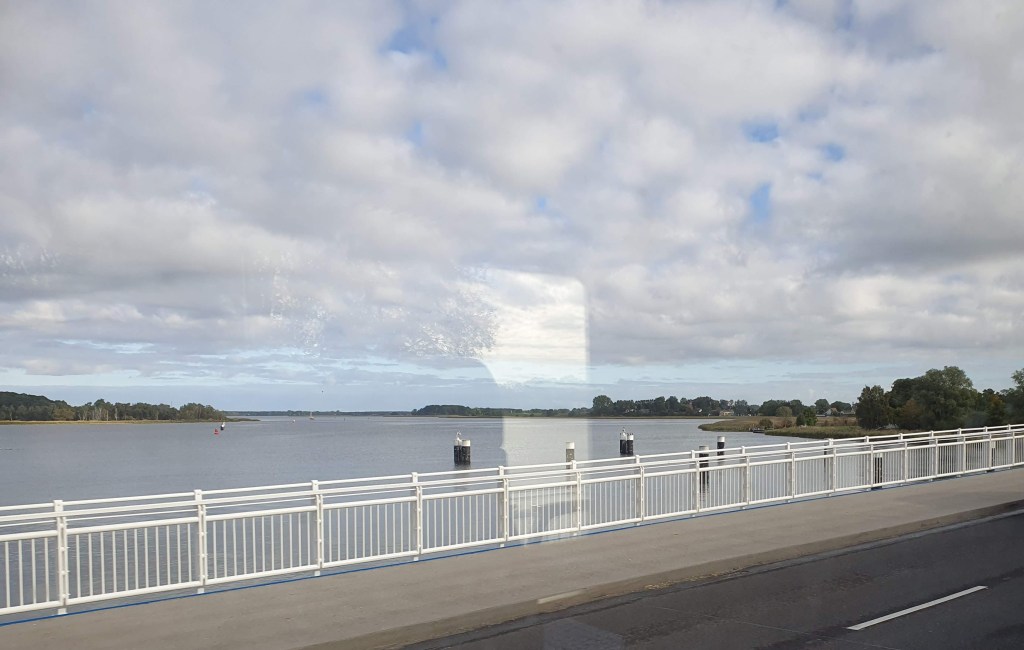
We arrived at Züssow on time at 1003 and it was a simple cross platform change to where our next train was already waiting. This train was to take us on to the island of Usedom, the second largest German island after Rügen. The train left promptly at 1008 and was fairly full on departure, but picked up more passengers before going over the bridge to Usedom. At Zinnowitz you could change for the waiting train to Peenemünde, home of German rocket research during World War II, at the other end of Usedom. Sadly, we had no time for an excursion to Peenemünde, so stayed on the train as it passed through various seaside resorts. At Seebad Heringsdorf the train reversed direction for the final leg to the tip of Usedom. The far eastern tip of Usedom is in Poland, making Usedom the tenth largest island in the world to be divided between more than one country. Only the final stop, Świnoujście Zentrum, is in Poland and our Mecklenburg-Pomerian day rover tickets covered our journey to there.
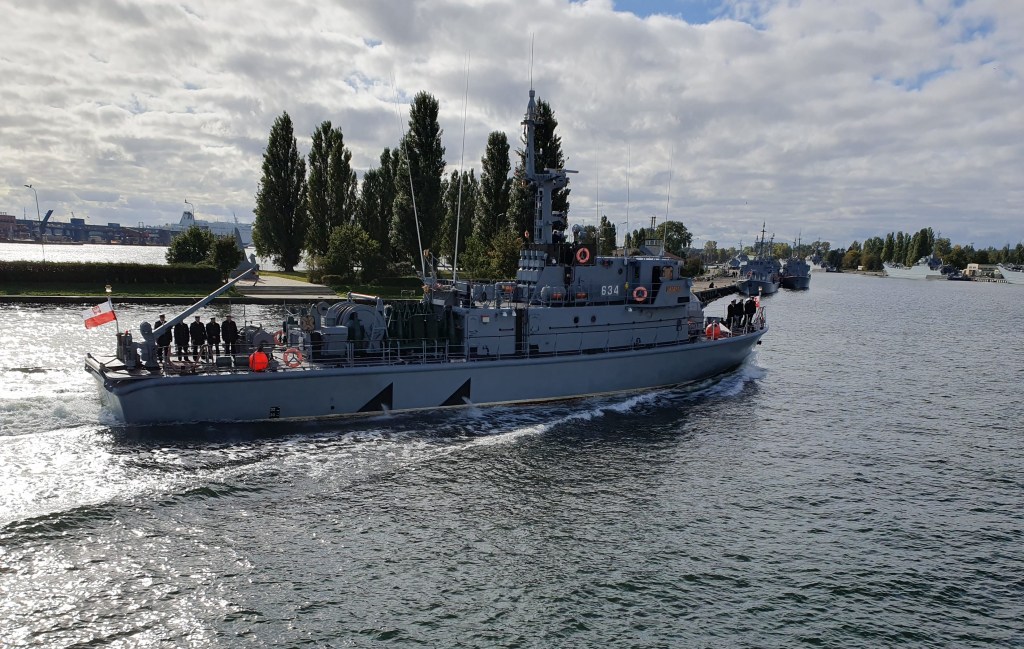
We arrived at Świnoujście Zentrum at 1139. From there it was just over a mile to walk to the ferry terminal, from which ferries leave every 30 minutes. We arrived at the ferry terminal just too late to catch the 1200 sailing, but we could see the incoming boat coming across the Swina estuary and we were on board the 1230 sailing by 1215. Świnoujście is a major port for the Polish navy, and while waiting for our ferry to depart we could observe various naval vessels in the harbour, including one arriving with all the sailors lined up on deck standing to attention.
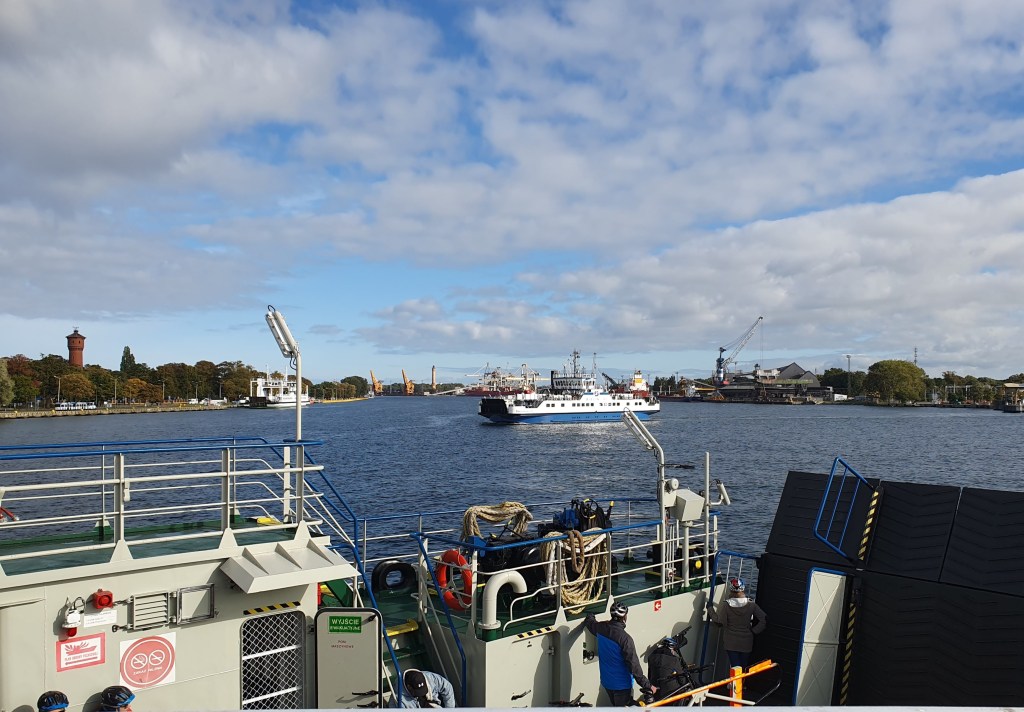
It takes just over ten minutes on the ferry to cross the Swina and get to the island of Wolin. On this side it is a very short walk to Świnoujście railway station, where our 1311 train was already waiting. As this train was eventually going to Krakow, rather than going to Szczecin’s main railway station, it skirted the city only calling at Szczecin Dabie on the outskirts. We returned to mainland Europe after over three hours on Usedom and Wolin, before arriving a few minutes late at Szczecin Dabie at 1437. Dabie is a fairly inhospitable station, with limited facilities and no live train departure information. We had hoped to catch a local train at 1449 to Szczecin Główny, but it never appeared, so we waited for the next one five minutes later. We eventually arrived at Szczecin Główny at 1508. From there it was about a mile to walk to our hotel in the old town.

The hotel we stayed in in Szczecin was located on the old town square and was the nicest, and cheapest, of all the hotels on this trip. It was directly opposite the old town hall which now serves as the main city museum, so after dropping off our bags we went straight there. Unfortunately, at the time of our visit the top two floors of the museum, which cover Szczecin’s more recent history, were temporarily closed, so the the museum did not take us as long as we had anticipated.
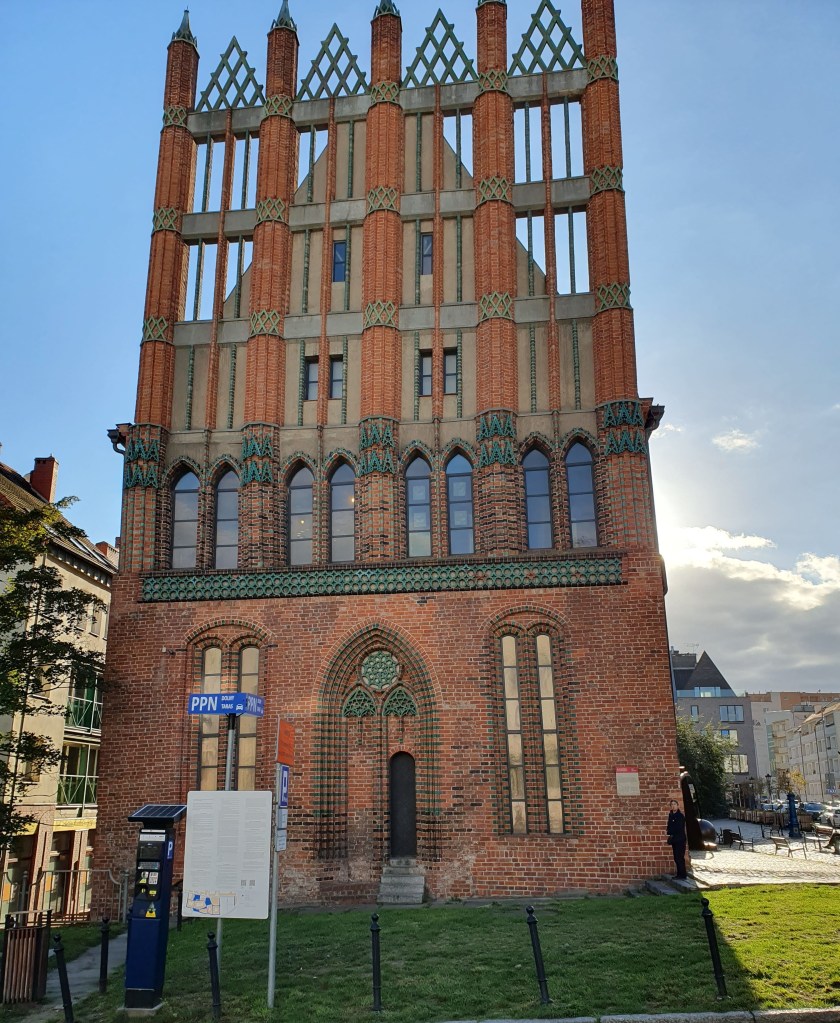
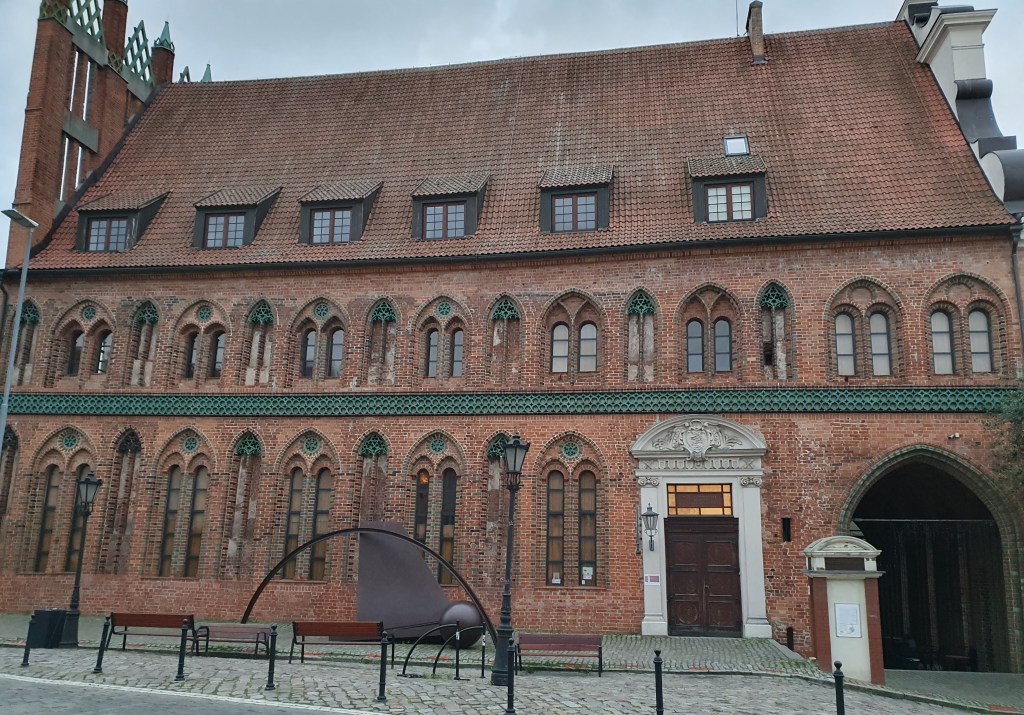
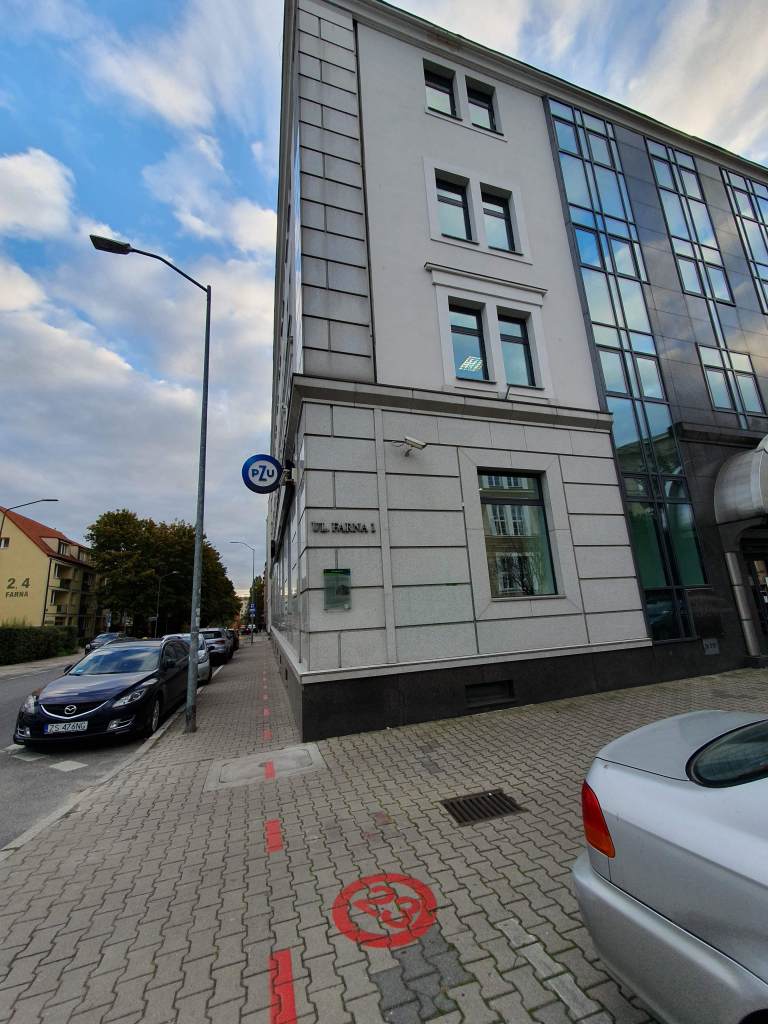
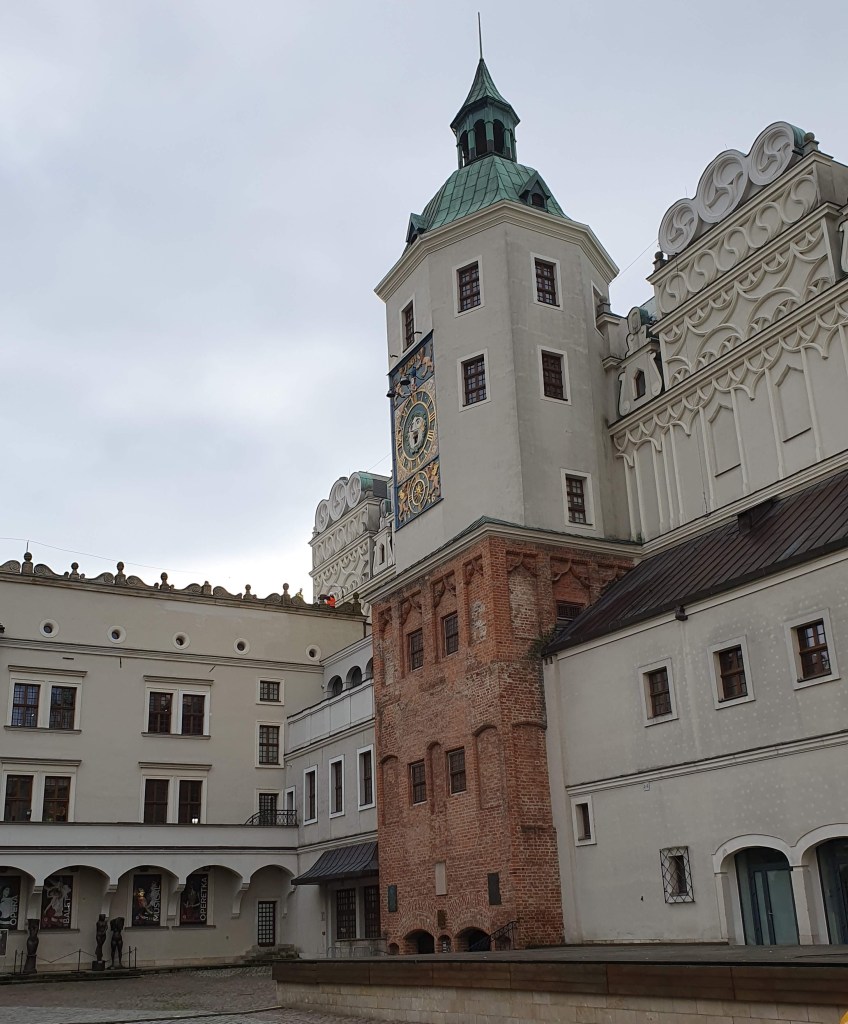
Until the end of World War II Szczecin was the German city of Stettin, immortalised by Churchill as from where the Iron Curtain ran across Europe to Trieste in the Adriatic. Within Szczecin there is a walking route marked with a red line on the ground which takes in all the main sights. We went to a tourist office located within the Castle of the Dukes of Pomerania, where we acquired a map of the red route. From there we followed sections of the route going past Szczecin Cathedral and the location of the birthplace of Catherine the Great of Russia. Catherine the Great, arguably the most powerful woman that the world has ever seen, started life in Szczecin as a minor Pomeranian princess, and the site of her birth is now occupied by the offices of an insurance company. We followed the red route until dusk, whereupon we returned to our hotel and planned where to eat dinner.
As the restaurants in the old town seemed a little expensive by Polish standards, and largely served non-Polish cuisine, we ventured into the more modern part of the city, where we ate in a large busy establishment. Fancying traditional Polish food on our first night in the country, I had borscht to start, followed by duck with dumplings and red cabbage, with Polish wheat beer to drink. The food was good and inexpensive, and despite being very busy, the service was attentive, which explained the popularity of the restaurant.
Day 8 – Wednesday 18th October 2023 – Szczecin to Gdańsk
In Szczecin we had the only hotel breakfast of the whole trip, after which we went to explore the Castle of the Dukes of Pomerania, which we had only looked at briefly the previous evening. We then returned to our hotel to collect our bags and made our way to Szczecin Główny station, by following some more of the red walking route (in reverse order) than we had not had time for previously.
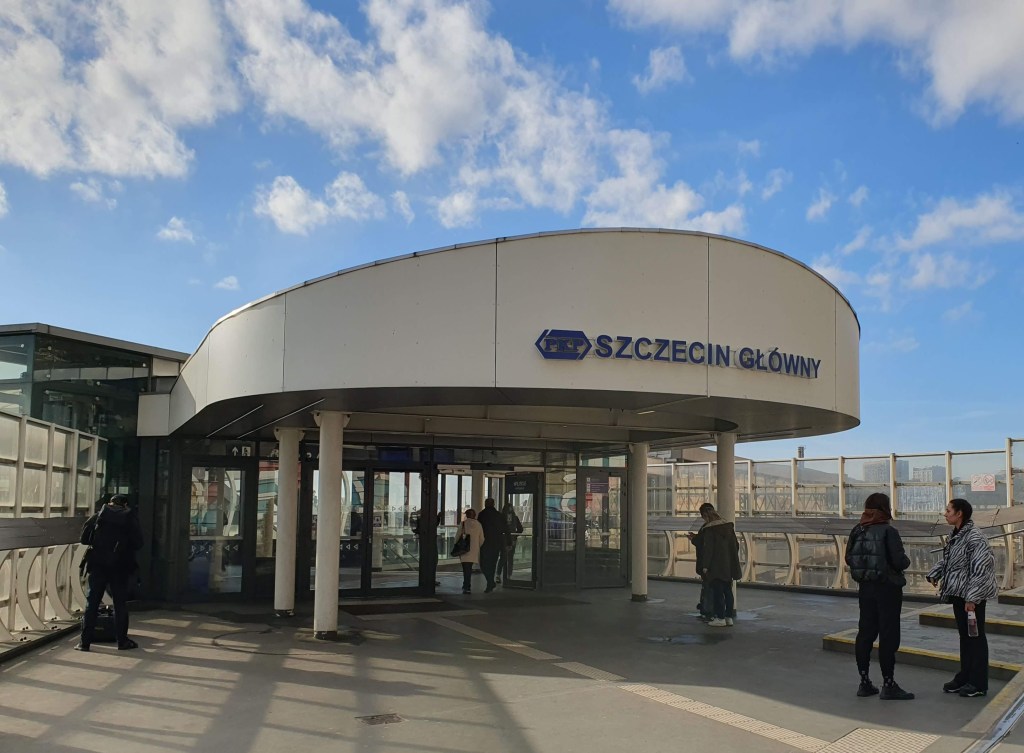
We were catching the 1106 train and arrived in good time for it. There was not much to explore at Szczecin Główny as unlike some other major Polish stations it did not have a shopping centre attached, nor did it have any interesting old station buildings. For the long journey to Gdańsk we had bought first class tickets (the only time on this trip) and, while other passengers came and went, we shared the six seater compartment all the way to Gdańsk with two women.
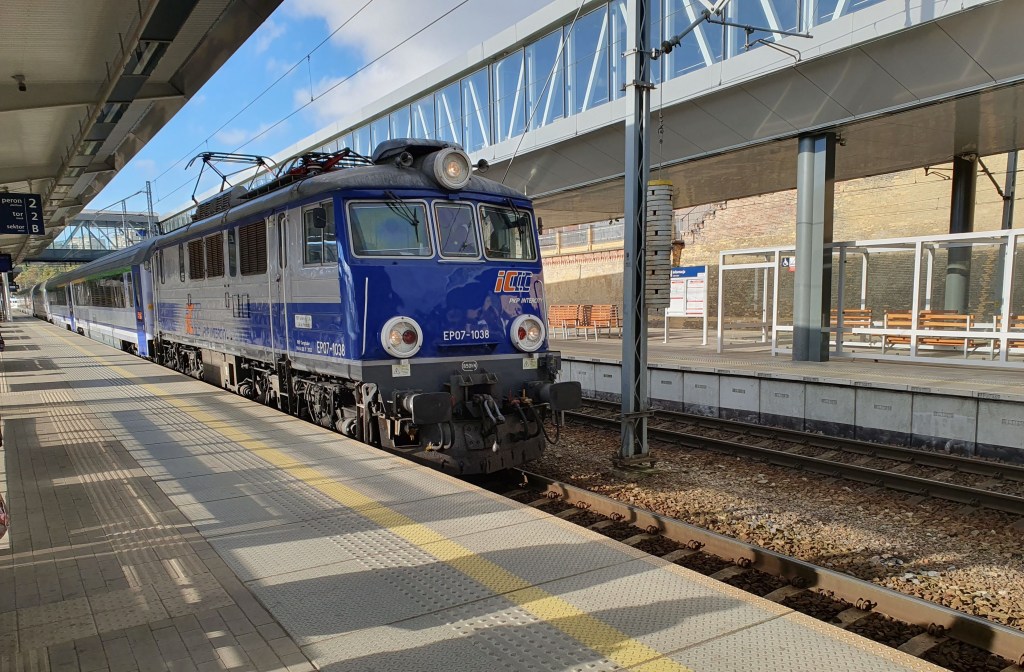
Although the distance from Szczecin to Gdańsk is only about the same as that from London to Manchester, the journey was scheduled to take 4 hours 40 minutes, for much of which the train trundled on a single track line across the flat plains of northern Poland, before returning to the Baltic coast at Gydnia and then on to Gdańsk Główny, arriving on time at 1546.
Gdańsk Główny station is cut off from the old town by a dual carriageway, which you have to cross using an underpass. It was a short walk to our hotel, which was in a communist era tower block. So although the bedrooms had been refurbished, they were rather small, the cramped feeling not being helped by having rather too much furniture crammed into them.
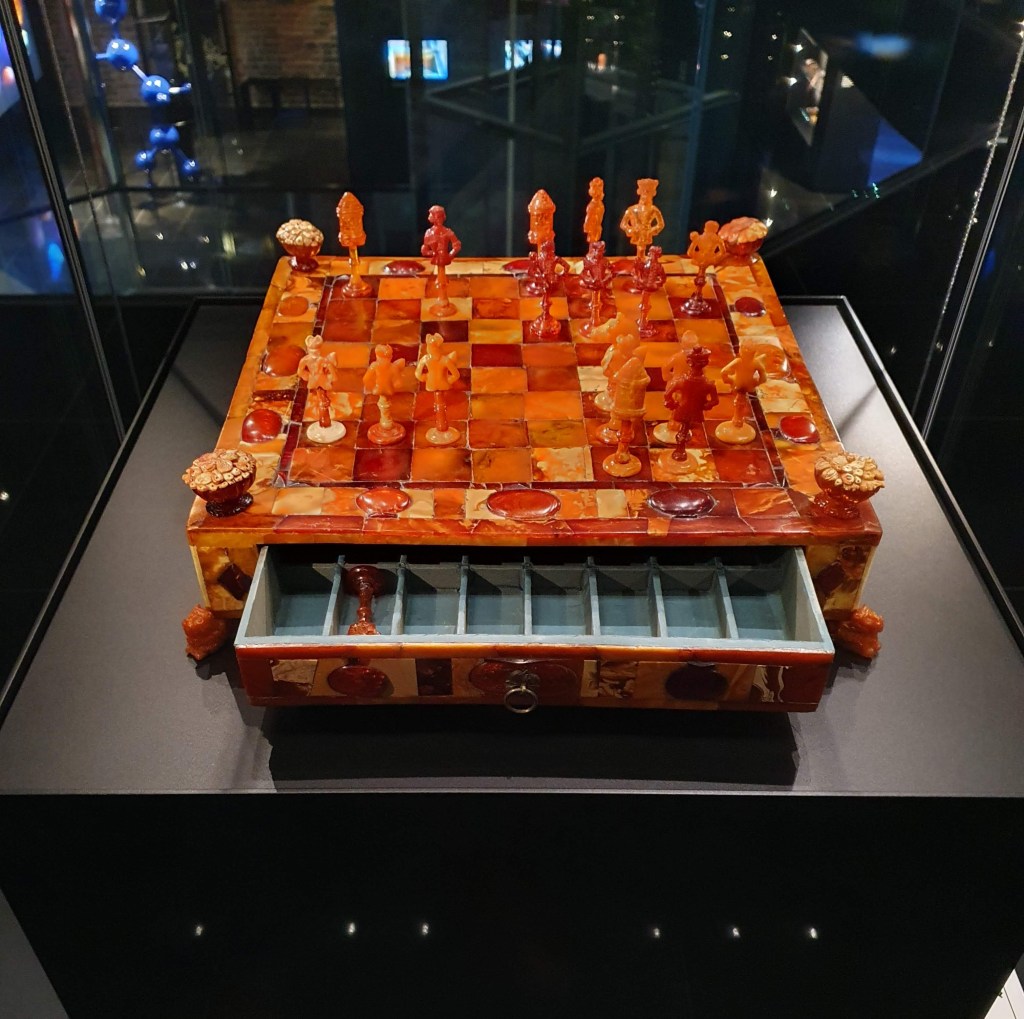
After leaving our bags, we went straight to the nearby Amber Museum, which was having free entry that day. Our son had visited Gdańsk a year earlier than us and it was one of the places that he recommended. I found the displays of the different types of naturally occurring amber rather more interesting than the exhibition of amber jewellery. We stayed in the Amber Museum until nearly closing time.
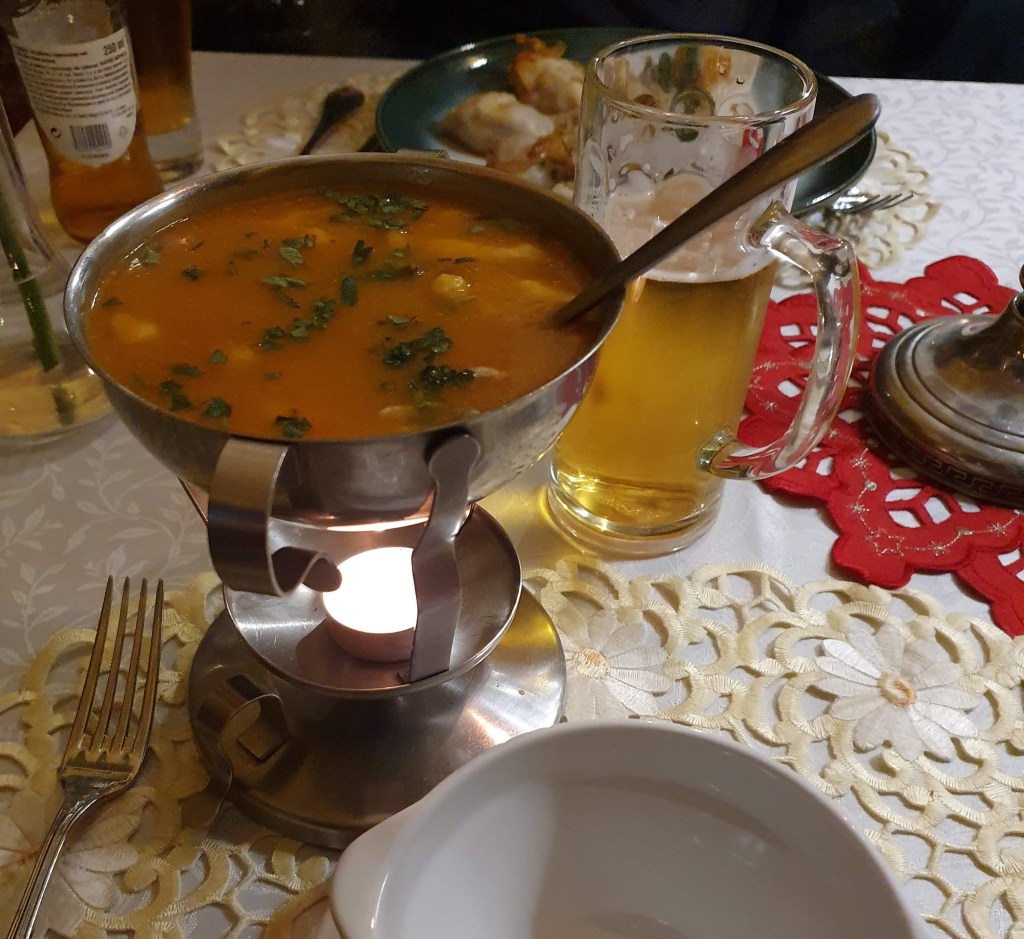
That evening we ate in a restaurant in the old town. I had a quite nice bowl of pumpkin soup to start, but the main course described as pork cutlet was rather disappointing, as was my wife’s main course. There was an added floor show of a woman who appeared to be drunk being evicted from the restaurant, only for her to wander back in on several occasions.
Day 9 – Thursday 19th October 2023 – Gdańsk
Before any of the attractions we wanted to visit had opened we went for a walk through the old town of Gdańsk, stopping off at the Tourist Information to buy a Gdańsk Card which gave us free admission to the places that we wished to visit in the city.
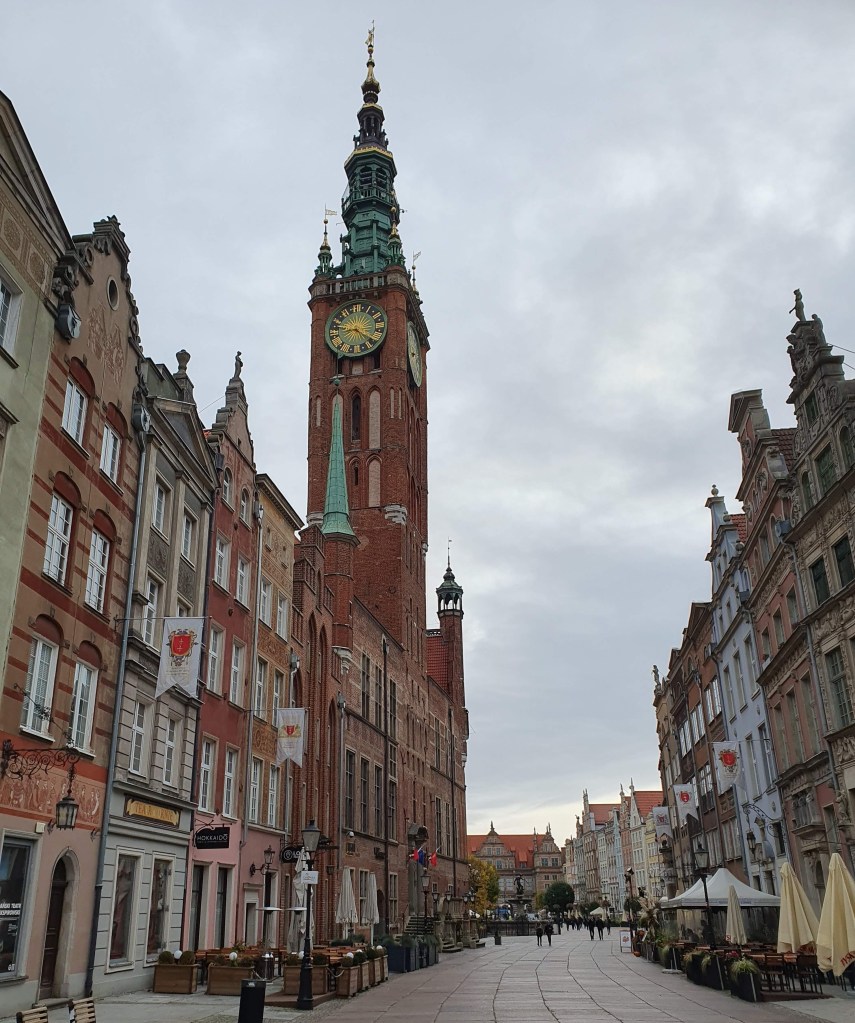
We then walked to the north of the city to where the Gdańsk shipyard is located to visit the Europejskie Centrum Solidarności (European Solidarity Centre), an enormous museum devoted to the history of Solidarity and other resistance movements which helped to overthrow communism in eastern Europe. We had an audio guide to provide commentary through our visit. We arrived so that we could enter as soon as the museum opened at 10am and spent over three and a half hours there, although had we wished it could have been longer, as we had no time to visit the special exhibition on the history of the shipyard. From the roof of the museum there is a good view of what remains of the shipyard, now much reduced in size due to competition from the Far East.
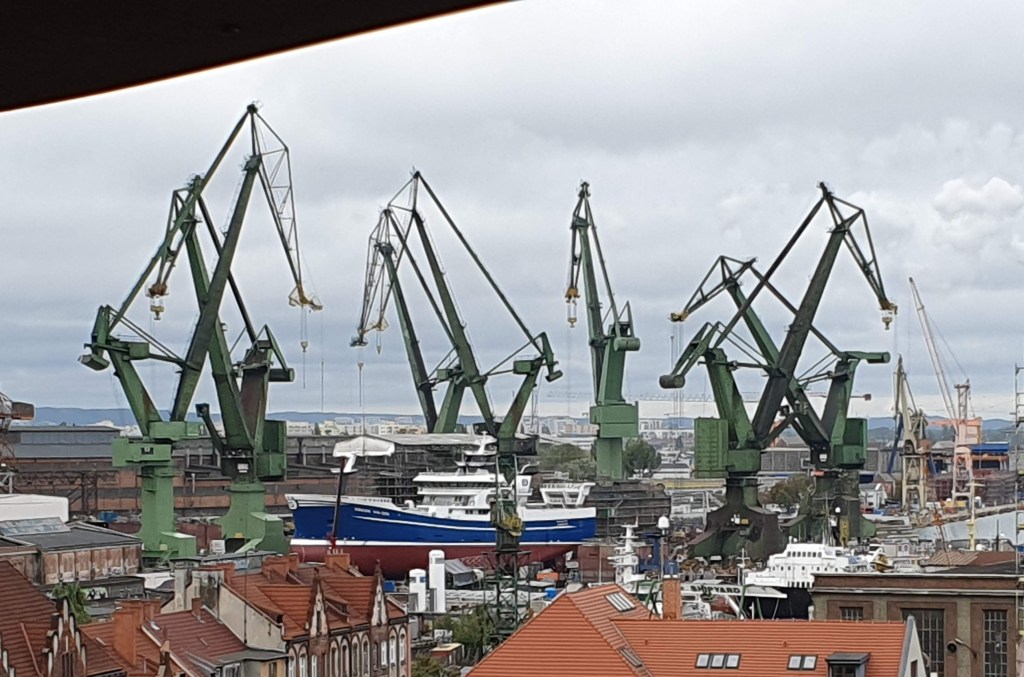
Returning to the old town we stopped off on route to have a quick look inside St Brigid’s church, which has an elaborate amber altar that is still a work in progress. St Brigid’s was a place of sanctuary for the leaders of Solidarity during the period of martial law in Poland in the 1980s.
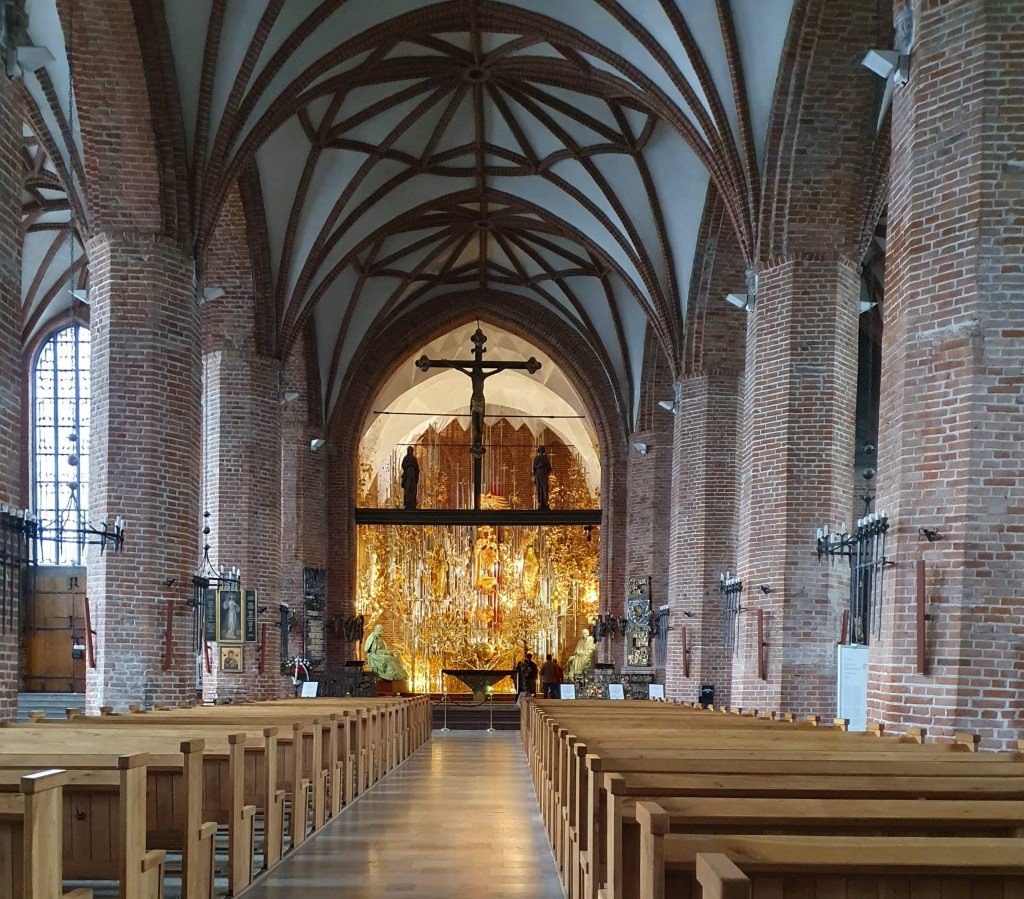
For the remainder of the day we visited a number of historic buildings in Gdańsk old town. First was Gdańsk Town Hall, an ornate building in the centre of the city which houses the main city museum. As Danzig, Gdańsk had been part of Prussia from 1793 to the end of World War I, when it became a free city under the protection of the League of Nations. Occupied by the Germans at the very start of World War II, it became part of Poland in 1945. One of the items on display in the town hall is the desk of the former mayor Paweł Adamowicz who was assassinated in 2019.
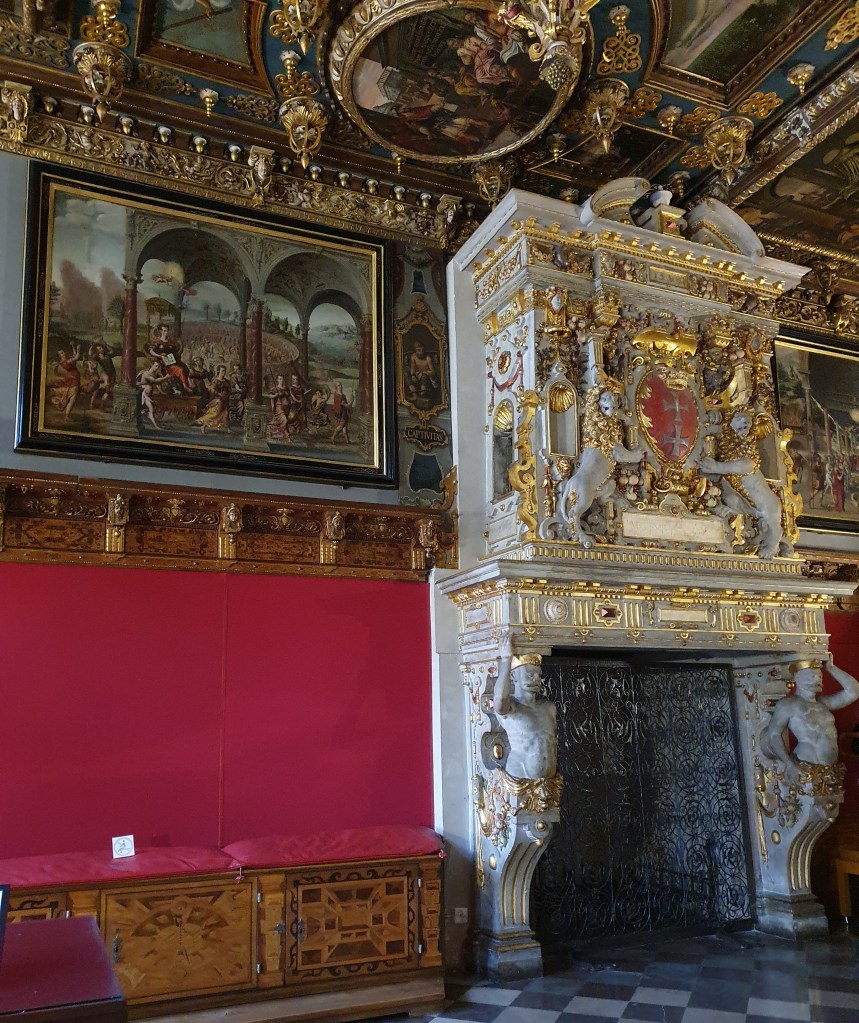
We then went to the nearby Artus Court. Originally built in the 14th century, the building contains a large lavishly decorated gothic hall. During its history, the building has been used for a variety of purposes, from a drinking establishment for the city’s elite to a stock exchange. As with most buildings in Gdansk, Artus Court was badly damaged in World War II and has been extensively restored, albeit with some work still to be completed.
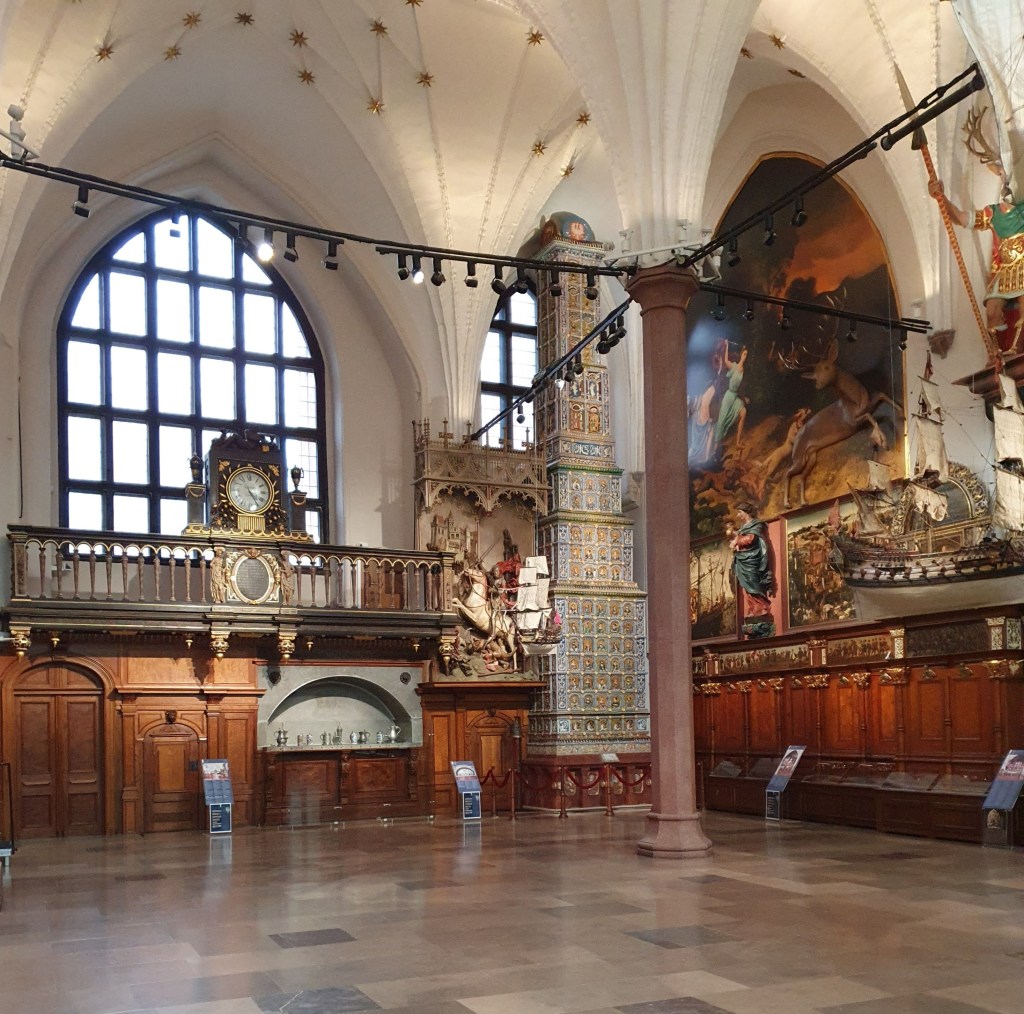
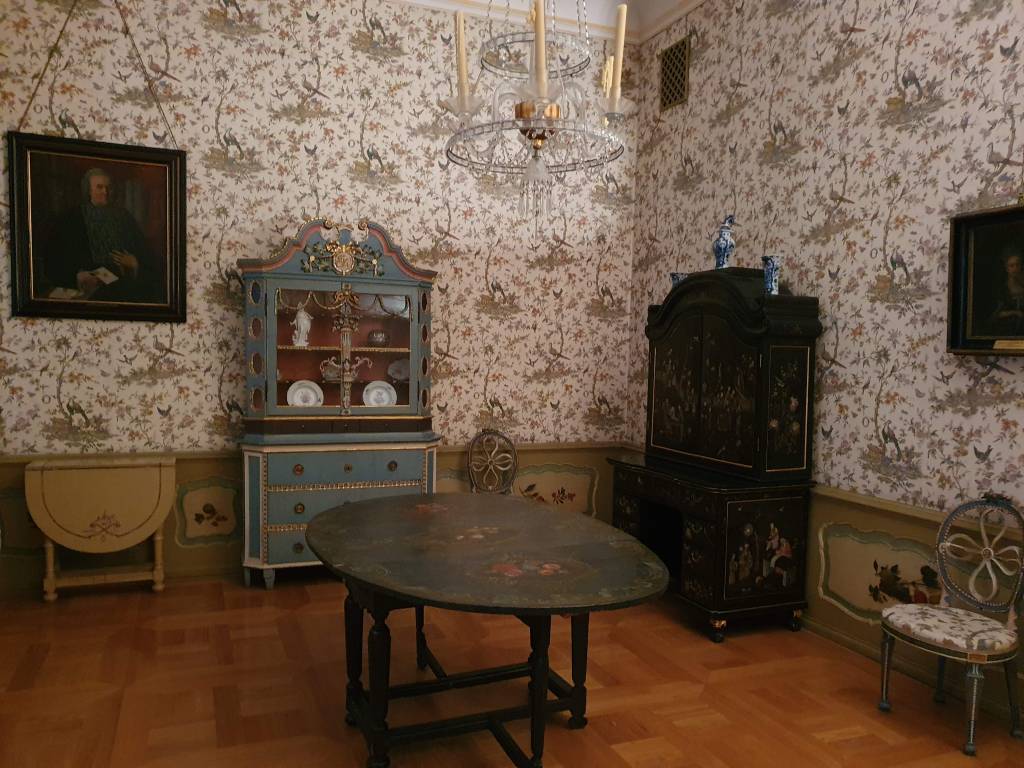
Our final visit of the day was to the Uphagen House, the former town house of a wealthy 18th century merchant, Johann Uphagen. It remained in the Uphagen family until early in the 20th century, when it was converted into a museum. We were the only visitors during our time there and left the house just before it was due to close for the evening.
For dinner that evening we went to a pizza restaurant, where I had a very good Nduja pizza, followed by pistachio ice cream.

Day 10 – Friday 20th October 2023 – Day trip to Malbork
We decided to go on a day trip to visit Malbork Castle, which, depending on how you define it, could be the largest castle in the world. Malbork is about 35 miles from Gdańsk and as the castle opens at 9am, we set off early to maximise our time there. We had pre-booked tickets on the 0815 inter-city train from Gdańsk Główny. This train was going to Warsaw and our carriage was full on departure from Gdańsk. It took just under 30 minutes to reach Malbork.
The weather had been getting steadily worse on our trip, and on this day the temperature was only just above freezing and it was raining hard. I had not come prepared for such wintry weather and the 15 minute walk from the station to the castle was rather uncomfortable.
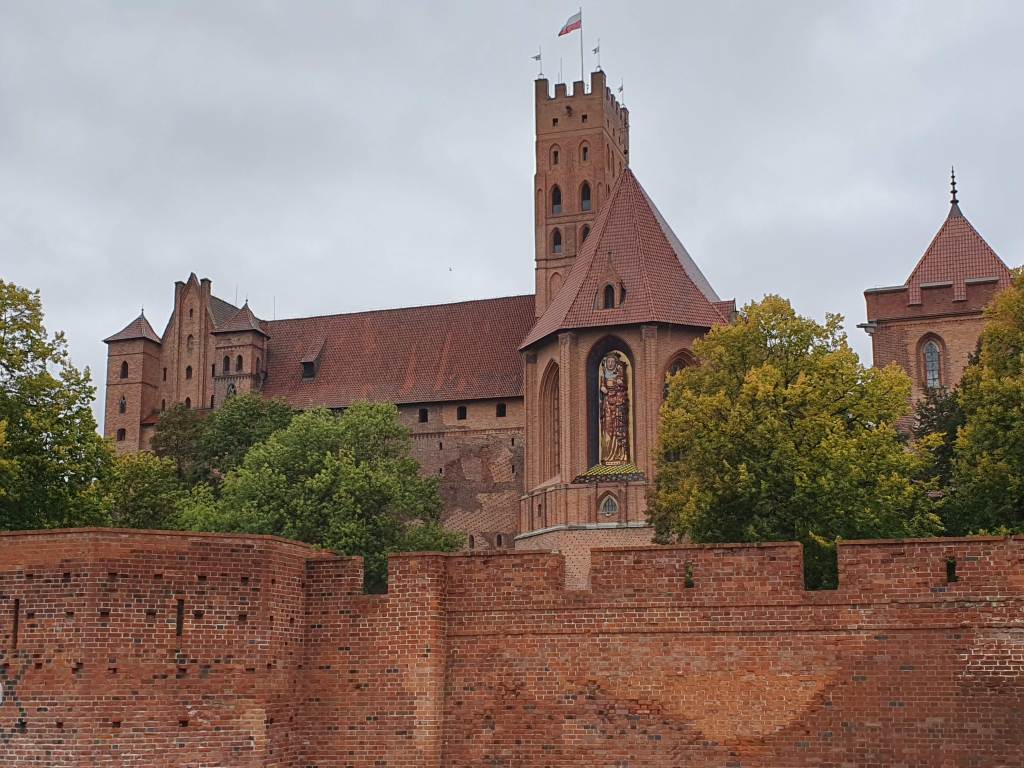
We arrived at Malbork Castle at its opening time of 9am and acquired audio guides for our tour. The first few stops on the audio tour were outside and we were glad when we eventually went into the buildings of the castle and got shelter from the freezing rain.
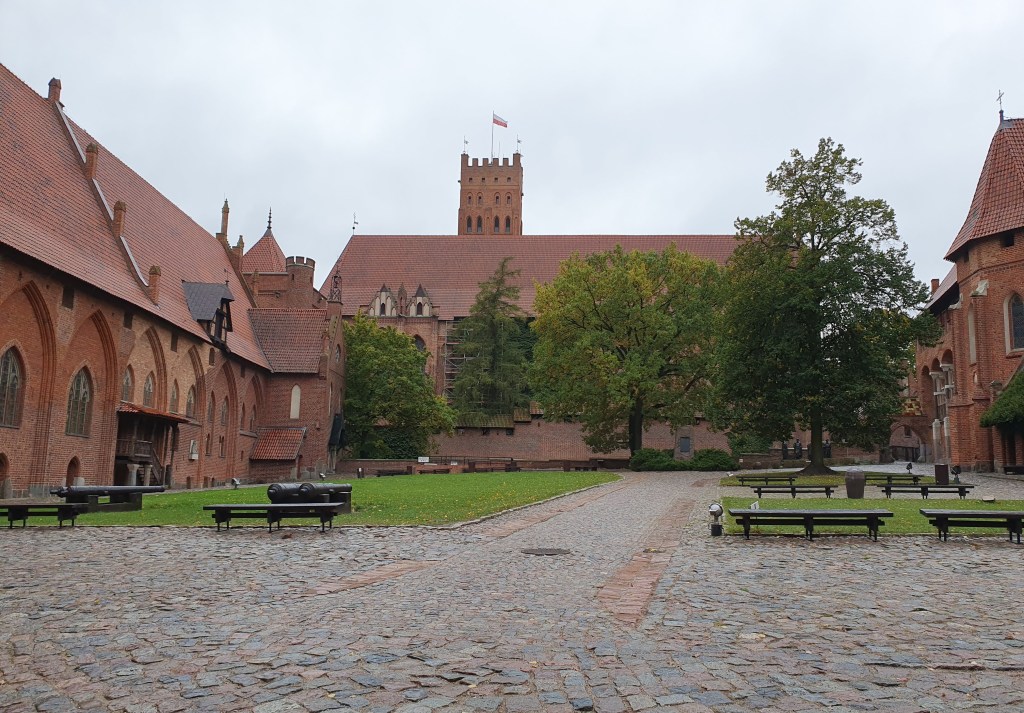
Malbork castle was built by the Teutonic Knights, originally being completed in 1406. Malbork was in Prussia after 1772, and a major restoration was initiated in 1816. In World War II it was heavily damaged. Our tour of the castle initially took us through the buildings surrounding an outer courtyard, before going on to the high castle which has its own smaller courtyard.
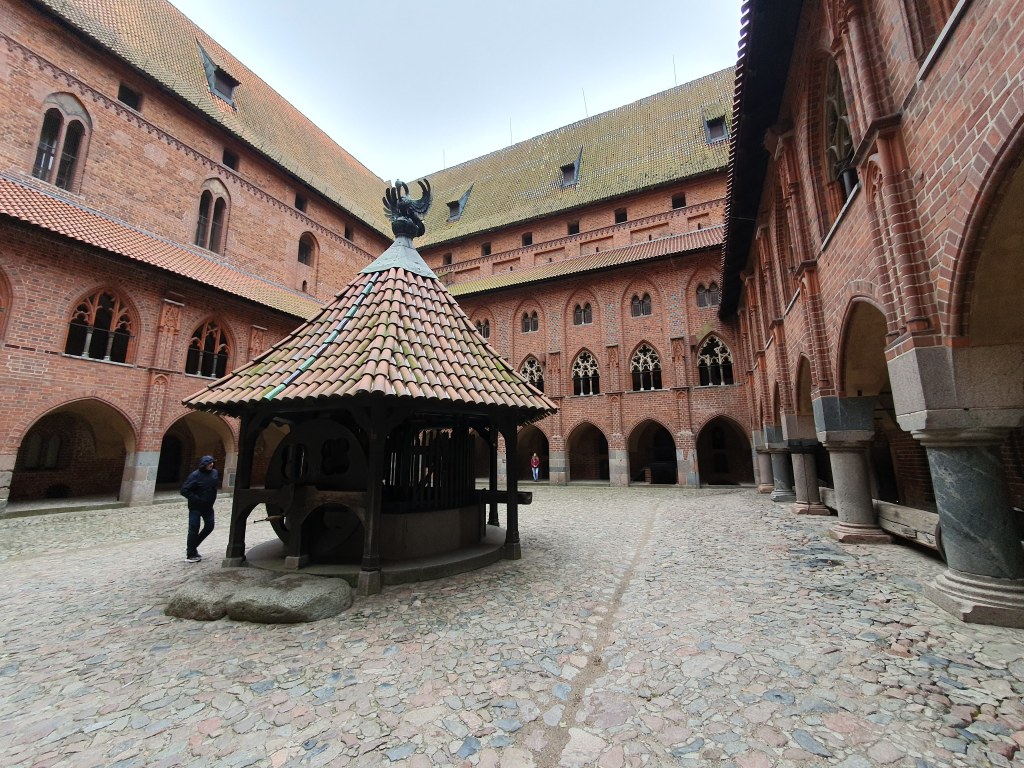
The audio tour described the history of the castle, and the role of the Teutonic Knights. There was a large exhibition of armour, including hundreds of different types of sword. There was also an amber collection, which we didn’t study in as much detail as some of the other exhibitions, since we had already been to the Amber Museum in Gdańsk. Malbork only became part of Poland after World War II, and during the Nazi period the castle was a place of pilgrimage for the Hitler Youth, incorporating the mythology of the Teutonic Knights into their ideology.
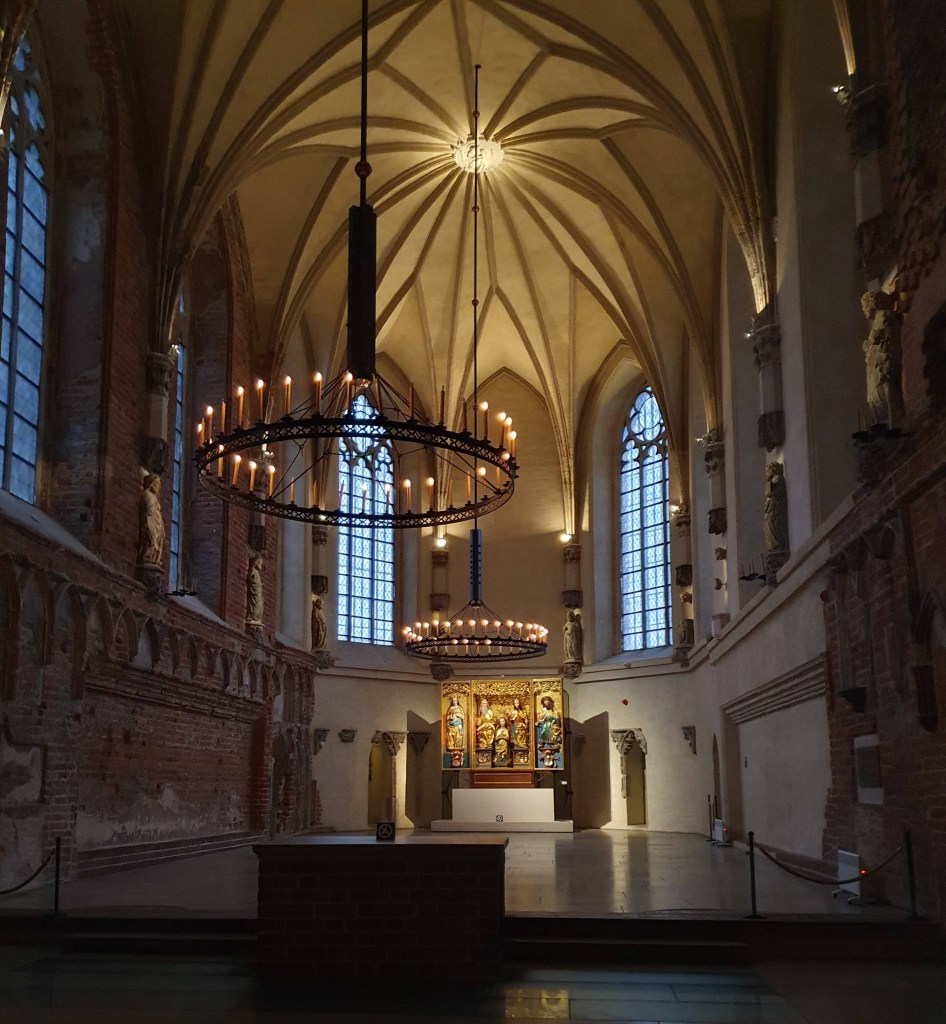
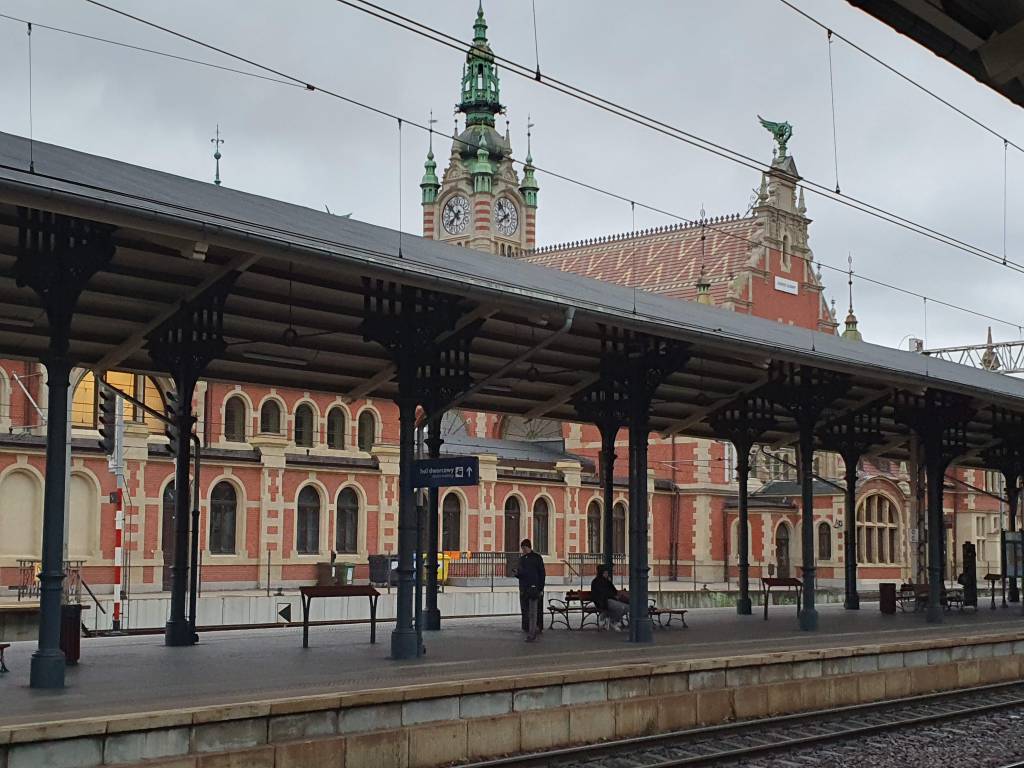
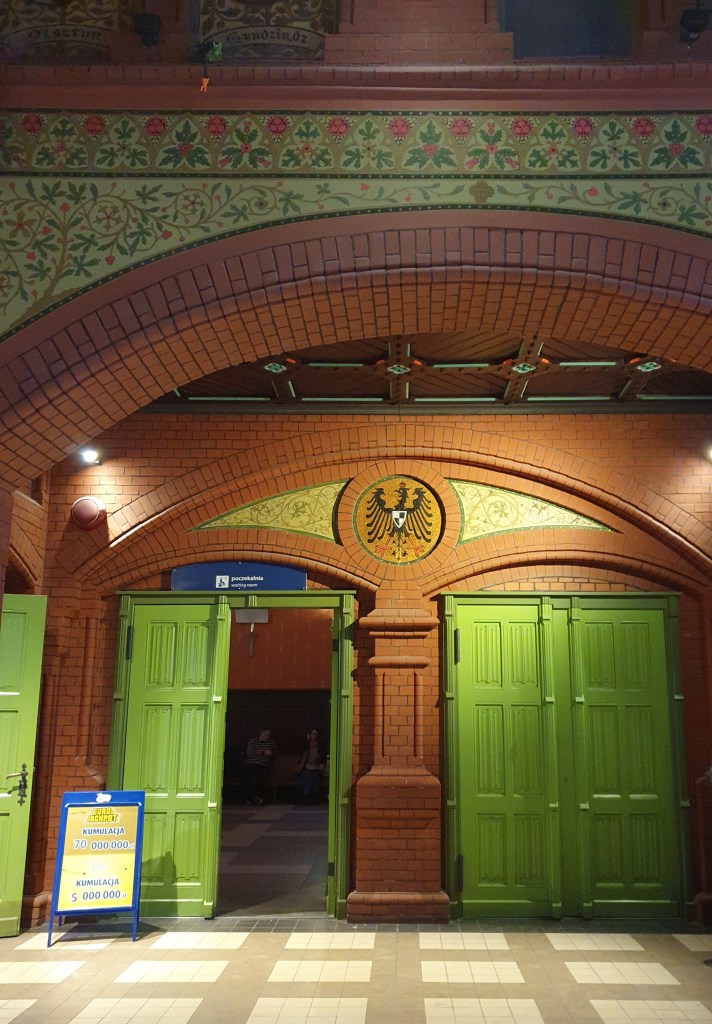
The audio tour was comprehensive taking you to all parts of the enormous castle and it took us about four and half hours to complete it. We had not booked in advance a specific train to return to Gdańsk, so when we had finished at the castle we walked back to Malbork station to catch the next train. There was an intercity train due at about the time we arrived at the station, but it was running 105 minutes late. So we waited for the next local stopping train at 1422. This gave us time to admire the splendidly decorated Malbork station.
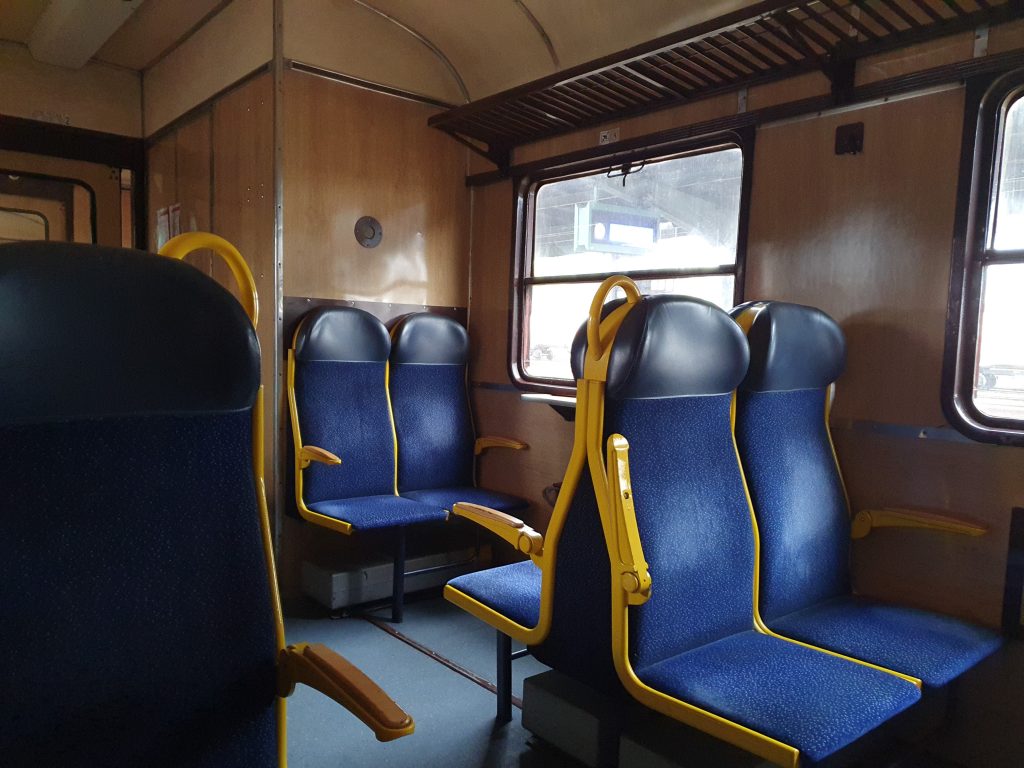
Our train back to Gdańsk was rather old fashioned, with its spartan carriages having hard seats. This train appeared to be stopping at almost all stations on the way back to Gdańsk, so we decided to try to get off at Gdańsk Śródmieście, the station adjacent to the city’s main art gallery. However, this turned out to be one of the few stations the train decided not to stop at, so we were forced to get off at Główny and take a suburban train back to Śródmieście.
The most famous work in the National Museum in Gdańsk (Old Art Collection), which is the official name of the gallery, was Hans Memling’s triptych, The Last Judgment. The painting had ended up in Gdańsk after being captured at sea by a Hanseatic privateer. The other works in the gallery were not particularly inspiring and we spent in total about an hour there.
When we went back to Śródmieście station to return to central Gdańsk, the ticket machine refused to sell us tickets due to a central systems fault. I only subsequently learnt that in such circumstances you should go to the front carriage of the train to seek out the conductor to sell you a ticket.
For our final dinner on this trip, we had three courses for the first time. I had duck dumplings in chicken broth, followed by meatballs, and cheesecake for dessert.
Day 11 – Saturday 21st October 2023 – Gdańsk to London
Overnight Storm Babet hit Gdańsk, so we woke to torrential rain. It was fortunate that this storm had not arrived a few days earlier, as a number of places we had visited in the previous week, including Lübeck, Wismar and Stralsund, were affected by flooding with disruption to transport.
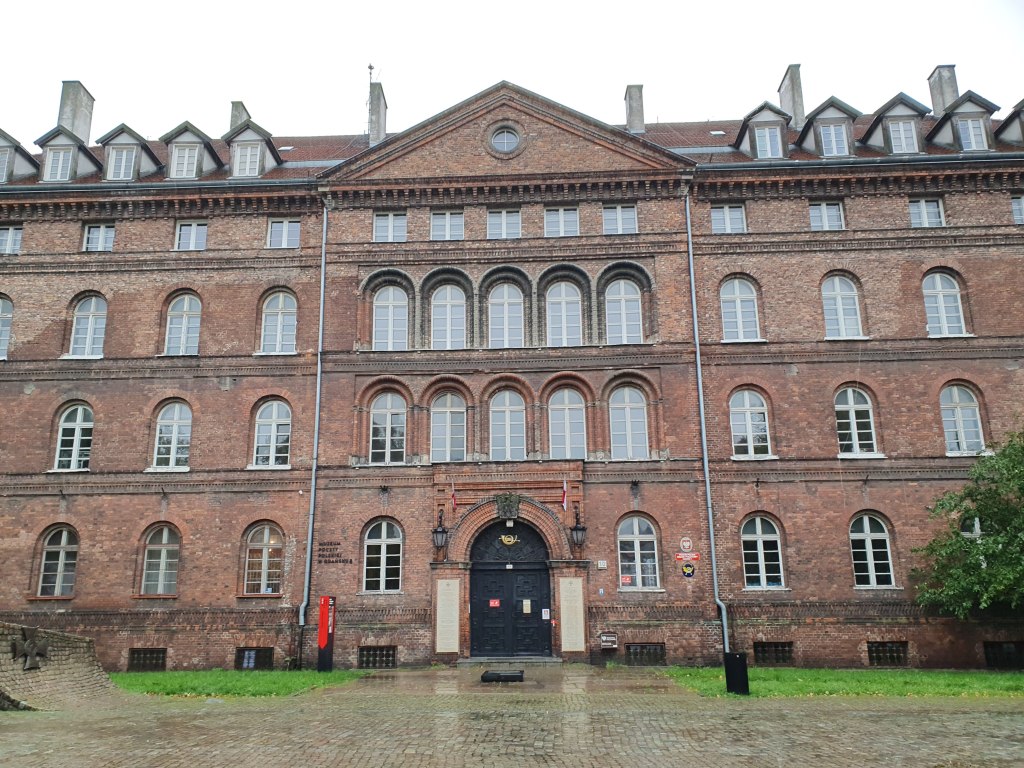
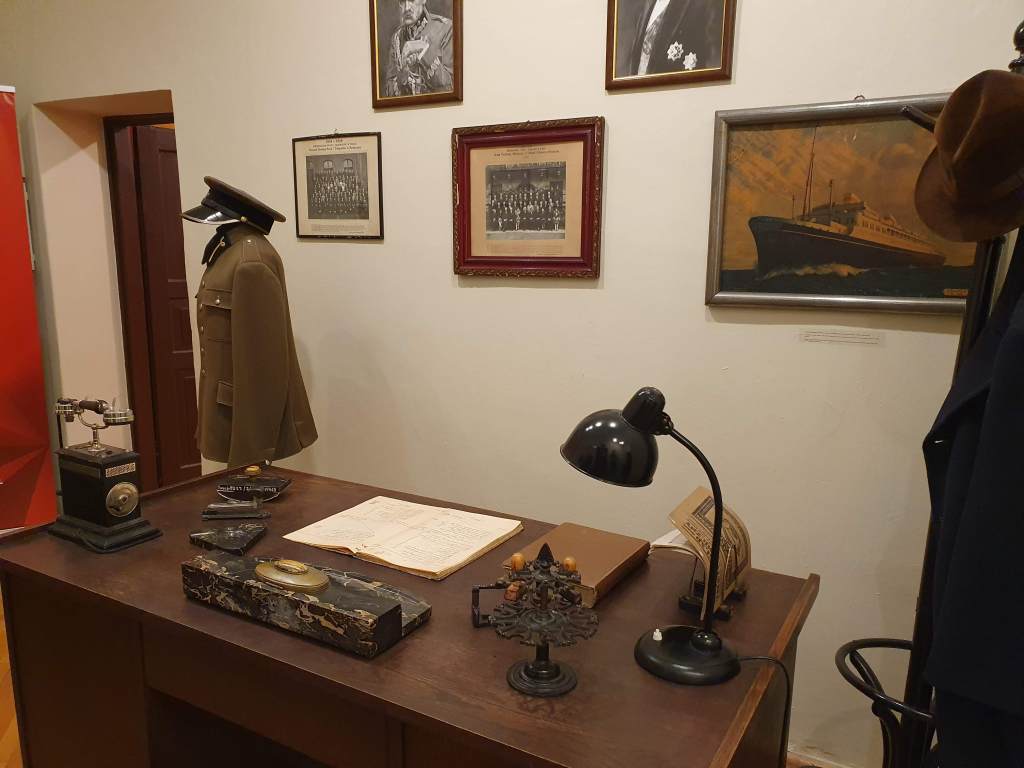
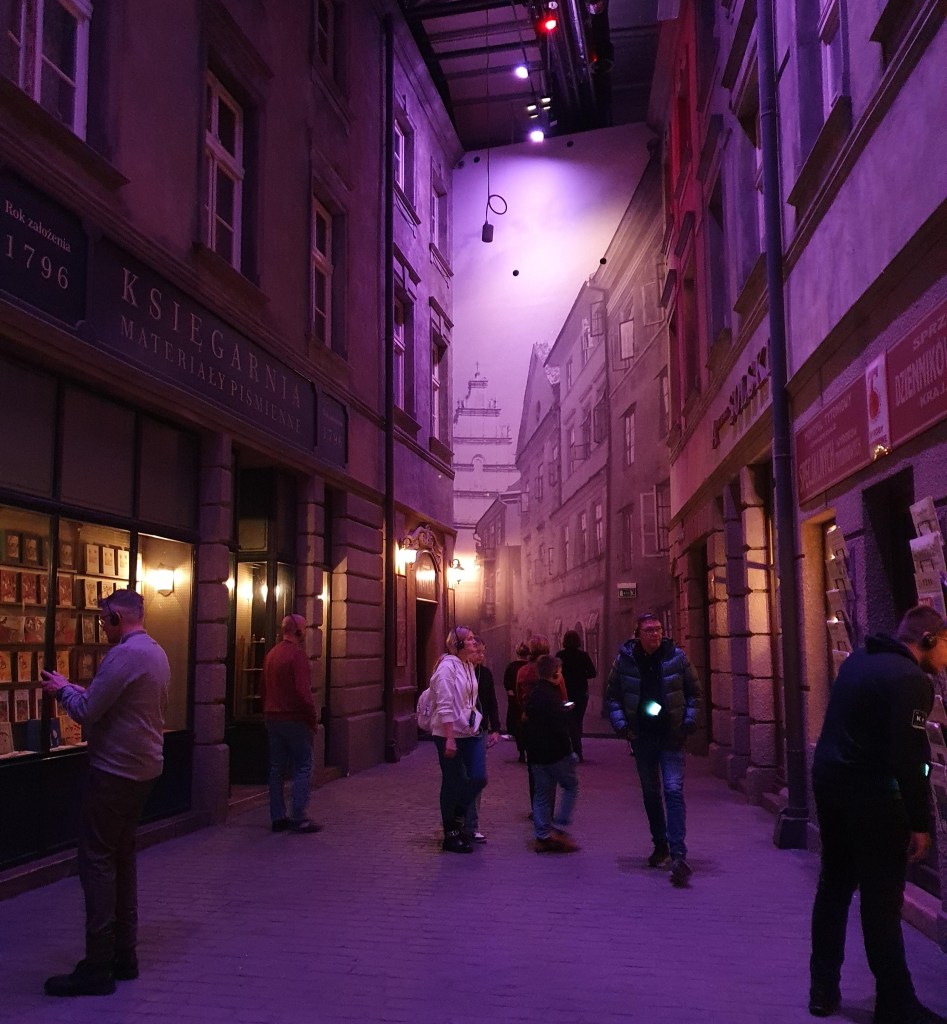
It was not a day for wandering the streets, so we stayed in the hotel until just before the opening time of the first place we wanted to visit and headed straight there. The Museum of the Polish Post Office in Gdańsk is located within the building where the events of 1st September 1939 took place. Although Danzig was established as a free city in 1920, under the Treaty of Versailles, the Polish Post Office was allowed to operate within the city. This was one of the first targets of German attacks in World War II. The first assault on the Post Office began at 4:45am, but the postal workers inside defended the building throughout the day before finally surrendering in the evening when the building was set on fire. Those Polish postal workers who were not killed in the assault, were executed by the Germans the following month.
It was still raining hard when we left the Polish Post Office, but it was only a short walk to the Museum of the Second World War. This massive museum was very busy with people when we arrived. Again we took an audio tour. The museum had received some criticism from the ruling PiS Government in Poland for focusing too much on the human tragedy of the war and not having enough on Polish heroism. We stayed in the museum for about three hours, leaving at 1:45pm.
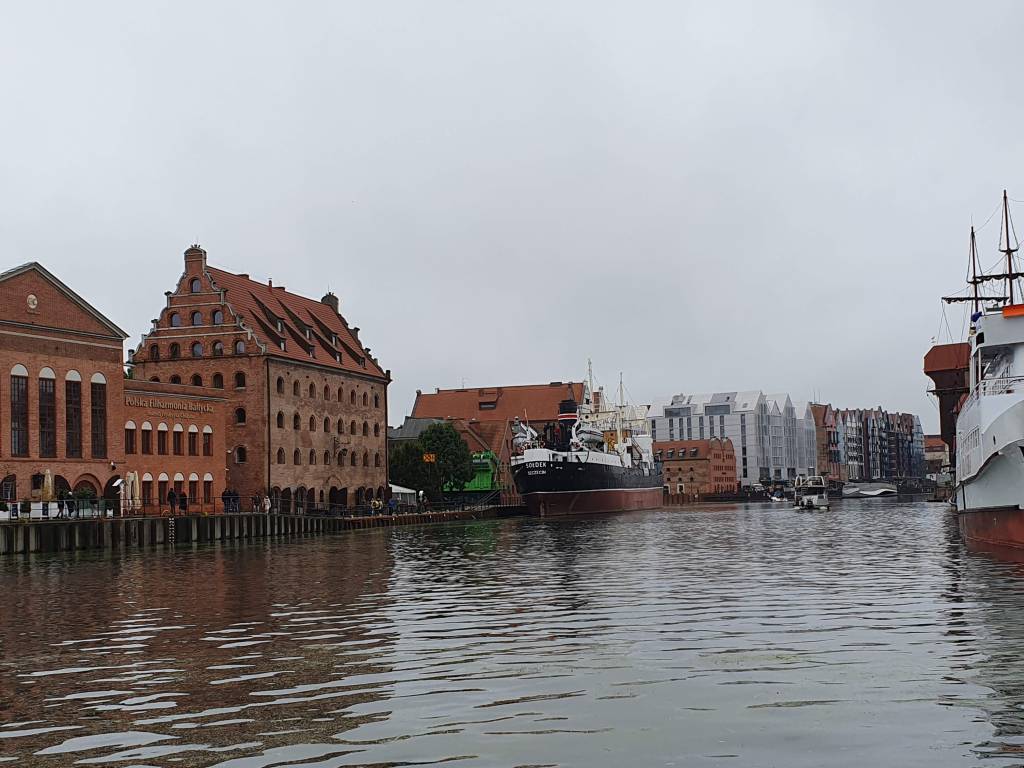
When we left, the rain had eased so we went for a walk along the Motlava River in the centre of the city. Here the SS Sołdek is moored, which is now a museum ship (part of the Maritime Museum). Sadly, we didn’t have time for any more visits, and we realised that there was much more to see in Gdańsk than we had managed in our brief visit. One final task remained. Our son, who had visited Gdańsk the year before, had requested that we try to find for him a small piece of unprocessed amber. We had tried to purchase such a piece in the Amber Museum and some other shops in the city, but discovered that they only had pieces of jewellery or other highly polished specimens. We were about to give up on this quest when we came across a shop selling exactly what we had been looking for.
We then returned to pick up our bags from the hotel and went once again to Główny station. From there we caught a local train to Gdańsk Wrzeszcz, which is the station from where trains to Gdańsk Lech Wałęsa Airport depart. We caught the 1514 train to the airport, arriving at 1539. Our flight was due to depart at 1800. The incoming flight was a little late arriving, but as had happened when we left Stansted at the beginning of this trip, there appeared to be a problem with disembarking some passengers from that plane, so we eventually left 45 minutes late. We arrived at Stansted shortly before 8pm, just missing the next train departing from the airport, so had to wait another 30 minutes for the one at 2043. We arrived home at 10pm.
This journey, steeped throughout with references to Hanseatic history, had been informative as well as enjoyable. Travelling with minimal luggage, as I always do, I’m not sure how you can prepare for a temperature drop of 20°C in the space of a week while away. I went from thinking that I had brought too many thick clothes while in Hamburg, to realising that I hadn’t brought anything sufficiently warm enough for the Malbork weather.
 Europe Explored