
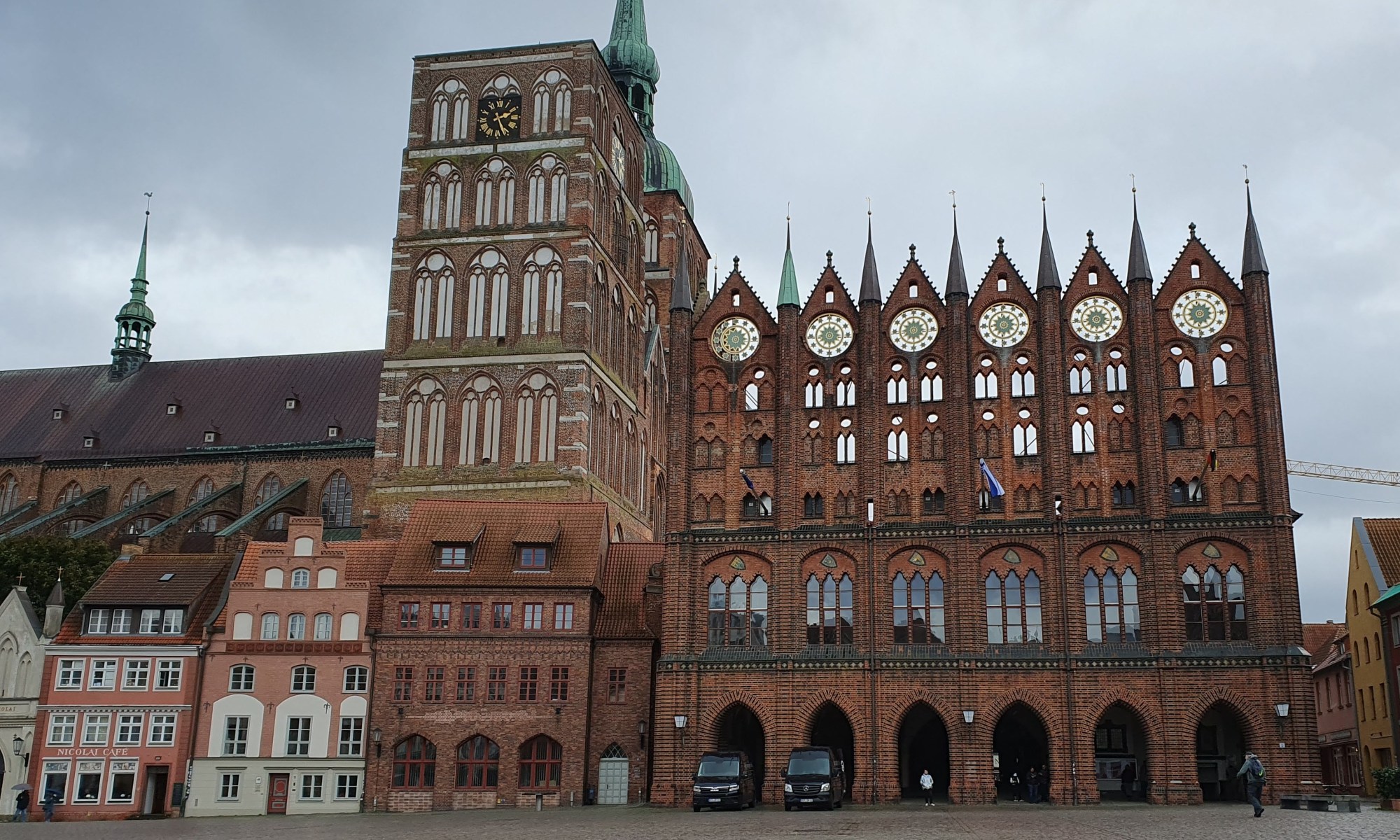
“All power to the merchants” (Motto of the Hanseatic League)
The Hanseatic League, or Hansa, was a loose confederation of city states mainly located along the Baltic coast, but with outposts as far afield as London, Bergen, Bruges and Novgorod. In its heyday in the Middles Ages it dominated maritime trade in the Baltic and North Seas. This trip, undertaken with my wife, was to visit six of the major Hanseatic cities in Germany and Poland.
Day 1 – Wednesday 11th October 2023 – London to Hamburg
We had booked the 1145 flight from Stansted Airport to Hamburg, with the intention of having sufficient time in the afternoon to visit a couple of places of interest. On arrival at the airport, our flight was shown as on time. I was monitoring the progress of the plane on a flight tracking app – after an early morning round trip to Knock in Ireland, it then had another one to Venice before being due to take us to Hamburg. It had arrived in Venice on time before we reached Stansted, but then showed no signs of leaving Venice. As it got closer to our scheduled departure time, the reality of the missing plane was eventually reflected on the airport’s departure boards, and the estimated delay soon crept up to two hours late. At some point, it must have been realised that our scheduled inbound flight was not going to come, and instead we would be using a plane due to arrive from Lanzarote. This caused a change of gate, and as the new plane was going to land about the time we were due to depart, our estimated delay was reduced to just 30 minutes. Once the passengers started disembarking from the incoming plane, processing of the departing passengers began. We walked onto the tarmac expecting to begin boarding within a few minutes, but we waited there for nearly 45 minutes before we were allowed on board. It was never explained what the cause of the delay was, but I think that there may have been a problem with disembarking a disabled passenger. Once everyone was on board, the pilot announced that we would have to wait for 20 minutes for a take-off slot. In the event, it was another 40 minutes before we actually took off, nearly two hours late.
The plane landed in Hamburg just before 4pm local time. Any chance of a speedy getaway from Hamburg Airport was scuppered by having to be bussed from the plane to the terminal, with the ground-staff at Hamburg making sure that all the passengers from the plane were on the two waiting buses before they set off. We caught the S-Bahn at 1637 from Hamburg Airport to the city centre, alighting just before 5pm at Hauptbahnhof, from where it was a short walk to our hotel.
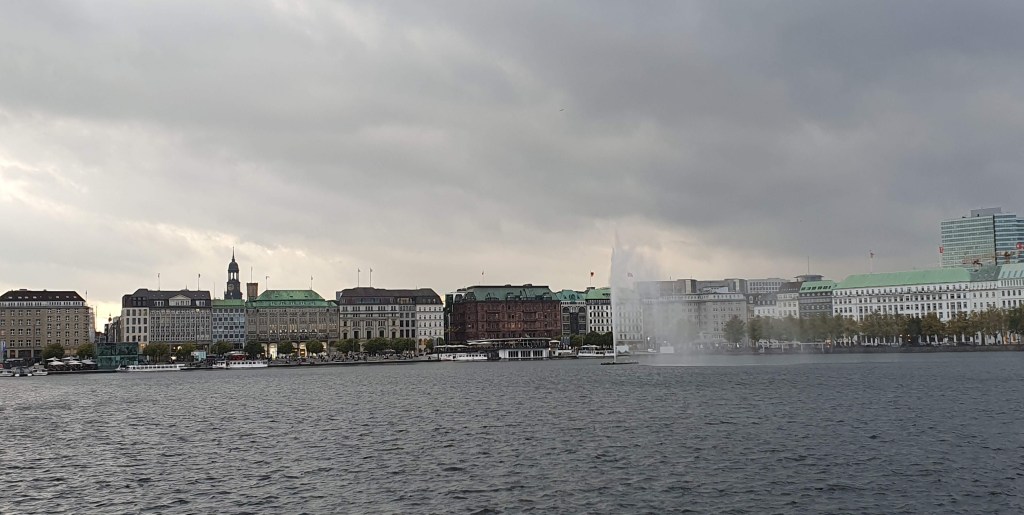
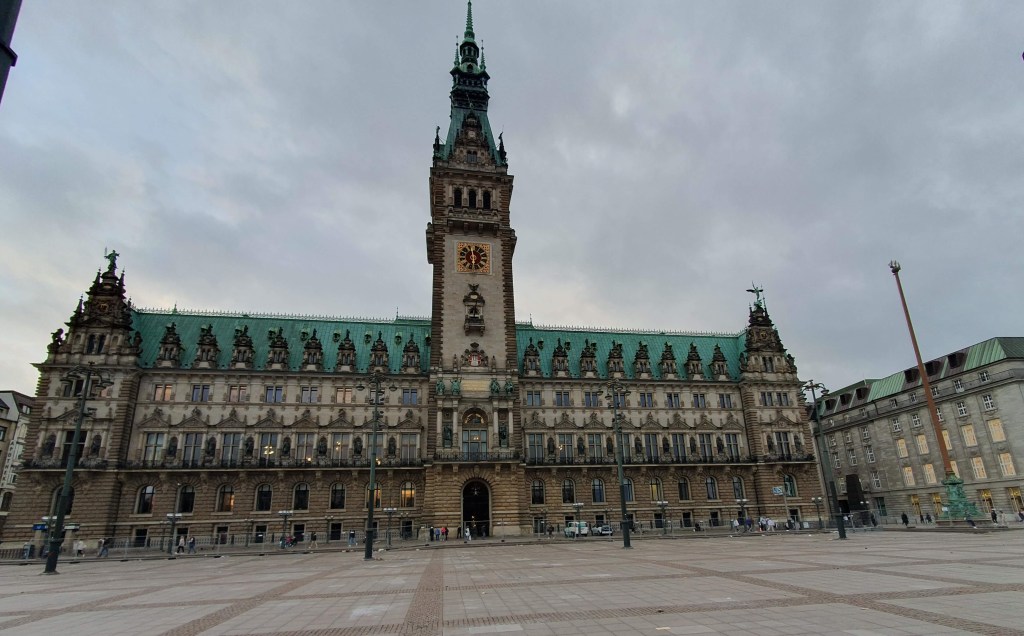
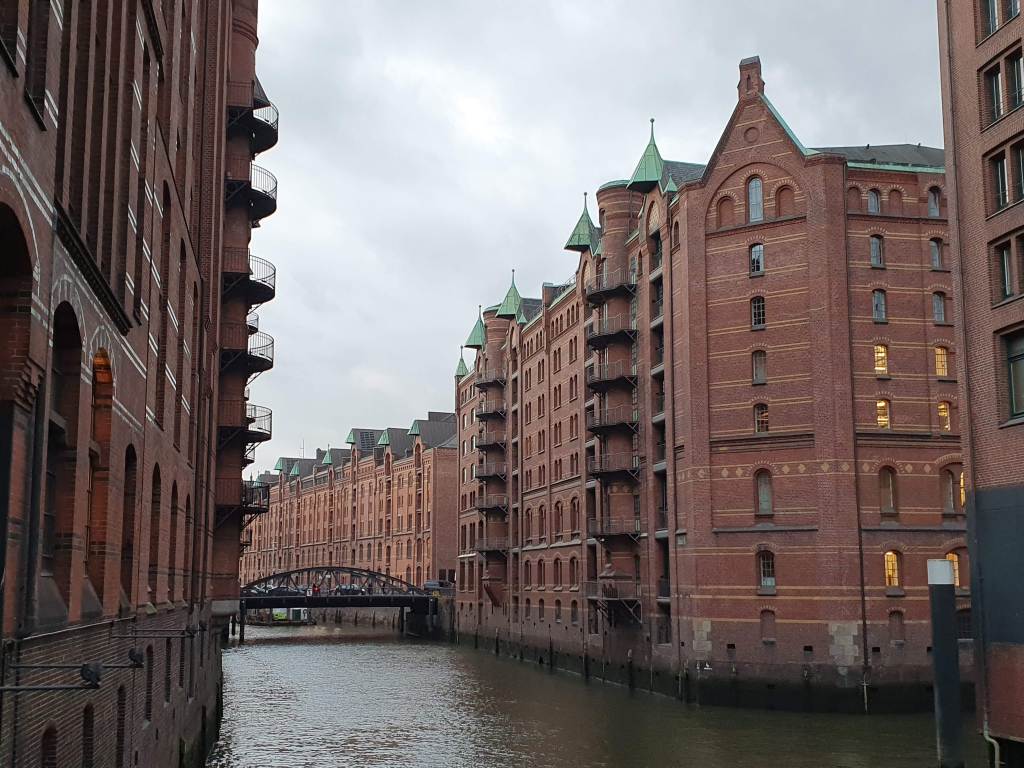
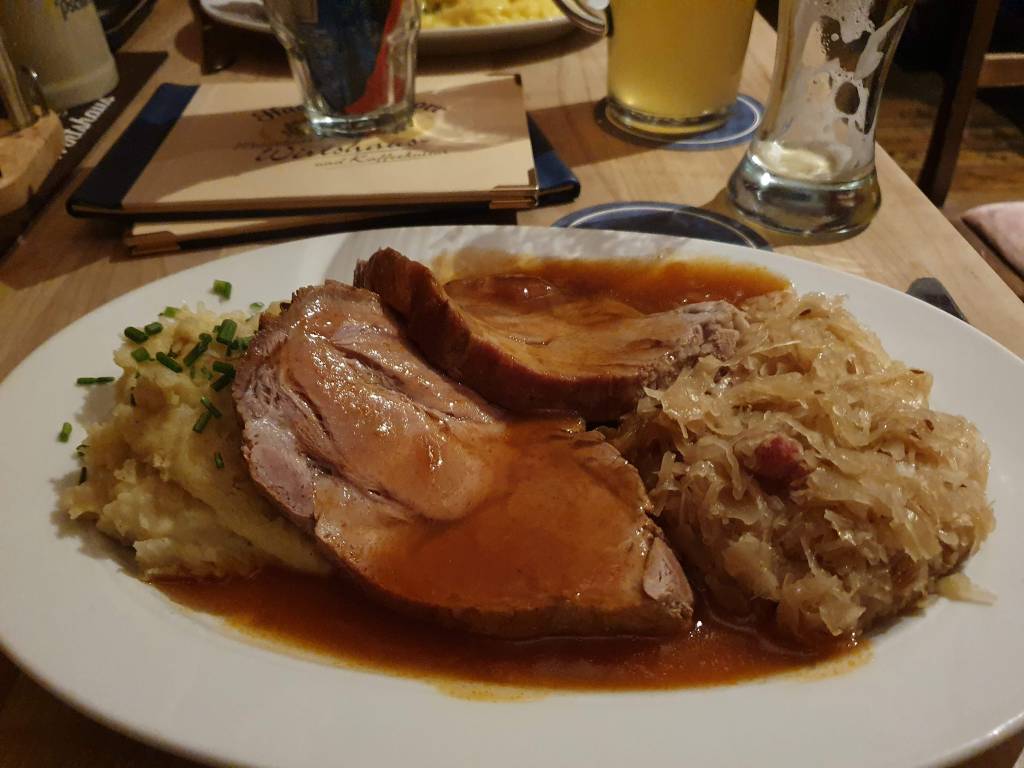
Since the delayed flight meant that it was too late to go into any attractions that afternoon, we contented ourselves with going for a walk for about an hour before dinner. As I had been to Hamburg before, making a two-day trip in 2018, I led my wife on a circuit to see the main sights – going along by the Binnenalster lake, to the Town Hall and then on to the Speicherstadt (Warehouse) district of the city, before returning to find a pub for dinner, not far from the large Außenalster lake. It was a traditional Wirtshaus which was very busy and we were lucky to secure a table. It was very good value and the food was also good with generous portions. I chose Schweinebraten (roast pork) to eat, washed down with some weißbier to drink.
Day 2 – Thursday 12th October 2023 – Hamburg
We made an early start to make up for the time lost by our late arrival in Hamburg the previous day. It is impossible to do much more than scratch the surface of what Hamburg has to offer in a single day. I agreed with my wife that we would mix some places that I had previously been to with others that I had not. You can buy a one day Hamburg card from the public transport ticket machines, which not only gives you free use of public transport in the city, but also discounted admission to many museums and other attractions. We bought ours from a machine at Hauptbahnhof. From there we travelled by S-Bahn to Stadthausbrücke station and then walked the short distance to St Michael’s Church arriving shortly after it opened at 9am.
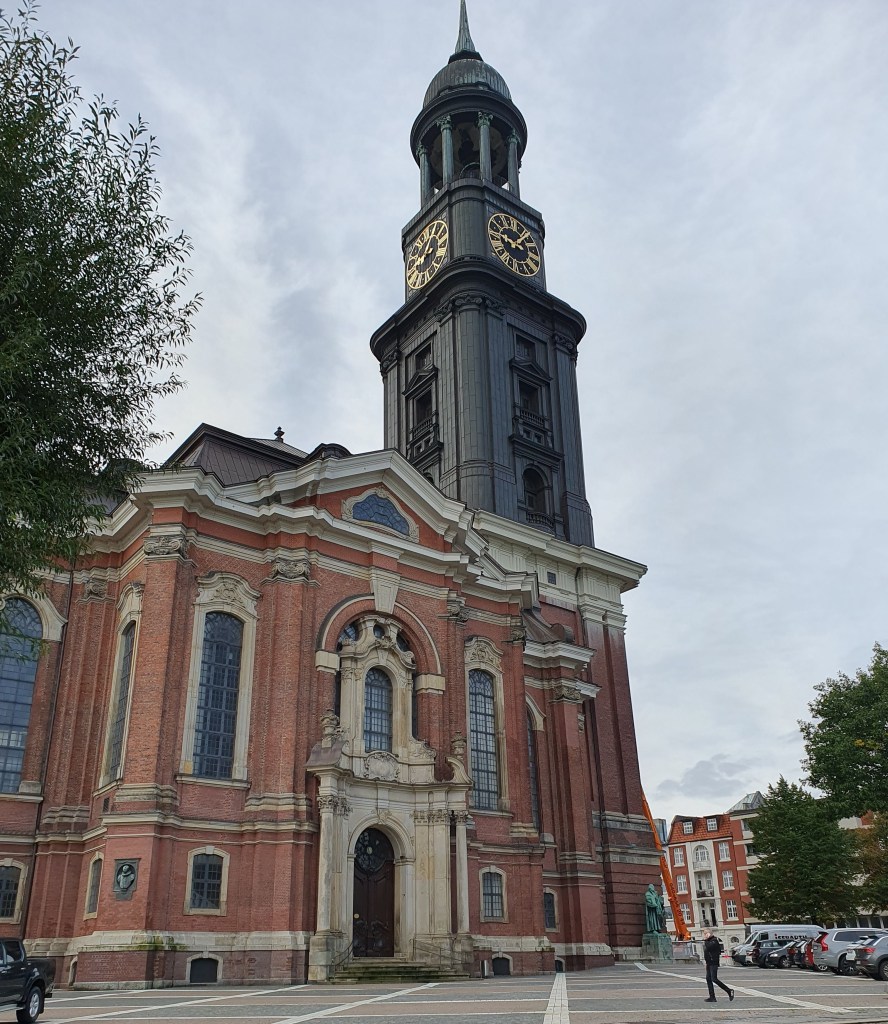
St Michael’s is a large baroque church whose tall tower is a prominent landmark for ships sailing up the Elbe. We first went up the tower using the lift. From the top there are good views of the city centre and of the docks which line the the riverside. Rather than catching the lift to descend we walked down, for which we were rewarded with exhibitions on various landings within the tower which explained the history of the church and its reconstruction following a fire in 1906 and wartime bombing in 1944 and 1945. The interior of the church is mainly made of white marble. Finally, we descended to the crypt which contains the burial place of C. P. E. Bach.
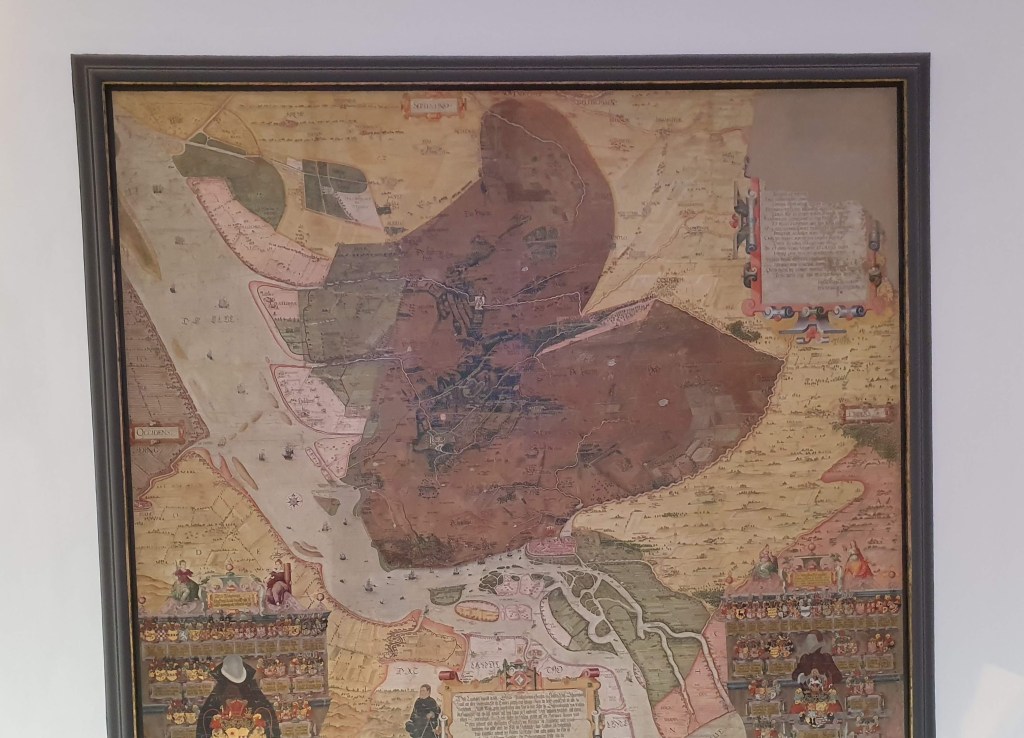
Our original intention had been to next visit the nearby Hamburg City Museum, but unfortunately it is undergoing a major refurbishment resulting in most of the normal exhibitions being closed. So instead we chose to go to the Altona Museum, which is a local history museum for what is now a suburb of Hamburg, but was originally a separate town in its own right. The Altona Museum is near Altona station, where many of the inter-city trains passing through Hamburg Hauptbahnhof start or finish. We got to Altona by continuing on the S-Bahn, but rather than returning to Stadthausbrücke we walked to the next station down the line, Landungsbrücken. The Altona Museum is spread over a number of floors in a large building, describing Altona’s development from a fishing village to becoming part of the city of Hamburg.
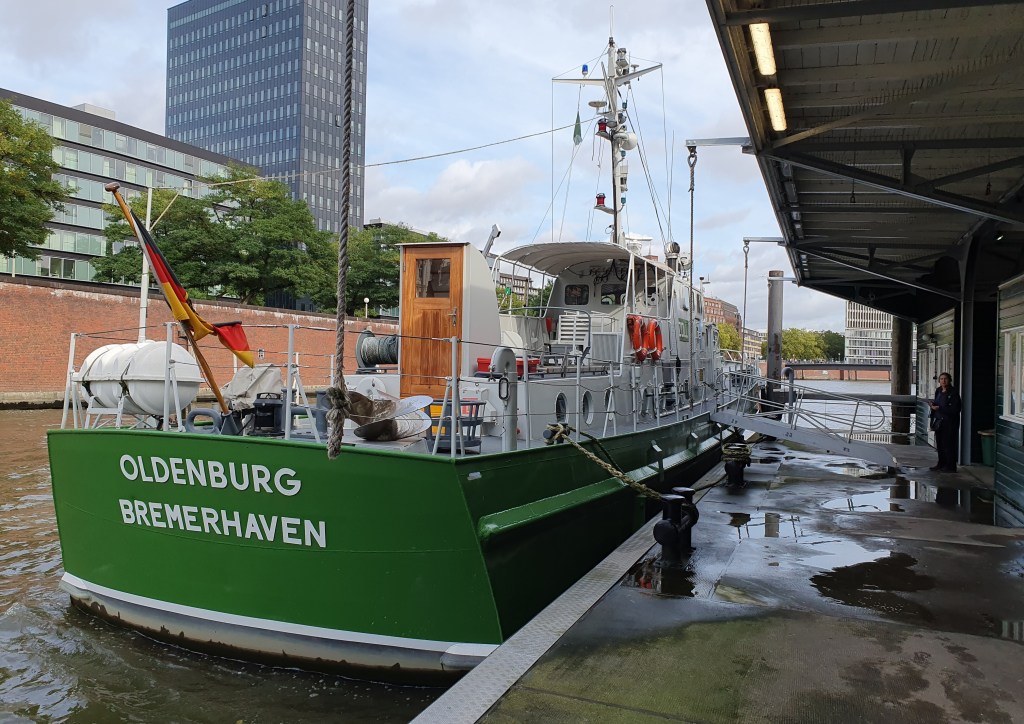
After we had finished in the Altona Museum, we returned to the centre of Hamburg, by changing from the S-Bahn to the U Bahn at Landungsbrücken station. Here there is the peculiarity that the S-Bahn is underground, whereas the U-Bahn is above it running on elevated tracks close to the north bank of the Elbe. We returned to the Speicherstadt district and paid a visit to the Zoll museum, which is still staffed by German customs officers. It is housed in the former customs building for the free port of Hamburg, which was sealed off from the rest of the city, and existed until 2013. As well as describing the history of customs arrangements in the free port, the museum also covers the history of German customs more generally, including parallel displays for the period from 1949 to 1989 when the country was divided. Moored outside the building is a former customs boat which you can go aboard.
Next stop was the Speicherstadt Museum, housed in a former coffee warehouse. I had visited this museum on my previous visit in 2018, when it had only recently moved to these premises, and I had found it a little disappointing. Since then the display of information had been considerably expanded and, despite my initial scepticism, I was glad I went back.
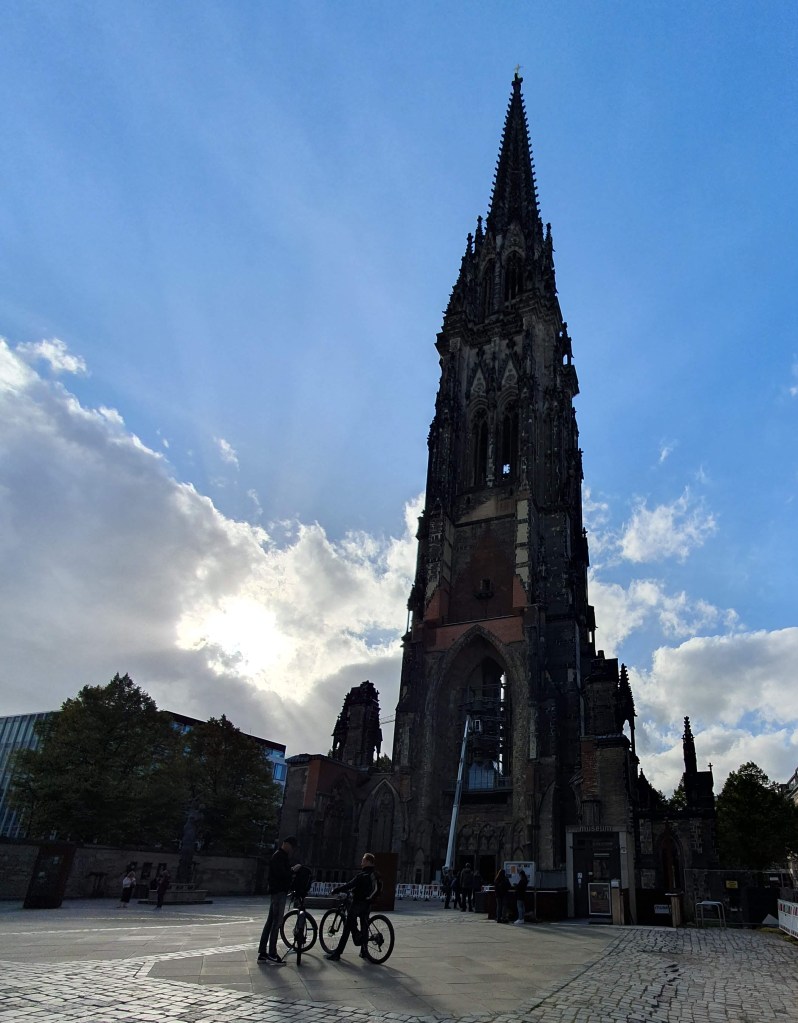
From the Speicherstadt we walked the short distance to the remains of St Nicholas church, the main body of which had been destroyed by bombing in World War II. It had been rebuilt in 1874, after a fire, to a design by the British architect, Giles Gilbert Scott, and for a couple of years was the tallest building in the world. All that remains now is the tower, the crypt and the outline of the nave. At the time of our visit it was not possible to ascend the tower due to work being done on the bells. However, the main purpose of coming here had been to visit the crypt, which now serves as an exhibition and memorial to the victims of Operation Gomorrah, the allied bombing which destroyed much of Hamburg in 1943.
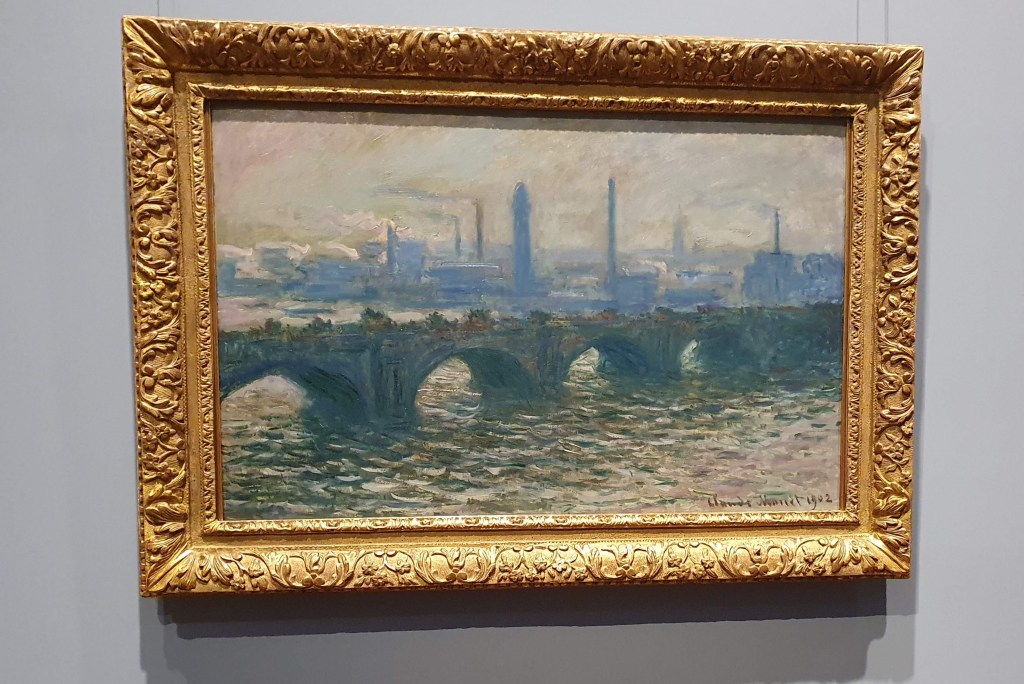
In our attempt to pack in as much as possible into one day, we saved our visit to the Kunsthalle (Hamburg’s main art gallery) until the evening, as Thursday is the day when it stays open late. In order to be able to eat at a reasonable time, we skipped the contemporary art exhibitions, but focussed on its collections from the medieval period to the early 20th century. One slight disappointment was that Caspar David Friedrich’s Wanderer above the Sea of Fog was on loan elsewhere at the time of our visit.
For dinner that evening we revisited the pub, near the Hauptbahnhof, that I went to on my previous visit to Hamburg. I am always wary about revisiting restaurants after a gap of some years, particularly in this case, as it appeared to have changed ownership and changed its name. However, the menu seemed to be much the same and I decided that I would have the same dish of cold roast beef that I had dined on five years previously. The interior of the pub had changed a bit, with some of the nooks and crannies I remembered having been opened up, and also the staff were now much younger. I was relieved when the food was still as good as on my previous visit.
Day 3 – Friday 13th October 2023 – Hamburg to Lübeck
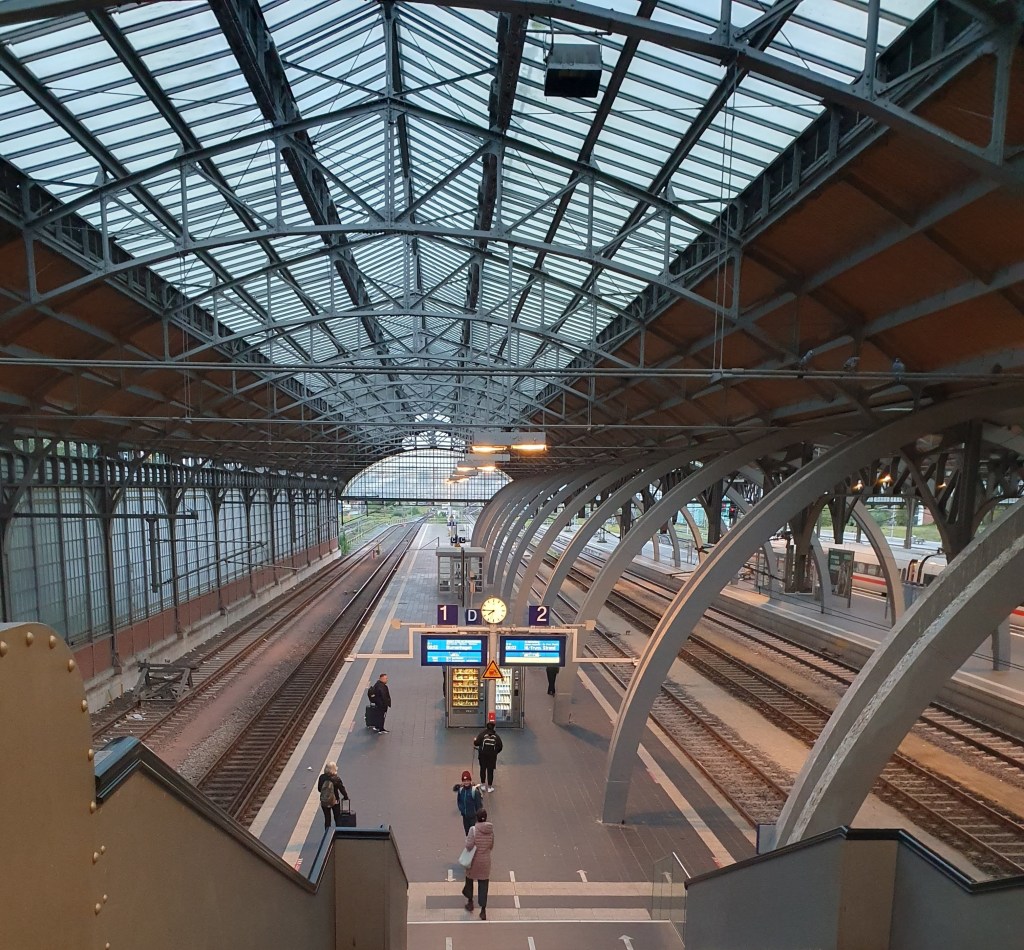
There are trains at least every half hour from Hamburg to Lübeck and to make the most of our time in Lübeck we caught the 0806 departure from Hamburg Hauptbahnhof. It was a double-decker train and we rode on the top deck arriving in Lübeck at 0850. As our hotel was near the station we took the opportunity to drop off our bags before heading to the old town, located on an island in the centre of the city. Unfortunately, shortly after our arrival it started to rain quite hard and continued to do so for the rest of the morning.
Lübeck, officially the Hanseatic City of Lübeck, was the seat of the Hanseatic Diet in the Middle Ages, and so could be considered the unofficial ‘capital’ of the Hanseatic League.
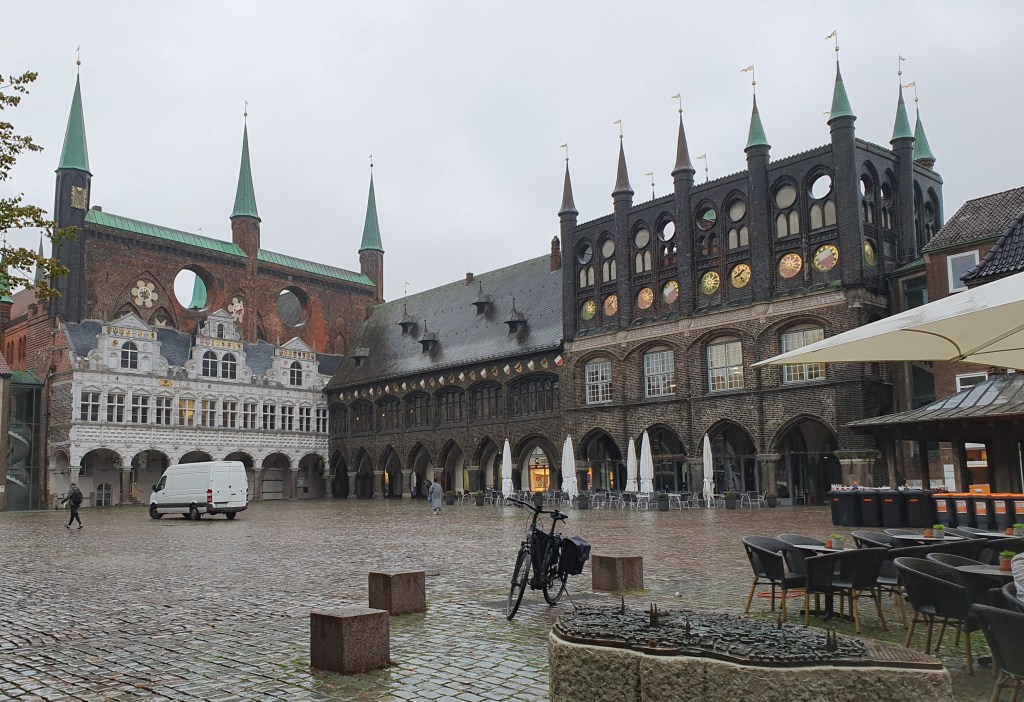
First stop was a small marzipan museum above the Niederegger shop and cafe, near Lübeck’s medieval town hall. Niederegger is one of the world’s leading producers of marzipan and is still a family run business. The museum provided some information on the history of the company and the process of making marzipan from ground almond paste, as well as containing a number of sculptures made from marzipan.
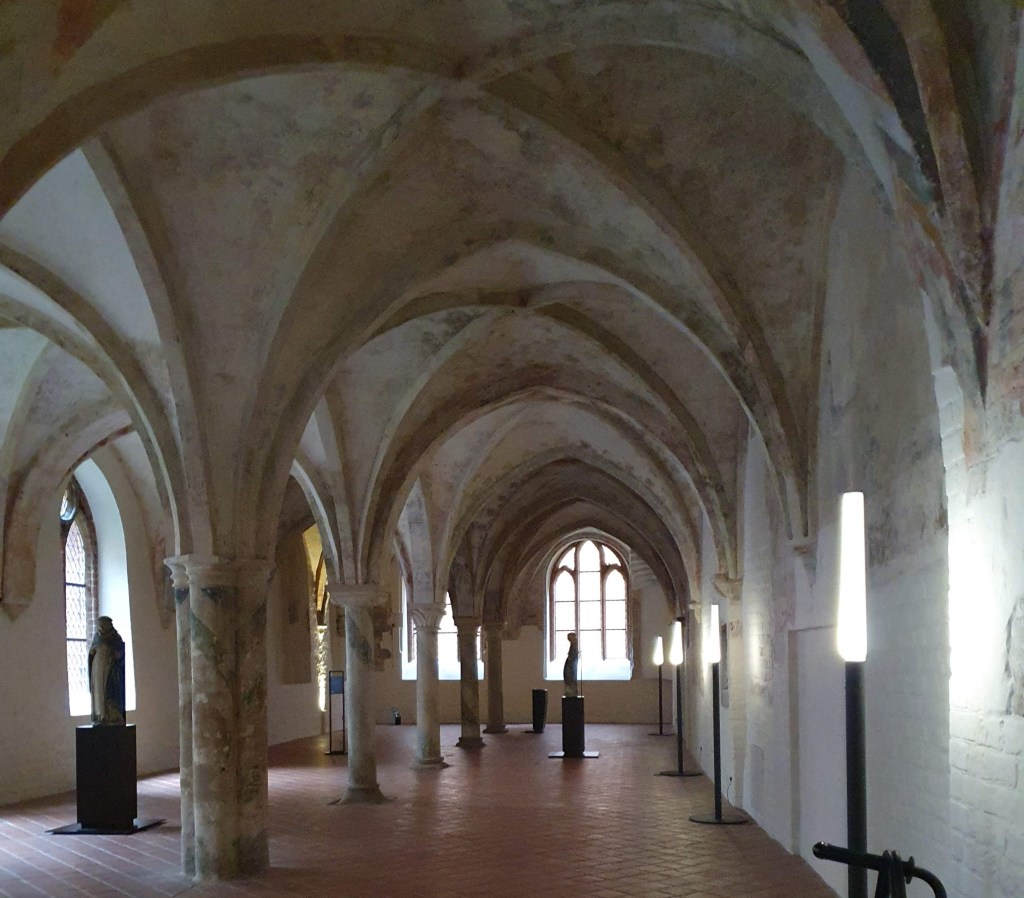
Towards the northern end of the old town is the European Hansemuseum, a large modern building on the site of a former monastery. The museum has many interactive displays explaining the history of the Hanseatic League, not just in Lübeck but across its many member cities and trading outposts. We spent the rest of morning in the Hansemuseum and before leaving visited the former monastery above the main museum building. By the time we left the rain which had been falling steadily all morning was starting to ease.
Not far away is the Heiligengeist Hospital, parts of which still function as an old people’s home. One can view its ornately decorated hall and see some of the former rooms used by residents.
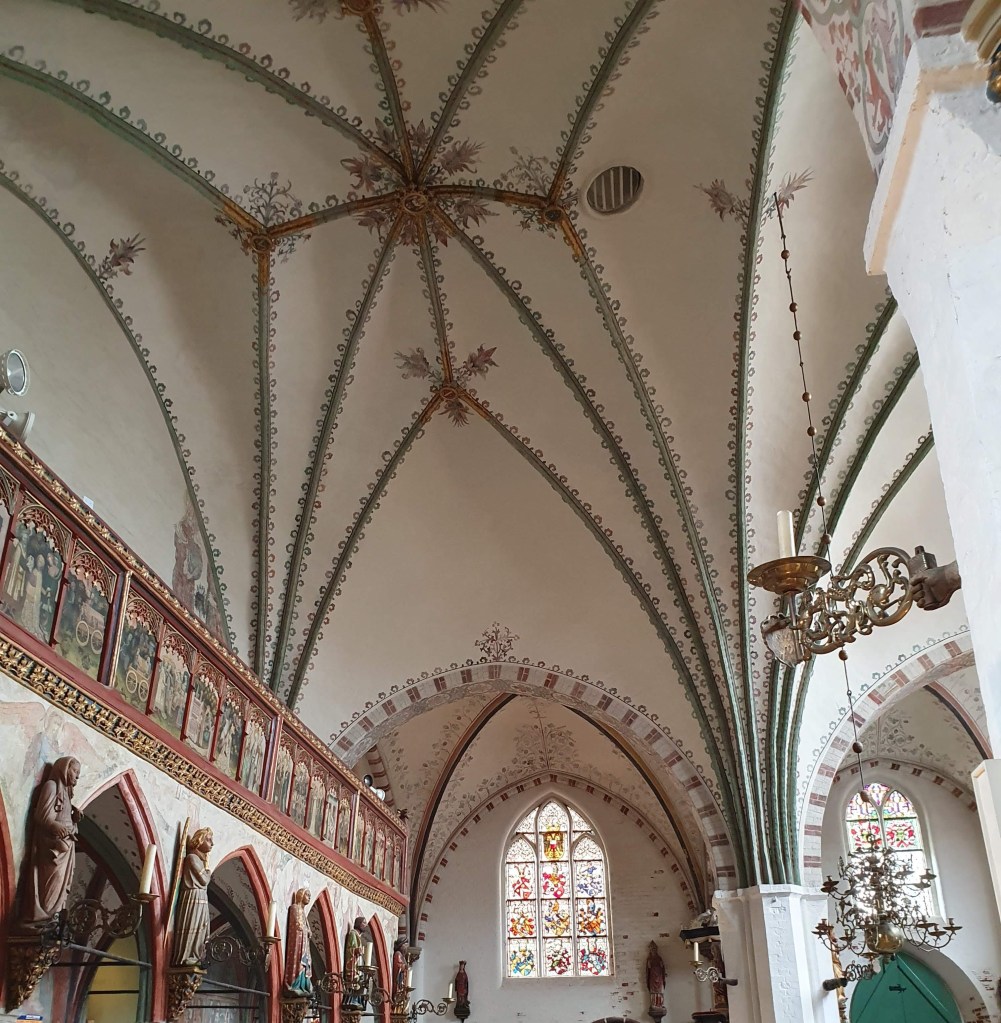
We then went to the Museum Bennhaus Dragerhaus, which has a small art collection, including some works by Caspar David Friedrich and Edvard Munch. There was also an exhibition about the local Lübeck residents, the novelists Thomas and Heinrich Mann.
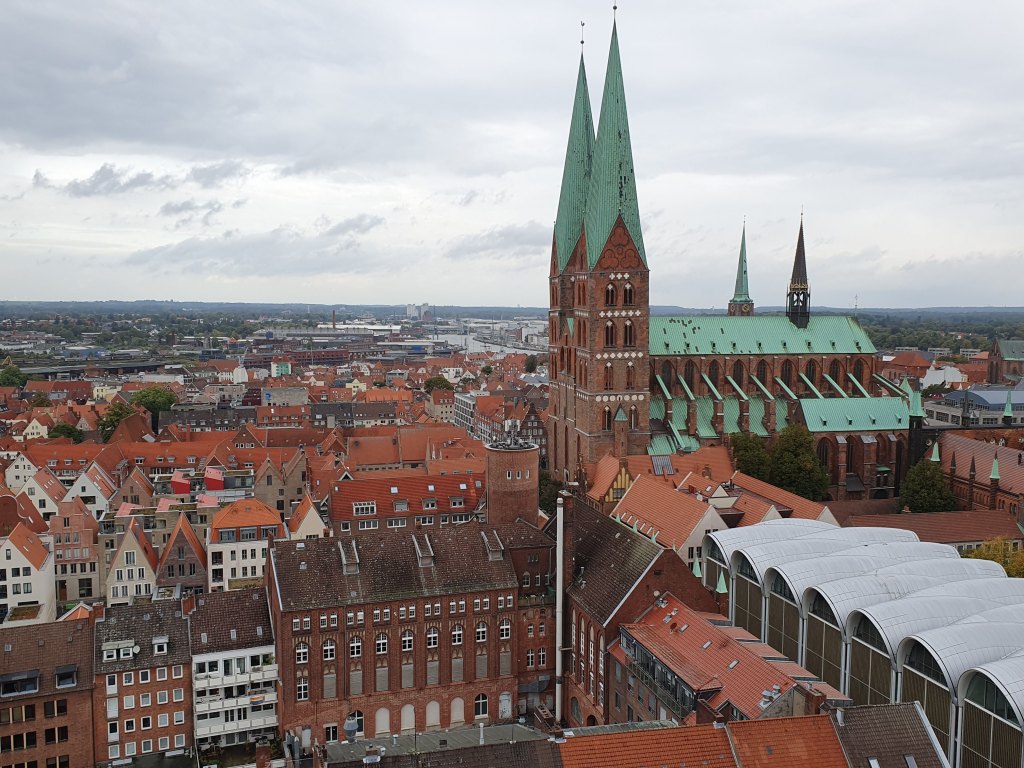
Next we went to two of the city’s churches – Jacobikirche and Petrikirche. In the latter we ascended the tower to get good views over the city.
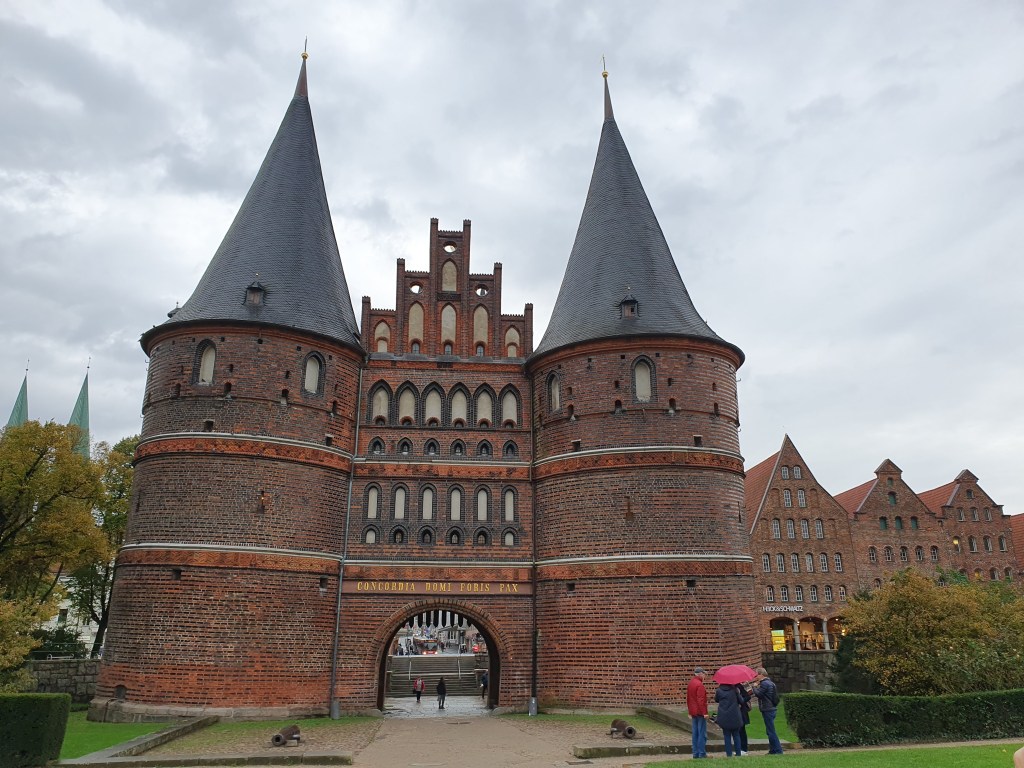
The final visit of the day was to the Holstentor, one of the original gates to the city which now contains the city’s museum. The Holstentor had been restored by the Nazis in the 1930s and turned into a museum presenting Germany’s history from a Nazi perspective. It is now a proper city museum, concentrating on the fortifications of the gate itself, and Lübeck’s role as a Hanseatic city.
In the evening we had dinner in a disused fire station not far from our hotel, where I dined on garlic bread followed by pork schnitzel.
Day 4 – Saturday 14th October 2023 – Lübeck to Wismar
There are departures only every two hours from Lübeck to Wismar and we caught the 0802 train. Lübeck was the only former West German city to adjoin the border with East Germany, not counting the special case of Berlin. So while a train going east every two hours may not seem very frequent, during the 1980s there was just one train per day on this route (with an additional one on summer Saturdays). For this journey and for all our remaining days in Germany we were taking advantage of Mecklenburg-Pomeranian day rover tickets. These are particularly good value if more than one person is travelling, as each additional adult costs only €2. The Mecklenburg-Pomeranian rover ticket not only allows unlimited travel on regional trains within the state, but also on the direct routes to cities outside Mecklenburg-Pomerania (Lübeck being in Schleswig-Holstein). Despite the early hour for a weekend, our train was full on departure from Lübeck. It was a diesel train, as the line was not electrified, and for much of the route was single track.
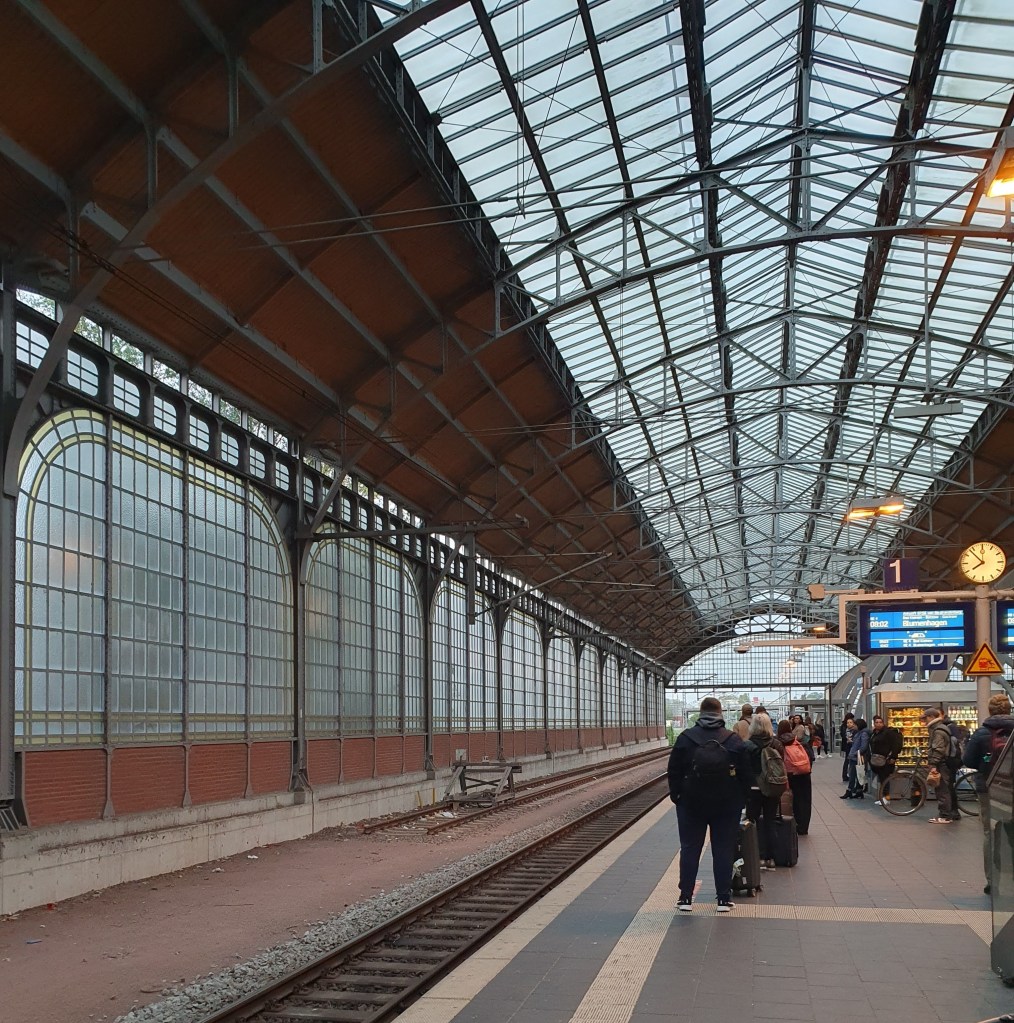
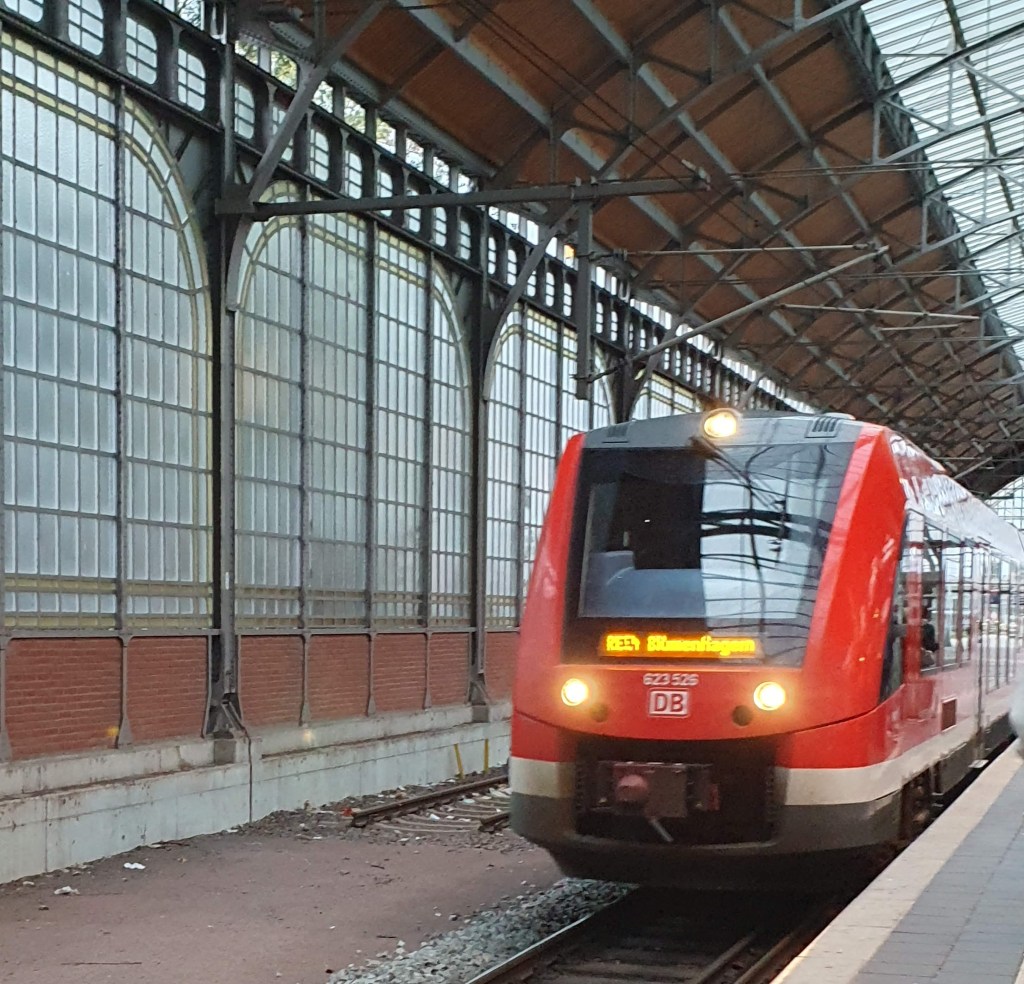
We had to change at Bad Kleinen, where we had a 23 minute wait for our connecting train, which gave us enough time for a short walk, but not enough to go the large lake on the other side of the tracks, as there was no direct exit from the station in that direction. A much emptier electric train took us the short distance to Wismar, arriving at 0937.
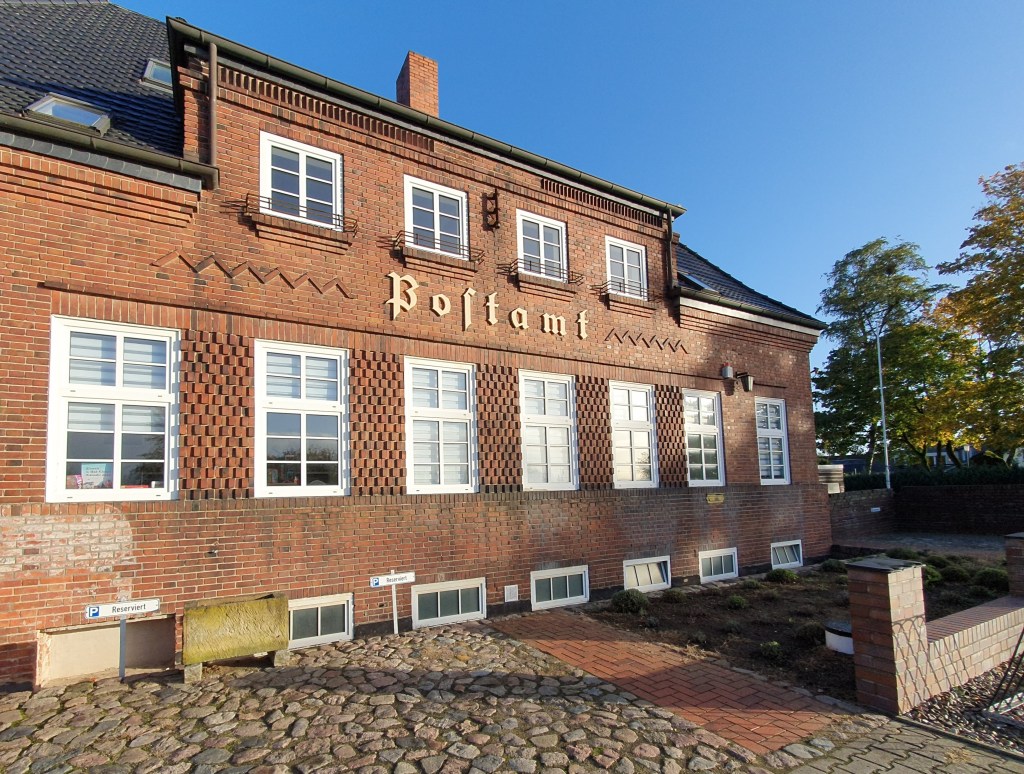
Walking the half mile or so from the station to the city centre we were struck by the absence of people on the streets. Our first visit of the day was to the Welt Erbe Haus, which has exhibitions celebrating Wismar’s status as a UNESCO World Heritage Site.
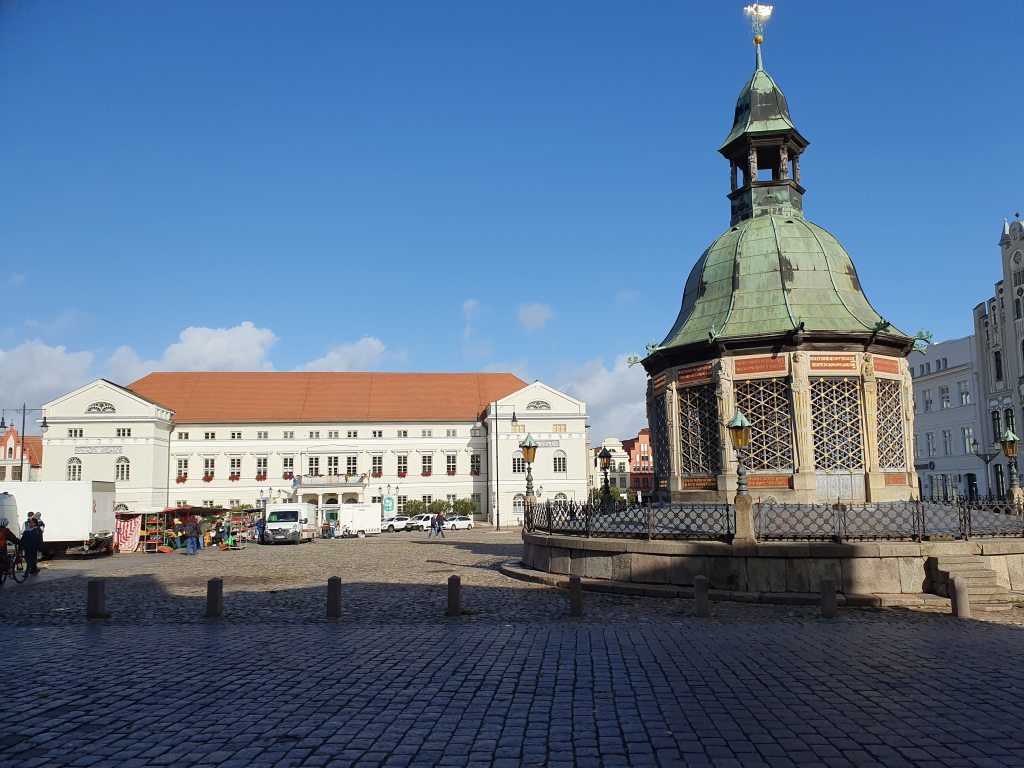
I had downloaded a couple of walks in Wismar which we proceeded to do. The first took us via the main square, where the town hall is situated, to the remains of the Marienkirche (St Mary’s). Only the tower of the Marienkirche is still standing, since the bomb damaged remains of the the nave were demolished by the East German authorities in 1960. The area of the nave has information boards on the history of the church, but you can only go up the tower during the summer, for which we were too late.

Not far away is St George’s, no longer in use as a church. We went up the the tower of this church to a viewing platform, which has the disadvantage of only facing in one direction. While we were up there it started to rain hard, so we returned inside the church and sheltered until the worst of the sudden shower had passed over.
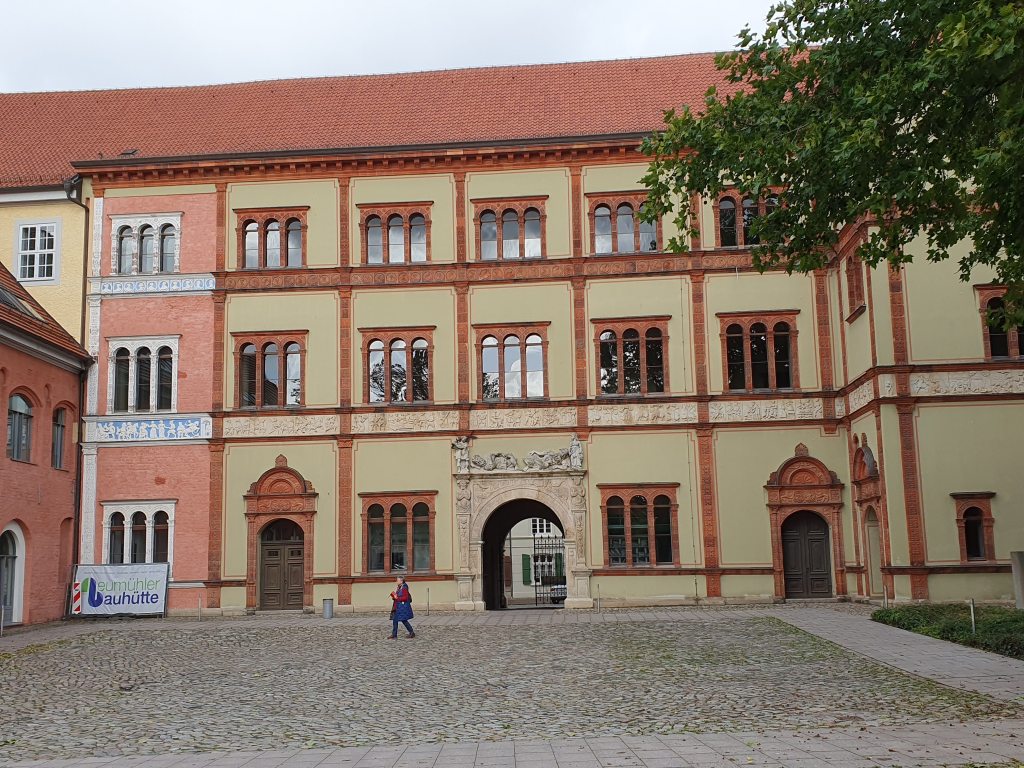
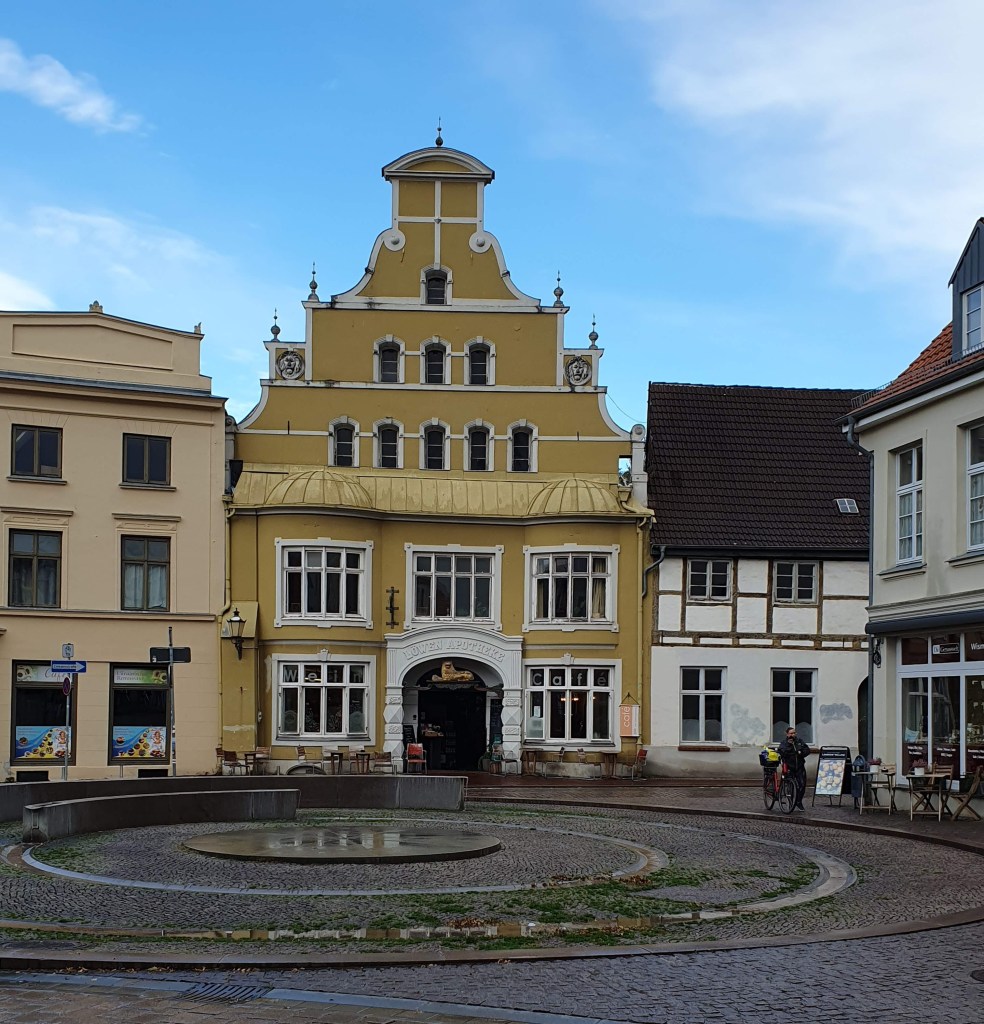
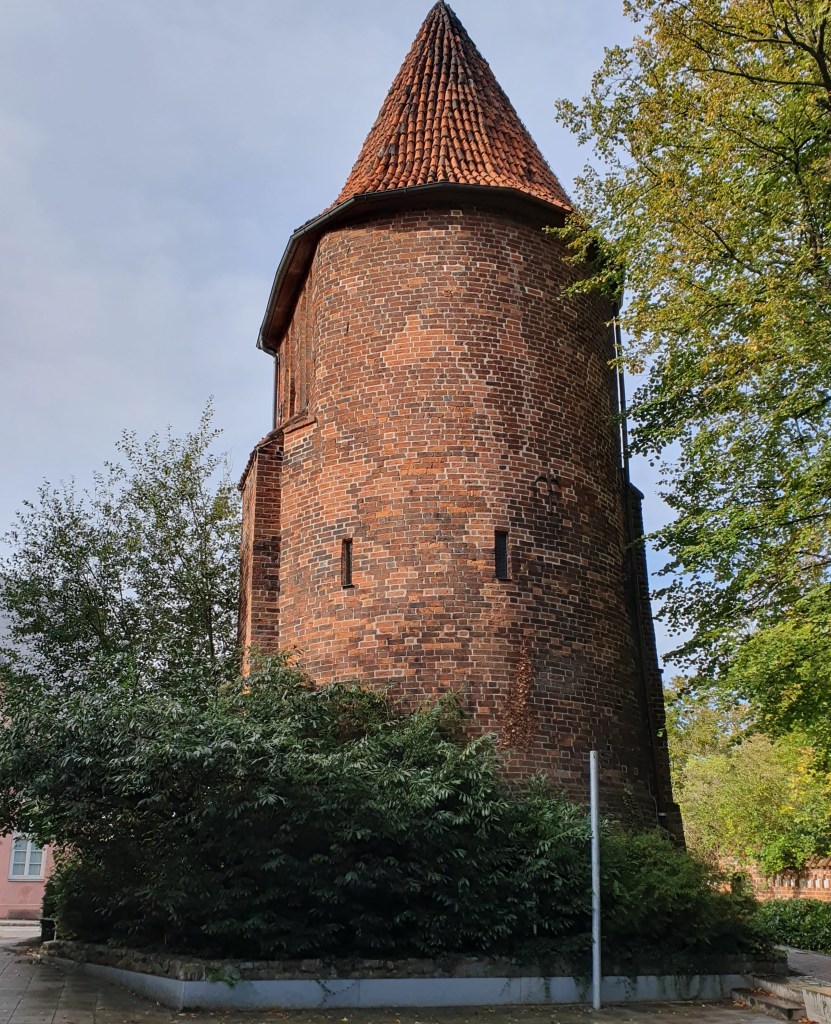
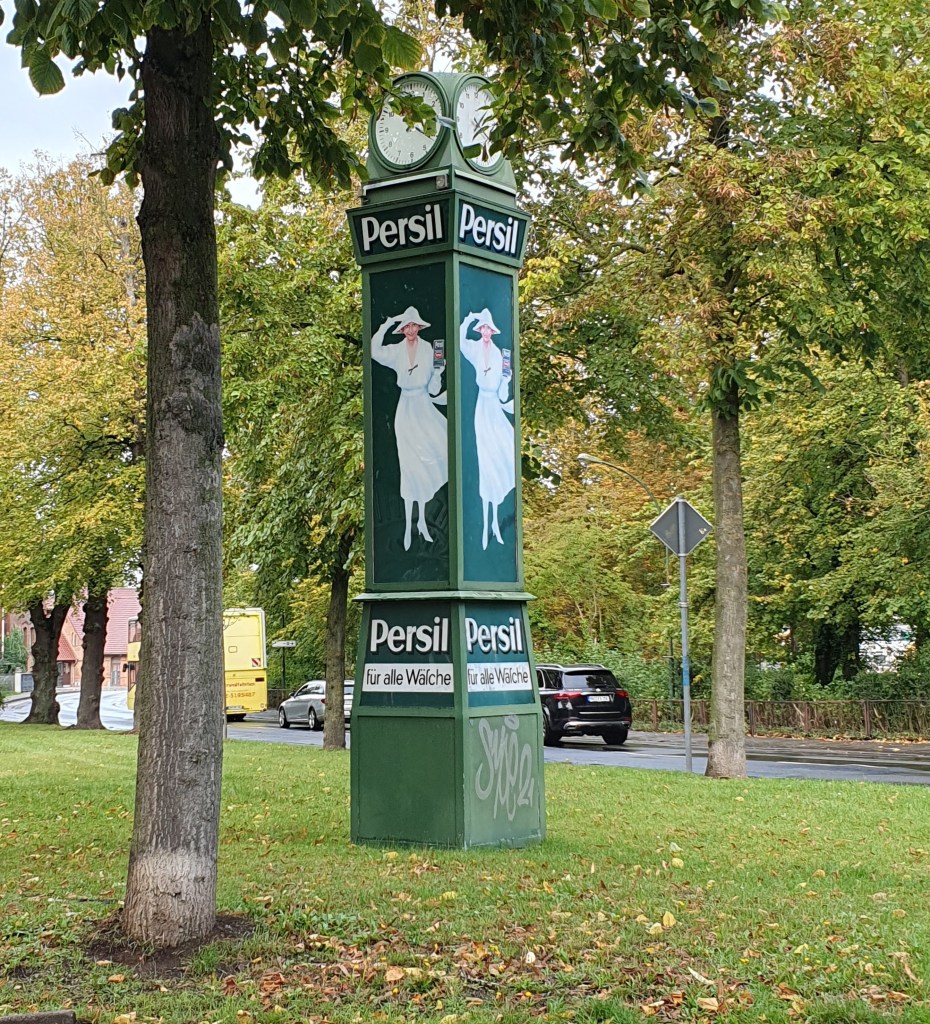
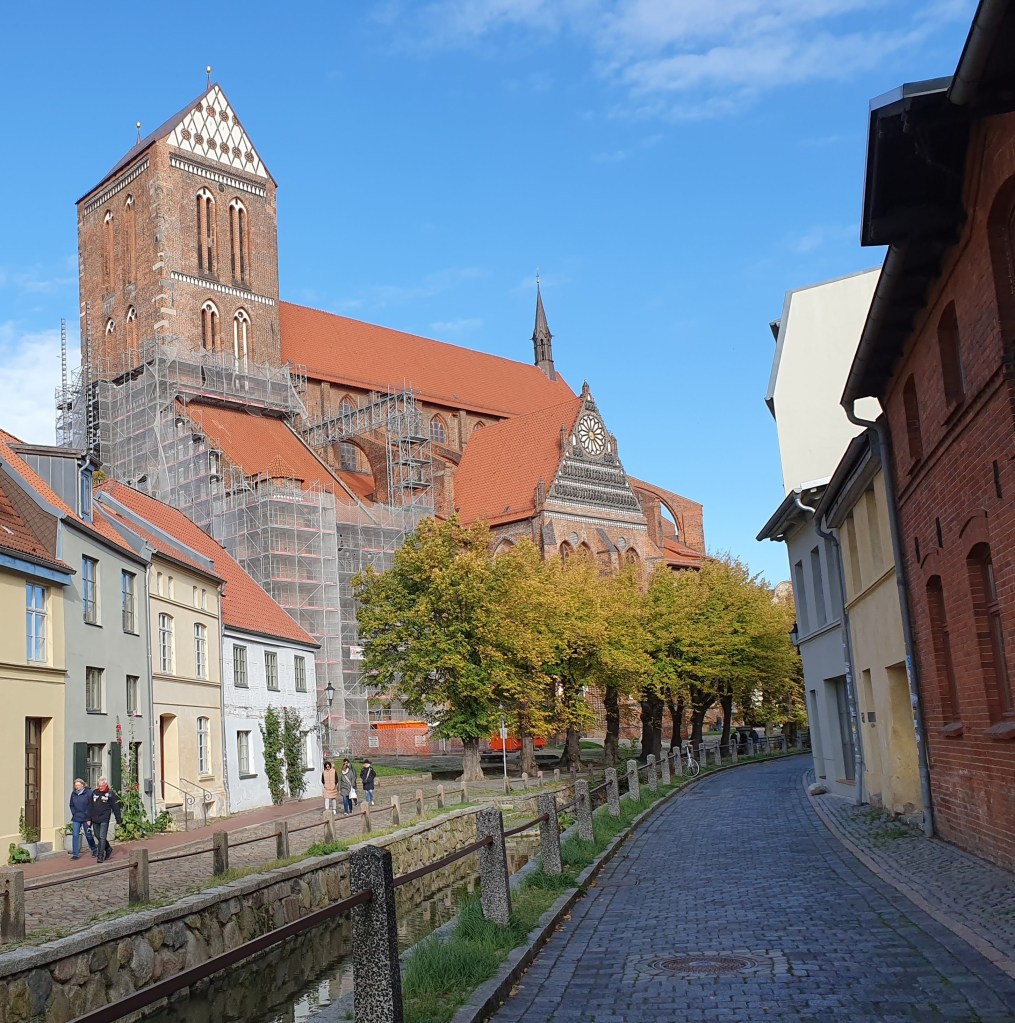
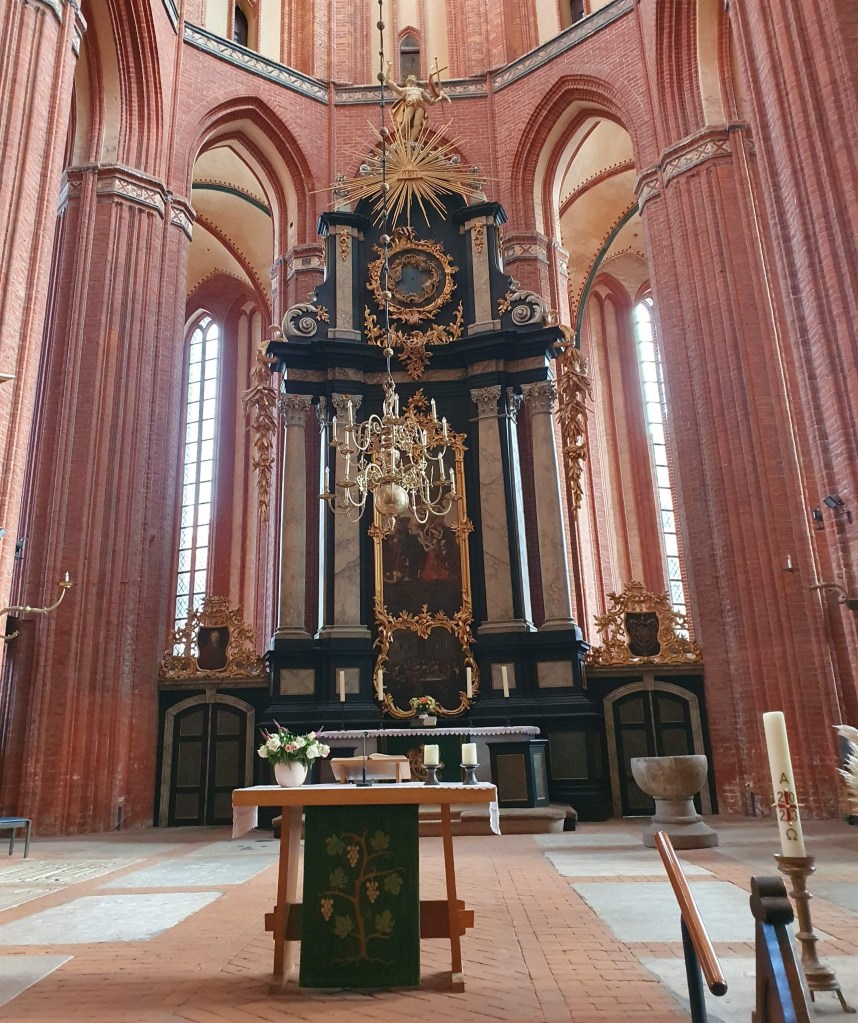
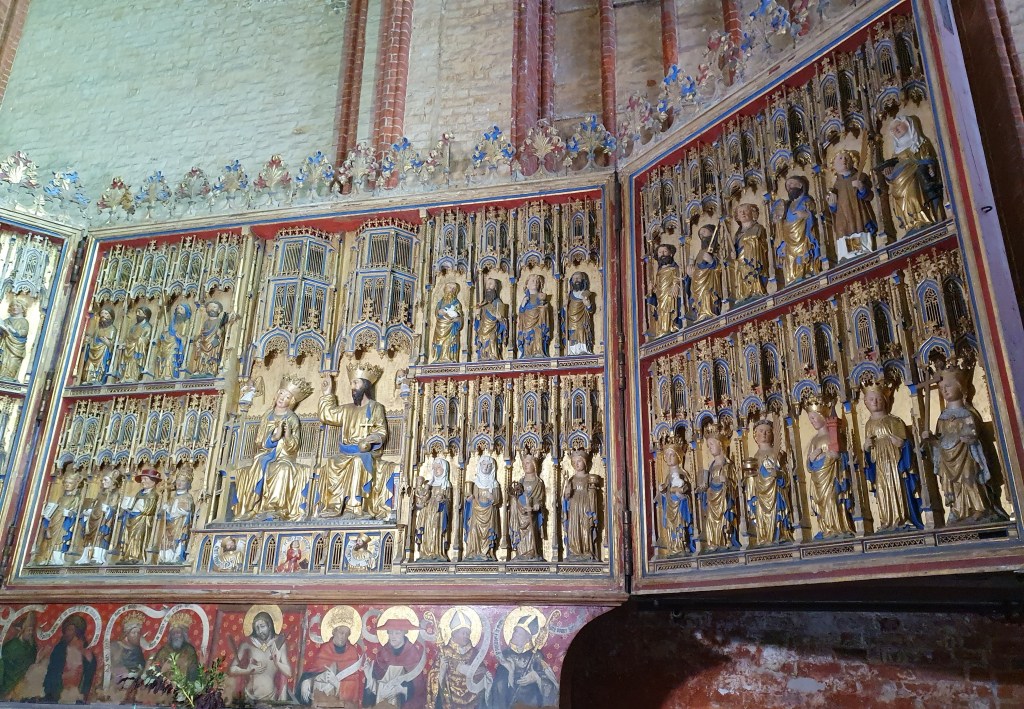
When the rain eased we started the second of the downloaded walks. This took us to the third of Wismar’s large churches, St Nicholas, the only one still being used for religious worship. Unlike most of the other Lutheran churches we visited in Germany, this one was richly decorated with a number of murals and statues.
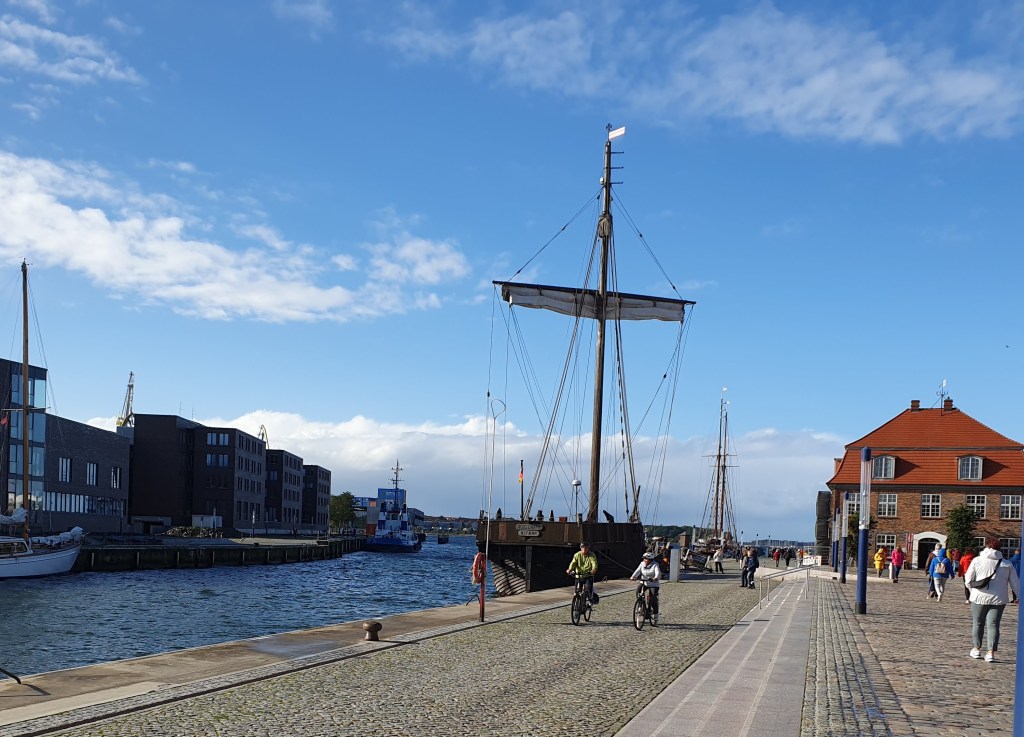
We then went to the old harbour area and visited the Baumhaus. The Baumhaus was where the employees responsible for closing the harbour entrance each night with a large beam were located. It now contains a small museum describing some of the history of the port of Wismar. The museum only consists of a couple of rooms, so did not detain us too long.
Our final visit was to the Schabbelhaus. This is the city’s main museum located in the former home of the merchant Heinrich Schabbel. It was an excellent museum, for which we hired an audio guide, and we stayed for over two hours until nearly closing time. It describes the history of the house and of Wismar. From being an independent Hanseatic city state, Wismar came under Swedish rule following the Peace of Westphalia in 1648, before becoming part the Grand Duchy of Mecklenburg-Schwerin in 1803. The museum also covered Wismar under Nazi rule, World War II and becoming part of the DDR. At the end of World War II, Wismar was captured by British and Canadian forces, but was handed over to the Soviet army under the terms of the agreements made at the Yalta Conference.
That evening, our first choice of a place to dine was full when we arrived, so we stumbled across a Ukranian restaurant, which was good. I had spundra, which was a type of pork stew. We were also given free shots of vodka with our meal and when we left we were allowed to each choose a piece of fruit from a basket to take with us.
Day 5 – Sunday 15th October 2023 – Wismar to Stralsund
Again the streets of Wismar were deserted as we walked from our hotel to the station to catch the 0942 train. The train was fairly empty and, as the line we were travelling on was not electrified, the train was diesel. The line was also single track for much of its route and a number of stations were request stops, which were skipped as nobody wished to get on or off at them. We passed through Bad Doberan, where a steam railway runs to the coast, but we didn’t have time to stop off there to ride on it.
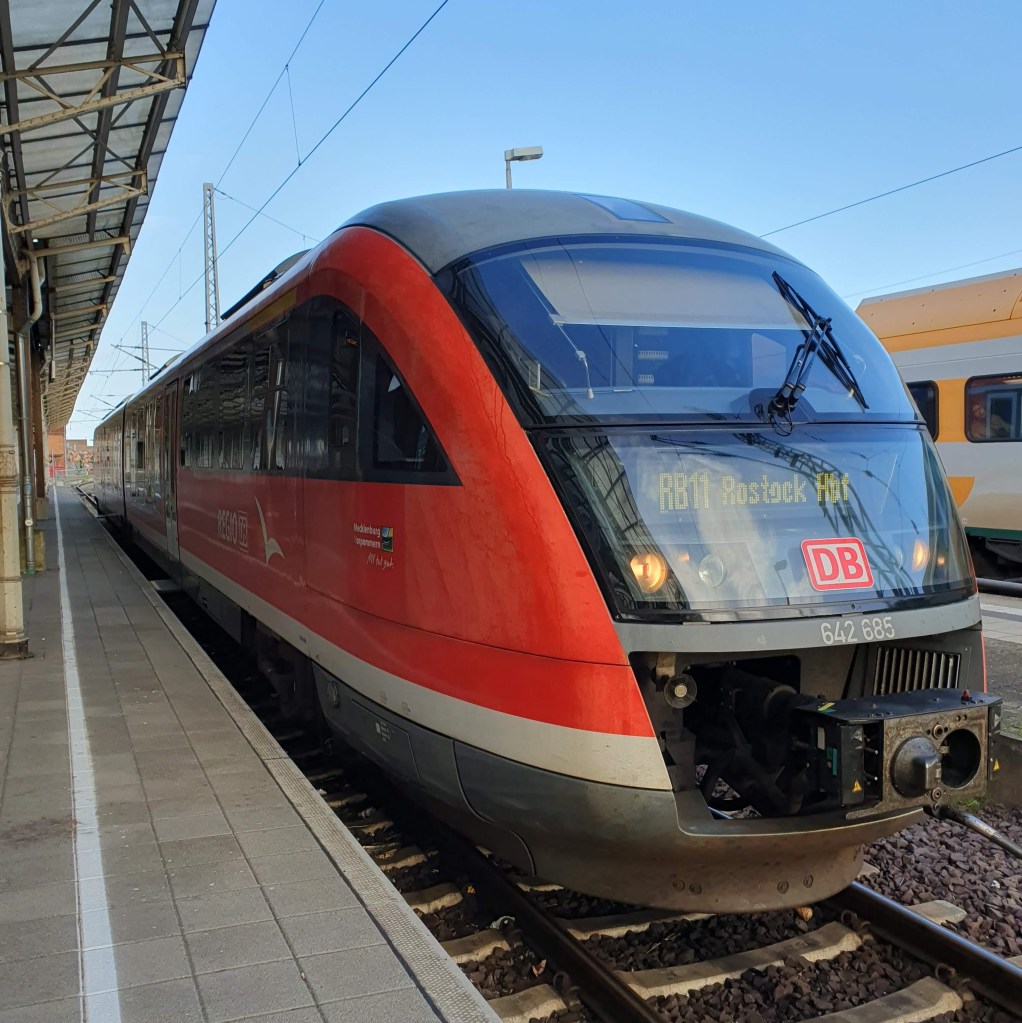
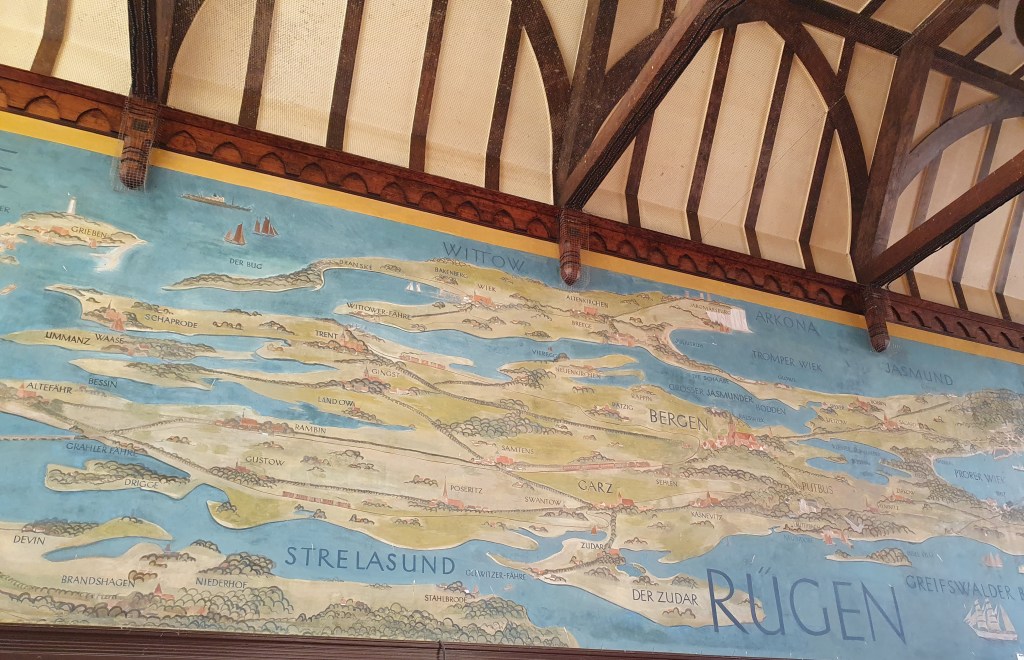
We had nine minutes in which to change trains at Rostock, which we thought would be plenty. However, Rostock station is long and strung out and the platform from which our next train was departing was some distance from the platform at which our train from Wismar arrived. When we got there, the platform was packed and the the incoming train was just arriving. Another hour on this train brought us to Stralsund, whose platforms are also spread across the station. The main building of Stralsund has some lovely murals with pictorial maps of the local area and the island of Rügen.
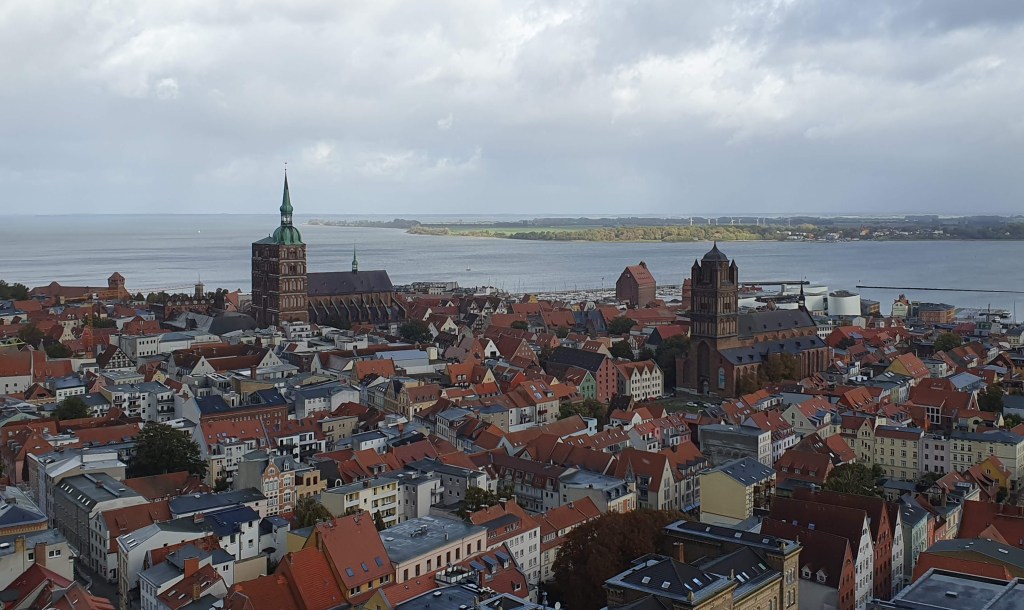
After dropping off our bags at our hotel near the station, we set off to explore Stralsund. First stop in the old town was the Marienkirche, which has a tall tower that you can climb. Unlike the other church towers that we had been up, there was no lift to provide assistance, but instead a one way system with some slightly scary ladders.
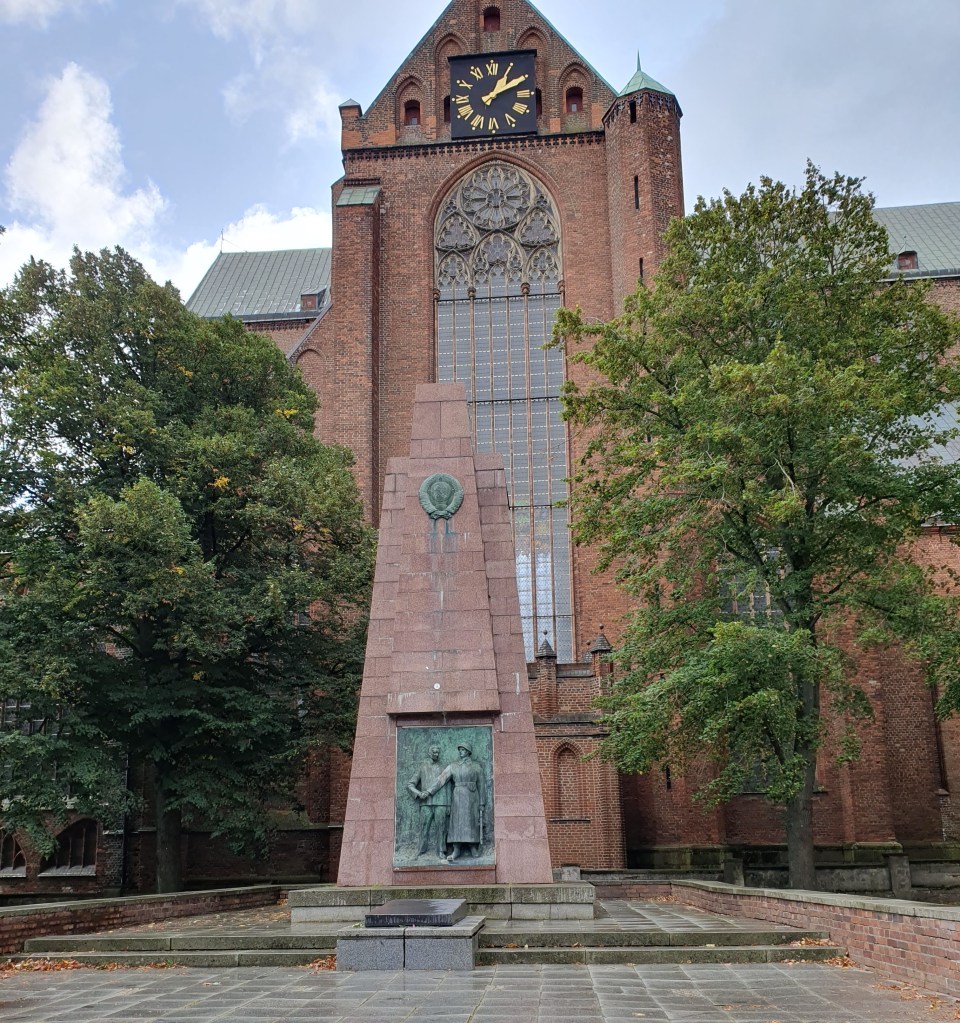
After leaving the Marienkirche we set off on a walk around Stralsund, which I had found on the internet. First stop outside the church was a Soviet war memorial. Shortly after we started the walk it started to rain and it became quite heavy at times. Unfortunately, Stralsund’s city museum was closed for refurbishment at the time of our visit, so churches provided the main place of sanctuary from the weather. It was also windy, which made using an umbrella quite tricky, but the wind did mean that the heavy showers passed over quickly. We ducked into the former church of St Jacobi, which is now used as an arts centre to avoid another downpour.
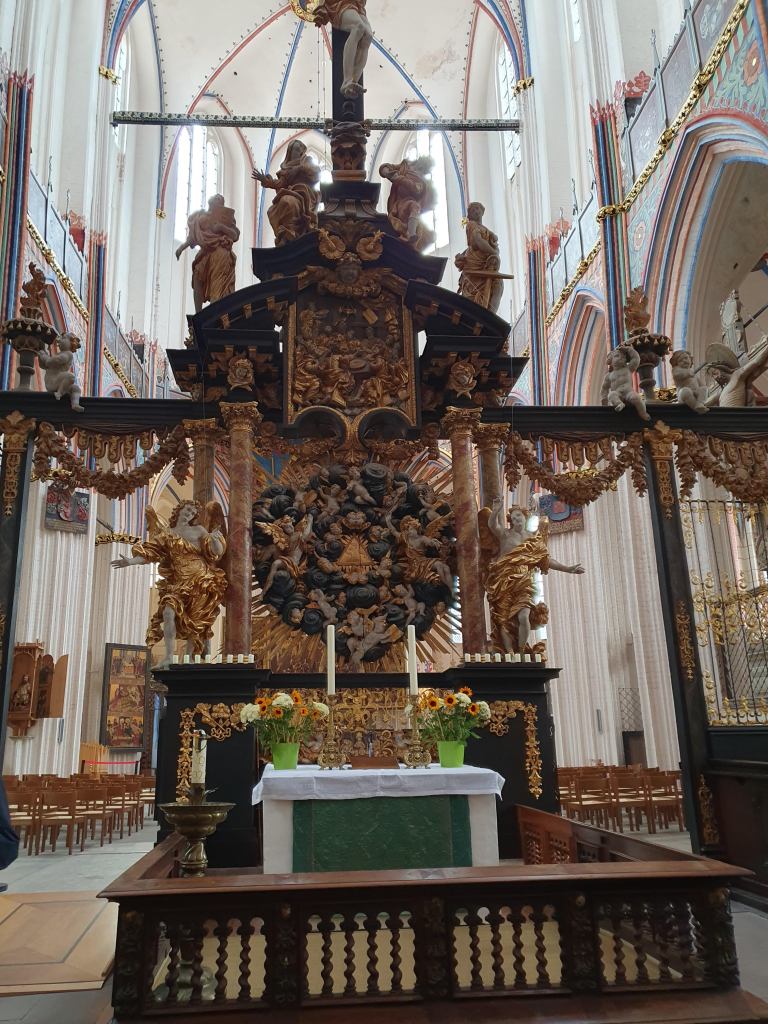
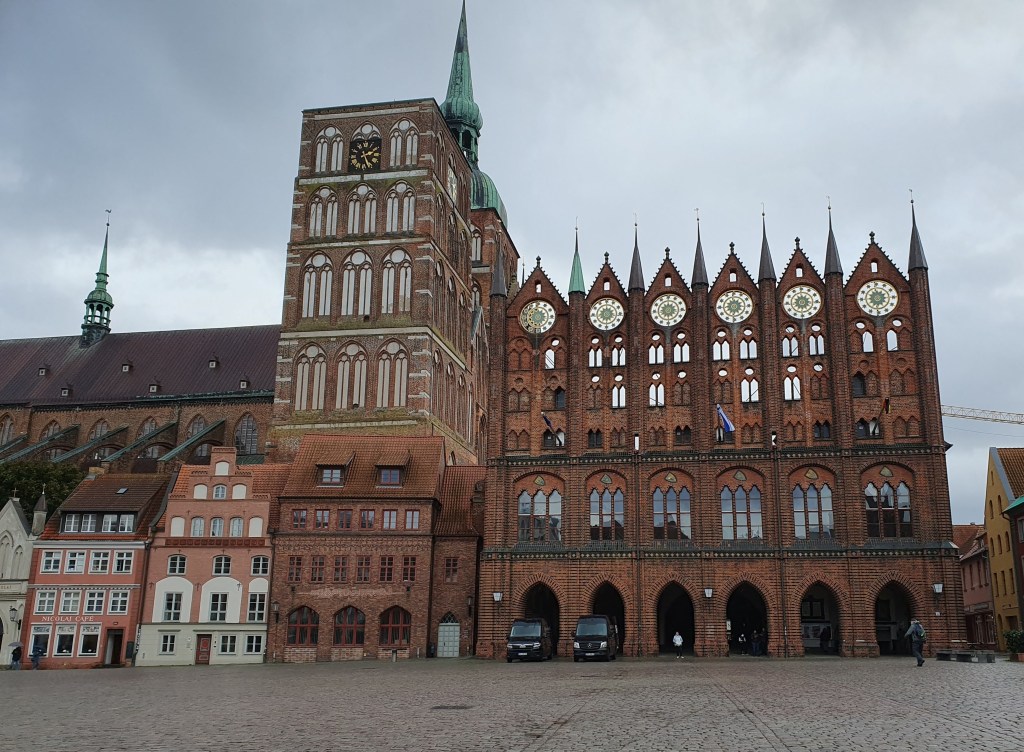
When we left St Jacobi the rain had eased, so we took the opportunity to explore the old docks, going there via the former Heilegengeist monastery. After a circuit round the north of the old town we came to the old market square through one of the old city gates. Located next to the town hall is the massive church of St Nicholas (St Nikolai). It was fortunate that we reached it when we did, as it had started raining again. St Nicholas has the most ornate interior of the three churches we visited in Stralsund.
Stralsund is paired with Wismar to form a joint UNESCO World Heritage Site and our next visit was to Stralsund’s Welt Erbe Haus. In comparison to the Welt Erbe Haus we had visited in Wismar, this one was rather disappointing, largely consisting of just some display panels about the various World Heritage Sites in Germany. We didn’t spend very long there and afterwards walked back to our hotel, initially taking shelter by going through the arcades of the town hall.
That evening we returned to the Neuemarkt near the Marienkirche for dinner. We chose an Italian restaurant where we both had onion soup, served sealed into its bowl with a baked cheese crust, just what we needed to warm us up after a dank day. We followed the soup with pizzas and shared a bottle of chianti.
Day 6 – Monday 16th October 2023 – Day trip to Rügen
Rügen is Germany’s largest island and if, like me, you have been learning German using Duolingo you will you will know of it because everybody seems to want to go on holiday there. As Monday is the usual closing day for many museums and other attractions in the cities we wished to visit, we decided to go on a day trip to the island. Again we were using our good value Mecklenburg-Pomeranian day rover tickets. However there was a slight problem in that on weekdays you could not use the day rover tickets before 9am, but the hourly trains depart from Stralsund at 59 minutes past the hour. Rather than delay our departure until the 0959 train we decided to get round this constraint by buying single tickets to the first stop upon leaving Stralsund and thus were able to legitimately use our day rover tickets for the rest of the day.
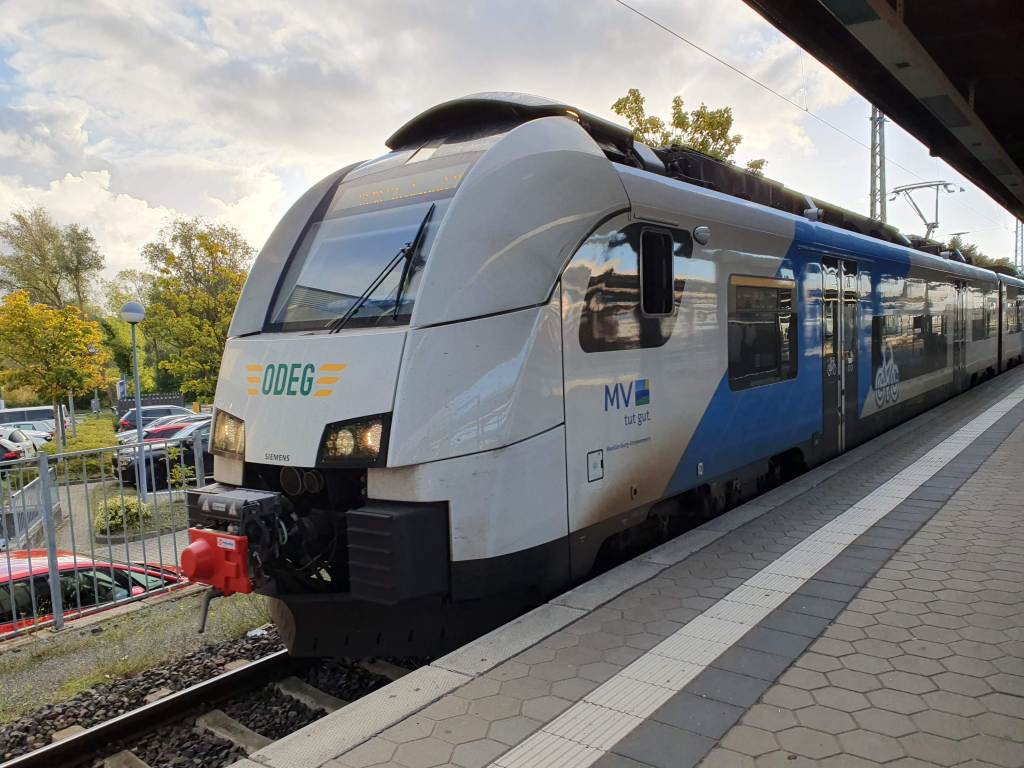
At Stralsund station we bought a ticket from a machine to Stralsund Rügendamm, having already obtained our day rover tickets online. Not having had a pricey hotel breakfast in Stralsund, I also bought an enormous pastry from a baker’s shop at the station. Normally there are two termini on Rügen served by the trains from Stralsund – Sassnitz and Binz. At the time of our visit, the leg to Sassnitz had a railway replacement bus service, so we chose to go to the end of the line at Binz, or rather to the station known as Ostseebad Binz. The train crosses onto the island on a bridge which is alongside two road bridges, the older one opens to allow marine traffic to pass, whereas the more modern road bridge is cantilevered and soars into the sky above the railway line. Shortly, after the train arrived on the island the heavens opened and there was a torrential downpour for about 10 minutes. Fortunately this stopped well before we needed to get off and the weather was sunny, if rather chilly, for the rest of the day.
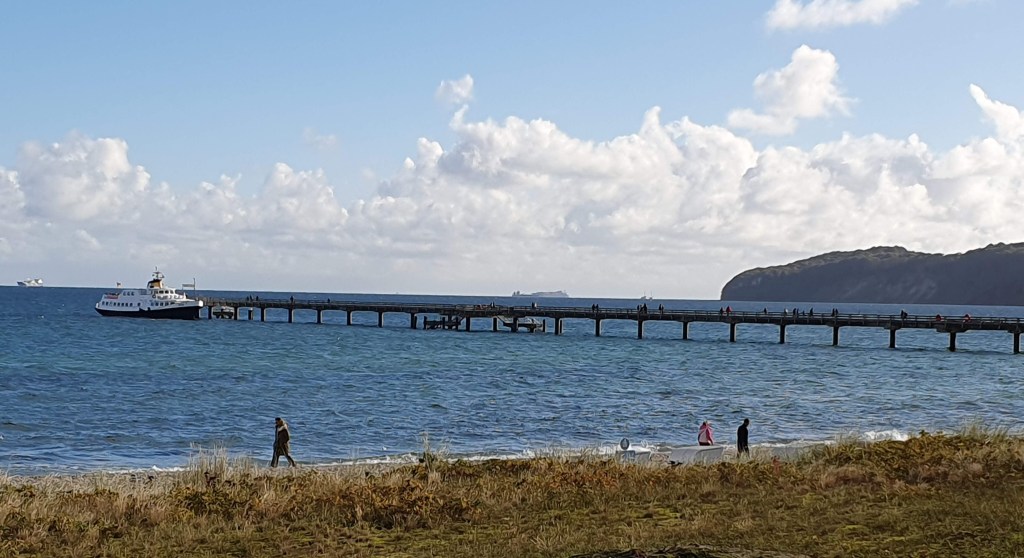
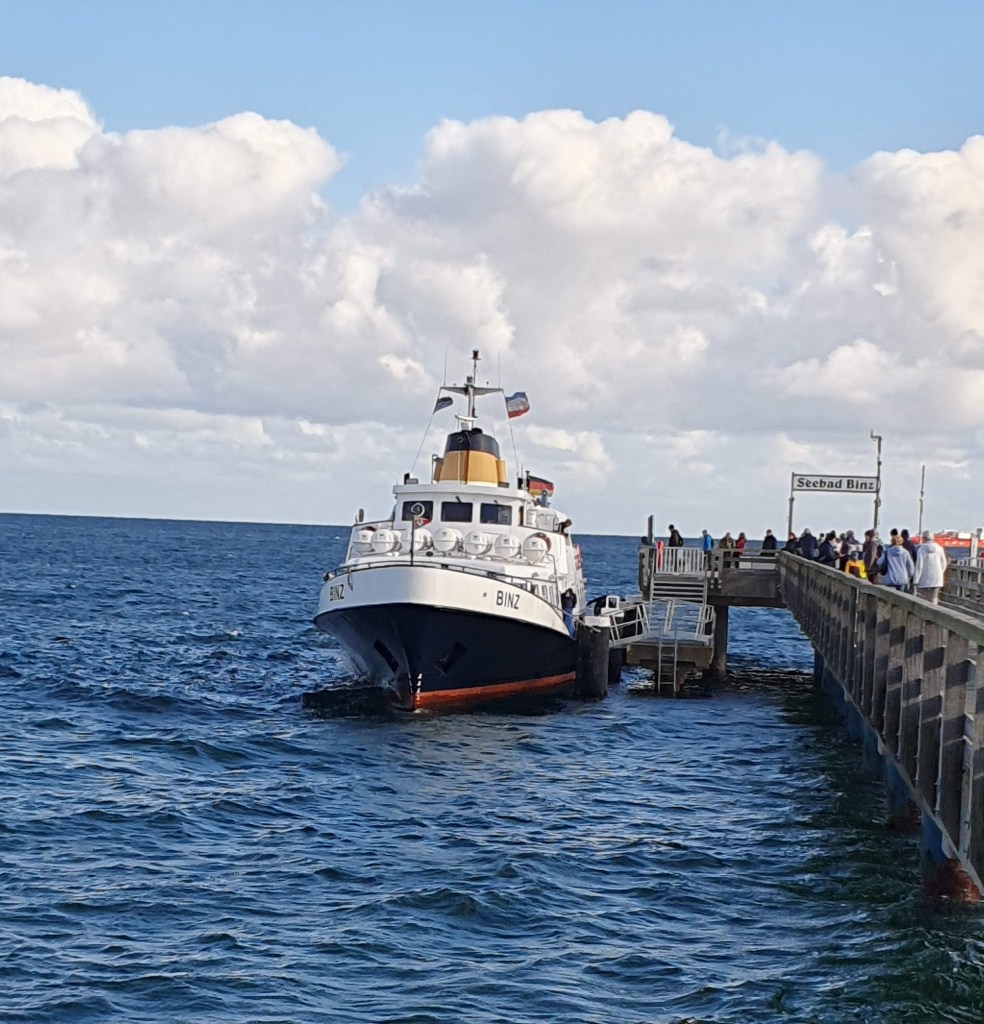
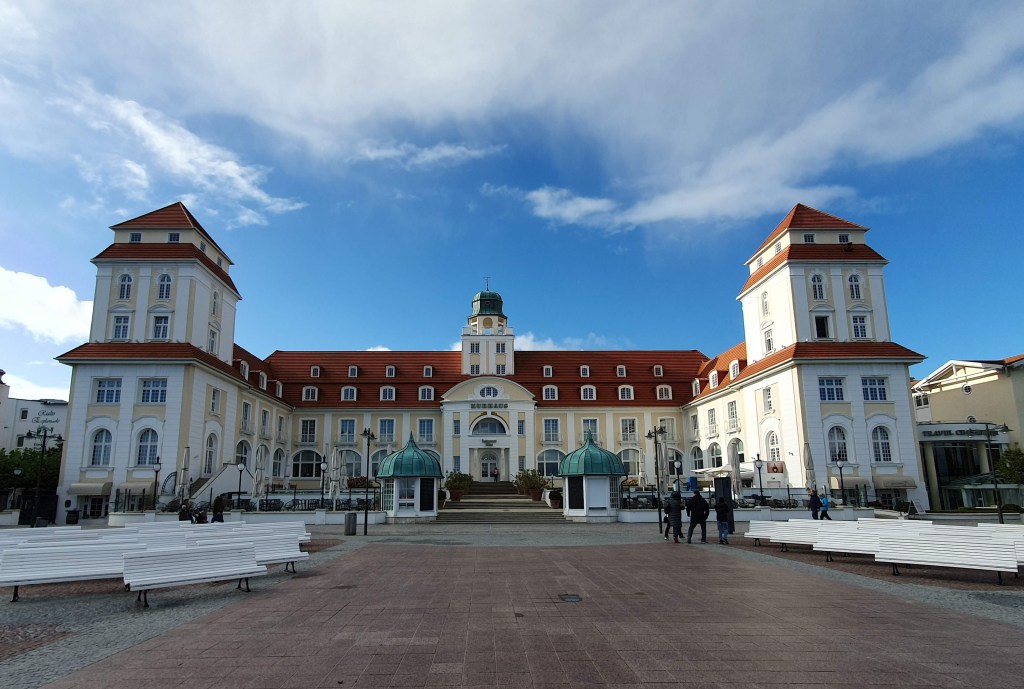
The train took about an hour to reach Binz from Stralsund, arriving a few minutes late. After a brief diversion to a shop we made our way to the seafront and walked along the prom to Binz pier. Binz was surprisingly busy, with many families about, presumably because it was the half term holidays. Most people were wrapped up in thick coats and hats, even those few sitting on the beach. There was a ferry about to depart to Sassnitz from the end of the pier. Near the pier is the very grand Kurhaus hotel.
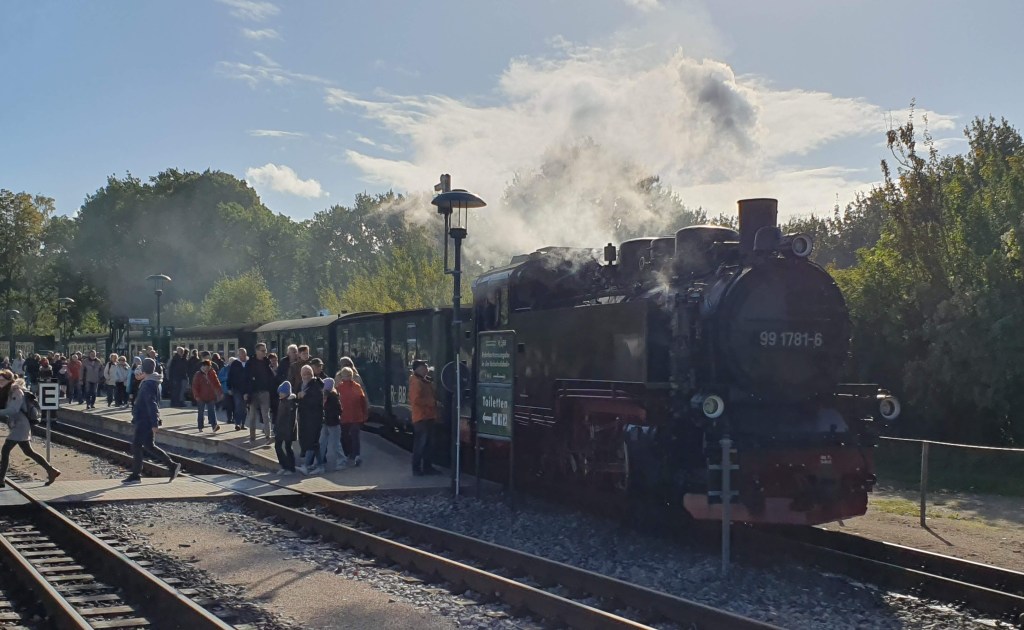
When we had finished on the pier we walked inland to find Binz’s local museum. This small museum is located within a public library, which itself is situated in the building of Little Binz station. This station is served by a steam railway that runs from Putbus. Just as we were finishing in the museum a steam train arrived and shunted itself round to take the train back in the direction from which it had arrived.
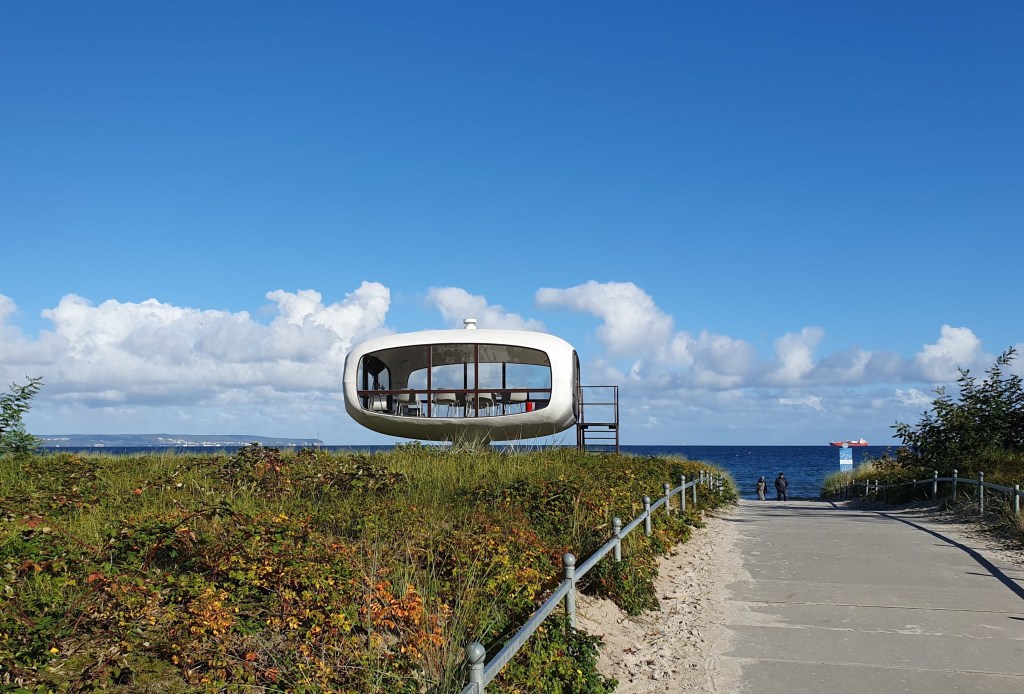
From Little Binz station we walked back to the prom, but a little further along from where we left it to see a lifeguard lookout cabin which was shaped rather like a capsule from the London Eye. We then walked north all the way along the prom for about four miles to Prora, stopping off when we got there to buy an ice cream.
Construction of Prora was started by the Nazis in the 1930s as part of their KdF (Strength through Joy) project. The intention was to provide holiday accommodation for 20,000 visitors in eight enormous sea-facing blocks stretching for nearly three miles in length. The onset of World War II came before the project was completed, and rather than housing holidaymakers, it was initially used as a training camp for the SS. One of the eight blocks was demolished towards the end of World War II. At the end of the war it requisitioned by the Soviet army, who demolished another two blocks. The Soviets only handed it back to the East German authorities ten years later. The East Germans also used it as a military training camp and throughout communism it was a restricted military area. Only in very recent years has Prora started to be used for its original purpose as holiday accommodation. The blocks are being sold off to private developers, with currently three out of the remaining five now having been redeveloped and two still derelict.
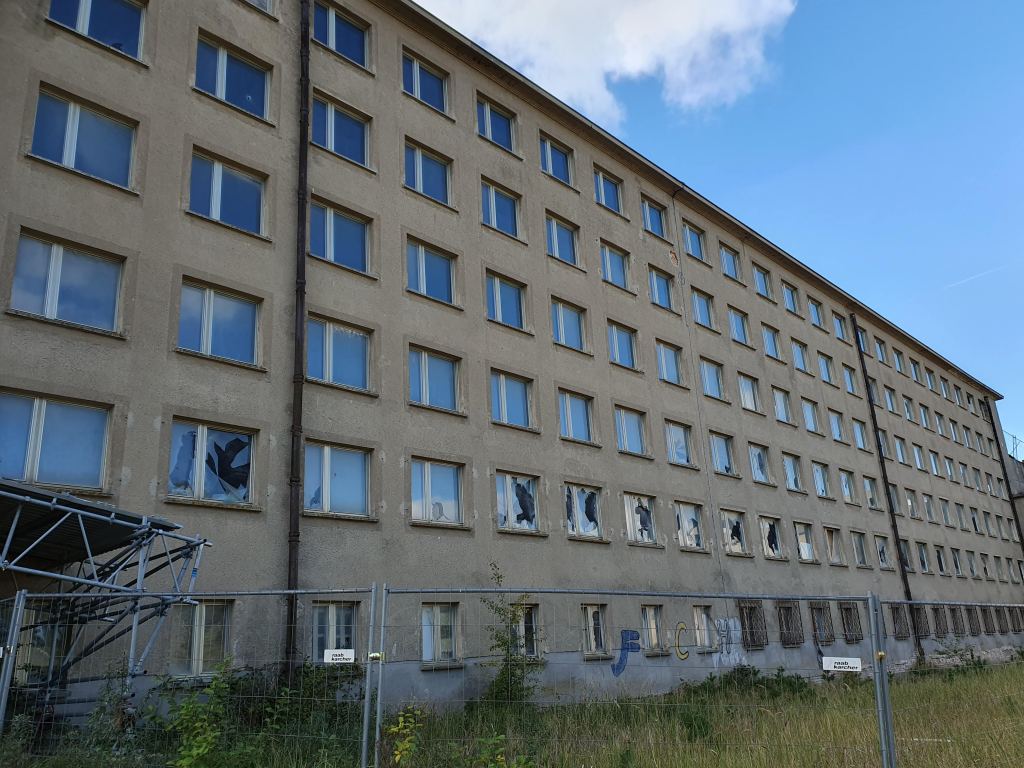
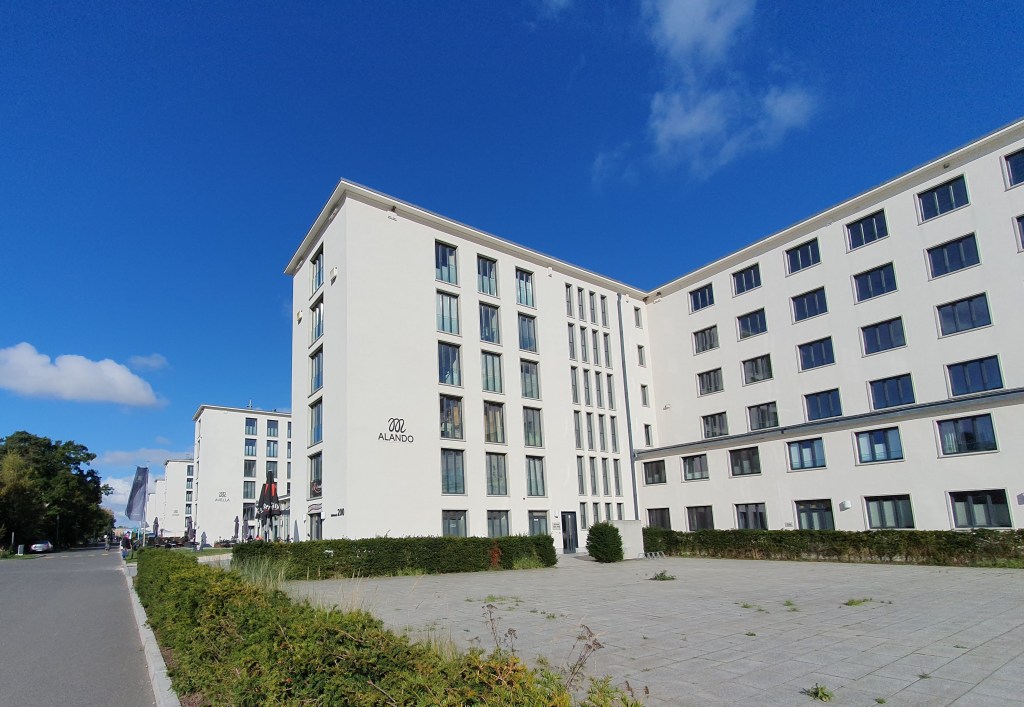
In the largely derelict central block is the Prora Documentation Centre, which has displays about the history of the complex and the Strength through Joy movement more generally. We spent some time there before leaving to walk to the nearby Prora station, where we caught the 1610 train back to Stralsund.
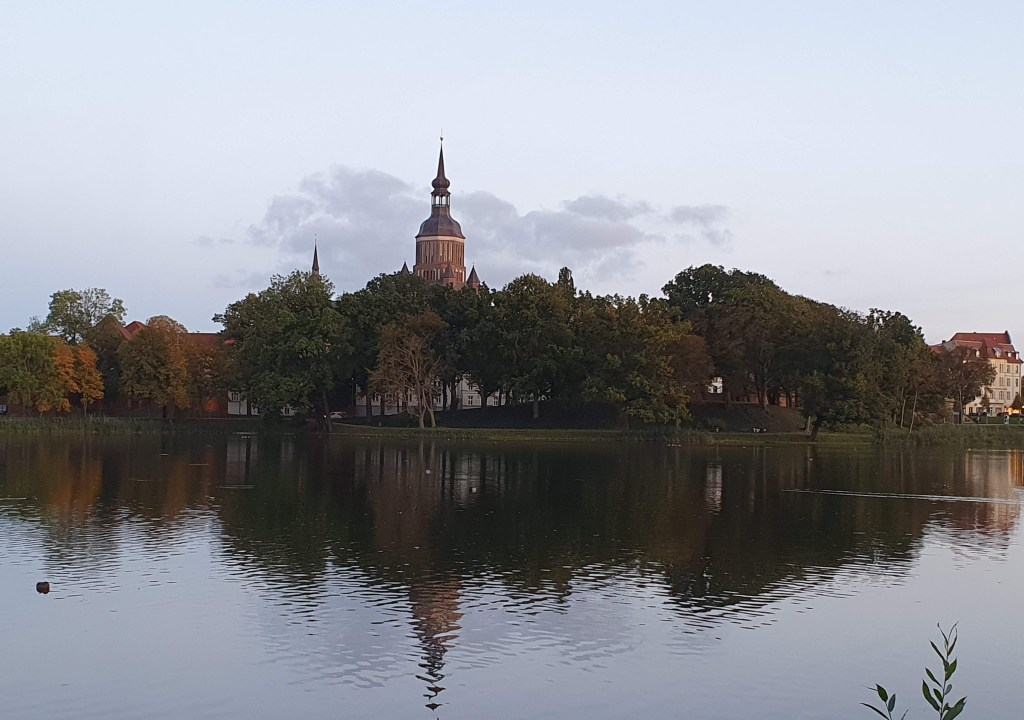
As the weather in Stralsund in the evening after we returned was more pleasant than the day before, we could saunter and better admire the views of the old town. We went back to the Neuemarkt again to find dinner, eating in a different restaurant to the one we had frequented the previous evening. Here I had pork with fried potatoes and onion, together with a couple of different draught beers from a local Stralsund brewery.
To be continued – coming next: Poland
 Europe Explored