
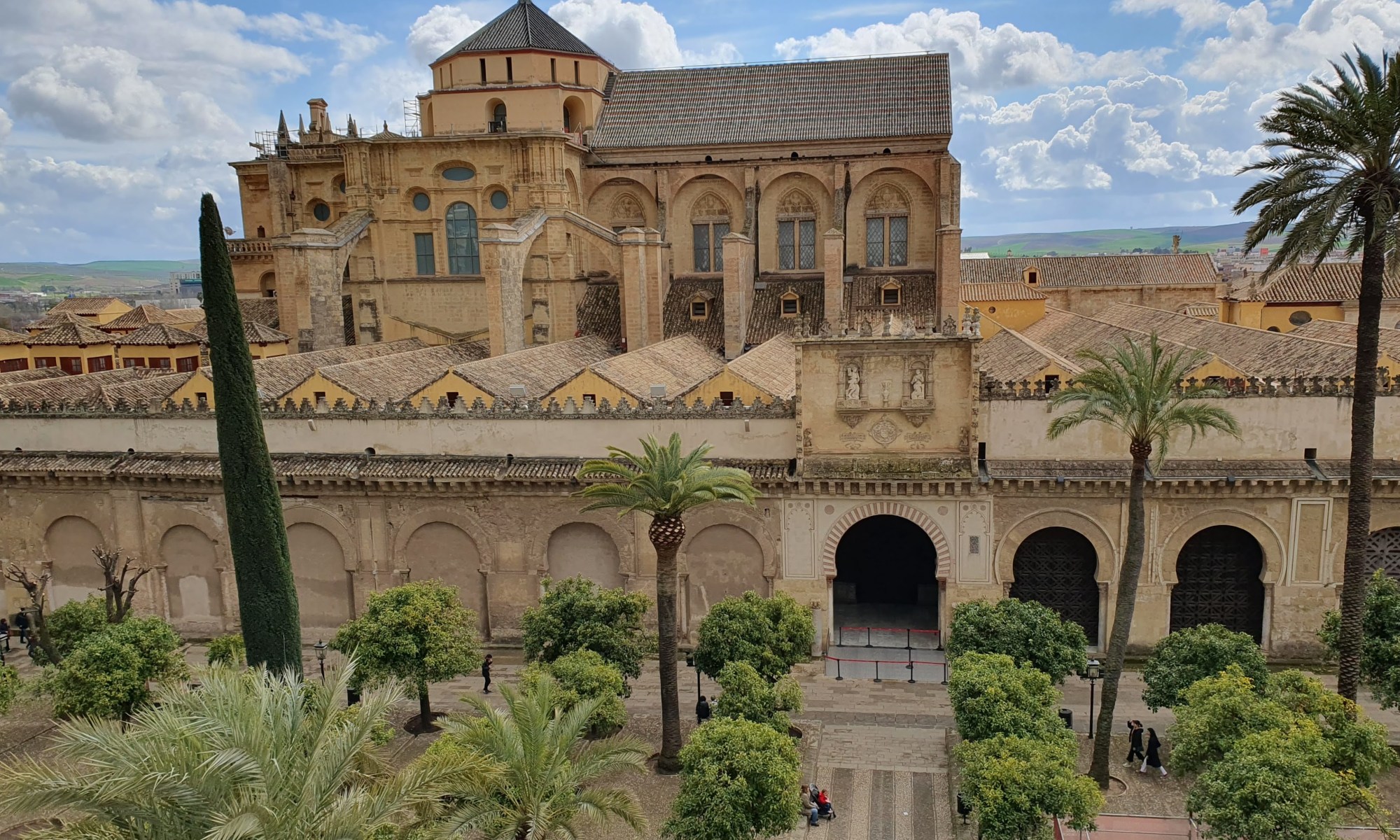
“Sacred for lovers of art, you are the glory of faith,
You have made Andalusia pure as a holy land!“
from The Mosque of Cordoba – Allama Iqbal
In 2021, shortly after travel became possible again following the pandemic, my wife and I made a short three day trip to visit the Alhambra in Granada. We enjoyed that so much, we decided to come back to Andalusia to explore more of the Moorish influences in this part of Spain. This was a trip with my wife, so as for our holiday in Poland in 2022, it had less train travel and longer stays in each location than when I am on my solo travels.
Day 1 – Thursday 23rd February 2023 – London to Malaga
As our flight from Stansted Airport was not until lunchtime , we had a fairly leisurely journey there in the morning. It left on time at 1315 and arrived in Malaga on time at 1700. When we had flown to Malaga in 2021, we had been met with massive queues for passport control, followed by further queues for Covid documentation checks, such that we nearly missed the bus to Granada that we had booked for 75 minutes after landing. This time we were pleasantly surprised there were no queues at all. We walked through where the passports checks where on our previous visit to discover that immigration control was now in the area that had been used to inspect our Covid certificates. Despite not having any e-gates, there was no wait to have our passports checked and we were out of the airport less than fifteen minutes after leaving the plane. We walked the short distance to the airport railway station, where we discovered that we didn’t even need to buy tickets as you can use your contactless credit card to touch in and out of the Malaga suburban train network in the same way that you do on the London Underground.
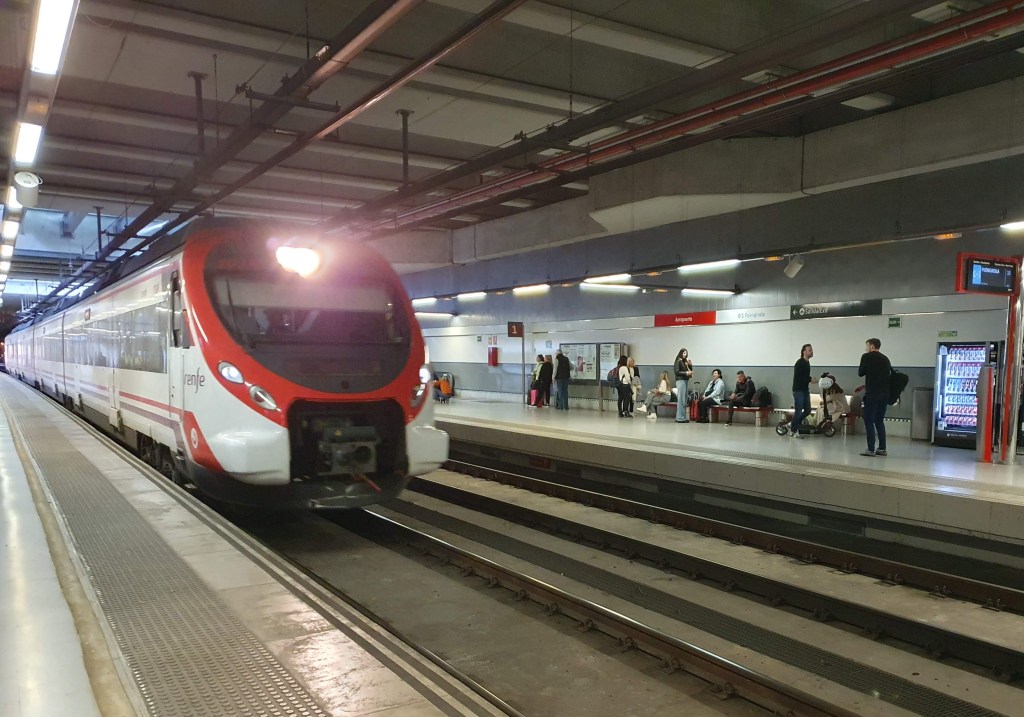
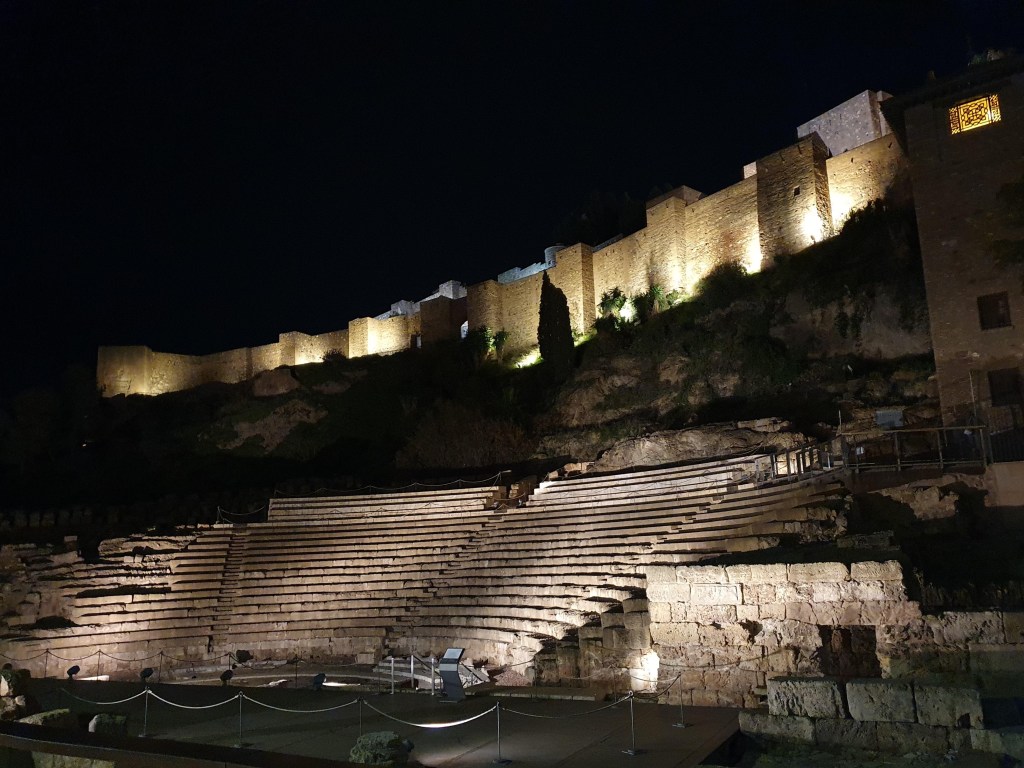
We had a short wait for a train to convey us to the centre of Malaga and we arrived at our hotel at 6pm. As we had spent the afternoon in Malaga on our return from Granada, the basic geography of the city was familiar. When we set off to find dinner we took the opportunity to walk past some of Malaga’s landmarks, such as the Cathedral and Roman Theatre.
We found a restaurant in a pedestrianised street not far from our hotel – it was just about warm enough to choose a table outside. I had Padron peppers to start with, followed by grilled sea bass served with puréed peas and leek, sharing a bottle of local white wine to drink.
Day 2 – Friday 24th February 2023 – Malaga
On our previous visit to Malaga in 2021 we had visited the Malaga Museum and the Pablo Picasso Museum. So we planned on our full day in the city this time to go to the main sites that we did not have time for previously.
We started off the day by climbing the steep hill to the Gibralfaro fortress on the top, occasionally stopping to admire the views over Malaga as we ascended. There has been a fortress on top of the hill since at least the time of the Phoenician presence in Malaga in about 770BC. We arrived at the entrance shortly after it opened at 9am – this was the first of many places on this trip were I could get reduced (or in some cases free) entry due to me now being over 65 years of age (and an EU citizen). We listened to an audioguide on our own phones as we explored the Gibralfaro, which would also cover the Alcazaba which we visited next.
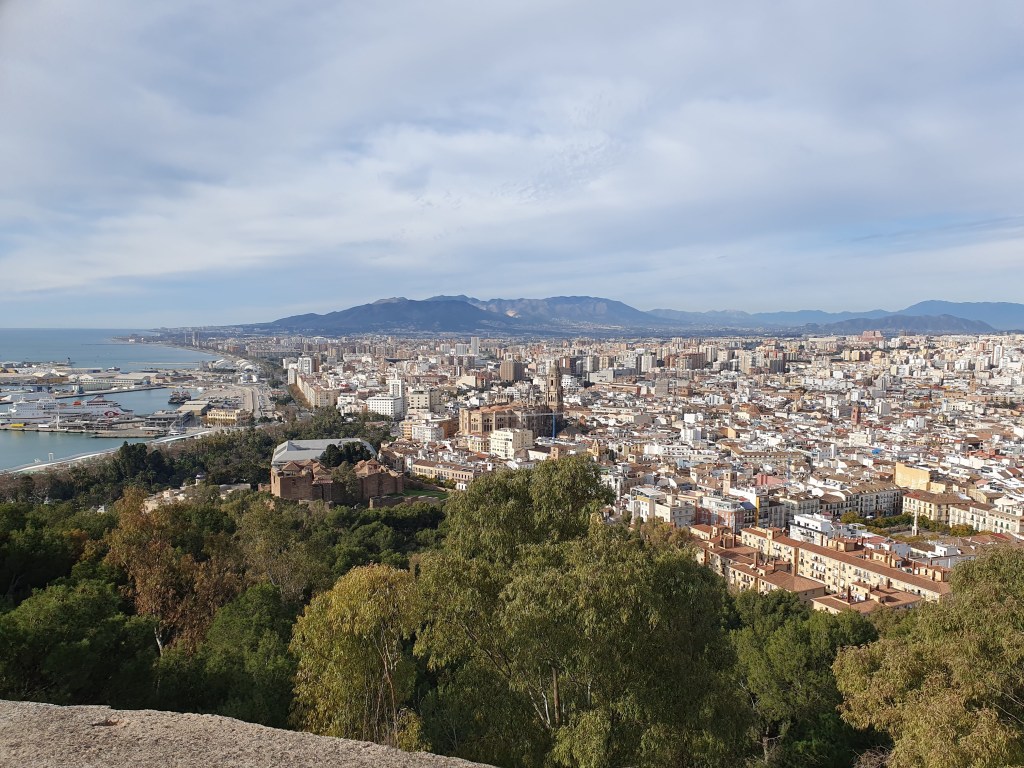
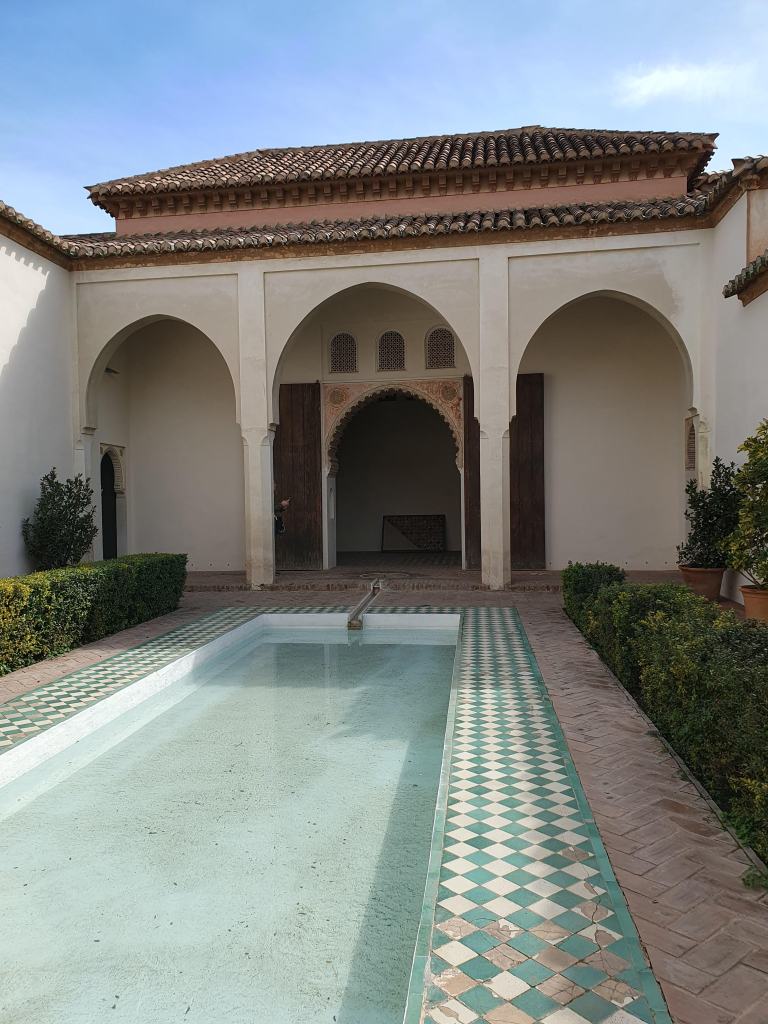
At about 11am we descended the way we had come up to get to the Alcazaba, the Moorish palace, built in the 11th century and linked to the Gibralfaro by a walled corridor which is sadly not open to the public. The Alcazaba was much busier than the Gibralfaro, probably due to it being later in the day and more easily accessible from the city centre. The Alcazaba was similar in design to the Alhambra in Granada that we had visited in 2021, but smaller in scale and lacking in the intricacy of design that is so spectacular in the Alhambra. One felt that the Alcazaba could be made more attractive with a little more care and attention, for example, by restoring running water to some of the features.
Next stop was the Roman Theatre which is adjacent to the entrance to the Alcazaba. Although it is possible to see the Roman Theatre every time you walk through the centre of Malaga, there is a small museum you can go in and then enter the theatre itself.

Malaga’s cathedral occupies a large site in the old centre of the city. As is the case for most cathedrals in Andalusia it was built on the site of the former mosque in the 16th century. The interior is in the renaissance style with numerous ornate side chapels. We again used an audioguide on our own phones to inform us as we went round.
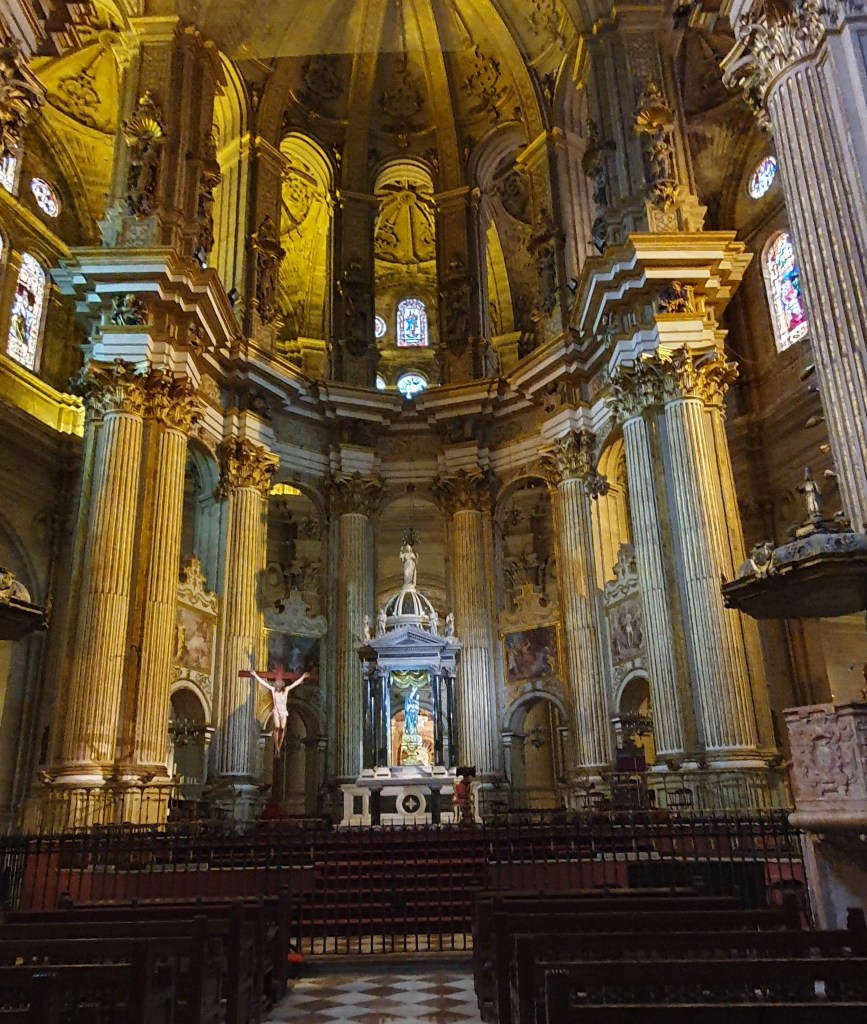
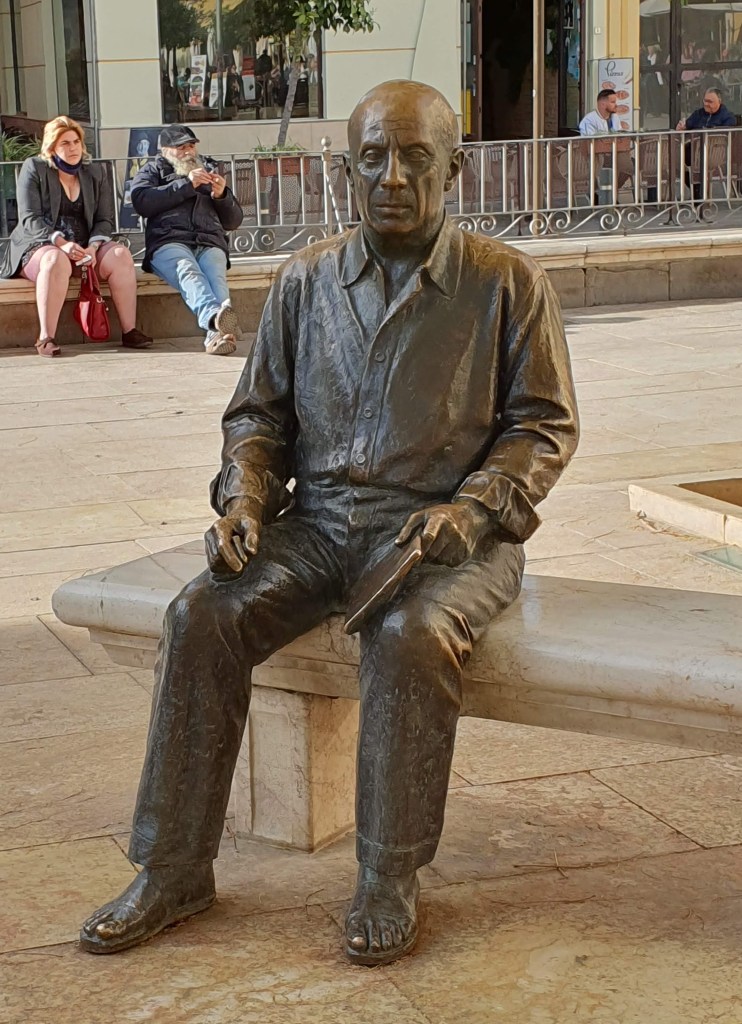
By the time that we had finished in the cathedral we had time for just one further visit that day. Having previously been to the Pablo Picasso museum, which contains many of his works, we decided to go the Pablo Picasso Birthplace Museum. This small museum is located in the house where Picasso’s parent’s rented the first floor at the time of his birth, and where he lived for the first three years of his life. The main room on the first floor overlooking the street is furnished as it would have been when occupied by Picasso’s family.
Having had more time to research where to eat in the evening, we chose a place a little further from our hotel than the restaurant we dined in on the first evening. We went to look at it earlier and found out when it would be serving dinner. However, when we tried to return for 8pm, we found that our way was blocked by a religious procession which was winding through the city centre and which appeared to have ground to a halt. We eventually found a way round it and made it to the restaurant in time for dinner. It was a very tasty meal. I had the local speciality of flamenquin (fried rolled ham and pork) to start, followed by lamb cutlets, sharing a bottle of red wine.
Day 3 – Saturday 25th February 2023 – Malaga to Cordoba
We caught the 0910 train from Malaga, which was nearly full for its journey of just over an hour to Cordoba. On arriving in Cordoba we stopped off at the hotel we had booked near the station, which let us drop off our bags in our room even though it was still early. We then walked into the centre of the city, initially through a park alongside a broad boulevard, before crossing the the city walls to enter the old town.
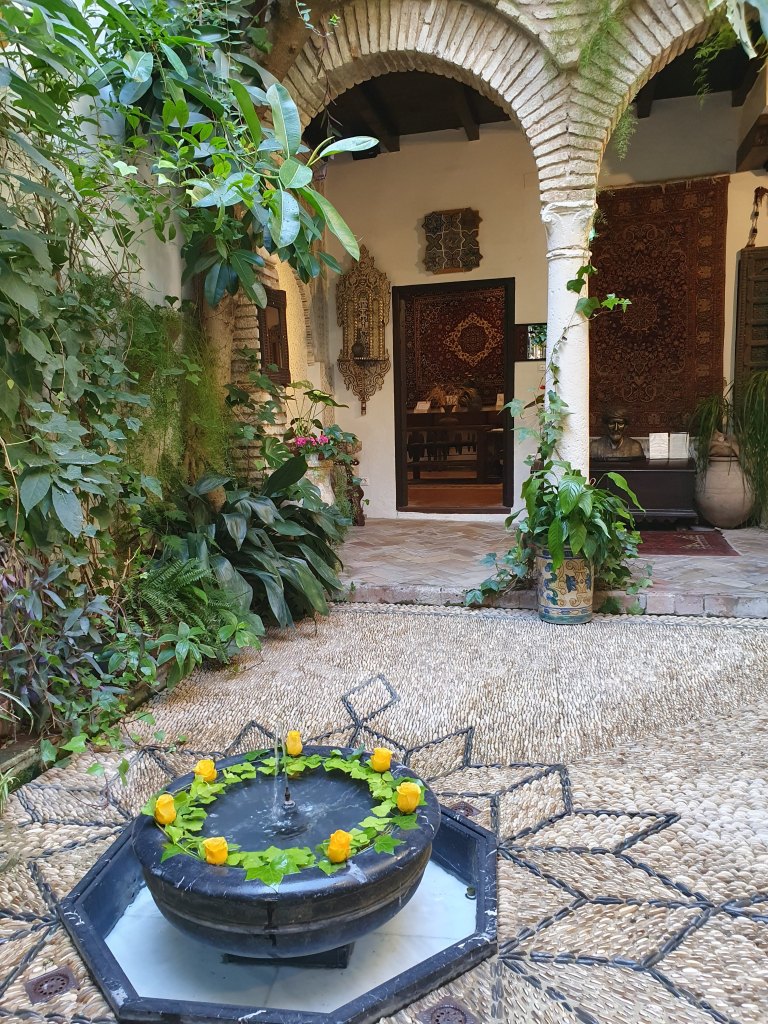
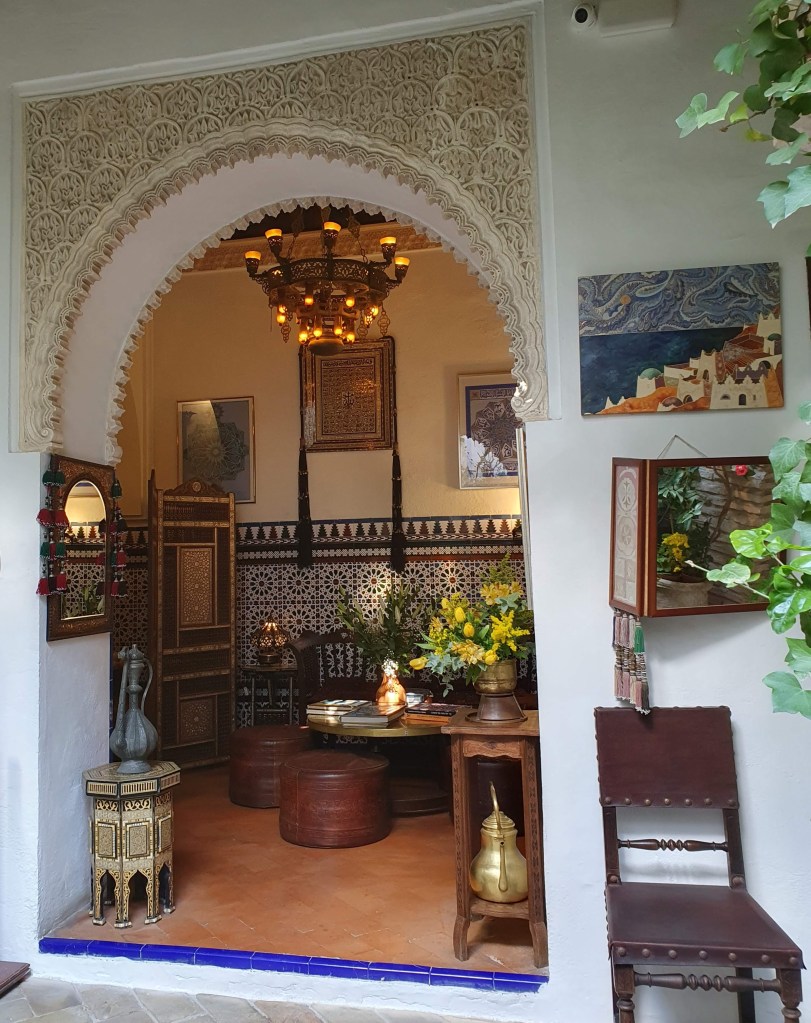
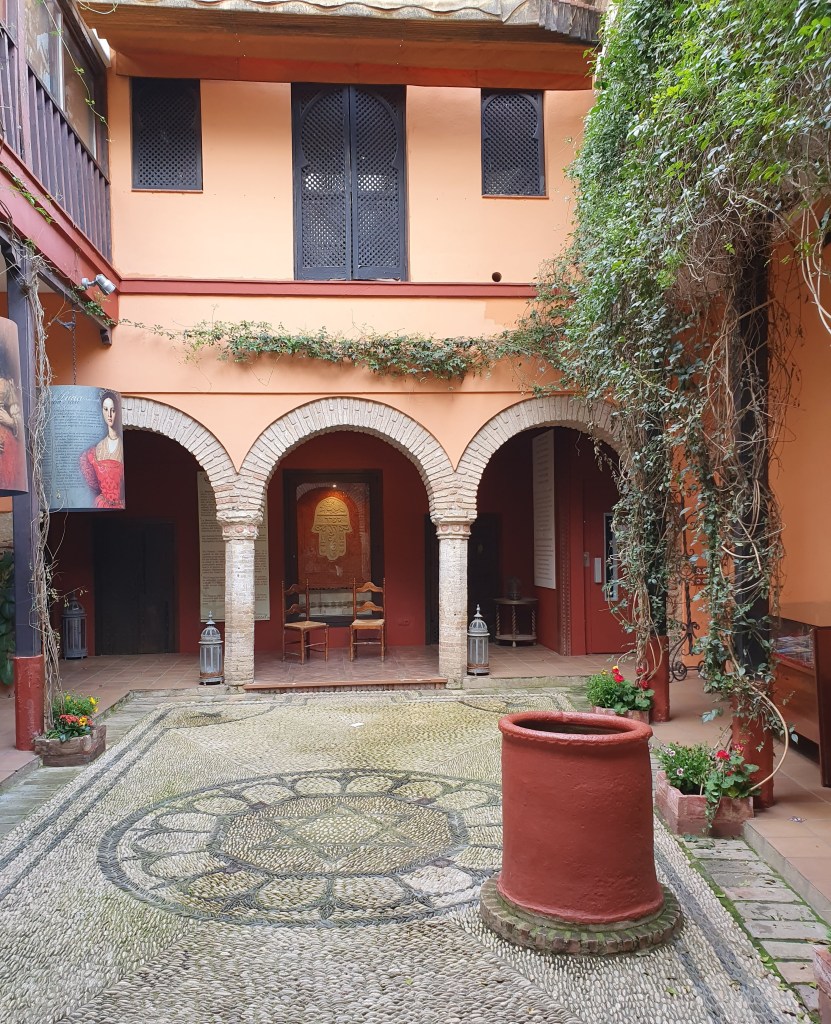
Cordoba is famous for its patios, the tiled courtyards of many of the houses. Our first visit was to the Casa Andalusi, a small house containing a traditional patio. This lovely little building had a trickling fountain at its centre. Next door to the Casa Andalusi is the Museo Le Alquima, the Museum of Alchemy. Rather than containing, as we expected, a history of alchemists in Cordoba, instead it was devoted to promoting some new age pseudo-scientific mumbo jumbo, so in retrospect we could have given it a miss.
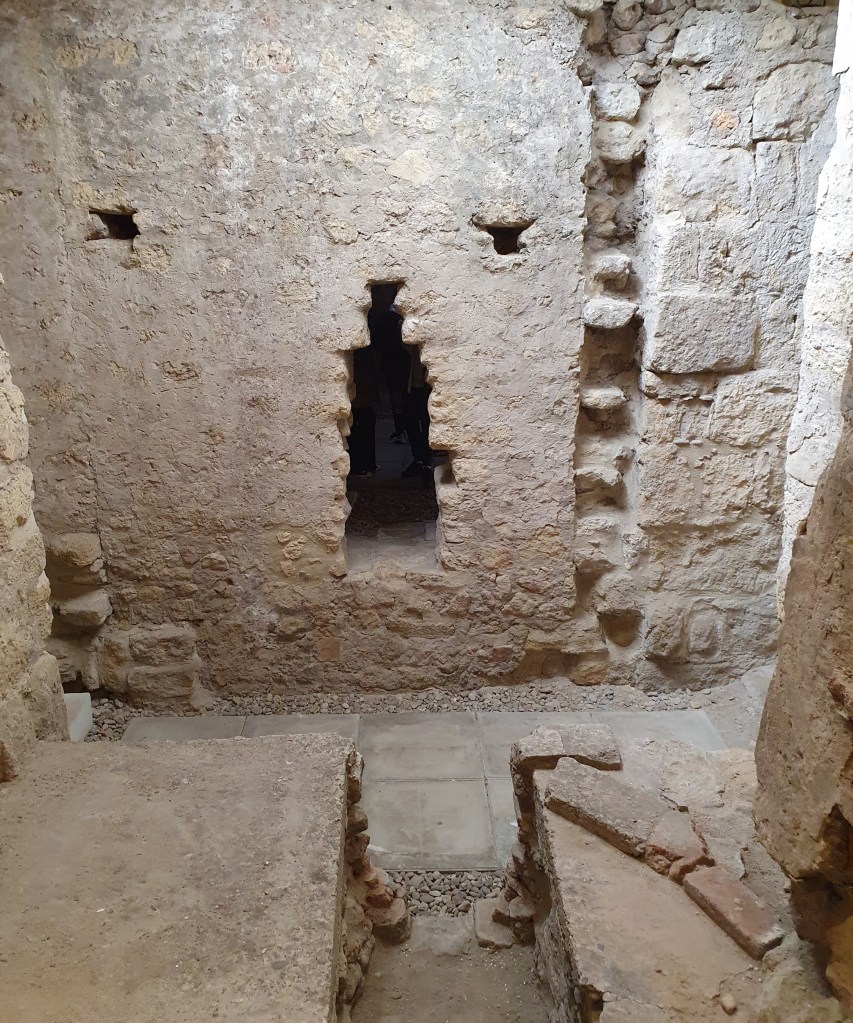
We then walked a short distance through the narrow winding streets of the old town to the Banos del Alcazar – the subterranean remains of the the bathhouses originally built in the 10th century by the Muslim Caliph of Cordoba. This was the first place on this trip where I discovered that I could enter for free, because I was now over 65 years of age and an EU citizen.
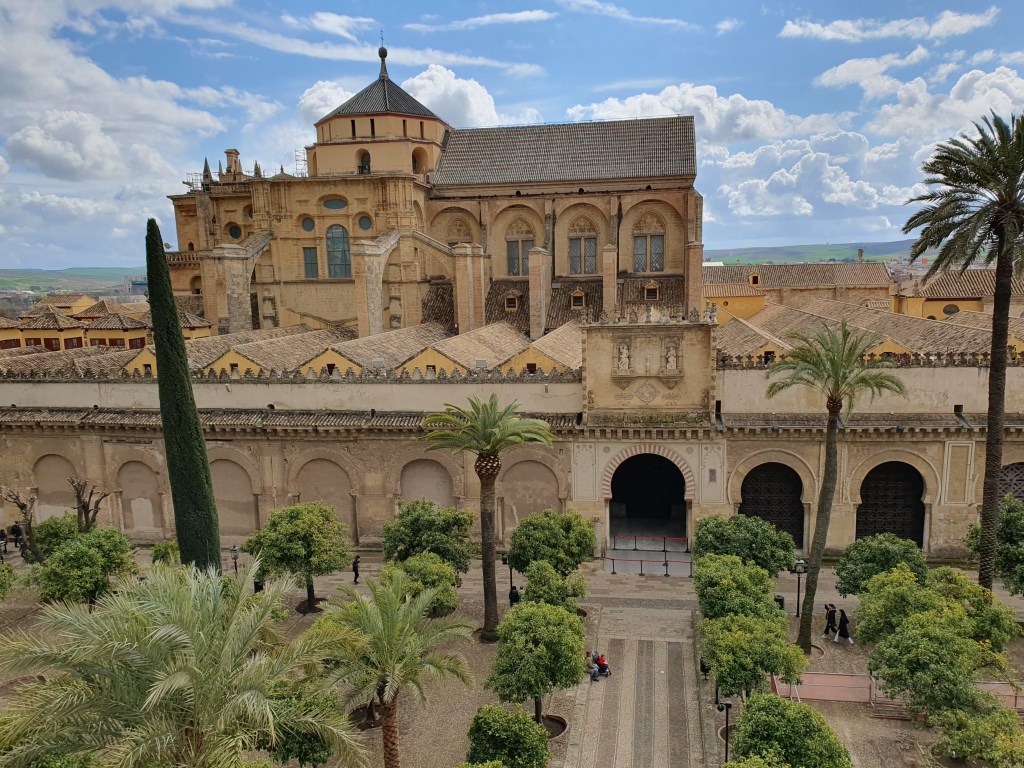
About a week before we departed for Spain we had booked timed tickets for Cordoba’s Mezquita and for the Mezquita’s Bell Tower. In the case of the Bell Tower this proved to have been wise, as when we arrived there it was displaying a notice saying that tickets for ascent that day had all been sold. At the appointed time we were let in to begin the climb of the tower. This was done in three stages – to an initial viewing area part way up, then to the level where the bells were hung and finally to the top of the tower. From the top there were views down to the Mezquita and across Cordoba.
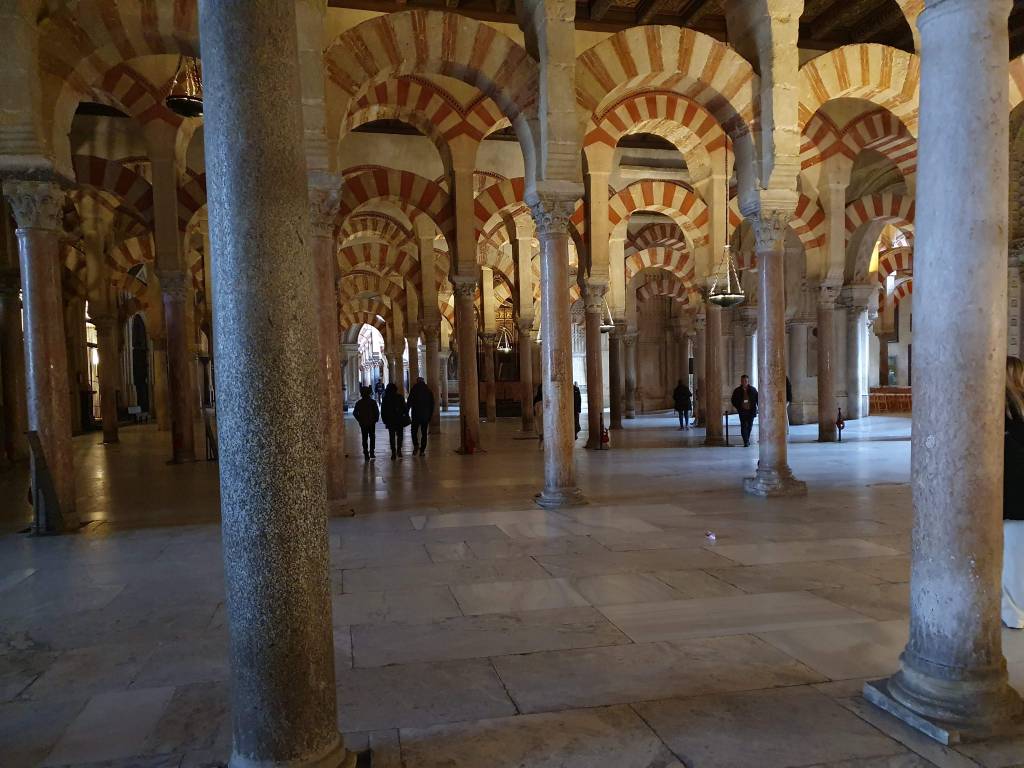
When we came down from the Bell Tower we obtained audioguides for the Mezquita itself. Although we had another timed ticket for the Mezquita, they were not concerned when we went in early. The Mezquita is now the cathedral of Cordoba located within what had been the Great Mosque. The mosque had been expanded several times since it was first constructed in the 8th century and the differences between the periods of construction are clearly visible. The way the columns lined up to produce different geometrical effects fascinated the Dutch artist M C Escher and he created an etching of the Mezquita’s interior which I had seen when I had visited Den Haag the previous month. I was expecting to be impressed by the Mezquita, but I think it exceeded my expectations.
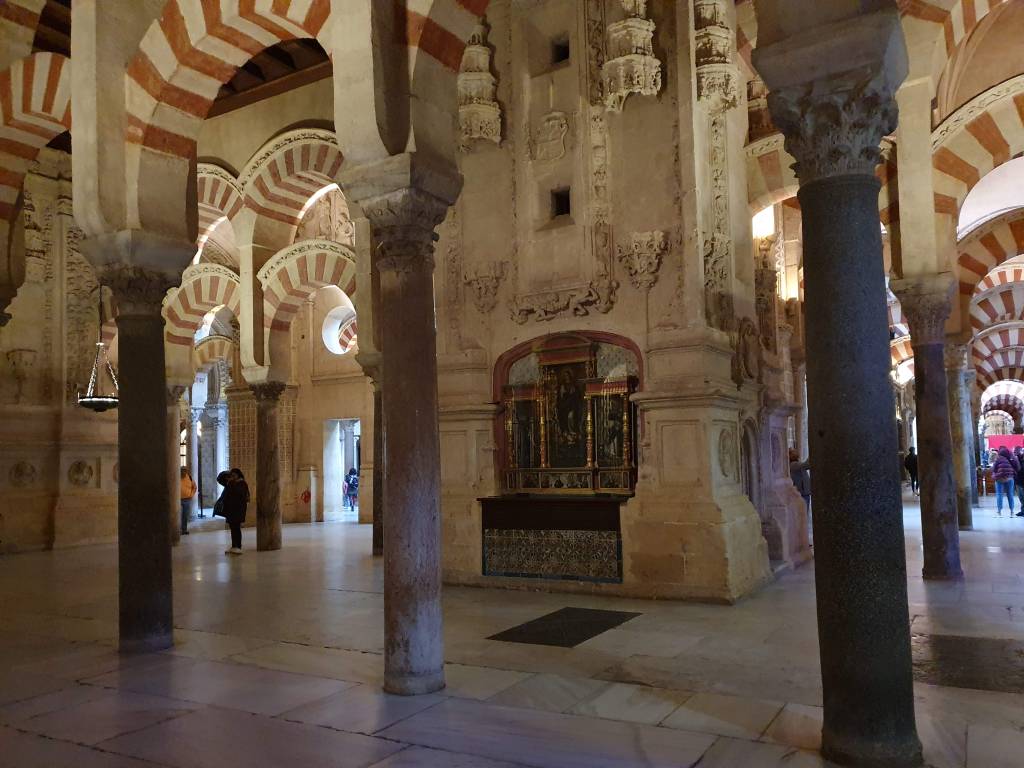
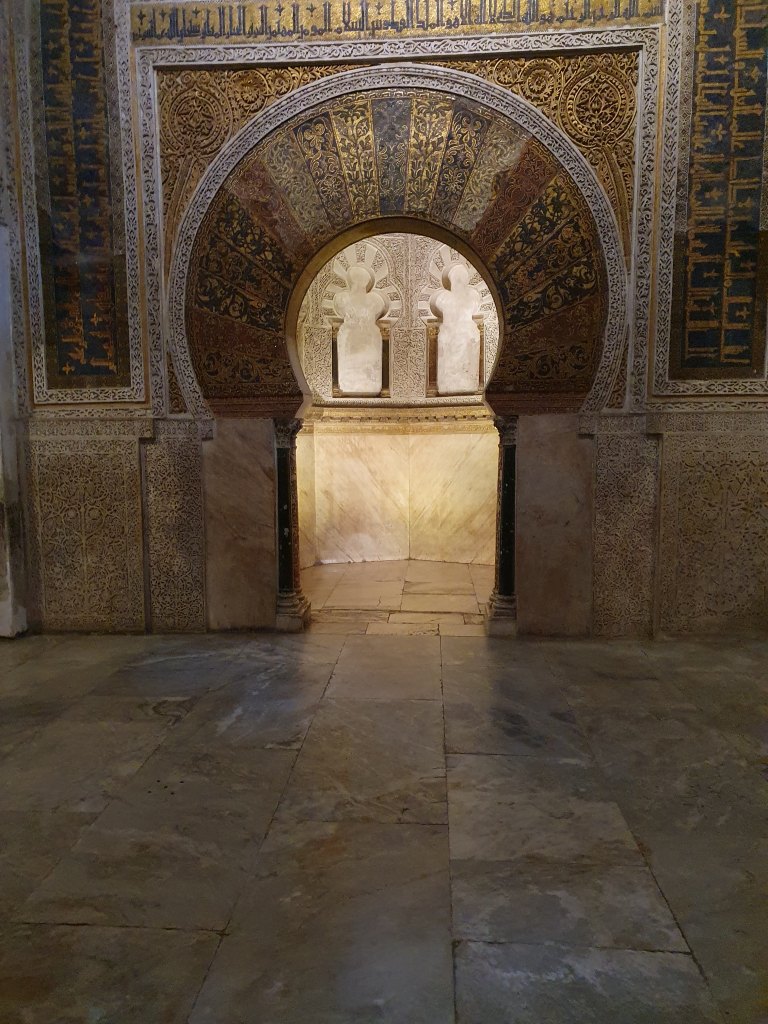
After leaving the Mezquita we strolled through old Cordoba, crossing the Roman Bridge across the Guadalquivir river. On coming back to the northern side we visited the small Synagogue of Cordoba. It is the only one in Cordoba to survive the expulsion of the Jews in 1492. For several centuries it was the chapel of a hospital, and although once more recognised as a synagogue in the 20th century, it has never again been used as a place of worship.
Our final visit of the day of the day was to Cordoba’s Archaeological Museum, built over the site of a Roman Theatre, which may be inspected in the basement. As we were now quite tired we did not do this museum justice and skipped one of the display floors to return to our hotel.
That evening we ate in a restaurant from the same upmarket hamburger chain in which I had dined in Burgos a year earlier.
Day 4 – Sunday 26th February 2023 – Cordoba
We made our way back to the centre of Cordoba following the same route through the park as we had when we first arrived. Our first stop today was at the Alcázar de los Reyes Cristianos, the former palace of the Christian Kings (although based on an earlier Visigothic and Moorish fortress). The interior of the palace was not particularly impressive – there were just a few rooms that you could visit and most of these were fairly plain in appearance. It was possible to access two of the towers of the Alcazar and walk along the walls between them.
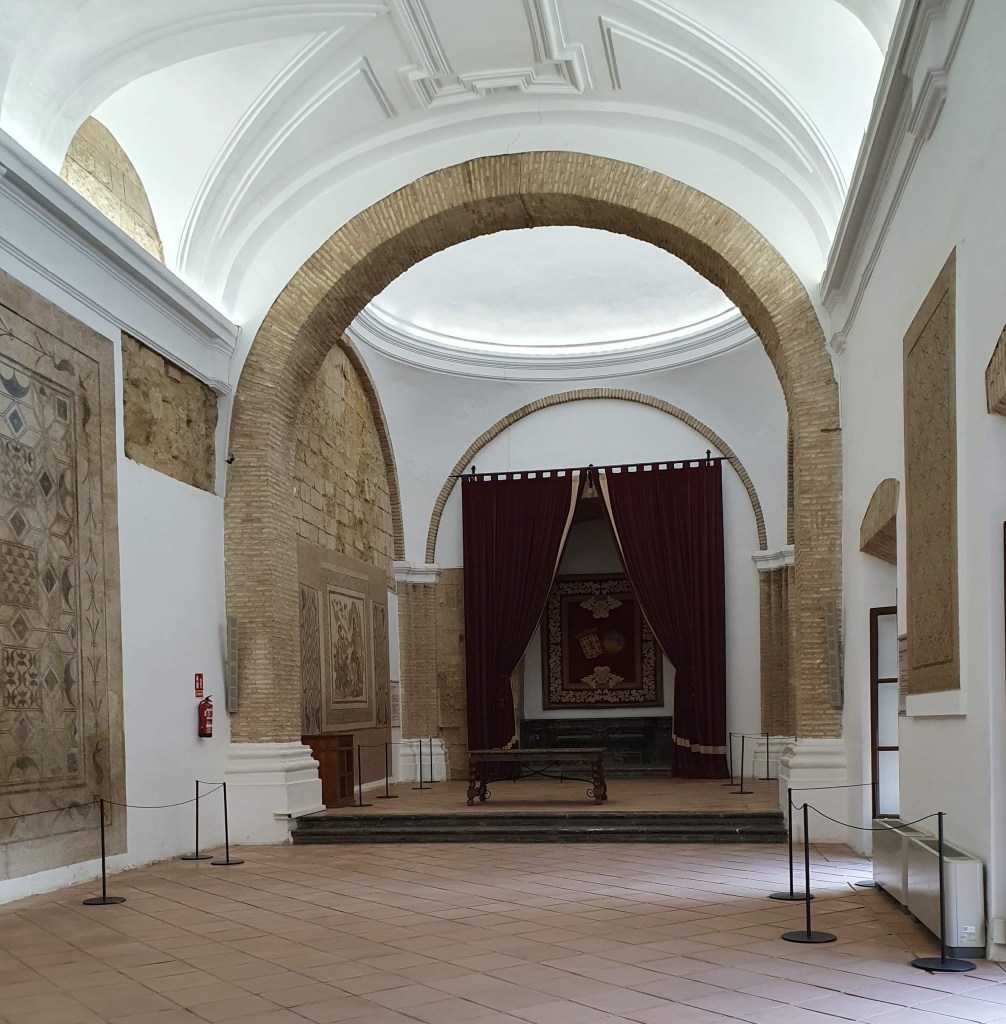
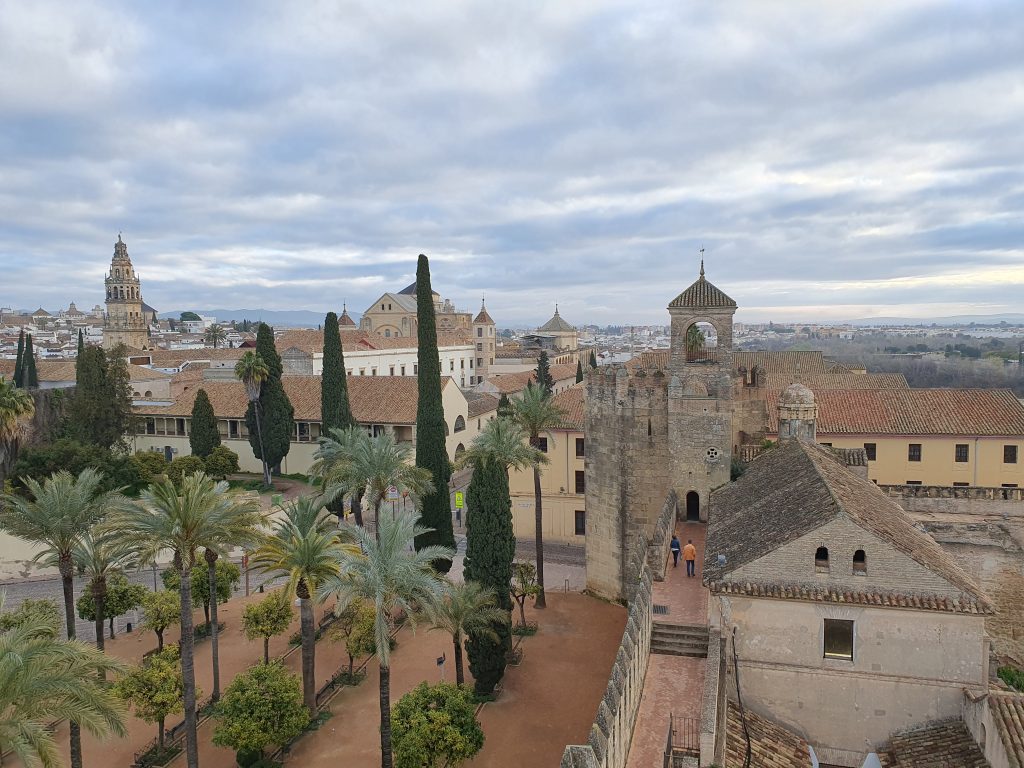
The gardens of the Alcazar were the most impressive feature, being extensive and well maintained. We spent most of of our time at the Alcazar in the gardens, being a very pleasant way to spend a Sunday morning. Throughout our time in Andalusia, early mornings had been quite cold, being typically just a few degrees Celsius, but as the sun was out it was starting to warm up as we wandered around the gardens.
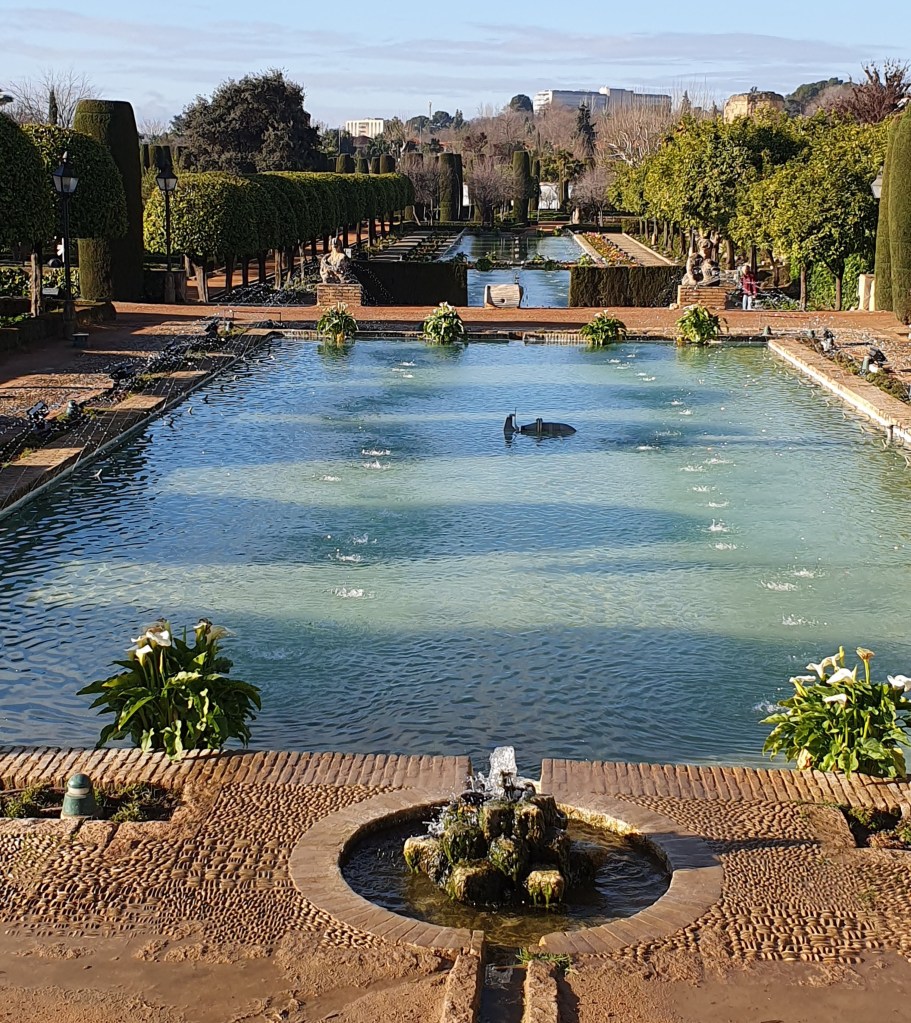
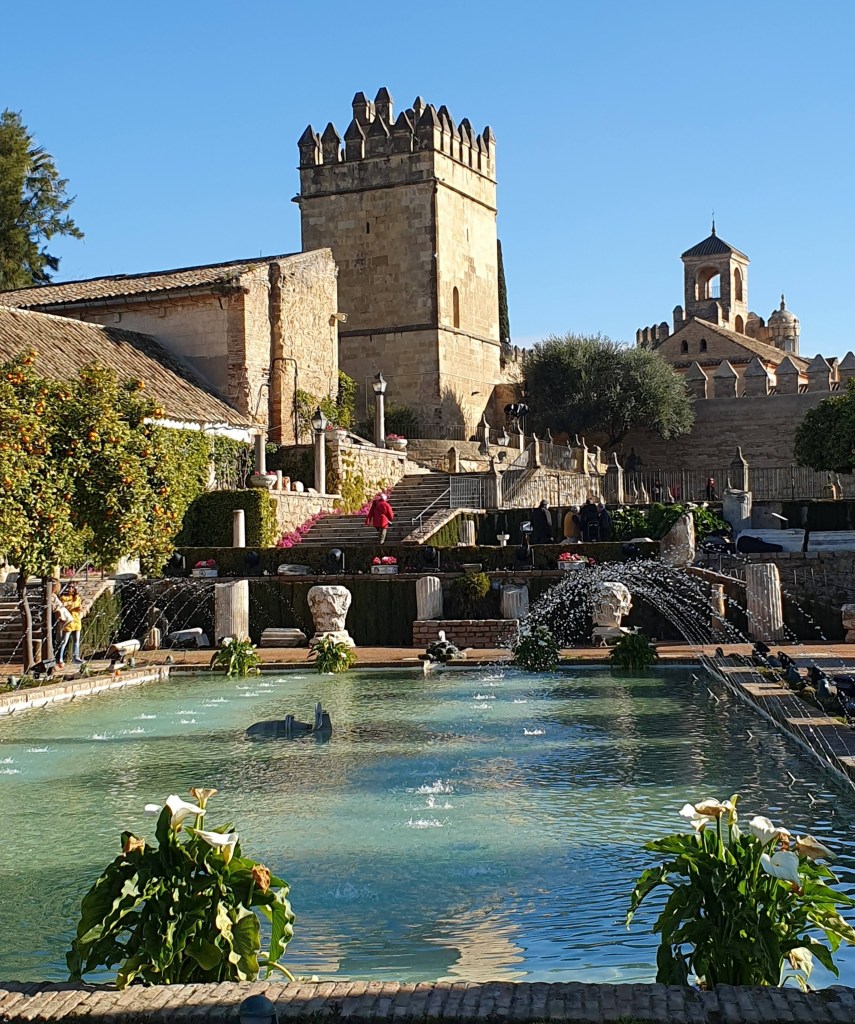
When we had finished in the Alcazar we crossed over the Roman Bridge to visit the Calahorra Tower, originally built by the Almohad Caliphate. It now contains a museum of life in Andalusia in about the 10th century when the Muslim, Christian and Jewish communities co-existed in relative harmony in Cordoba. There were audiovisual displays located on each of the floors of the tower and at the top you could go on to the roof for views across the Guadalquivir to the Mesquita. There are a number of former mills in the river nearer the Roman Bridge and on our way back we took a slight detour to look at one of them, although it was not open for entry at the time of our visit.
As we now had time, we returned to the Archaeological Museum that we had not done full justice to the day before, and looked round the galleries that we had not previously visited.
Our final visit of the day was to the Casa de Sefarad which commemorates the lost Jewish community of Cordoba. There is a gallery devoted to the Spanish Inquisition and their brutal hounding not just of Jews, but of anyone who didn’t conform with their narrowly defined orthodoxy.
That evening we dined in a restaurant in the centre of the old town, at which we had taken the precaution of booking a table earlier in the day. My wife and I shared a platter of cold meat and cheese to start with. I followed with beef medallions served with sliced potatoes and then had a white chocolate coulan for dessert.
For variety, we took a slightly different route back to the hotel after dinner, which once we had left the old town took us through Cordoba’s main modern shopping district.
[To be continued – coming next: Cadiz and Seville.]
 Europe Explored