
“In Italy, for thirty years under the Borgias, they had warfare, terror, murder, and bloodshed, but they produced Michelangelo, Leonardo da Vinci, and the Renaissance.” (Harry Lime – The Third Man)
Day 4 – Wednesday 11th May 2022 – Zurich to Innsbruck
I mentioned in a previous post that I’m not a eater of big breakfasts and so these days I generally tend not to book breakfast in a hotel if it is charged for separately, as I find that I don’t get good value for money. On this trip, because it was a repeat of the one first booked two years previously, rather than research hotels afresh, I had largely booked the same ones as before, either to reward them for refunding my money last time or because I still had a credit from them. As a result I was having rather more hotel breakfasts than on my other recent trips, and the hotel in Zurich was one where breakfast was being provided.
As I had a relatively early train to catch, I went to breakfast shortly after they started serving at 7am. Rather than the usual generous buffet to help yourselves from, there was just a selection of rolls and bread on offer and a form on your table for you fill in to indicate your choice of one of two types of cheese and two types of meat. I was brought a tiny piece of cheese and a few slices of salami. I think it was the skimpiest breakfast that I had ever been given in a hotel.
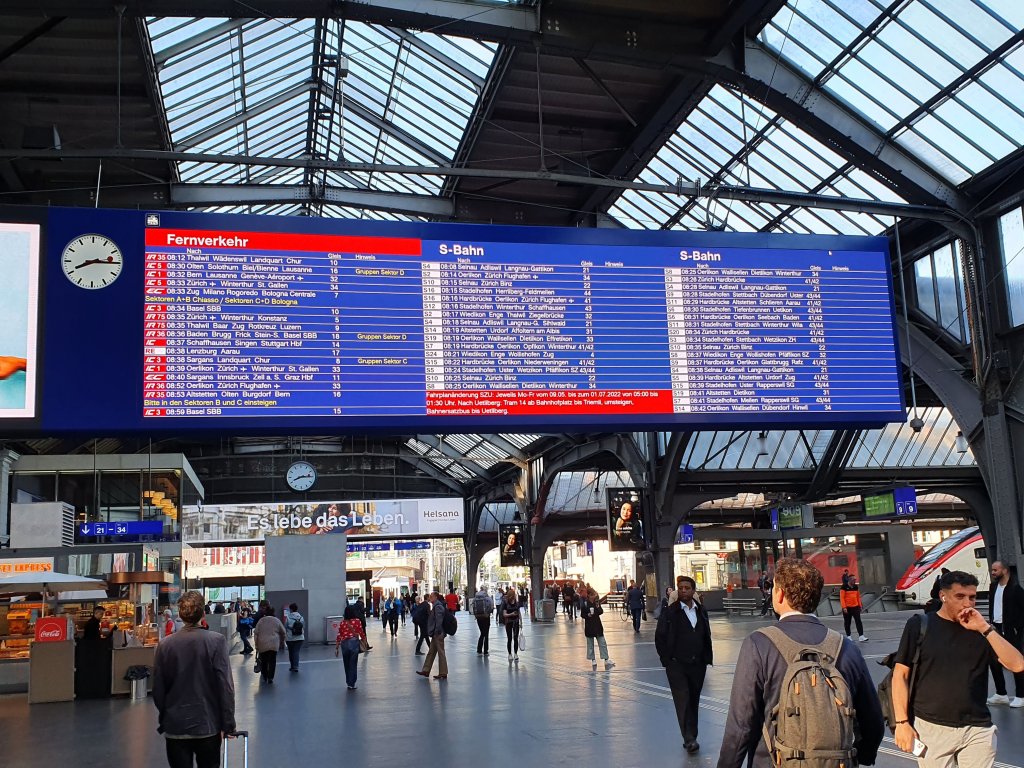
I walked the short distance from my hotel to Zurich’s main station to catch the 0840 train to Innsbruck. I was travelling second class today, because when I booked, the first class option was double the price of second, possibly because the first class carriages included a glass-roofed observation car. Second class was perfectly good – I had a group of four seats to myself throughout most of the journey, which, unlike in some other second class carriages, were exactly aligned with the big windows. Having researched the route, I knew that the train was due to reverse direction at Buchs, and I swapped seats to ensure that I was always facing the direction of travel. My side of the train was also the best for views throughout the journey.
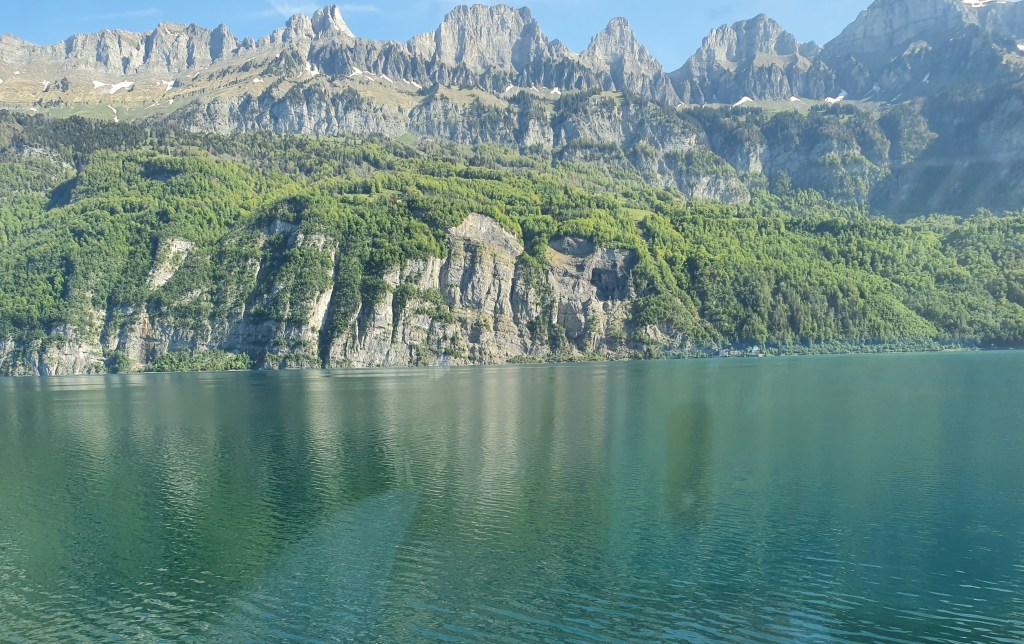
On initially leaving Zurich the train travelled the length of the Zurichsee, on which I had had my boat trip the previous day, before climbing to follow the shore of the even more picturesque Walensee. On arrival at Buchs there was a short hiatus as this is the border station where the train reverses and presumably the engine is changed. I noticed a couple of customs officials wandering about on the platform, but there were no border formalities on the train. The only indication that we were about to enter a new country was the announcement that the wearing of face masks was now compulsory.
Almost immediately after departure from Buchs, the train entered Liechtenstein, a new country for me, but as the train did not stop in Liechtenstein, I am not sure that it counts. I was rather annoyed with myself that I failed to get a decent photo as we went through the only main station in the country, Schaan-Vaduz, the other three stations we passed through were little more than simple short-platform halts. After leaving Liechtenstein the train started the long climb up the Arlberg valley until entering the 10km long Arlberg tunnel.
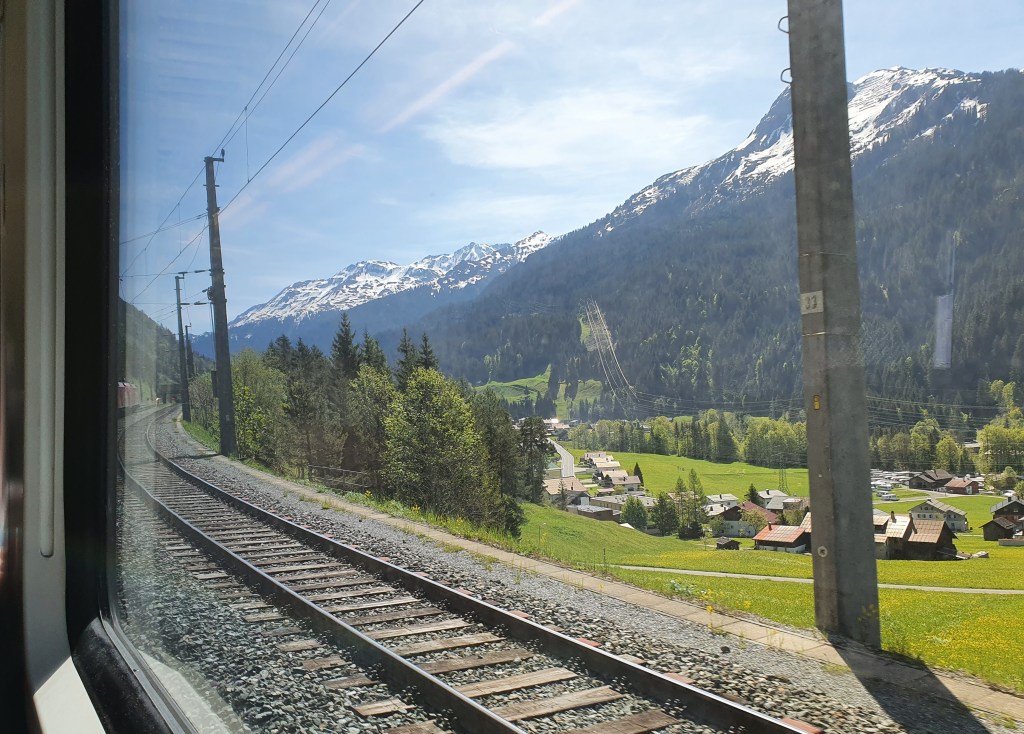
From the tunnel the line starts to descend and follows the valley of the Inn, which becomes progressively wider, although still flanked by high mountains. The train arrived in Innsbruck on time at 1211. Immediately on stepping out of the station one is struck by the fact that in whichever direction you look in Innsbruck city centre you can see snow-capped mountains.
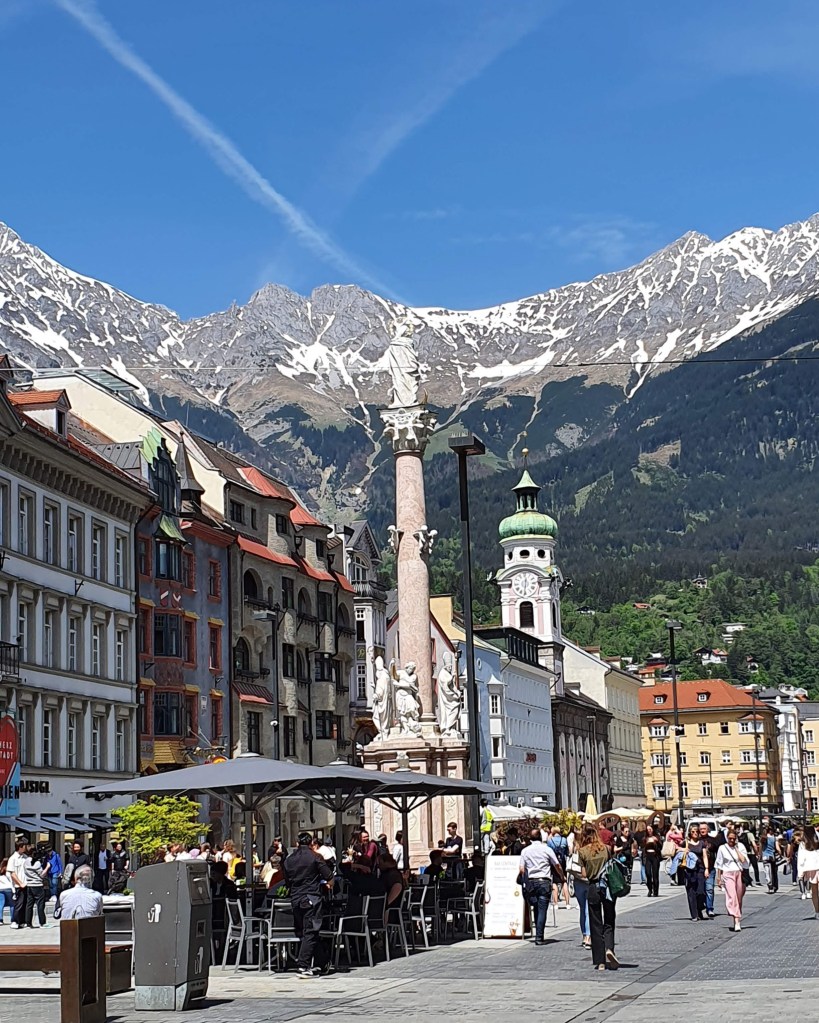
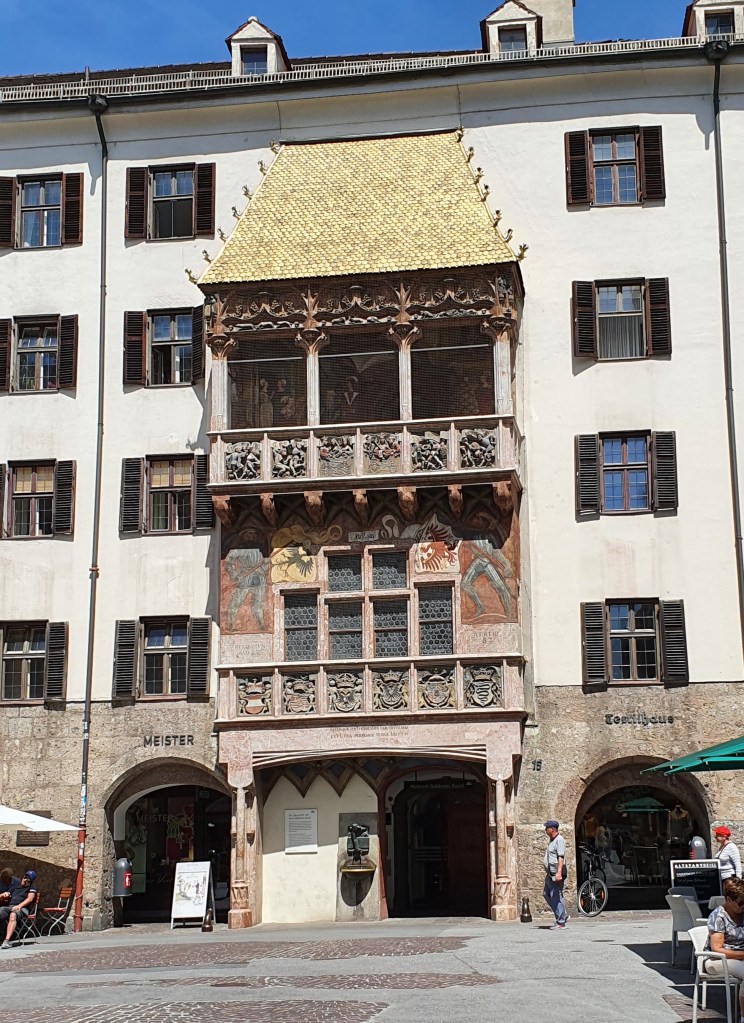
My first stop in Innsbruck was at the Goldenes Dachl whose balcony roof is decorated with gilded copper tiles. The Goldenes Dachl contains a museum dedicated to the Holy Roman Emperor Maximilian I, whose story seems to crop up quite a lot in Innsbruck. When I had finished there I treated myself to an ice cream for lunch, as despite being surrounded by snow-capped mountains, it was the hottest day of the trip so far.
I next went to the Tiroler Volkskunstmuseum (Tyrolean Folk Art museum). On entry, I worked out that it would be cheaper to buy a multi-ticket for the six attractions in Innsbruck run by the Tyrolean state, even though I was unlikely to have time to visit them all. Even better, this was the only place on this trip where the definition of eligibility for a reduced price senior ticket was being over 60 (which I am), rather than over 65 (which I am not). The museum showcases traditional Tyrolean life and rituals, including having a number of wood-panelled parlour rooms from different periods and types of houses.
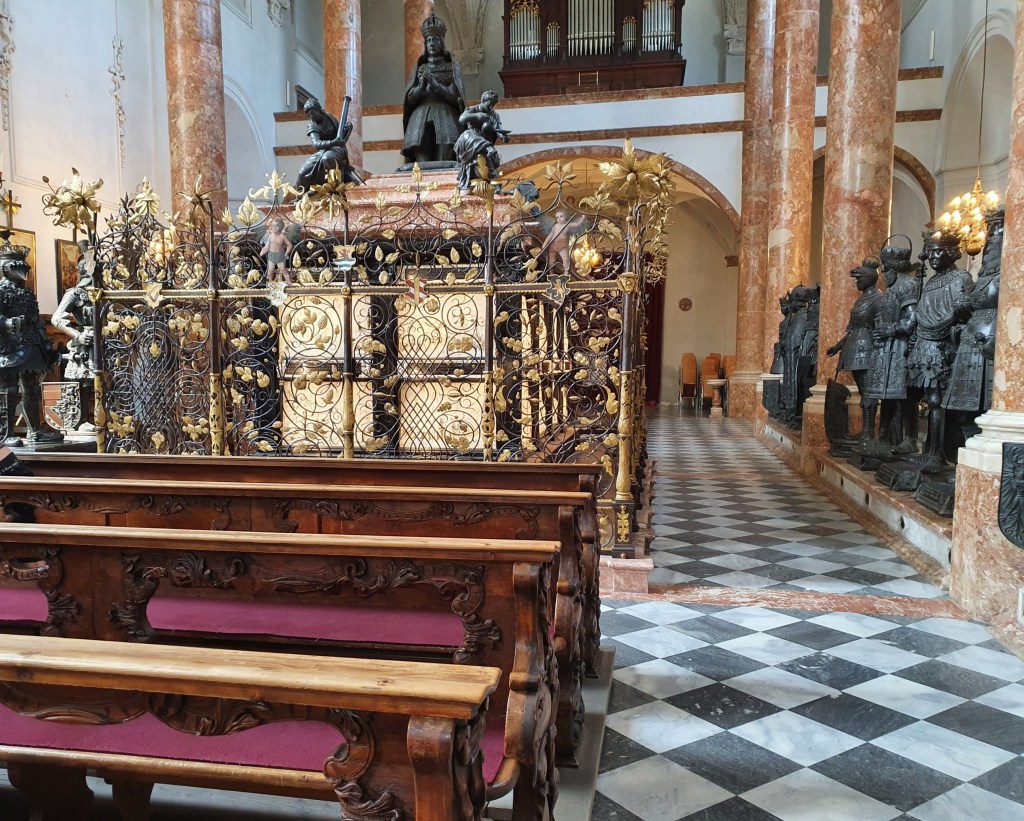
The Tyrolean Folk Art museum is next to the Hofkirche, which was also included in the multi-ticket that I had bought. Before entering the main body of the church I visited a three-room audiovisual presentation on the life and legacy of Maximilian I. The nave of the church is dominated by the elaborate tomb built for Maximilian surrounded by 28 larger than life statues of his ancestors, relatives and heroes – ranging from King Arthur and Clovis, King of the Franks, through to his daughter Margaret of Austria. The tomb was built by Maximilian’s grandson, but the body was never placed within it, remaining in its original burial place in Wiener Neustadt.
The next place I visited on my ticket was the Ferdinandeum, the main archaeology and art museum in Innsbruck. Spread over three floors and a basement, it has a varied art collection from the middle ages to the modern, as well as Roman and prehistoric artefacts from the area.
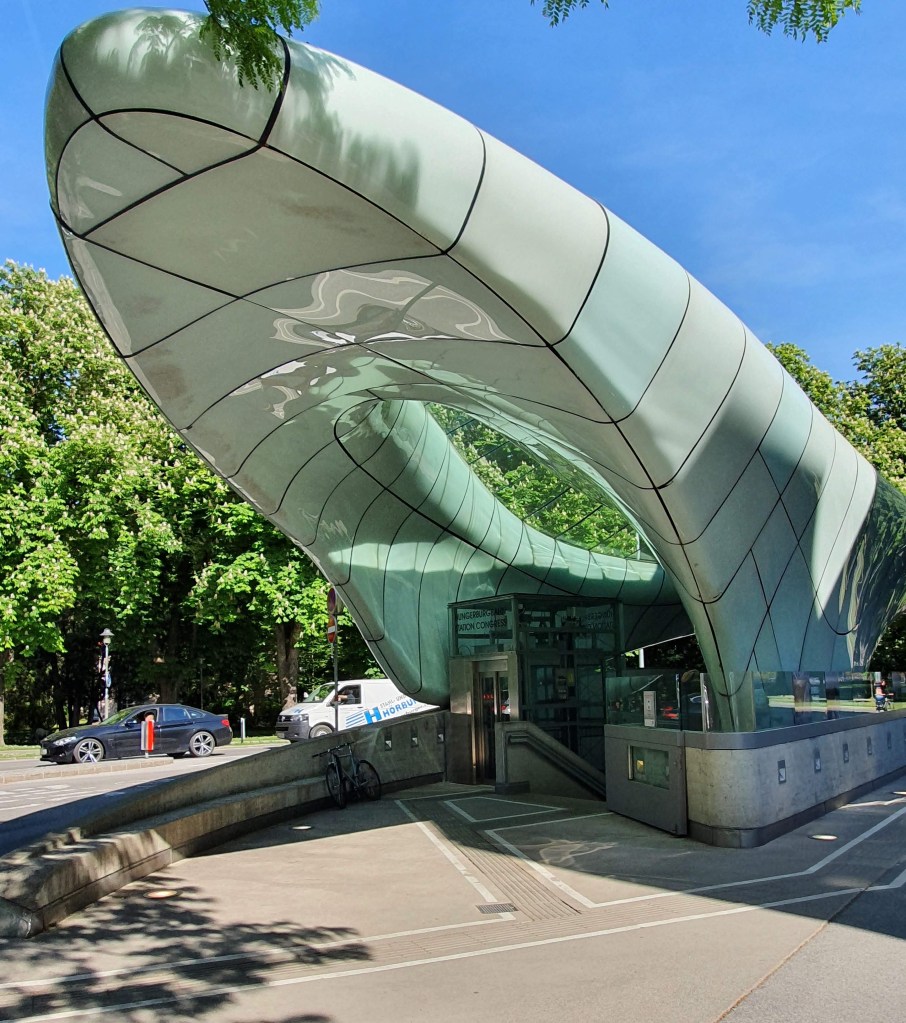
Rather than going to any more museums, I decided to take a trip above Innsbruck. First I checked into my hotel so that I would no longer have to carry my bag around with me. It is possible to travel by a series of cable cars to the top of the Nordkette high above the city. In the end I decided not to go all the way as I was unsure that I would be able to get to the top and back before the service shut for the evening and also because the return fare was more than the cost of most of my other train journeys on this trip. Instead I chose to travel just the first leg on the Hungerburgbahn, a funicular railway which reopened in 2007 with stations designed by Zaha Hadid. The floors in the carriages adjust to keep level despite wide variations in the steepness of the line. Hungerburg is a small village about 300m (1,000 feet) above Innsbruck. The difference in altitude meant that it was pleasantly cooler in Hungerburg than it had been in the city below. Rather than come straight back down again I went for a walk in the woods that climb above the village.
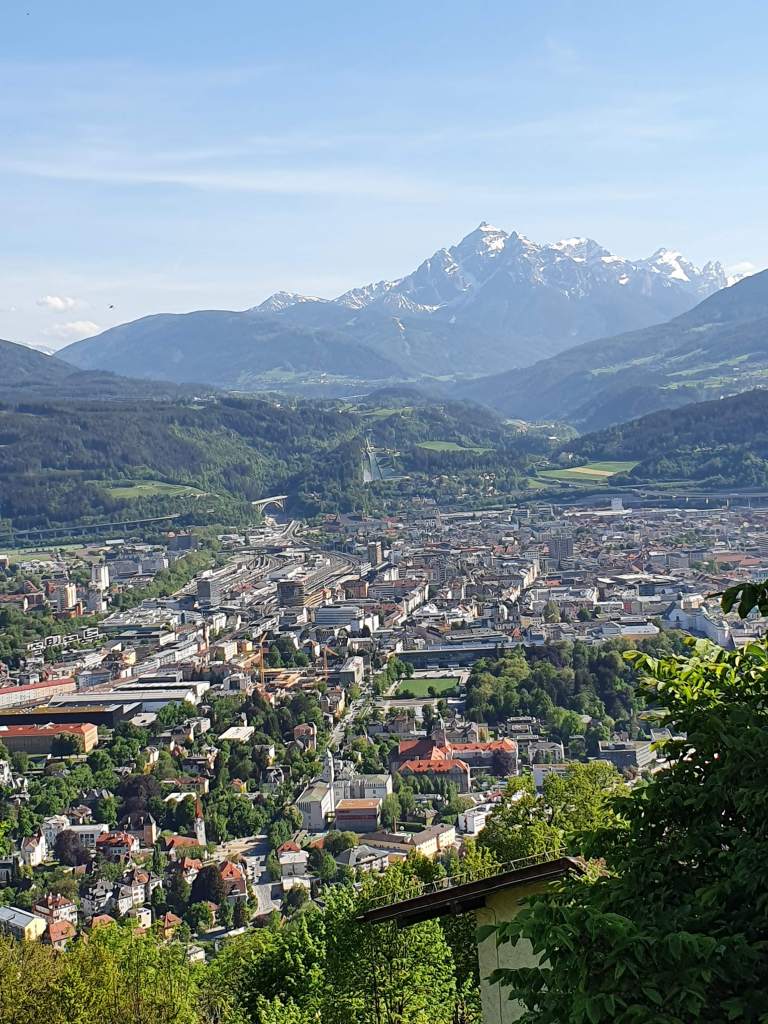
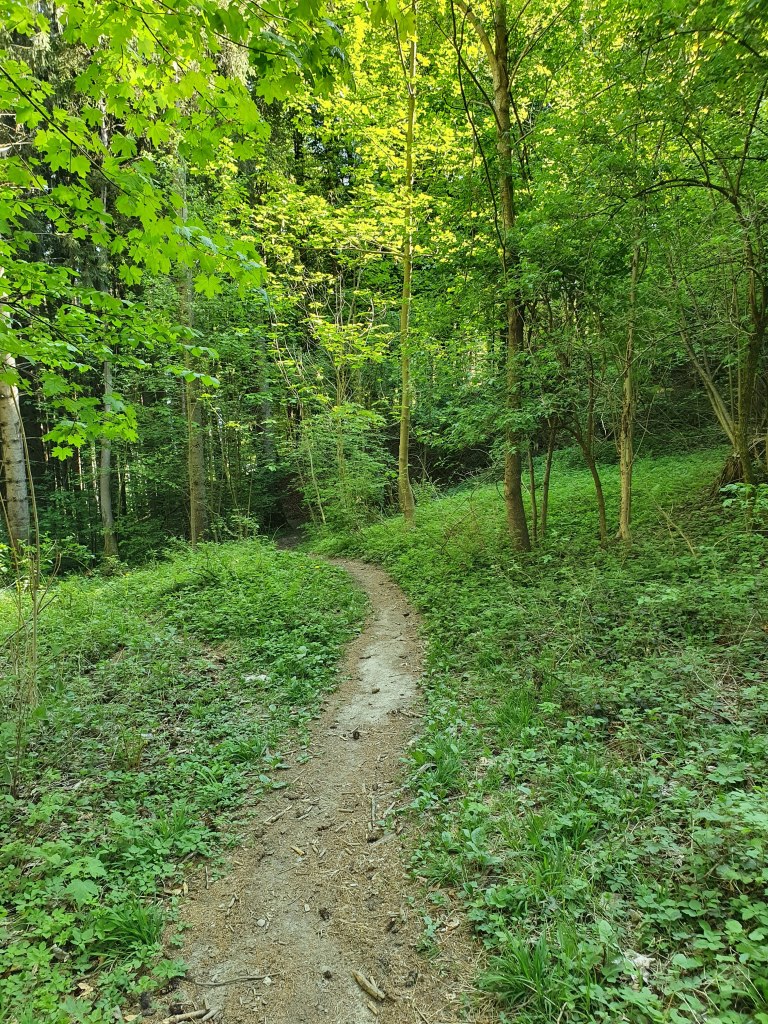
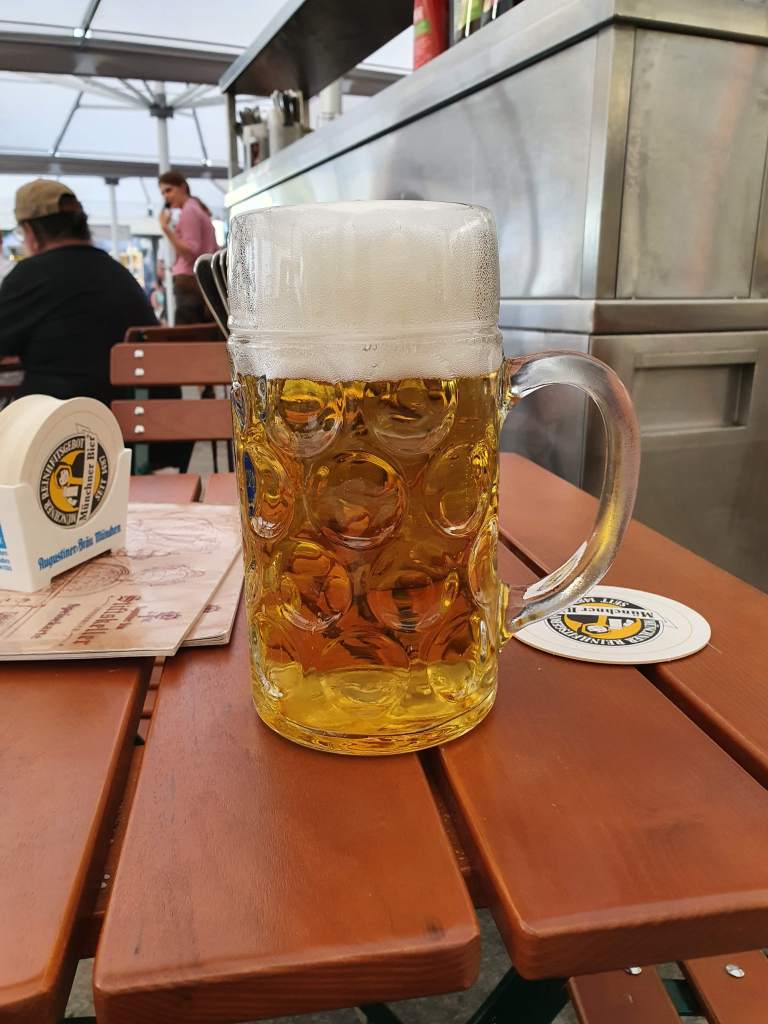
When I returned to Innsbruck my original plan had been to go back to my hotel before going out to dinner. I had identified a likely looking restaurant near the Hofkirche with a pleasant outdoor dining area, but when I walked past it on my way back at about 6pm, I noticed that the outside area was already nearly full, so I decided to grab a table while I could and have an early dinner. After my exercise in the woods I felt that I deserved the mass (one litre glass) of beer that I ordered on arrival. To eat I chose beef in onion gravy followed by apple strudel.
Day 5 – Thursday 12th May 2022 – Innsbruck to Verona
My hotel in Innsbruck was next to the station, such that when the windows were open you could hear the train announcements from the platforms. When I woke up, I found that I had an email from Austrian railways informing me that my train this morning had been re-timed and would now depart 10 minutes later, but that it should make up time by not waiting so long at the Italian border station.
I had not ordered breakfast at the hotel, so went straight to the station. The train actually arrived (having come from Munich) as originally timetabled, but rather than leave at the revised time it hung around for a further 10 minutes to depart 20 minutes late compared with the original timetable.
After going through a tunnel on leaving Innsbruck the train climbed steeply up to the Brenner Pass, the route being higher and even more scenic than the Arlberg the day before. There is a much delayed scheme to build a long railway tunnel under the mountain, which means that when it opens one will miss out on the delights of this route. On the way up I saw a Portakabin being delivered by helicopter to some works high above the railway line, but I did not manage to take a photo which properly brought out the precariousness of the operation.
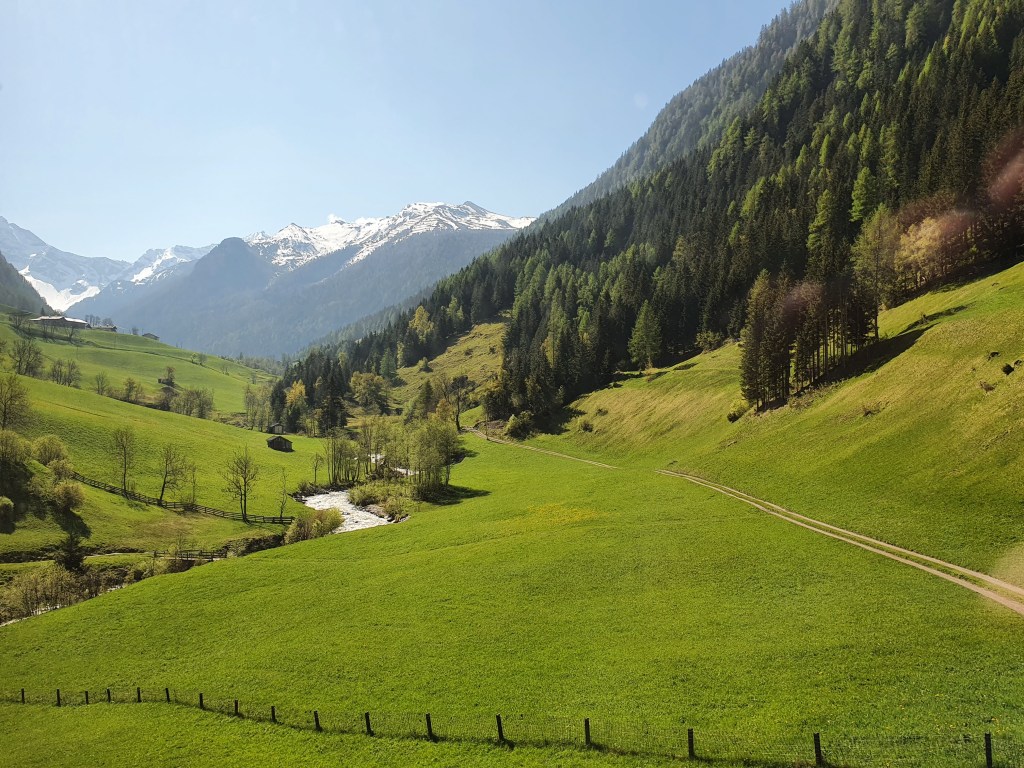
The train stopped at the Italian border station of Brennero, where Hitler and Mussolini had met in 1940 to seal the pact that brought Italy into the Second World War on the Axis side. The train waited just as long at Brennero as originally scheduled, so rather than making up any time it was still twenty minutes late on departure. It then began its long descent, passing through the Italian Alto Adige region. This area only became part of Italy after World War I, and is still majority German speaking, as evidenced by all the signs at the stations being in both German and Italian. The train picked up more passengers at the stations it stopped at in Italy, becoming much fuller. Interestingly the Austrian guard was not replaced at the border, but he could only speak German and English, resulting in a tortuous conversation with a woman who needed a ticket, but who only spoke Italian. As the train neared Verona it amazingly made up all the lost time and arrived on schedule. A large number of passengers got off the train and, as another train on the adjacent platform had also just deposited its passengers, it was rather slow to get down the stairs leading from the platform and exit the station.
Verona Porta Nuova station is over a mile from the historic centre of the city. I decided to walk, as the hotel I had booked for the night was on route, which gave me the opportunity to call in and leave my bag.
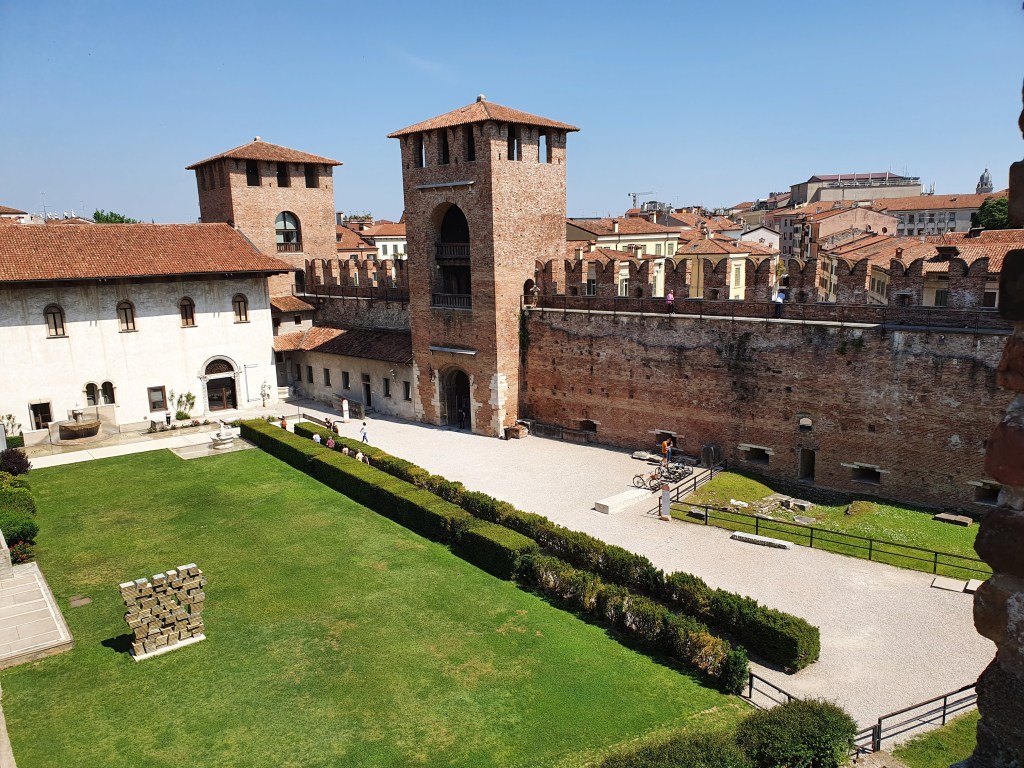
From the hotel I went to the Castelvecchio Museum, which as the name suggests is located in an old castle, situated by the banks of the Adige river. The museum building is probably more impressive that the artworks that it contains. After viewing the galleries one can walk along the ramparts of the castle walls looking down into the courtyard below.
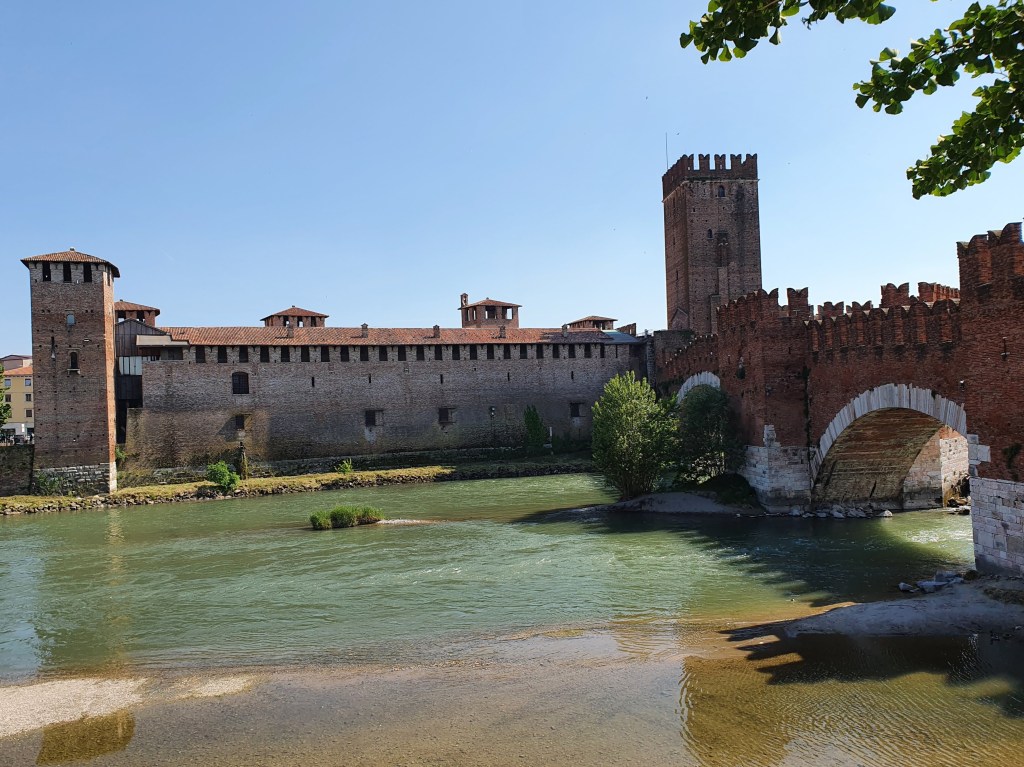
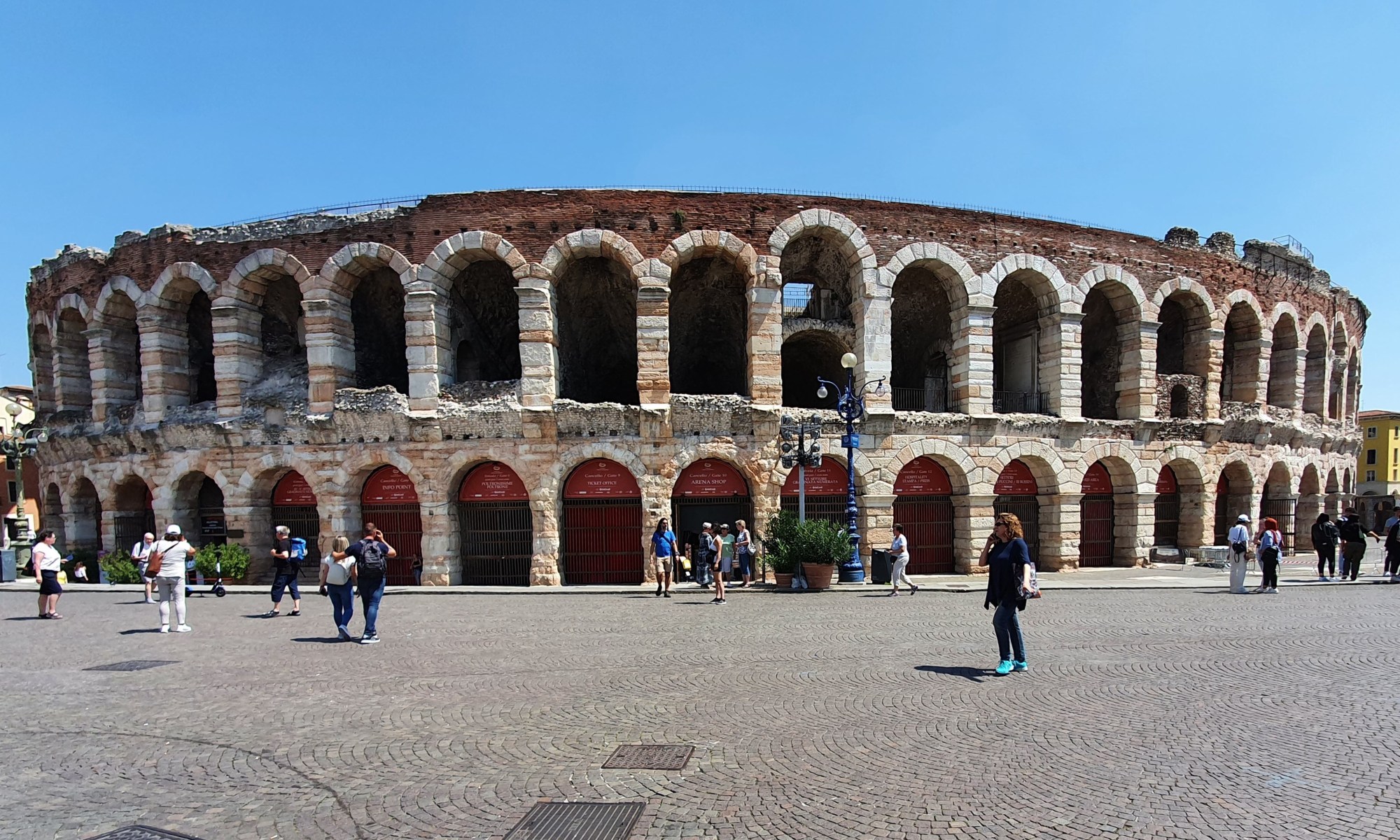
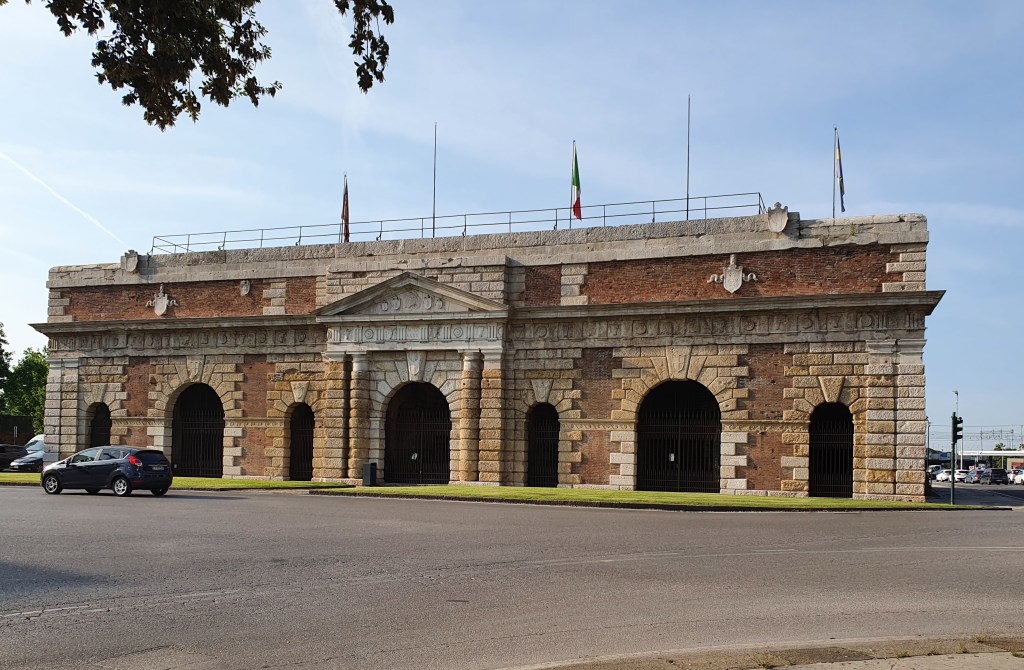
When I had finished in the Castelvecchio Museum, I walked across the Ponte Scaligero, an old bridge, to the far side. On my return I ventured into the historic heart of the city to the Piazza delle Erbe. I decided to give a miss to the tourist trap that is supposed to be Juliet’s house with its balcony, but instead went via the Roman Arena which is still used to stage opera. There was no performance on the day I was there, but there was one scheduled for the following night.

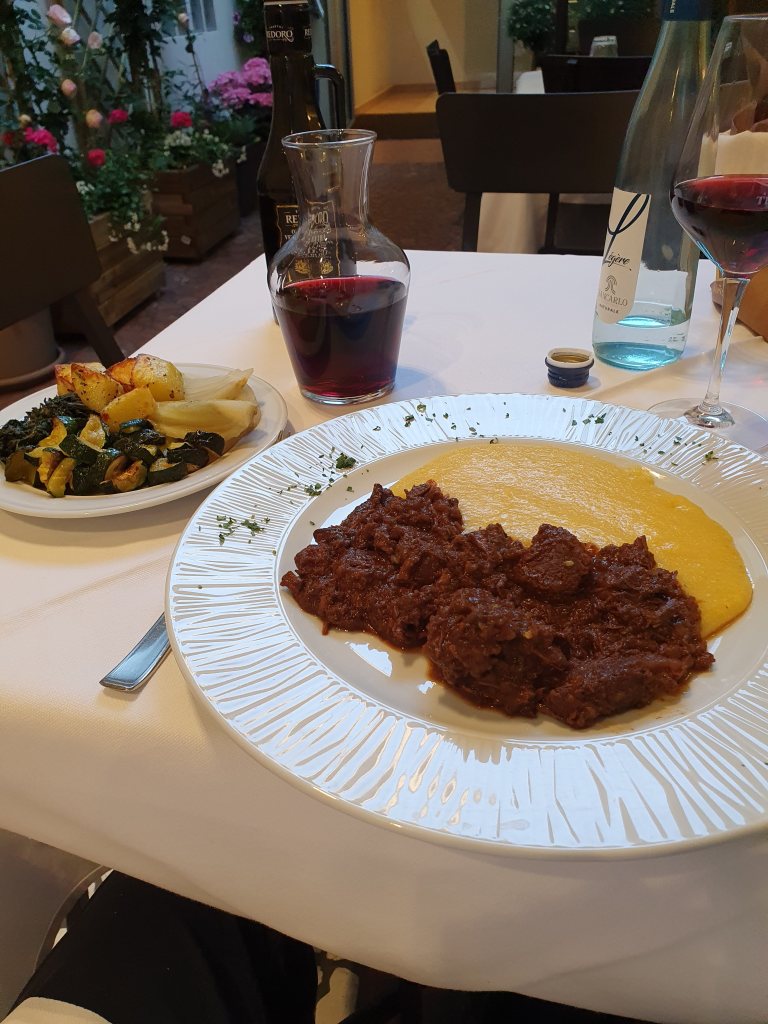
In the evening I had an excellent and very filling meal at a surprisingly empty restaurant, just a little way from the main tourist areas. To start with I had thin tagliatelle with pancetta dunked in bean soup, followed by horsemeat stew served with polenta and grilled vegetables. The half litre carafe of house wine I had to go with the meal cost only €4, cheaper than some beers I had had earlier on the trip, but nonetheless it was very drinkable.
Day 6 – Friday 13th May 2022 – Verona to Trieste
Skipping the hotel breakfast again, I walked to Verona Porta Nuova station in good time for my 0900 train to Trieste, which turned out to be running five minutes late.
The train was a Trenitalia Frecciargento service, which offered four classes of travel – Standard, Premium (seats as in Standard, but with a free at seat service of drinks and nibbles), Business (service as in Premium, but seats spaced out as first class), Executive (pampered luxury). My cancelled trip from 2020 had booked Premium for this journey (as it was the cheapest ticket available) and because for that trip I was catching an early evening service, I was delighted to discover that the ticket included a free glass of Prosecco. For old times sake, I booked Premium again, but being a morning train the only drinks on offer were coffee, water or other soft drinks. The train was full and I began to wish that rather than paying extra for a drink and packet of biscuits I didn’t particularly want, I had paid a little more for some extra space. This was particularly so when at the first stop a Frenchman with lots of luggage got on, who had the reserved seat next to mine. He managed to get into an argument with the person sitting across the aisle from him about where to place his luggage, and he tried to squeeze it into the floor space around his and my seat, leaving us both rather squashed.
The train went via Venice, but only called at Venezia Mestre station, located in an industrial area on the mainland, rather than the more attractive Venezia Santa Lucia station on the island. After leaving Venice, it proceeded more slowly along the coast to give me my first sighting of the sea on this trip, to arrive in Trieste on time at 1210. As I got off the train, I noticed there was a group of people with flowers and glasses of wine greeting the driver as he got out of his cab. I assumed from his demeanour that he must have reached his retirement and that I had ridden on the final train of his career.
The first thing I did at Trieste Centrale station was buy a ticket for the next day to Ljubljana, which cost just €8, as you can’t buy tickets online for the twice daily local service. (You can book online for the daily long distance EuroCity train to Vienna which goes via Ljubljana, but that is much more expensive.)
On my way to Trieste, I had researched things to do and was disappointed to discover that most of the historical museums were going to be shut at the time of my visit, as they appeared to be reorganising the museums in the city, causing them to be closed while they transferred their collections.
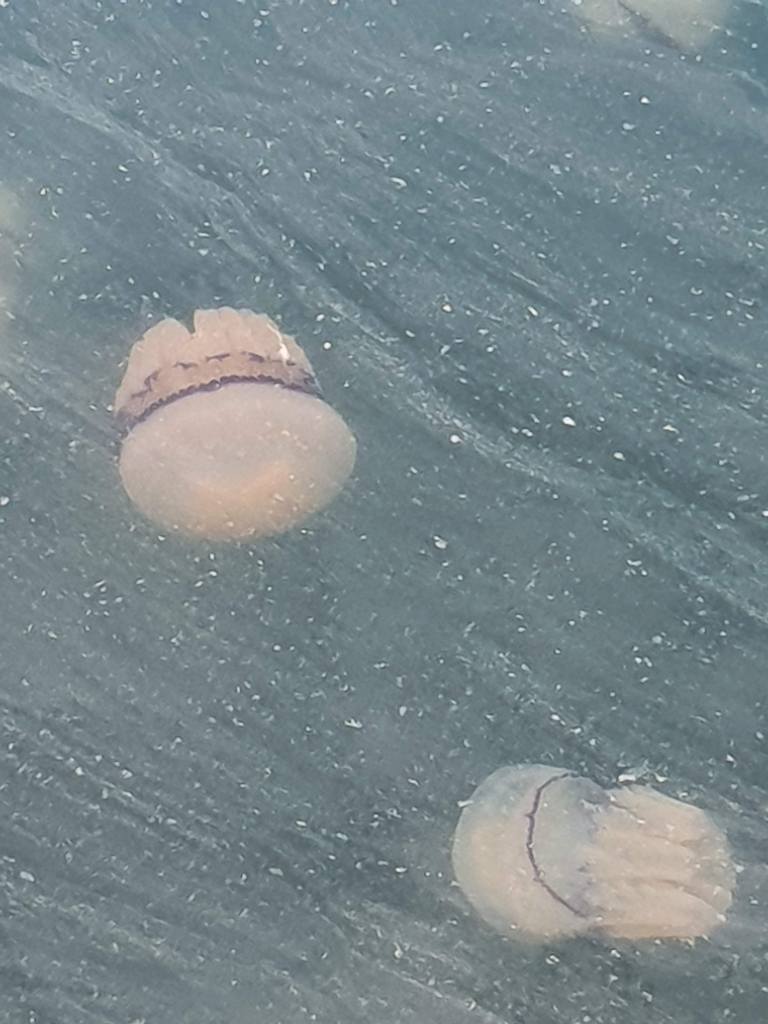
Once I had bought my train ticket to Ljubljana, I set off to explore Trieste, initially walking along the harbour front. I was surprised to see that the harbour and immediate sea area were thronged with thousands of jellyfish. This smack (the collective noun for jellyfish) had arrived a couple of weeks before my visit and was showing no sign of wishing to depart.
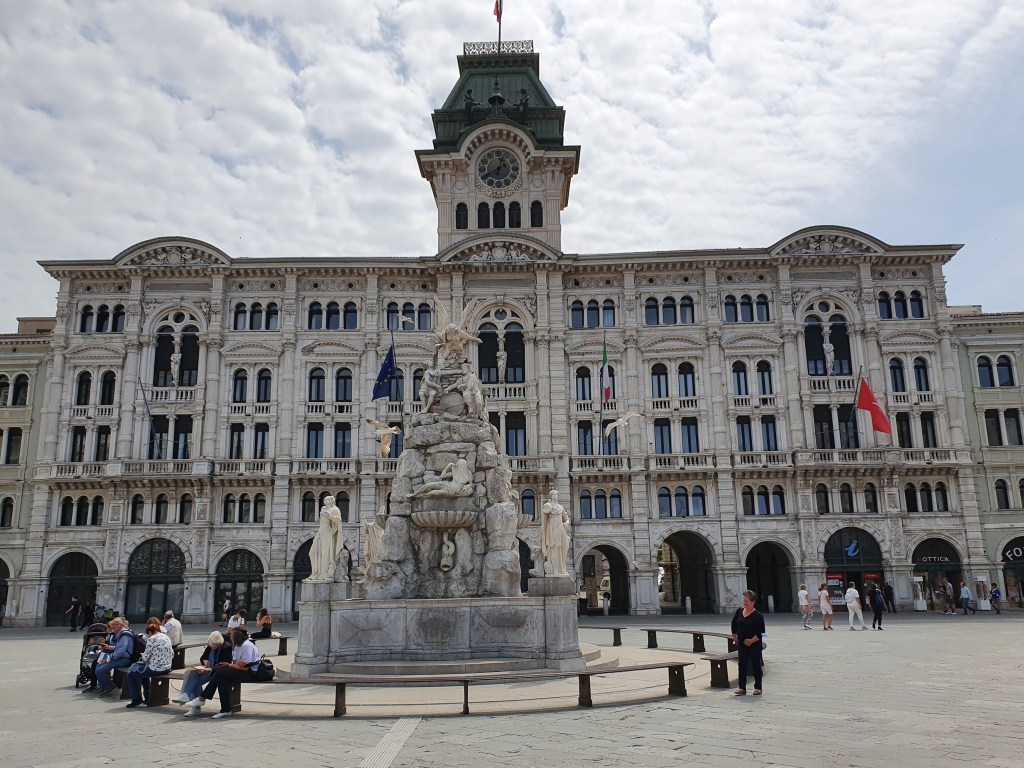
Trieste is an interesting city. It was the major port of the Austro-Hungarian Empire, but was ceded to Italy after the First World War, under the same deal that saw them gain the Alto Adige. Trieste was briefly under Yugoslav control after the end of the Second World War, but then it and its surrounding area were declared a Free State under the protection of the United Nations, which lasted until 1954 when the city and most of the rest of the Free State became part of Italy. The remaining bits of the former Free State joined Yugoslavia (and are now divided between Slovenia and Croatia).
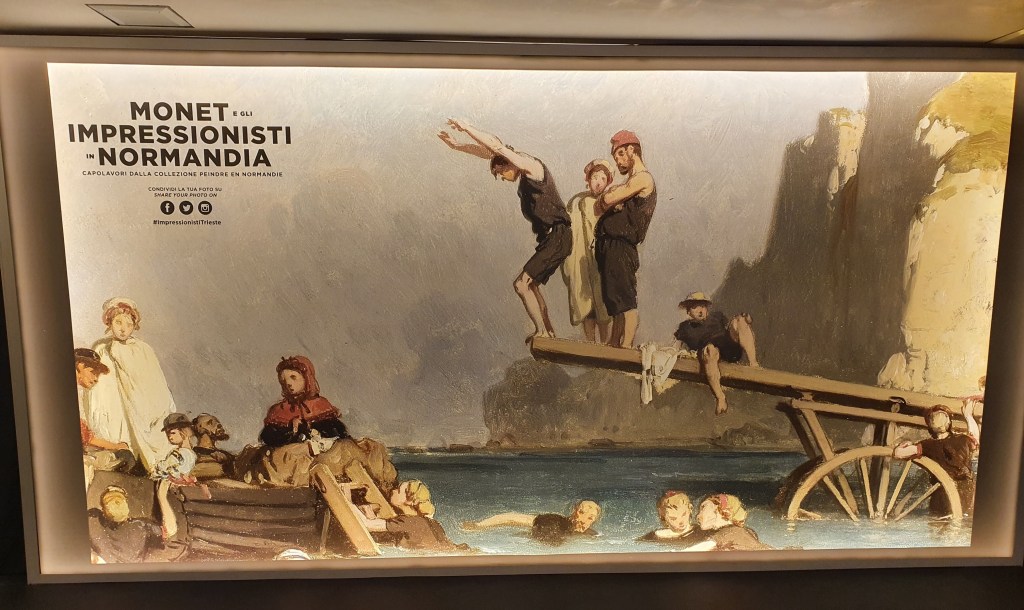
Once I had got my bearings in the city, the first attraction I visited was the Revoltella Museum, which at the time of my visit had a special exhibition of Monet and French Impressionists in Normandy. On each of my Europe Explored trips so far I have managed to visit a French Impressionist exhibition. I had an audioguide to provide more information about many of the paintings on display, most of which were on loan from the museum in Caen. (I had considered stopping off in Caen on my trip to Normandy last October, but in the end just changed trains there, when going from Bayeux to Rouen.) When I had finished with the special exhibition, I explored the rest of the museum spread over six floors. It combines a number of rooms furnished as they would have been in the mid-19th Century, when the building was the residence of Baron Revoltella, together with galleries displaying art works mainly from the 19th Century onwards.
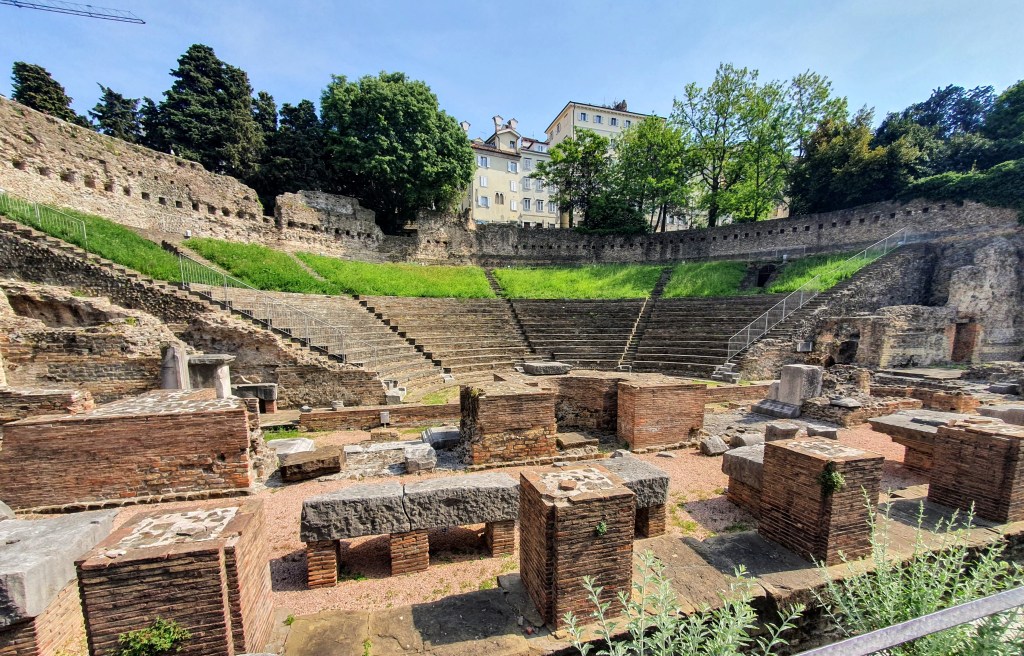
In my wandering around Trieste I had noticed a number of marked walking routes. I started to follow one of them which went past the remains of a Roman amphitheatre. When it brought me to Museum of Oriental Art, I went in. While it was quite an interesting little museum, my main discovery there was that they had detailed booklets to take away, describing several of the walking trails in Trieste. There are seven trails in total, including ones themed on the history, architecture, and the literary and scientific aspects of the city. For the remainder of the afternoon, I pieced together bits of the walks from the booklets to continue my exploration of Trieste.
When I had had enough of walking I went to my hotel, not far from the station. It was slightly old fashioned, and my room, while having a washbasin and toilet in a separate area, had the shower (which had a leaky screen) in the middle of the bedroom. Mobile phone reception in Trieste is very poor, although there are some public Wifi hotspots. So I was glad to connect to the Wifi in the hotel, only to discover over time that while it let you browse, most other applications including sending email, Whatsapp or connecting to a VPN did not work.
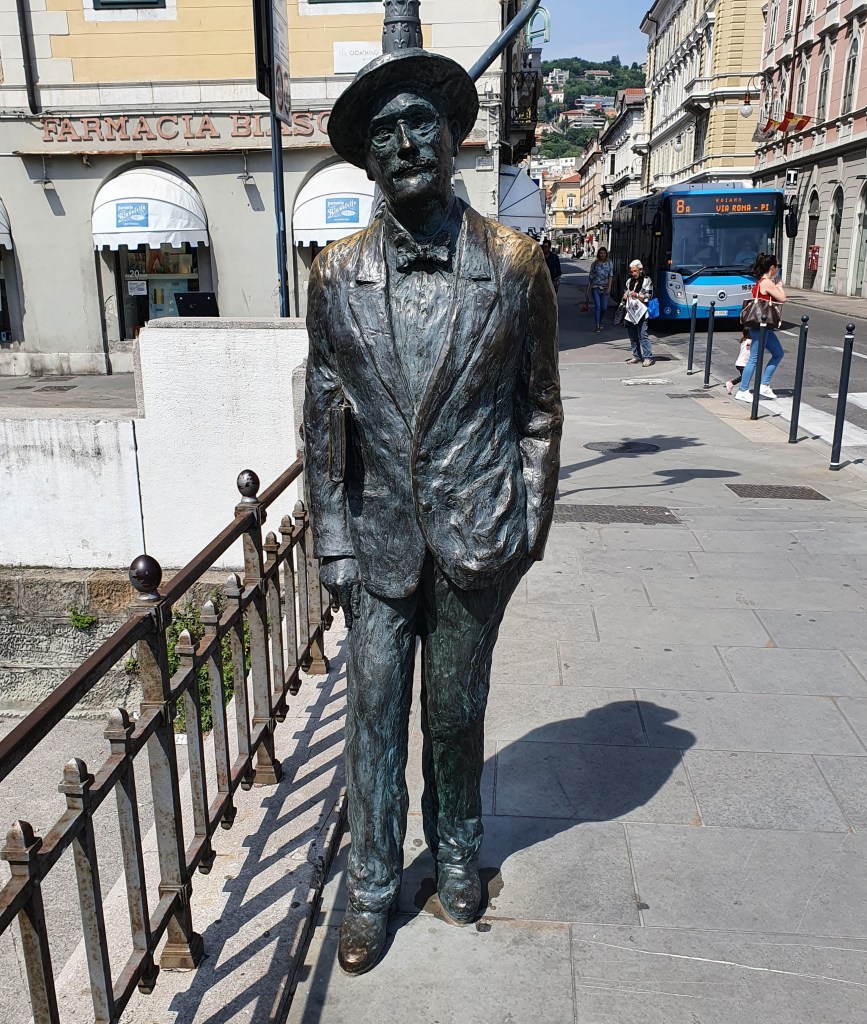
I had had two very large dinners on the previous two nights, so I thought I would aim for something more modest on my evening in Trieste. I identified a bar/restaurant specialising in pizzas a little way from my hotel, which had very good reviews. I went there, ordering a pizza and what I thought would just be a few olives for the time that I was waiting for the pizza to be cooked. The olives when they arrived were a large bowlful – they were stuffed with meat and fried in breadcrumbs – and were a meal in themselves. The pizza was also enormous with the toppings in a thick layer all over it. So much for my intention to have a smaller meal! I was so full that in the end I couldn’t quite finish the pizza.
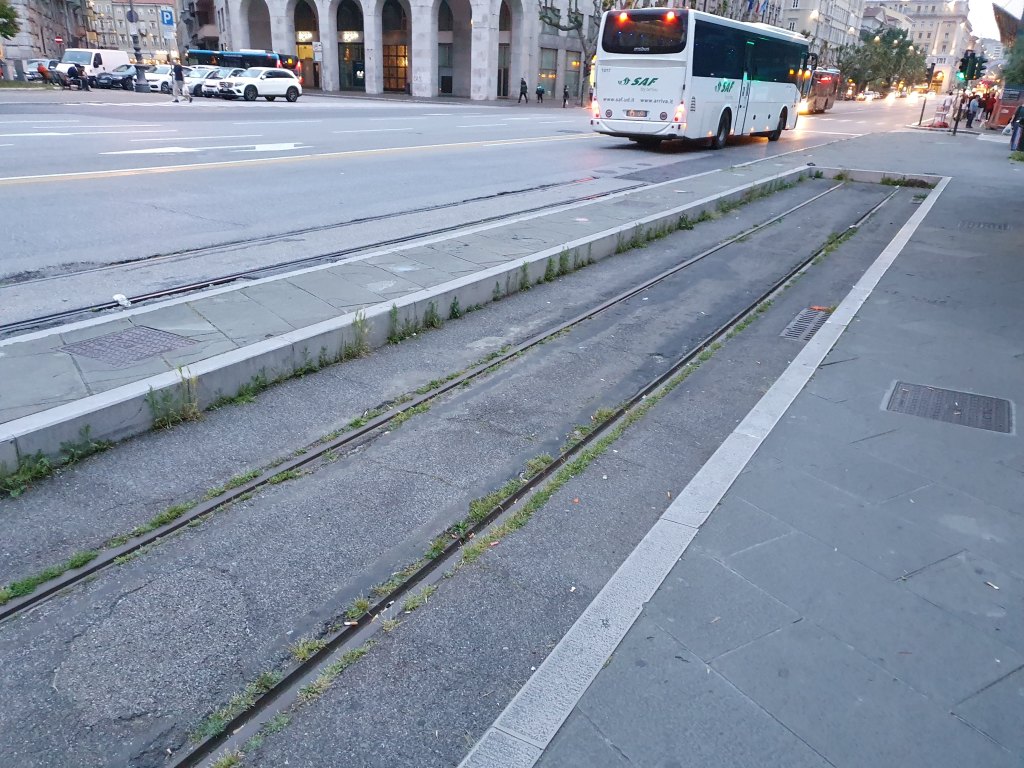
On my way back to the hotel I went past the terminus of the tram route to Villa Opicina on the Slovenian border, which has been shut since an accident in 2016, so there is now grass growing in the tracks. When the trams are running they provide an alternative route from Trieste to Ljubljana, as they connect with several trains per day from Villa Opicina to the Slovenian capital. There were various notices at the terminus about the closure and information about replacement buses, but no indication of when it may reopen.
[To be continued. Coming next – Slovenia.]
 Europe Explored