
“In Switzerland, they had brotherly love, and they had 500 years of democracy and peace. And what did that produce? The cuckoo clock.” (Harry Lime – The Third Man)
When the Europe Explored idea was first conceived in the happy pre-Covid times of late 2019, the first trip I planned was a tour to visit a number of places in Europe that I had not been to before. That trip was booked well in advance, but Covid struck in March 2020 just before I was due to depart and instead I spent the next few months trying to get refunds on my bookings. I still had a couple of credit notes from that trip and as soon as I had returned from my Lisbon to London adventure in March this year, I started planning my next trip. Having now written off the vouchers from a planned stay in Ukraine in 2020, I decided to use the credits from my first planned trip. I squeezed a day out of the itinerary, to make it last 11 days.
Day 1 – Sunday 8th May 2022 – London to Dijon (via Paris)
I had booked a ticket on the 0930 Eurostar train to Paris and I arrived at St Pancras in plenty of time for my departure. My recent trips have ended by catching a Eurostar to St Pancras, but this was the first time since the pandemic that I have caught a train from that station. My first discovery was that the place that I previously used to buy a bacon roll and coffee had closed down, so I was forced to find an alternative supplier. Once I had eaten my breakfast, I went to check in. International travel seemed to be back in fashion, as there was a long queue just to get to the ticket barriers, followed by further queues to go through security and passport control, the whole process taking about 30 minutes.

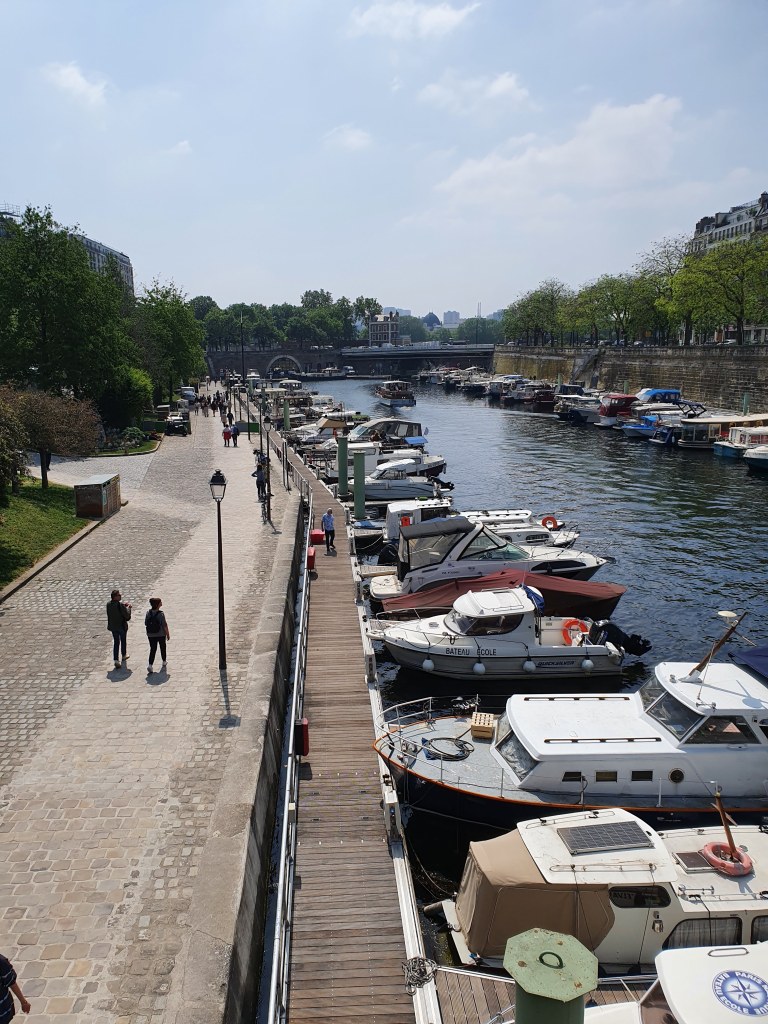
The train was on time and arrived at Paris Gare du Nord at 1247. A short journey across Paris on the RER brought me to Gare de Lyon. As I always allow plenty of contingency for connections, I had an hour or so to spend in Paris. I walked to the banks of the Seine from where I could see Notre Dame Cathedral, which is still being renovated after its devastating fire in 2019. After sitting there a while, I walked up the Canal St Martin in the direction of the Place de la Bastille before heading back to Gare du Lyon to catch my next train. Soon after I arrived at the station boarding of my train to Dijon was allowed. On this trip I was being a little extravagant, and if the ticket price for first class was only a few Euros more than standard I chose that option and this was my first opportunity to travel first class on a French train. I was seated on the upper deck of a double-decker TGV, which was surprisingly full by the time it left Paris.
I arrived in Dijon at 1632 and walked towards the historic centre to find my hotel. Because 8th May is a public holiday in France (for VE Day), I knew that all the museums would be shut on my arrival, so I just went for a short walk to get my bearings in the centre of Dijon.
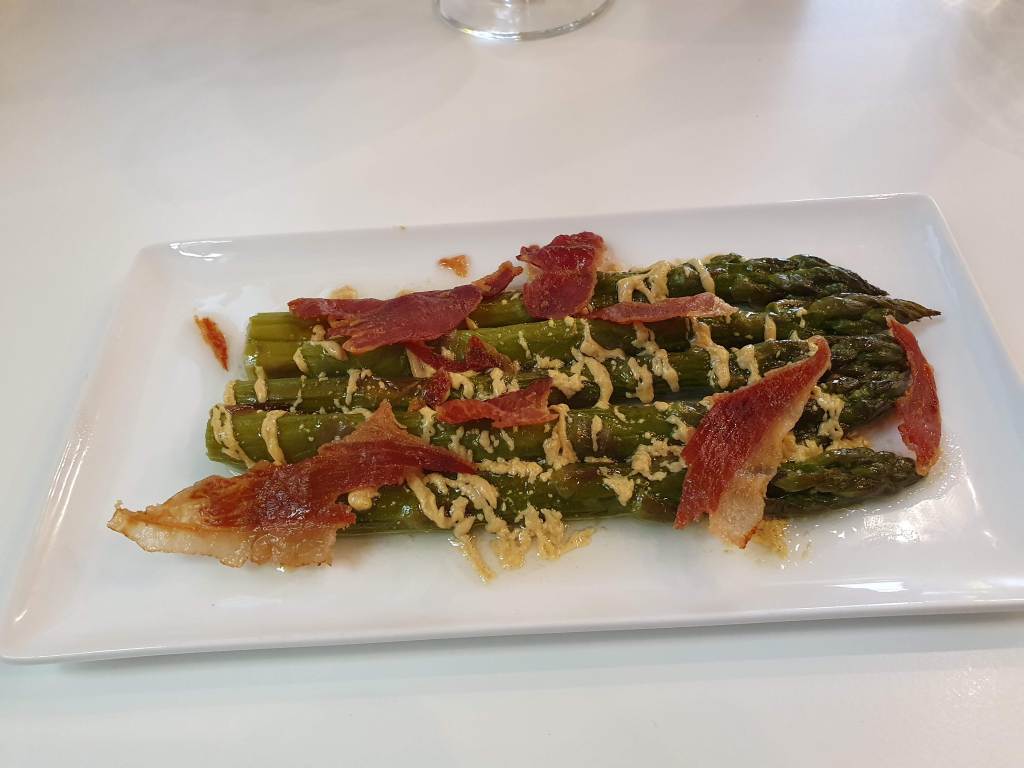
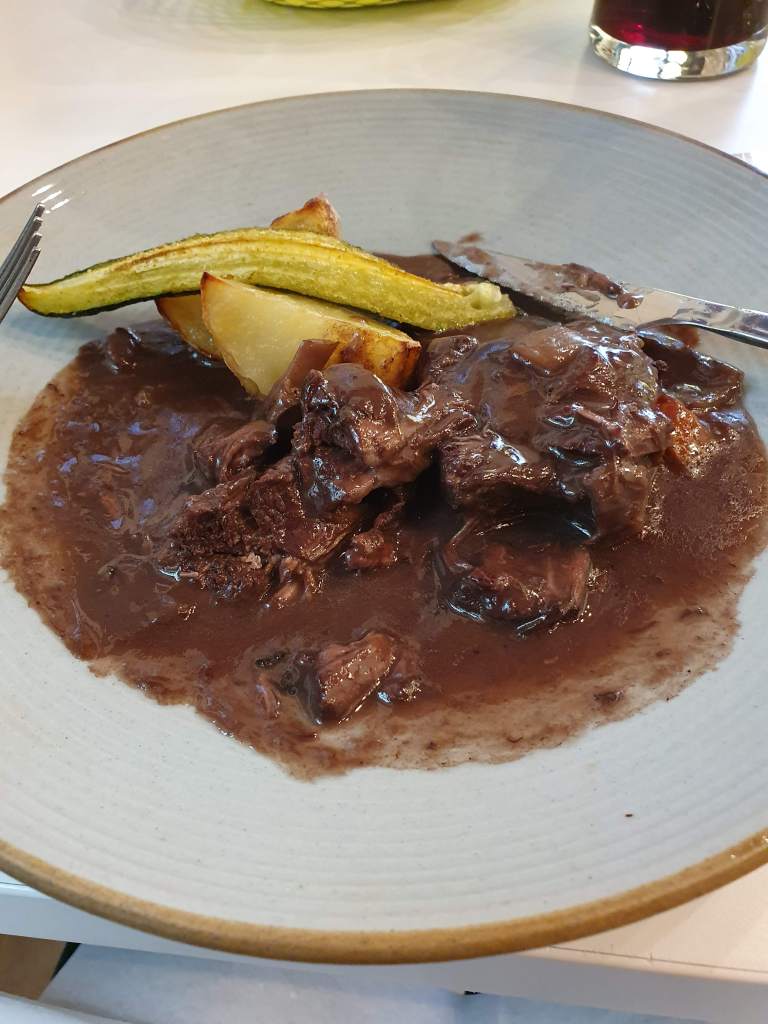
Not only were all the museums shut that afternoon, but my researches had told me that most of the restaurants in Dijon were closed on Sunday evenings. I had taken the precaution of booking a table for dinner in a small restaurant not far from my hotel. The meal lived up to expectations – I dined on asparagus for starters, followed by Boeuf Bourguignon (Dijon is the capital of Burgundy) and finally a strawberry based dessert, together with a carafe of the local Macon Rouge to drink.
Day 2 – Monday 9th May 2022 – Dijon to Basel (via Mulhouse)
After breakfast in the hotel, I set off to explore the museums of Dijon of which there are many. Those museums in Dijon that are run by the city authorities are not only all free, but also open at 0930, giving an opportunity to squeeze a lot into a morning.
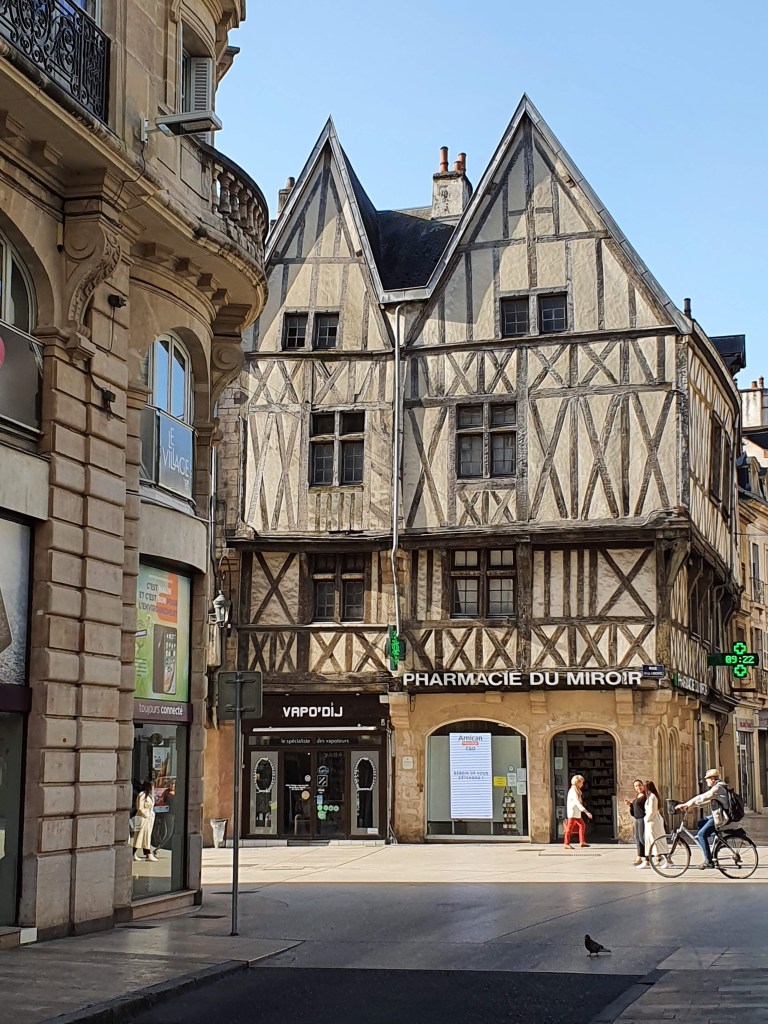
I chose to visit first the one furthest from my hotel so that I could maximise my viewing time by walking there to arrive when it opened. This was the Museum of Burgundian Life which has an interesting collection on the history and traditions of Dijon and the surrounding area. According to the film Passport to Pimlico, which I watched a couple of days before departure, Dijon castle had become a cement works – however, I learnt from the museum that site is now a park, but had previously been a postal sorting office and a convent. Next door to the Museum of Burgundian Life was the Museum of Sacred Art housed in a former church. I probably would not have come this far from the centre of town just to visit this museum, but since I was already there I had a quick look around. It has a large collection of church sculptures and a couple of small rooms for painting and other religious objects.
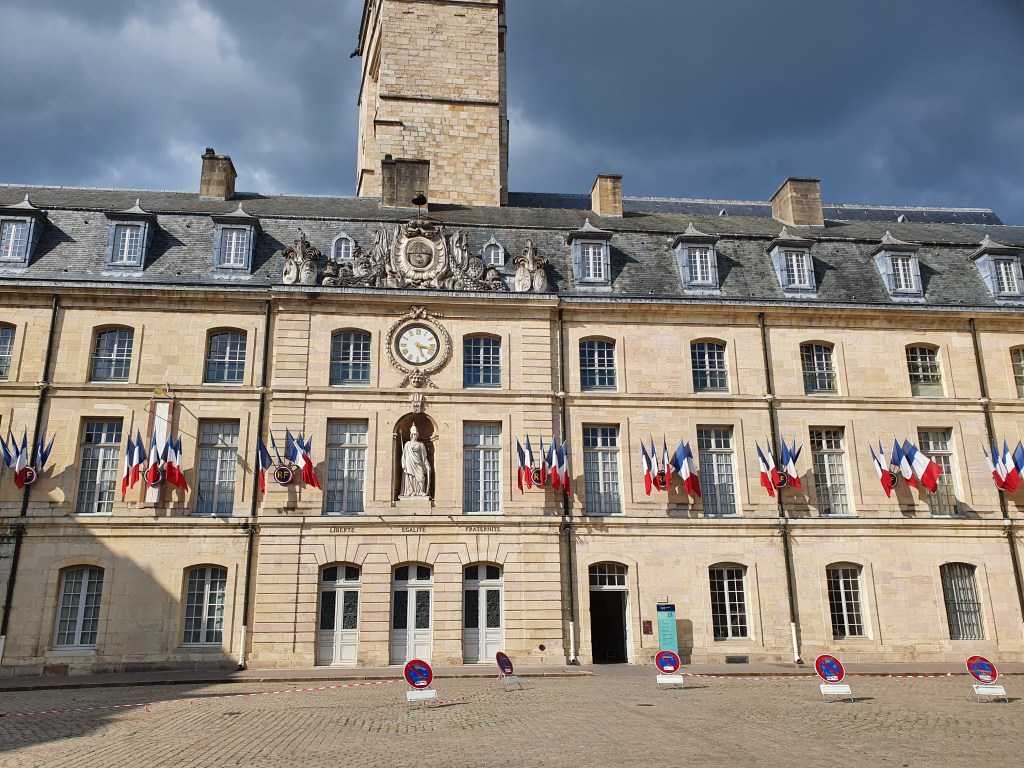
Returning to Dijon city centre, my next stop was the Musée Rude, also housed in a former church and largely showcasing the sculptures of Francois Rude. I took a picture of one of the mathematician Gaspard Monge near the entrance to the museum, not realising until someone tweeted about him later that day that he had been born on 9th May 1746, so it was the 276th anniversary of his birth.
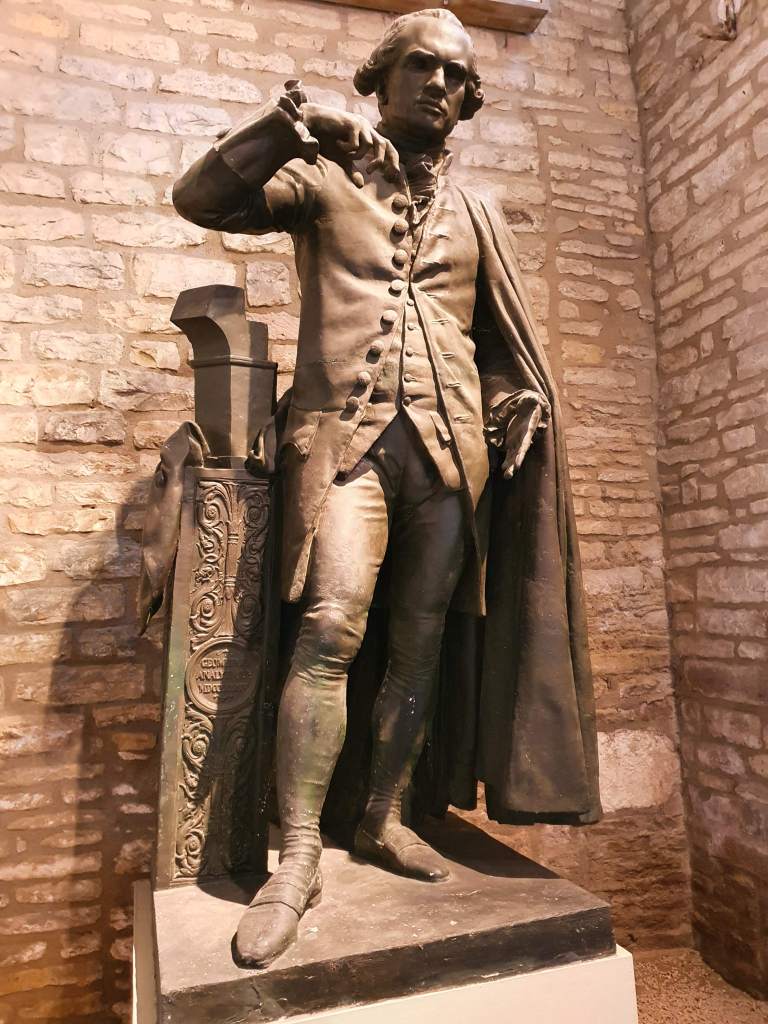
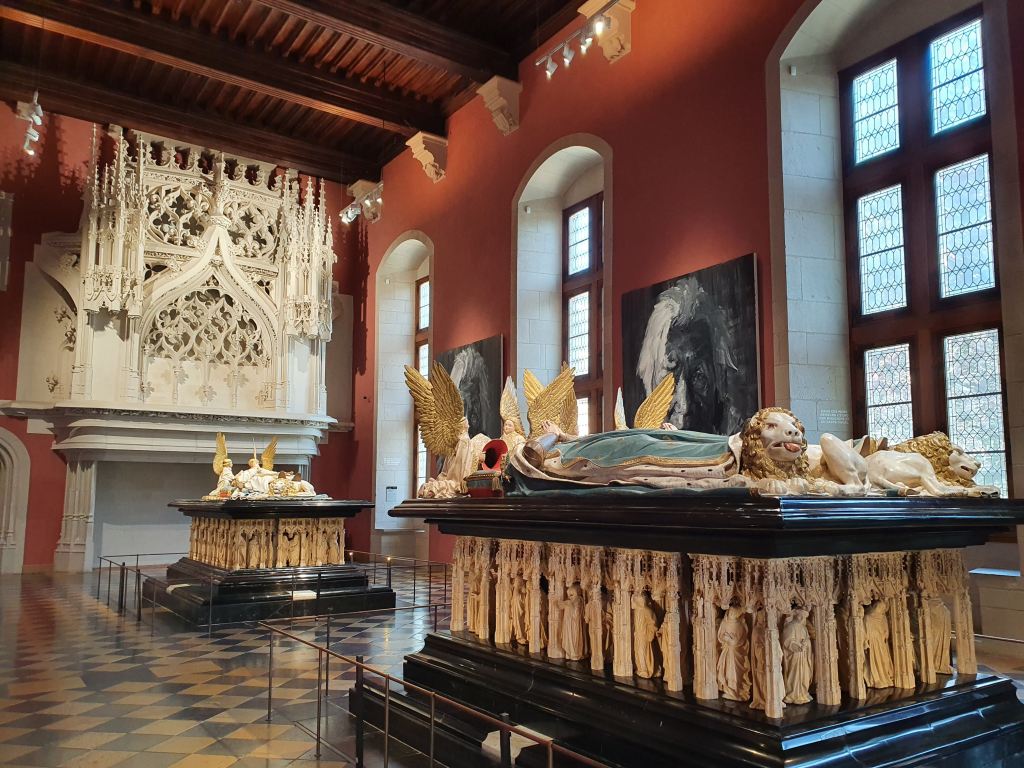
Most of the rest of the morning was spent in the Musée des Beaux-Arts, which is housed in the former Palace of the Dukes of Burgundy, which it shares with Dijon’s Town Hall. The museum is large, spread over four floors, and includes the ornate tombs of the Dukes of Burgundy.
When I had finished in the museums, I just had time to follow part of the Chouette trail, a walking route round the main sights of the city centre and marked with owl symbols laid into the pavement at regular intervals. The trail is named after the owl which can be spotted carved into one of the walls on the outside of Dijon cathedral.
At a suitable point I broke off from the trail to walk to Dijon station to catch a train to Basel. While there are direct French/Swiss Lyria services from Dijon to Basel, for some reason, at the time I booked Lyria tickets were not available. Instead I booked a route via Mulhouse, which probably saved me some money as the Lyria trains seem generally to be quite expensive. I caught the 1301 departure, which like my train the previous day was another double-decker TGV. Coincidentally, I had been allocated the same seat number in the same carriage as I had on the train to Dijon from Paris. So I knew exactly where to go, and was confident about asking the person who was sitting in my seat when I arrived to move. The train took just 45 minutes to reach Mulhouse and the 30 minutes I had to change there was not sufficient to explore the city to any great extent.
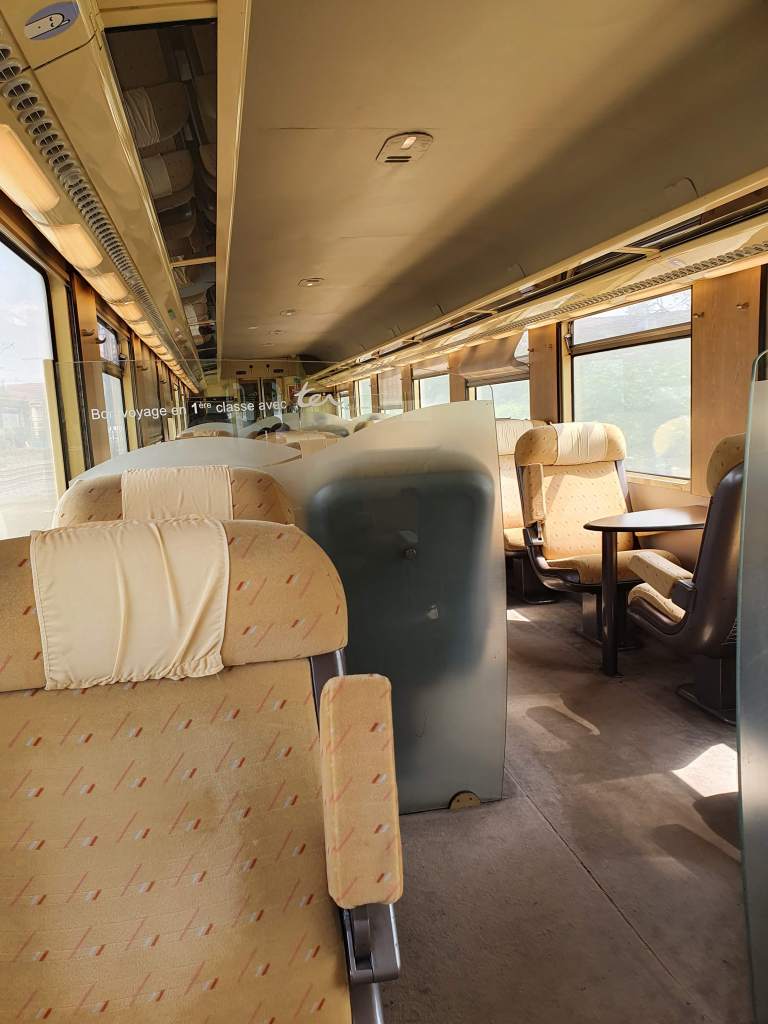
The train to take me to Basel was running slightly late. It was a TER service with very old-fashioned rolling stock. I was travelling first class again on this leg of the journey. The one first class carriage at the rear of the train was nearly empty, with plush but slightly tatty armchair-like seats.
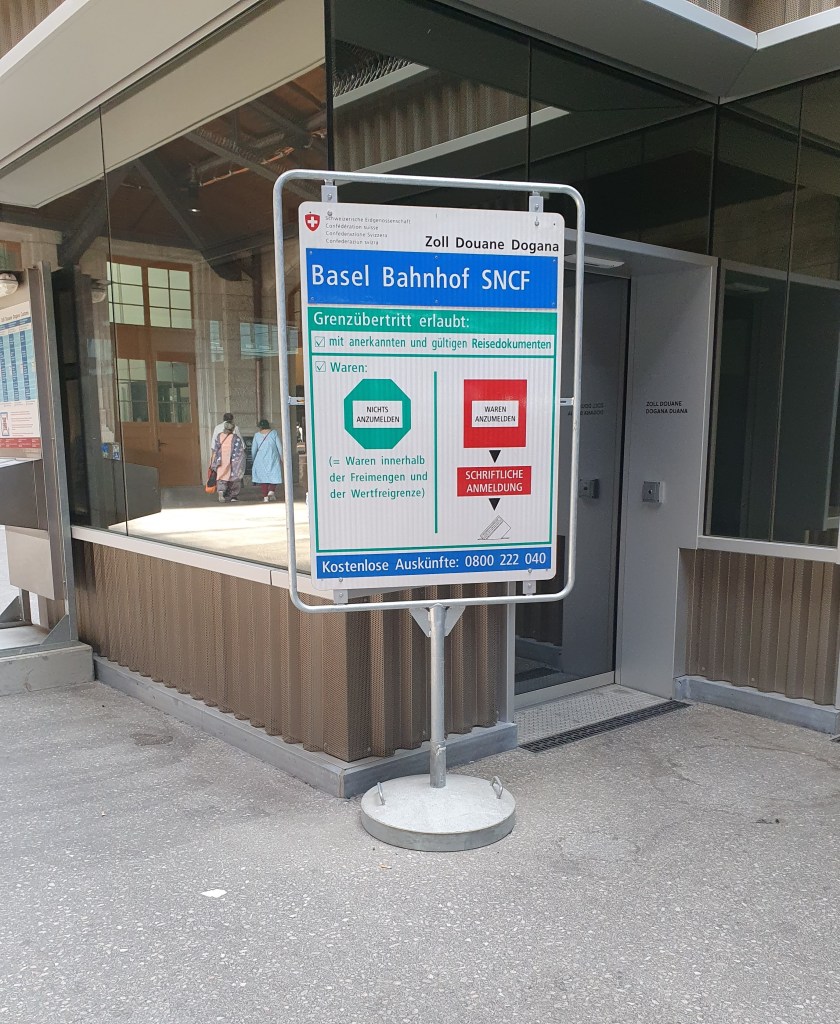
The train arrived at the SNCF portion of Basel station. In the past this was separated by from the rest of the station by a full border control. As Switzerland is now part of the Schengen Area, but not in the EU Customs Union, technically one has to pass through Customs, but apart from a sign there was no indication of any activity.
Basel is in the German-speaking part of Switzerland and this was the first time that I had visited a German speaking country since I started to learn the language as a lockdown activity. I went to the Post Office near the station to buy some stamps for the postcards I had written while on the train, and was pleased that I managed to have a nice chat in German with the counter clerk.
I then went to the hotel I had booked. If you stay at a hotel in Basel, you are entitled to a free Basel Card valid from the day you arrive to the day you leave, which gives you free public transport within the city and half price admission to the city’s museums. I managed to check-in to the hotel by speaking German, but when the receptionist started to explain to me how the Basel Card worked, my lack of conversational German was sorely exposed.
After dropping off my bag, I set off to explore the city. My room was on the fifth floor of the hotel and I had caught the lift up to the room, but I decided to walk down the stairs to exit. You had to use your room’s key card to open the door to the stairwell. When I got to ground floor level, there were four unmarked doors to choose from, two with key pads attached. However, I could not get any of the doors to open. Fearing that I might be trapped, I walked up one flight to the first floor, where I pushed open a door to exit. However, doing so seemed to set off an alarm which I could still hear ringing when I walked past the reception desk to make my escape.
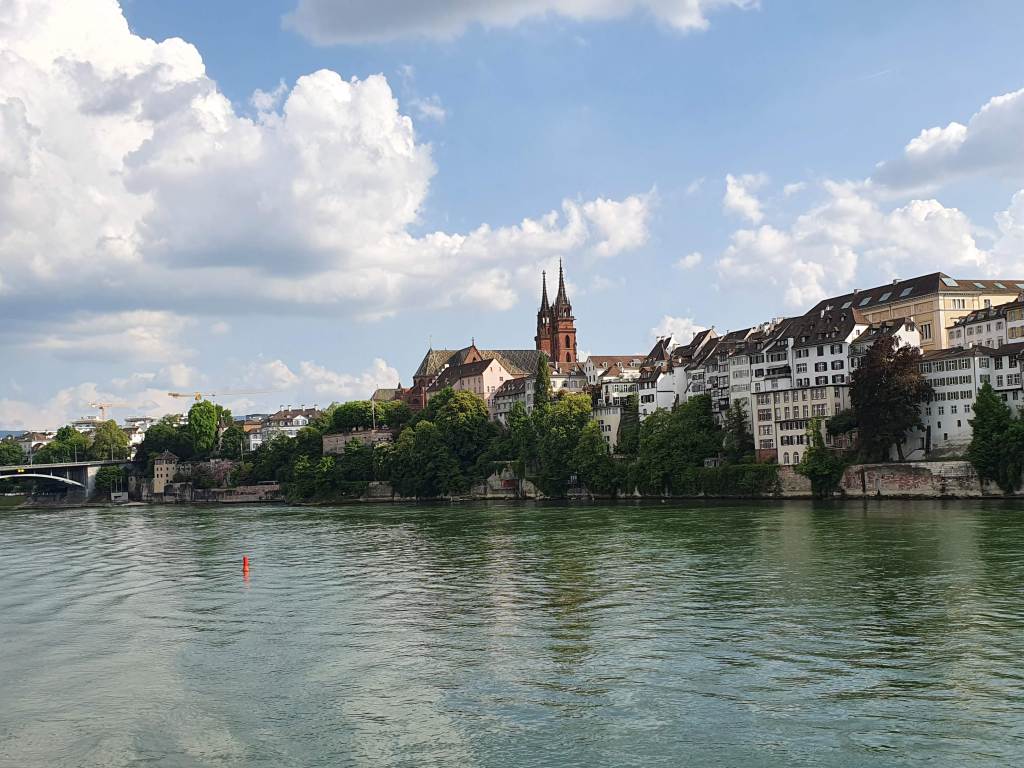
Although it was a little a way to the old city centre, I chose to walk rather than use the free public transport – to help me get my bearings and also to research potential venues for dinner. I walked through the historic centre, where many of the pedestrianised areas were being dug up, and then I went on further to the cross the Rhine. Having explored the far bank for a while, I recrossed the river to get a tram back to my hotel. After I got on the tram I noticed a beer hall by the tram stop, which I researched on my phone on the way back and identified it as a suitable place for dinner, as it seemed to have good reviews and far more reasonable prices than many extortionate Basel restaurants.
After a shower at the hotel, I went back by tram to the beer hall I had identified. When I entered I was surprised how empty it was with just a few people drinking there. The waiter explained that there was no food available that night as the chef had had an accident. I was forced to rethink my plans and eventually found another beer hall nearer the city centre, which was a bit more expensive and probably more touristy than my original choice. There I dined on pork schnitzel and drank some of the local unfiltered beer.
Day 3 – Tuesday 10th May 2022 – Basel to Zurich
Following breakfast in the hotel I set off by tram to the city centre to visit Basel’s history museum. (During my brief explore the previous afternoon all the museums had been shut, being Monday.) The museum is housed in the former Barfüsserkirke – literally the barefoot church, so called because it had been founded by Franciscan monks, an order which shuns footwear.
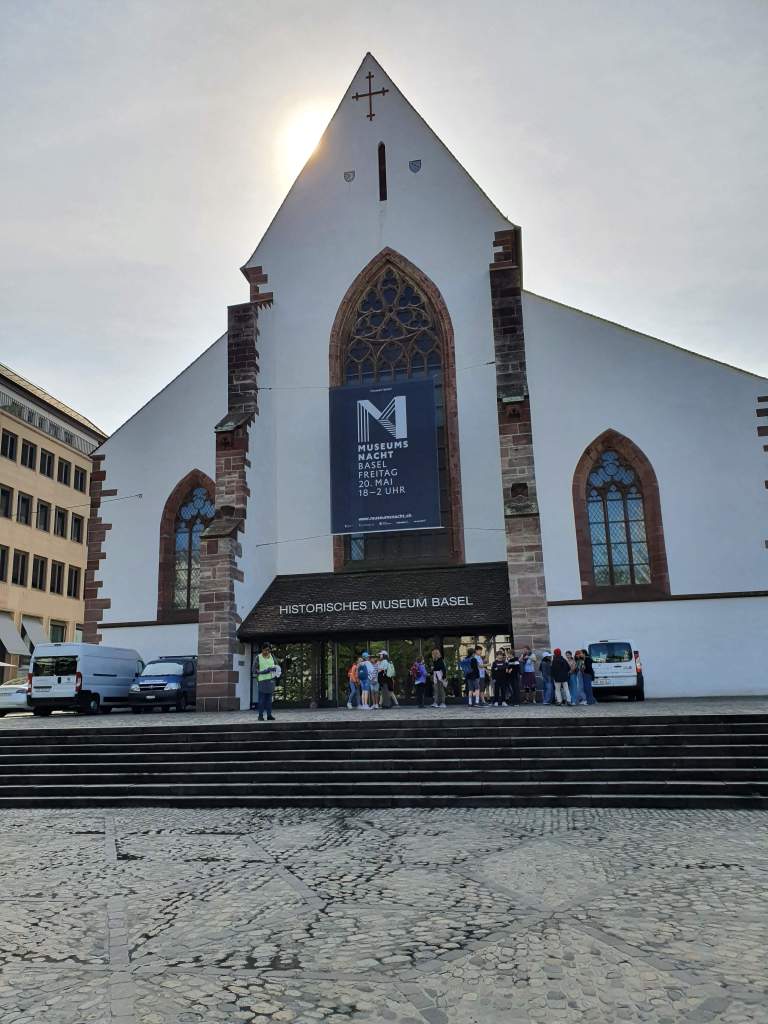
I arrived at the Barfüsserkirke a couple of minutes before opening time and was slightly dismayed to see a school group also waiting to enter. Despite them, like me, spending all morning in the museum I didn’t see them again until we left at the same time, as they headed to the exhibitions in the crypt on arrival while I initially viewed those in the main body of the church first. I had my Basel Card ready to gain half-price admission, but even better, because they were doing work on the area around the cash desk, I was let in for free. The museum presents a history of the city from pre-Roman times to the present day. I especially liked their quirky History of Basel in 50 objects – the final one being a phial of Covid vaccine. Throughout the museum you can get more information via your phone from an e-guide accessed from the museum’s website.
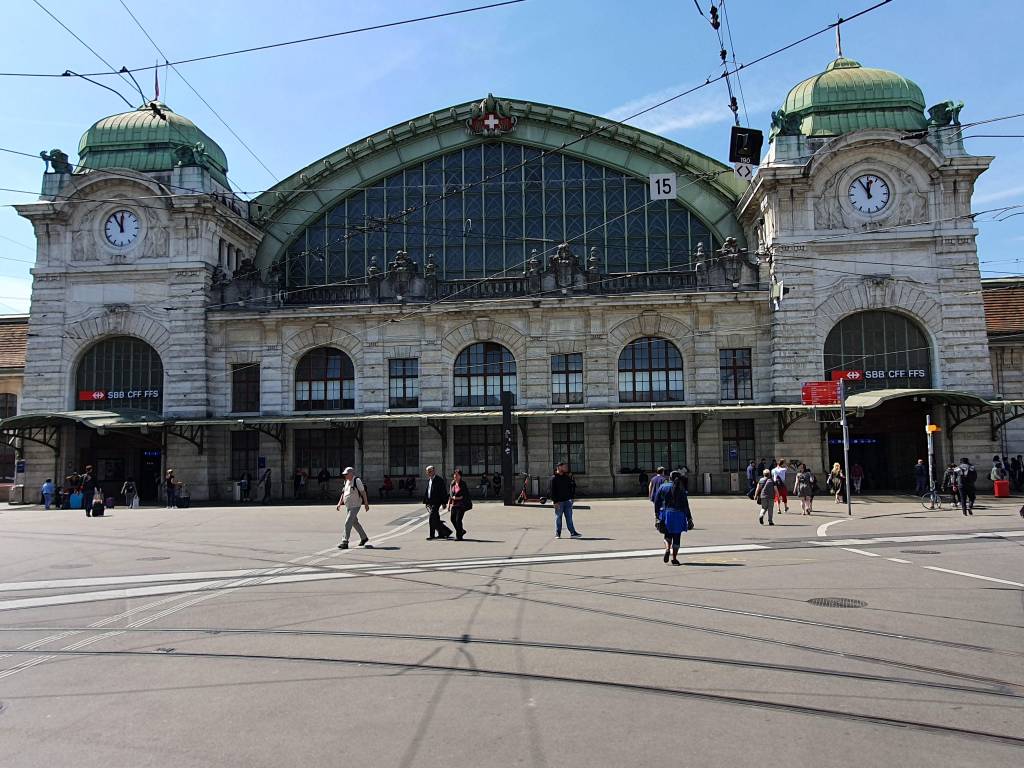
Because the Barfüsserkirke was so interesting I didn’t have time to visit any other museums in the city, but just caught a tram to the station. From there, I caught the 1233 train to Zurich. There is a half-hourly service between the two cities and my train was fairly empty for the non-stop journey, which took 53 minutes. The scenery along the route was not particularly special, being mostly light-industrial throughout.

On arrival at Zurich’s main station, I just crossed the road to visit the Swiss National Museum. As well as the permanent collection on the history of the country, there were a number of special exhibitions at the time of my visit, including Im Wald (In the Forest). On leaving the museum after more than two hours there, I noticed a landing stage for a boat service which is part of Zurich’s public transport network. Having checked the timetable, I decided to catch a boat to visit the Zurichsee, the large lake to the south of the city. Being part of the public transport network, the fare was quite reasonable (by Swiss standards) compared with tourist boats found in many other cities. I just had time before the boat left to drop off my bag in the hotel I had booked nearby. The hotel was slightly old-fashioned with a rack of room keys behind the reception desk. The key for my room was on the top row, but the receptionist was quite short and could not reach it. She was about to get something to stand on, but instead agreed to my suggestion that I just go behind the desk and help myself.
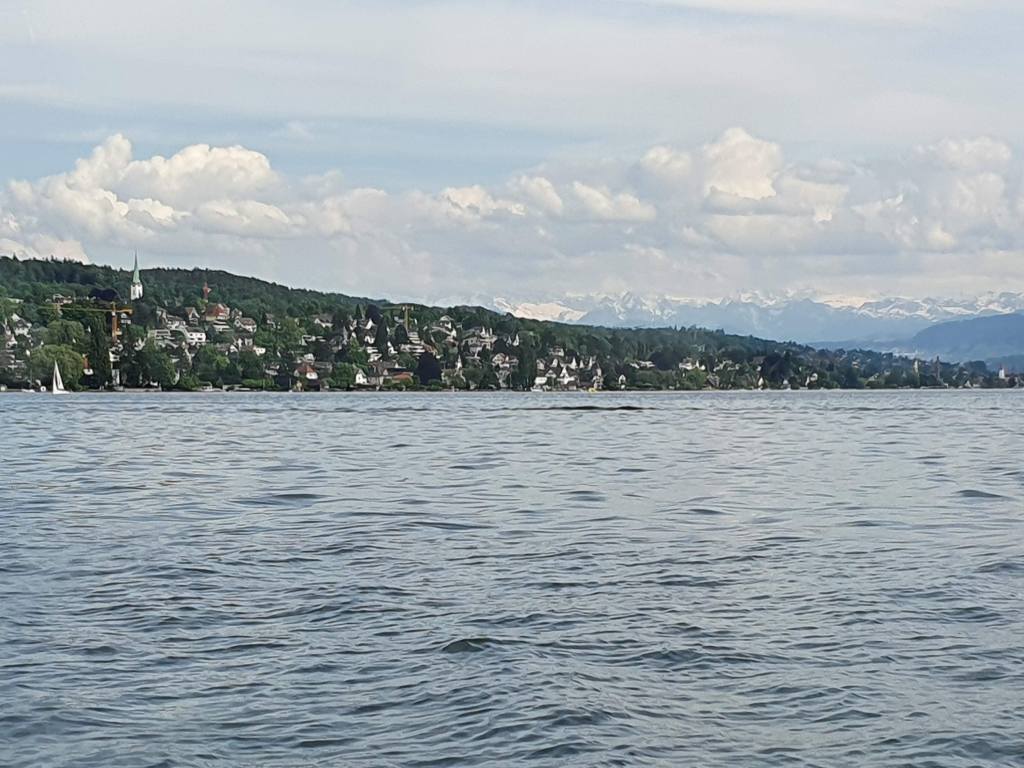
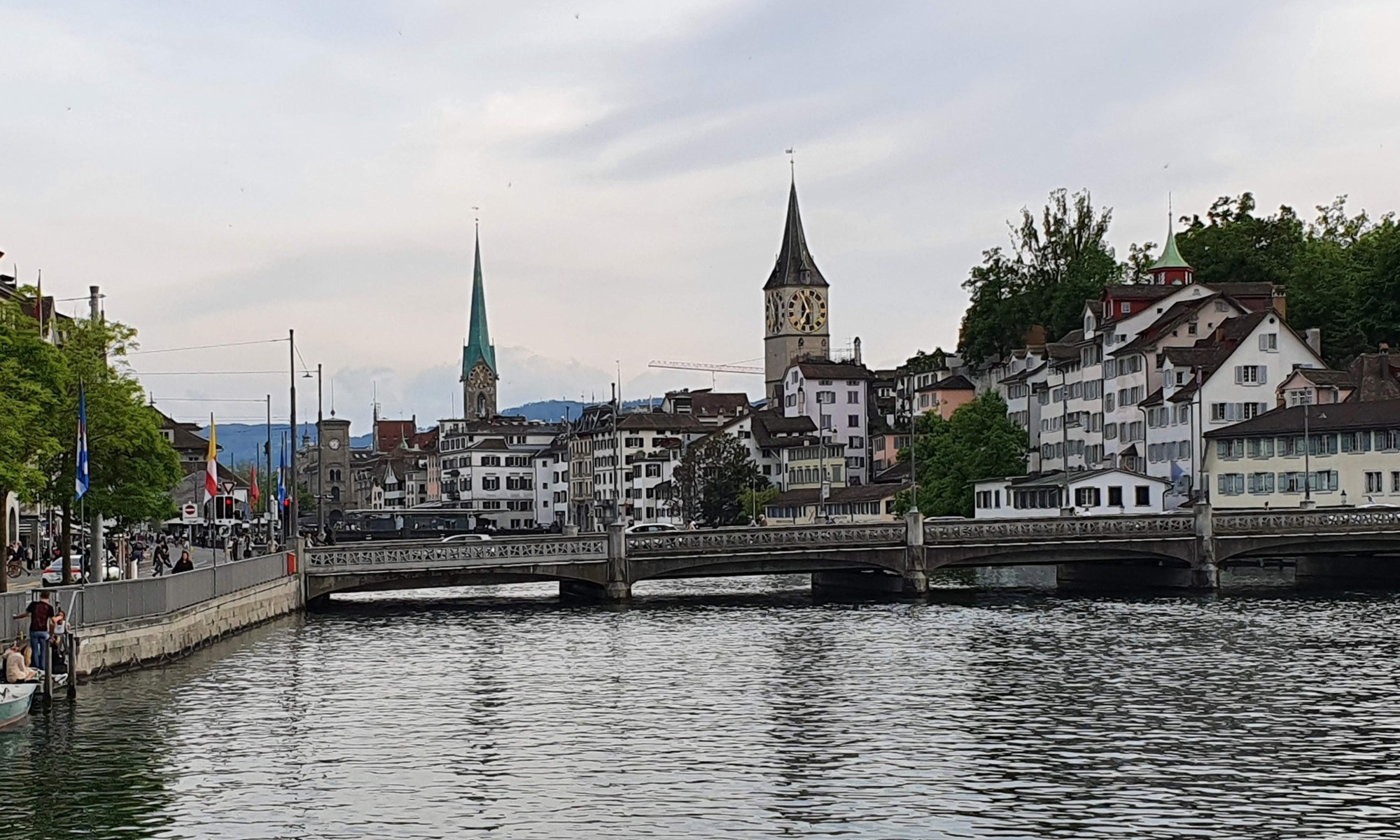
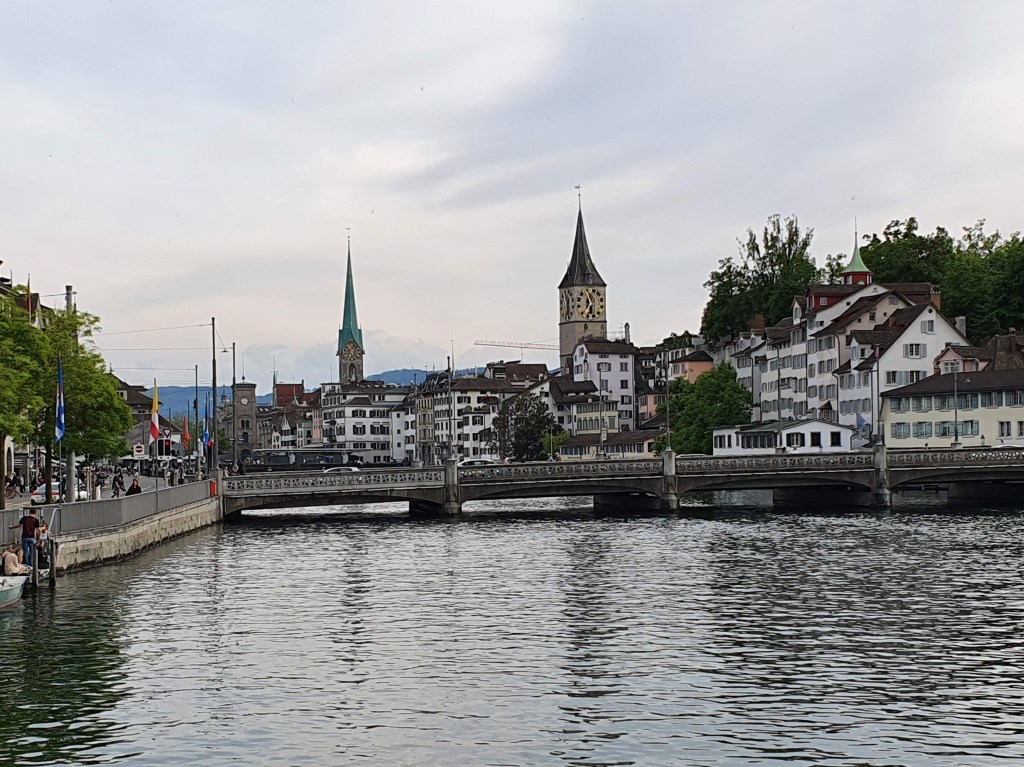
Having left my bag behind I returned to catch the boat. It initially travelled down the Limmat river with the old town on both sides, before entering the Zurichsee. Once on the Zurichsee I caught my first sight of snow-capped mountains. The boat went to a landing stage to the south of the city before returning, taking about one hour in total for the round trip. Once back on land, I walked through the old city centre, which was busy with people. I chose to eat in a restaurant specialising in raclette, where I picked two different types of cheese to be melted, served with potatoes, pickles and bacon.
[To be continued. Coming next – Austria and Italy.]
 Europe Explored