
“Everything ends this way in France – everything. Weddings, christenings, duels, burials, swindlings, diplomatic affairs – everything is a pretext for a good dinner.” (Jean Anouilh)
Day 8 – Wednesday 2nd March – San Sebastian to Bordeaux
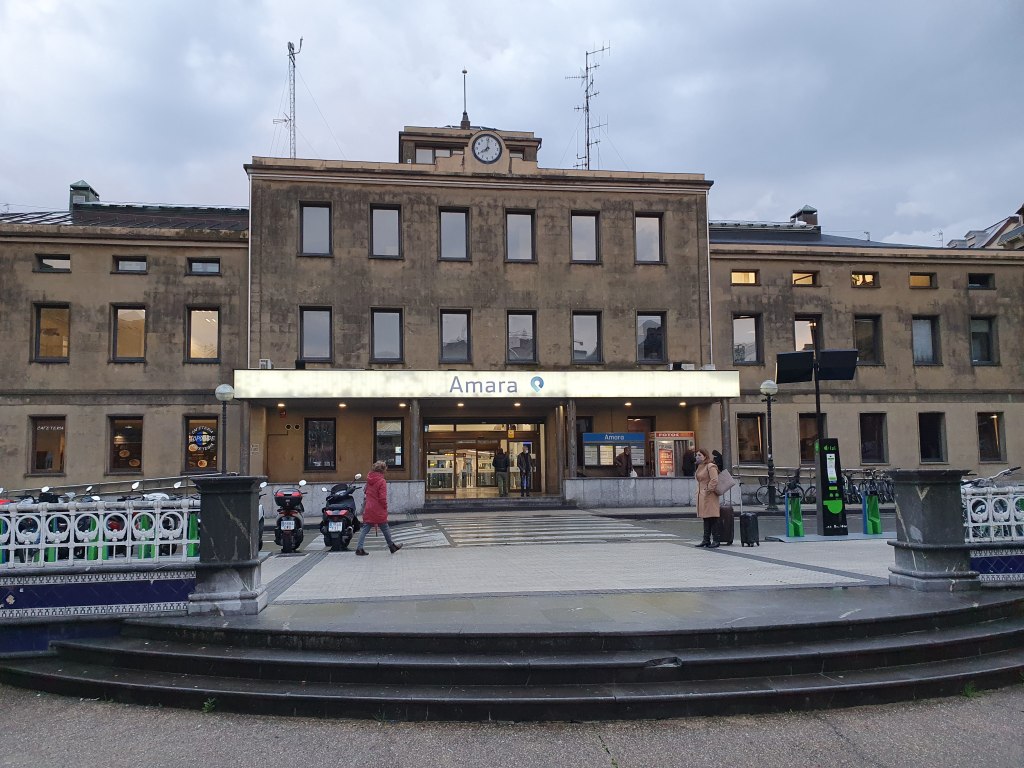
The hotel I was staying in was one of the more upmarket ones that I had chosen for the trip. There were various electronic controls to change things in the room. While there were a lot of things you could control, there seemed to be no way to open the room’s windows, and as I sleep better with fresh air at night, I did not have a very good night’s sleep. I got up early and again chose not to have the hotel breakfast. I strolled to the nearby Amara Euskotren (Metro) station, where I purchased a €2.75 ticket from a machine. The Euskotren service to Hendaia runs every 30 minutes and I caught the 8:15am departure, rather earlier than necessary.
Initially the Euskotren was fairly busy with commuters going to work, but emptied out as it got nearer to Irun and the French border. It terminated at Hendaia at 08:52, where I was slightly surprised to find French police waiting in the station entrance asking everyone to show their passport or ID card.
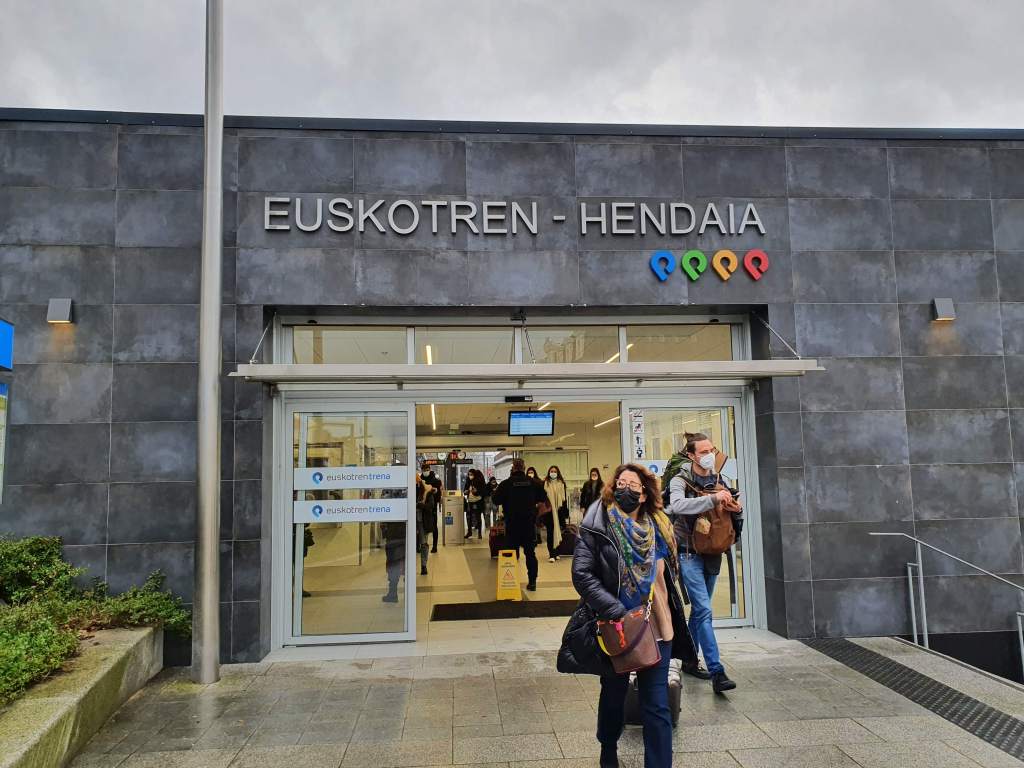
The Euskotren station is just 50 yards from the SNCF station of Hendaye. I had arrived with plenty of time for my train, so much so that I had to let the earlier TGV depart, before going to find the train that I had booked. To kill time I went for a little explore of Hendaye, but discovered that there wasn’t very much to see in the town and when it started to drizzle I returned to the SNCF station and waited there.
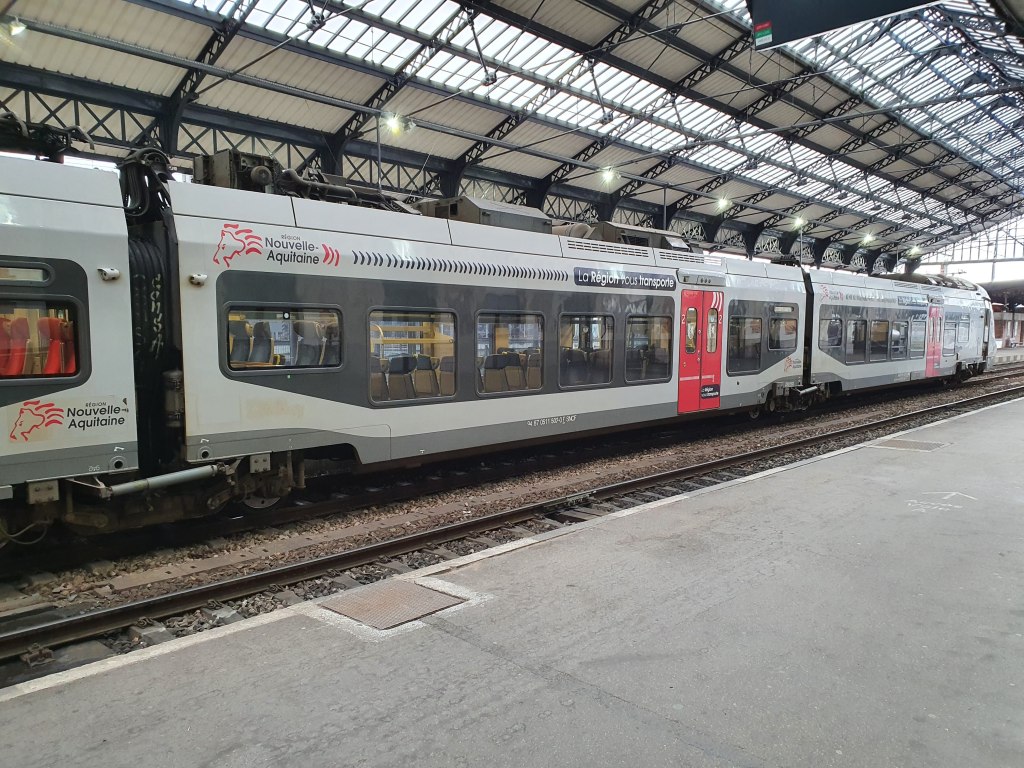
Eventually the departure boards confirmed that the train already standing in the station was the one to take me to Bordeaux, whereupon I went and got on. The train left at 10:01, initially following the Atlantic coast, stopping at once fashionable resort towns such as Biarritz, before heading inland slightly and passing through the seemingly endless Landes forest. The train eventually arrived at Bordeaux St Jean station at 12:43.
I had booked a hotel near the station, as I had an early departure the next morning, and unlike in San Sebastian I succeeded in checking in early and dropping off my bag. The centre of the city is a twenty minute walk from the station along the broad boulevard which flanks the Garonne river. After admiring the sights of the centre, my first stop was at the Musée d’Aquitaine which contains a comprehensive history of the region, with a strong emphasis on Bordeaux’s role as port.
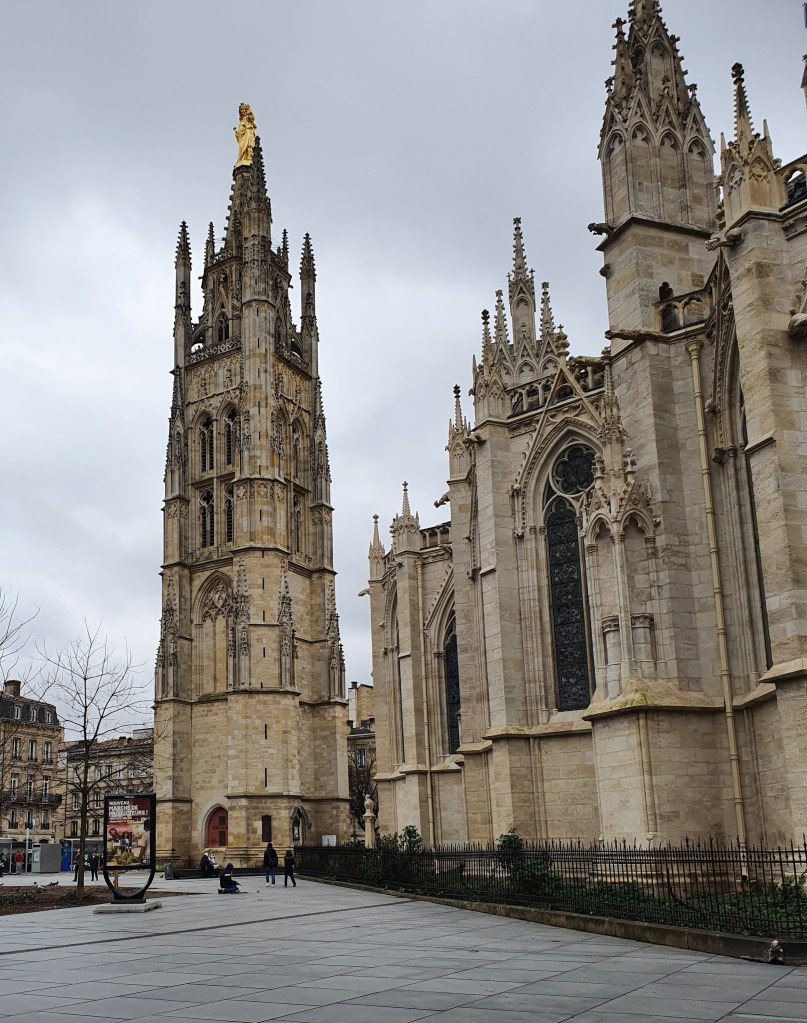
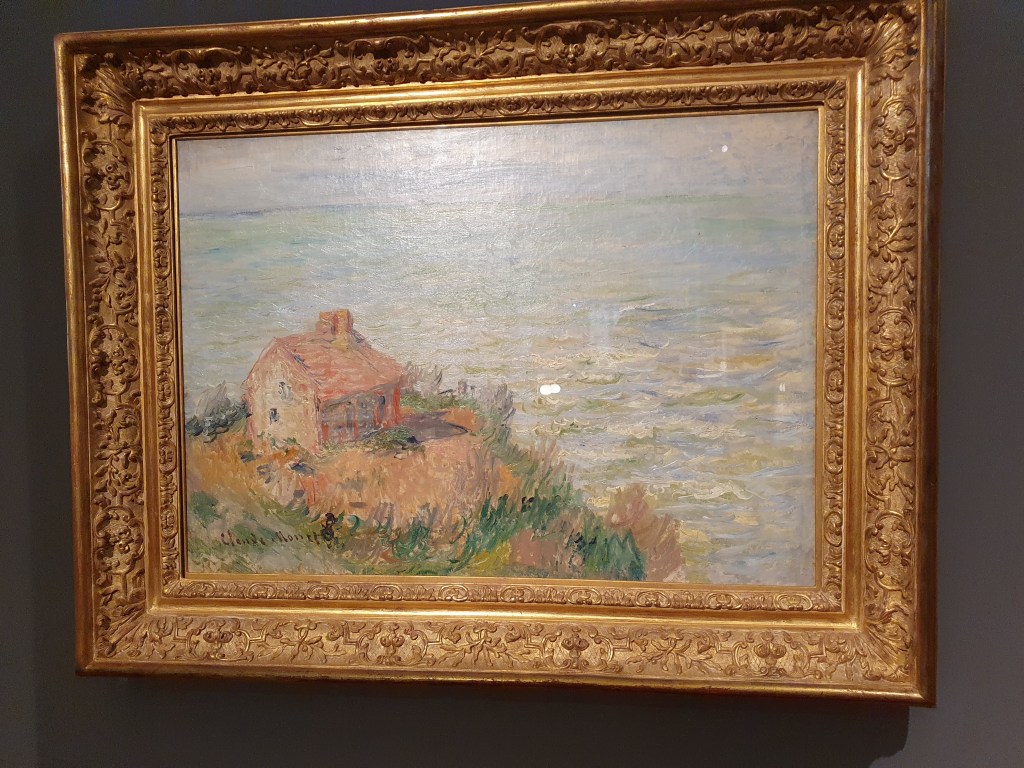
After an hour and a half in the Musée d’Aquitaine I left at about 3pm and went towards the river to visit the National Customs Museum. This is housed in a former customs building and is staffed by actual customs officers who go out of their way to explain the museum to you. I purchased an audio guide, which turned out to be extremely detailed, so that I did not finish my tour until near the closing time of the museum. This meant that I didn’t have time to visit Bordeaux’s art museum, but I did have the consolation that the Customs Museum had on display a Monet painting of a coastal customs hut.
After my slight difficulties in finding available places to eat in Spain, I had taken the precaution of making a reservation for dinner in Bordeaux. As it turned out, I needn’t have bothered as my chosen restaurant was not full and I went past several other suitable establishments on my way there. That said, the meal was very good with enormous portions. I had gravlax to start with, but rather than the thin slices of salmon that I am used to, the cured fish was served in large chunks. The piece of beef I had for main course was about the size that I may cook as a family Sunday roast. With the meal I had a carafe of the local red Bordeaux to drink. But I was so full after two courses I had to turn down the waiter’s offers for dessert. Towards the end of the meal, unfortunately a large part of one of my teeth fell out, which required an emergency visit to the dentist on my return home.
Day 9 – Thursday 3rd March – Bordeaux to Angers
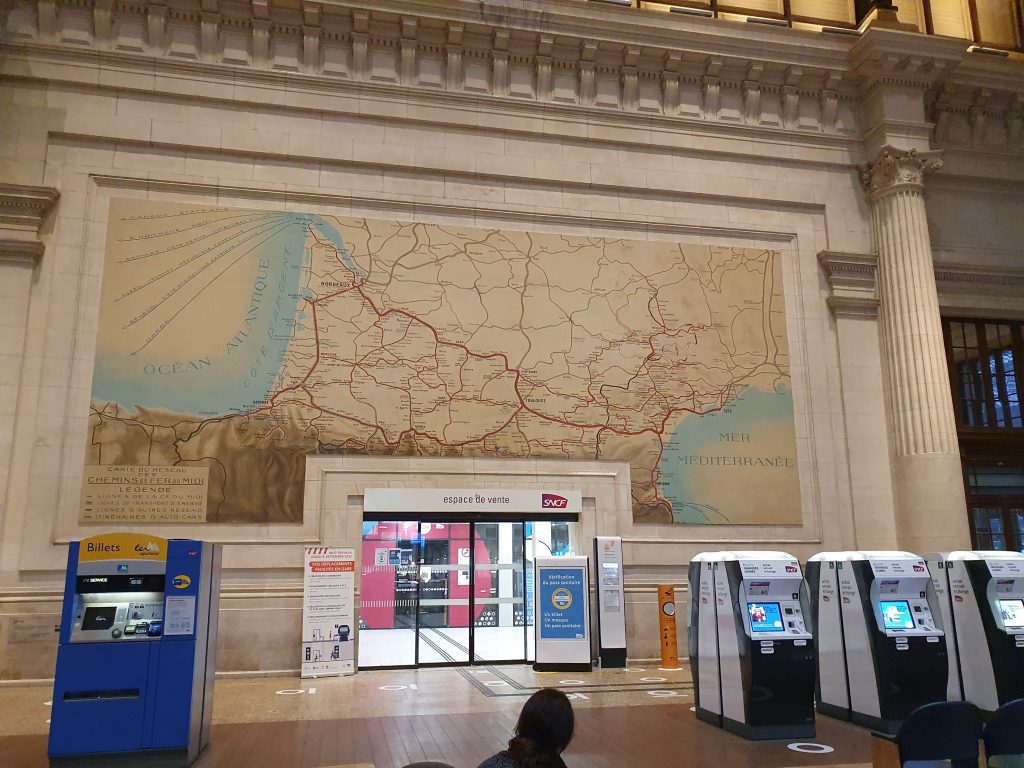
I slept much better than on the previous night, having managed to open the window in my hotel room – I found the rumbling of night trains going past on the nearby railway line rather soothing. Today was my earliest scheduled departure since leaving home. I left the hotel at about 7:30am for the short walk to Bordeaux St Jean station. I had time to admire the splendid entrance hall of the station, with its map of the railway lines of southern France on one wall, before going to find my train, which was waiting when I arrived at the platform.
My train departed at 07:55. It was initially fairly empty as it travelled through the vineyards of the Bordeaux region. After about an hour, at the first stop, Jonzac, a school group of about 40 teenagers got on, filling up the carriage in which I was travelling. It looked like they were on a major expedition, as they each had far more luggage than I was taking for my trip across half of Europe. However, three-quarters of an hour later at the next stop, Saintes, they all got off and peace was restored in the carriage for the remaining two and a half hours to Nantes.
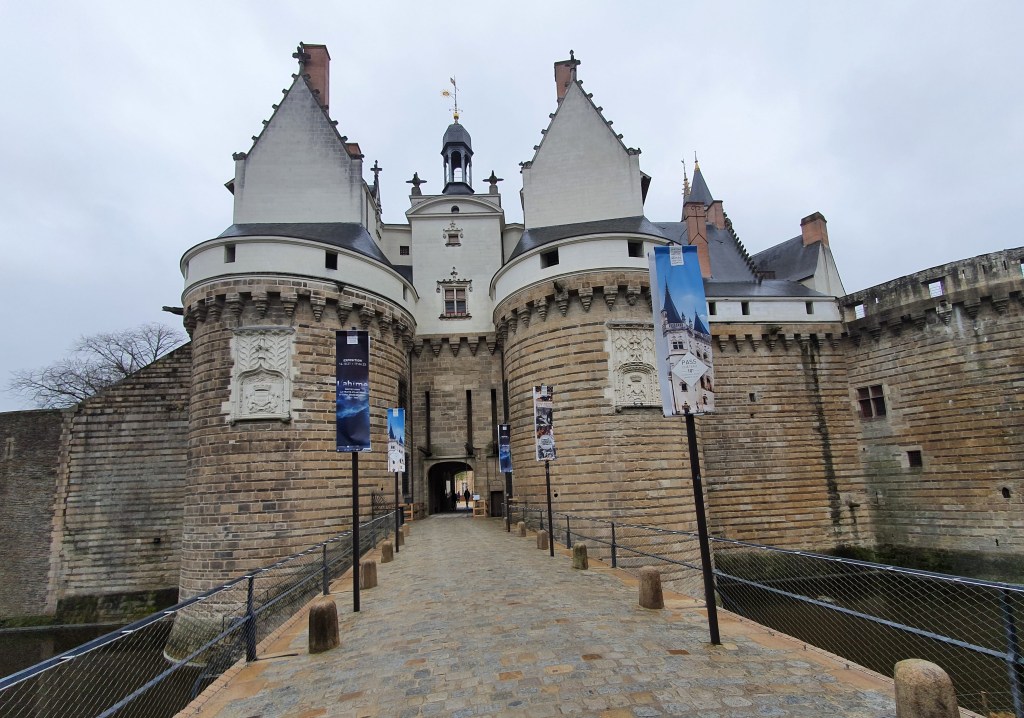
When I arrived in Nantes it was raining slightly. First stop was Nantes Castle and the Palace of the Dukes of Brittany, which is located conveniently close to the station. While you can pay to visit the history museum located within the castle, the best bits can be seen for free, including walking right round the ramparts.
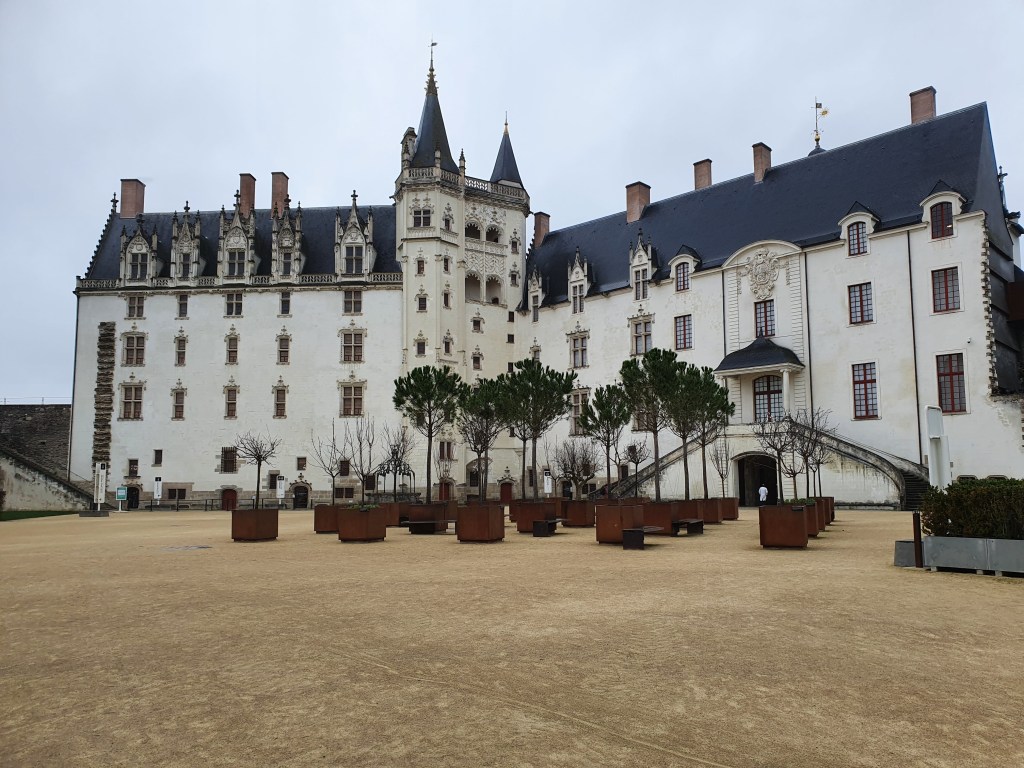
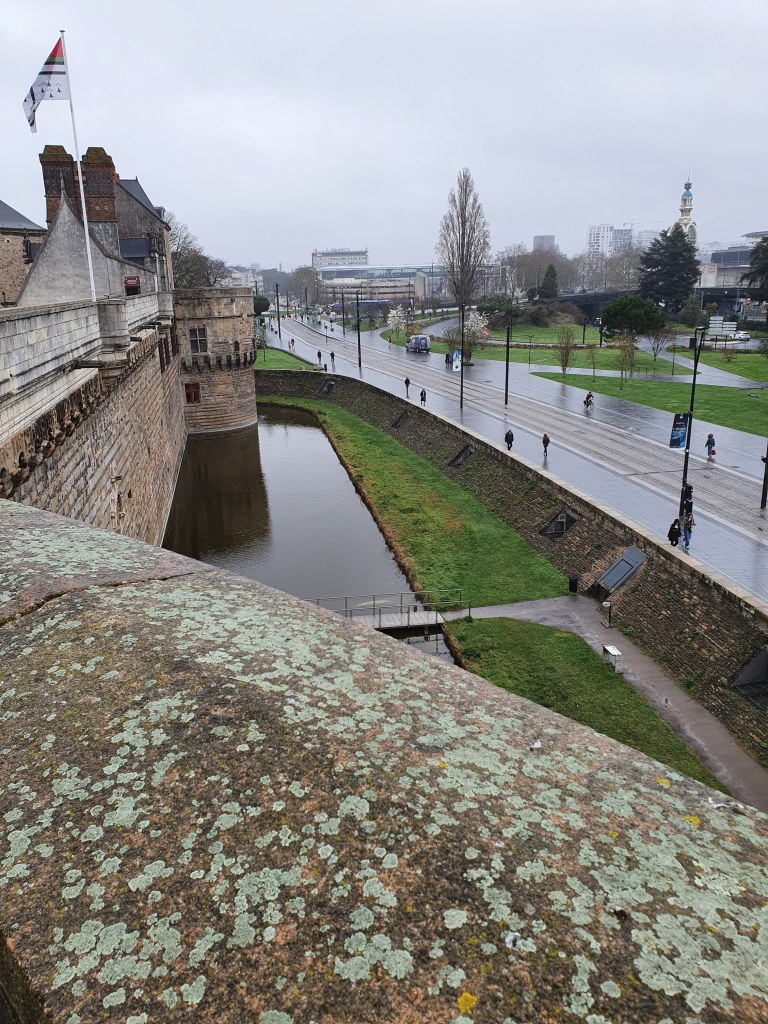
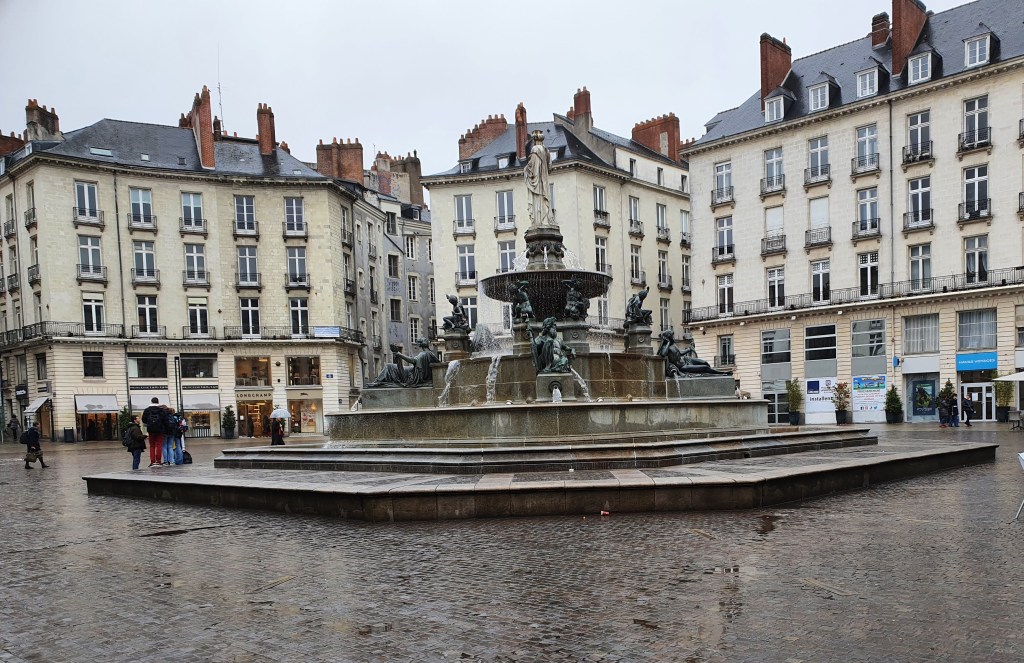
Upon leaving the castle I still had time to walk into Nantes city centre, and have a quick look at the Basilica and Cathedral, before heading back to Nantes station.
My next train was to be a TGV. To access the train you had to scan your ticket at barriers on the open air platform. As it was now raining hard my self-printed ticket became rather damp, which caused some temporary problems in operating the barriers.
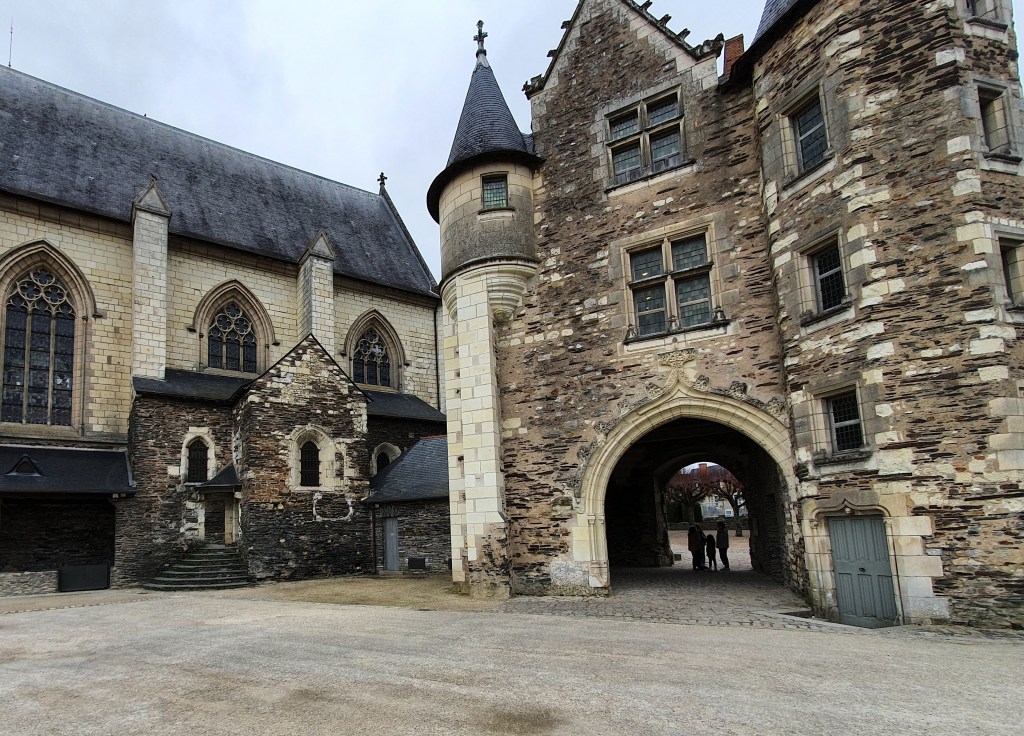
The short train ride to Angers, on which I had an upper deck seat, followed the River Loire for most of its journey, arriving at 14:41. The main reason for coming to Angers was to visit its castle, where I spent the rest of the afternoon. Fortunately the rain stopped for the time I was there. I acquired an audio guide to the castle, whose main construction dates from the 13th Century and was the base of the Dukes of Anjou.
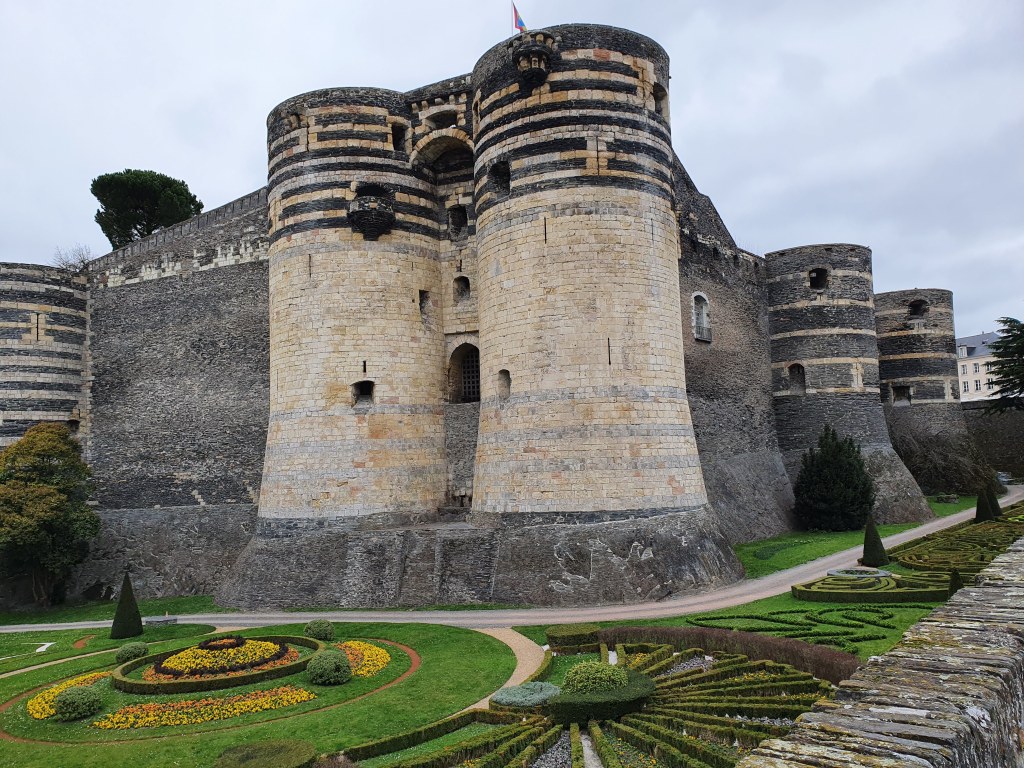
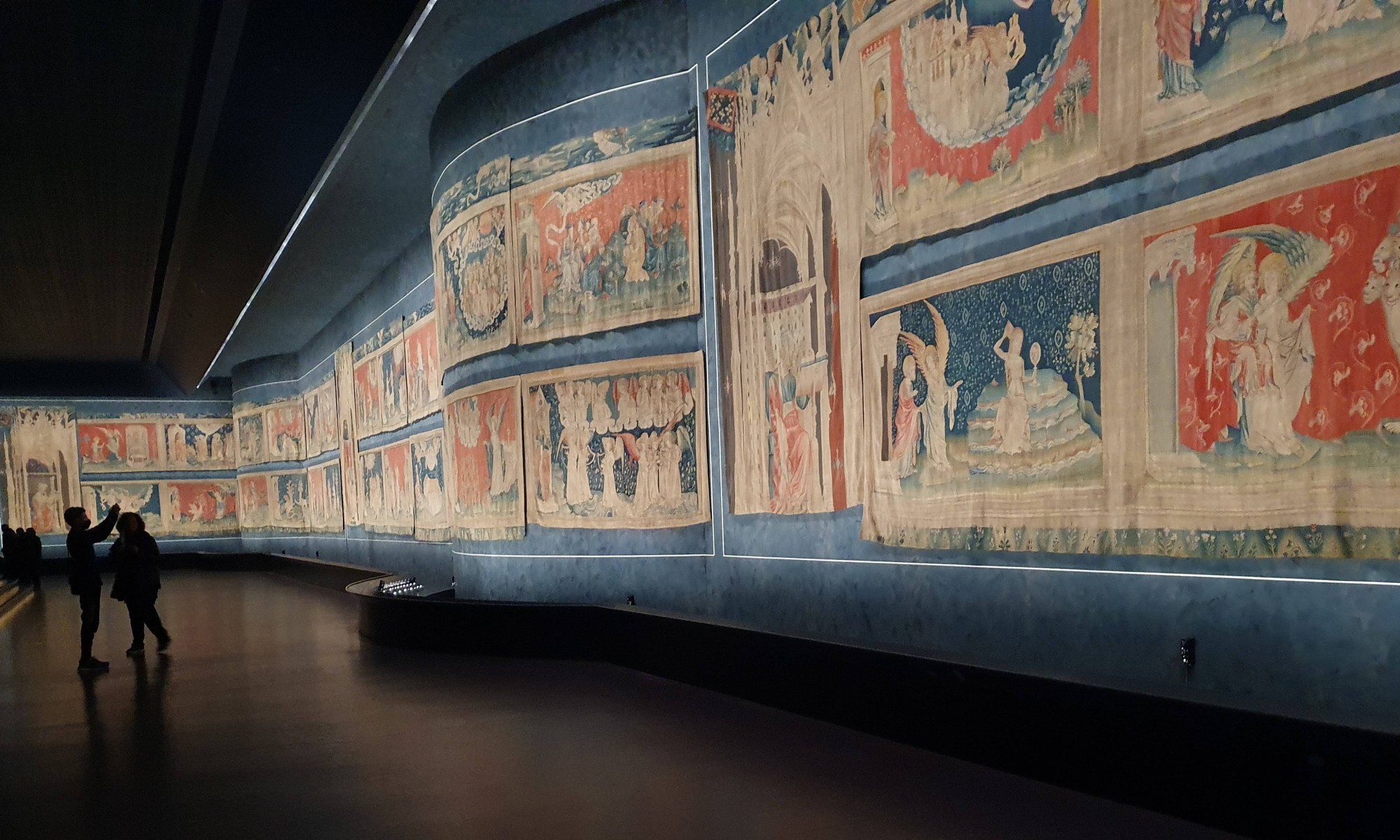
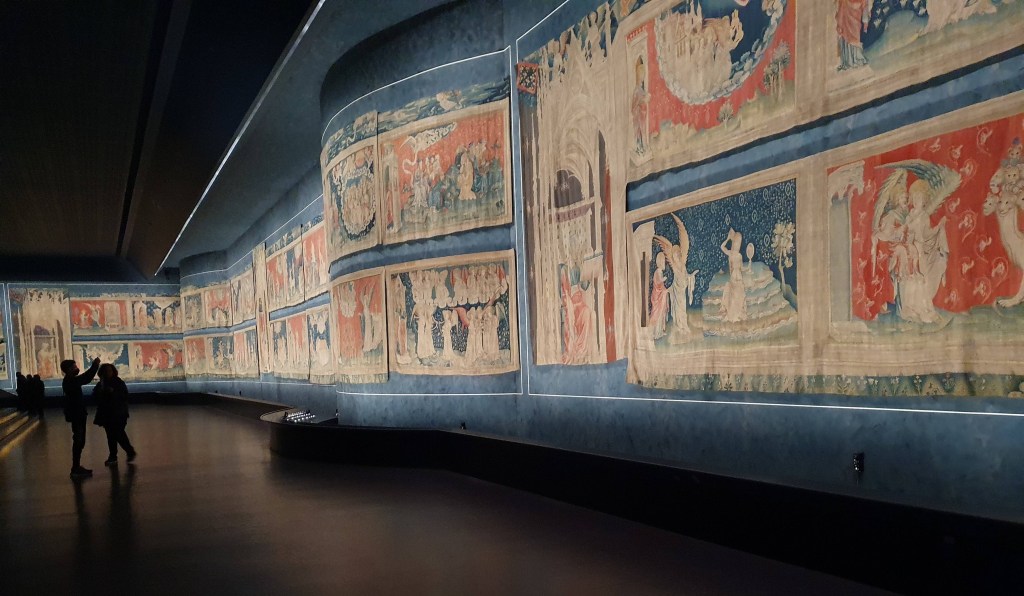
The castle houses the Apocalypse Tapestry, commissioned by the Duke of Anjou in the 14th Century and depicting the Revelation of St John. The tapestry is enormous, it was made in six sections each 6m high and 24m long. It is kept in a specially constructed building within the castle, where it wraps itself round three sides.
I eventually left the castle at closing time and made my way to the hotel I had booked for the night. When I had researched the trip the usual chain hotels in Angers did not have particularly good reviews, so instead I had booked an independent hotel situated in an old building a short walk from the city centre. On the reception desk was a grey-haired old lady, who spoke no English. Checking in required her poring over a large paper ledger to find the room I had been allocated, then filling out by hand various receipts, before giving me a large metal key. When I went to the room, which was quite small, I found the door open, the bed unmade and dirty towels on the floor. So I returned to the reception to complain. I’m not sure if it was my poor French, but the old lady seemed not to believe my description of the state of the room, so she came to inspect it herself. As soon as she saw it she threw her hands into the air and kept repeating “erreur du personnel”. On our return to the reception there was much further poring over the ledger to decide which alternative room to give me. I was pleased to find that this one was clean, but also that it was a much larger and nicer room than the one I had been originally allocated.
That evening I ate in a restaurant near Angers Cathedral. I had a plate of mixed charcuterie to start with, which was a meal in itself, followed by duck, and finally a cheese board to finish, with a bottle of the local Chinon to drink.
Day 10 – Friday 4th March – Angers to Chartres
When I woke it was raining hard and I needed my umbrella for the walk to the station. I caught another TGV, the 09:44 to Paris, again with a top-deck seat. The train was full, but I was only travelling for 40 minutes to the next stop, Le Mans. I had just over an hour to explore Le Mans. As the city centre is a brisk 15 minute walk from the station, I considered catching a tram, but since the rain had stopped I decided to walk instead. There was just time for a quick circuit of the centre before I had to head back to the station.
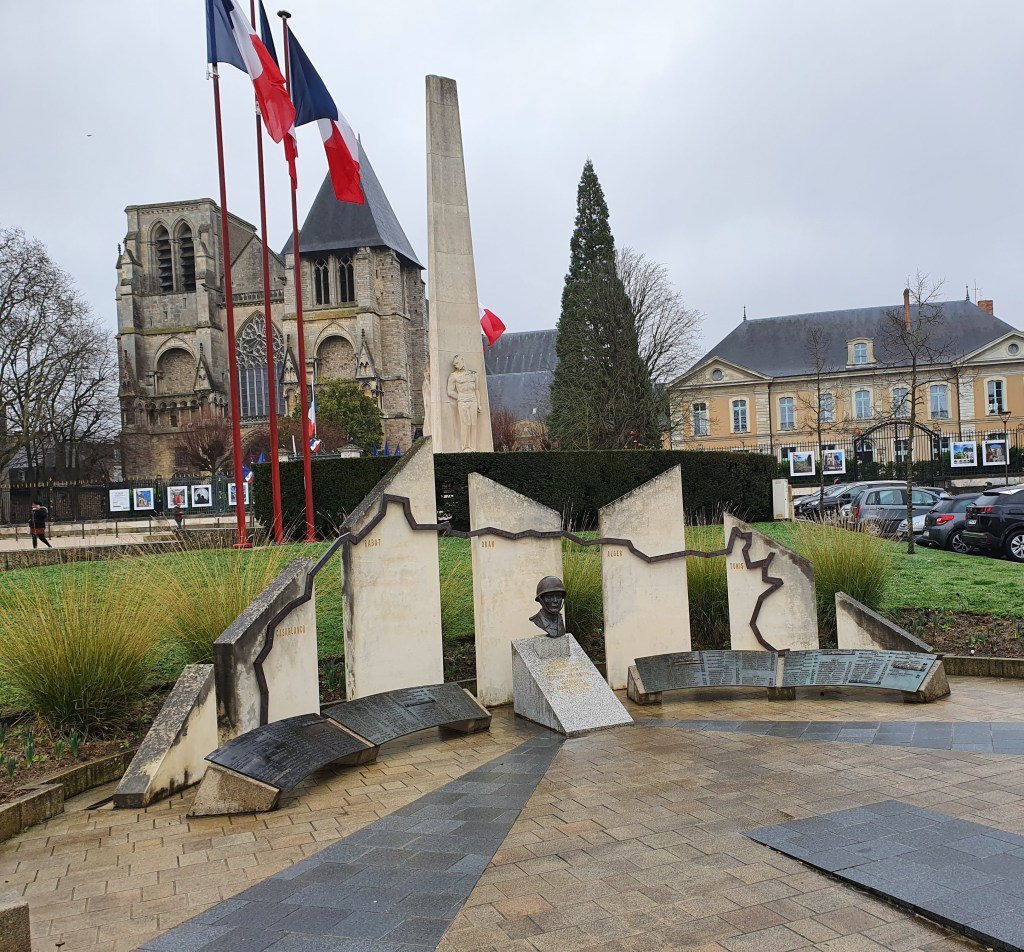
My next train was a local TER double-decker, without reserved seating. I went upstairs and the train was fairly empty for its hour long journey to Chartres. For the first time on a French train I was asked for my ID to be presented along with my ticket. The train arrived in Chartres on time at 12:50, but, as happened previously in Burgos, the doors refused to open for five minutes. On this occasion I was standing next to the two female guards who were changing shift at Chartres, but even they failed in their attempts to open the doors sooner.
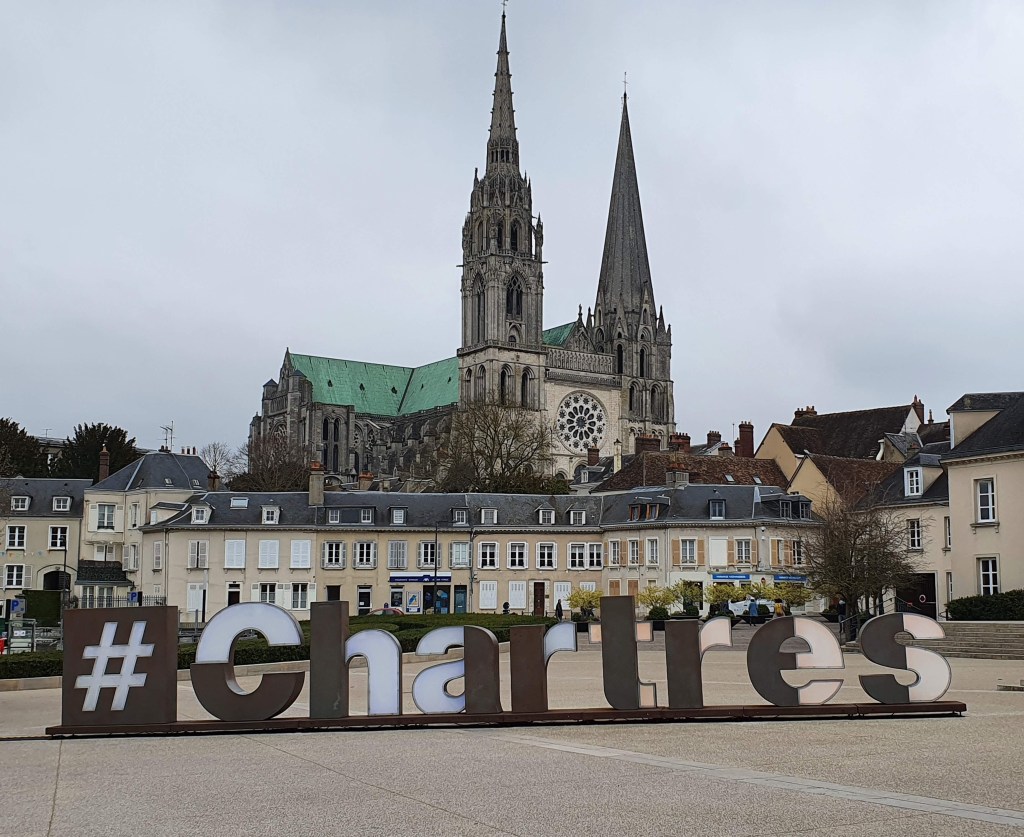
Although it was not raining in Chartres, it was bitterly cold with a stiff breeze. The main reason for coming to Chartres was to visit the cathedral, which I remembered Kenneth Clark enthusing about in the second episode of his 1969 television series Civilisation. There has been a church on the site since at least the 8th Century, but the current Gothic masterpiece dates from the 13th Century, although it has been affected by fires and restoration many times since.
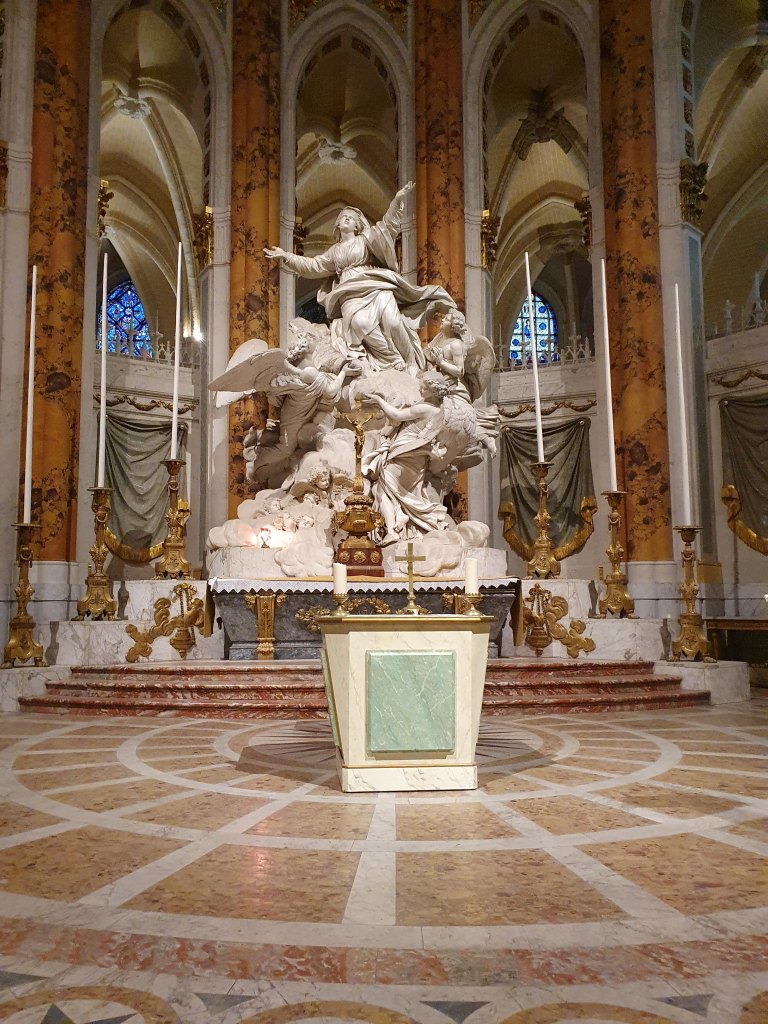
I was pleasantly surprised that there was no charge to enter the cathedral, and it had a distinct off-season feel to it, as even the gift shop and audio guide sales point were closed.
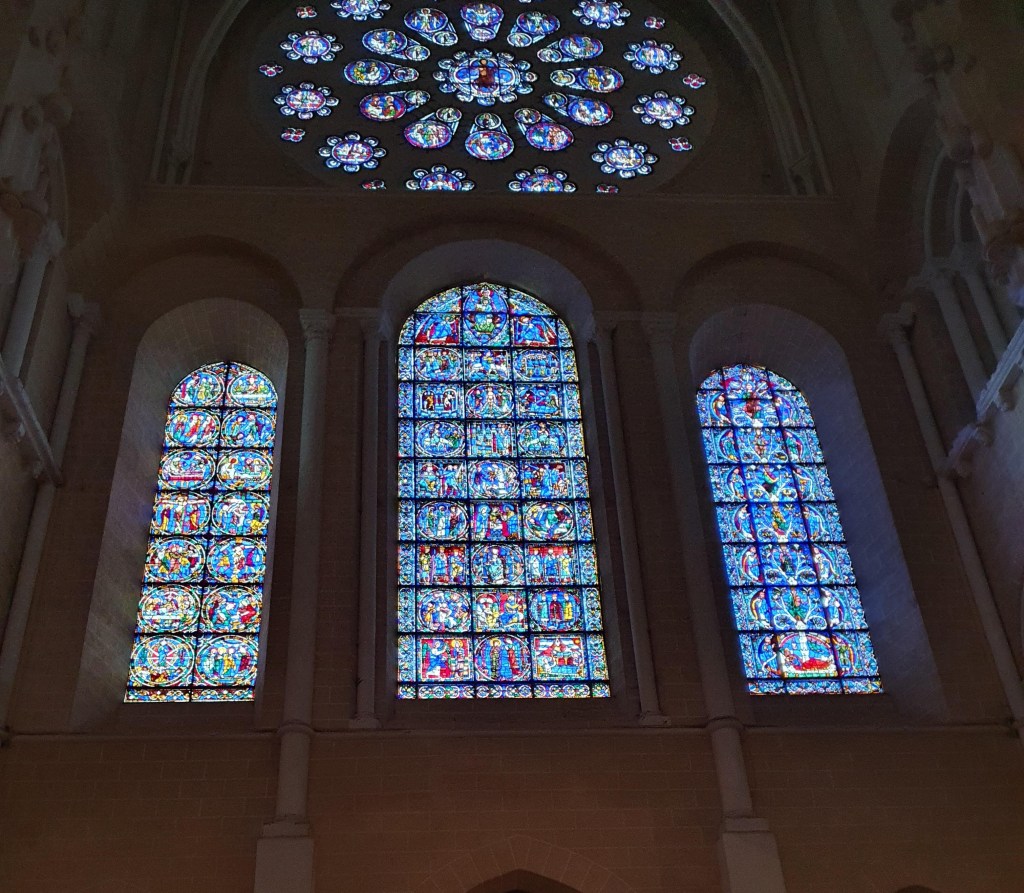
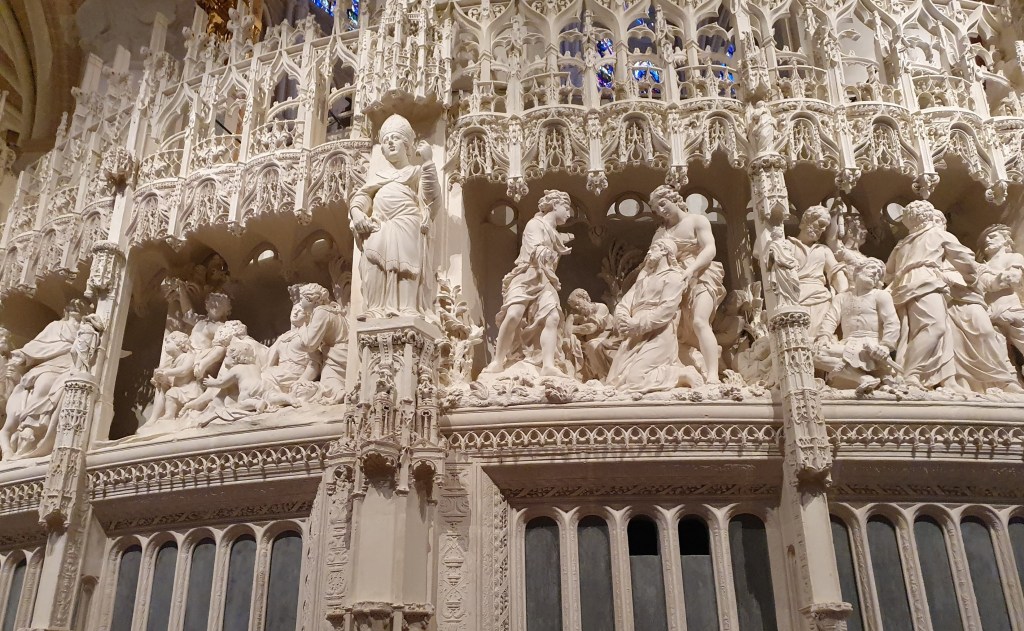
Chartres cathedral is renowned for its stained glass with three large rose windows and for the intricate carving on the choir screen that surrounds the main altar.
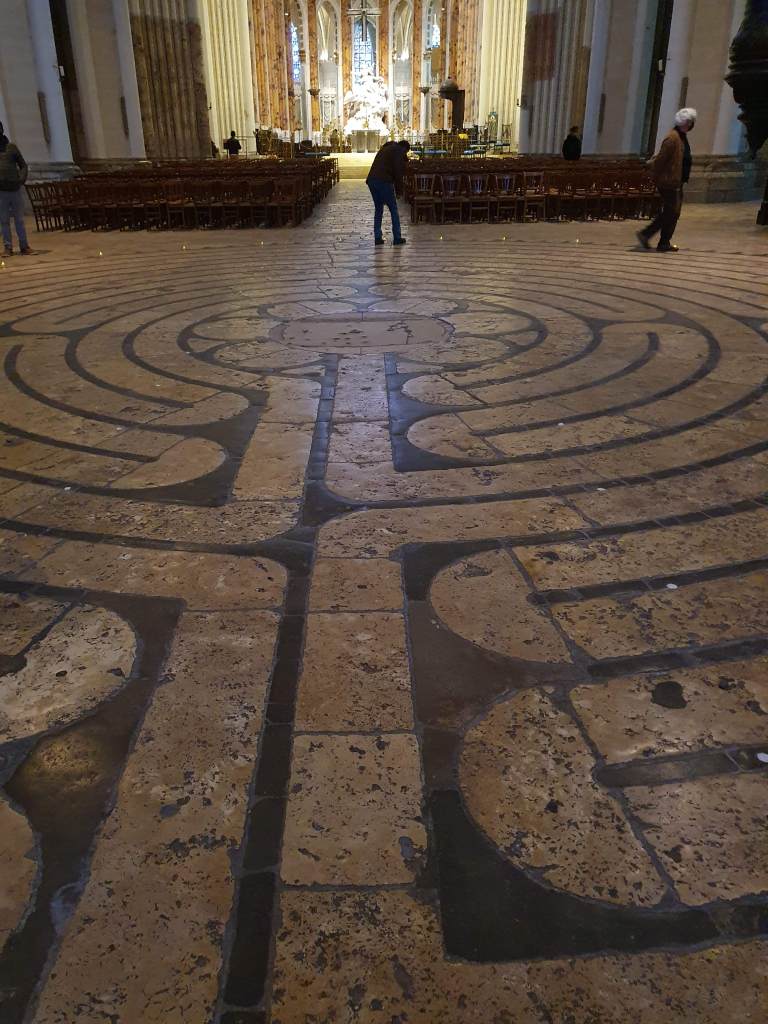
The cathedral also contains a labyrinth marked out on the floor in the centre of the nave of the church. People were reverentially walking its route from the entrance to the centre, some in bare feet. When I joined them, I kept my shoes on and found that it took a surprisingly long time to reach the centre. Once at the centre, you stop to meditate before exiting directly, as there is no specified route out.
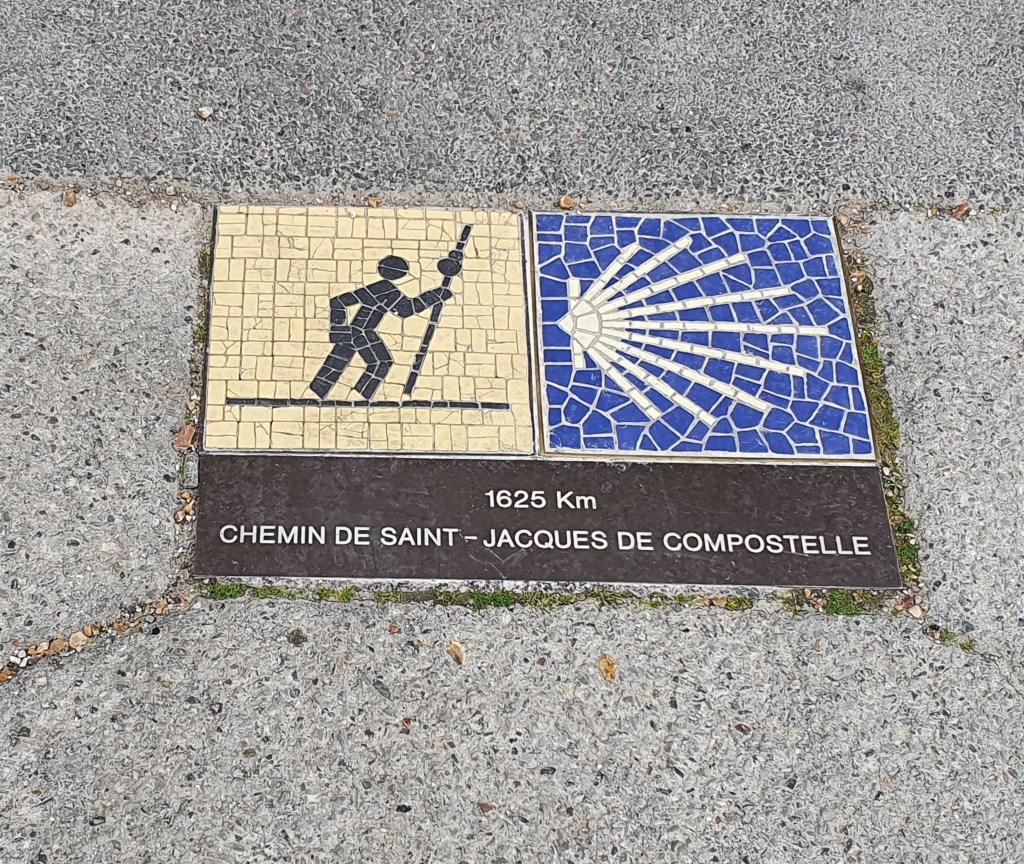
On leaving the cathedral I was intrigued to see a marker in the ground for the Camino de Santiago, informing me that I was 1625km from Santiago de Compostela, where I had been five days earlier.
I next went to the Chartres Art Gallery, housed in the former Archbishop’s Palace. The collection was rather small and disappointing. At the time of my visit there was also a special exhibition about Woolly Mammoth remains that had been found in the area. Having spent some time in the gallery, I went to explore the area around the cathedral. After a while the cold started to get to me, so I went to my hotel and had a cup of tea to warm up.
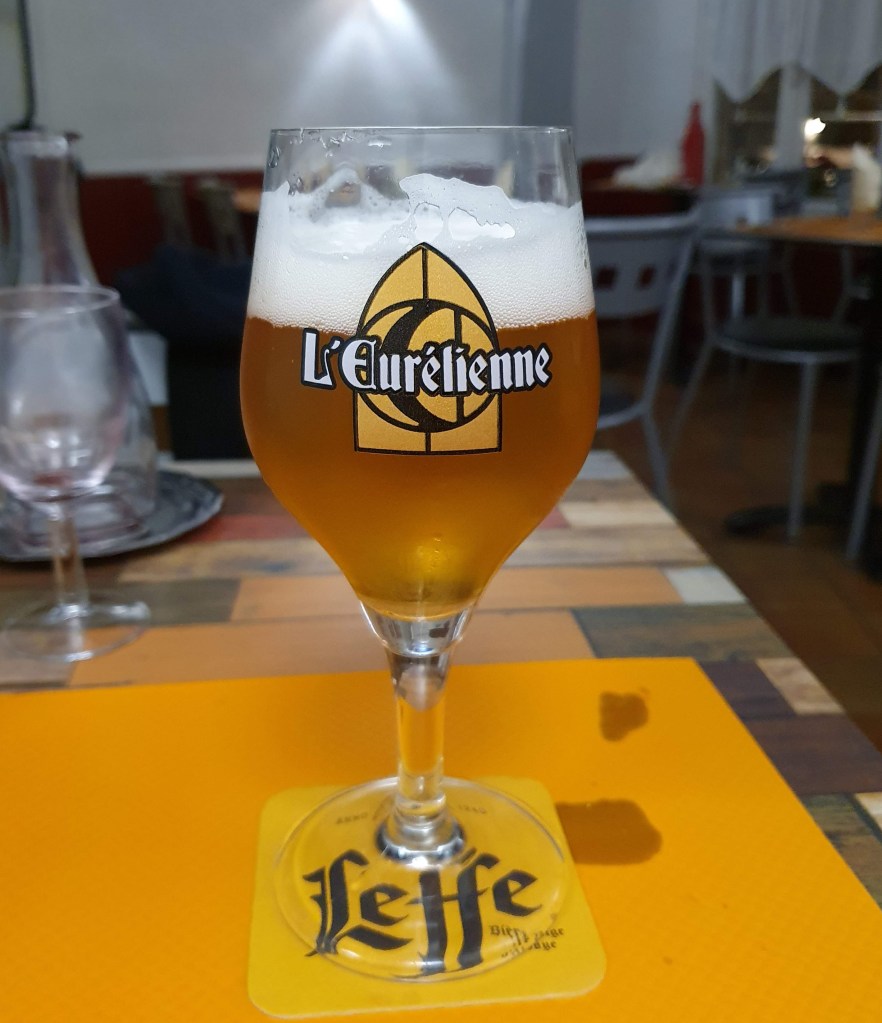
In the evening I ventured out to find my final dinner of the trip. Earlier research on-line had identified one potential establishment, whose website said they did not take reservations. In my wanderings earlier in the afternoon I had found another promising restaurant which had a blackboard outside saying that they would be open on Friday evenings for dinner. I first went to the restaurant I had spotted with the blackboard outside, but when I arrived the blackboard had gone and the place was completely shuttered – it clearly was not going to be open that evening. So I then went to the venue I had found on-line, which its website had said would be open. I was pleased to see when I arrived that the lights were on, the tables were laid and that there were people inside. When I went in and asked for a table, I was told that they were not serving dinner either and was advised that there were open restaurants on the other side of the cathedral. The restaurants near the cathedral were rather too touristy for my taste, so I wandered a little further and found a bar down a side street which had a small restaurant on its first floor. I dined very well there – herring salad to start, pork in mustard sauce for main course, and a berry tart for dessert (though I’m still not sure exactly what sort of berries they were). To drink, I had a carafe of the house red wine. When the waiter asked if I wanted coffee at the end of the meal, I declined but, as it was my final evening, ordered a glass of the local l’Eurélienne beer, which was very good.
Day 11 – Saturday 5th March – Chartres to London
On my walk to the station this morning the cloud was low and the spires of Chartres Cathedral were disappearing into the mist. I was catching the 08:52 train to Paris, which arrived about five minutes late. This train was the continuation of the service from Le Mans that I had caught the day before. But unlike the day before it was nearly full on departure from Chartres and after its first couple of stops it had filled up completely.
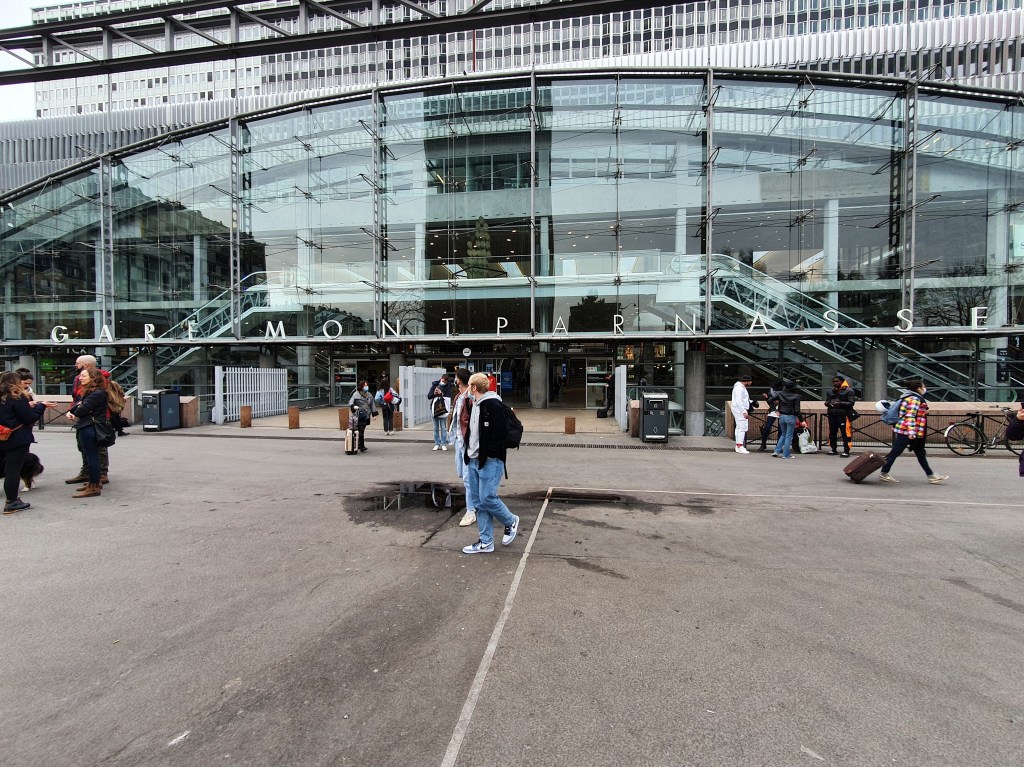
Despite running late for most of its journey, the train arrived on time at 09:54 at Paris Montparnasse. The station was busy and at the entrance to the Metro there was a long queue to buy Metro tickets. However, by looking around I discovered there were additional ticket machines around the corner from the main entrance, where there were no queues.
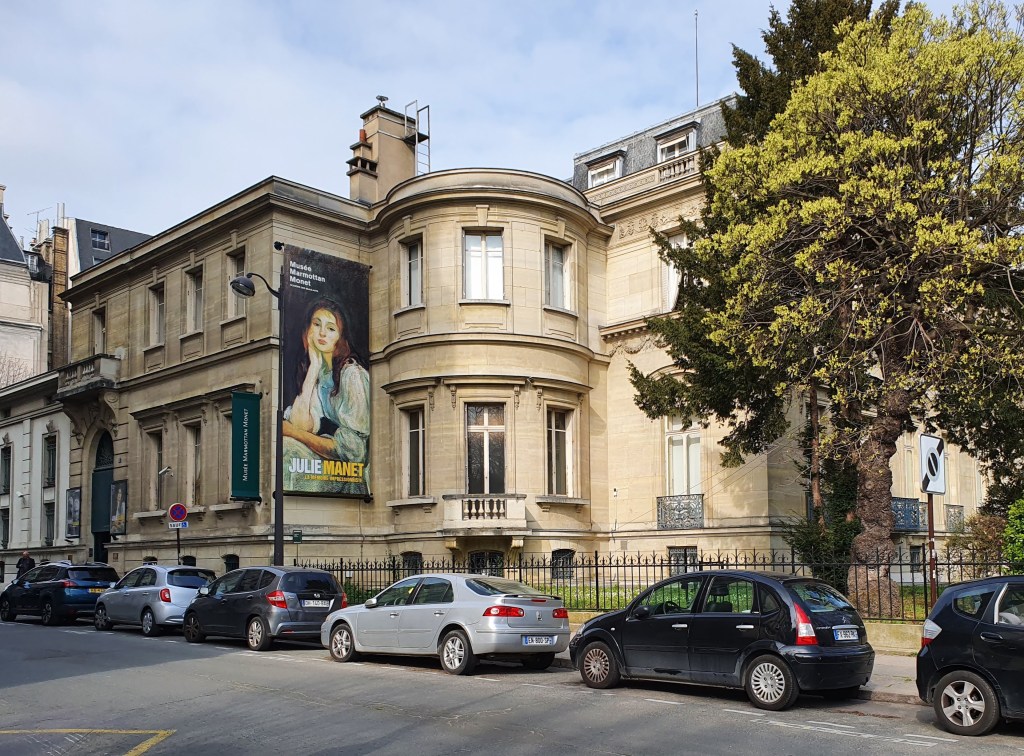
I caught a couple of Metro trains, alighting at La Muette. From there I walked through the Jardin du Ranelagh to get to the Musée Marmottan Monet. This museum originally holding just the personal collection of Jules Marmottan and his son Paul, now has a large selection of impressionist works, including those by Monet, Renoir and Morisot. Among the paintings by Monet is his depiction of Le Havre harbour, Impression, Sunrise, from which Impressionism gets its name.
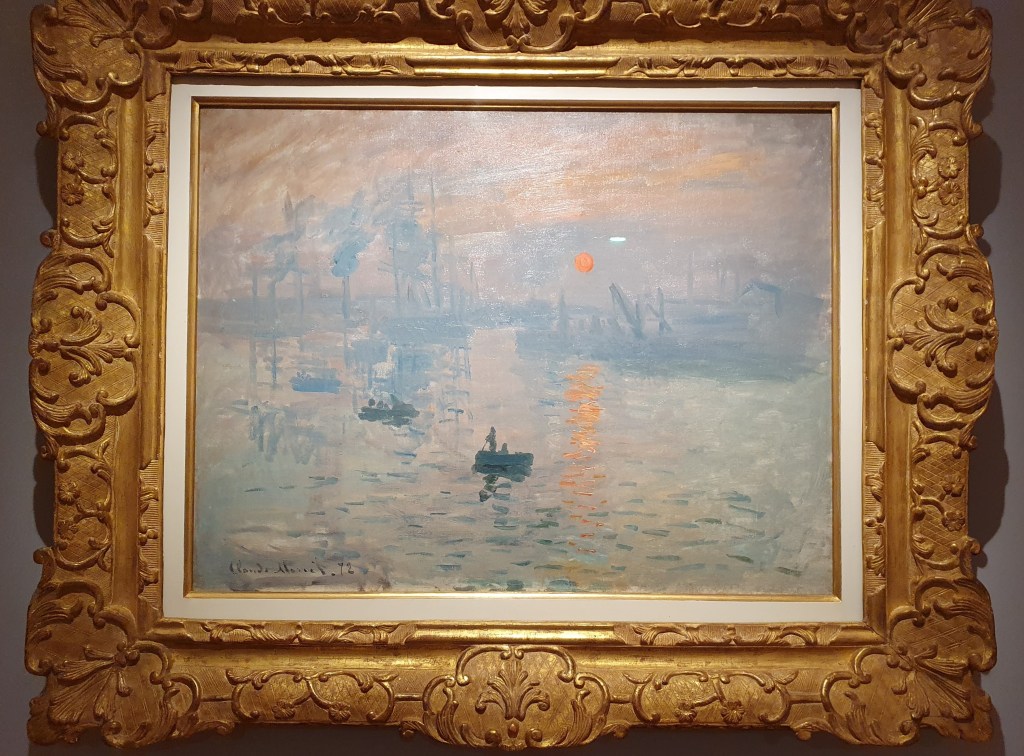
After a couple of hours in the museum, I left and sat for a while eating a snack in the gardens nearby – the weather in Paris being much improved on that in Chartres. I caught a couple of Metro trains to Gare du Nord. There was time to go to a nearby supermarket to buy a few things to bring home. The pavement bars opposite the Gare du Nord were all packed on a Saturday afternoon, so I just went and checked in for my 16:10 departure to London. The train left on time and going through the largely featureless landscape of northern France it looked like a beautiful sunny early spring afternoon. However, once through the Channel Tunnel, the weather in Kent reverted back to the murky conditions I had experienced in Chartres. The train arrived on time at St Pancras at 1730, but I could not catch a tube all the way home because of weekend engineering works, so my final leg of the journey from Lisbon was on the same bus route I had used eleven days previously on my way to Stansted airport.
It had been a very successful and enjoyable journey. Even though it had been booked only a couple of weeks before departure the transport costs were very reasonable – an £8.99 flight from London to Lisbon and under £120 for a dozen trains to get me from Lisbon to Paris (helped by my Spanish and French over 60s railcards). Once I was home my thoughts soon turned to planning my next adventure.
 Europe Explored