
“Oh salty sea, how much of your salt Is tears from Portugal?” – Fernando Pessoa
After I had completed my two successful trips last Autumn (to Normandy and Granada), I started thinking about where to go next. At that time Covid cases were in decline across Europe with restrictions being relaxed, and I was due my booster dose, which was predicted to give a high degree of protection against infection. As we now know, in early December the Omicron wave hit Europe, with the UK in the forefront. Quickly, even more stringent controls were introduced – with, for example, France banning all travel from the UK except for a limited number of essential reasons.
At the beginning of 2022, the late February departure I had pencilled in was looking an impossibility. However, around the beginning of February, there were signs that all three countries I was hoping to visit were considering relaxing the draconian rules they had introduced in response to the Omicron variant, so I tentatively resurrected my plans. Departing in February meant I wanted to go somewhere which would not be too cold – so I chose to make a rail trip from London to Lisbon or vice-versa. I originally envisaged going from London to Lisbon and then returning quickly, but a combination of the Covid testing rules in Portugal and France, and the timing of some of the infrequent trains I wanted to catch, meant that a Lisbon to London trip was actually more practical.
Even at the beginning of February, when 10% of the population of Portugal was infected with Covid, I did not believe that my trip would be possible. Exactly three weeks before my proposed departure date I saw that I could get a flight to Lisbon at the time and day I wanted for just £8.99 – so I bought it on the basis that it would be no great loss if in the end I couldn’t use it. (I don’t understand budget airlines’ pricing model, as the cost of my ticket was £4.01 less than the Air Passenger Duty all airlines have to pay on flights to Europe from the UK. I assume that they think they will make money from add-on charges for bags and other services they sell or from the return trip. As I just took a small rucksack, which would fit under the seat, they didn’t get any extra revenue from me that way, but in the end I did pay £4 to choose the seat I wanted, but the total price was still 1p less that the departure tax they would have to pay.)
After encouraging noises from the Portuguese, Spanish and French governments, and the number of Covid cases in those countries starting to decline, I booked the necessary train travel a couple of weeks before departure, taking advantage of advance fares, and also using the 60+ discount cards I had previously bought for train travel in Spain and in France.
Day 1 – Wednesday 23rd February 2022 – London to Lisbon
The flight I had booked was due to depart from Stansted Airport at 0915, so I used the route to the airport that I used to use for my short City Visits in pre-Covid times, namely a couple of buses to pick up the Stansted Express from Tottenham Hale. Since Covid struck, the frequency of the Stansted Express has been reduced from quarter-hourly to half-hourly, which is not helpful in allowing contingency for cancellations or delays. (In addition, the cheapest advance ticket I could get for the Stansted Express was considerably more than the cost of my flight to Lisbon.) I had an initial scare when the first bus I caught was running late, but thankfully so was the connecting bus, so I caught the train I intended.
I arrived at the airport at 0730 – going through security was quick, so I had time to purchase some breakfast. The main departure waiting area was very crowded – so I made an educated guess about where my plane was likely to depart from and went there, which was much quieter to eat my breakfast. My research had been correct and after a short while the departure gate was confirmed on the airport screens. Boarding started soon after that, which was quick and easy – the departure gate staff did not wish to check any Covid documentation as they had for my journeys in November. My flight was with Lauda Air an airline that I had not used before. When I checked a couple of hours before departure, it appeared that nearly every seat on the flight had been sold, but while it was quite full there must have been a number of no shows, as there were spare seats dotted around the plane. It enabled the person originally sitting next to me to move to the unoccupied seat next to him, giving us both more room.
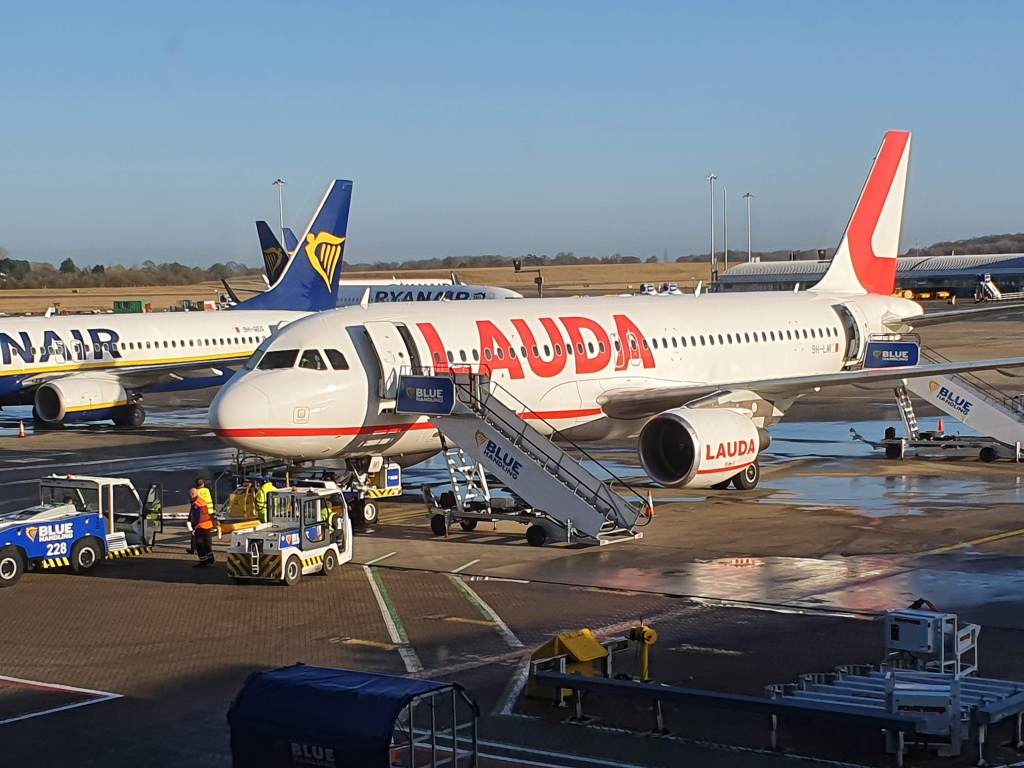
The flight left on time and arrived at Lisbon Airport on time at 1205, after doing a sweep over the sea to the south of the city giving good views of Lisbon as we approached. On landing, the plane taxied to a far-flung part of the airport, where three buses were brought to take the passengers to the terminal. I think it was the longest bus ride I have ever been on from a plane to the terminal, seeming to go all the way round the perimeter of the airport. On being discharged into the terminal building, I was initially confronted with a long snaking queue for passport control. However, I noticed that this start of this queue was signed ‘All Passports’, so I walked a little further and saw a much shorter queue for ‘EU Passports’. As I was travelling on an EU passport, not a British one, I joined this shorter queue. The problem was that there were only a couple of desks serving this queue, which also doubled as the the ones serving priority and air crew arrivals (who took precedence), so it moved rather slowly. When I was just a couple of places from the front, I noticed that even further on there were some e-gates, which the odd passenger appeared to be using (I didn’t recall seeing these signed when I arrived). I contemplated ducking out of the queue I was in to see if I could use them, but decided not to as my queue had grown in length since I joined it. Unfortunately, the two desks I was waiting to become free now had problematic cases which took them a long time to process. When I eventually reached the front I was let through quickly with just a cursory passport check, and no request to see either my vaccination certificate or passenger locator form, which I was supposed to show.
When I got into the main arrivals hall I bought a 24-hour Lisboa Card, which gives free use of all public transport in the city and free or discounted admission to a number of attractions. (When I did the sums on leaving the city, I calculated that I probably was a Euro or so short on the deal, but it was worth it for the convenience of not having to buy separate tickets every time I wanted to use public transport.)
From the airport I caught a couple of metro trains to Cais do Sodré station, where I transferred to the suburban rail line (also covered by my Lisboa Card) which runs along the Tagus estuary.
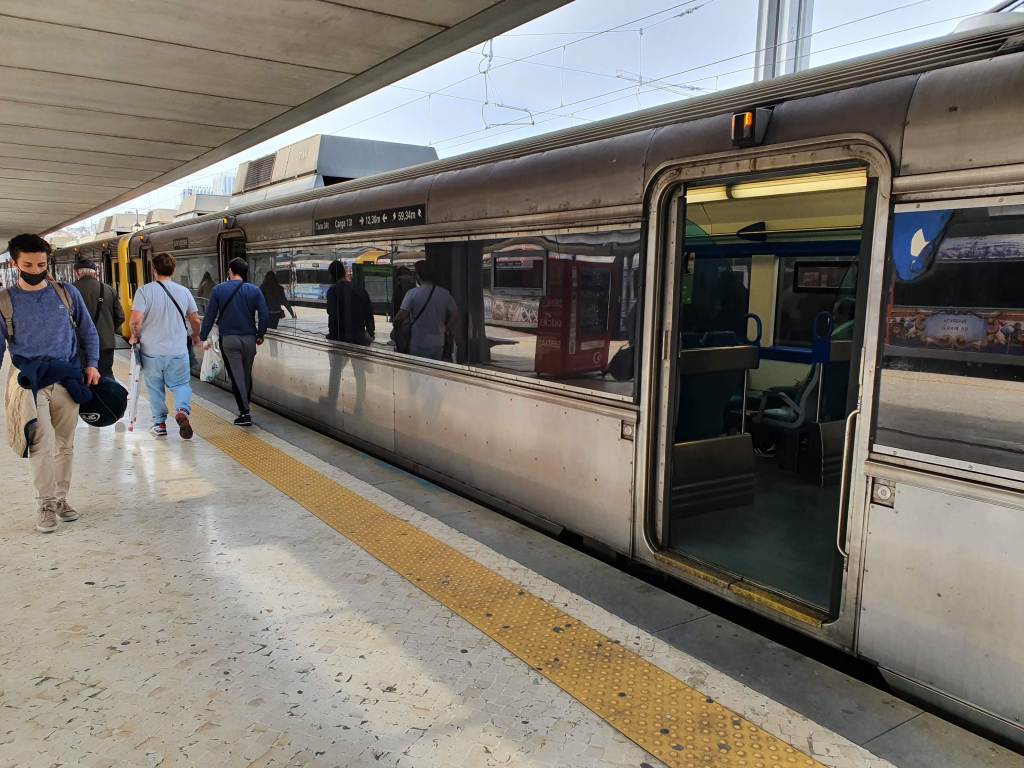
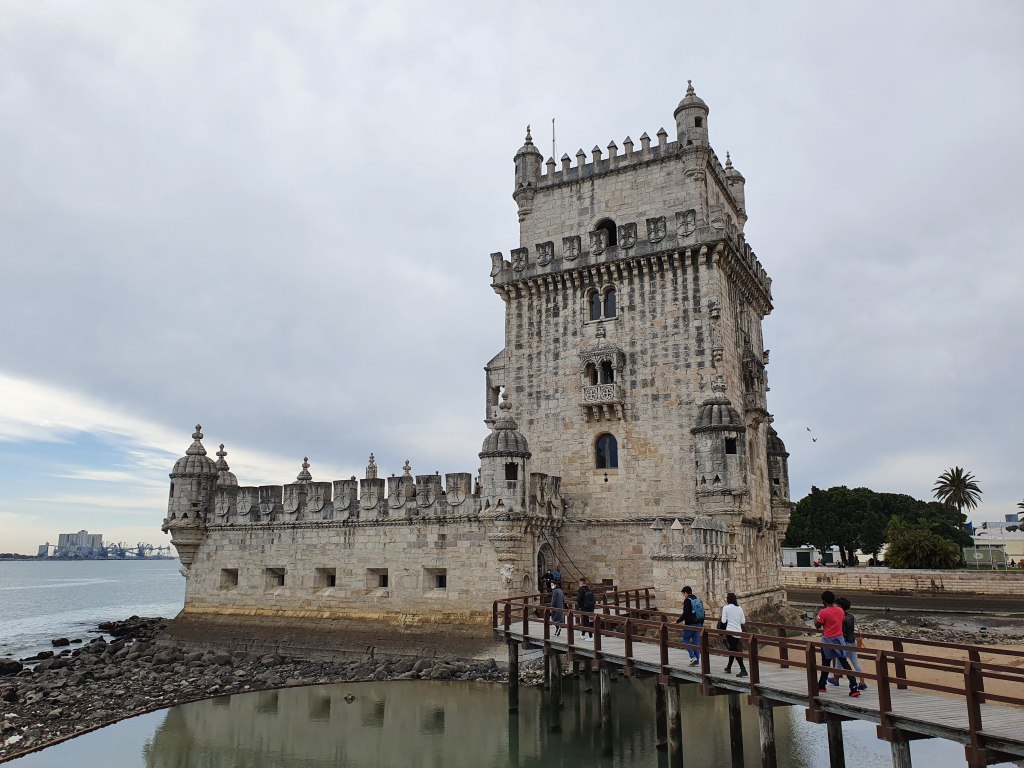
From Cais do Sodré I travelled three stops to Belem. I then wandered along the sea-front to view the Padrão dos Descobrimentos (Monument to the Navigators) and the Belem Tower.
Across the busy road from the estuary is the Jerónimos Monastery. Part of the monastery is now occupied by the maritime and archaeological museums, which I decided that, sadly, I would not have time to visit, so I just went to the main part of the monastery adjoining the church of Santa Maria. (I remembered being impressed by the monastery on one of my two previous visits to Lisbon in 1985 and 1986.) There are cloisters round a courtyard lined with traditional tiles, which reminded me a bit of the Alhambra in Granada, although the style of the decoration is very different.
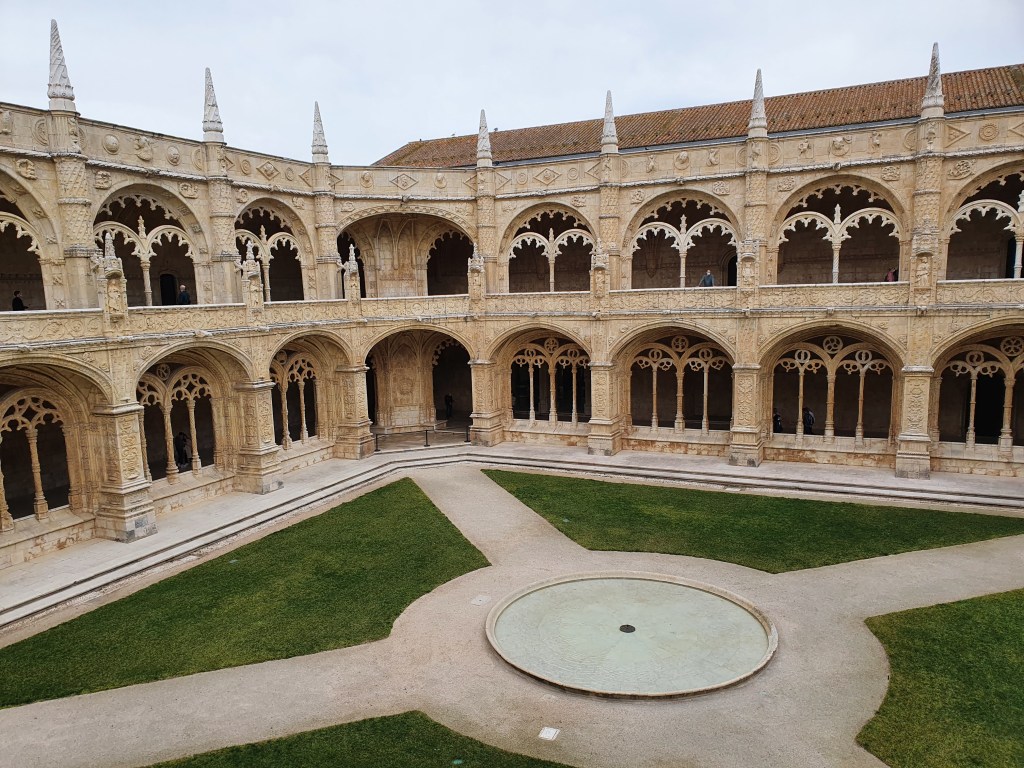
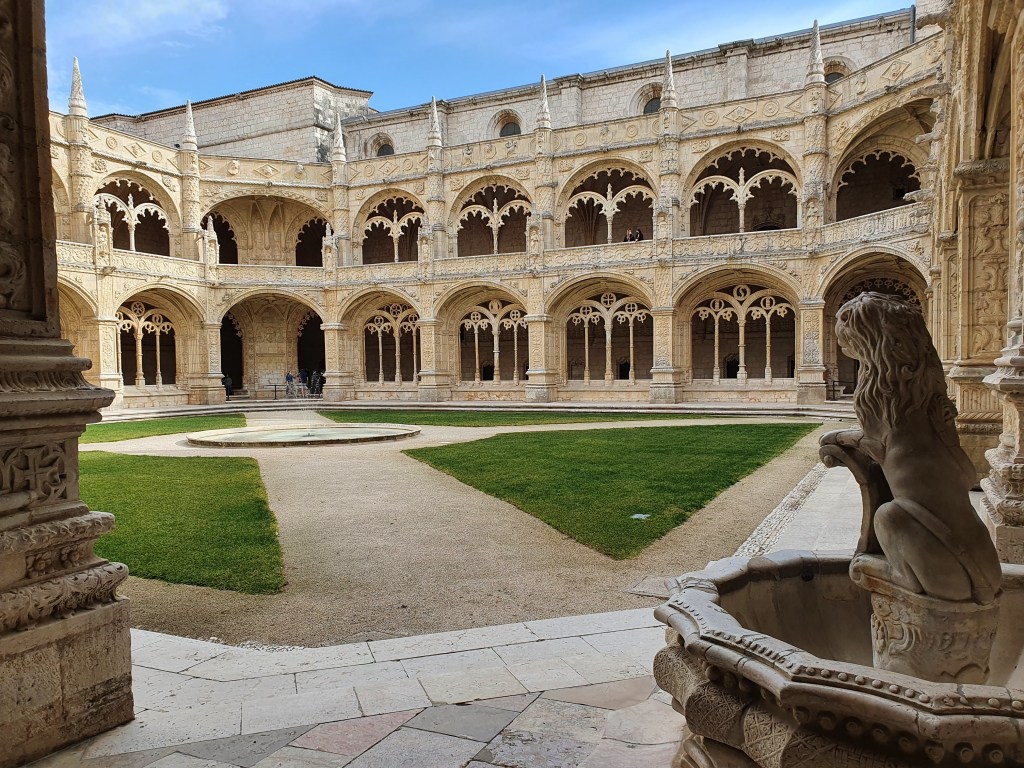
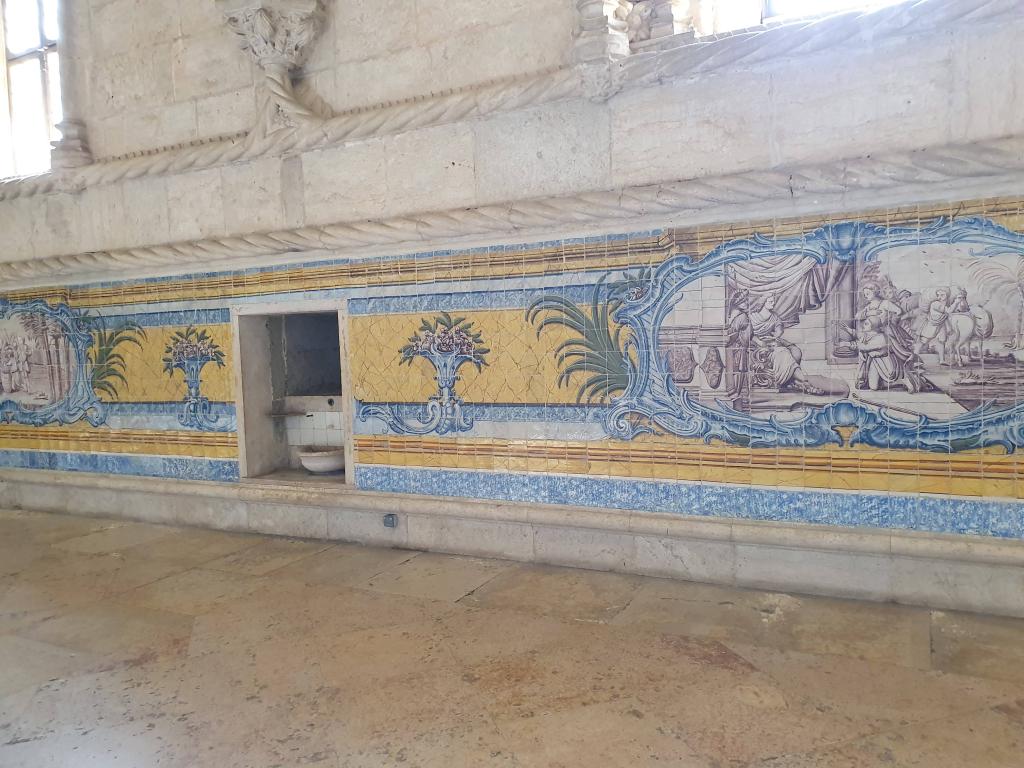
From Belem I then decided to go to the Gulbenkian Art Museum to the north of the city. Rather than catch a train back to the city centre, Google Maps suggested it would be quicker to cut the corner by catching a couple of buses. When I changed from my first bus, the second bus Google was suggesting I catch from the same stop did not seem to exist. Some hasty replanning let me identify an alternative bus which would do just as well. The Gulbenkian Museum contains the personal art collection of Calouste Gulbenkian. Originally an Armenian Turk, he emigrated first to London and then Paris, but on the outbreak of the second world war he relocated to Lisbon, where he stayed until his death in 1955. The museum contains an interesting collection from a variety of periods, but was somewhat smaller than I was anticipating, partly due to a couple of galleries (containing 18th Century French art) being closed for renovation.
Once I had finished in the Gulbenkian I caught the metro for a couple of stops to my hotel in the business district of the city. After I had freshened up I ventured out to find dinner, I walked for about 20 minutes to an area where there were lots of restaurants with good reviews located in little side streets. I secured a table in a small establishment, where the proprietor was the sole server and his wife did the cooking in an area at the back of the restaurant close to my table. I had grilled salmon with half a bottle of the local white wine, followed by chocolate cake for dessert.
I walked slowly back to my hotel admiring the Lisbon night-life, including the ornate Rossio station, which is these days only served by local trains.
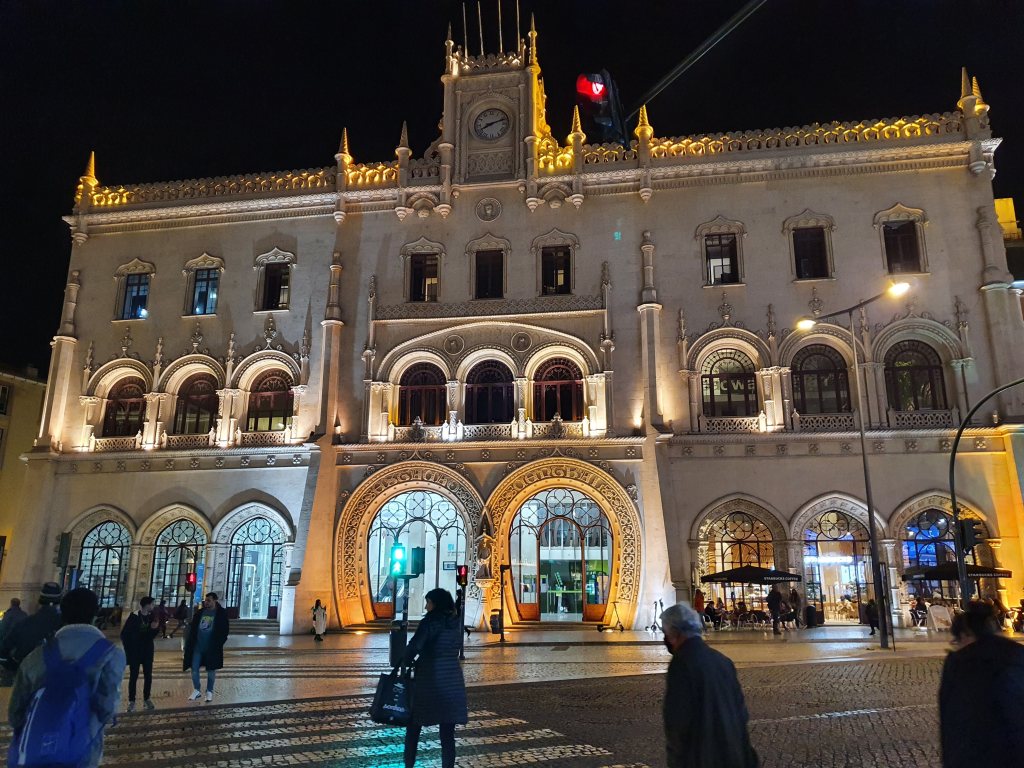
Day 2 – Thursday 24th February 2022 – Lisbon to Porto
I awoke to the shocking news of the Russian invasion of Ukraine – just as Europe seemed to be slowly emerging from the worst of Covid, there was now an even more devastating development to worry about.
I walked from my hotel to the Castelo São Jorge, the castle which overlooks Lisbon perched on top of one of its many hills. This impressive castle, which dates from pre-Roman times, has a double set of walls forming an outer and inner keep. It provides a good view over the city and the River Tagus. There is a small museum within the castle with various artefacts and descriptions of its history. Peacocks wandered about the grounds showing off their colourful plumage.
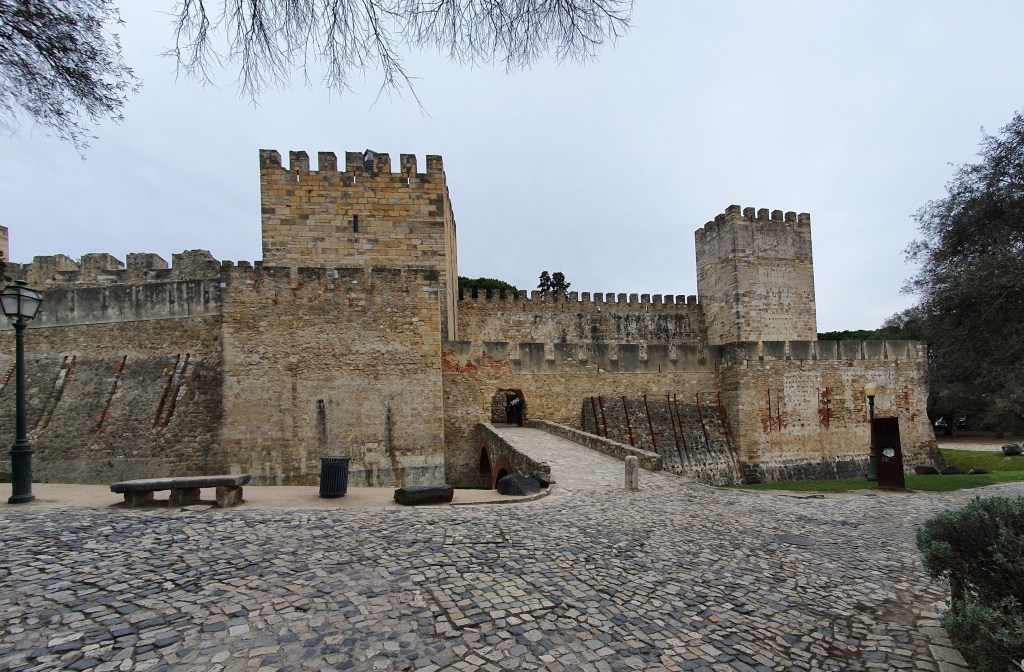
By chance, I was in the area of the archaeological remains when I was offered a free guided tour, allowing me to access parts that you cannot enter by yourself. This area was only discovered recently when they started excavating with the intention of building a car park. Among the discoveries was the mosaic of a Roman floor and the remains of a Moorish palace, which existed before Lisbon was conquered by the Christian king of Portugal in 1147. It is thought that this area was completely destroyed in the Lisbon earthquake of 1755.
My exploration of the castle took most of the morning, after which I just had time for a final walk through Lisbon ending up at the Praça do Comércio, the large plaza adjoining the harbour front.
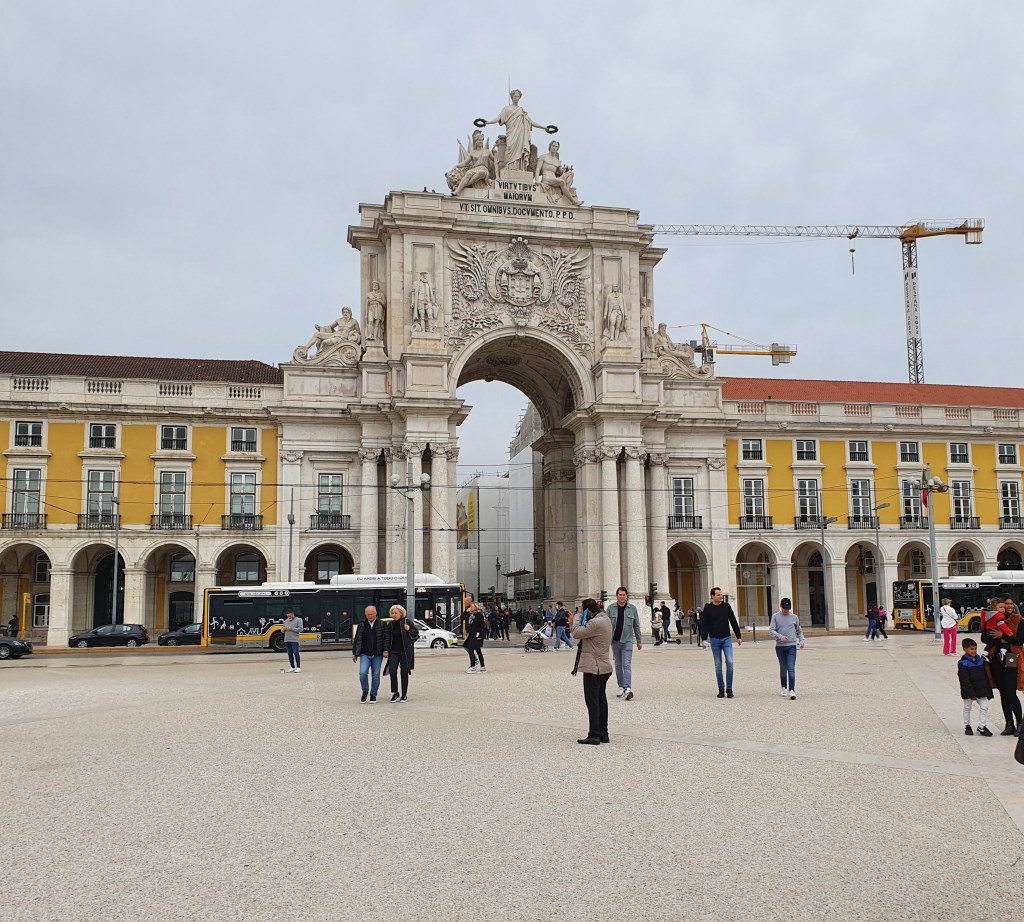
After a visit to a nearby post office to buy stamps for my postcards, I tried to catch a metro but I discovered that my 24-hour Lisboa card had just expired, so since I had time, I decided to walk to Santa Apolónia station to catch my train to leave Lisbon.
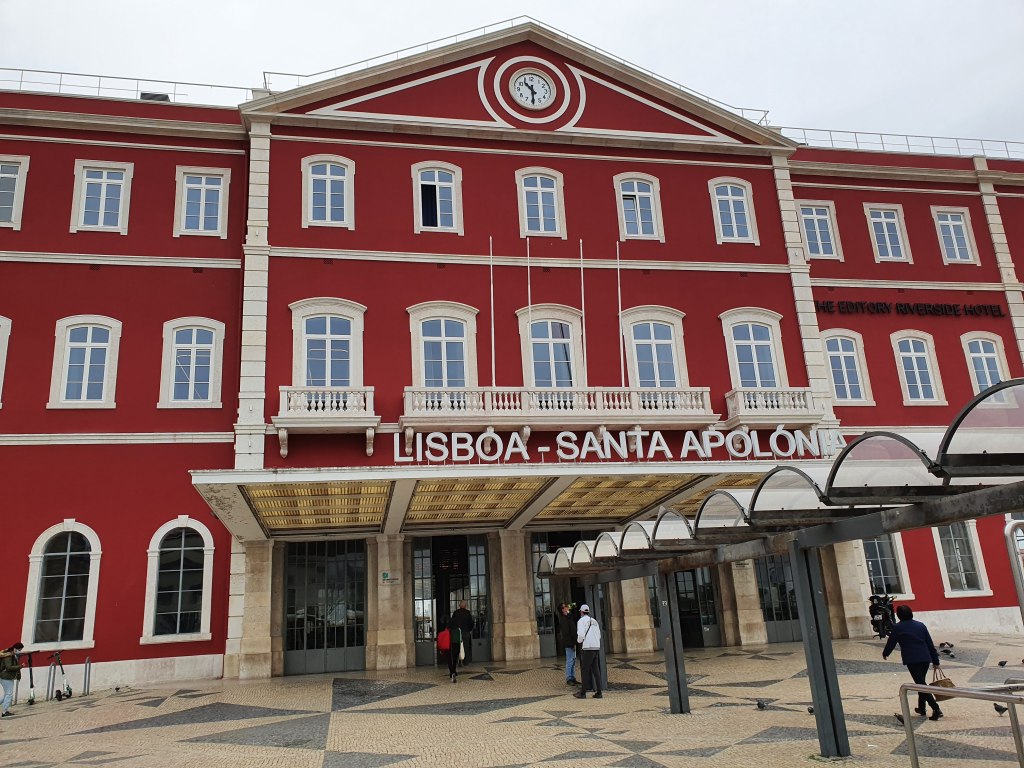
My train was waiting when I arrived at the station for the three hour journey to Porto, although I had to wait a little while until they had finished cleaning it before they would let passengers board. It left promptly at 1400, and although it was fairly empty on departure it completely filled up at the first stop, Lisbon Oriente, the Lisbon station which is the main interchange for the metro network. A man came and sat in the seat next to me and promptly fell asleep and started snoring – when he started sprawling beyond his seat, I had to give him a gentle nudge to protect my own personal space. He eventually got off at Aveiro, leaving me in peace for the final 50 minutes of the journey to Porto.
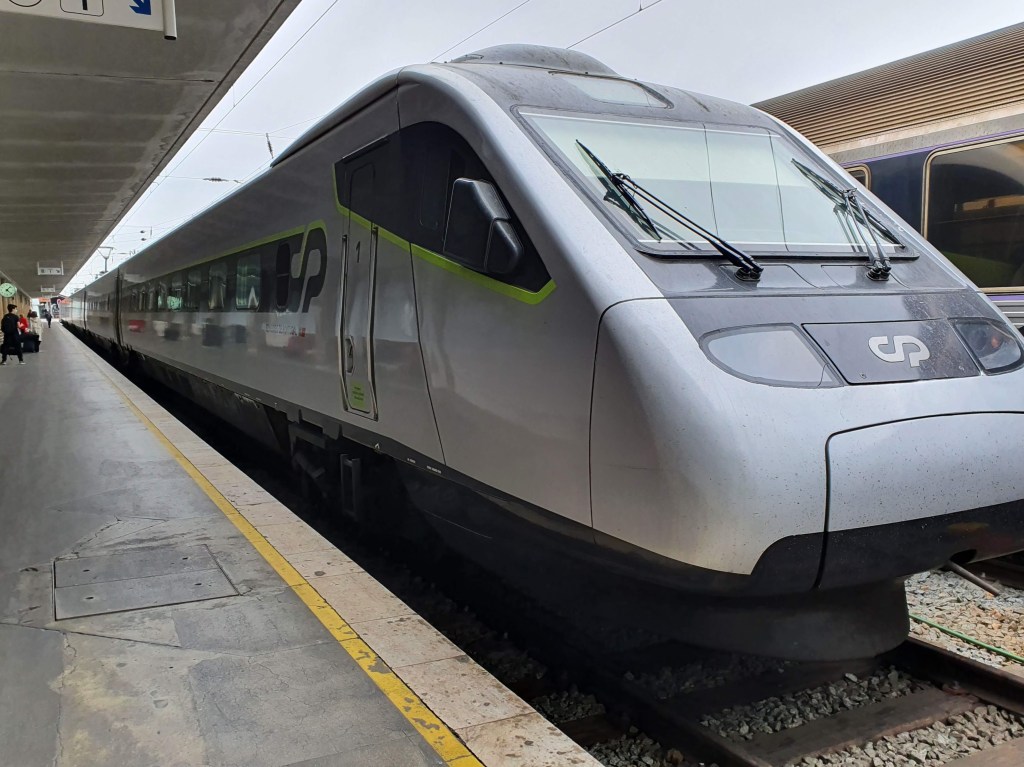
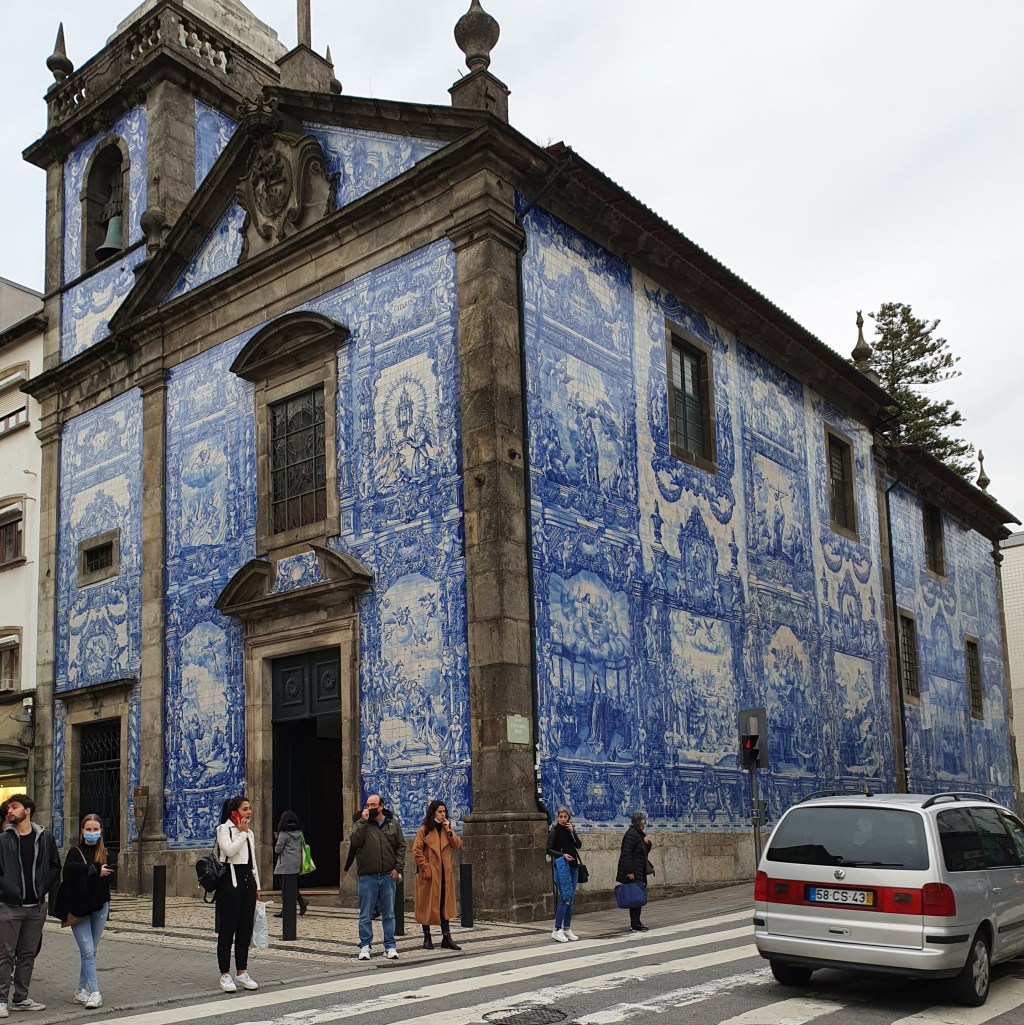
The train arrived at Porto Campanhã station on time at 1700. Campanhã is a little way from the centre of the city, so I caught a metro to take me to my hotel near the Bolhão market. Opposite the exit on leaving the metro was the amazing blue-tiled Capela des Almas, from which it was a short walk to my hotel.
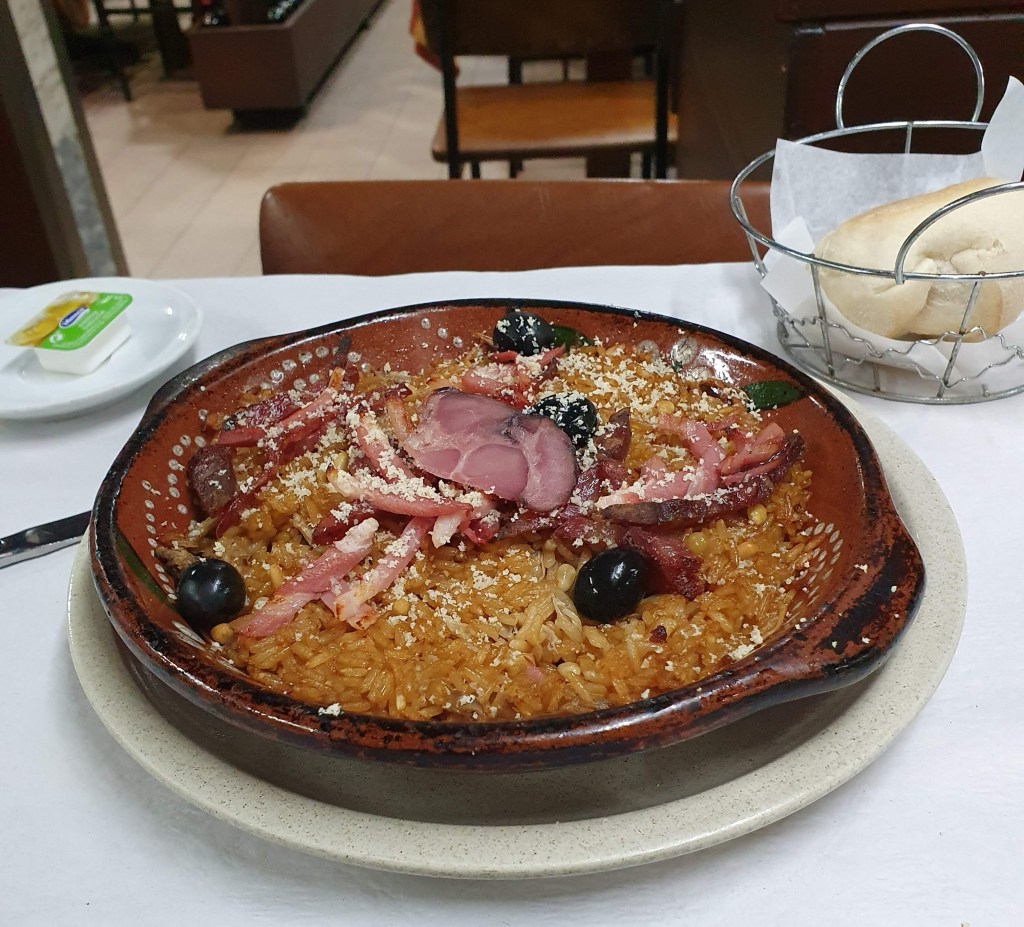
My research had suggested there was a good restaurant one block from my hotel, which had good food, generous portions, unpretentious attentive service and cheap prices. I secured a table there, where I had vegetable soup, followed by Arroz de Pato (a traditional north Portuguese dish of rice with duck and bacon), and almond tart for dessert.
Day 3 – Friday 25th February 2022 – Porto
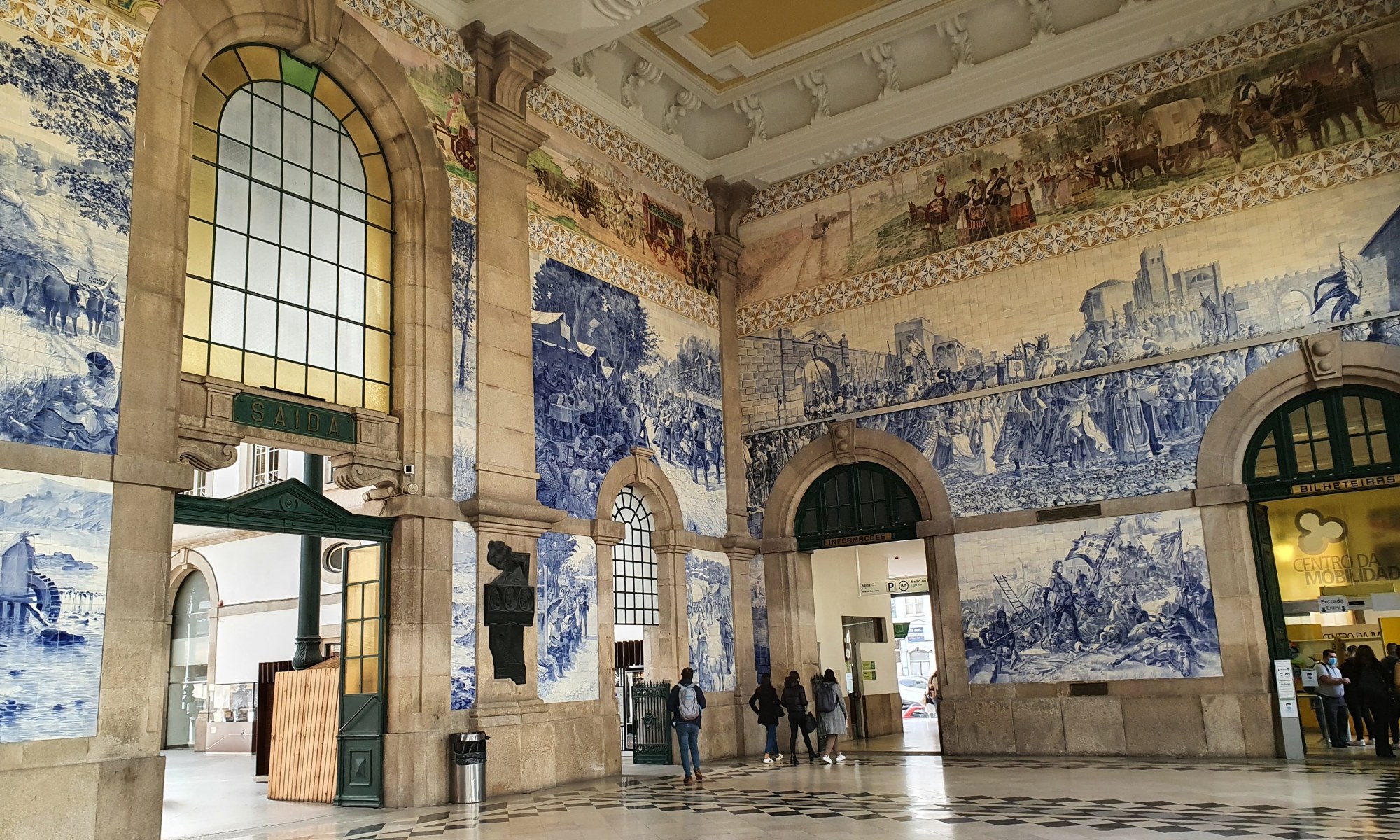
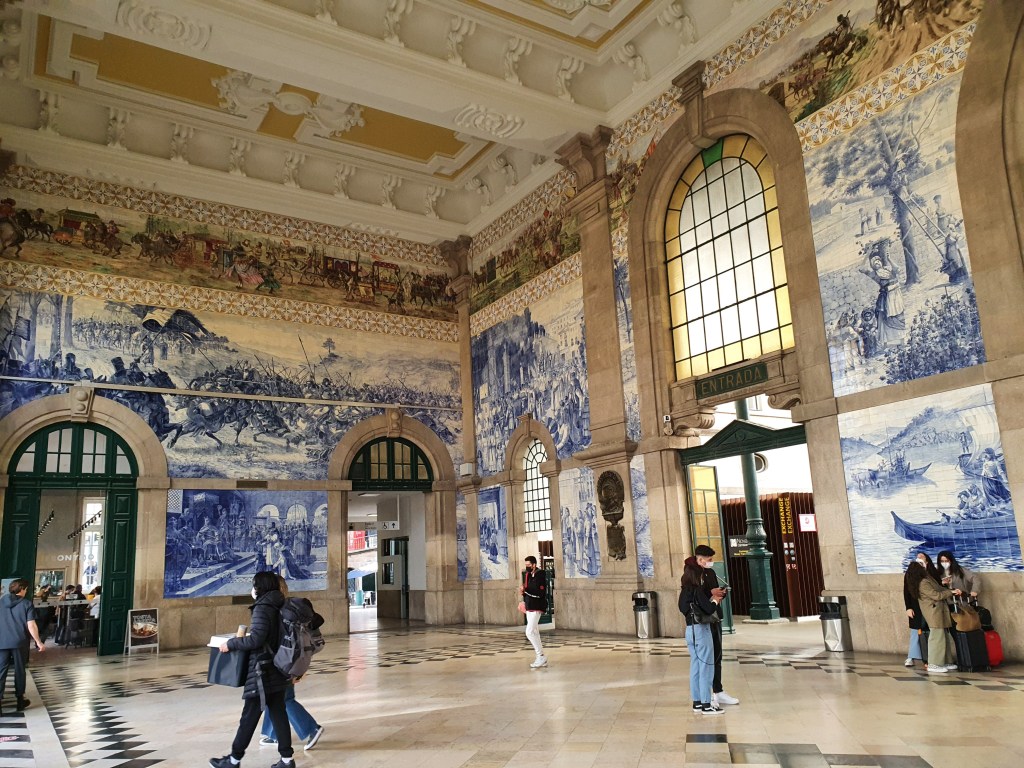
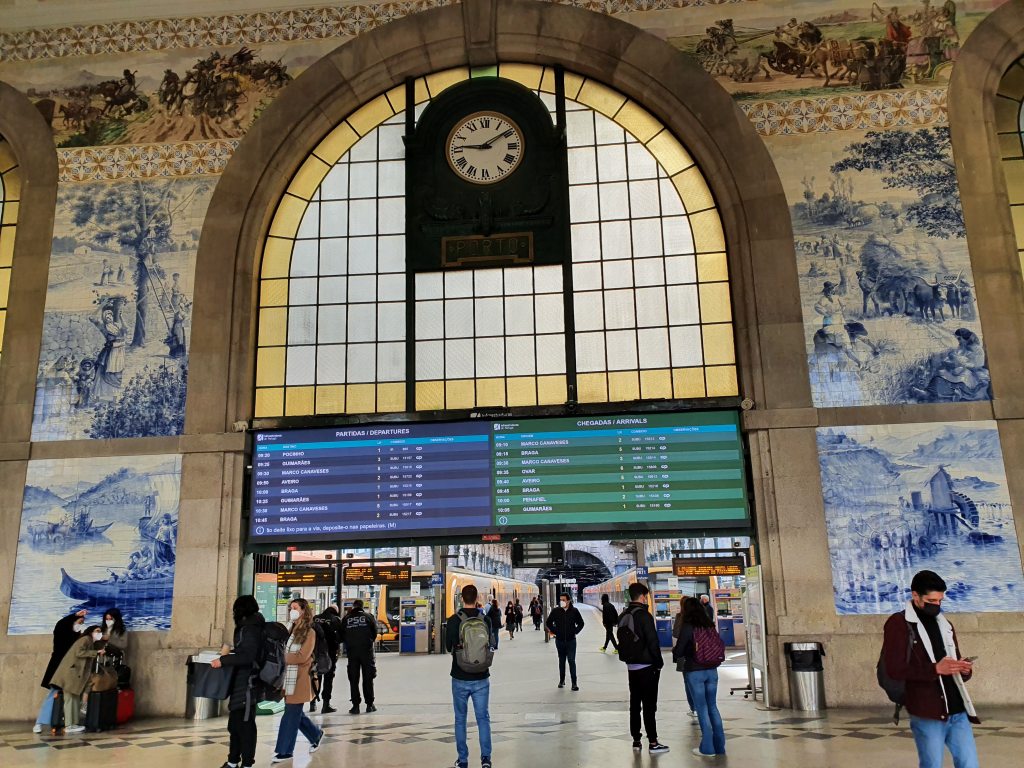
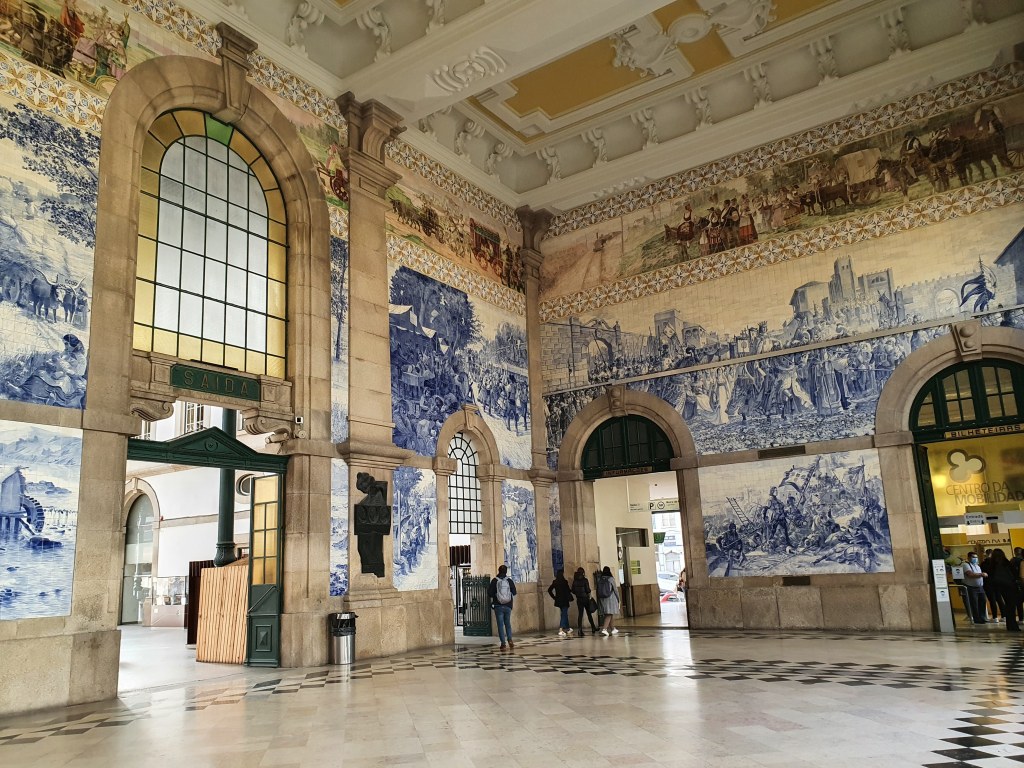
From my hotel I walked downhill towards the heart of Porto and the Douro river. (Both Porto and Lisbon are hilly cities.) On route, I passed São Bento station in the heart if the city, which is only used by local trains these days – longer distance trains all depart from Campanhã further out. I had a look inside São Bento to admire its tiled entrance hall.
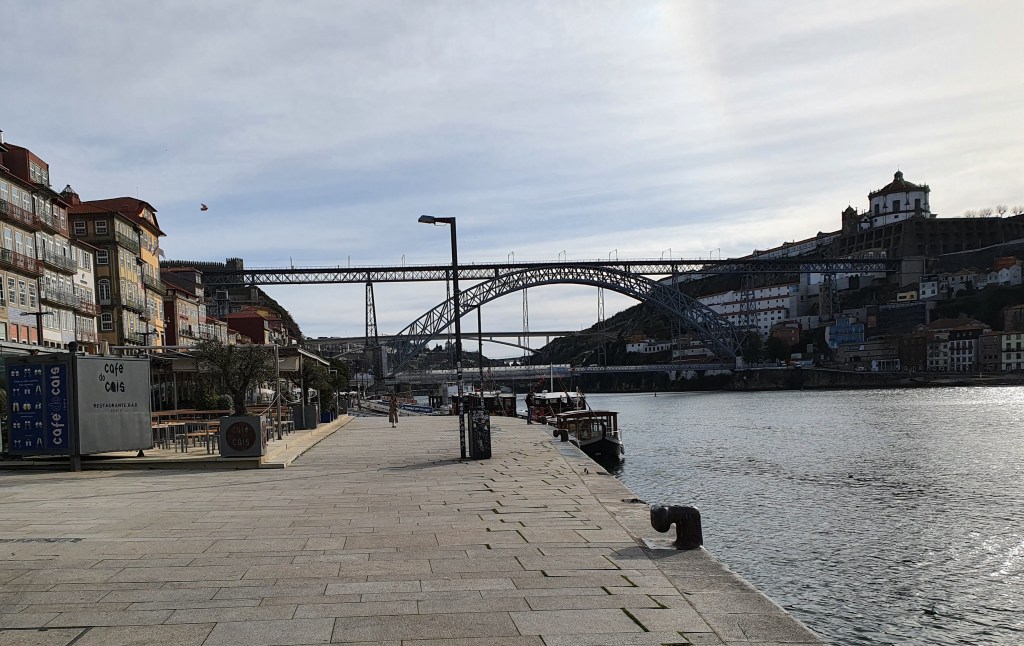
I reached the Douro riverside before the hordes who would throng it later in the day had arrived and got a good view of the double-decker Dom Luís I bridge.
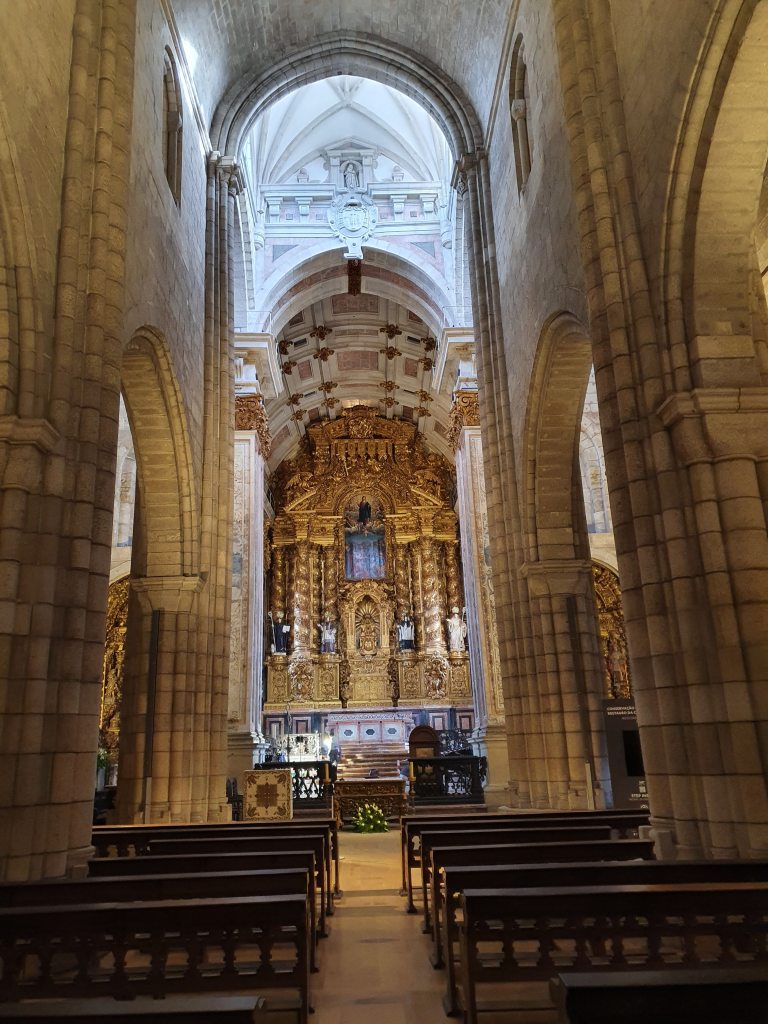
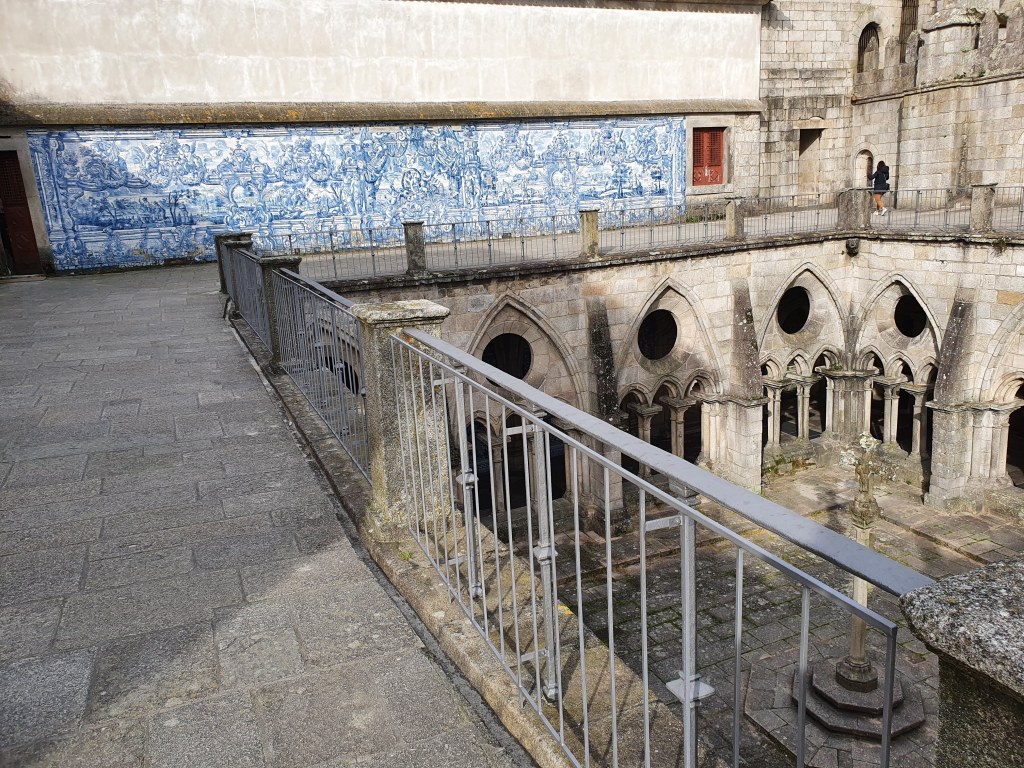
As most of the museums had not yet opened, my first visit was to Porto Cathedral. It has been altered many times since its first construction in probably the 12th Century, including major Baroque changes introduced in the 18th Century. The distinctive azulejos tiles are found in various places, including lining the cloisters. It was possible to climb one of the towers of the cathedral giving good views of the city below.
I then decided to visit what was described as the transport museum. According to my sources it was free to enter, except for a charge to to view the collection of presidential cars. On arriving, I was sold a ticket, which in fact was for the presidential cars. They were mildly interesting – ranging from the horse-drawn carriages inherited from the monarchy, through to the present day. The more recent cars did not seem especially distinctive, but just normal top of the range saloon cars. I then tried to discover the rest of the transport museum – except that it was a transport museum with no transport on display. Apparently, it houses the archives of the national history of transport society, but the only displays were a few panels in Portuguese describing the history of the building, which formerly had been the Customs House for the city.
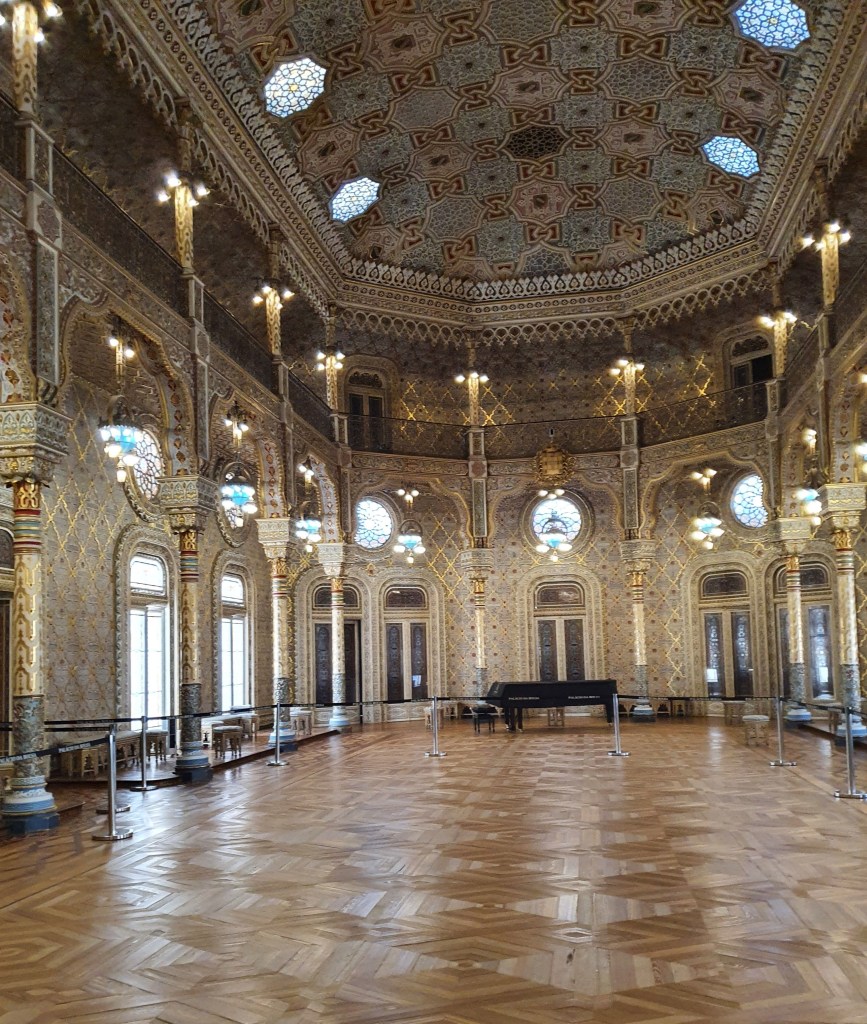
After the slight disappointment of the non-transport museum visit, I decided to book a guided tour of Porto’s former stock exchange, which is still used as the headquarters of the city’s Chamber of Commerce. I had walked past the building earlier and had considered booking a tour then, but as I was not sure how long everything else I wanted to do would take I had decided to wait and see if I had time. By leaving it later, the next available guided tour in English was not until 1530 in the afternoon, giving me plenty of time to do other things in Porto first.
I then went to the city’s history museum, housed in the Casa do Infante, which was far more interesting than the non-transport museum. Porto seems to be very proud that it is the birthplace of Henry the Navigator and the museum made much of the city’s nautical heritage. Porto was occupied by the Romans and the museum is built over the excavations of Roman ruins.
Upon leaving the museum, I bought a snack lunch at a local supermarket which I ate while sitting on the banks of the Douro. I then crossed the river using the lower level of the double-decker Dom Luís I bridge. Both levels of the bridge have pedestrian walkways – the upper level also carries metro trains, while the lower level normally is used by cars. However, at present the bridge is under repair, so only the pedestrian walkways are open at the lower level. On the south side of the river, which is technically Vila Nova de Gaia rather than Porto, many of the warehouses for the port wine trade are situated. Even though only February, it was warm in the afternoon sun, so I spent some time relaxing on a bench overlooking the river. On the south side there is a cable car, which strangely does not cross the river, but rather goes from the upper level of the bridge to the riverside further downstream.
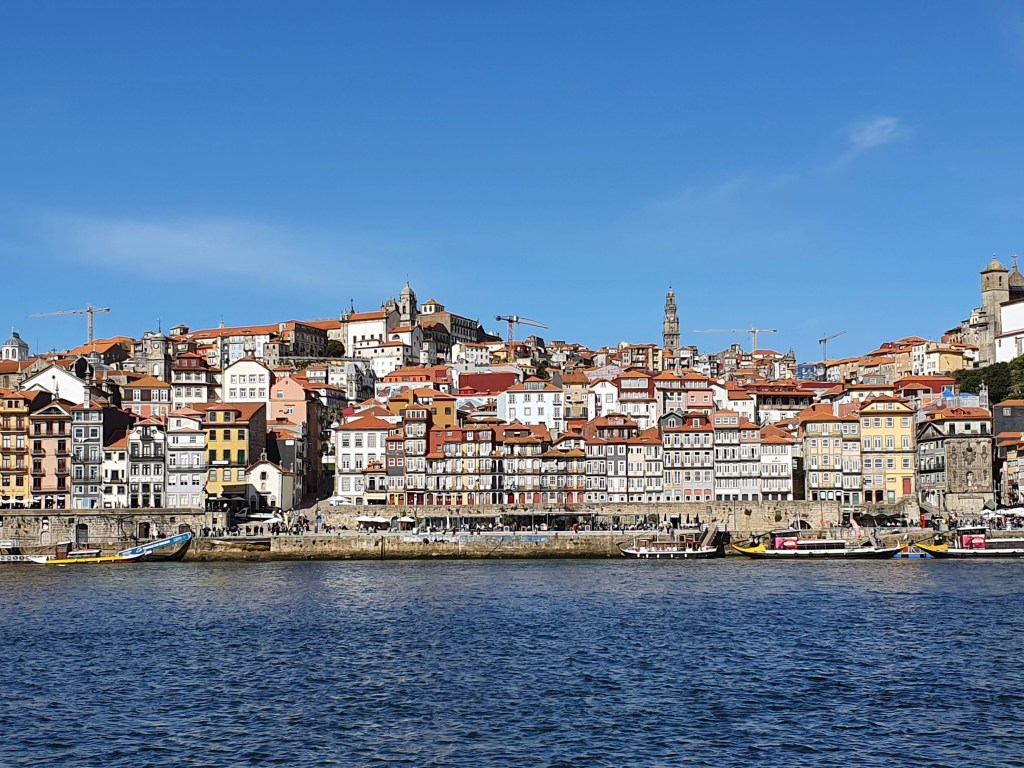
I went back across the river, purchasing an ice cream on route, to be in time for my tour of the Bolsa – the former stock exchange. The tour took nearly an hour and explained the history of the building – a grandiose pile built in the mid-19th Century. It has a ballroom decorated in an over-the-top pseudo-Moorish style, which reminded me a bit of the Music Room in the Royal Pavilion in Brighton.
After my tour had concluded, I had a final wander through Porto and made my way to back to my hotel. I contemplated where to eat, but in the end decided to break with my normal practice and, because it was so good, returned to the same restaurant that I had eaten in the previous evening. This time I had two types of fish balls to start with, followed by pork served with bean rice.
I had enjoyed my brief time in Portugal and wondered why it had taken me 36 years to go back there after my last visit.
[To be continued. Coming next – my travels through Spain.]
 Europe Explored