

“A forest bird never wants a cage.” (Henrik Ibsen – The Master Builder)
[Without the confidence to plan any European adventures at the moment, I look back to another short trip I made last year.]
Tuesday 7th May 2019
My flight to Oslo was about an hour later than the one to Bologna earlier in the year, so I had the luxury of not having to catch a bus until 6am, rather than the first bus of the day at 5am. My flights to and from Oslo were slightly more expensive than those to and from Bologna, but still only cost £16.99 each way. I made sure that I had a flight to Oslo’s main airport (Gardermoen), rather than the alternative (Torp) which is served by many budget flights. The difference is that the main airport is about 30 miles from the city and has a high speed rail connection which takes only 20 minutes, whereas Torp is 80 miles away and only has a bus connection.
Looking out of plane window as we came into land I was rather alarmed to see that there was snow lying on the ground. Being May, I had not anticipated snow and I had not brought a coat for this trip – however, based on the chilly weather forecast I had looked at the day before, I did bring a jacket and scarf.
Once inside the terminal building, having carefully researched how to get to city centre, I ignored all the prominent signs for tickets and trains to Oslo. Instead I sought out the less obvious ticket machines of Norwegian Railways (NSB at the time of my visit, but now rebranded as Vy) and bought a ticket from one of them. This ticket would not be valid on the Flytoget airport express trains – but the trains on which it is valid are just as frequent and take the same amount of time to reach Oslo, but at half the price. The Flytoget services are the only privatised trains in Norway, but the price of a Flytoget ticket from the airport to the city centre was more than I paid for my plane ticket from London to Oslo.
I carefully made my way to the platforms served by NSB trains and waited for my service to arrive. When it pulled in, I was standing opposite the quiet (stille in Norwegian) coach. As I thought that I might need to use my phone on the journey, I hastily walked along the platform to board the next carriage. Whilst I had noticed that this had ‘komfort’ written on the door where I boarded, I did not realise this is the designation Norwegian Railways give to their first class carriages. Fortunately, when the ticket inspector came round he seemed fairly relaxed, and given I was alighting at the next stop, Oslo Sentral, he did not attempt to charge me for my mistake.
As we came closer to Oslo, fortunately the snow on the ground had all melted. On arrival at Oslo Sentral station I made my way to the tourist information office where I purchased a 24 hour Oslo Pass, which would give me free admission to all the museums I wished to visit, as well as free use of public transport within the city.
I walked from the station through the city centre to the harbour by the large brick built city hall (first opened in 1950), which was closed for renovation at the time of my visit. All the locals seemed to be wrapped up against the cold with thick coats, scarves and woolly hats. From there I caught a ferry (the fare included in my Oslo pass) across the harbour to the so called ‘museum island’. I suspect the name ‘museum island’ is just a bit of clever marketing by the ferry company to describe the area where many of Oslo’s museums are located, as it is not an island but a peninsula which is also accessible by bus from the city centre.
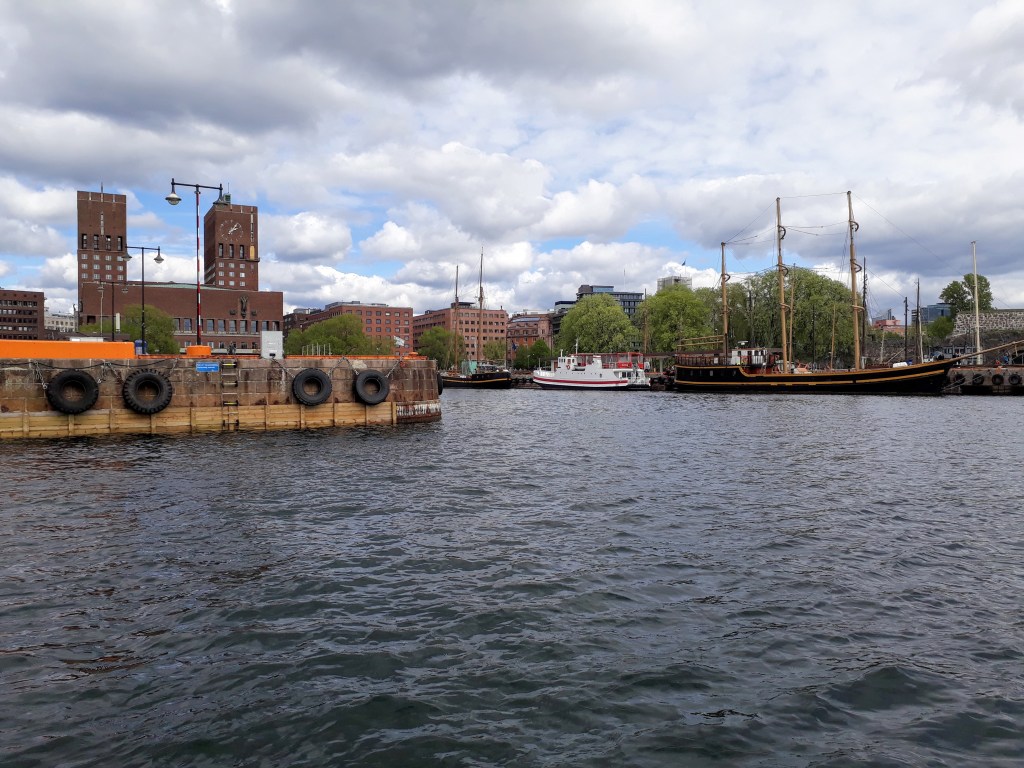
From the ferry, and also from many other points in Oslo, you can clearly see the wooded hills which surround the city and give the place a different feel to most other capitals.
I got off the ferry at its second stopping point and walked a short distance to the Norwegian Maritime Museum. This contains comprehensive displays spread over four floors highlighting Norway’s maritime heritage. Many Norwegian coastal communities used only to be accessible by sea and hence the sea has played a significant role in Norway’s history.
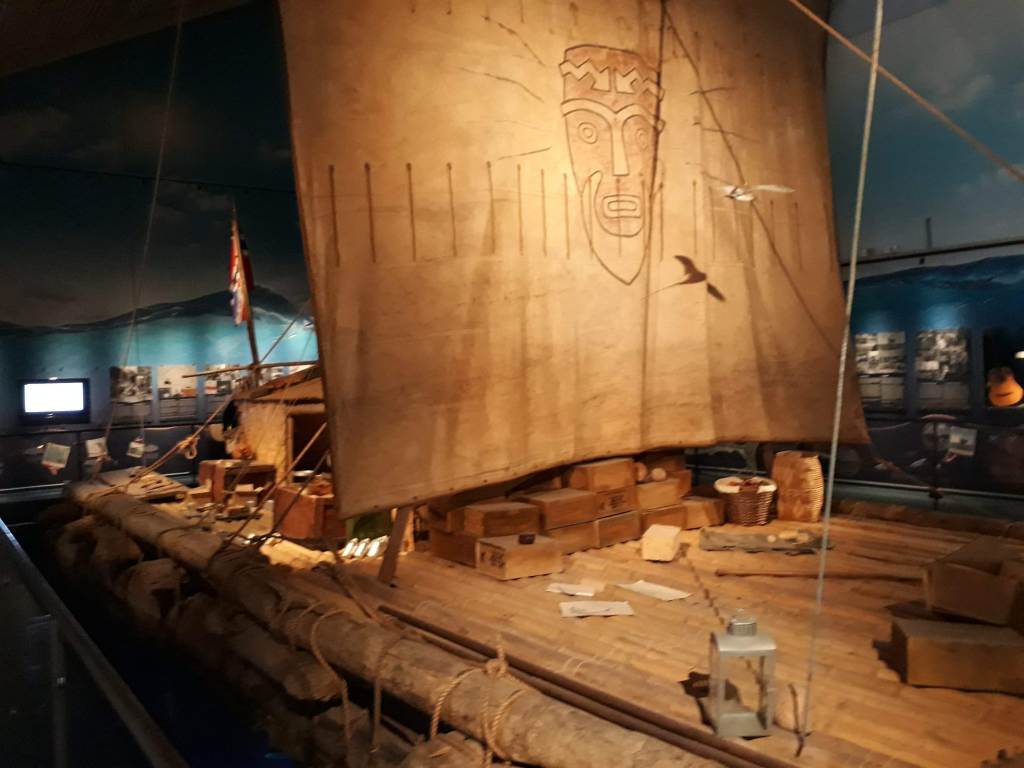
When I had finished in the Maritime Museum, I walked across the road to the Kon Tiki Museum. When I was a child there was much interest in Thor Heyerdahl’s exploits in sailing the oceans on his Kon Tiki and Ra expeditions, to prove his hypothesis that ancient people were capable of inter-continental travel. The museum contains the original Kon Tiki and Ra II craft – they were bigger, but more fragile, than I had imagined.
The third museum I visited that afternoon was the Fram Museum, which is a museum of polar exploration, the centrepiece of which is Roald Amundsen’s polar ship Fram. I chose to visit this museum last of the three that afternoon to make best use of my time, as it closed an hour later than the others. The exhibition brought home to me how polar exploration in the first half of the 20th Century had been a dangerous adventure into the unknown, probably more so than space flight was in the second half of the century. Had I been at the Fram museum exactly a week later, I could have gone to a talk by Michael Palin to promote his book about the ship Erebus, which travelled to both the Antarctic and Arctic, before finally foundering on Franklin’s ill-fated expedition in search of the North West Passage.
I left the Fram Museum just a few minutes before closing time to enable me to catch the penultimate ferry of the day back to the City Hall landing stage. From there I caught a tram to take me to the hotel I had chosen for the night. Given that most things in Oslo were very expensive, I was slightly worried about the quality of my hotel, as it was very reasonably priced. I needn’t have worried as it turned out to be a perfectly good hotel, with a spacious room. The hotel appeared to be owned and run by the organisation which provided student accommodation for the nearby university.
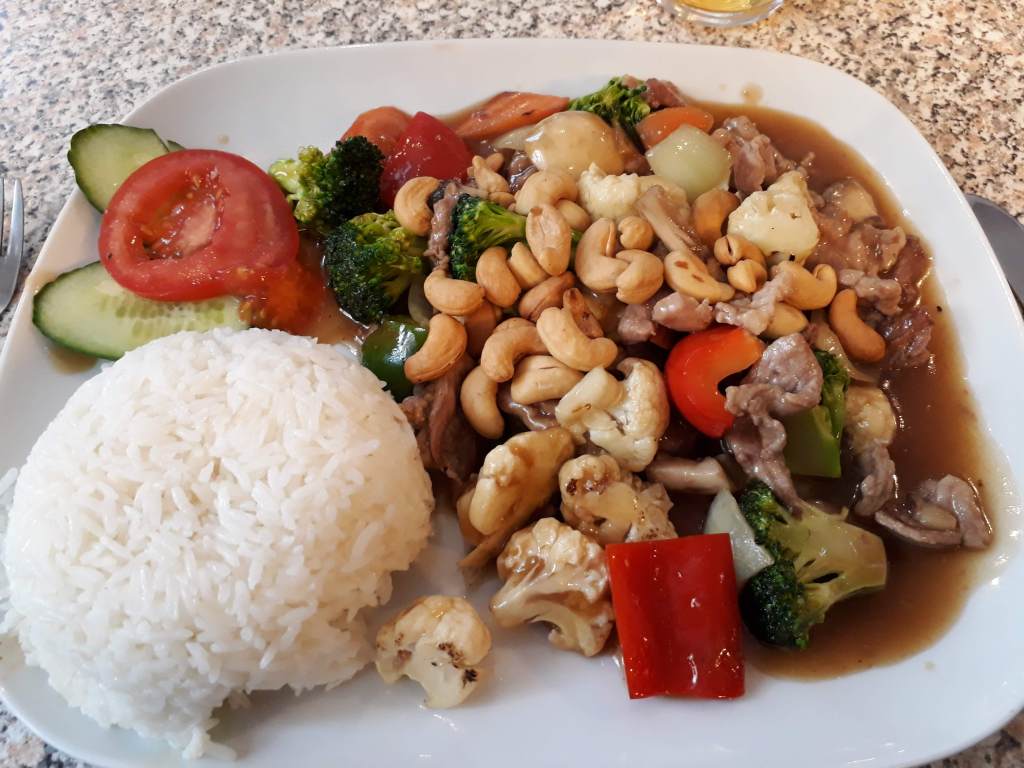
I carefully planned where to eat that evening, given the steep prices charged by many Oslo restaurants. Anywhere claiming to offer traditional Norwegian cuisine came with an eye-watering price tag, so I opted for a Vietnamese restaurant a short walk back towards the city centre from my hotel. I took it as a good sign that when I arrived at the restaurant there was a queue out of the door of people waiting for a table. However, turnover was brisk and I did not to have wait long to be seated. I ordered pork with cashew nuts, vegetables and rice and when it came the amount was very generous and the food tasty. Overall it was a very good value meal even by the standards of London prices.
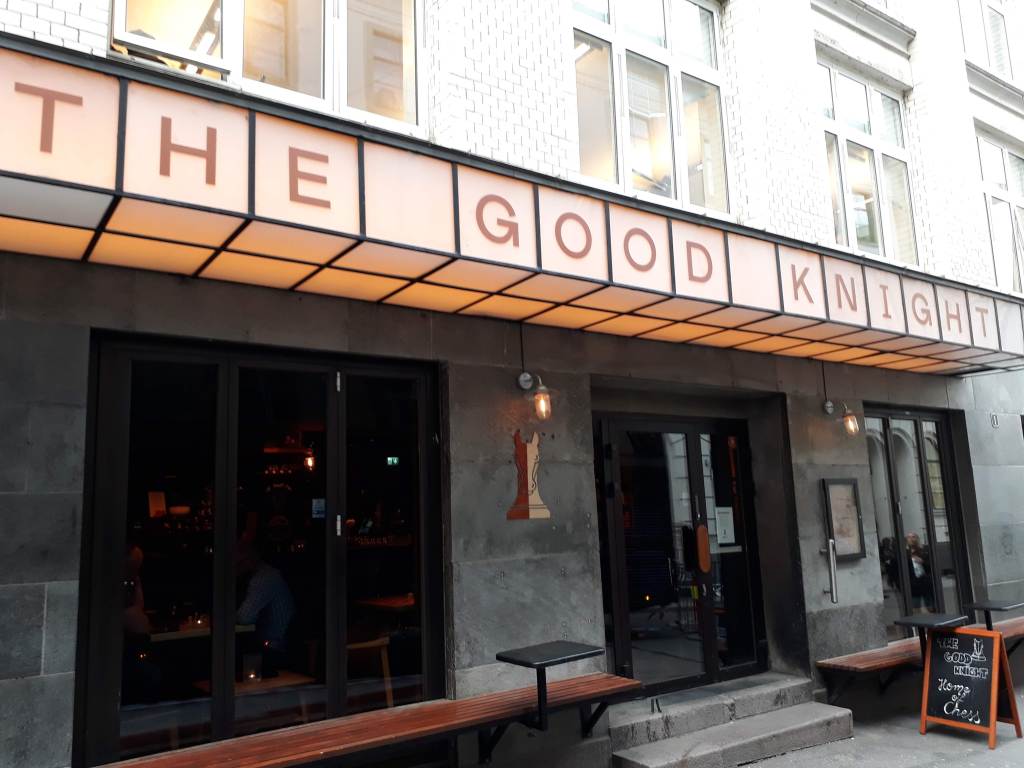
After I had finished dinner I walked a few blocks to The Good Knight pub. Ever since Magnus Carlsen became World Chess Champion in 2014, Norway has become obsessed with the game. The Good Knight is a chess pub – as well as ordering a drink at the bar, you can also pick up a chess set, board and clock to use while at the pub. At the time of my visit most of the customers in the main bar were playing friendly blitz games, while in the back room there was a chess lesson being taught.
Not wishing to drain my financial resources too much, I left The Good Knight after a couple of drinks and returned to my hotel relatively early. While idly flicking the television channels in my room, I stumbled across the Norwegian equivalent of A Question of Sport about to start on the state broadcaster’s channel. However, that evening’s edition of the programme was a chess special with all the questions about chess. There was a round of identifying the films from which stills of chess scenes were shown – such as Ingmar Bergman’s The Seventh Seal. For the remaining rounds, I got the impression that, if in doubt, a guess of Magnus Carlsen would probably get you the right answer.
Wednesday 8th May 2019
The breakfast buffet in the hotel had a wide selection, including pickled fish and brown Norwegian cheese. After breakfast, I walked to the bus stop which would take me to my first visit of the day. The weather today was much warmer, so that I no longer felt the need to wear a scarf. Nonetheless, my fellow commuters were still wrapped up in thick coats and woolly hats. (I have heard that when Magnus Carlsen plays in chess tournaments, he often complains about the temperature, asking for the heating to be turned up or windows to be closed.)
The bus was initially very full, but as it went through the centre of Oslo it dropped off passengers, so that by the time it reached my stop for the Viking Ship Museum there was only one other passenger. She also alighted with me and went to open up the café outside the museum.
The Viking Ship Museum was the only one of the museums that I planned to visit on this trip which opened at 9am, rather than 10am. So it made sense to visit it first this morning. I arrived just before opening time and was fortunate to be be the only visitor for the first 40 minutes. The museum is housed in a purpose built building designed to house three large Viking long-ships (the Oseberg, Okstad and Thune ships) dating from the 9th Century. There are balconies in the corners of the halls in which they are housed allowing you to look inside. I have always wanted to visit these ships ever since I encountered the Oseberg and Okstad ships and their carved prows in the first episode of Kenneth Clark’s 13 part TV series Civilisation, first broadcast in 1969. The Viking Ship Museum did not disappoint – the atmosphere was heightened by having the place to myself for most of my visit.
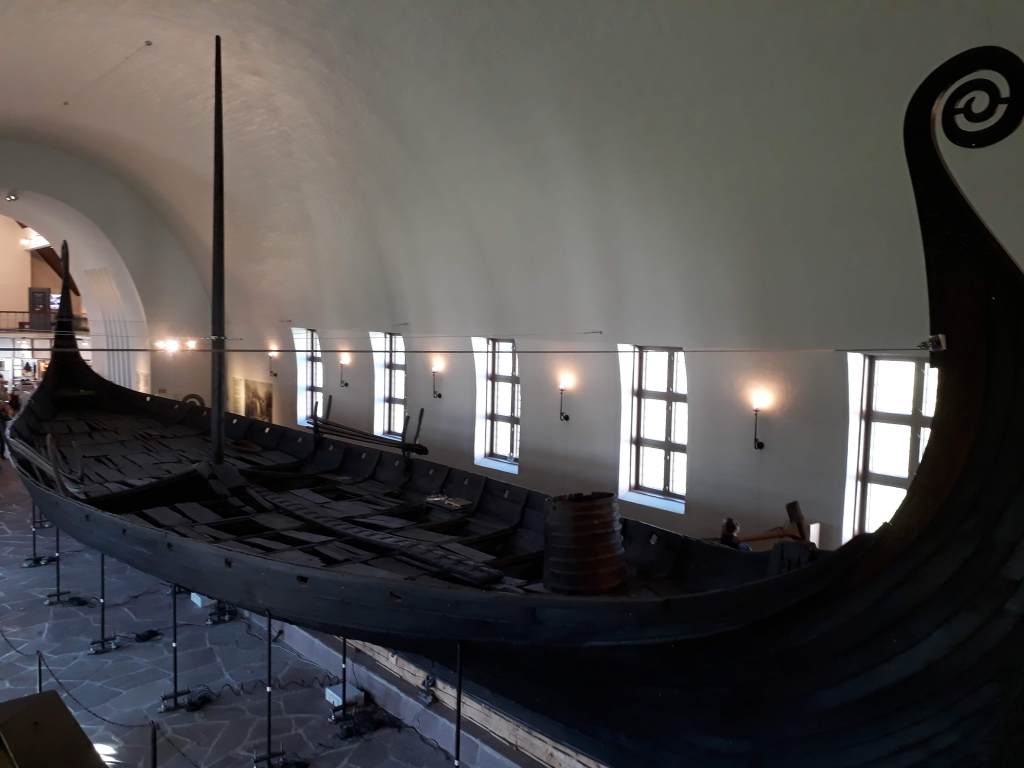
When I saw a coach party arriving outside the Viking Ship museum, I realised it was time to move on. I walked a short distance down the road to the Norsk Folkenmuseum (Museum of Norwegian Cultural History). The museum is situated in extensive rolling countryside, with a collection of reconstructed buildings dotted throughout. These range from medieval wooden buildings through to a 19th century apartment block. There is an old wooden church, as well as a variety of farm buildings (with livestock) from different areas of Norway. The apartment block is situated in a reconstruction of an old town with shops, a school and a bank. The different flats in the apartment block are furnished in a variety of styles each about twenty years apart from the late 19th Century to an immigrant family’s flat of 2002.
After exploring all the various buildings in the Norsk Folkenmuseum, I then went to look at the more traditional museum displays. I was particularly fascinated by a couple of the exhibitions – one on the Sami people and their culture and the other on the Hytte, a wooden cabin in the countryside that many Norwegian families own and use to escape to on holiday.
After I dragged myself away from the Norsk Folkenmuseum, I caught a bus back to the city centre. I just had time to squeeze in one more attraction. I chose to visit the the Oslo City Museum, which as the name suggests tells the history of Oslo. There is a strong emphasis on Oslo’s 20th Century history – throughout this period the city has had a left wing tradition which has balanced the more conservative views of the rest of the country.
Unlike most of my other city visits of the past couple of years, I did not visit any art galleries. For one thing, there was just not time – I would not want to have missed any of the places I did visit, all of which I would thoroughly recommend. Also the main National Gallery was closed as it was in the process of being relocated to a new site and the Munch museum was also shut in the week I was there. However, just before my trip to Oslo I had been to the exhibition of Edvard Munch’s drawings that was on at the British Museum at the time.
On leaving the Oslo City Museum, I walked across the park in which it is situated to the tram stop to catch a tram to take me back to Oslo Sentral station. The journey to the station took slightly longer than anticipated, as a inconsiderately parked lorry prevented the tram from turning a corner and we could not move until the lorry driver had been found.
I arrived at the station expecting to catch a train to the airport. To my dismay all the NSB trains to the airport were shown as cancelled due to a signal failure. There was a however an extortionate Flytoget train shown as due to depart in a couple of minutes. I had carefully saved the correct amount of Norwegian Krone to buy my NSB ticket, but as this was insufficient for a Flytoget ticket I had to pay for this on my credit card. I ran to the train which was now due to depart, but, because of the ongoing signal failure, it sat around for another fifteen minutes before leaving. I eventually arrived at the airport less than an hour before my flight, but as the airport was fairly quiet this did not cause any problems. I still had time to have a beer before departure, using the cash I had intended spending on my train fare which was still sitting in my pocket.
I thoroughly enjoyed Oslo, but a two day visit was nowhere near long enough. Had the Europe Explored project not been cancelled for 2020, I may well have revisited by now.
 Europe Explored
One Reply to “”