

[Still unable to travel, I look back to another short trip I made a couple of years ago.]
“How can you govern a country that has 246 varieties of cheese?” (Charles de Gaulle)
In 2018, I had already made flying visits to explore three different cities, while staying away for just one night. For my final such trip in that year, rather than flying I went by train.
Wednesday 7 November 2018
As my Eurostar train to Lille was not due to leave until just before 9am, even allowing for the need to check in at least half an hour before departure, I was expecting to be able to get up rather later than I had for some of my flights earlier in the year. As it turned out, my local London Underground line was having a 24 hour strike on this day, so I still had to leave the house at about 6:20am for a brisk 45 minute walk to the nearest alternative station.
Allowing contingency which wasn’t required, I arrived at St Pancras International in plenty of time to have some breakfast before checking in for my Eurostar departure. The train from St Pancras took just under 90 minutes to reach Lille Europe, where I arrived at about 11:20am (local time). It is quicker to get from London to Lille than it is to get to most British cities by train.
Lille Europe is a modern station a short distance to the east of the city centre, built specifically to serve high speed lines, including Eurostar. Walking to the city centre, I went past Lille Flandres, as the original Lille station is now called.
My first stop was a visit to Lille Tourist Office to pick up a map and other information. I confirmed, as I had expected, that two of the potential attractions would be closed – the Charles de Gaulle birthplace (closed for refurbishment) and the Louis Pasteur museum (only open at weekends).
I walked in slight drizzle through the centre of Lille, being careful in the main square (Place Charles de Gaulle) to avoid the cars which could drive through it following a route laid out by stud marks on the ground. Just off the main square is the Chamber of Commerce with its impressive clock tower.
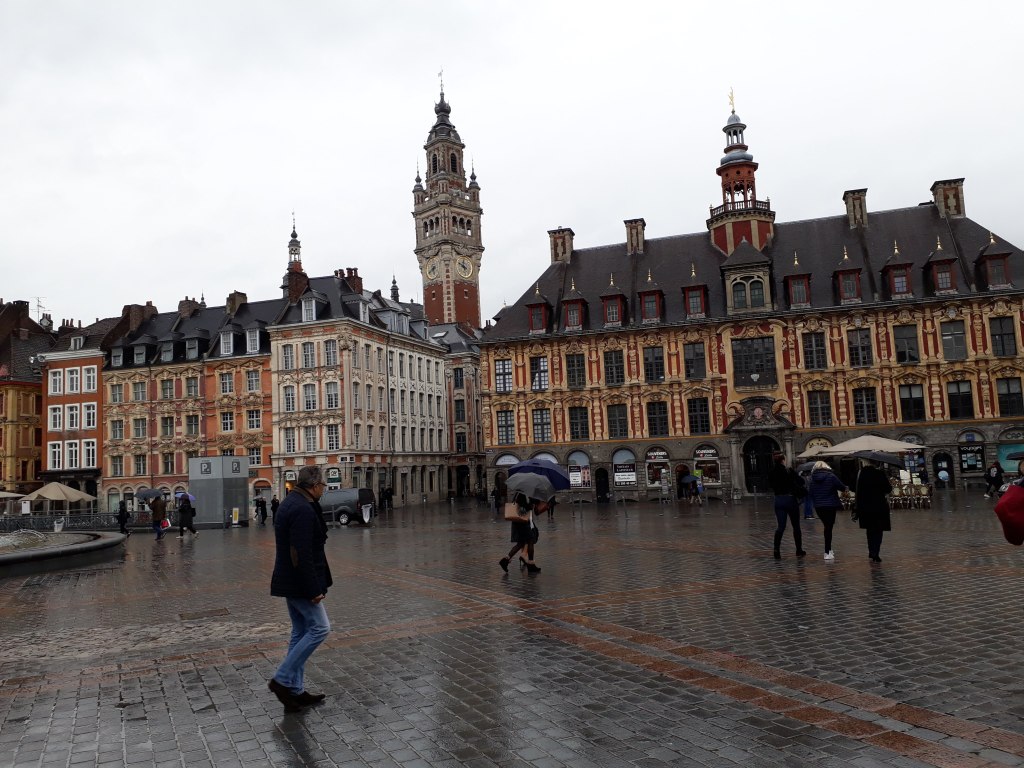
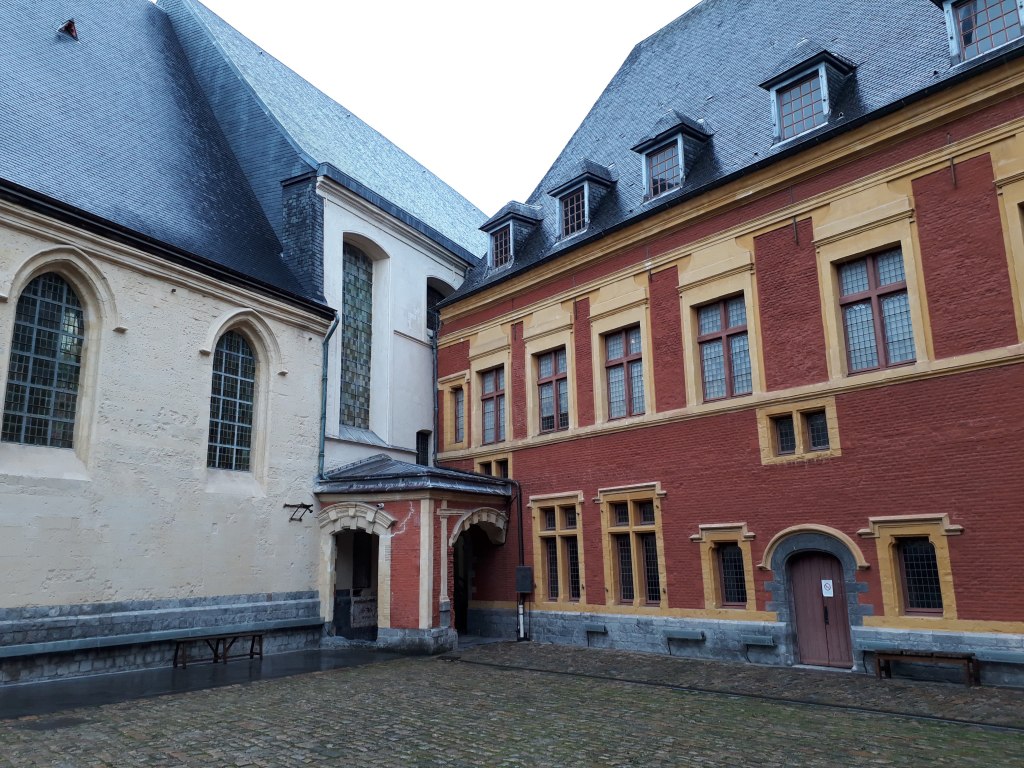
My destination was the Musée de l’Hospice Comtesse, in the old part of the city. This had originally been a hospital run by Augustinian nuns founded by Countess Jeanne of Flanders in 1236. The ground floor rooms were furnished as they might have been in the 17th century, while upstairs was devoted to a museum and gallery of the history of the building and of Lille.
After visiting l’Hospice, I purchased a freshly made roll for lunch and made my way to the south of the city to the Palais des Beaux Arts. This is an impressive art gallery with notable works by Breughel the Younger, Goya and Monet. I used an audio guide which gave comprehensive information on many of the paintings. The Palais was in the later stages of a refurbishment, with a new atrium having recently been opened. One of the attractions of the museum is a large relief map of Lille which was closed for restoration at the time of my visit. However, nobody seemed to mind that I sneaked in to have a look at it while they were working on the restoration.
After checking in to my hotel, I went for an explore of the old town, keeping an eye out for places to eat. It was noticeable that most of the restaurants did not open for dinner until 7:30pm. I eventually selected one which looked good, arriving shortly after it opened to ensure I got a table. I decided to skip the starters on offer and ordered Carbonnade Flamande, a rich beef stew, with a large glass of red Burgundy. I noticed that the restaurant also had draught beer, so I also had a glass of Trois Monts while I waited for my main course to be prepared. I was very pleasantly surprised by the Trois Monts – it was one of the tastiest beers I had experienced, most unlike the bland offerings from other French breweries. The carbonnade was delicious, complemented by the rich Burgundy I had chosen. I was keen to have another Trois Monts, so I ordered a plate of cheese for dessert to accompany it. The proprietor was obviously very proud of his cheeses, because as he served the three different local northern French cheeses he gave me a full description of each of them.
Thursday 8 November 2018
After breakfast, where I managed to make a mess by using a cup too small for the coffee that I asked the machine to dispense, I set off on foot to the south of the city. The drizzle of the previous day had gone and the skies were clear blue, but being November it was rather cold.
My first destination was the town hall complex near the monumental arch of the Port de Paris. The main building is a massive Art Deco construction completed in the 1930s, topped by a 104m high belfry. To access the belfry, I had to press a buzzer on the outside door and walk up a couple of flights of stairs to buy a ticket to use the lift to the top. As I had arrived at opening time, I initially had the top of the belfry to myself and could appreciate the clear views without the distraction of other visitors. When more people arrived I decided I had had enough, but rather than catch the lift down I chose to walk. This was rewarded by there being information panels on the descent giving information about the history of the building and Lille more generally.

Upon leaving the town hall, I made my way to the nearby Metro station and caught a train to Roubaix. The Lille Metro uses driverless automated trains which have very narrow carriages. I alighted at Roubaix Grand Place, where the Metro was again underground after surfacing for part of the journey. Roubaix is a former textile town very close to the Belgian border. Up until my visit, all I knew about Roubaix was that it is the finishing point of the classic Paris – Roubaix cycle race. I had considered visiting the velodrome where the race finishes each year, but as it would have been shut I decided not to. Emerging from the Metro, I was directly opposite Roubaix Town Hall, which though completed only about twenty years earlier than the one in Lille, was of a rather different style.

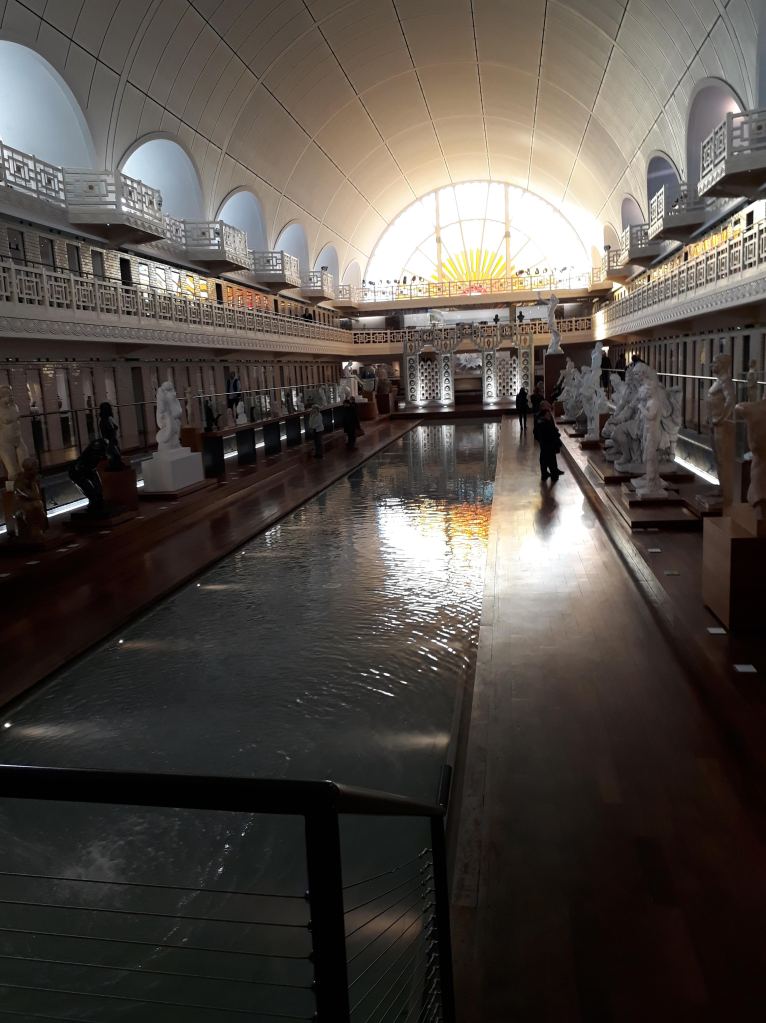
I walked a short distance to La Piscine, a superb collection of art and sculpture housed in a former Art Deco swimming pool. It had only reopened the week before my visit after a two year closure for refurbishment, so it was quite busy. I got the impression that the French cultured class were flocking there to inspect the newly enhanced exhibitions. Many of the sculptures are displayed round the edge of the former swimming pool, which was still filled with water (although with a reduced depth and width from when it was used for swimming). Rather disconcertingly (if, like me, you were not expecting it), from time to time splashing and shouting sounds of a swimming pool are broadcast within the area, so at first I thought that one of the current visitors must have fallen in. The paintings are displayed in galleries round a large garden courtyard, on one side of which was a somewhat upmarket restaurant which was doing a roaring lunchtime trade.
In the afternoon, I returned by Metro to Lille. After the sunny morning, the weather had become slightly damp again, so I postponed my planned wandering round the city and sought shelter in Furet du Nord, the largest bookshop in Europe (think Foyles, but double the size). Now a chain of bookshops across northern France, the enormous branch in Place Charles de Gaulle is the original. The unusual name (literally Ferret of the North) comes from the name of furriers whose premises were bought when the bookshop was founded, but they never got round to changing the name.
Dragging myself away from the bookshop, I went across the square to the old Bourse, where in the courtyard there were a number of stalls selling second-hand books, magazines and maps. As the weather had improved a little I explored Lille further, stopping to look inside Lille cathedral, Notre Dame de le Treille. This has a curious mix of architectural styles – the main body of the church looks Gothic, but was only built in the late 19th and early 20th Centuries. The main entrance on the west front, looks very modern, built out of translucent marble and completed in 1999.
My train back to London was not due to depart until 1935 in the evening (with check-in required by 1905), so I had planned to have an early dinner in Lille. But as I had discovered when searching for somewhere to eat the previous night, the better restaurants did not open for dinner until about the time I was due to leave. From the limited choice of those that were open, I chose one opposite Lille Flandres station, but compared with the lovely meal I had the evening before, this one was rather disappointing.
I made my way back to Lille Europe, via the Euralille shopping centre. There was a large supermarket there which I was pleased to find sold bottles of Trois Monts, so I bought a couple to bring back home. Lille Europe is a fairly inhospitable place on a winter’s evening, particularly so when the sole bar on the station is closed for refurbishment. Once the passport officials (British and French) arrived at their posts the passengers for London were quickly processed and then held in a waiting area above the platform. Only when the train was due within about a minute were we allowed to descend to the secure platform area. The train was already nearly full with passengers who had started from Brussels, but I quickly found my reserved seat. The journey back to London was even quicker than the one out, taking just 1 hour 20 minutes. I was home by 9pm, the tube strike of the previous day being now over.
 Europe Explored
One Reply to “”